A PuzzleNation First Look: Setka

Making a new puzzle is challenging. You have to strike a balance between established solving styles (those that are familiar and effective) and innovative twists, mechanics, and variations, all without making the puzzle too convoluted, too tedious, too easy, or too hard.

In the world of crosswords, some variant success stories include Double Trouble, cryptic crosswords, Brick by Brick, and diagramless. With Sudoku, there are variants like Extreme Sudoku (aka X-Sudoku or Diagonal Sudoku), Samurai Sudoku, and Word Sudoku.

I’m always on the lookout for new puzzles and variations to try out, so when the folks behind Setka contacted me, I was more than happy to try out their puzzle brand and explore their signature attempt to combine Sudoku and clued-puzzle elements.

setka1

In short, Setka puzzles start with a single word. The consonants of that word not only form the answers to the clues, but also provide the letters to place in the accompanying grid.

For example, if the starting word was INFORM, the key letters would be N, F, R, and M. Every clue answer would feature one or more of those letters. The answer words, like the starting word, ignore the vowels. So you could have answers like NeaR, MoRoN, or MaiNFRaMe. (In the case of duplicate letters, like ReRaN, any duplicates are dropped, so the key letters here would be RN.)

And since there are four letters, there would be an accompanying 4×4 grid for you to fill in, where no letter is repeated in any row or column, Sudoku-style.

To place the letters, the clues are numbered, and the relevant cells in the grid are numbered to match. So, for NeaR (let’s say it’s clue 2), there would be two neighboring cells in the grid with a number 2 in them, and you could place the letters as RN or NR. Words that are three letters or above can read backward, forward, or in an L-shape in the grid.

This mechanic separates Setka from other clued or letter-placement puzzles, because you need both the clue answer AND the Sudoku no-repeats rule in order to complete a grid. Without the clue answers, there can be alternate solves where grid letters swap. And without the Sudoku-style placement, it would be virtually impossible to actually place the answer letters into the grid, because there’s more than one way to do so.
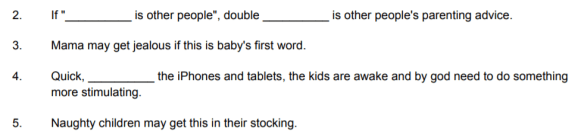
setka2-1

The cluing style alternates between standard crossword-style clues (but usually longer and a little more conversational or trivia-based) and fill-in-the-blank clues. The clues also fit the theme established by the starting word. For instance, the clues above all have to do with kids, which fits the puzzle’s theme word, CHILD.

It takes time to get used to seeking out answer words from the given consonants (since you have to supply any vowels or duplicate consonants missing in order to come up with the correct answer word), but once you’re a few puzzles in, it becomes second nature and a fun component to the solving experience.

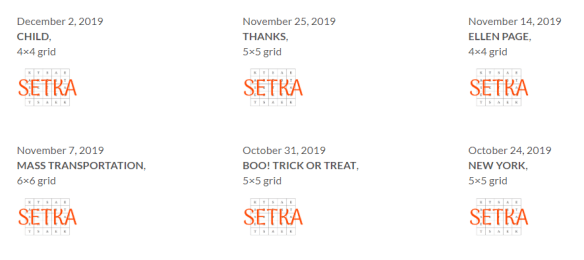
Setka puzzles range in size from 4×4 to 7×7, with its signature size being 5×5. Honestly, 5×5 is really where it becomes a proper puzzle. With a 4×4 grid, once you have a few letters placed, it becomes an elementary logic puzzle and you don’t really need the clues.
setka3

[A selection of Setka sizes and themes.]

The puzzle itself is reminiscent of another puzzle we tried late last year — Cluedoku — but Setka’s letter-based theme and smaller grids make for a far more sustainable puzzle going forward, and the mechanic of placing the words in the grid (rather than just individual letters/numbers) adds an intriguing wrinkle to the solve.

All in all, I enjoyed trying out Setka — I solved a half-dozen or so puzzles to get a feel for different sizes and difficulties — and I think they’ve forged an engaging and clever combination of crossword-style cluing and Sudoku-style solving.

You can try Setka for yourself on their website, either playing interactive versions of Setka on the site or printing and solving PDF copies of Setka puzzles. They also offer a subscription where you can receive a Setka puzzle each week along with news and updates.

What do you think of Setka, fellow puzzlers and PuzzleNationers? Let us know in the comments below! We’d love to hear from you.


Thanks for visiting PuzzleNation Blog today! Be sure to sign up for our newsletter to stay up-to-date on everything PuzzleNation!

You can also share your pictures with us on Instagram, friend us on Facebook, check us out on TwitterPinterest, and Tumblr, and explore the always-expanding library of PuzzleNation apps and games on our website!

Acts of Puzzly Charity: Fight Fires With Games!

Puzzlers have many admirable qualities, and one particular trait that’s common amongst constructors and puzzle fans alike is generosity.

In the past, constructors and game companies have teamed up for wonderful charitable efforts on behalf of women’s rights / women’s health, the LGBTQIA+ community, education and STEM programs, mental health, and other worthwhile causes.

Puzzlers donated time and creative energies to puzzle packets like Queer Crosswords and Women of Letters, as well as puzzles, games, and other products for raffles, Humble Bundles, and other projects.

And now, once again, puzzlers are stepping up to help others. In this case, it’s the victims of the wildfires in Australia.

charitybanner1

DriveThruRPG, a website loaded with resources, adventures, and other materials for roleplaying games, is partnering with dozens of game publishers, content creators, writers, artists, and designers for Fight Fires With Games!

Fight Fires With Games offers eight different charity bundles packed with deeply discounted RPG content, with all of the proceeds going to Red Cross of Australia and World Wildlife Fund Australia to aid in brushfire relief.

charitybanner2

The bundles range in price from $9.99 to $29.99, and often include hundreds of dollars in discounted content. So, if you’re an RPG enthusiast, it’s a win-win all around!

Every little bit helps, and it always warms my heart to see puzzlers step up again and again to support others in times of need.


Thanks for visiting PuzzleNation Blog today! Be sure to sign up for our newsletter to stay up-to-date on everything PuzzleNation!

You can also share your pictures with us on Instagram, friend us on Facebook, check us out on TwitterPinterest, and Tumblr, and explore the always-expanding library of PuzzleNation apps and games on our website!

The Best Puzzle Solvers in Fiction

bestlit1

Last year, we assembled super-teams of the best puzzle solvers in horror films and television respectively. The goal was to highlight characters who stood out, the ones you’d want on your side, because they’re clever, decisive, and immensely capable.

In the third installment in this illustrious series, we turn our attention to literature, seeking out the quickest minds and the deftest problem solvers from the printed page.

Yes, this list will be a bit detective-heavy, since they’re the protagonists most frequently put into situations where puzzly problem-solving becomes synonymous with the character. But we still think it’s a fair representation of the best puzzlers in the medium.


Oh, two quick notes before we get on with the post.

1.) Since both Batman and Sherlock Holmes were listed amongst the best puzzle solvers on television, we’ve opted to exclude them from this entry in order to make room for other individuals. Obviously they still make the cut, but it never hurts to share the spotlight.

2.) Fans of children’s books and young adult novels may be disappointed that the likes of Nancy Drew and Winston Breen didn’t make the list. But that’s for good reason. They’ll be getting their own list in the near future.


bestlit2

Inspector Morse (Colin Dexter)

[Image courtesy of eBay.]

Detective Chief Inspector Endeavour Morse is the protagonist of 13 novels and dozens of hours of television. This opera-loving detective is famous for enjoying cryptic crosswords, and several of his novels challenge the reader with a crossword clue early on, revealing the answer in a later chapter.

Possessing a keen intellect, Morse solves cases through diligence, intuition, and a near-photographic memory. When you factor in his puzzle skills, you end up with someone who can, for instance, effortlessly realize that the spelling mistakes in a piece of evidence are a hidden threatening message, not mere errors.

bestlit3

Lord Peter Wimsey (Dorothy L. Sayers)

[Image courtesy of LibraryCat.]

Although investigation is a hobby for Lord Peter Wimsey rather than a profession, that doesn’t make his efforts any less impressive or diligent. He offhandedly solves a cryptic clue for his valet during breakfast, something that will prove helpful later when he has to solve “The Fascinating Problem of Uncle Meleager’s Will.”

Resourceful in the extreme, Wimsey always manages to gather the necessary info to crack the case, whether that requires faking his own death or unraveling an entire cryptic puzzle in order to settle an acrimonious family gathering.

bestlit4

C. Auguste Dupin (Edgar Allan Poe)

[Image courtesy of Learnodo-Newtonic.]

Perhaps the first literary detective, this creation of Edgar Allan Poe combined a keen eye for observation with an impressive knack for abductive reasoning (inference or making good guesses, as Sherlock Holmes does). Equally at home solving mysteries or chasing forgotten manuscripts, Dupin is the template from which so many crime solving characters sprung.

A master at demystifying enigmas, conundrums, and hieroglyphics, Poe’s creation employed “ratiocination” to place himself in the shoes of criminals and work out not only what they’d done, but where they went after the crime. Surely no criminal mastermind or logic puzzle could withstand the skills of C. Auguste Dupin.

bestlit5

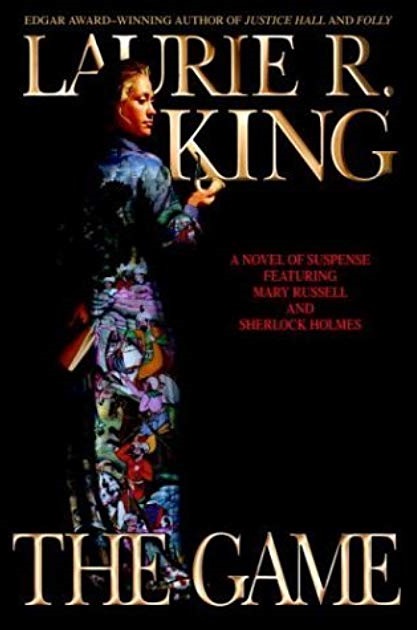
Mary Russell (Laurie R. King)

[Image courtesy of Goodreads.]

Fans of Sherlock Holmes know that he retired from crime solving and spent his twilight years beekeeping. But worry not, England, because Mary Russell ably fits the role Holmes left behind. As observant and strong-willed as her mentor, Mary is brilliant, proving herself a worthy student for Holmes while still a teenager.

A student of many languages, a theology scholar, and an avid reader, Mary is a fierce and intriguing character who embodies many of the puzzliest attributes of Holmes, but with her own idiosyncratic touches, even managing to resolve lingering threads from some of Holmes’s most famous cases.

bestlit6

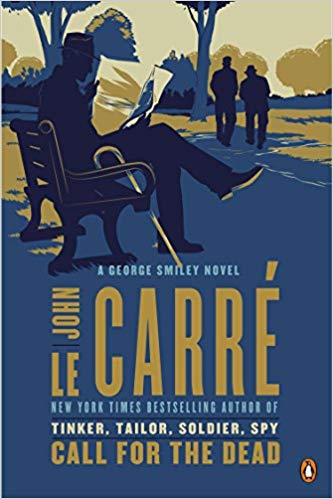
George Smiley (John le Carré)

[Image courtesy of Amazon.]

There are many characters in literature that think ten steps ahead and manage to succeed, but George Smiley is one of the few who does so in believable fashion. The fictional spymaster and intelligence agent may not have Bond’s rakish good looks, but he has the puzzly chops to crack even the most diabolical schemes.

With an encyclopedic knowledge of spycraft and a perceptive mind capable of subtly getting information out of people, George Smiley is a master of looking at the chessboard of international gamesmanship and figuring out the best moves to make, which pieces to sacrifice, and how to read your opponent and outmaneuver him.

bestlit7

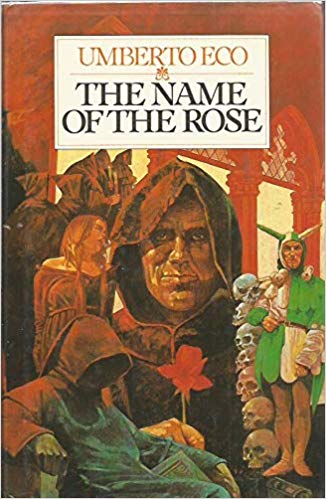
William of Baskerville (Umberto Eco)

[Image courtesy of Amazon.]

Given how many cryptic crossword constructors in England name themselves after Inquisitors, it’s appropriate to find a strong puzzle solver during the time of the Inquisition. Franciscan friar William of Baskerville, often regarded as insightful and humble, refused to condemn a translator as a heretic, deducing that he was innocent. Later, after leaving the ranks of the Inquisition, William is asked to help explain a series of strange deaths at a Benedictine monastery.

William manages to solve the case AND disprove the presence of a demonic force in the abbey, but not in time to prevent tragedy. Nonetheless, his impressive deductions and masterful efforts to unravel the mysteries at the heart of the case — braving labyrinths both real and invented — are key to the novel’s success.

bestlit8

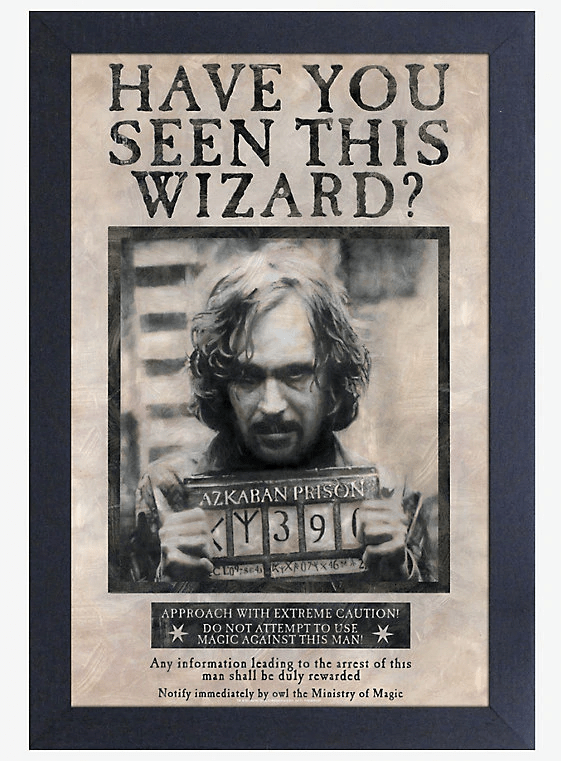
Sirius Black (J.K. Rowling)

[Image courtesy of Boxlunch.]

Yes, he was a devotee of the Daily Prophet crossword, but it takes more than that to land you on this list. Although reckless at times after a long incarceration in Azkaban, Sirius proved on more than one occasion to have a quick, clever, and strategic mind, a trait shared by many great puzzlers.

He managed to sneak into Hogwarts twice, escaped the infamous Azkaban prison, and deduced where he could find the traitorous Peter Pettigrew. Not bad, especially when you consider the damage Dementors can do to someone’s psyche.

bestlit9

The Black Widowers (Isaac Asimov)

[Image courtesy of Amazon.]

A fictional dining club (men only, sadly), the Black Widowers often solve problems without ever leaving the dinner table. While many mystery novels walk you through the detective’s deductions and theories at the very end as the crime is solved, each Black Widowers case is solved in front of you, as they ask questions and pose solutions, before the final deduction (and correct solution) emerges.

Combining skills in chemistry, cryptography, law, art, and math, the Black Widowers are equipped to handle every puzzle, even if common-sense solutions occasionally elude them.


Did I miss any world-class puzzlers from famous (or obscure) works of literature? Let me know in the comments section below! I’d love to hear from you!

Thanks for visiting PuzzleNation Blog today! Be sure to sign up for our newsletter to stay up-to-date on everything PuzzleNation!

You can also share your pictures with us on Instagram, friend us on Facebook, check us out on TwitterPinterest, and Tumblr, and explore the always-expanding library of PuzzleNation apps and games on our website!
A Month of Puzzly Celebration!

January is a good month for puzzles and puzzly pursuits. Not only is National Puzzle Day coming up soon, but there are two delightful anniversaries for us to celebrate.

Two years ago this month, one of the newer parts of the puzzle community was founded: The Crossword Puzzle Collaboration Directory.

This Facebook group is part gathering place for established and aspiring constructors and part resource for constructors of all skill levels.

People post and share information about everything from grid construction, editing programs, and cluing advice to networking, test-solving, and encouraging feedback.

Inexperienced and aspiring constructors meet and collaborate with established names. Obstacles, problems, and questions are handled with equal care and support. Heck, some constructors even post rejection notices they’ve received in order to share the valuable feedback it contains.

It’s become a hub for discovering and supporting underrepresented voices in puzzles as well, not only encouraging valuable new partnerships, but hopefully recruiting the next generation of constructors for all backgrounds.

It’s been a pleasure to watch this community grow and evolve as newer constructors become more confident and established voices launch new puzzly projects. I can’t wait to see what emerges from this marvelous endeavor in the months and years to come.

The second anniversary to celebrate this month belongs to domino master, kinetic artist, and friend of the blog Lily Hevesh, aka Hevesh5, who is celebrating 11 years as a domino artist and YouTuber.

Over the past decade, Lily has evolved from a foundling YouTuber with a few dozen dominoes into an influential member of the world domino community. She has designed works of kinetic art for films, TV shows, and special events, as well as Guinness World Records and collaborations involving hundreds of thousands of dominoes.

Continually pushing the boundaries of what you can do with dominoes — from chains and Rube Goldberg devices to literal works of art — Lily has amassed more than two million followers on YouTube and transformed a small hobby into a thriving business and contributing member of her community.

I’m overjoyed to see her ambitious plans for the future, especially after being a fan for so long. Every new video shows off her incredible range and talent, and I look forward to seeing what new wonders she has in store for us all in the future.

Happy Anniversary, Crossword Puzzle Collaboration Directory!
Happy Anniversary, Lily!

And happy puzzling to you, fellow puzzlers and PuzzleNationers!


Thanks for visiting PuzzleNation Blog today! Be sure to sign up for our newsletter to stay up-to-date on everything PuzzleNation!

You can also share your pictures with us on Instagram, friend us on Facebook, check us out on TwitterPinterest, and Tumblr, and explore the always-expanding library of PuzzleNation apps and games on our website!

A Jeopardy! G.O.A.T. revealed early?

Over the last two weeks, the three most dominant names in Jeopardy! history were brought together for a series of head-to-head-to-head battles to determine The Greatest of All Time.

Brad Rutter (the all-time money leader), Ken Jennings (the record holder for most games won in a row), and James Holzhauer (the dynamo who set daily record after daily record last year) faced off in prime time, the first time in 30 years that Jeopardy! has aired in prime time.

Each hour-long show consisted of two half-hour games, and the player with the highest point total across the two games would be the winner for the night. The first contestant to win three of the hour-long episodes would be declared the champion.

jeopardygoat1

[Image courtesy of Slate.]

Night One was Tuesday, January 7. The first game went to Jennings, the second to Holzhauer, but Jennings eked out a victory for the night over Holzhauer by a mere $200, winning $63,400 to $63,200.

Night Two was Wednesday, January 8, and Holzhauer won both games, besting Jennings by more than $25,000.

It was now 1-1, with Rutter the only player winless. Sadly, this would remain a pattern for Rutter throughout the contest. Nineteen years out from his original win streak, time was clearly catching up to him.

Night Three was Thursday, January 9, and Jennings returned to his winning ways, taking both games and the victory for the night. Rutter had his best performance yet, coming within $10,000 of Holzhauer’s second-place total.

The viewers — 14 to 15 million each night! — had to wait until the following Tuesday, January 14, for the game to resume.

Night Four saw Jennings take the first game, and Holzhauer bet the farm on the second game’s Final Jeopardy question, only to get it wrong, leaving him with $0 for the second game. Jennings claimed his third victory in four nights, and is now known as The Greatest of All Time.

jeopardygoat2

[Image courtesy of CNN.]

Unfortunately, this outcome was spoiled days ago for keen-eyed viewers, particularly those who prefer to record/DVR their shows to ensure they don’t miss out on a special event like this.

Anyone who was looking ahead to the second week of shows in order to record them would have no problem setting up the DVR for Night Four on Tuesday.

But anyone who looked forward to record Night Five and beyond was greeted instead by ABC’s usual schedule of shows. And it doesn’t take a rocket scientist to realize that, by not blocking out the hour for another Jeopardy! prime time show — even tentatively — that most likely meant that there wouldn’t be any more episodes to come after Tuesday.

The championship would be determined on Night Four. Ken Jennings would win.

Sadly, if you were one of those very organized individuals, like my mother was, you had the outcome ruined for you as early as Friday of last week.

What a bummer. You’d think that the programming execs at ABC would have realized this and listed the block going forward for the week, complete with a side note about replacing the show with other programs in case the championship wrapped up early, as they do for the World Series and other sporting events with an uncertain number of games.

It’s an easy mistake to make, particularly with a pre-recorded show like Jeopardy!, but one that spoiled the championship for more than a few.


Thanks for visiting PuzzleNation Blog today! Be sure to sign up for our newsletter to stay up-to-date on everything PuzzleNation!

You can also share your pictures with us on Instagram, friend us on Facebook, check us out on TwitterPinterest, and Tumblr, and explore the always-expanding library of PuzzleNation apps and games on our website!

The Unexpected Return of Timothy Parker

Of all the names I expected to see pop up in puzzles in the new year, Timothy Parker wasn’t one of them.

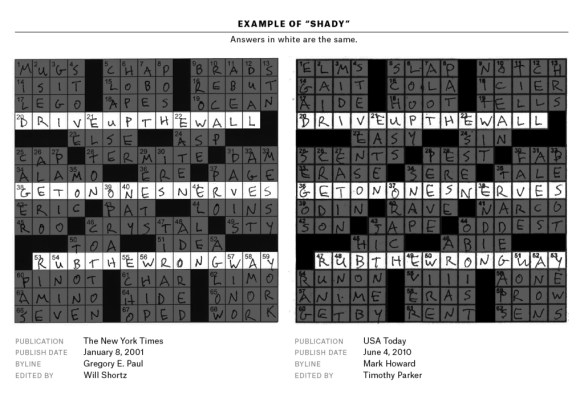
For the uninitiated, Timothy Parker was the crossword editor for Universal’s syndicated puzzle and USA Today, both of which are owned by Universal Uclick. He touted himself as “America’s most solved crossword constructor.”

And almost four years ago, devastating accusations of plagiarism emerged regarding Parker’s conduct as a crossword editor. In a story broken by FiveThirtyEight.com, more than 60 puzzles were flagged for suspicious patterns of repeated entries, grids, and clues with previously published puzzles in The New York Times and other outlets. (Hundreds more showed some level of repetition.)

crossword-finals-shady

Additionally, a pattern of puzzles re-published under fake names or Parker’s name — rather than the name of the actual constructor who submitted the puzzle — also emerged.

In response — eventually — Universal Uclick released a statement that Parker “agreed to temporarily step back from any editorial role for both USA Today and Universal Crosswords.” The company later confirmed “some” of the allegations against Parker, and he was placed on a three-month leave of absence. He was soon removed as editor for the USA Today crossword. (The question of whether he was still employed by Universal Uclick would linger for years to come.)

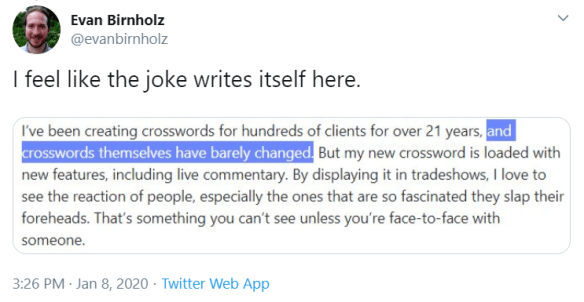
After all the kerfuffle, Parker seemingly vanished. Except for the occasional joke on Twitter (or scathingly clever puzzle) referencing the story, that was it.

parkerplag

[Image courtesy of Evan Birnholz.]

Until last week, that is.

In a promotional article on ExpoTor, Parker touted the strength and drawing power of his puzzle brand, taking the opportunity not only to toot his own horn, but to settle a few old scores.

From the article:

Thirdly, be aware of snakes in the grass. As you get more and more successful, there will be more and more snakes slithering around trying to degrade your work in hopes of boosting theirs. This is common in any industry but is particularly relevant in my industry. I once had a D-list constructor for the Washington Post actually convince a gullible major newspaper reporter that one of my family-oriented crossword themes contained a secret “rape” joke.

This preposterous and asinine assumption was then actually written up by a reporter who stated I had “hidden” a rape joke in my crosswords. Having a G-rated, family-oriented brand for 21 years, this could have been devastating to the brand. But in my case, solvers who have known my work for years came to my rescue, and not only chastised the D-list constructor responsible for this nonsense but also the reporter as well. The article stayed up for a couple of hours and was quickly removed.

Both the supposed “D-list constructor” and the supposed “gullible major newspaper reporter” gladly identified themselves, pointing out that the article — you know, the one that was quickly removed back in 2017? — is still up on HuffPost today.

chloroformgrid

[Image courtesy of Huffpost.]

As for the secret rape joke, the grid contained the message “PSST HEY DOES THIS OLD RAG SMELL LIKE CHLOROFORM TO YOU.” The clue? “Run away from anyone who says this.”

Good lord. That’s about as overt a rape joke as I’ve ever seen that didn’t actually include the word “rape.”

Parker concludes the point with “The lesson learned here is rivals are rarely an asset to your brand.” You’d think a better lesson to learn — other than “don’t make offensive comments the centerpiece of your crossword” — would be “Don’t waste time in the middle of a promotional pitch grinding an ax that makes you look petty, incompetent, and insensitive.”

scratching-head

[Image courtesy of biaphysio.]

Now, fellow puzzler, you might very well be asking yourself, “why waste blog post space on a topic like this?” That’s a fair question.

But I think it’s important to identify and call out problematic members of a community. Parker has never once admitted any fault or claimed any responsibility for the plagiarism scandal years ago. He has never apologized to the hardworking constructors whose work was stolen and/or reused without credit.

And for him to make such snide comments about another constructor — a well-respected one, I might add, with vastly higher standards for what constitutes a quality puzzle — reflects poorly on the entire field.

It’s been my privilege to meet and interact with dozens of top-flight constructors and puzzle editors. And the vast majority of them are good people, Evan included. They’re decent, creative, often brilliant, and frequently incredibly supportive of their fellow constructors.

Meanwhile, Parker claims that “Timothy Parker Crosswords is a brand that’s known worldwide.” That’s true, though DeLorean and Ponzi are also brands known worldwide.

Thankfully, USA Today and Universal Crosswords (part of Andrews McMeel Syndication) are both in more capable, reliable, and honest hands, being edited by Erik Agard and David Steinberg, respectively.

Here’s hoping the trend toward editors who support and respect both their fellow constructors and the crossword audience continues onward into 2020 and beyond.


Thanks for visiting PuzzleNation Blog today! Be sure to sign up for our newsletter to stay up-to-date on everything PuzzleNation!

You can also share your pictures with us on Instagram, friend us on Facebook, check us out on TwitterPinterest, and Tumblr, and explore the always-expanding library of PuzzleNation apps and games on our website!