A Barrage of Brain Teasers!

[Image courtesy of SharpBrains.com.]

One of our favorite pastimes here on PuzzleNation Blog is cracking brain teasers. From riddles to logic problems, we accept challenges from all comers, be they TV detectives or fellow PuzzleNationers!

I got an email a few days ago from a reader who needed help unraveling a few brain teasers from a list she found online. She was proud to have solved most of them, but a few had eluded her.

We’re always happy to assist a fellow puzzler, so let’s take a look at those brain teasers!


In case you want to try them for yourself before we reveal the answers and how to solve each puzzle, I’ll list the original puzzles here and put a nice spoiler-safe break between the questions and the answers.

QUESTION 1: If you have a 7-minute hourglass and an 11-minute hourlass, how can you boil an egg for exactly 15 minutes?

QUESTION 2: Name the next number in the following sequence: 1, 11, 21, 1211, 111221, 312211, _____.

QUESTION 3: Four people want to cross a river, but the only option is a narrow bridge. The bridge can only support two people at a time. It’s nighttime, and the group has one torch, which they’ll need to use every time they cross the bridge. Person A can cross the bridge in 1 minute, Person B in 2 minutes, Person C in 5 minutes, and Person D in 8 minutes. When two people cross the bridge together, they must move at the slower person’s pace. Can all four get across the bridge in 15 minutes or less?

QUESTION 4: During a recent census, a man told a census taker that he had three children. When asked their ages, he replied, “The product of their ages is 72. The sum of their ages is the same as my house number.” The census taker ran to the man’s front door and looked at the house number. “I still can’t tell,” she complained. The man replied, “Oh, that’s right, I forgot to tell you that the oldest one likes chocolate pudding.” The census taker then promptly wrote down the ages of all three children. How old are they?

QUESTION 5: There are five bags of gold that all look identical, and each contains ten gold pieces. One of the five bags has fake gold, though. All five bags are identical, and the real gold and fake gold are identical in every way, except the pieces of fake gold each weigh 1.1 grams and the pieces of real gold each weigh 1 gram. You have a perfectly accurate digital scale available to you, but you can only use it once. How do you determine which bag has the fake gold?


[Image courtesy of AwesomeJelly.com.]

Okay, here’s your spoiler alert warning before we start unraveling these brain teasers.

So if you don’t want to see them, turn away now!

Last chance!

Ready? Okay, here we go!


[Image courtesy of Just Hourglasses.com.]

QUESTION 1: If you have a 7-minute hourglass and an 11-minute hourlass, how can you boil an egg for exactly 15 minutes?

A variation on the two jugs of water puzzle we’ve covered before, this puzzle is basically some simple math, though you need to be a little abstract with it.

  • Step 1: Start boiling the egg and flip over both hourglasses.
  • Step 2: When the 7-minute hourglass runs out, flip it over to start it again. (That’s 7 minutes boiling.)
  • Step 3: When the 11-minute hourglass runs out, the 7-minute hourglass has been running for 4 minutes. Flip it over again. (That’s 11 minutes boiling.)
  • Step 4: When the 7-minute hourglass runs out, another 4 minutes has passed, and you’ve got your 15 minutes of egg-boiling time.

QUESTION 2: Name the next number in the following sequence: 1, 11, 21, 1211, 111221, 312211, _____.

The answer is 13112221. This looks like a math or a pattern-matching puzzle, but it’s far more literal than that.

Each subsequent number describes the number before it. 11, for instance, isn’t eleven, it’s one one, meaning a single one, representing the number before it, 1.

The third number, 21, isn’t twenty-one, it’s “two one,” meaning the previous number consists of two ones, aka 11.

The fourth number, 1211, translates to “one two, one one,” or 21. The fifth number, 111221, becomes “one one, one two, two one.” And the sixth, 312211, becomes “three one, two two, one one.”

So, the number we supplied, 13112221, is “one three, one one, two two, two one.”


[Image courtesy of Do Puzzles.]

QUESTION 3: Four people want to cross a river, but the only option is a narrow bridge. The bridge can only support two people at a time. It’s nighttime, and the group has one torch, which they’ll need to use every time they cross the bridge. Person A can cross the bridge in 1 minute, Person B in 2 minutes, Person C in 5 minutes, and Person D in 8 minutes. When two people cross the bridge together, they must move at the slower person’s pace. Can all four get across the bridge in 15 minutes or less?

Yes, you can get all four across the bridge in 15 minutes.

This one’s a little tougher, because people have to cross the bridge in both directions so that the torch remains in play. Also, there’s that pesky Person D, who takes so long to get across.

So what’s the most time-efficient way to get Person D across? You’d think it would be so send D across with Person A, so that way, you lose 8 minutes with D, but only 1 minute going back with the torch with A. But that means only 6 minutes remain to get A, B, and C across. If you send A and C together, that’s 5 minutes across with C, and 1 minute back with A, and there’s your 15 minutes gone, and A and B aren’t across.

So the only logical conclusion is to send C and D across together. That’s 8 minutes down. But if you send C back down, that’s another 5 minutes gone, and there’s no time to bring A, B, and C back across in time.

So, C and D have to cross together, but someone faster has to bring the torch back. And suddenly, a plan comes together.

  • Step 1: A and B cross the bridge, which takes 2 minutes. A brings the torch back across in 1 minute. Total time used so far: 3 minutes.
  • Step 2: C and D cross the bridge, which takes 8 minutes. B brings the torch back across in 2 minutes. Total time used so far: 13 minutes.
  • Step 3: A and B cross the bridge again, which takes 2 minutes. Total time used: 15 minutes.

(It technically doesn’t matter if A returns first and B returns second or if B returns first and A returns second, so long as they are the two returning the torch.)


QUESTION 4: During a recent census, a man told a census taker that he had three children. When asked their ages, he replied, “The product of their ages is 72. The sum of their ages is the same as my house number.” The census taker ran to the man’s front door and looked at the house number. “I still can’t tell,” she complained. The man replied, “Oh, that’s right, I forgot to tell you that the oldest one likes chocolate pudding.” The census taker then promptly wrote down the ages of all three children. How old are they?

Their ages are 3, 3, and 8.

Let’s pull the relevant information from this puzzle to get started. There are three children, and the product of their ages is 72.

So let’s make a list of all the three-digit combinations that, when multiplied, equal 72: 1-1-72, 1-2-36, 1-3-24, 1-4-18, 1-6-12, 1-8-9, 2-2-18, 2-3-12, 2-4-9, 2-6-6, 3-3-8, 3-4-6. We can’t eliminate any of them, because we don’t know how old the man is, so his children could be any age.

But remember, after being told that the sum of the children’s ages is the same as the house number, the census taker looks at the man’s house number, and says, “I still can’t tell.” That tells us that the sum is important.

Let’s make a list of all the sums of those three-digit combinations: 74, 39, 28, 23, 19, 18, 22, 17, 15, 14, 14, 13.

The census taker doesn’t know their ages at this point. Which means that the sum has multiple possible combinations. After all, if there was only one combination that formed the same number as the house number, the census taker would know.

And there is only one sum that appears on our list more than once: 14.

So the two possible combinations are 2-6-6 and 3-3-8.

The chocolate pudding clue is the deciding fact. The oldest child likes chocolate pudding. Only 3-3-8 has an oldest child, so 3-3-8 is our answer.


[Image courtesy of Indy Props.com.]

QUESTION 5: There are five bags of gold that all look identical, and each contains ten gold pieces. One of the five bags has fake gold, though. All five bags are identical, and the real gold and fake gold are identical in every way, except the pieces of fake gold each weigh 1.1 grams and the pieces of real gold each weigh 1 gram. You have a perfectly accurate digital scale available to you, but you can only use it once. How do you determine which bag has the fake gold?

With only one chance to use the scale, you need to maximize how much information you can glean from the scale. That means you need a gold sample from at lesst four bags (because if they all turn out to have real gold, then the fifth must be fake). But, for the sake of argument, let’s pull samples from all five bags.

How do we do this? If we pull one coin from each bag, there’s no way to distinguish which bag has the fake gold. But we can use the variance in weight to our advantage. That .1 difference helps us.

Since all the real gold will only show up before the decimal point, picking a different number of coins from each bag will help us differentiate which bag has the fake gold, because the number after the decimal point will vary.

For instance, if you take 1 coin from the first bag, 2 coins from the second, 3 coins from the third, 4 coins from the fourth, and 5 coins from the fifth, you’re covered. If the fake gold is in the first bag, your scale’s reading will end in .1, because only one coin is off. If the fake gold is in the second bag, your scale’s reading will end in .2, because two coins are off. And so on.


Thanks for visiting PuzzleNation Blog today! Be sure to sign up for our newsletter to stay up-to-date on everything PuzzleNation!

You can also share your pictures with us on Instagram, friend us on Facebook, check us out on TwitterPinterest, and Tumblr, and explore the always-expanding library of PuzzleNation apps and games on our website!

The September Deluxe Puzzle Set has arrived!

September is here, Labor Day is around the corner, school is back in session, and we’re celebrating the way we know best: by launching a new puzzle set for the Penny Dell Crosswords App!

Our September Deluxe puzzle set just launched for both iOS and Android users, and it offers the quality solving experience you’ve come to expect from PuzzleNation!

Add some puzzly fun to your long weekend by indulging in this marvelous puzzle bundle, designed for any skill level!

Offering 30 easy, medium, and hard puzzles, plus 5 September-themed bonus puzzles to delight solvers of all skill levels, the September Deluxe puzzle set is the perfect activity for a quiet moment, now that the kids are back in school, or a relaxing few minutes on the porch!

But that’s not all!

That’s right, double down on puzzle goodness with the September Deluxe Combo! That’s 70 puzzles, including September-themed bonus crosswords for your puzzly pleasure!

But maybe you need more! Maybe, just maybe, you’re hungry for more puzzles. And if you want the most bang for your buck, we’ve got you covered with the September Deluxe Bundle! That’s 105 puzzles, three times the crafty clues and cagey crosswords, ready for you to solve!

You can’t go wrong with these awesome deals! PuzzleNation is dedicated to bringing you the best puzzle-solving experience available, with world-class puzzles right in your pocket, ready to go at a moment’s notice! That’s the PuzzleNation guarantee.

Happy solving everyone!


Thanks for visiting PuzzleNation Blog today! Be sure to sign up for our newsletter to stay up-to-date on everything PuzzleNation!

You can also share your pictures with us on Instagram, friend us on Facebook, check us out on TwitterPinterest, and Tumblr, and explore the always-expanding library of PuzzleNation apps and games on our website!
A PuzzleNation Anniversary Scavenger Hunt!

[Image courtesy of ClipArt Panda.]

On Tuesday, I waxed nostalgic on the five-year anniversary of PuzzleNation Blog and all the amazing, curious, puzzly adventures we’ve shared.

So when it came time to conjure up an idea to celebrate the day in question, I wanted to do something appropriately puzzly.

And I think I’ve got it.

I have five trivia questions for you. The answers to all five have been featured in some of the most popular, most shared, most visited posts in the history of the blog.

Consider this a trivia scavenger hunt, and the blog is your realm to explore. (Though there will be clues on where to begin your search.)

Answer all five questions AND include links to the posts in which you found the answers, and you’ll be in the running to win a terrific prize in honor of our five-year bloggiversary!

So, without further ado, let’s get to it!


[Image courtesy of Alaris Health.]

PuzzleNation Anniversary Trivia Scavenger Hunt

1.) One of my favorite recurring features is Puzzles in Pop Culture, where I explore puzzly moments in television, film, and literature. We’ve discussed Sherlock, Hell’s Kitchen, and even Gilmore Girls in installments of Puzzles in Pop Culture.

Question: How do you solve the four gallons of water puzzle?

2.) You can’t talk about puzzles without also discussing games, because there’s so much overlap between the two. Game reviews from a puzzle solver’s perspective have become a part of the fabric of PuzzleNation Blog, as has creating your own puzzles and games from scratch.

Question: What’s the name of the DIY game that only requires a bunch of identical blank pieces of paper (like index cards) and something to write with?

3.) Naturally, if you’re going to talk puzzles, Sudoku is going to be part of the conversation sooner rather than later. We’ve not only explored the history of Sudoku here, but we’ve been a part of it, debuting brand-new Sudoku variants created by topnotch constructors.

Question: What do you call two overlapping Samurai Sudoku?

4.) A fair amount of puzzle history, both past and present, has been covered here over the last five years. We’ve examined cryptography in the American Revolution, the Civil War, both World Wars, and beyond. We’ve celebrated the one-hundredth anniversary of the crossword. And we’ve even discussed scandals in the puzzle world.

Question: What are the names of the programmer and crossword constructor who first uncovered the curious pattern of puzzle repetition in USA Today and Universal Uclick puzzles that eventually led to the ouster of Timothy Parker?

5.) In the Internet age, memes and fads appear and disappear faster than ever. A picture or a joke or a news story can sweep the world in a matter of hours, and then vanish forever. On a few occasions, the Internet has become obsessed with certain optical illusions, and we’ve done our best to analyze them from a puzzler’s perspective.

Question: The creators of The Dress appeared on what talk show to put the mystery to bed once and for all?


Our Trivia Scavenger Hunt will run until midnight EST next Wednesday, August 23rd. You can submit your answers (plus links) in the comment section here, or contact us on any of our social media platforms: Facebook, Twitter, Instagram, wherever!

Good luck, and happy puzzling!


Thanks for visiting PuzzleNation Blog today! Be sure to sign up for our newsletter to stay up-to-date on everything PuzzleNation!

You can also share your pictures with us on Instagram, friend us on Facebook, check us out on TwitterPinterest, and Tumblr, and explore the always-expanding library of PuzzleNation apps and games on our website!
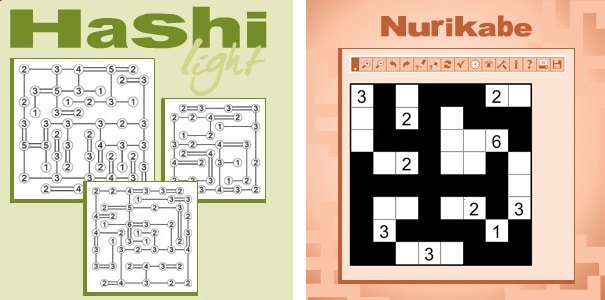
A different way to puzzle: the Norway way!

Puzzles are a truly global phenomenon, and it’s always fun to explore how other countries tackle classic puzzle styles and designs.

In the past, we’ve looked at German puzzle magazines, Spanish puzzle magazines, Sudoku books in Russian, French, and Japan, and we’ve even embarked on a global tour of Logic Art puzzles from all over.

In today’s post, we add Norway to the list as we check out a Norwegian puzzle book. (Thank you to friend of the blog Amy Roth for sharing this gem with us!)

As you can see, in many European-style crosswords (including these), the clues are placed right into the grid itself, rather than being offset and gathered in one place. Couple this with the intriguing arrow paths roaming throughout the grids, and you’ve got some tight, crafty construction.

But crosswords aren’t the only kind of puzzle to get the Norwegian treatment. Here, a Quotagram and a Bull’s-Eye Spiral take a trip through the Google Translator and come out the other side ready to be solved.

Thankfully, some puzzles remain universally solvable no matter what language you’re in. A Framework-style Fill-in and a Word Search with Scandinavian origins can both be cracked with relative ease.

And there you have it! This Norwegian puzzle book shows not only the endless variations in puzzle design and construction across countries, but surprising similarities as well.

I hope you enjoyed this little glimpse into the world of foreign puzzle books! If you’d like to see more posts like this, let us know in the comments section below!


Thanks for visiting PuzzleNation Blog today! Be sure to sign up for our newsletter to stay up-to-date on everything PuzzleNation!

You can also share your pictures with us on Instagram, friend us on Facebook, check us out on TwitterPinterest, and Tumblr, and explore the always-expanding library of PuzzleNation apps and games on our website!
Puzzle(r)s in Pop Culture: Superhuman

Superhuman is a television show on FOX that combines elements of game shows and talent shows, wherein people with exceptional mental abilities are tested on the air, competing for a $50,000 grand prize.

The show has featured exhibitions of memorization, visual acuity, math and puzzling skills, and more, offering people the rare opportunity to show off the mind’s amazing capabilities. (It also bucks the trend of modern reality competition shows by not having the contestants judged by a smug British man.)

Actor Kal Penn hosts the show, and the three panelists who comment on performances and help choose the winner are boxer Mike Tyson, singer Christina Milian, and neuroscientist Dr. Rahul Jandial.

And on last week’s episode, “All Parts Extraordinary,” a face familiar to puzzlers and crossword fans appeared on the show: Tyler Hinman.

The former 5-time American Crossword Puzzle Tournament champion was pitted against four other contestants with impressive mental abilities.

Chris Authement, a math whiz, was tasked with adding up all the pips on giant dominoes as they fell, correctly counting 535 pips in the time allotted.

Tatiana Marquardt, a mother of three with impressive memory recall, was tasked with memorizing five days of scheduling for three different kids. Each day had four activities. The judges then randomly chose a child and a day of the week, and she had to pack their backpacks for each day’s agenda. And she nailed all three days.

Dave Farrow, a computer scientist with a focus on robots, memorized a grid of 108 blue and red balloons (laid out in an 18×6 grid). Then, based on the judge’s choices, he was asked to recall the color of a particular balloon, the pattern of a particular column of balloons, and finally, a particular row of balloons. Recited backwards. And he did so.

Luke Salava, a lawyer with a knack for facial recognition, had to learn the faces of 100 members of the studio audience. Then, three of those people were removed, and that entire section of the audience was reshuffled. His task was to identify the three new people in the crowd. And he did so with ease.

When it was Tyler’s turn to show off his puzzly skills, he had a serious challenge ahead of him.

This grid of crisscrossing 5-letter words can only be completed with the letters in a 9-letter word provided alongside the grid. But Tyler had five of these grids to solve, and he wasn’t told which of the five 9-letter words went with which grid.

Oh, and he only had 3 minutes and 30 seconds in which to solve all five grids.

He went right up to the wire, but solved all five grids, showing off not only his deductive reasoning, but his vast vocabulary and his speed-solving technique, honed by years of crossword solving and tournament competition.

After all five competitors had their time to shine, the judges narrowed the field to three: Chris, Dave, and Tatiana. And the audience voted electronically for the winner: Dave Farrow, master of balloons.

Honestly, I thought both the judges and the audience picked wrong. Tyler was the only one who really had to work out his technique in front of the crowd, showing missteps and false paths that he corrected on the fly.

He actually talked through the process as he solved, which to me was more engaging and interesting.

Don’t get me wrong, the acts of memorization were very impressive, but only Tyler and math whiz Chris were really under a time limit. (Tyler’s was literal, while Chris’s was kinetic, since the dominoes were toppling.)

Also, I can’t believe that Luke didn’t at least make the top three, let alone win. 100 faces to memorize and reshuffle in your head? That’s mind-boggling to me.

Alas, such is the flying fickle finger of fate. Still, it was a strong showing for a world-class puzzler, an exhibition of puzzly talent that did not fail to impress.


Thanks for visiting PuzzleNation Blog today! Be sure to sign up for our newsletter to stay up-to-date on everything PuzzleNation!

You can also share your pictures with us on Instagram, friend us on Facebook, check us out on TwitterPinterest, and Tumblr, and explore the always-expanding library of PuzzleNation apps and games on our website!
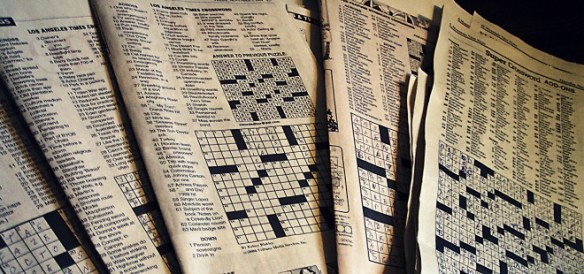
Puzzles in Pop Culture: Twin Peaks: The Return

On Tuesday, I concluded a multi-part series about the history of American codebreaking. In a related story, a fellow puzzler pointed out that there might be a new code out there awaiting an enterprising codebreaker.

In a recent episode of the television show Twin Peaks: The Return, there was a brief scene with an airplane flying over a snowy mountain. Sharp-eyed viewers noticed that the plane’s windows seemed to disappear and reappear as it flew.

Naturally, when you have a show that’s all about trying to unravel mysteries and finding deeper meaning in even the most obscure clues, fans leapt onto this possibility and began trying to crack the code of the windows.

There are six windows, and they disappear and reappear numerous times in the brief scene. (There’s also a spot closer to the tail that also appears and disappears.)

[One solver’s breakdown of the plane window pattern.]

Charting out a possible pattern in the windows has led to several intriguing theories. While attempts to translate the pattern into morse code, binary, and other languages have yielded nothing so far, some fans posit that it’s a musical pattern, since one of the characters, FBI agent Gordon Cole, plays a 6-hole flute. (A villain from the original series, Windom Earle, also played a flute.)

While this may simply be a red herring, I suspect there’s more to the window mystery than just providing a distraction in a show littered with distractions.

People have gone so far as to track down the original footage of the plane flying, so they can see what was altered to produce the window pattern:

What do you think, PuzzleNationers? Is there a message or a tune lurking in plain sight on Twin Peaks: The Return? Or is this much ado about nothing?


Thanks for visiting PuzzleNation Blog today! Be sure to sign up for our newsletter to stay up-to-date on everything PuzzleNation!

You can also share your pictures with us on Instagram, friend us on Facebook, check us out on TwitterPinterest, and Tumblr, and explore the always-expanding library of PuzzleNation apps and games on our website!