A different way to puzzle: the Norway way!

Puzzles are a truly global phenomenon, and it’s always fun to explore how other countries tackle classic puzzle styles and designs.

In the past, we’ve looked at German puzzle magazines, Spanish puzzle magazines, Sudoku books in Russian, French, and Japan, and we’ve even embarked on a global tour of Logic Art puzzles from all over.

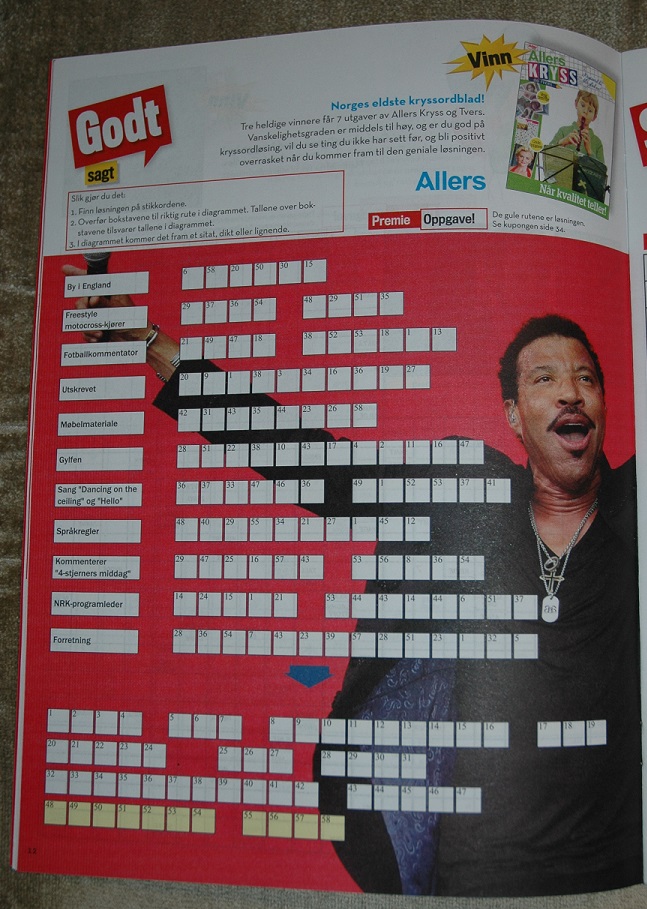
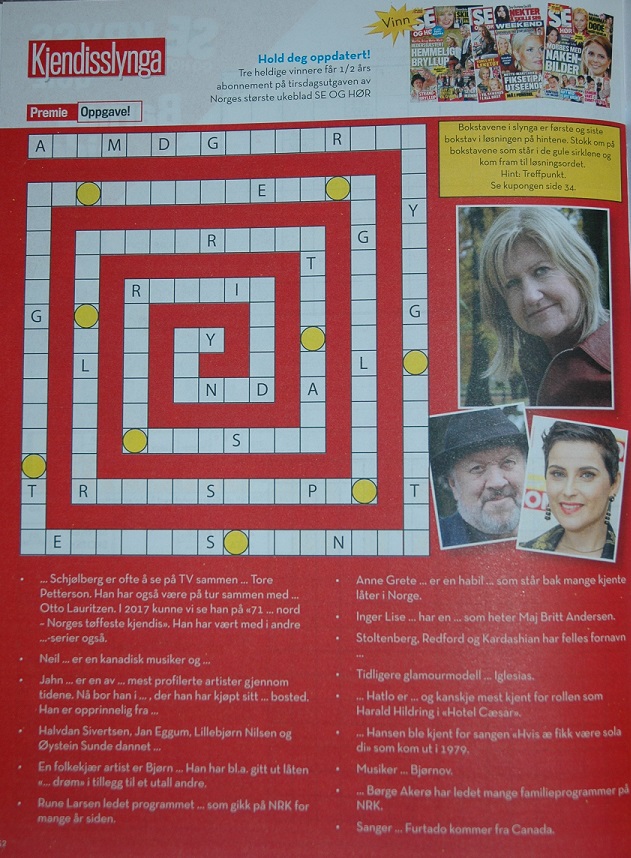
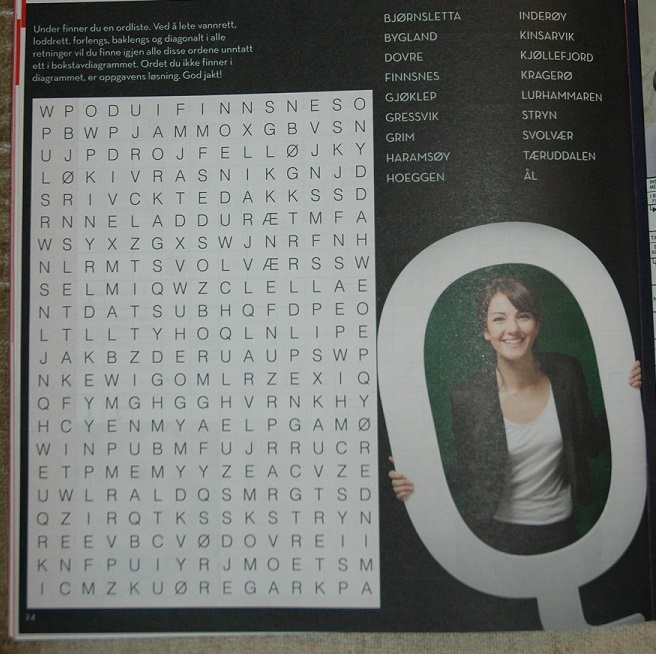
In today’s post, we add Norway to the list as we check out a Norwegian puzzle book. (Thank you to friend of the blog Amy Roth for sharing this gem with us!)

As you can see, in many European-style crosswords (including these), the clues are placed right into the grid itself, rather than being offset and gathered in one place. Couple this with the intriguing arrow paths roaming throughout the grids, and you’ve got some tight, crafty construction.

But crosswords aren’t the only kind of puzzle to get the Norwegian treatment. Here, a Quotagram and a Bull’s-Eye Spiral take a trip through the Google Translator and come out the other side ready to be solved.

Thankfully, some puzzles remain universally solvable no matter what language you’re in. A Framework-style Fill-in and a Word Search with Scandinavian origins can both be cracked with relative ease.

And there you have it! This Norwegian puzzle book shows not only the endless variations in puzzle design and construction across countries, but surprising similarities as well.

I hope you enjoyed this little glimpse into the world of foreign puzzle books! If you’d like to see more posts like this, let us know in the comments section below!


Thanks for visiting PuzzleNation Blog today! Be sure to sign up for our newsletter to stay up-to-date on everything PuzzleNation!

You can also share your pictures with us on Instagram, friend us on Facebook, check us out on TwitterPinterest, and Tumblr, and explore the always-expanding library of PuzzleNation apps and games on our website!

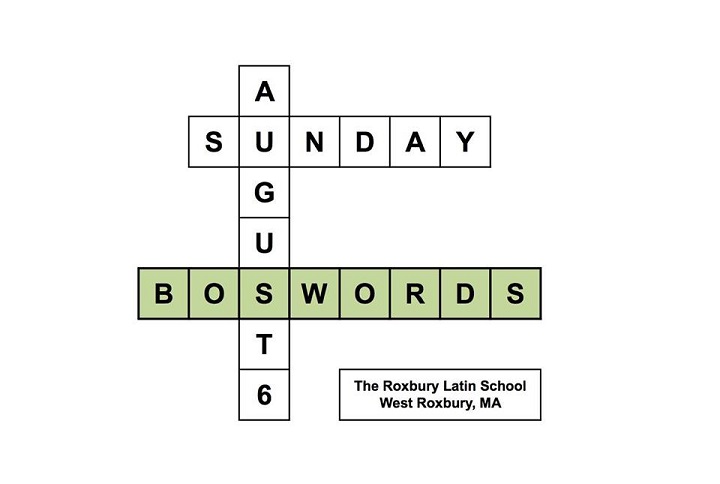
The BosWords Crossword Tournament This Weekend!

This Sunday, August 6, from noon to 5 PM, puzzlers from all over will gather at The Roxbury Latin School in West Roxbury, Massachusetts for the inaugural edition of the BosWords Tournament!

With three divisions to choose from — Expert, Amateur, and Pairs — puzzlers of all ages and experience levels will have the opportunity to test their puzzly wits.

The four themed puzzles in regular competition have been constructed by Laura Braunstein, Andrew Kingsley, John Lieb, Joon Pahk, and Brendan Emmett Quigley, and after the scores from those puzzles are tabulated, a championship themeless crossword by David Quarfoot awaits the top three solvers in each division!

BosWords is asking for $20 for adults and $10 for students to attend and compete, which is a real bargain!.

You can check out their Facebook page for full details!

Will you be attending the BosWords tournament, fellow puzzlers and PuzzleNationers? Let us know! We’d love to hear from you!


Thanks for visiting PuzzleNation Blog today! Be sure to sign up for our newsletter to stay up-to-date on everything PuzzleNation!

You can also share your pictures with us on Instagram, friend us on Facebook, check us out on TwitterPinterest, and Tumblr, and explore the always-expanding library of PuzzleNation apps and games on our website!

Puzzles Endanger, Then Save, a Nation: The Spy Who Couldn’t Spell

While working on our multi-part series of posts about the history of codebreaking in America during the 20th century, I mentioned that some of the recent revelations about the National Security Agency were the result of Edward Snowden’s actions during his time as a government contractor.

What you might not know is that he has not been the only contractor to sneak information off of government computers in that fashion: a decade before Edward Snowden, there was Brian Patrick Regan.

Regan was a career soldier in the Air Force who eventually reached the rank of Master Sergeant and worked in signals intelligence.

Buried under hundreds of thousands of dollars in credit card debt, Regan decided his only way out of financial ruin was to try to sell US government secrets to a foreign government. He copied page after page of sensitive documents from national defense systems and snuck them out of his office, eventually amassing more than 15,000 pages, CD-ROMs, and other material in his home.

He would later bury bundles of these documents in various locations, including state parks, concealing the GPS coordinates of these valuables caches through a complicated series of encryptions where letters and numbers became three-digit sets.

You see, Regan had spent a fair amount of time studying cryptography, and fancied himself a top-shelf codemaster.

Regan used another set of encryptions of lesser complexity when he attempted to contact agents of the Libyan, Iraqi, and Chinese governments in order to sell off the treasure trove of secrets he’d amassed during his time at the National Reconnaissance Office.

One of these packets — a collection of three parcels intended for Libya — ended up in the hands of an FBI agent named Steven Carr.

From The Spy Who Couldn’t Spell by Yudhijit Bhattacharjee:

In the first envelope was a four-page letter with 149 lines of typed text consisting of alphabets and numbers. The second envelope included instructions on how to decode the letter. The third envelope included two sets of code sheets.

One set contained a list of ciphers. The other, running to six pages, listed dozens of words along with their encoded abbreviations: a system commonly known as brevity codes. Together, the two sets were meant to serve as the key for the decryption.

Some of the document had already been decrypted by FBI agents, and it revealed a member of the US intelligence community — claiming to be CIA, which was unverified, but definitely someone with top secret access — was trying to sell government secrets.

And this person had terrible spelling.

Brian Patrick Regan suffered from severe dyslexia. And, despite concerted efforts to perfect both his encryptions and his plan to net millions by selling government secrets, that dyslexia would be one of the clues that led Steven Carr to Regan’s doorstep.

It took Carr six months to connect Regan to the Libyan package, but once he did, surveillance on Regan began immediately.

When Regan attempted to board a plane to Zurich in 2001 — intending to meet with Iraqi and Libyan embassy officials — he was nabbed by the FBI and taken into custody.

Again, excerpted from The Spy Who Couldn’t Spell:

On searching Regan, officials found a piece of paper tucked between the inner and outer soles of his right shoe, on which were written addresses of Iraqi and Chinese embassies in Europe. The other materials they found on him and in his belongings were more mystifying. In a trouser pocket, Regan was carrying a spiral pad containing a page with 13 words that didn’t add up to anything: like tricycle, rocket and glove.

He had another 26 random words scribbled on an index card. Among the contents of Regan’s wallet was a piece of paper with a string of letters and numbers that read “5-6-N-V-O-A-I …” And in a folder he was carrying in his duffel bag were four sheets with handwritten lines of three-digit numbers.

FBI cryptanalyst Daniel Olson decoded some of the messages found on Regan when he was captured, but he had failed to unravel the multi-stage encryptions that concealed where Regan had buried his secret parcels. The government knew which state parks, but with acres and acres of possible hiding places, they needed more precise information.

And those parcels were the key, because they weren’t just packages to be sold to the highest bidder. No, those parcels doubled as a ransom in order to secure a better deal for himself with the US government. He wanted to blackmail the government for a reduced sentence.

They were his insurance plan.

As Thomas G. West said in Seeing What Others Cannot See, a book about visual thinking and dyslexia, “It’s not hard for a dyslexic to think ‘out of the box’ because they have never been in the box.”

Thankfully, Regan eventually realized that cooperation was in his best interest, and he revealed that each of the elaborate three-digit codes concealed a backdoor key built into the code itself.

Regan designed them this way so that, if he forgot the actual details of the encryption, all he would need is the starter word, a spark that would unlock the built-in key and help him decode the entire message.

This backdoor key system worked in a similar fashion to the Vigenere cipher, where a keyword or key phrase served as the entry point for a longer string of encrypted text. The trouble is… you need to know the cipher word or source in order to crack the code.

For example, during World War II, German agents in Europe used Daphne du Maurier’s Rebecca as the basis of a code for transmitting intelligence from Cairo to support a campaign by the Axis powers against the Allies in North Africa.

The discovery of the book among the possessions of two German radio operators who didn’t read English ultimately led to the breaking of the code, which in turn led to the capture of the German spies in Cairo.

Regan revealed the cipher words for the various hiding spots in state parks — which used cipher words from sources as peculiar as Regan’s own high school yearbook — and soon, the FBI recovered all but one of the buried parcels.

But Regan couldn’t remember the cipher word for the last one.

Daniel Olson would then step in, having learned some of Regan’s techniques as they uncovered the other parcels, and partially decrypting the remaining message enough to spark Regan’s memory. Regan finally came up with the last cipher key, and the final parcel was recovered.

Yes, once again, puzzly perseverance had saved the day!

Regan was found guilty on two counts of attempted espionage and one of gathering national defense information, and sentenced to life imprisonment with parole. Which, quite honestly, is getting off easy, considering that prosecutors were seeking the death penalty for his treasonous acts. (If prosecutors had gotten their way, he would’ve been the first person executed for espionage since the Rosenbergs in the ’50s.)

For the full story, including more in-depth explanations of Regan’s elaborate encryptions, check out The Spy Who Couldn’t Spell by Yudhijit Bhattacharjee.


Thanks for visiting PuzzleNation Blog today! Be sure to sign up for our newsletter to stay up-to-date on everything PuzzleNation!

You can also share your pictures with us on Instagram, friend us on Facebook, check us out on TwitterPinterest, and Tumblr, and explore the always-expanding library of PuzzleNation apps and games on our website!

The August Deluxe Puzzle Set Has Arrived!

It’s August 1st, and we’re celebrating the way we know best: by launching a new puzzle set for the Penny Dell Crosswords App!

Our August Deluxe puzzle set just launched for both iOS and Android users, and it’s one of our best yet!

Summer’s not over yet! Make the most of it and indulge in this marvelous puzzle bundle, designed for any skill level!

Offering 30 easy, medium, and hard puzzles, plus 5 August-themed bonus puzzles to delight solvers of all skill levels, the August Deluxe puzzle set is the perfect activity for a casual moment on the porch or a day at the beach!

But that’s not all!

That’s right, double down on puzzle goodness with the August Deluxe Combo! That’s 70 puzzles, including August-themed bonus crosswords for your puzzly pleasure!

But maybe you need more! Maybe you want the most bang for your buck! If so, we’ve got you covered with the August Deluxe Bundle! That’s 105 puzzles, three times the crossword content and clever cluing, loaded and ready for you to solve!

You can’t go wrong with these awesome deals! PuzzleNation is dedicated to bringing you the best puzzle-solving experience available, with world-class puzzles right in your pocket, ready to go at a moment’s notice! That’s the PuzzleNation guarantee.

Happy solving everyone!


Thanks for visiting PuzzleNation Blog today! Be sure to sign up for our newsletter to stay up-to-date on everything PuzzleNation!

You can also share your pictures with us on Instagram, friend us on Facebook, check us out on TwitterPinterest, and Tumblr, and explore the always-expanding library of PuzzleNation apps and games on our website!

Special offer on July Deluxe Puzzle sets!

Hello puzzlers and PuzzleNationers!

We interrupt your hopefully mellow, relaxing, and enjoyable Sunday with some puzzly news!

It’s the end of July, so we’re offering a terrific discount on the July Deluxe Puzzle Sets for the Penny Dell Crosswords App!

Prices have been slashed on our July Deluxe Set, July Deluxe Combo, and July Deluxe Bundle! You get easy, medium, and hard puzzles, plus bonus July-themed puzzles!

This offer is only available for a short time, and with in-app purchasing, you’re just a few clicks away from brand-new puzzle delights!

You can’t go wrong with quality puzzle bundles like this! Snap them up today!


Thanks for visiting PuzzleNation Blog today! Be sure to sign up for our newsletter to stay up-to-date on everything PuzzleNation!

You can also share your pictures with us on Instagram, friend us on Facebook, check us out on TwitterPinterest, and Tumblr, and explore the always-expanding library of PuzzleNation apps and games on our website!

Farewell, @midnight…

For a couple of years now, we’ve been doing monthly puzzle-themed hashtag games with our pals at Penny Dell Puzzles.

In fact, just last week, we collected and shared all of the responses to our #PennyDellPuzzleMyth hashtag game that combined the names of puzzles from Penny Press and Dell Magazines with various characters and storylines from famous mythical traditions, like Greek, Roman, and Norse mythology.

We’re far from the only ones who play such games online. Hashtag games or hashtag wars are an immensely popular pastime on Twitter, often encouraged by comedy bloggers or pun-based game companies like our friends at Galactic Sneeze, who created Schmovie.

But, when it comes to hashtag games, most if not all of them can be traced back to one interactive television show: @midnight with Chris Hardwick.

This Comedy Central show has aired four nights a week for four years (originally at midnight, as the name suggests, then later on at 11:30 pm), and every night, they’ve offered up a new hashtag war to challenge and entertain with.

Not only do the comedians on the show strut their punny stuff during the game, but anyone on Twitter can contribute their best efforts at games like #CarSongs or #AddALetterRuinAMovie.

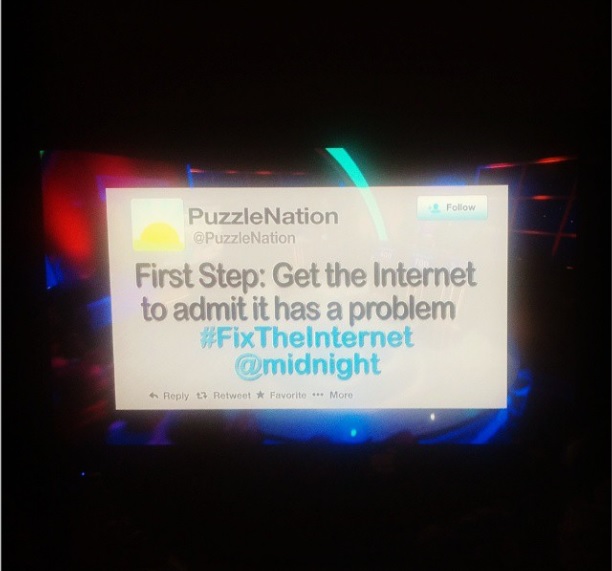
And each show, one of the submissions from those Twitter users is chosen as Tweet of the Day and shared on national television. Which is pretty cool.

Not to brag, but PuzzleNation has won Tweet of the Day not once, but twice, back when we used to participate in hashtag wars on a nightly basis.

And although we don’t indulge our hashtag urges more than once a month, we’re grateful for @midnight, not only for their creativity and humor, but for inspiring us to never stop finding fun, puzzly ways to engage our audience.

Sadly, after four years on the air, @midnight will wrap up their impressive run in the next few weeks. I’m sad to see the show go, because many of my favorite lesser-known comedians got a lot of air time on the show and got to show off their hilarious punny chops.

The show comes to an end on its 600th episode, and it will be missed. Thank you to the cast, crew, and host Chris Hardwick for all their hard work, all their silliness, and all their wit.


Thanks for visiting PuzzleNation Blog today! Be sure to sign up for our newsletter to stay up-to-date on everything PuzzleNation!

You can also share your pictures with us on Instagram, friend us on Facebook, check us out on TwitterPinterest, and Tumblr, and explore the always-expanding library of PuzzleNation apps and games on our website!