Nominees Announced for the World Video Game Hall of Fame!

Rochester, New York is the home of The Strong National Museum of Play, and they have a very important mission: to chronicle the history and importance of play.

Child development, social interaction, imagination… all of these key features in a healthy individual are facilitated by play, and the staff at The Strong help us not only understand that process, but celebrates it by hosting both the National Toy Hall of Fame and the World Video Game Hall of Fame under its brightly-colored umbrella.

As you might have guessed, puzzles and games play a significant role in The Strong’s work, and they’re represented in both Halls of Fame. Clue, Chess, Scrabble, the Rubik’s Cube, and Dungeons & Dragons are all inductees in the National Toy Hall of Fame, while Myst, Tetris, The Oregon Trail, and Where in the World is Carmen Sandiego? are among the puzzlier inductees on the video game side of things.

And The Strong have recently announced the nominees for this year’s class of video games to be inducted in the World Video Game Hall of Fame.
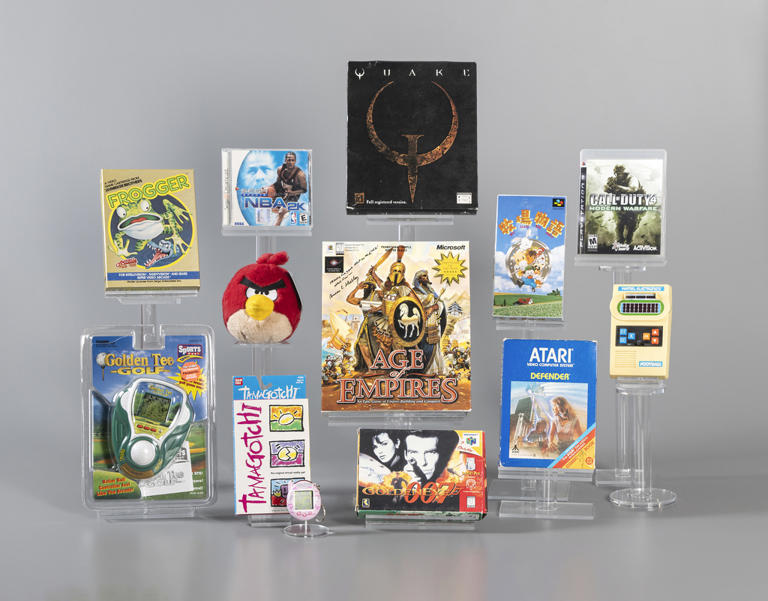
This year’s finalists for the 2025 class run the gamut from 8-bit classes, modern phenomenon, and games that took play to surprising new places, and they represent different genres, play styles, and aspects of gaming across decades.

The 2025 finalists are: Age of Empires, Angry Birds, Call of Duty 4: Modern Warfare, Defender, Frogger, Golden Eye, Golden Tee, Harvest Moon, Mattel Football, Quake, NBA 2K and Tamagotchi.

What a field! Everywhere from arcades (Frogger) to pocket games (Tamagotchi) are on display here, as well as social gaming both in person (Golden Eye) and online (Quake).

The nominees were chosen from thousands of nominations online. The field was then narrowed by staff members at The Strong based on “longevity, geographical reach, and influence on game design and pop culture.” Only a small handful of these finalists will be selected by an international committee of experts as this year’s inductees.
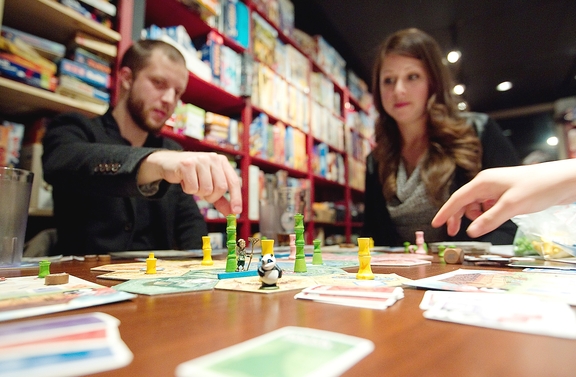
Everyone has an award show that they geek out over, and you’re probably not surprised to discover that these Halls of Fame are two of my favorite awards given out each year. I love seeing deserving games and puzzles get the spotlight they deserve for helping change how we play and interact with each other.

You can check out the full list of National Toy Hall of Fame inductees and World Video Game Hall of Fame inductees at these links. Do yourself a favor and take a stroll through not only your childhood, but the childhoods of generations past. It’s a real treat.

What toys and games would you like to see inducted in the future? Let us know in the comments below!
The First Viral Handheld Puzzle Game?

It’s fair to say that PuzzleNation knows a little something about the world of mobile puzzling. Mobile apps are our bread and butter, after all, and whether you’re talking about our Daily POP Crosswords App or the Penny Dell Crosswords App, we are connoisseurs of puzzles that fit in your pocket.

Of course, puzzle apps are a relatively new addition to the genre. Mobile puzzles, like matchstick puzzles, have existed for centuries.

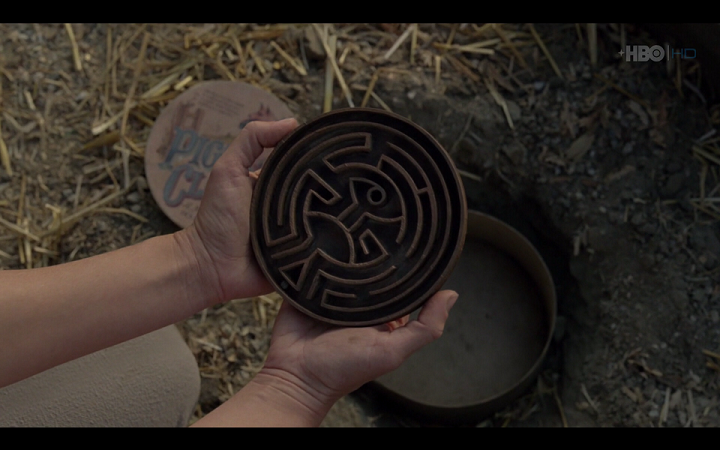
In fact, more than a hundred years ago, a mobile puzzle game went “viral” and became a cultural sensation. (And it has made a recent return to prominence thanks to the HBO drama Westworld.)

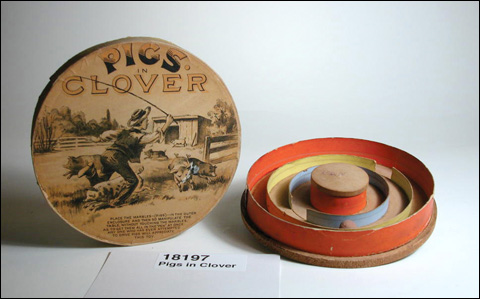
Today, let’s talk about Pigs in Clover.

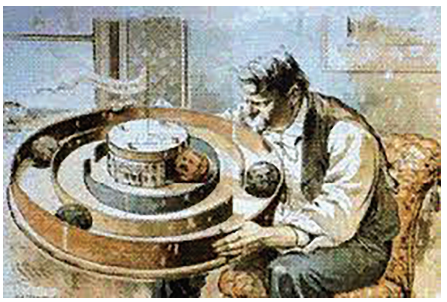
Pigs in Clover is a ball-in-a-maze puzzle invented in 1899 by toymaker Charles Martin Crandall. Although puzzle historians aren’t sure if Pigs in Clover was the first ball-in-a-maze puzzle created, it was definitely the first to capture the imagination of consumers.

You’ve probably solved a ball-in-a-maze puzzle at some point in your life. From the flat disc and labyrinth-inspired models to spherical and more complicated three-dimensional versions, they’re a fun test of both dexterity and strategic thinking.

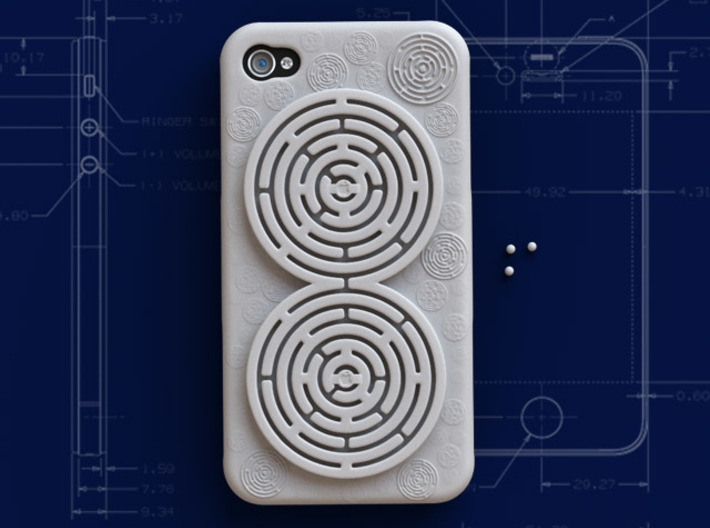
A quick Google image search turns up dozens of variations on the concept, including an iPhone case with two ball-in-a-maze puzzles built into it!

Pigs in Clover was a simpler design, involving only three rings and a center “pen” to herd the “pigs” into. But it’s one that was supposedly so popular upon launch in January of 1889, it impacted the actual operation of the U.S. government.

But how popular was “popular” in 1889?

Well, according to the Waverly Free Press, “The toy works are turning out eight thousand of ‘Pigs in Clover’ a day, and are twenty days behind with their orders.” According to some sources, over a million games were sold by late April 1889!

And one of those games found its way into the hands of William M. Evarts, senator from New York. Depending on the version of events you read, he purchased a copy of Pigs in Clover from either a street vendor or, curiously, an aggressive street fakir.

He then took it home and played with it for hours. At work the next day — and by work, I mean the Senate of the United States — another senator, George Graham Vest, borrowed it and went to the cloak room to try to solve the puzzle game.

Yes, a sitting U.S. senator went and hid in the coats to play this game. It’s sorta like hiding under all the coats at a Christmas party and playing Angry Birds, except in fancier clothing.

Oddly enough, Vest was soon joined in the cloak room by four other senators — Pugh, Eustis, Walthall, and Kenna — who were also interested in trying their hands at the popular game. Apparently, they were too impatient to share Evarts’ copy of the game, since a page was enlisted to go out and buy five more copies of Pigs in Clover for the distracted senators.

Once each had his own game in hand, they engaged in a pig-driving contest. It must’ve been harder than it looks, since it took Vest 30 minutes to herd all of his pigs into the pen.

Yup, at least half an hour of senate business was derailed by a few little metal balls in a cardboard maze. Amazing.

Naturally, the story got out, and a political cartoon in the New York World on March 17th commented on this peculiar delay in President Benjamin Harrison’s agenda, likening the political landscape to the game. With the White House as the pen and various lawmakers as the pigs, the cartoon asked, “Will Mr. Harrison be able to get all these hungry pigs in the official pen?”

It makes you wonder just how many man-hours were lost to Pigs in Clover! After all, a simple game — solved by many — can prove costly.

Remember the Google Doodle in 2010 that allowed you to play Pac-Man? It’s estimated it cost $120 million dollars, and nearly five million hours, in terms of productivity.

Sounds like President Harrison should count himself lucky it was just a half-dozen senators… as far as we know.

[Sources for this article: The Strong Museum of Play, Eli Whitney Museum and Workshop, Le Roy Historical Society, Antique Toy Collectors of America, Wikipedia, and A History of Video Games in 64 Objects.]


Thanks for visiting PuzzleNation Blog today! Be sure to sign up for our newsletter to stay up-to-date on everything PuzzleNation!

You can also share your pictures with us on Instagram, friend us on Facebook, check us out on TwitterPinterest, and Tumblr, and explore the always-expanding library of PuzzleNation apps and games on our website!