
The 2025 Conference on BIPOC Game Studies convened this past weekend, bringing together students, game designers, college professors, and influential names in the games industry. It was organized in part by the Strong National Museum of Play in Rochester, New York.
The goal? To share research, showcase games, and discuss the future of game studies through the lens of BIPOC experiences (Black, Indigenous, and People of Color).
Here is a bullet point list of themes the conference was designed to explore:
- Representation and Identity in Video Games
- Digital & Analog Games as Cultural Artifact
- Games By & About Black and Indigenous Communities
- Decolonizing Game Development & Design
- Integration of Indigenous & Black Knowledge Systems
- Afrofuturism in Gaming
- Cultural Preservation & Digital Heritage
- Social Impact & Activism Through Games
- Diversity, Equity & Inclusion in Playful Technologies
Both board games and video games were topics of discussion across the three-day event, with panels and presentations covering properties as varied as Yu-Gi-Oh!, collegiate Esports, The Last of Us, murder mystery games, Dragon Age, virtual reality, the cultural value of arcades, and more.
Lindsay Grace, co-chair of the Conference and Knight chair in Interactive Media at the University of Miami, eloquently explained to WXXI News why this conference was not just necessary, but invaluable:
“I think one of the most important things to recognize about games is that they are kind of a cultural artifact. And being a cultural artifact, it’s important to ask questions about what these things mean in society, or what these things mean to the people who make them.”
“… One of the things I think is really interesting in game studies is we have the opportunity to think critically about the kinds of problems we’re solving and then also the kinds of solutions we’re offering. So a lot of what people talk about in, say, decolonizing games is about reinvestigating those two questions, what’s the real problem here? What’s the source of that problem? Similarly, how are we solving the problem?”
For years, I have discussed in this blog how the world of puzzles and games not only reflects our culture and choices, but why that’s important. But I can only examine those things through one particular lens, that of a white cishet male. There are blindspots I’m unaware of and experiences I simply don’t have, despite my best efforts.
That’s why it’s so important to have other voices included in the discussion, and events like this are crucial to the health of the games industry and our understanding of why we play games at all.

While I wasn’t in attendance, I have read through the various studies and papers associated with the conference, trying to better educate myself on these topics.
And the topics presented are fascinating.
How the experiences of Black users suffer in virtual reality due to whiteness as a default in so many games.
How the roles of Black and Latinx characters in games like Overwatch and Marvel Rivals contribute to not just representation, but reinforce perceptions of particular ethnic groups only in violent situations, not those of support or providing nonviolent solutions.
How video games are being used to preserve Latinx culture and the artistic legacy of the Hmong.
I learned about topics like Quare Theory and Misogynoir (how racist and anti-Black depictions affect the public perception of Black women), explained through the medium of video games.
But the article I found myself returning to several times over the last few days was “Decolonizing Play: Exploring Frameworks for Game Design Free of Colonial Values.”
It was startling to realize just how many video games are foundationally built on the values of Colonialism, and how easy it would be to NOT reinforce those harmful cyclical patterns.
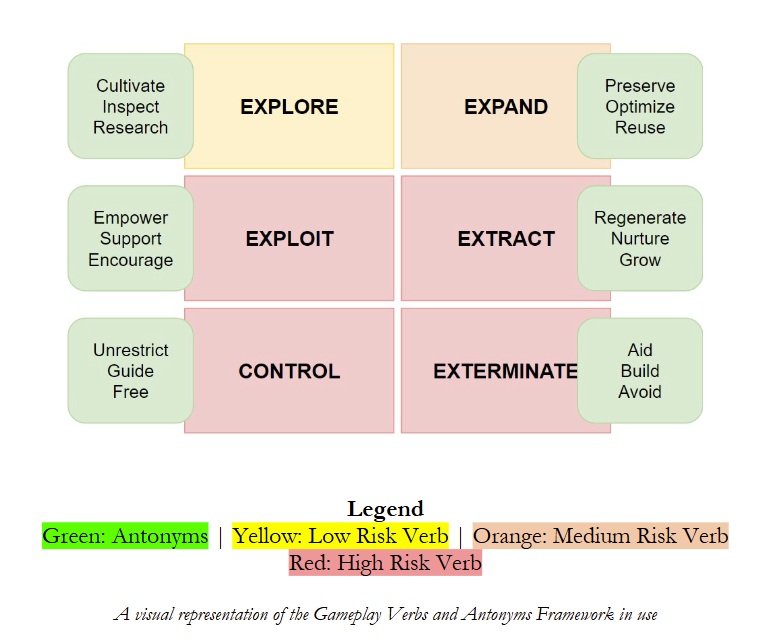
From the paper by Elaine Gomez: When the topic of colonization arises, many game developers often hesitate to get involved in meaningful and constructive design conversations around how to mitigate values that are heavily ingrained in game theory and player expectations.
Some of the conversations broached by these panels and papers are uncomfortable, but difficult conversations are worth having. Challenging the biases and preconceived notions that games are often built upon is worthwhile. (I’m hoping to reach out to some of the Conference’s participants for more details in the coming weeks to follow up on these enlightening discussions.)
In the meantime, I encourage everyone to read the proceedings from the event and take some time to really ponder the topics presented.
The world of puzzles and games is big enough for everyone, and only gets better when everyone feels included. The 2025 Conference on BIPOC Game Studies is proof of that.
Happy gaming, everyone.



 PuzzCulture