
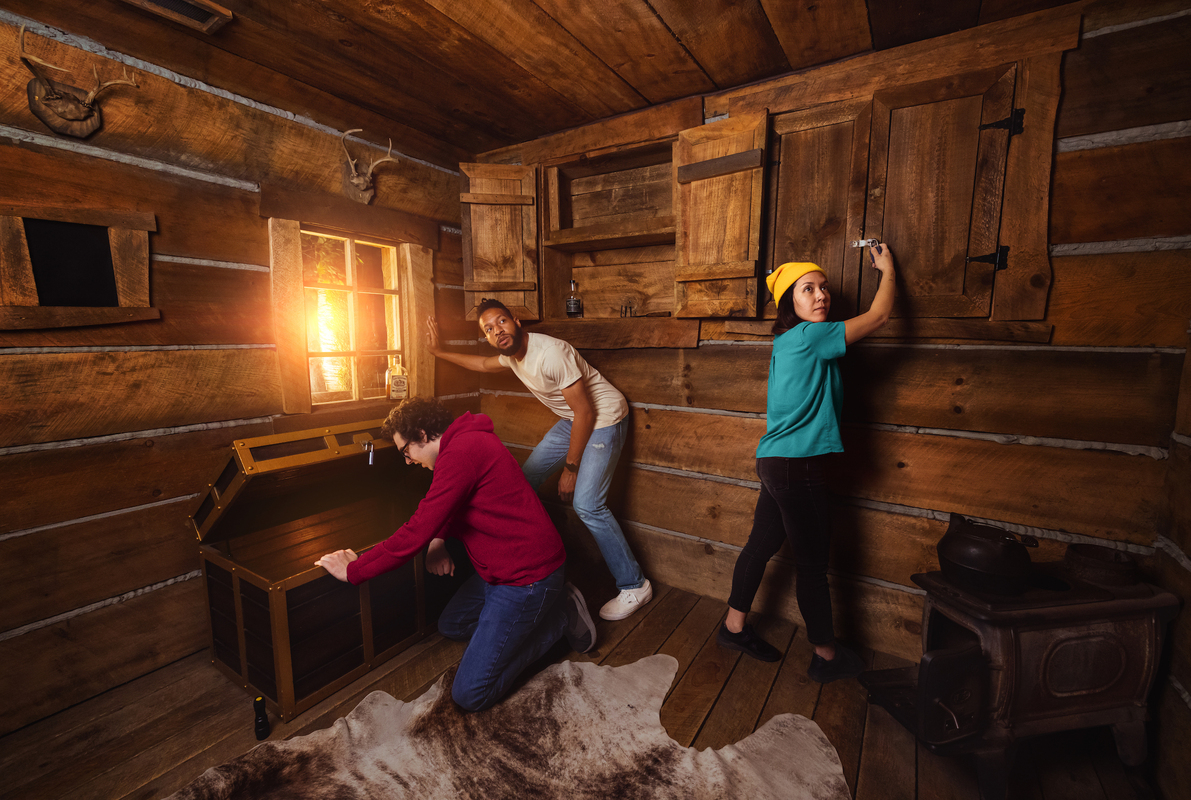
There are a lot of interactive puzzle experiences out there. Scavenger hunts, puzzle hunts, murder mystery dinners, treasure hunts, geocaching… it’s an amazing array of puzzly options.
But I think escape rooms are probably my favorite. There’s something about the combination of the ticking clock and the mechanic of working as a team to defeat the room itself that is so immensely satisfying.
It builds communication skills, it challenges you to use both your logical and associative thinking patterns, and
Ideally, everyone gets a moment to shine in an escape room.
- Some people are better seekers, finding items or hints or pieces of a particular puzzle for others to put together.
- Some are better connectors, realizing which of those items could combine to crack a problem or a code.
- Some are better puzzlers, figuring out how those combinations of found items and context clues leads to a solution.
- Some are better organizers, sorting found items, putting aside items already used in solutions to help keep track of what hasn’t been used and still could contribute to a later puzzle.
- Some are better leaders, assigning tasks to best utilize everyone’s hands and minds to get the ball rolling.
- Some are better realists, accepting when the group is truly stumped and/or needs a hint or a clue, recognizing when an answer isn’t coming and helping move the game along in a timely manner (with the group’s agreement, of course).
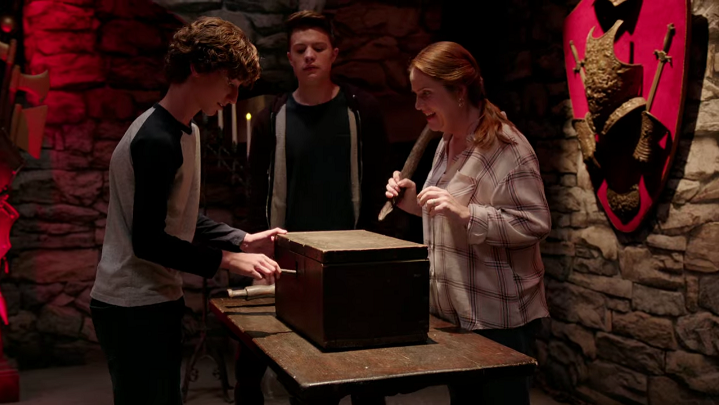
Even when my team has failed to escape a room in the allotted time, I’ve never felt like the effort was wasted. I still had a blast, and I learned from it, and I got better for next time.
And one unexpected consequence of frequenting escape rooms has been hearing horror stories from staff members regarding players who took things too far.
So let’s go over some escape room etiquette together as I share some tidbits escape room operators have shared with me over the years.
#1: You don’t have to pull hard.
Now, it’s true that some locks stick. If that’s the case, then grasp the loop in one hand and the body of the lock in the other and pull.
But don’t yank the lock and damage how it’s attached to something. Don’t pull hard on doors. Don’t force things. The VAST majority of doors, hatches, trunks, and other items that open in an escape room do so EASILY. If you have to force it, you’re probably not doing it right.
The very first time I hosted an escape room event at a convention, one of the boxes got broken open by an overexcited teenager. Because the magnetic opener didn’t work the first time they tried it. So they immediately went HULK SMASH on the poor little false book disguising a hidden trove.
I’ve seen escape rooms with warnings about not RIPPING cabinets off the wall by trying to open them, complete with the obvious repair jobs that went along with returning said cabinets to the wall. People need to seriously calm down.
This leads nicely into my second bit of escape room etiquette:
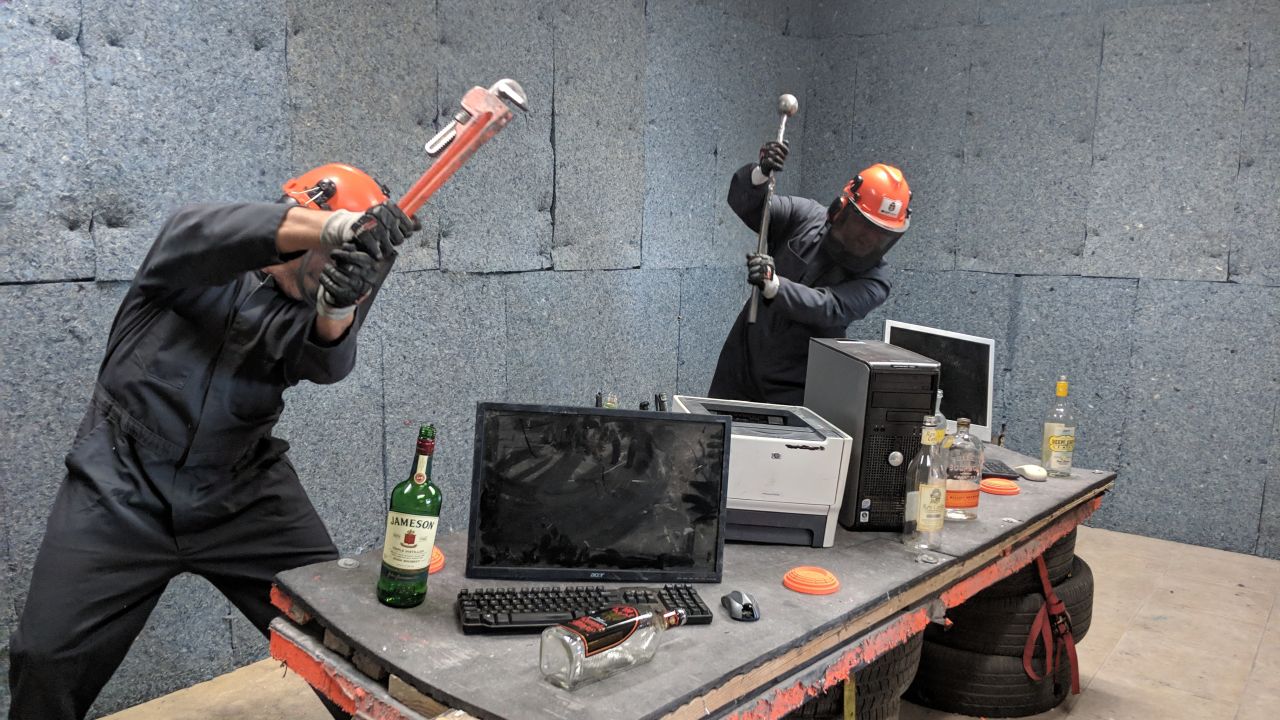
#2: It’s not a rage room.
I saw this written on the whiteboard in capital letters at an escape room once. Because, apparently, someone broke every bit of glassware in the room. It’s not clear if they thought it was part of the game or they just had poor impulse control.
It’s a little sad that they have to include that on a board that otherwise offers fun little advice and tips for first-timers.
I heard about a group of constructor workers that went to an escape room as a team-building exercise, and the staff member running their room overheard them discussing how thick the sheetrock was. They were genuinely considering just GOING THROUGH THE WALL instead of playing the game.
I mean, it’s cool that they were bringing their particular skillset to the experience, but guys, dial it back a notch. They didn’t give you sledgehammers, after all. I don’t want every escape room to need signs that say, “Please don’t smash through this wall.”
So, in short, be nice to the room. Whether it’s the trunks/cabinets or the walls or the many knickknacks and bits of color they put in the room to help with the immersion, just be gentle with it all so other solvers can enjoy the same experience.
And speaking of enjoyment:

#3: Winning isn’t the only goal.
Yes, the goal is to escape the room before the time limit expires. Lots of places post the best escape times, and there are folks that will sacrifice an immersive experience just to beat that particular room’s record escape time.
And, as previously stated, some people take it too far.
One operator told me a guy snuck a Swiss army knife into the room with him, unscrewed the screws holding the final box together, took the key, and opened the door. Out the door within the first first minutes, bypassing the ENTIRE game for everyone involved.
I don’t know if he didn’t want to do the whole room, or he was trying to show off how clever he was by cheating, or what the thought process was. But he spoiled it for everyone.
Communicate with your fellow players. Show them what you find, don’t hoard it for yourself. Encourage discussion and theorizing. It’s way more fun to solve as a group than to solve alone. A close call with a few minutes to spare — but one where everyone got to contribute — is better than a quick escape that only one or two people in the group got to enjoy. And it makes for a better story to retell later.
Do you have any favorite escape room stories? Are you an escape room staffer with a horror story to share? Either way, I’d love to hear from you!
Happy puzzling!


 PuzzCulture