Learning about the science behind optical illusions has been one of my favorite parts of this job. More and more, scientists are figuring out WHY optical illusions work on us, utilizing combinations of color, shadow, perspective, and how we process information to create impossible images, illusions of movement, and visual wonders to challenge how we interpret the world.
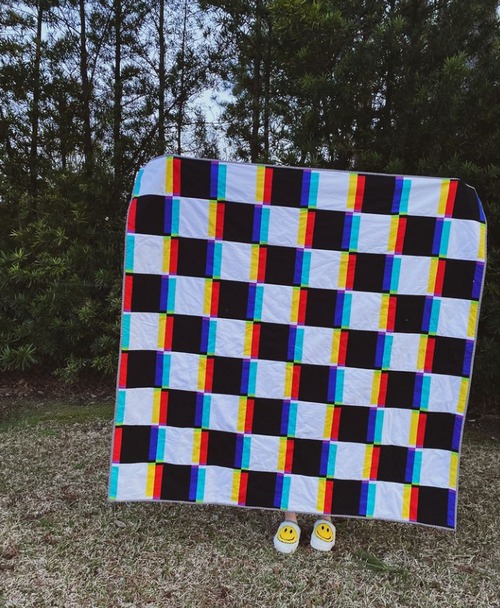
And I love seeing how people have responded by pushing the boundaries of what we can do with optical illusions. Earlier this year, I wrote about the glitch quilt, a fascinating and eye-wobbling work of brain-melting color play and meticulous execution.
In a world increasingly reliant on computer assistance and push-button AI-fueled shortcuts, there’s something both comforting and immensely charming about glitch quilts being handmade.
So it should come as no surprise to you, fellow puzzler, that I was overjoyed to discover another example of handmade optical illusion crafting… this time, made of wood.
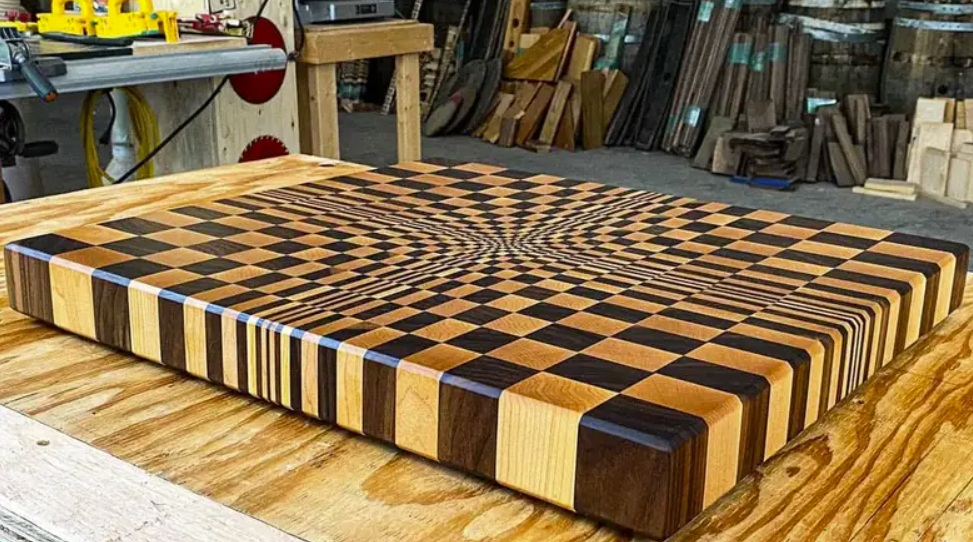
This is the end grain optical illusion cutting board. It appears to bend and swirl and warp as you stare at it, despite being made of straight lines and alternating colors.
Although I discovered it through Obsessed Woodworking, this particular piece is the handiwork of Ryan Hawkins, who has a woodworking YouTube channel where he detailed the elaborate step-by-step process involved in creating this sturdy perspective-twisting delight:
Ryan, to his credit, pointed to another woodworking content creator who supplied the design plans for the cutting board: mtmwood.
Employing a similar technique to the optical illusion cutting board, but managing to shape four twisting patterns, is truly impressive and a testament to the hard work, skill, and technique required to bring these stunning pieces to life.
And, as you might expect, this sent me down a YouTube rabbit hole looking for other wooden optical illusions, and there are plenty to choose from.
This is a nicely executed attempt at showing dimension and depth to get us started.
Whereas this one walks us through all the stages of preparing to take a familiar optical illusion from a drawing to a three-dimension form:
I confess, I watched this next one three times in a row, trying to spot the seams:
I could go on and on, but honestly, instead of closing out on the illusions, I’d like to end this celebration of creativity and artisanship with a simple photo showing the preparation and painstaking work it takes to bring these pieces to life.
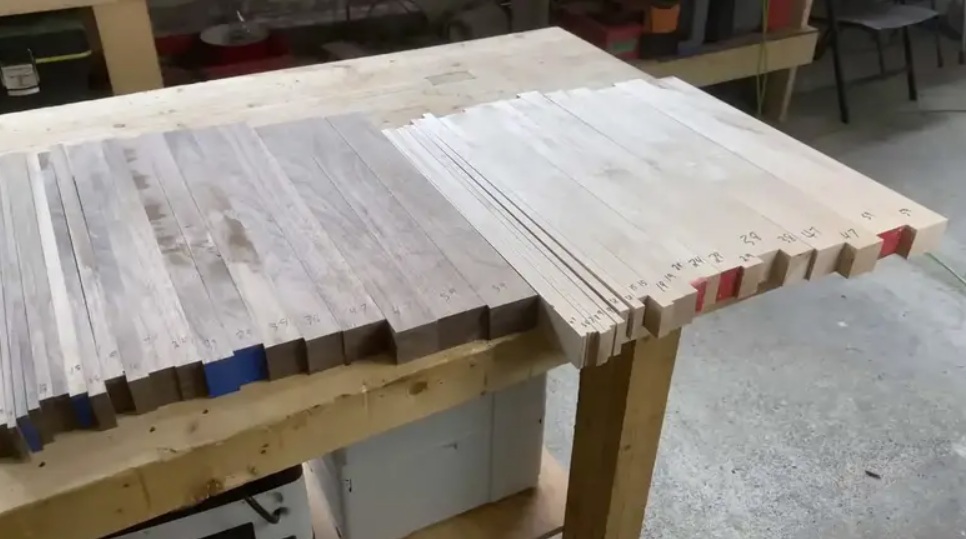
This is the optical illusion cutting board in its embryonic stage, a lineup of different pieces and thicknesses of wood. All marked and cut with precision, waiting for the next step in assembly. I stare at this picture, and consider every mark, every cut, every spin of the table saw’s blade as the creator runs piece after piece after piece through those whirling metal teeth, each of them perfect and crisp.
It’s a remarkable thing to ponder, and a joy to watch in both progress and in final realization. I’m glad I could share that with you today.
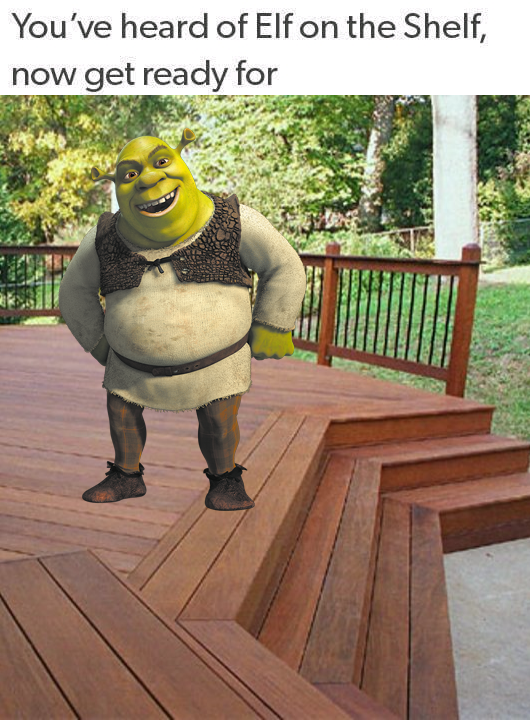
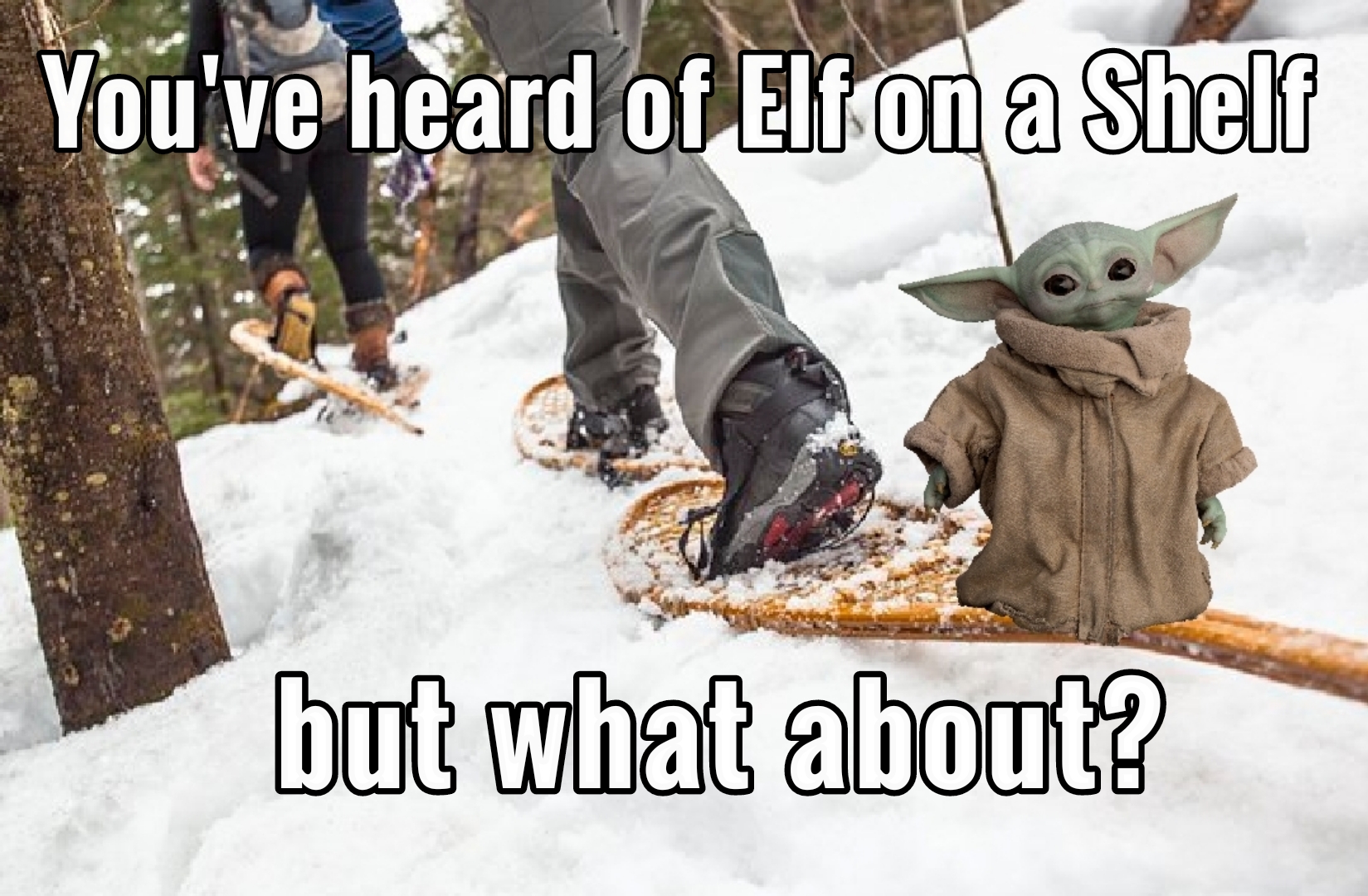
One of my favorite memes is “You’ve heard of Elf on a Shelf, now…”
Inspired by the family-friendly surveillance toy that took the world by storm, this meme (which dates back to 2016!) gives you the format of “elf on a shelf” and sets you up with a little visual puzzle to solve.
The image above, for instance, gives you Shrek on a deck!
Many TV shows, films, and novels help add character to their narrative universes by mentioning the games played by the characters.
Shows and franchises as wildly disparate as Battlestar Galactica, New Girl, It’s Always Sunny in Philadelphia, The Witcher, and Pretty Little Liars have fictional games that enrich their worlds.
But sometimes, either through clever marketing or the affection of fans, these games go from fictional recreational activities to real ones, crawling fully formed from the imagination to be enjoyed across tabletops worldwide.
Today, I’d like to introduce you to a few of them. Let’s play, shall we?
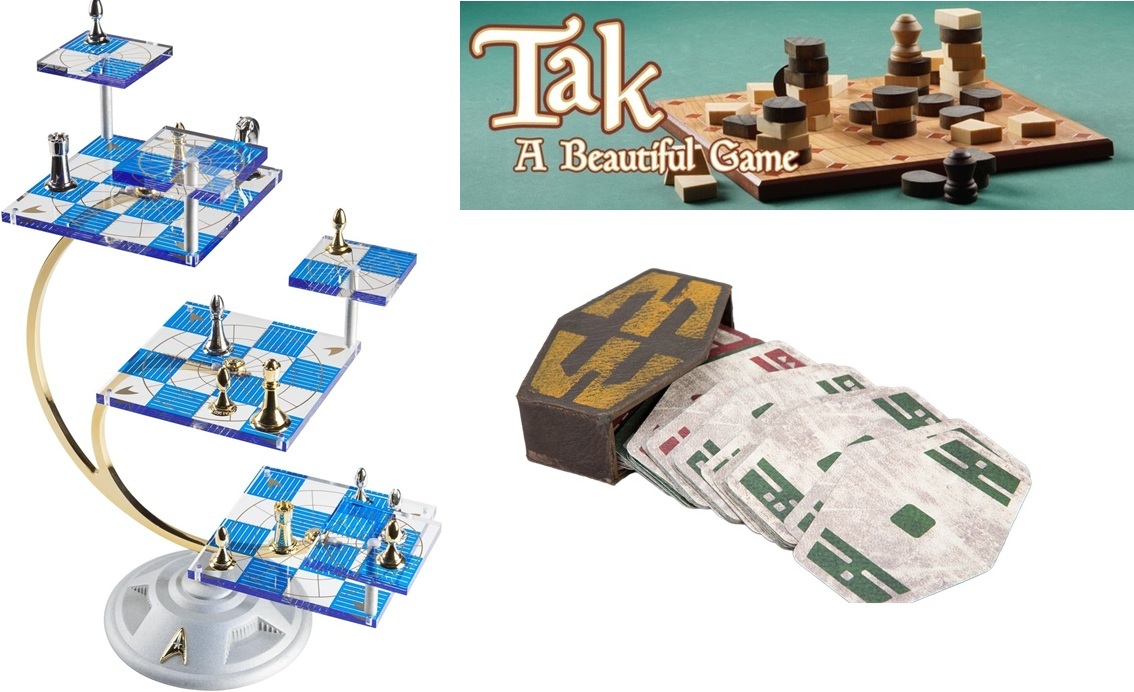
Tri-Dimensional Chess
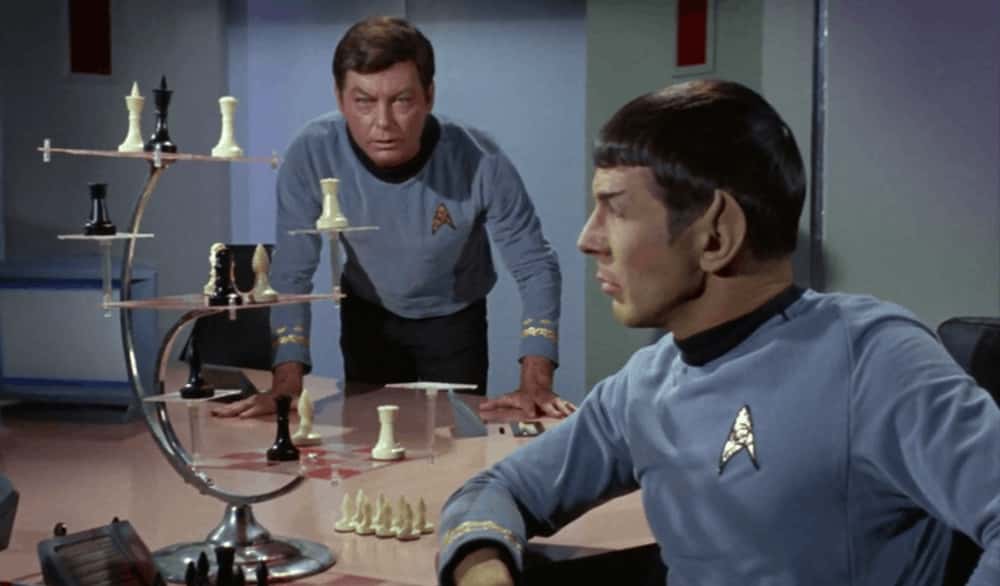
Star Trek has been a source of many fictional games and sports over the years. Dom-jot, Chula, Dabo, Parrises Squares, and Stratagema are some of the more famous ones, but the granddaddy of Star Trek games is Tri-Dimensional Chess.
First appearing in the original series back in 1966, Tri-Dimensional Chess follows the normal rules of chess, but spread across different vertical levels. So a knight could move in its usual L-shaped format, but on its own board OR the boards above and below.
Over the years — and across different Star Trek series — we’ve heard stories about key maneuvers like the Aldabren Exchange and the Kriskov Gambit in games of Tri-Dimensional Chess, helping flesh out how influential the game is for several characters. (Heck, in one episode, Spock beats the Enterprise computer at the game, saving Kirk from a court martial!)
The Franklin Mint has released limited edition versions of the game on two occasions, and I’ve seen homemade games of Tri-Dimensional Chess at gaming and pop culture conventions over the years.
Chess remains incredibly popular — as do many variants of Chess — so it’s no surprise this fictional game made the leap to the real world. (I suspect the complicated three-person Chess game developed by Sheldon in The Big Bang Theory is less likely to make a similar leap. Especially since there are already three-person Chess games on the market today.)
Cones of Dunshire
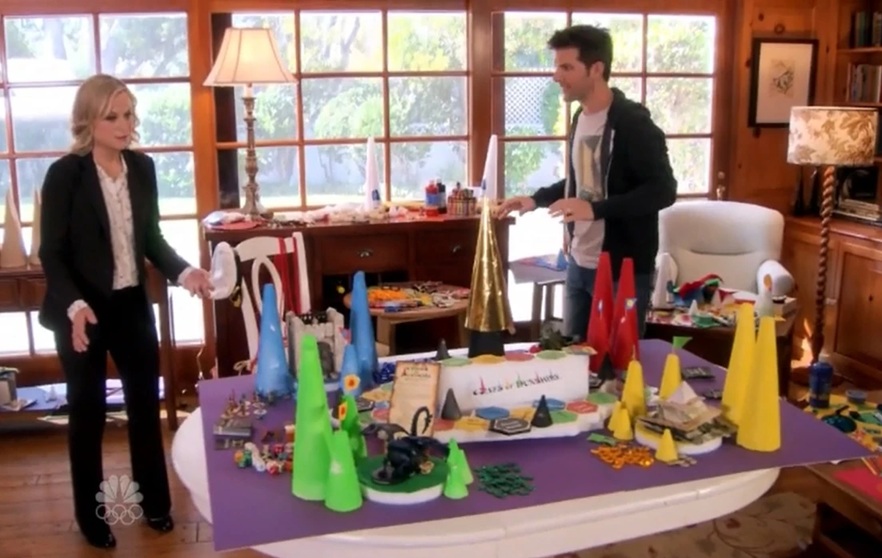
Ben Wyatt of Parks and Recreation enjoyed many nerdy pastimes, but Cones of Dunshire was his masterpiece.
Initially treated as a mistake, a nonsensical result of his boredom and frustrations, the game becomes a running gag in the show after Ben leaves a copy as a gift for the accounting firm that he has been hired by (and walked away from) several times during the show’s run.
Later, we find out the game has been commercially produced, and Ben stumbles across it when dealing with a dotcom company. He mentions that he invented it, but his claims are dismissed. He then proves not only his gaming skill but his authorship of the game when he beats the dotcom bosses in a tense playthrough.
It’s mentioned once that a gaming magazine called Cones of Dunshire “punishingly intricate,” a point that makes Ben proud.
Part of the fun of Cones of Dunshire (other than the parody of Settlers of Catan) is that the viewer never really understands what’s going on, so supposedly dramatic moments can be played for laughs. (I also appreciate that the name of the game is basically a fancy way of saying “dunce hat.”)
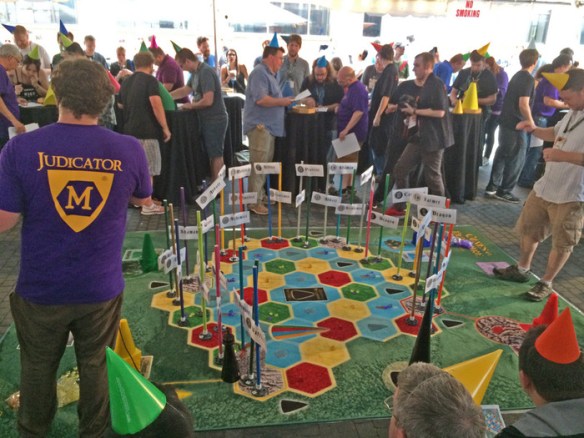
And, in the sort of cyclical storytelling that could only happen in a nerdly pursuit like board games, the company that made Settlers of Catan — Mayfair Games — produced a giant version of the game as part of a charity event at GenCon.
Both the silliest and most ambitious game to cross from fictional to real, Cones of Dunshire is a nerdy highlight of a now classic sitcom.
Tak: A Beautiful Game
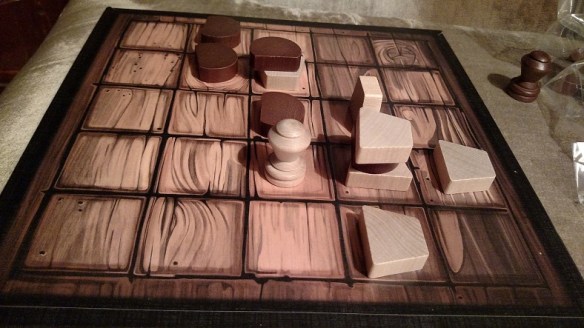
Originally introduced in Patrick Rothfuss’s Kingkiller Chronicles novels as a tavern game, Tak made the leap to the real world as a stretch goal in a Kickstarter campaign for another game.
Game designer James Ernest accepted the challenge of bringing the game to life, and his collaboration with Rothfuss created one of my all-time favorite board games.
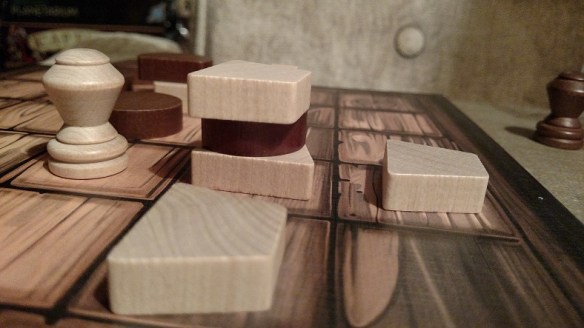
Tak has a very simple concept: two players each attempt to build a road connecting opposite sides of the game board. The first player to successfully complete their road wins.
To do so, you place game pieces called stones, one at a time, on various spaces on the board. The stones can either be played flat (meaning they’re part of your road) or standing on edge (meaning they’re a wall, blocking any road’s passage through that space).
It’s a rare thing when a new game feels like something that could’ve been played in taverns centuries ago. For me, this is the gold standard when it comes to adapting fictional games to the real world.
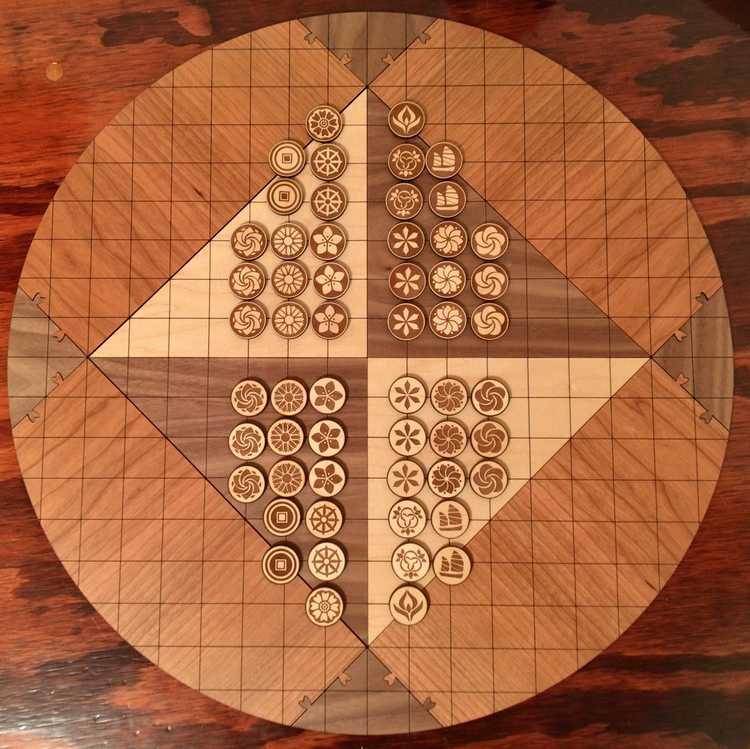
A key storytelling device in the much-beloved show Avatar: The Last Airbender, Pai Sho was a tactical tile-based game that reinforced important themes in the show.
The game had many variants (often played differently depending on the faction or nation featured) but each had the feeling of an ancient game passed down across generations.
In the most popular variant, Skud Pai Sho, the goal is to form a harmony ring around the center point of the board. Players create harmonies by placing two harmonious tiles on the same line without other tiles or obstacles. There are gates, gardens, and lines that help dictate play, as well as multiple flower tiles for players to place that accomplish different things when placed properly.
There are entire forums and websites dedicated to the rules of Pai Sho and its many variants, and the thriving fan community that continues to nurture these games well after the show’s conclusion make this one of the most heartfelt and successful transitions from fictional to real life that I can think of.
Image courtesy of starwars.com.
Sabacc
In The Empire Strikes Back, we learn about the friendly rivalry between Lando Calrissian and Han Solo, and how a wager led to the Millennium Falcon changing hands.
But exactly how it happened was only revealed later in supplementary material like the Star Wars Visual Encyclopedia and the novel Lando Calrissian and the Mindharp of Sharu.
The second draft of the script for The Empire Strikes Back mentioned that Lando won Cloud City in a “sabacca” game, but by the time additional stories fleshed out the relationship between Lando and Han, the game had been shortened to Sabacc.
It’s sort of a combination of poker and Blackjack. You want the value of the cards in your hand to be as close to 23 or -23 as possible. Sounds simple, right?
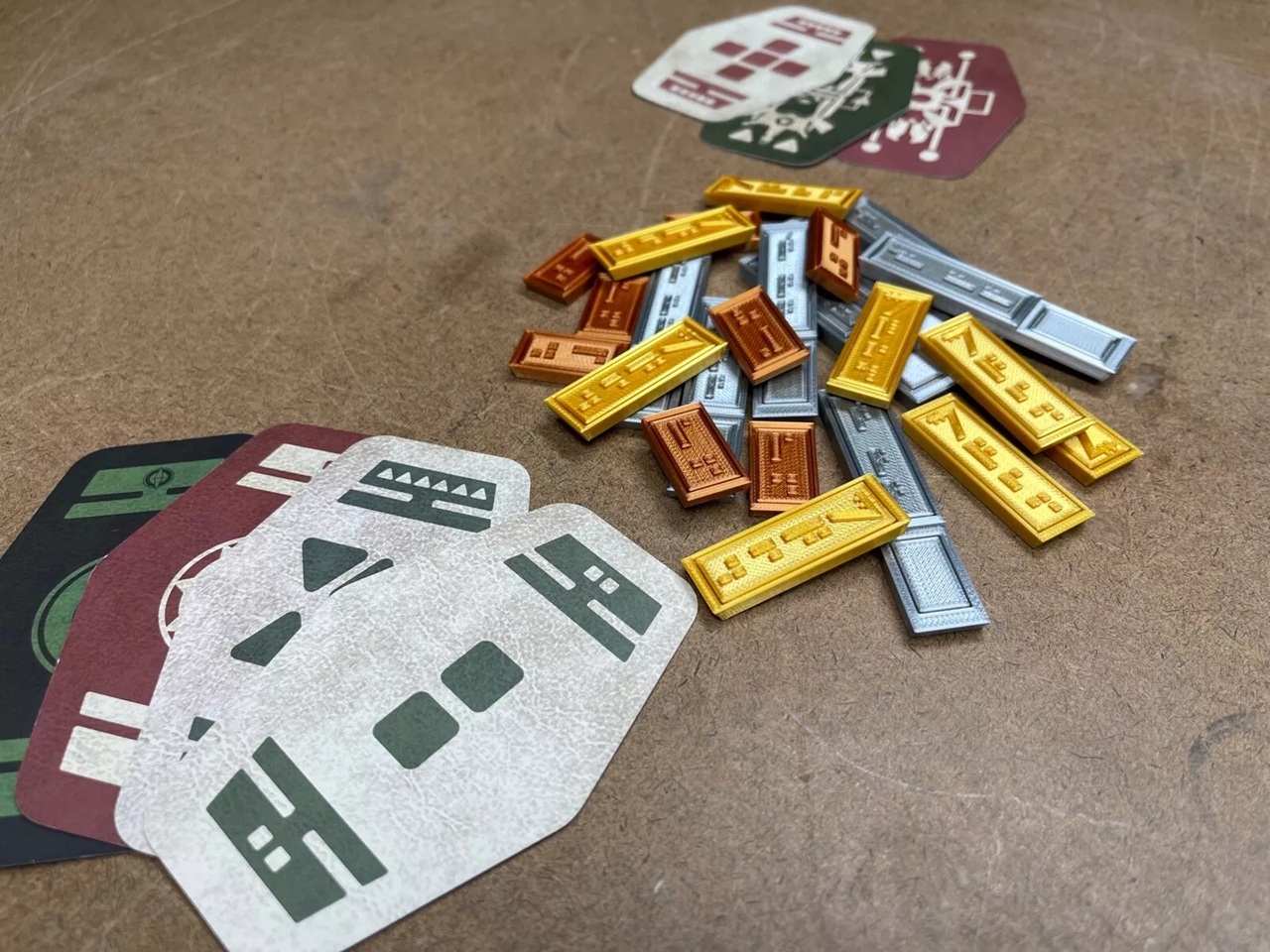
Well, imagine a game of poker where the cards in your hand changed periodically unless you publicly locked them in by placing them on the table, where they stayed until the hand was over. That’s the basic idea behind Sabacc.
There were numerous fan versions of the game over the years, but now you can get Sabacc decks at Disney theme parks (alongside many, many, MANY other items).
Do you have a favorite fictional game that made the leap to the real world? Did we miss any major ones? Let us know in the comments below!
What would a Boggle grid look like that contained every word in the English language?
Well, there are somewhere between 1 million and 1.5 million words in the English language, so I imagine it would be pretty big.
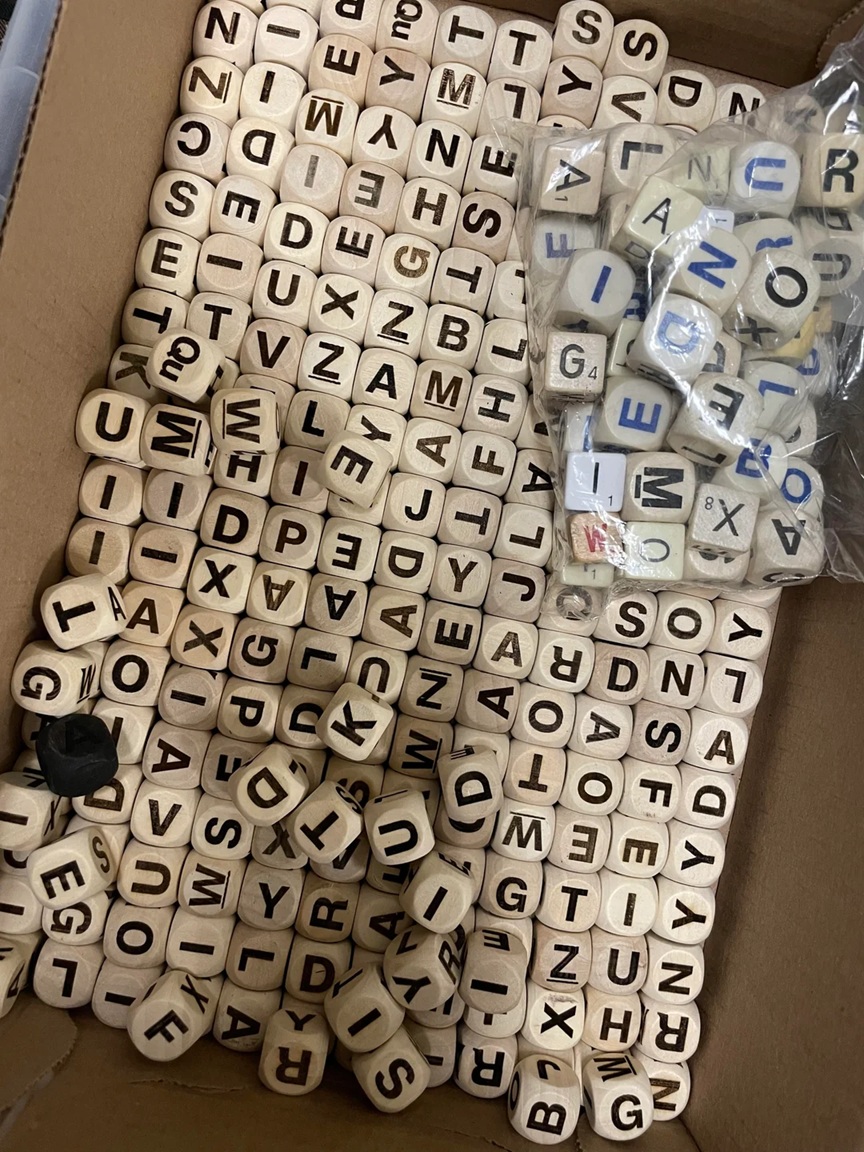
The redditor is an artist, and their goal is to make a sculpture composed of Boggle dice. And their concept is fascinating:
The idea for the piece is that it’s a linguistic Rorschach that conveys someone could find whatever they want in it. But it would be even cooler if it literally contained any word someone might reasonable want to say or write.
So, where do you start with something like this? Our artist has a suggestion:
To simplify, we could scope it to the 3000 most important words according to Oxford. True to the nature of Boggle, a cluster of letters could contain multiple words. For instance, a 2 x 2 grid of letter dice T-R-A-E could spell the words EAT, ATE, TEA, RATE, TEAR, ART, EAR, ARE, RAT, TAR, ERA. Depending on the location, adding an H would expand this to HEART, EARTH, HATE, HEAT, and THE...
What would be the process for figuring out the smallest configuration of Boggle dice that would let you spell those 3k words linked above? What if the grid doesn’t have to be a square but could be a rectangle of any size?
Naturally, creative minds accepted the challenge.
One user claimed that an online Boggle website called Squaredle has two 10×10 boards with just under 900 words of 4 or more letters.
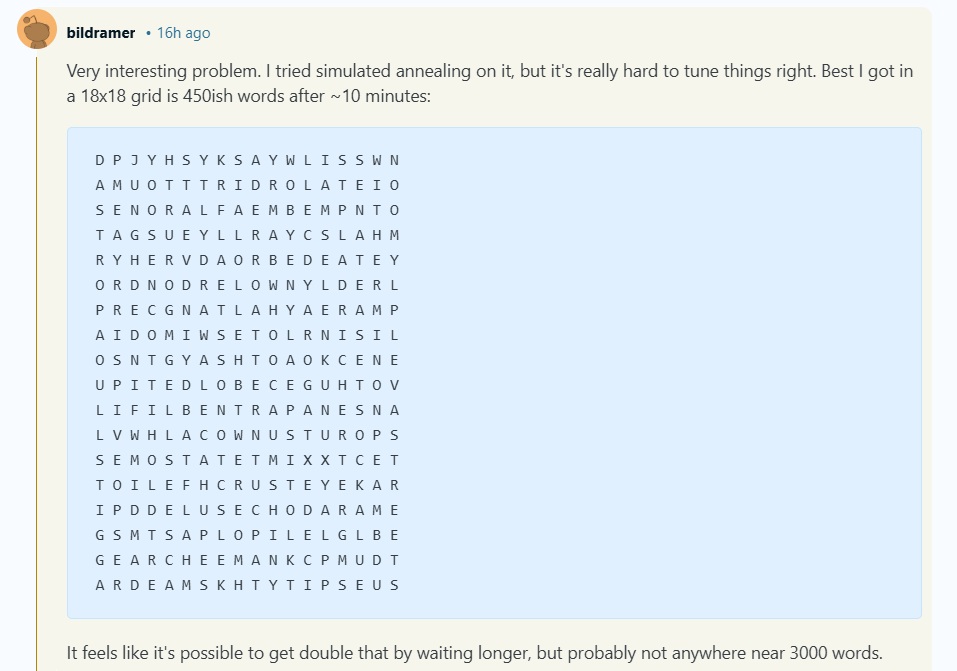
Another user, a programmer, was able to create an 18×18 grid with approximately 450 words in under 10 minutes.
As you might expect, I was unable to resist diving into this one. But I’m not a programmer, so let’s do some meatball mathematics to get a sense of the scope of the puzzly conundrum before us.
We can extrapolate that if we get 450 words in an 18×18 grid, we’d need seven 18×18 grids connected to approach 3,000 words, assuming there’s some consistency in letter efficiency.
If we stick to the rectangular suggestion of the original post, a 63×36 rectangle (six 18×18 grids in a 2×3 arrangement, plus a 9×36 grid attached at the bottom) should allow for those 3,000 words.
Now, I can’t verify that. But 63×36 means 2,268 letters in the grid. Which, with a 3,000 word goal (including two- and three-letter words) kinda feels possible.
Of course, this is just to cover that 3,000 word list. Remember that the English language is estimated to contain between 1 million and 1.5 million words total.
That’s 333-and-a-third times more, if we use a million words. It’s 500 times more words if we assume 1.5 million words.
So, that’s 2,268 letters in our 3,000 word grid. Multiply that by 500 and you get 1,134,000 letters in the grid.
That means we’d need a grid that’s 1,065 x 1,065 to cover the entire English language.
So what does that mean in Boggle terms?
A standard six-sided die is 16 millimeters. That’s 17,040 millimeters, or 17.04 meters. That’s 67.09 inches. We’re talking about a Boggle game that’s FIVE AND A HALF FEET ACROSS.
That’s one heck of a Boggle grid.
Now, of course, these numbers are all estimates, and dubious ones at that. But I couldn’t resist TRYING to find an answer, even if it’s just a ballpark number.
You see, fellow puzzlers, this brand of puzzle efficiency tickles something in my brain, as there are several Penny Press puzzles I quite enjoy that employ a similar idea.
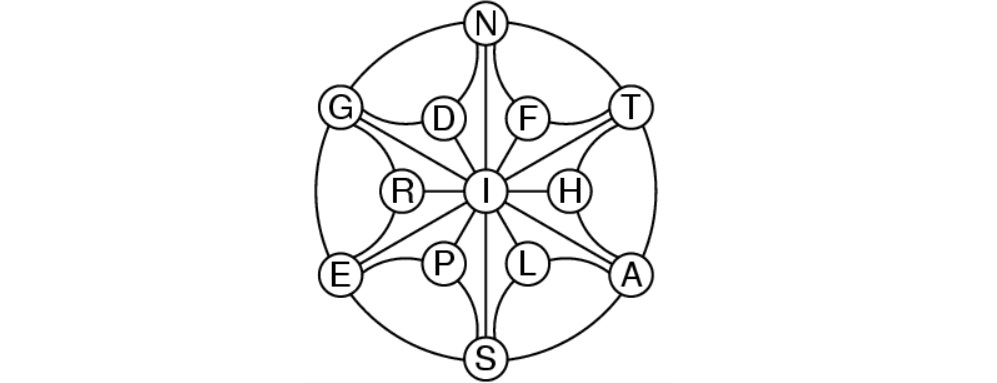
Starspell (pictured above) involves finding words in a star-shaped grid, except unlike Boggle, you can reuse letters. So you could bounce back and forth from A to N and spell BANANA, for instance.
Word Maze involves a small grid with many words hidden inside Boggle-style (though it’s actually a themed word list, meaning it’s not optimized to just cram as many words inside as possible).
Letter Perfect is a reversal of the idea, seeing if the solver can arrange letters in a mostly-empty 4×4 grid to fit every word in a given wordlist. It’s excellent training for a challenge like this, since you learn about efficiency of letter placement and how many words can spell out with neighboring letters if you’re clever.
I don’t know if any programmers will figure out how to build a language-spanning Boggle grid, but I look forward to seeing them try!
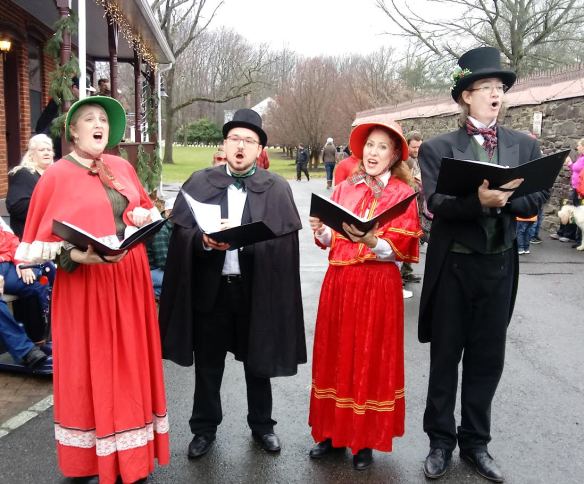
A few years ago, I posted a holiday puzzle that had been floating around the Internet for years. It was a list of Christmas songs and carols whose titles had been reworded, and it was up to the reader to identify the actual titles.
It was a popular post, but something about the list always bothered me. There were 21 reworded titles, which didn’t strike me as very Christmassy at all. I mean, why not 12? Or 24? Or, heck, 25?
So, I did something about it.
I added 10 new reworded titles to the list, bringing the total to 31, one for every day in December. Let’s see how many of you can crack all 31 titles, shall we? Enjoy!
1.) Move hitherward the entire assembly of those who are loyal in their belief.
2.) Listen, the celestial messengers produce harmonious sounds.
3.) Proceed forth declaring upon a specific geological alpine formation.
4.) Nocturnal timespan of unbroken quietness.
5.) Embellish the interior passageways.
6.) An emotion excited by the acquisition or expectation of good given to the terrestial sphere.
7.) Twelve o’clock on a clement night witnessed its arrival.
8.) The Christmas preceding all others.
9.) Small municipality in Judea southeast of Jerusalem.
10.) In a distant location the existence of an improvised unit of newborn children’s slumber furnishings.
11.) Tintinnabulation of vacillating pendulums in inverted, metallic, resonant cups.
12.) The first person nominative plural of a triumvirate of far eastern heads of state.
13.) Geographic state of fantasy during the season of Mother Nature’s dormancy.
14.) In awe of the nocturnal timespan characterized by religiosity.
15.) Natal celebration devoid of color, rather albino, as an hallucinatory phenomenon for me.
16.) Expectation of arrival to populated areas by mythical, masculine perennial gift-giver.
17.) Obese personification fabricated of compressed mounds of frozen minute crystals.
18.) Tranquility upon the terrestial sphere.
19.) Omnipotent supreme being who elicits respite to ecstatic distinguished males.
20.) Diminutive masculine master of skin-covered percussionistic cylinders.
21.) Jovial Yuletide desired for the second person singular or plural by us.
22.) Allow winter precipitation in the form of atmospheric water vapor in crystalline form to descend.
23.) A first-person observer witnessed a female progenitor engaging in osculation with a hirsute nocturnal intruder.
24.) Your continued presence remains the sole Yuletide request of the speaker in question.
25.) Permanent domicile during multiple specific celebratory periods.
26.) Diminutive person regarded as holy or virtuous known by the informal moniker shared by two former Russian tsars.
27.) More than a passing resemblance to an annual winter festival is emerging.
28.) Are you registering the same auditory phenomenon I am currently experiencing?
29.) Overhead at the summit of the suburban residence.
30.) Attractive or otherwise visually pleasing wood pulp product.
31.) Parasitic European shrub accompanied by a plant with prickly green leaves and baccate qualities.
How many did you unravel, fellow puzzlers? Let us know in the comments section below! We’d love to hear from you!





 PuzzCulture