A New Feature! Citizen Shoutouts!

Welcome to the first installment of a brand-new monthly feature on the blog, Citizen Shoutouts!

Each edition of Citizen Shoutouts is an opportunity to say thank you, to put the spotlight on folks in the PuzzleNation community who contribute to the world of puzzles and games.

And in our inaugural edition, I’d like to highlight a few intrepid puzzlers who regularly make their presence felt across our social media feeds.

As many of you well know, we have a recurring feature on Facebook and Twitter, the Crossword Clue Challenge. Every weekday, a word from that day’s free puzzle for the Penny Dell Crosswords App is selected, and we use it to test the puzzly skills of our followers on social media.

Not only does it highlight the clever cluing and expansive vocabulary you can expect from our app puzzles, but it gives members of the PuzzleNation readership a chance to show off their chops, filling in the blanks Wheel of Fortune-style and revealing each day’s answer.

Over on Facebook, we have a number of devoted solvers who regularly accept the Crossword Clue Challenge.

On any given weekday, you’re likely to see correct answers from PuzzleNationers Diane Wood, Sherri Strayer, and Mary Hayes, alongside fellow puzzlers Francis Ichihara and our two resident Crossword Carols, Carol Dawn Whittaker and Carol Tucker!

And I just wanted to take a moment today to thank them for their enthusiasm and their involvement in the game. It always brings a smile to my face to see their names pop up in our feed, alongside the new solvers trying their hand at the CCC for the first time.

But Twitter also has a Crossword Clue Challenge master who deserves a shoutout.

If you follow the CCC on Twitter, you’re bound to have seen one name pop up again and again. No matter how crafty the clue, no matter how many or how few letters I provide as a starter, one solver stands head and shoulders above the rest.

His name is Joshua Heckert, and he definitely merits a hearty round of applause for his puzzly skills and a thank you for accepting the Crossword Clue Challenge as often as he does. Ever since he first followed our Twitter account months ago, he has been a CCC contributor, and he rarely, if ever, misses a day. That enthusiasm certainly merits a Citizen Shoutout!

All of these folks, my fellow puzzlers, help make PuzzleNation one of the best puzzle communities on the Internet today, and I’m proud to highlight them in our first Citizens Shoutout post.

But what about next month? I’m glad you asked.

In the future, I’d like to take suggestions from my fellow puzzlers and PuzzleNationers for those we highlight in each month’s post.

It could be a puzzler or designer who inspires you, a constructor who challenged you or surprised you with a puzzle, or someone who did something kind in a puzzly way.

Maybe you have a favorite local game shop where you meet other puzzlers, or that introduced you to a favorite game.

Maybe you’d like to give a shout-out to an escape room you think others would enjoy, or to someone who went above and beyond to make a puzzly experience truly memorable.

You can submit your suggestions for the next Citizen Shoutouts post on Facebook, on Twitter, or in the comments section below. We’d love to hear from you.


Thanks for visiting PuzzleNation Blog today! Be sure to sign up for our newsletter to stay up-to-date on everything PuzzleNation!

You can also share your pictures with us on Instagram, friend us on Facebook, check us out on TwitterPinterest, and Tumblr, and explore the always-expanding library of PuzzleNation apps and games on our website!
Introducing New Players to Roleplaying Games!

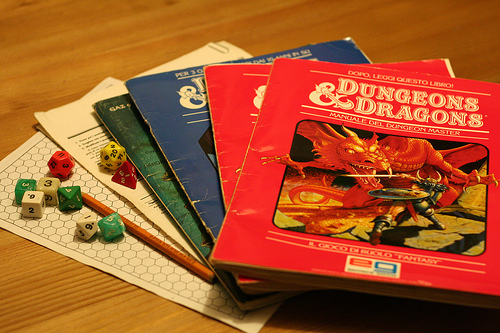
A month or so ago, there was a marvelous article on Amazing Tales about how to make your child’s first role-playing game amazing.

Although the article was geared toward introducing younger players to the world of roleplaying games, the advice can be easily adapted and expanded to include new players of all ages. So today, I thought I would take the five points introduced by Amazing Tales and do just that.

So if you’re a new or inexperienced game-runner / dungeon master, or if you’ve only run games for people with previous experience playing roleplaying games, this is the place for you.

(And this advice should fit no matter what sort of game you’re running. Is it classic Dungeons & Dragons? Supernatural? Zombie horror? Space adventure? Knights of the Round Table? Explorers? Pirates? Monster hunters? Modern spies? Thieves in the Victorian era? No matter what setting or characters, this advice is universal.)

#1 Keep cool

It’s easy for the person running a roleplaying game to have high expectations for themselves and the story they want to craft. You want your new players to have fun. You want them to immerse themselves in telling a story. You want them to be excited and come back for more.

But that’s a lot of pressure to put on yourself, and a stressed or nervous game master can lead to stressed or nervous players. So don’t set the bar so high. Sit back and let the players interact; sometimes, you can engineer a scenario that allows for this, like a tavern scene. Or you can create an instant threat and let them jump into the action and work together to solve a problem as a bonding experience.

Don’t be afraid to take opportunities to ask if anyone’s confused. A first game is introductory by nature, and if someone feels left behind early on, it can be hard to catch them up later, or to make them feel included if they’re not gelling with the other players.

Sometimes when I’m starting a new game with new players, I’ll hold what I call a “session zero,” a safe game before the game kicks off, where the characters can play in the environment, interact, and test out the actual mechanics of playing (particularly if there’s a magic system or some other aspect of the game that might not be intuitive).

#2 Keep it small

You want your players to feel immersed but not overwhelmed, so party size (the number of players) is an important consideration. I try to keep my number of new players to three or fewer, because it can be hard to give meaningful attention to a larger number of players. It’s like a classroom; you want the ratio of experienced voices to students to be as small as possible, so you can get that one-on-one time to answer questions and help them find their footing.

For me, the ideal group for a newcomer-heavy game is two (or three) new players, one (or two) experienced players, and myself running the game. That way, each new player is balanced by someone with greater experience. You can even have a buddy system to get them acclimated.

A smaller group also means less time for players to sit out while other players get the spotlight. Never let the new players feel shortchanged or like their voices aren’t as important as those of the more experienced players. After all, if you’re an experienced player, you’re going to feel more comfortable speaking up and venturing forward than a new player might.

[Image courtesy of Lewis Brown.]

#3 Say yes to their ideas

Now, obviously, you can’t say yes to every idea a player has or the story could descend into nonsense. But trust your players’ instincts.

Let them wander down the paths they find most interesting. It might not be the path you intended, and it might take them longer to get to the desired end point, but it’s always better for players to reach a story point organically, rather than railroading them to the place and time you want. Even new players can sense when they’re being strong-armed in a certain direction, and that can leave a bad taste in players’ mouths.

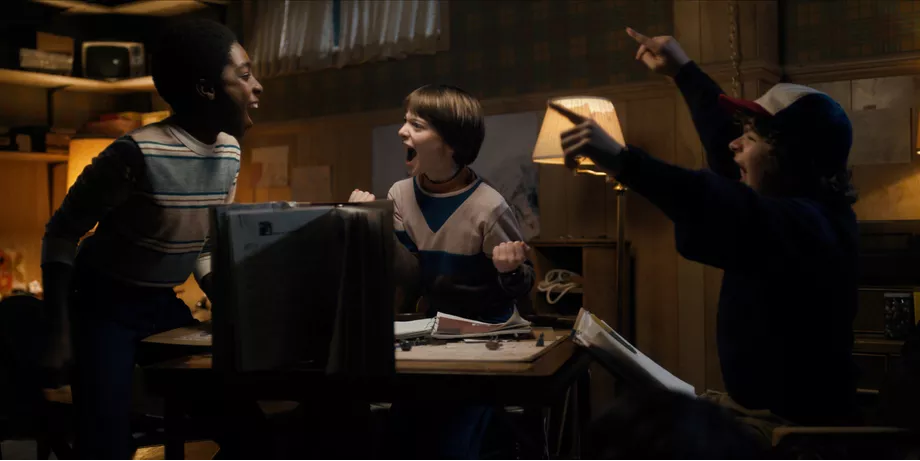
Be flexible. I’ve always found that, no matter how thoroughly I think I’ve mapped out an adventure, my players (both new and experienced) excel at finding paths I hadn’t considered. That requires me to be quick on my feet, and I enjoy the challenge of pitting my wits, improvisational skills, and imagination against those of my players.

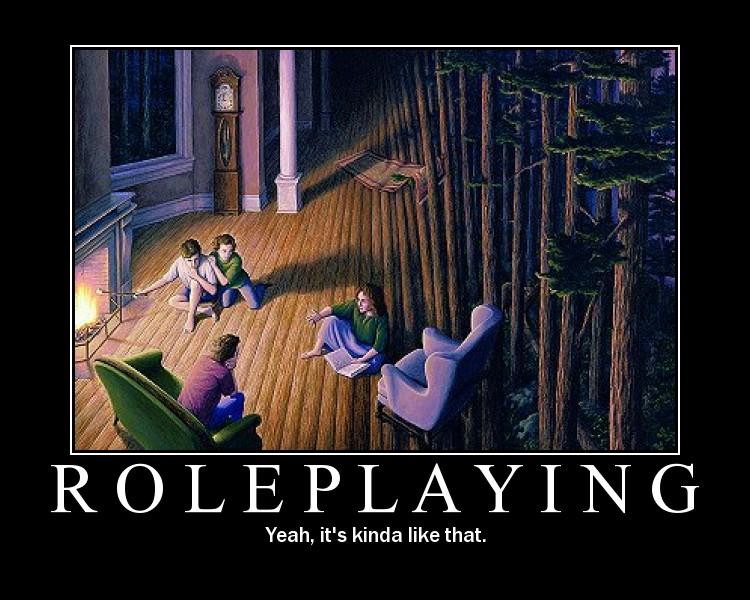
A roleplaying game is like a Choose-Your-Own-Adventure novel writ large… whenever possible, let them feel in control of their players, their story, and their destiny.

[Image from Stranger Things courtesy of The Verge.]

#4 Take them where they want to go

This might feel like a repeat of the previous note, but it’s not. This point is a reminder to always consider the characters your players are playing. What are their strengths? What goals do they have? What are they hoping to experience and accomplish?

Plenty of game runners, myself included, can get so wrapped up in the story WE want to tell that we forget that it might not mesh with the story our players want to participate in.

Give them moments to shine. Give the fighters a chance to fight, give the magicians opportunity to ply their craft, and give the puzzlers puzzles to solve. If characters have wings, let ’em fly.

[Image courtesy of Digital Trends.]

#5 Make the ending awesome

No matter how simple the adventure starts — a theft, a murder, the discovery of a treasure map, the descent into a trap-laden dungeon — make sure the ending is memorable. You want the quest, however short or long, to feel worthwhile.

You can try the old cliffhanger trick in the hopes of leaving them wanting more, but that can come back to bite you if the players are dissatisfied that their first adventure doesn’t feel complete. Instead, give them a sense of accomplishment.

Martin at Amazing Tales said it well:

Make sure your child’s first ever role-playing game features an epic ending. Face to face with the villain on a cliff edge as the counter ticks toward zero; returning the stolen jewels to the temple moments before sunset while pursued by ghosts; wrestling the controls of the star-ship from the pirate moments before it crashes into the sun. That kind of epic.

You don’t necessarily need to go epic, but certainly make it memorable. Nothing sells a big win like giving the bad guy a funny line before he turns to ash.


Here’s hoping this advice encourages aspiring dungeon masters and storytellers to get out there, find some players, and spin some marvelous adventure yarns. (Or maybe it’s inspired some new players to try roleplaying themselves!)

What’s your favorite memory from your early roleplay sessions, fellow puzzlers? (Either as a game runner or player.) Let us know in the comments section below!


Thanks for visiting PuzzleNation Blog today! Be sure to sign up for our newsletter to stay up-to-date on everything PuzzleNation!

You can also share your pictures with us on Instagram, friend us on Facebook, check us out on TwitterPinterest, and Tumblr, and explore the always-expanding library of PuzzleNation apps and games on our website!
Winning Monopoly With Math!

I’m always on the hunt for tips to make myself a better puzzler and gamer. Sometimes you stumble across those tips in unexpected places.

For instance, I was reading, of all things, a book about mathematics and Christmas — The Indisputable Existence of Santa Claus: The Mathematics of Christmas — and inside, I found a statistical analysis of the best strategy for winning a game of Monopoly.

Yes, we’ve discussed this topic before, but even that previous deep-dive into the mechanics of the game wasn’t as thorough or as revealing as the work by Dr. Hannah Fry and Dr. Thomas Oleron Evans in this Christmas-fueled tome of facts and figures.

They started with a breakdown of how your first turn could go, based on dice rolls. This is the same breakdown as in our previous post, but with some important differences. For instance, they also considered the chances of going to jail after multiple doubles rolls.

Also, they covered the statistical impact of how landing on card spaces can affect where you land on your first turn. The Community Chest is a curveball, because of the possible sixteen cards, three will send you somewhere on the board: Go, Mediterranean Ave, and Jail.

A simple statistical analysis is complicated even further by the Chance cards — nearly half of the sixteen cards send you elsewhere: Go, Income Tax, St. Charles Place, Pennsylvania Railroad, Illinois Ave., Jail, and Boardwalk.

If you extrapolate forward from this point, you uncover some interesting patterns:

The orange property set benefits from all the ex-cons leaving their cells, and after their next turn the reformed criminals will likely end up somewhere between the reds and yellows… Illinois Avenue, with its own dedicated Chance card directing people to it, gets an extra boost, making it the second most visited square on the board.

The property that is visited least frequently is Park Place, where players spend just 2.1% of their time.

Check out this graph. This shows potential earnings from each complete color set, with the dotted line marking the point where your purchase of the property is canceled out by how much the property has earned in rent thus far. Everything above that is profit.

As you can see, blue and brown properties start close to the dotted line, because they’re affordable to buy and build on. The standouts on this graph are New York Avenue (which earns $30 a roll up through thirty rolls statistically) and Boardwalk, which is an expensive investment, but pays off handsomely down the line, remaining the top earning spot past thirty rolls.

Of course, that’s only single properties, and you can’t build on single properties. Let’s look at a chart for full color set revenue:

Some of our previous findings change radically. Boardwalk’s rating drops significantly, because of Park Place’s relative infrequency of being landed on (as we mentioned above).

So which properties should you nab to give yourself the best chance of winning? Well, that depends on how long the game lasts.

The average game of Monopoly takes approximately thirty turns per player, so the larger the number of players, the longer the game will last.

So, for a two-player game, your best bet is to go after the light blue or orange sets, since they’re better in the short term, and the odds are in your favor if the game stays short.

In a three- or four-player game, the orange and red sets are better, because the game is likely to last a while.

And if five or more people are playing, you’re really playing the long game, so the green set becomes your best chance for success.

What about building on those properties? Well, Fry and Evans considered that as well. If you’re playing against multiple opponents and know you’ll be in for a long game, then you definitely want to buy and place houses. But don’t fear if the first house takes a long time to start paying for itself.

As it turns out, your best strategy is to put three houses on your properties as quickly as possible, because the third house is the fastest to recoup on investment. So once the three houses are in place on each property, you can rest for a bit and regenerate your bank before investing further.

And there you have it. Better gaming through mathematics! The only thing better would be, well, playing practically any other game.

Kidding! (But not really.)


Thanks for visiting PuzzleNation Blog today! Be sure to sign up for our newsletter to stay up-to-date on everything PuzzleNation!

You can also share your pictures with us on Instagram, friend us on Facebook, check us out on TwitterPinterest, and Tumblr, and explore the always-expanding library of PuzzleNation apps and games on our website!

Playing Dungeons & Dragons Like Royalty!

Dungeons & Dragons (or any roleplaying game, for that matter) is about telling a story together. Many Dungeon Masters go above and beyond to immerse players in the roleplaying experience.

Some use miniatures or models atop battlemats to help players visualize the events that are taking place (especially combat). Others use music to set the tone, create atmosphere, or provide dramatic effect.

These little bits of set dressing can be simple or elaborate, but they all contribute to a better roleplaying experience.

Now imagine if you could turn the dial up to 11 and really immerse yourself in your setting. Say, by playing D&D in an actual castle.

That’s the idea behind D&D in a Castle, a special event being held in Challain-la-Potherie, France, from July 1st to the 5th.

Check out the sales pitch:

Spend four days playing Dungeons and Dragons in a castle with world class DMs in a vacation like none you have ever experienced. Retreat into a magnificently restored castle for a spot of luxury, relaxation, and, of course, role-playing.

Yup, a team of professional Dungeon Masters help attendees to build their characters and familiarize themselves with the game before they even walk through the door. And after that, there are two daily RPG sessions and optional ones in the evening.

Over the course of the five days, you are guaranteed to play at least 24 hours of Dungeons & Dragons.

Now THAT is immersion.

With names like Jeremy Crawford (the lead rules developer for D&D) and Satine Phoenix (actress, artist, and DM) involved, this is sure to be a massively creative event, and I am thoroughly envious of anyone and everyone attending.

This will certainly raise the bar for D&D night at the house afterward. Dimming the lights and putting on some mood music will pale in comparison to the palatial spread at Challain-la-Potherie.

Of course, if you’re looking for a more affordable option here in the US, I highly recommend Troll Haven in Sequim, Washington. The Gate Keeper’s Castle is absolutely awesome, and the perfect setting for a LARP, an escape room, or some immersive D&D.

Just be careful if you invite a rogue to the castle, folks. They have sticky fingers.


Thanks for visiting PuzzleNation Blog today! Be sure to sign up for our newsletter to stay up-to-date on everything PuzzleNation!

You can also share your pictures with us on Instagram, friend us on Facebook, check us out on TwitterPinterest, and Tumblr, and explore the always-expanding library of PuzzleNation apps and games on our website!

PuzzleNation Product Review: IcoSoKu

[Note: I received a free copy of this game in exchange for a fair, unbiased review. Due diligence, full disclosure, and all that.]

Most puzzles — whether we’re talking about puzzle boxes, jigsaw puzzles, physical brain teasers, or mechanical puzzles — operate under a simple premise: the puzzle arrives in one configuration, and it’s up to you to solve it and put it into a different configuration.

With puzzle boxes, you’re opening them. With jigsaws, you’re assembling the pieces. With physical brain teasers and mechanical puzzles, you’re separating them, freeing a given piece, or accomplishing a particular task. But in each case, they’ve arrived that way. You have been pitted against the designer.

Project Genius‘s IcoSoKu is something different. IcoSoKu challenges you to create your own puzzle, and then solve it.

The setup is elegant in its simplicity. It’s a puzzle ball consisting of a twenty-sided icosahedron base, twelve numbered pegs, and twenty triangular tiles with different combinations of pips at the corners.

To start, remove all of the tiles and all of the pegs from the icosahedron. Place the numbered pegs wherever you wish on the puzzle ball.

Then, you must figure out how to arrange the triangular tiles on the puzzle ball.

This is tougher than it seems. Each triangular tile has a different combination of pips in its corners. Some corners have none, while others have one, two, or three pips. And each corner neighbors a different numbered peg. Each numbered peg is surrounded by five corners, and the pips on each corner, when added together, should total the number on the peg.

And with numbers ranging from 1 to 12, you have to be both clever and careful in your tile placement. That peg labeled “1” can only have a single pip neighboring it, meaning that the other four tiles surrounding that peg should have empty corners.

[Three different looks at the same solved puzzle ball.]

IcoSoKu combines the deduction of placement puzzles like Minesweeper or Blackout! with the mathematical puzzling of a magic square or a Sudoku puzzle. And by making the puzzle three-dimensional, it places a healthy demand on your puzzly faculties. You’re constantly tipping and turning the puzzle ball, because you can never see the whole puzzle at once, making it much harder to manage your tiles and maintain a good sense of just how many of those valuable little pips you’ve already used.

And as soon as you’ve placed the final tile and searched the puzzle ball all over, confirming a successful solution… all you want to do is strip away all of the tiles and pegs to test your wits again.

Assigning pegs randomly creates a completely different solving experience from bundling all the large numbers together on one side and all the small numbers together on the other side of the ball. Although you will begin to spot certain patterns and techniques that will come in handy as you solve each successive permutation of the puzzle, you’ll still find IcoSoKu to be an engaging and satisfying challenge.

Plus there are other ways you can enjoy the puzzle after cracking it yourself. I challenged a fellow puzzler to a timed IcoSoKu solve-off! First, I arranged the pegs and timed how long it took her to solve the puzzle ball I’d devised. Then, she arranged the pegs and timed how long it took me to unravel the puzzle ball she’d created. It added a fun touch of competition and uncertainty to the solving experience, one that my patient solo-solving didn’t capture.

But whether you’re tackling IcoSoKu yourself or with a puzzly rival, you’ll find plenty to enjoy here. It’s a DIY puzzle, masterfully put together and waiting for you to execute.

IcoSoKu is available from Project Genius and other participating retailers, appropriate for solvers 9 and up!


Thanks for visiting PuzzleNation Blog today! Be sure to sign up for our newsletter to stay up-to-date on everything PuzzleNation!

You can also share your pictures with us on Instagram, friend us on Facebook, check us out on TwitterPinterest, and Tumblr, and explore the always-expanding library of PuzzleNation apps and games on our website!
Pun for the Road: Puzzle Drinks!

Oh yes, it’s that time again! It’s time to unleash our puzzly and punny imaginations and engage in a bit of sparkling wordplay!

You may be familiar with the board game Schmovie, hashtag games on Twitter, or @midnight’s Hashtag Wars segment on Comedy Central.

For years now, we’ve been collaborating on puzzle-themed hashtag games with our pals at Penny Dell Puzzles, and this month’s hook was #PennyDellPuzzleDrinks, mashing up Penny Dell puzzles with beverages, drinks, thirst-quenchers, and aperitifs, both alcoholic and nonalcoholic!

Examples include: HopScotch, Mojito-at-a-Time, and Sunrays-D.

So, without further ado, check out what the puzzlers at PuzzleNation and Penny Dell Puzzles came up with!


All Mixed Up Drinks!

ZinfanDell

Crossword App-letini

Lemon Drop-Ins

Beer and There WS

Mixed Drinks: Sixes on the Beach

Hex(agrams) on the Beach

Word Seeks on the Beach

Long Island Roll of the Diced Tea

WhisKeyword

Sloe Gin Fill-Ins / Fill-Gin

Crypto Lime Rickey

Angostura Bits & Pieces

Mud Slide-o-gram / Mudslide-O-Rama / Mudslide Rule

Perfect Fit Schnapps

Schnapps-lines

Capri Sunrays

Tequila Sunrays

Tequilabyrinth

Pine Cone-lada

7 & 7-UP

Mezcalators

Mai Tie-In / Mai Tai-In

Family Mai Tais

Gimlet-terboxes / Take a Gimletter

Blue cura-countdowns

Anagram-aretto

Vodkakuro

HeinekenKen

Camouflager

JigSake Puzzle

Give and Sake

A to Zima-ze

Quilting Zombee

Bar-Tiles & Jaymes

Blackout! Russian

Blackout and Tan

Black and Tanglewords

Cosmopolitanglewords

Highball Scorer

Five Alive Twists

Apple InCiders

Bubbles Tea

Punch Bowl Game

V-8 Words

Red Bull’s Eye Spiral

Grand Pour

SyllaBubbles

Letter Powerade

Half and Halftime

Crosswords Club soda


Two Puzzly Drinks for the Price of One!

Sam Add-One Boston Longer Division

Crypto-Lime Rickeyword

Drummerman and Cokakuro

Lucky Score-pion Bowl Game


L’Drinkwords!

Baristar Words

Fair Trade-Off

Wine Connoisseur

Mixed Drink Bag

Mixer Master

Hey bartender, Fill ‘Er Up!

Five Twists of Lime

Name Blended Whiskeys

Top Shelf to Bottoms Up

Are we going to get Scorecarded for ordering any of these drinks?

Candy is dandy, but liquor is Quicker Quotes.

It’s Your Move
Puzzler
Add One


There was also a submission that deserves its own section, as one of our intrepid puzzlers went above and beyond by reimagining a classic tippler’s tune:

99 Bubbles of beer on Quotefalls, 99 Bubbles of beer, you take 1 Down, pass it In and Around, 98 Bubbles of beer on Quotefalls . . .


Have you come up with any Penny Dell Puzzle Drinks entries of your own? Let us know! We’d love to see them!

Thanks for visiting PuzzleNation Blog today! Be sure to sign up for our newsletter to stay up-to-date on everything PuzzleNation!

You can also share your pictures with us on Instagram, friend us on Facebook, check us out on TwitterPinterest, and Tumblr, and explore the always-expanding library of PuzzleNation apps and games on our website!