Sometimes, You Can’t Trust the “Rules” of Crosswords

There are a lot of things you learn as you solve more and more crosswords.

You learn vocabulary, both words that are simply new to you AND words that are common to crosswords. You learn cluing tropes, like question marks indicating wordplay or quotation marks indicating informal speech or exclamations.

You also start to learn some of the constructors’ tricks.

Now, there are all sorts of ways that constructors can play with solvers, but all told, they seem to fit into three overall categories: clue trickery, theme gimmickry, and grid manipulation.

We’ve spoken about clue trickery loads of times in the past, and no doubt will again. And theme gimmickry will be the subject of a future post.

But today, we’d like to focus on grid manipulation.
tumblr_nltrvaQWZN1qafoq6o1_400

So, what do we mean by that? Well, essentially, grid manipulation is our catchall term for the most devious arrow in the constructor’s quiver. It’s when the standard accepted rules of crosswords no longer apply.

No matter what sort of symmetry is involved or how the grid is constructed, there are generally three accepted rules of crosswords:

  • Across words read across.
  • Down words read down.
  • One letter per square.

These are the fundamental rules, Newton’s three laws of crosswords. They’re the rules every solver expects to be in play when they sit down to solve a crosswords.

But that’s not always true.
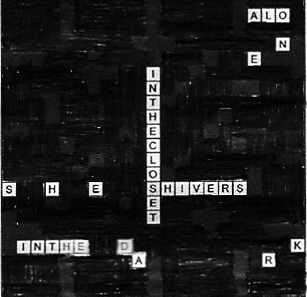
gopher

Over the years, crafty constructors have found ways to push the boundaries of what you can do with those iconic grids of black and white squares.

Some constructors have literally gone outside the box, creating puzzles where letters of answers are placed beyond the grid itself, as in Sid Sivakumar’s American Values Club crossword “Bursting With Pride” a year or two ago (with the letters LGBTQIA+ appearing in sequence).

Byron Walden’s Fasten Your Seatbelts puzzle from the AVC crossword in 2019 also extended beyond the grid. Extra letters served not only as “bumps” along the otherwise smooth sides of the grid, but spelled out various bumps, like RAZOR, SPEED, and GOOSE.

Other constructors find fresh ways to pack more into a grid than expected.

The most common form is the rebus puzzle, whether multiple letters can be placed in a single grid square. Sometimes, it’s only a single square in a themed entry where multiple letters fit. Other times, you can get whole strings of them. The exact puzzle escapes me, but I can remember a crossword where two down entries all had rebus squares, so instead of one film title in that down entry, two would fit in each.

One impressive example that comes to mind is Andy Kravis’s “Currency Exchange” puzzle from the 2019 Indie 500 puzzle tournament.

The puzzle actually had little ATM graphics in various grid boxes, and they represented different currencies concealed in the theme entries. Plus, the across and down entries that shared an ATM had different currencies in their entries. For instance, one ATM represented WON in SMALL WONDER and DINAR in ORDINARY.

Other puzzles, known as quantum puzzles, feature multiple possible answers in the same space.
1996 election puzzle gif

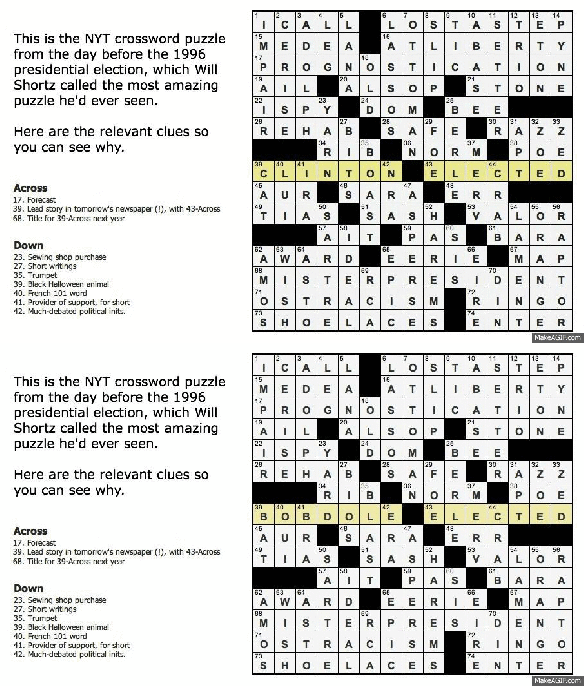
The most famous example is the 1996 Election Day crossword. The puzzle “predicted” the outcome of the election quite cleverly by allowing for either CLINTON ELECTED or BOB DOLE ELECTED to read out, depending on how the solver answered seven down clues.

Arguably the most impressive one I’ve ever seen was published in 2014. Constructors Kacey Walker and David Quarfoot combined some considerable Scrabble skills and a dynamite crossword grid to create an amazing puzzle.

You see, clues 26-Across, 36-Across, and 44-Across all featured seven letters, like a rack in Scrabble. It was up to the solver to find the anagram of each rack that fit the grid. Walker and Quarfoot designed the puzzle so that each of those clues had three possible correct answers — for 26-Across: ROWDIER, WORDIER, and WORRIED all fit the down clues — meaning there were a staggering 27 possible correct solutions!

Still, those puzzles followed the standard across and down rules. But other puzzles don’t.

In those puzzles, entries don’t go the way you’d think, bending or taking unexpected twists in the grid. One example was Patrick Berry’s brain-melting Puzzle 5 from the 2016 American Crossword Puzzle Tournament, “Changing Lanes,” where answers zigzagged across the grid.

A less complex puzzle with a similar gimmick appeared in the 2019 Boswords tournament. “Spill the Tea” by John Lieb and David Quarfoot featured longer entries than would fit in the given spaces. The trick was to shorten in by removing a brand of tea from the answer, and letting it read down off that across entry, rather than inside it. So, for instance, HOTEL CHAIN read HOTELCN across, because CHAI was reading down from the C instead.

thatsnoneofmy

Lieb and Quarfoot incorporated five such “spills” in the grid, and clued each tea reading down simply with “Oops.” It was an immensely clever way to utilize the across and down entries in a unique, unexpected way.

As you can see, puzzle innovation can come in virtually any form, and often, the very foundational rules of crosswords can be bent or broken to create an ambitious, brain-twisting, and (ultimately) satisfying solve.

So be on the lookout, fellow puzzlers. You truly never know how constructors will challenge you next.


Thanks for visiting PuzzleNation Blog today! Be sure to sign up for our newsletter to stay up-to-date on everything PuzzleNation!

You can also share your pictures with us on Instagram, friend us on Facebook, check us out on Twitter, Pinterest, and Tumblr, and explore the always-expanding library of PuzzleNation apps and games on our website!
New to Crosswords? Solve Along With the Try Guys!

exercise-brain-crossword-670x335

As someone who has attended the American Crossword Puzzle Tournament in the past, I can attest to how blisteringly fast some of the top solvers are.

And there’s a lot that goes into a top-ranked solving technique. There’s the regular experience of actually solving on paper in pencil (which is very different from solving on a screen), and years of familiarity with crossword tropes, building a well-established lexicon of common crossword words, letter patterns, and cluing styles to draw on.

There may be a natural gift or affinity for puzzle solving as well, or simply a knack for reading past clever wordplay and cracking tricky clues and elusive themes faster than most.

In any case, it’s a curious alchemy that makes a top-notch solver. But you don’t have to be top 3 in a tournament to be fast. I am routinely impressed by the average times posted by constructors and fellow puzzlers alike.

During the Boswords 2020 Fall Themeless League, for instance, plenty of fellow solvers completed puzzles in less than half the time it took me.

So when I heard that YouTube’s famous experimental quartet The Try Guys were testing their puzzly mettle against a respected constructor, I happily watched along.

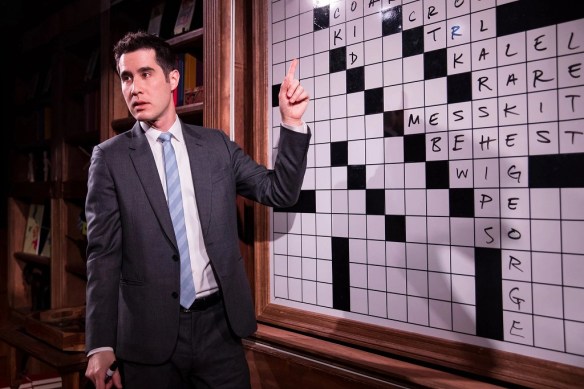
In the video, the team tried to group-solve a Monday New York Times crossword in the time it would take magician and crossword constructor David Kwong to solve FOUR New York Times puzzles.

I won’t spoil how things turned out — watch the video for that! — but I do want to discuss the role David played as puzzle ambassador in the video.

If you know someone who is intimidated by crosswords, or maybe wants to try solving them but hasn’t yet, I would highly recommend sending them a link to this video.

David does a terrific job introducing the Try Guys to the rules of crosswords, discussing everything from themed entries and rotational symmetry to some of the common crossword tropes we all know and love. (He even explains the famous November 5, 1996 quantum puzzle where either BOB DOLE ELECTED or CLINTON ELECTED could fit in the grid.)

He helps demystify the puzzle, but manages to do so in a way that still makes the challenge seem fun. The Try Guys go from being apprehensive about the race to being excited to bring their own unique trivia knowledge and skills to the table.

Not only does it encapsulate a lot of what’s fun and enjoyable about crosswords, but it serves as a small sampling of competitive solving, which might make fellow puzzlers more interested in participating in a tournament someday.

In short, it’s great fun AND great PR for crosswords. I don’t think it’ll make me any faster as a solver, but I enjoyed watching nonetheless. Nicely done, David. Nicely done, Try Guys.


Thanks for visiting PuzzleNation Blog today! Be sure to sign up for our newsletter to stay up-to-date on everything PuzzleNation!

You can also share your pictures with us on Instagram, friend us on Facebook, check us out on Twitter, Pinterest, and Tumblr, and explore the always-expanding library of PuzzleNation apps and games on our website!
The Boswords 2020 Fall Themeless League Has Come to a Close!

boswords new

After two months of delightful weekly solving, the Boswords 2020 Fall Themeless League has come to a close.

If you’re unfamiliar, the Boswords 2020 Fall Themeless League was a clever weekly spin on traditional crossword tournament-style solving. Instead of cracking through a number of puzzles in a single day (or two), the Fall Themeless League consisted of one themeless crossword each week, scored based on your accuracy and how fast you complete the grid.

Each week’s puzzle only had one grid, but there were three sets of clues, each representing a different difficulty level for solvers. Smooth was the least challenging, Choppy was the middle ground, and Stormy was the most challenging. (When solvers registered to participate, they chose the difficulty level that suited them best.)

Hundreds of solvers signed up for the challenge of two months of themeless puzzle solving and a bit of friendly competition, and now that it’s over, I’d like to share a few thoughts about my experience in the League.

questions-banner-860x280

I confess, I was skeptical about entering the league. No, it didn’t have anything to do with the puzzles themselves. I knew the constructing team was top-notch, and with John Lieb, Andrew Kingsley, and Brad Wilber running things, I knew the competitors were in excellent hands.

I simply don’t solve themeless puzzles that often. In fact, this tournament probably marks the most themeless puzzles I’ve ever solved in this short an amount of time. They’re simply not part of my usual solving rotation, save for championship themeless puzzles in various tournament packets, and the occasional puzzle here and there (like Doug Peterson and Patti Varol’s Friday NYT themeless last week, congrats on your debut, Patti!).

But I really enjoyed seeing what creative constructors could do with crosswords once freed from the shackles of a theme. The long, crossing entries can certainly be intimidating at the start — especially if you read three or four clues in a row and feel like your brain has gone blank — but the sheer inventiveness of the entries you get to see, often stacked close together, is really cool.

exercise-brain-crossword-670x335

And, like a jigsaw puzzle, the solving experience sneaks up on you. You get a few words here, a few letters there, and suddenly everything starts to fall into place. Clues that eluded you make total sense on a second or third reading, or the now-obvious wordplay punches you in the face.

Eventually, you’re left with a full grid and a real sense of accomplishment. (Not to mention a growing sense of wonder that the constructor managed to make all those crossings work.)

This tournament showed me how much I’d been missing by not solving themeless crosswords more often.

And with the promise of future Boswords-hosted events in 2021 like the Winter Wondersolve and the Spring Themeless League to come, it’s nice to have exciting puzzle events to look forward to in the near future.

I ended up placing 85th out of 400 or so competitors, which I am pretty pleased with! And now I’ll try to do better in the next one. It’s always good to have goals.

Kudos to everyone who helped bring this marvelous project together, and kudos to everyone who participated. It was a blast.


Thanks for visiting PuzzleNation Blog today! Be sure to sign up for our newsletter to stay up-to-date on everything PuzzleNation!

You can also share your pictures with us on Instagram, friend us on Facebook, check us out on Twitter, Pinterest, and Tumblr, and explore the always-expanding library of PuzzleNation apps and games on our website!

Kickstarter Alert! Check Out Fireball Newsflash Crosswords!

newsflash_header

One of the coolest parts about assembling each year’s Holiday Puzzly Gift Guide is reaching out to crossword constructors I admire and respect. Not only do I get to find out what projects they’ve been working on and would like to promote, but they’re also incredibly giving to fellow constructors, shouting out the subscriptions, puzzle books, and projects that they most enjoyed solving during the year.

The bulk of the puzzle books/subscriptions section of the Gift Guide comes from these constructor interactions and the praise they heap upon each other. Not only is it heartwarming to read, but it’s valuable information for me and the PuzzleNation readership. After all, who better to tell you about great puzzles out there than top-notch constructors who know puzzling inside and out?

There are a host of brilliant recommendations in the Gift Guide, but today I’d like to shout-out one of my favorite yearly puzzle subscriptions. It’s launching on Kickstarter today for a new “season” of topical puzzles, and you should definitely check it out.

It’s Peter Gordon’s 2021 edition of Fireball Newsflash Crosswords.

Now, most crossword solvers probably know Fireball Crosswords by reputation alone. The puzzles are challenging (equivalent to a Friday or Saturday NY Times puzzle), but incredibly fun, inventive, and cleverly clued. Several of my all-time favorite crosswords have been published through Fireball Crosswords.

Fireball Newsflash Crosswords, on the other hand, are not nearly as difficult, so puzzlers who might find traditional Fireball Crosswords daunting can breathe easy.

Plus Fireball Newsflash Crosswords carry their own unique flavor by being as up-to-date and fresh as possible. Each puzzle is absolutely peppered with current references. Important news events, pop culture happenings, celebrity passings, memes, buzzwords, and cultural fads have all appeared in these grids in the past.

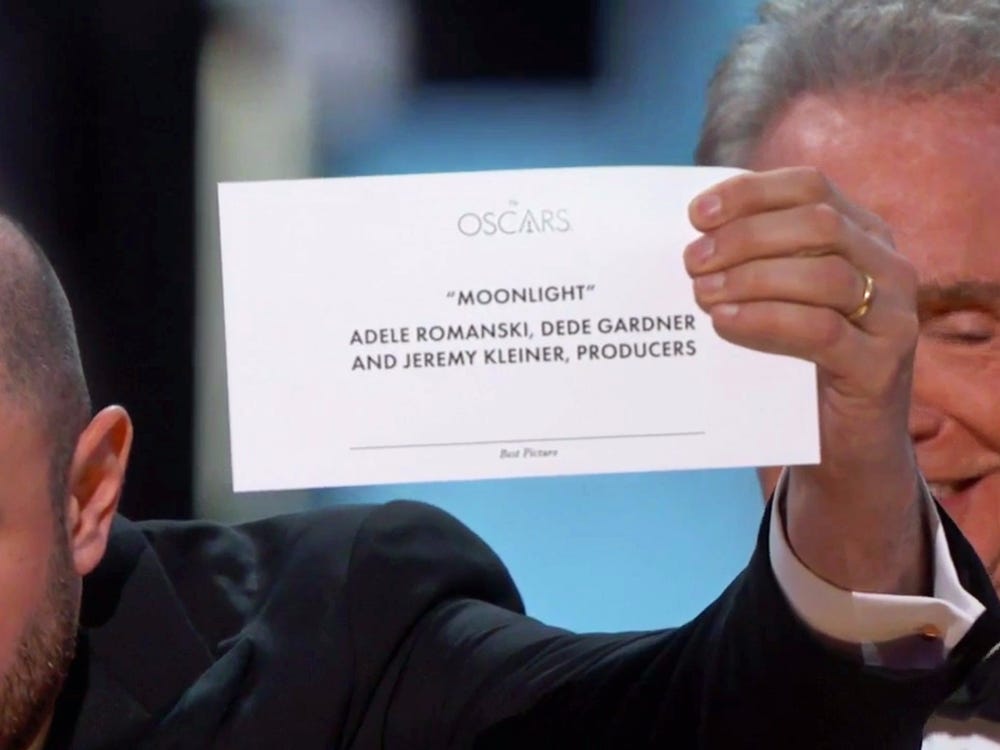
For example, after the 2017 Oscars had their snafu with the Best Picture award winner, Gordon mentioned LA LA LAND as Best Picture winner, then “corrected” himself later in the grid with the true winner MOONLIGHT. It was a lovely little playful jab at an awkward and noteworthy moment in time.

58b445f9c32d6b1c008b4c3f

And that sort of quick-turnaround puzzling and topicality simply cannot be matched by the major outlets.

For just $13, you’ll get 20 such puzzles delivered to you by email, one puzzle every 2 or 3 weeks.

And with this Kickstarter, you can pledge for not just the newest season of Fireball Newsflash Crosswords, but hats, keychains, additional puzzles and puzzle magazines, and more.

I cannot say enough good things about this project, and I’m happy to spread the word to my fellow puzzle lovers. Take a moment and check out this worthwhile project. There are even sample puzzles to try out, so you know exactly what you’re signing up for and supporting.

Good luck, Peter! Cannot wait to see what you cook up for us in the coming year!


Thanks for visiting PuzzleNation Blog today! Be sure to sign up for our newsletter to stay up-to-date on everything PuzzleNation!

You can also share your pictures with us on Instagram, friend us on Facebook, check us out on Twitter, Pinterest, and Tumblr, and explore the always-expanding library of PuzzleNation apps and games on our website!
Representation in Crosswords: A Fresh Look

Problem-solving-crossword

We live in a data-driven world these days. Everything is quantified, analyzed, charted, and graphed. Your social media use alone is an absolute treasure trove of data that tells businesses all sorts of information about your activities, spending habits, and more.

So it should come as no surprise to you that the world of crosswords is no different. In recent years, we have been able to analyze decades of crosswords like never before, drawing important conclusions and uncovering trends both intriguing and shocking.

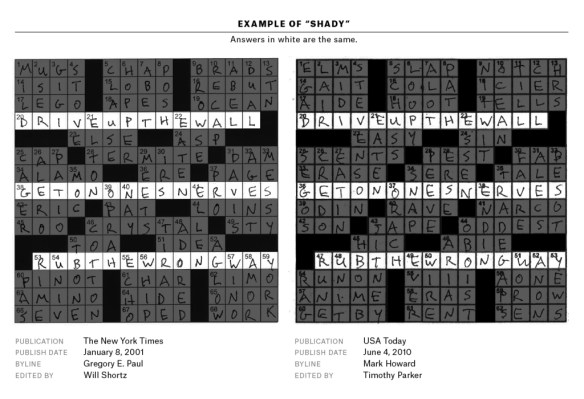
Back in 2016, the data analysis of programmer Saul Pwanson and constructor Ben Tausig uncovered a pattern of unlikely repeated entries in the USA Today and Universal crosswords, both of which were then edited by Timothy Parker. Eventually, more than 65 puzzles were determined to feature “suspicious instances of repetition” with previously published puzzles in the New York Times and other outlets, with hundreds more showing some level of repetition.

crossword-finals-shady

This led to Parker’s removal from both the USA Today and Universal crosswords.

But the impact of data analysis in crosswords doesn’t stop there. In 2018, Erik Agard compiled stats on how often the work of female constructors appeared in the major crossword outlets across the first four months of that year. It was an eye-opening piece about gender disparity among published constructors, backed up by smart research.

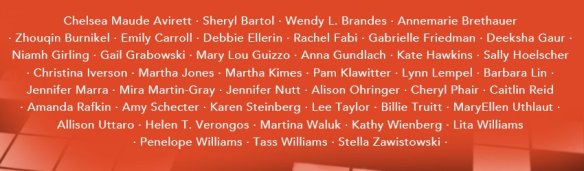
And there has been a greater push for inclusion on the construction side of crosswords. Back in March, at the urging of constructor Rebecca Falcon, several outlets participated in Women’s March, a concentrated effort in the puzzle community to support, foster, and cultivate more minority voices in crosswords.

(It comes as no surprise that two of the voices encouraging female puzzle creators are Erik Agard and David Steinberg, both of whom stepped up massively in the wake of the Timothy Parker scandal and have been advocates for greater inclusiveness in crosswords.)

womensmarch

[The list of all of the female constructors involved in Universal’s Women’s March project.]

This does raise the question, however, of inclusiveness when it comes to cluing and crossword entries.

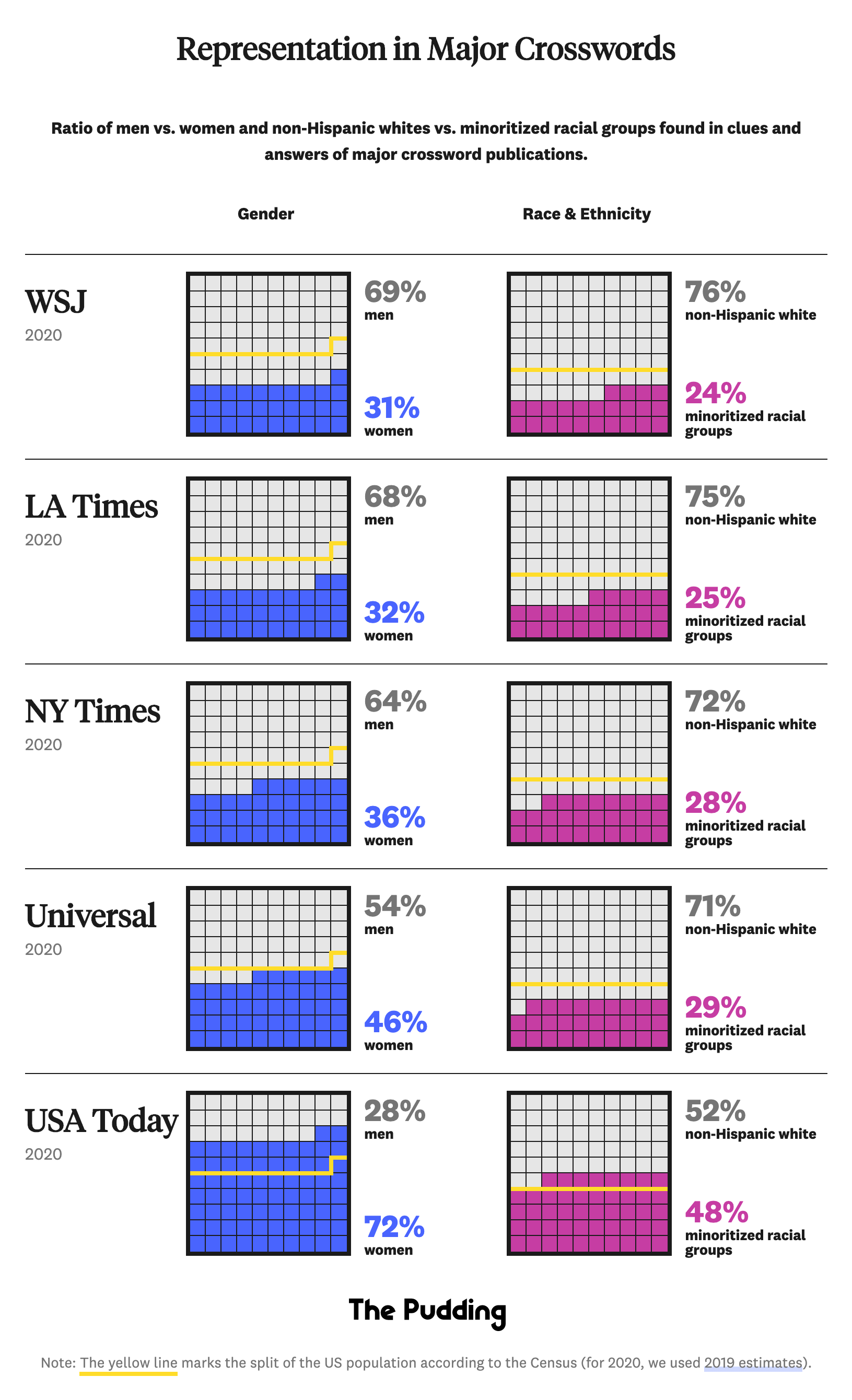
And that question has been tackled quite brilliantly by Michelle McGhee in an article for The Pudding.

Striving to “better understand who is being referenced in crossword puzzles,” McGhee made a strong point about the influence crosswords have as a reflection on society:

Crosswords tell us something about what we think is worth knowing. A puzzle that subtly promotes the idea that white men are the standard, the people everyone should know about, is a problem for all of us (yes, even the white men).

A less homogenous puzzle would be an opportunity for many solvers to expand their worldviews. But more importantly, if you’re a solver like me, it’s meaningful to see yourself and your experiences in the puzzle, especially if they are often unseen or underappreciated. When I see black women engineers, or powerful athletes, or queer couples centered in a puzzle, it makes me feel seen and significant. It’s a reminder that I can be the standard, not just the deviant.

And she put the data to work to prove her point.

hloq2v535n061

Sampling tens of thousands of crosswords from Saul Pwanson’s puzzle database, she and her fellow researchers sorted people mentioned in crossword clues and used as crossword answers by race and gender according to US Census categories.

And their conclusion, sadly, was hardly unexpected:

We recognize that this is an imperfect method, but it does not change our finding: crossword puzzles are dominated by men of European descent, reserving little space for everyone else.

Not only did they chart the percentages of representation, but they also created charts illustrating the most commonly referenced people in crossword answers in the New York Times puzzle.

The goal? They wanted to quantify the concept of “common knowledge” in crosswords in the hopes of redefining it in a way that better reflects a true common knowledge, one that represents everyone.

I’m only scratching the surface of this article, which is a fascinating exploration of the history of crosswords, what they say about society, and what they COULD say about society. I encourage you wholeheartedly to read McGhee’s full piece here.

It’s the sort of journalism, commentary, and data analysis that helps push a problematic aspect of crosswords into the spotlight and keep it there. Yes, there have been great steps forward for representation in crosswords, both within the puzzles and in the realm of constructors, but we can do better. We must do better.

And work by folks like Michelle McGhee and her graph-savvy data miners is a valuable part of the process.


Thanks for visiting PuzzleNation Blog today! Be sure to sign up for our newsletter to stay up-to-date on everything PuzzleNation!

You can also share your pictures with us on Instagram, friend us on Facebook, check us out on Twitter, Pinterest, and Tumblr, and explore the always-expanding library of PuzzleNation apps and games on our website!
Halfway through the Boswords 2020 Fall Themeless League!

boswords new

Last night marked the fifth week of competitive puzzly fun in the Boswords 2020 Fall Themeless League.

If you’re unfamiliar, the Boswords 2020 Fall Themeless League is a clever weekly spin on traditional crossword tournament-style solving. Instead of cracking through a number of puzzles in a single day (or two), the Fall Themeless League consists of one themeless crossword each week, scored based on your accuracy and how fast you complete the grid.

Each week’s puzzle only has one grid, but there are three sets of clues, each representing a different difficulty level for solvers. Smooth is the least challenging, Choppy is the middle ground, and Stormy is the most challenging. (When solvers registered to participate — which you can still do now! — they chose the difficulty level that suited them best.)

With a lineup of top-flight constructors involved and the Boswords team organizing, it was a can’t miss prospect, and hundreds of solvers signed up for the challenge of two months of themeless puzzle solving and a bit of friendly competition.

120718_crossword_L

Now that we’re officially halfway through the season, it feels like the right time to take a moment and reflect on the last four weeks of puzzling.

I will only be referencing the previous four puzzles — not last night’s Week 5 themeless — so there are only potential spoilers for non-participants. Competitors may read at their leisure.

Although I am quite familiar with crosswords, I am far from the fastest or cagiest solver, nor have I ever competed in any tournament solving, so I opted to enter the Choppy rank.

And I have very much enjoyed the experience thus far. Themeless puzzles always often a fun challenge, mixing long answers — often crossing or stacked with other long answers — with strong cluing, clever grid design, and most notably, no theme around which to frame the grid (or your solve, if you happen to dig into the theme entries immediately).

The cluing feels very fresh, mixing topical entries, meme fodder, and slang with traditional crossword classics and a dash of pop culture references. Although my lack of football knowledge betrayed me in week 1, I’ve made up some ground in weeks 3 and 4, posting my two quickest times, both with clean grids.

My times are far from cheetah-like; the top solvers in the Choppy rankings often solve these puzzles in half the time I do, and manage perfect scores to boot. I am getting faster, it seems, which is probably due to a growing familiarity with the solving interface, wasting less time maneuvering the screen.

I’m definitely finding it challenging. There are plenty of clues I pass over two or three times before coming up with something that fits the entries I’ve already placed, and these diabolical constructors always slip some devious wordplay and a-ha cluing into their puzzles.

In October alone, solvers contended with puzzles from Tracy Gray, Nate Cardin, Amanda Rafkin, and David Quarfoot, each bringing a unique style and flavor to their grid entries and cluing. Each themeless has been a challenge all its own, and once you finally figure out each solver’s tricks, you’re confronted with a new constructor the next week, and you start all over again.

Still, it’s great fun, a nice puzzly touch to the week that feels like you’re part of a community, bolstered not only by a communal solving experience once a week, but by Twitch chats and interactions with the organizers and fellow solvers.

We’re only halfway through, and I’d have to declare the Boswords 2020 Fall Themeless League a rousing success. I can’t wait to see what surprises the November puzzles bring, and what awaits the top solvers in the championship round.

Whether you’re competing alongside us or simply enjoying puzzles at your own speed, thanks for visiting. And happy puzzling!


Thanks for visiting PuzzleNation Blog today! Be sure to sign up for our newsletter to stay up-to-date on everything PuzzleNation!

You can also share your pictures with us on Instagram, friend us on Facebook, check us out on Twitter, Pinterest, and Tumblr, and explore the always-expanding library of PuzzleNation apps and games on our website!