Two Crossword Anniversaries This Week!

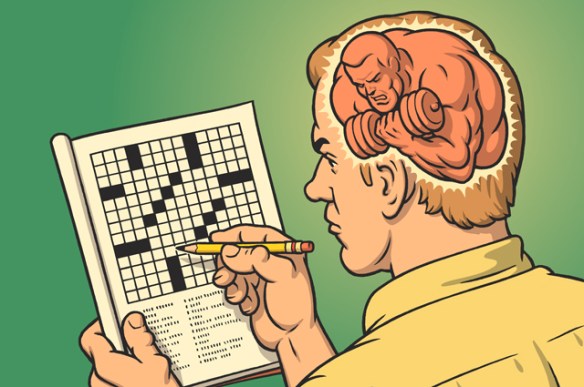
exercise-brain-crossword-670x335

Crossword history isn’t exactly a field of study that dates back to ancient times — I mean, we only celebrated the centennial of the crossword back in 2013 — but that doesn’t mean there isn’t a huge amount of historical crossword material out there to be commemorated.

In fact, this week marks two fairly meaningful crossword anniversaries, one to be celebrated today, the other tomorrow.

The first crossword anniversary to observe is the 150th birthday of Arthur Wynne.

[Image courtesy of express.co.uk.]

In 1913, Arthur Wynne created the first modern crossword puzzle — which he called a Word-Cross puzzle — and over a hundred years later, we are still enjoying the ever-increasing variety of puzzles and clues spawned by that “fun”-filled grid.

Wynne was born on June 22, 1871 in Liverpool, England, but moved to the states in the early 1890s, spending time in Pittsburgh and New York City before creating his Word-Cross puzzle for the New York Sunday World.

Of course, the crossword as we know it — with its square grid and the black-and-white square patterning — are due not to Mr. Wynne, but to his former associate, future first New York Times crossword editor Margaret Farrar.

But, speaking of figures who helped elevate crosswords to greater prominence, that brings us to our second anniversary.

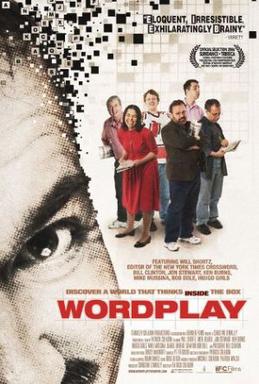
Tomorrow marks the 15th anniversary of the release of the influential crossword documentary Wordplay.

Wordplaymp

Wordplay introduced several famous names in crossword tournament circles, like Ellen Ripstein, Trip Payne, Tyler Hinman, Jon Delfin, and Al Sanders, as well as highlighting many celebrity crossword solvers like Jon Stewart, Ken Burns, Bill Clinton, and more. The documentary also chronicled the 2005 edition of the American Crossword Puzzle Tournament, bringing national attention to the tournament (and inspiring a Simpsons episode about crosswords).

Wordplay sparked a 40% increase in attendance the year after it aired, and the growing interest in the yearly event caused the tournament to actually change locations to a larger venue in New York City for 7 years!

(It has since returned to the Stamford Marriott, its traditional setting, despite actually topping the biggest NYC attendance in 2019, and again virtually in 2021.)

But the impact Wordplay had on the tournament itself, and interest in crosswords in general, cannot be overstated.

And this week, we celebrate both crossword anniversaries, one marking the genesis of crosswords, and the other marking how far crosswords had come, and how much farther they could go in the future.

It’s a pretty cool confluence of dates, to be sure.


dailypopwsicon

Have you checked out our special summer deals yet? You can find them on the Home Screen for Daily POP Crosswords and Daily POP Word Search! Check them out!

Thanks for visiting PuzzleNation Blog today! Be sure to sign up for our newsletter to stay up-to-date on everything PuzzleNation!

Bringing People Back to Puzzles After a Bad Solving Experience

About a month ago, we discussed crossword difficulty and how it can be daunting to get started in puzzles.

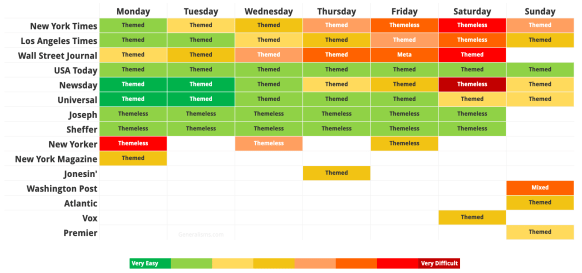
In that post, we shared Lloyd Morgan’s crossword difficulty matrix, a cart that allows new and unfamiliar solvers to seek out different venues based on their difficulty, ensuring they can ease into crosswords and not immediately get discouraged by a puzzle tougher than they’re ready for.

I mentioned the post to a friend of mine who isn’t terribly puzzle-savvy, and he asked, “But what about people who have already had bad experiences with crosswords and might be gun-shy about attempting them again, no matter what difficulty level is promised?”

And that’s a very fair question. How many folks do you know who try something once, and then never again after an unpleasant first encounter? I know several people who won’t touch logic problems because the grid is intimidating and they weren’t eased into the solving style. Cryptograms, Kakuro, puzzle hunts… all of them can be tainted for someone with one bad solving experience.

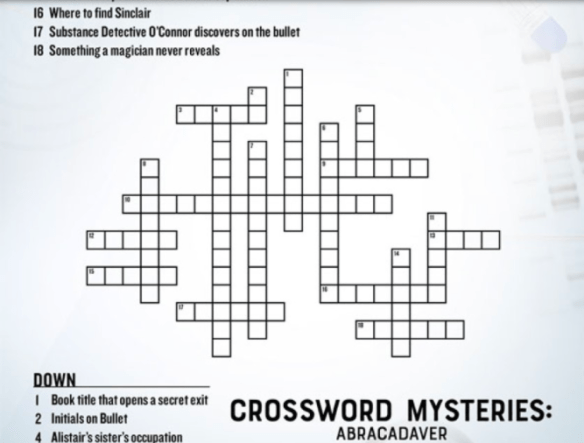
crisscross

You might think that crisscross-style puzzles (like the one above) would be less intimidating, since they don’t have the same dense grid surrounded by clues that crosswords have, but I’ve found that folks don’t warm to those quickly. No matter how well-constructed the crisscross, it tends to remind people of activity books for kids, and no one wants to feel patronized when trying out a new hobby or giving it another go.

I do have a suggestion, though. I’ve tried this with several friends and acquaintances who had sworn off crosswords entirely, and it not only introduced them to a new puzzle they didn’t know, but opened their eyes to the possibility of more puzzle-solving in the future.

My solution was: Fill-Ins.

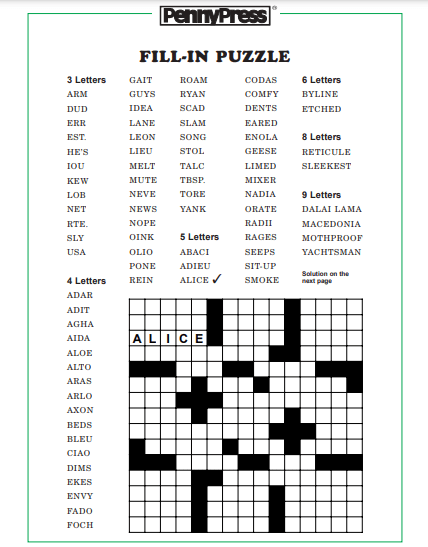
fillin sample

[A sample puzzle from our friends at Penny Dell Puzzles. Check out their fill-in library here!]

For the uninitiated, fill-ins utilize the same general grid style as a crossword. But instead of answering numbered clues to place the words in the grid, you’re already given the answer words, organized by word length. Your task is to place them all into the grid, using other words and letters in the grid to guide you.

Solving fill-ins helps remove the intimidation factor of crosswords in three ways.

1. No trivia or outside knowledge is required, which removes a huge burden from a solver who has probably felt overwhelmed by crossword cluing in the past.

2. It makes empty crossword grids less intimidating. Do you ever have those moments where you read three or four crossword clues in a row and you don’t immediately conjure up answers? And then you look at all those empty spaces in the grid and feel dumb? It happens. But fill-ins often have a set word to get you started, and once you start placing letters, recognizing useful crossings, and filling the grid, all that goes away.

3. Fill-ins help strengthen another skill valuable in crossword solving: letter-blank recognition. If you see B _ U _ , a regular solver instantly starts listing off possibilities: BOUT, BLUE, BLUR, BAUD, etc. But a new solver can look over at the four-letter words, scan the list, and see what fits, helping to build that mental lexicon for future solving.

120718_crossword_L

After solving a handful of fill-ins, word placement goes quicker, confidence in filling in those letter blanks increases, and empty grids become fields of potential puzzle fun, not stark empty spaces.

And honestly, it’s a pretty cool feeling to make puzzles enjoyable again for someone. When I get a phone call a month or so after introducing them to fill-ins, and they ask what other puzzles are out there, or where a good place to start with crosswords might be, that’s a win.

Then, of course, I direct them to Daily POP Crosswords. Because we’re the best. (And also to other puzzle outlets like our friends at Penny Press, of course.)

Do you have any suggestions for helping restore a love of puzzles to those previously burned, spurned, or disappointed, fellow puzzlers and PuzzleNationers? Share them in the comments section below! We’d love to hear from you.


dailypopwsicon

Have you checked out our special summer deals yet? You can find them on the Home Screen for Daily POP Crosswords and Daily POP Word Search! Check them out!

Thanks for visiting PuzzleNation Blog today! Be sure to sign up for our newsletter to stay up-to-date on everything PuzzleNation!

The Mind-blowing Variety of Puzzles

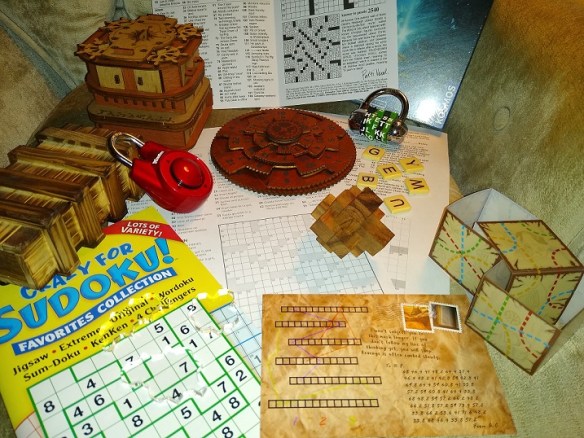
[A sampling of puzzles of many sorts: crosswords, puzzle boxes,
mechanical brain teasers, tile puzzles, riddles, and more!]

It really is incredible how many forms puzzles can take.

Think about it. Whether you’re talking Rubik’s Cubes, cryptograms, jigsaws, Sudoku, brain teasers, riddles, crosswords, escape rooms, tangrams, word seeks, sliding tiles, deduction problems, coded messages, or anagrams, they all fall under the umbrella of puzzles.

A puzzle can be as simple as pencil and paper or as complex as a multi-stage puzzle hunt or escape room, replete with codes, keys, hidden buttons, mechanical devices to assemble or utilize, and more. The folks at ThinkFun, for instance, have employed everything from ropes and magnets to lasers and mirrors in their puzzles.

That’s some extreme variety.

And the field of possibilities only widens when we add video game puzzles to the mix. We’ve previously talked about games like Tetris and Portal, where you must think in 2D and 3D respectively. We’ve seen games where you change the rules of the world to proceed or even interfere with the coding of the game itself to solve problems.

In the last few years, indie game designers and big studios alike have produced puzzle games that continue to push the boundaries of puzzly minds.

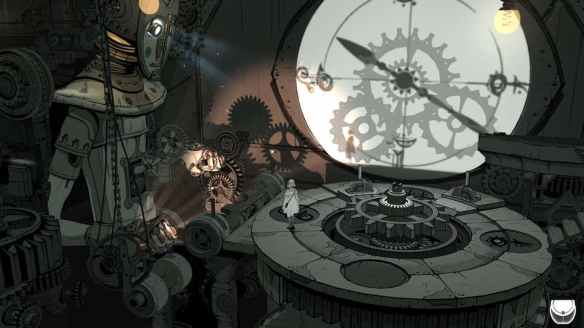
For instance, in Iris Fall you solve puzzles and maneuver around obstacles by playing with light and shadow. By moving light sources and interacting with the environment, both the light and the shadows it creates allow your character to play with perspective and illusion in order to accomplish tasks. It’s very cool!

In a similar vein, the game Superliminal challenges you to solve puzzles and move from room to room by shifting perspective. For instance, if you pick up a small item and then pull it close to you so that it looks bigger, it BECOMES bigger.

Check out this playthrough to see this mindbending puzzler in action:

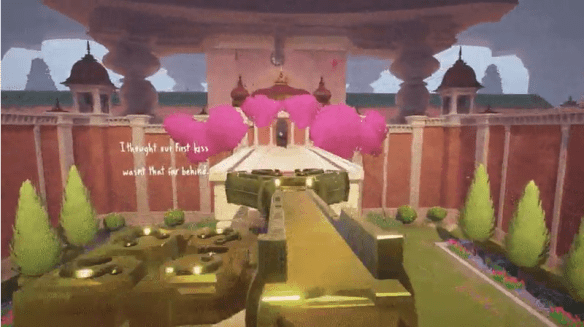
The game Maquette works off of a similar concept, but requires you to think in both big and small terms. In Maquette, you have a city to explore, and in order to do so, you also need to manipulate a miniature version of the city that affects the world outside.

For instance, there’s a bridge with the center path missing. How can you reach the other side with only a key in your hands?

Easy. You take the key, place it over the same bridge gap in the miniature, and then walk back to the real bridge, where a giant version of that key is now spanning the gap.

And now there’s Viewfinder, a game where you use a Polaroid-style camera to take pictures that you can then place into a three-dimensional world and turn them into structures you can interact with and solve problems!

These sorts of puzzle games help reinforce one of the fundamental rules of puzzle-solving: always be willing to change your perspective and come at the puzzle from another angle. It works with wordplay, it works with brain teasers, and it works in three-dimensional perspective puzzles in video games.

What’s your favorite flavor of puzzles, fellow PuzzleNationers? Have you learned something from one kind of puzzle that you’ve been able to apply in another style of puzzling? Let us know in the comments section below! We’d love to hear from you.


dailypopwsicon

Have you checked out our special summer deals yet? You can find them on the Home Screen for Daily POP Crosswords and Daily POP Word Search! Check them out!

Thanks for visiting PuzzleNation Blog today! Be sure to sign up for our newsletter to stay up-to-date on everything PuzzleNation!

Themeless Crosswords Vs. Themed Crosswords?

exercise-brain-crossword-670x335

When you think of crossword puzzles, what comes to mind? The grid first, or maybe the clues? When you picture your default crossword, is it a themed puzzle or themeless?

I ask because something of a kerfuffle was sparked on Twitter over the weekend regarding themeless puzzles vs. themed puzzles, and as you might expect, fellow puzzler, I have thoughts on the subject.

So how did all this start? With a blog post by crossword reviewer Rex Parker.

If you’re unaware, Rex is a constructor in his own right, but is far better known in the crossword world for his curmudgeonly reviews of the New York Times crossword. He frequently makes fair points, but they can be lost amid his personal views regarding particular clues and entries. (Often, if he doesn’t know it, it’s obscure. Which is not the same thing at all.) He’s sort of a “you love him or you don’t” figure in the crossword sphere.

I genuinely believe his commentary, however inconsistent or caustic at times, comes from a sincere desire to be engaged, entertained, and wowed by the puzzles he is so clearly invested in. But again, sometimes he can’t see the forest for the trees, and when your brand is “guy who bellyaches about crosswords,” you often play into what people expect from you.

cloud

[Now, to be fair, Rex is no Grandpa Simpson. But I simply couldn’t resist, given how he’s become synonymous with “grumpy fan who knows better than you.” And I’m so so very tired of gatekeeping fandom in general.]

And on Sunday, he carved into a Robyn Weintraub 21x themeless crossword with some serious vitriol:

This is very good for what it is, but unfortunately (for me), what it is is a Sunday themeless, and these are just never going to be interesting to me. As I’ve said before, it’s a giant (literally, giant! 21×21!) shrug. A Sunday-sized “we give up, here’s some stuff.” It’s too easy to be that interesting, and since the grid is so big, the construction doesn’t feel particularly special.

That is, yeah, you can get a lot of longish answers into a 21×21. There’s lots of room. I just don’t care as much as I ought to care. And today’s grid shape was really vanilla. No, wait, I like vanilla. A vanilla malt is the best thing in the world. Let’s call it “boilerplate” instead. It looks like a template of some kind. It’s a very clean grid, and many of the entries here are interesting, but the overall effect of said entries in a Sunday themeless is ho-hum.

There’s a reason the NYTXW didn’t do Sunday themelesses until, what, like two or three years ago? It’s because they’re a cop-out. I hear that some people enjoy them. I’m happy for them. For me, they’re a non-event. There’s no real low, no real high, just … middle middle middle. Time passes, and then the puzzle is done. Solving one of these unthemed Sundays, even a very competent one like this, isn’t necessarily better than solving a disastrous themed Sunday, to be honest. Certainly, from a blogging perspective, this is much much worse, as there’s really hardly anything to say.

Wow.

Now, this post is not intended to be a burial of Rex and his opinions. Even though I wholeheartedly disagree with his dim view of his puzzle.

It’s worth discussing because I’m someone who didn’t initially get the appeal of themeless crosswords.

weintraub themeless

[Robyn’s thoroughly impressive Sunday themeless grid.]

I’ve always liked puzzles, and tried my hand at solving New York Times-level crosswords many times before I ended up as part of the puzzle world. Once I really immersed myself in themed puzzles, I quickly started to appreciate the amount of skill, creativity, and hard work that went into a satisfying themed crossword.

I was slower to come around on themeless puzzles. I liked figuring out the trick of a themed puzzle, and I didn’t give themeless puzzles much thought. Thankfully, friends of the blog Patti Varol and Keith Yarborough (both of whom also helped open my eyes to so many terrific puzzle outlets and constructors) encouraged me to solve themeless puzzles more.

And I started to see that you don’t need a theme to show off the same skill, creativity, and hard work that goes into a crossword.

As I said in my wrap-up of the Boswords 2020 Fall Themeless League (yeah, I went from never solving themeless crosswords to eagerly anticipating a two-month tournament full of them!):

I really enjoyed seeing what creative constructors could do with crosswords once freed from the shackles of a theme. The long, crossing entries can certainly be intimidating at the start — especially if you read three or four clues in a row and feel like your brain has gone blank — but the sheer inventiveness of the entries you get to see, often stacked close together, is really cool.

And, like a jigsaw puzzle, the solving experience sneaks up on you. You get a few words here, a few letters there, and suddenly everything starts to fall into place. Clues that eluded you make total sense on a second or third reading, or the now-obvious wordplay punches you in the face.

Eventually, you’re left with a full grid and a real sense of accomplishment. (Not to mention a growing sense of wonder that the constructor managed to make all those crossings work.)

tumblr_inline_ojfzuuUgZr1rmajvb_500

And it’s disappointing that an influential voice in crosswords sees a themeless Sunday puzzle as a waste of time. (Constructor Eric Berlin has rightfully noted that Rex isn’t against all themeless puzzles, and has stated in the past that he often looks forward to the Friday themeless.)

Which makes it all the more strange that he’d choose to die on this particular hill. Robyn is a well-respected constructor, and her byline alone is a welcome sight for many puzzle fans, themeless or themed. The response online to this themeless puzzle was very positive overall; even in the comments section of Rex’s blog post, the majority of the responses celebrated Robyn’s themeless as a terrific solve.

I would argue that the occasional Sunday themeless puzzle is a good thing. Not only is it a nice break from the expected norm, but having puzzles the caliber of this one will bring more eyes to the merits of themeless crosswords in general.

The sheer variety in fresh, exciting, and thought-provoking grid entries alone makes them worthwhile. Themed puzzles are great, obviously, but they can also severely limit how interesting you can make the rest of the grid once the theme has been figured out.

Great constructors and engaging cluing can overcome that, but it’s a limitation that themeless crosswords simply don’t have. The fill is EVERYTHING, and that pushes constructors to be as creative as possible with their grid designs, the often ambitious crossings and stacks of long entries, and all that delightfully unexpected vocabulary.

Rex says, “Solving one of these unthemed Sundays, even a very competent one like this, isn’t necessarily better than solving a disastrous themed Sunday, to be honest.”

I think you’ll find many solvers and constructors disagree. There’s as much beauty and value in a skilled themeless as there is in a deftly-constructed themed puzzle.

And to say a well-constructed themeless is on par with a “disastrous” themed puzzle is just ridiculous. Sure, for his brand, he gets more mileage taking apart a bad puzzle than discussing a good one, but a good solve and good blog fodder aren’t the same thing at all.

As I said before, you can learn a lot from Rex’s blog. Plenty of constructors have gleaned valuable lessons about theme entries, grid fill, and more from his critiques. But punching down against a particular style of crosswording benefits no one, particularly when it can easily be misconstrued as a shot against themeless puzzles in general..

Thank you, Robyn Weintraub, for a banger of a Sunday puzzle, and thank you, Evan Birnholz, for championing the cause of themeless crosswords (and bringing this to my attention.)

Do you enjoy themeless puzzles, fellow PuzzleNationers? Let us know in the comments section below! We’d love to hear from you.


dailypopwsicon

Have you checked out our special summer deals yet? You can find them on the Home Screen for Daily POP Crosswords and Daily POP Word Search! Check them out!

Thanks for visiting PuzzleNation Blog today! Be sure to sign up for our newsletter to stay up-to-date on everything PuzzleNation!

5 Questions for Crossword Constructor Malaika Handa!

Welcome to 5 Questions, our recurring interview series where we reach out to puzzle constructors, game designers, writers, filmmakers, musicians, artists, and puzzle enthusiasts from all walks of life!

This feature is all about exploring the vast and intriguing puzzle community by talking to those who make puzzles and those who enjoy them.

And this marks the sixth edition of our series of interviews where we turn our eyes to the future of crosswords. Instead of interviewing established talents in the field, I’ve been reaching out to new and up-and-coming constructors and asking them to share their experiences as a nascent cruciverbalist.

And we’re excited to welcome Malaika Handa as our latest 5 Questions interviewee!

You have to be fairly ambitious to get into constructing crosswords, but Malaika Handa is setting the bar pretty high.

Less than a year into her cruciverbalism career, she’s already been published in outlets like Grids These Days, Matthew Stock’s Happy Little Puzzles, and the American Values Club Crossword.

But she’s best known as the creator and curator of 7xwords, an attempt to create a puzzle for every possible 7×7 crossword grid in a single year. If that’s not impressive enough, she launched 7xwords after having only constructed crosswords for a few months!

Malaika was gracious enough to take some time out to talk to us, so without further ado, let’s get to the interview!


5 Questions for Malaika Handa

1. How did you get started with puzzles?

I started solving the New York Times puzzle about two years ago, when I got a job that had a commute. Eventually, we switched to working from home, but I still would solve the puzzle every morning. I didn’t realize regular people could make puzzles (“crossword constructor” felt akin to “astronaut” in terms of attainability) until a crossword blogger I liked refilled a corner as an example of how to make it better. That blew my mind! I started making mini puzzles in Excel, and then finally bought Crossfire around October 2020. Hand gridding is not for me, I’ve learned!

2. What, in your estimation, makes for a great puzzle?

I really don’t think there’s such a thing as a canonical great puzzle– or if there is, I am frankly uninterested. Appealing to every single solver seems like an impossible task, and a good way to end up with a puzzle that’s a little flat and lifeless. I like to solve puzzles that are fun for me, Malaika Handa, to solve! (I hope that framing doesn’t seem selfish.) Puzzles with pop culture references that I know, computer / math stuff, make-up / fashion stuff, Twitter slang.

Adam Aaronson had a puzzle with SYNTACTIC SUGAR in it, and I plunked it in with no crossings. I solved the rest of the puzzle floating on a cloud. I love that term so much– when I was a teaching assistant in college (one of my favorite jobs I’ve had) I taught it to my students, and I think it is a lovely and evocative phrase. I bet a lot of people had never heard of SYNTACTIC SUGAR before, so maybe that was really tough for them, but that’s okay. We don’t have to have the same opinion on everything.

What do you most enjoy — or try hardest to avoid — when constructing your own? 

When I write puzzles, I like to use fill and clues that make me really excited, even if it’s things other people might not have heard of. (I think that’s called “voice,” by the way.) Once I clued ISLA as [Stephanie Perkins’ heroine] and all my test solvers said they had never heard of that reference. I kept it in the puzzle anyway.

Then my older sister solved it and when she got to that clue, she texted me with a zillion exclamation points and we freaked out over how good Stephanie Perkins’ books are. My number one advice to other constructors is: If a particular entry doesn’t make you excited, what is it doing in your puzzle? (By the way, sometimes the answer is “it’s holding in place three other entries that make me excited” and I think that’s fine.)

Do you have any favorite crossword themes or clues, either your own or those crafted by others?

I love hearing people’s favorite clues. Mine are Robyn Weintraub’s [Batting equipment?] for FAKE EYELASHES, and Mollie Cowger’s [“Thank God it’s Friday”?] for SHABBAT SHALOM, both of which I, no exaggeration, think about probably once a week. My favorite clues that I’ve written are always clues from my most recent puzzles. So right now there’s 50-Across from this puzzle ((Editor’s note: Great clue, but NSFW)), or [Wireless device] from this puzzle.

3. Your 7xwords puzzle blog has become something of a sensation in the puzzle world, shouted out by fellow constructors like Erica Wojcik, Kevin Trickey and May Huang. Where did the concept for 7xwords come from? What have you learned from the project so far? Will 7xwords reach its ambitious goal by week 52?

The site started with the discovery that there are 312 legal 7×7 crossword grids, which works out to a six-days-a-week midi puzzle. (I talk more about the 7xwords origin story and the math behind it in this episode of Fill Me In, at around 24:30. And if you’re curious about the code I used to build the grids, feel free to message me on Twitter!)

I’ve learned so much from this project, I don’t even know where to start. Stuff like “How to make an html page exist on the Internet instead of just locally on my computer” and “Having a separate email address for a project like this will make your life one hundred times easier.” I’ve also gotten a lot better at articulating why a particular clue or crossing feels like it needs improvement. That’s a skill that has come from copy editing *checks notes* about 150 midi puzzles. Back in January, I was operating mostly under vibes (“this feels like it could be better”) but now I can usually identify what needs fixing, and how to fix it.

As for whether we’ll reach the goal… I do have a constructor locked down for every single grid. So it feels very promising. I have also seen that final grid, with no black squares, and it exists. So, even more promising!

4. What’s next for Malaika Handa?

The most concrete thing coming up is my puzzle in the Boswords summer tournament! Registration will open on July 1. Join us!! It’s going to be a super fun time.

5. What’s one piece of advice you would offer fellow solvers, aspiring constructors/setters, and puzzle enthusiasts?

I would love for solvers to remember that just because they personally didn’t like a puzzle doesn’t (necessarily) mean the puzzle should not have been published. (Sometimes it does, of course. Like Woody Allen tribute puzzles– we can just stop with those.)

Also, when you’re solving, look up entries that you don’t know! It’s a game, not a test.


A huge thank you to Malaika for her time. You can follow her on Twitter for all of her crossword endeavors, and be sure to check out her 7xwords puzzle site for both the 7×7 puzzles and her other crosswords! Whatever she does next, I’m sure it will be brilliant!

Thanks for visiting PuzzleNation Blog today! Be sure to sign up for our newsletter to stay up-to-date on everything PuzzleNation!

You can also share your pictures with us on Instagram, friend us on Facebook, check us out on TwitterPinterest, and Tumblr, and explore the always-expanding library of PuzzleNation apps and games on our website!

The 2021 Boswords Spring Themeless League: Looking Back

boswords new

After two months of challenging, engaging, and thoroughly enjoyable weekly solving, the Boswords 2021 Spring Themeless League came to a close a few weeks ago.

If you’re unfamiliar, the Boswords 2021 Spring Themeless League spreads out a tournament-style solving experience over nine weeks, one themeless crossword per week. Each puzzle is scored based on your answer accuracy (incorrect letters, empty squares, etc.) and how quickly you complete the grid.

While each week’s puzzle only had one solution, there were three sets of clues, each representing a different difficulty level for solvers. Smooth was the least challenging, Choppy was the middle ground, and Stormy was the most challenging. (When solvers registered to participate, they chose the difficulty level that suited them best.)

Hundreds of solvers signed up for the challenge of two months of themeless puzzle solving and a bit of friendly competition, and now that it’s over, I’d like to share a few thoughts about my experience in the League.

exercise-brain-crossword-670x335

When I participated in the 2020 Fall Themeless League, I didn’t really know what to expect. I didn’t have much experience with themeless puzzles, and I rarely solve online, so even though I’m very familiar with crosswords, it felt like a new experience.

But with last season’s league under my belt, I went into the 2021 Spring Themeless League excited to again test my skills with some top-flight puzzles, a touch more confident in my themeless solving than last time.

As you might expect, being freed from the shackles of themed puzzle building allows constructors to really flex their creative muscle, indulging all sorts of curious and unexpected vocabulary as they cross long entries and employ staggeringly few black squares in these impressive grids.

tumblr_nnl5c43Ov61qd4fqho1_500

Aimee Lucido opened up week one with three 13-letter entries across the center of the grid, giving new solvers a taste of just what constructors can do with a themeless grid, and offering established solvers some terrific crossings and fun vocabulary.

Peter Wentz’s week two puzzle and the week three offering from Brynn Diehl and Mark Diehl continued to set the tone for the season, mixing some clever wordplay in their cluing with ambitious grid construction. (Week three’s puzzle had stacks of 10-letter entries in every corner, which was impressive.)

Rachel Fabi provided week four’s puzzle — which really tickled me by having “advice column” as a down entry, i.e. a column — and Ryan McCarty’s week five puzzle was one of my smoothest solves of the tournament. Plus, he had “doggos” in the grid, and I am fully onboard with “doggo” becoming crosswordese.

I stupidly submitted my grid with an empty square in Patti Varol’s week six, which hurt my score somewhat. I still enjoyed the puzzle, though. Crossing SPANKED with BUCKNAKED was certainly a style choice. Also, Patti always teaches me new words with her puzzles. This time around, it was “vaporetto.”

Week seven’s offering by Ricky Cruz really impressed me with some difficult letter placements — particularly the plethora of Xs in the lower-left corner. (Unfortunately, I missed the submission deadline for this one, so I got a zero for this puzzle.)

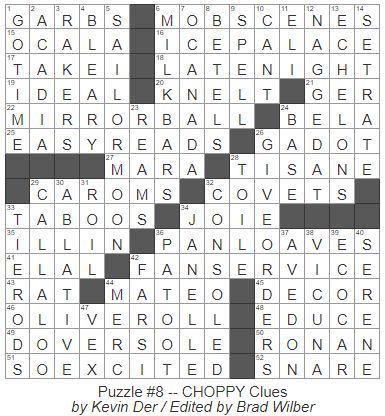
That was followed by Kevin Der’s amazing week eight grid. This one took me ten minutes longer than my average time for the rest of the tournament puzzles.

I mean, look at this grid:

kevin der grid

Week nine’s championship puzzle was constructed by Brooke Husic, and it was the perfect closer to two months of solving. It was sharp and well-constructed, sending everyone home happy.

All in all, I enjoyed the Spring Themeless League more than the Fall League because I felt much more comfortable with the solving interface and I had a better handle on themeless solving overall. My times were stronger — although far from the blistering pace set by many of the top solvers — and I felt like I was making smarter choices in my solving. It’s always nice to both see and feel improvement in your puzzling.

I ended up placing 262nd out of around 600 competitors — had I actually gotten puzzle seven submitted, I would’ve been closer to 115th or so — which is about on pace for how I did in the Fall Themeless League.

But the tournament experience was delightful. Having a new challenge awaiting you every week is a treat, especially with the fantastic roster of talent they assembled in this season’s constructors.

And with the promise of future Boswords-hosted events in 2021 like the Summer Tournament on July 25th and the Fall Themeless League in October and November, it’s nice to have exciting puzzle events to look forward to in the near future.

Kudos to everyone who helped bring this marvelous project together, and kudos to everyone who participated. It was so much fun.


Thanks for visiting PuzzleNation Blog today! Be sure to sign up for our newsletter to stay up-to-date on everything PuzzleNation!

You can also share your pictures with us on Instagram, friend us on Facebook, check us out on TwitterPinterest, and Tumblr, and explore the always-expanding library of PuzzleNation apps and games on our website!