An Escape Room in a Box!

[Image courtesy of Escape Game Addicts.]

Escape rooms have been all the rage lately, as teams of people pit themselves against riddles, puzzles, codes, and other challenges in order to escape a room within a certain amount of time. It’s about as close as you’ll get to being MacGyver or Batman in this life, and it can be great fun.

They’ve been around long enough that themed escape rooms are beginning to emerge. From post-apocalyptic and horror themes to hockey, schools, pirates, and more, escape rooms are constantly innovating to keep solvers on their toes.

So when I heard about an upcoming escape-the-room-style event in Chicago, I had to share it with my fellow puzzlers.

Revolution Brewing Tap Room in Chicago will be hosting Creatures on the Loose on December 28, a creation of The Mystery League, and they’ve put a curious twist on the escape-the-room scenario: everything you’ll need is inside a locked briefcase.

From the announcement on Eventbrite.com:

Ten terrible creatures, each from an alternate dimension, have been let loose to wreak havoc on our town. The culprit’s identity and motives are unknown. Hunters have been on the case, snooping around town and collecting evidence. But they too have vanished, leaving just their locked briefcases behind. You will need to break into the briefcase, find the creatures, and figure out who is causing all this mayhem.

Inside the briefcase you will find all the tools you need to solve the mystery, including (but not limited to): a newspaper, a magic wand, a bible, a calculator, a wallet of money, a pile of stocks, a Wonka bar, a leather strap, a code wheel, a map, and an enigmatic computer.

The idea of an escape room that comes to you is an awesome one, and I hope the Mystery League finds great success with this challenge. (And the winning team gets a round of pints as their prize!)

Tickets start at $29 for a 90-minute event, and that sounds like a great deal for a puzzly experience like this. Let me know if you participate! I’d love to hear about it!


Thanks for visiting PuzzleNation Blog today! Be sure to sign up for our newsletter to stay up-to-date on everything PuzzleNation!

You can also share your pictures with us on Instagram, friend us on Facebook, check us out on TwitterPinterest, and Tumblr, and explore the always-expanding library of PuzzleNation apps and games on our website!

The GCHQ Strikes Again!

Last year, one of the toughest puzzles I encountered all year was the GCHQ Christmas Card.

The GCHQ — Government Communications Headquarters — provides security and intelligence services for the British government. Back when they were known as GC&CS — Government Code and Cypher School — they were responsible for funding Bletchley Park and its successes cracking the German “Enigma” code during World War II.

And last Christmas, they released a puzzly Christmas card that challenged the staunchest puzzlers, with over 600,000 submissions, but only 3 successful solutions!

This year, they’re doing things a little bit differently.

[Click here for a larger version.]

This puzzle is the first step in a larger event that the GCHQ expects will take MONTHS to solve. (Their official due date for submissions is February 28, 2017!)

The big change here is that instead of a series of webpages available free to the public, they’re releasing this puzzly master challenge as a book containing over 140 codes and puzzles.

But it’s for a good cause, as “all GCHQ’s proceeds from sales of the book will be donated to the Heads Together campaign, supported by HRH The Duchess of Cambridge, who wrote the foreword for The GCHQ Puzzle Book.”

The Duchess writes:

I have always been immensely proud of my grandmother, Valerie Glassborow, who worked at Bletchley Park during the Second World War. She and her twin sister, Mary, served with thousands of other young women as part of the great Allied effort to break enemy codes. They hardly ever talked about their wartime service, but we now know just how important the men and women of Bletchley Park were, as they tackled some of the hardest problems facing the country.

In a new century, their successors at GCHQ continue this intellectual tradition. Like their Bletchley predecessors, they have become well known for valuing and understanding the importance of mental wellbeing. This is so important when dealing with such discretion and the pressure which comes with this.

William, Harry and I are very grateful that this book is supporting our Heads Together Campaign. I hope it will not only amuse and challenge readers, but help to promote an open discussion of mental health problems, which can affect anyone, regardless of age or background. Together, we are aiming to change the national conversation around mental health from stigma and fear to openness and understanding. Those who buy this book and support the Heads Together campaign will be playing a part in helping people get the important mental health care they deserve.

Puzzles and charitable works: a perfect holiday match, to be sure.

For US shoppers, the book is available as a Kindle ebook through Amazon.com, but if you want a paperback copy, you’re better off ordering it from Amazon.co.uk. With shipping and conversion, it still cost me less than $20.


And thanks for visiting PuzzleNation Blog today! Be sure to sign up for our newsletter to stay up-to-date on everything PuzzleNation!

You can also share your pictures with us on Instagram, friend us on Facebook, check us out on TwitterPinterest, and Tumblr, and explore the always-expanding library of PuzzleNation apps and games on our website!

The Mystery of the Kryptos Sculpture

[Image courtesy of Kryptos.arcticus.com.]

If I told you that one of the most famous unsolved encrypted messages in the world isn’t lurking in the works of Da Vinci or in some vast government warehouse like the Ark of the Covenant, but rather as part of a sculpture only twenty-five years old, you might be surprised.

You’d probably be less surprised to discover that said sculpture is located in front of the headquarters of the CIA, though.

Kryptos, a flowing sculpture made of petrified wood and copper plating over a small pool of water, was revealed to the world in 1990. Masterminded by artist Jim Sanborn, it was apparently designed to both challenge and honor the Central Intelligence Agency. And for decades now, it has proven to be a top-flight brain teaser for codebreakers both professional and amateur.

From an article on Wired.com:

It all began in 1988 when the CIA Fine Arts Commission commissioned local artist James Sanborn to create a cryptographic sculpture for a courtyard on the CIA campus. Sanborn completed the two-part sculpture in 1990, which included stones laid out in International Morse code near the front entrance of the CIA campus, and a 12-foot-high, verdigrised copper, granite and petrified wood sculpture. The latter, which is the more famous part of Kryptos, was inscribed with four encrypted messages composed from some 1,800 letters carved out of the copper plate.

[Image courtesy of The Magazine.org.]

There are four distinct sections, utilizing different forms of encryption. And amazingly, the fourth section continues to elude codecrackers to this very day.

It took nearly a decade before anyone announced a solution to the first three encryptions. A computer scientist named Jim Gillogly announced in 1999 that he had cracked passages 1, 2, and 3 with computer assistance.

The CIA, not to be one-upped, then revealed that one of their own employees, an analyst named David Stein, had solved those same three passages the year before, using only pencil, paper, and lunchtime man-hours.

But a 2013 Freedom of Information Act request into records of the National Security Agency revealed that an NSA team actually cracked those same three passages back in 1993 as part of a friendly rivalry between the NSA and CIA, provoked by former NSA director and then-deputy CIA director William O. Studeman.

[Image courtesy of G.A. Matiasz.]

Passage 1 employs a Vigenère cipher, a letter-shifting cipher that has been used for centuries, also known as a periodic polyalphabetic substitution cipher, if you want to get fancy with it.

The message, penned by Sanborn himself, reads Between subtle shading and the absence of light lies the nuance of iqlusion. [Iqlusion is an intentional misspelling of “illusion.”]

Passage 2 also employs a Vigenère cipher, but utilizes a different keyword than Passage 1. The message, also composed by Sanborn, points toward something hidden nearby:

It was totally invisible. How’s that possible? They used the earth’s magnetic field. x The information was gathered and transmitted undergruund to an unknown location. x Does Langley know about this? They should: it’s buried out there somewhere. x Who knows the exact location? Only WW. This was his last message. x Thirty eight degrees fifty seven minutes six point five seconds north, seventy seven degrees eight minutes forty four seconds west. x Layer two. [Again, there’s an intentional misspelling here with “undergruund.”]

Passage 3 uses a transposition cipher, which relies on the positioning of given letters in order to properly spell out a message. The message is inspired by the words of Howard Carter, the archaeologist who opened King Tut’s tomb:

Slowly, desparatly slowly, the remains of passage debris that encumbered the lower part of the doorway was removed. With trembling hands I made a tiny breach in the upper left-hand corner. And then, widening the hole a little, I inserted the candle and peered in. The hot air escaping from the chamber caused the flame to flicker, but presently details of the room within emerged from the mist. x Can you see anything? q [Again, there’s an intentional misspelling with “desparatly.”]

[Image courtesy of Unmuseum.org.]

Although some codebreakers believe the misspellings of “iqlusion,” “undergruund,” and “desparatly” are simply Sanborn’s crafty attempts at misdirection, others believe they are clues hinting at how to crack Passage 4, which is only 97 characters long.

Sanborn has even offered hints to help frustrated solvers in their efforts to unravel the mystery of Passage 4. In 2006, he revealed that letters 64 through 69 in the passage, NYPVTT, decrypt to “Berlin.”

And in 2014, Sanborn revealed that letters 70 through 74, MZFPK, decrypt to “clock.” So the message has something to do with the Berlin Clock, although Sanborn has stated “there are several really interesting clocks in Berlin.”

[Image of the Berlin Clock courtesy of Secret City Travel.com.]

Amazingly, even if someone does crack Passage 4 someday, that’s not the end of the journey. All four passages are part of a riddle to unravel to truly solve the Kryptos puzzle, and apparently, doing so requires you to be on CIA property. That’s no small feat.

Jim Sanborn has truly created a beautiful, diabolical puzzle for the ages here. I wonder who will step up to finally solve this masterpiece.


Thanks for visiting PuzzleNation Blog today! Be sure to sign up for our newsletter to stay up-to-date on everything PuzzleNation!

You can also share your pictures with us on Instagram, friend us on Facebook, check us out on TwitterPinterest, and Tumblr, and explore the always-expanding library of PuzzleNation apps and games on our website!

5 Questions with Author Elizabeth Singer Hunt!

Welcome to 5 Questions, our recurring interview series where we reach out to puzzle constructors, game designers, writers, filmmakers, musicians, artists, and puzzle enthusiasts from all walks of life!

It’s all about exploring the vast and intriguing puzzle community by talking to those who make puzzles and those who enjoy them! (Click here to check out previous editions of 5 Questions!)

And I’m excited to welcome Elizabeth Singer Hunt as our latest 5 Questions interviewee!

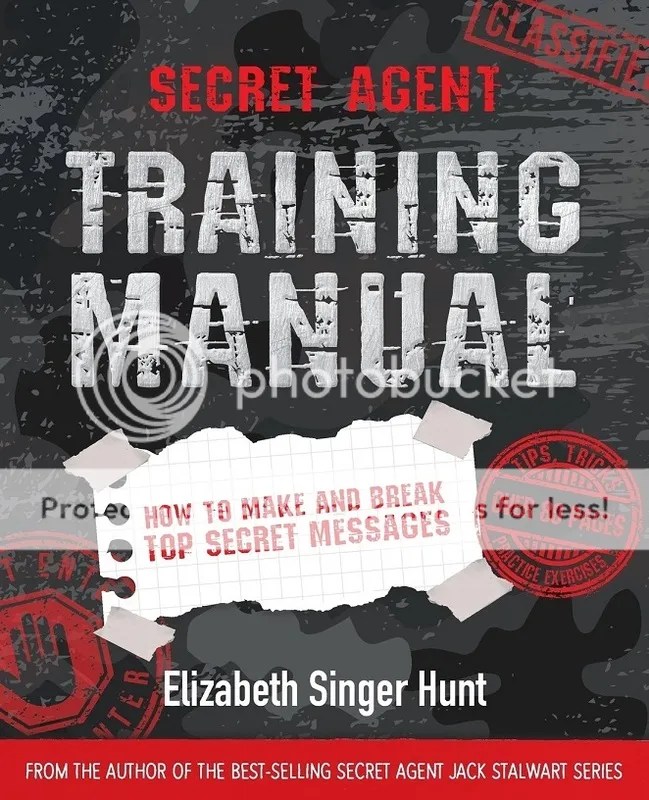
Elizabeth Singer Hunt is the author behind the globe-spanning Jack Stalwart books, a young adult series featuring a nine-year-old secret agent, with over two million books sold to her credit! She’s recently expanded into the world of puzzles with the publication of the Secret Agent Training Manual, a terrific introductory guide to codecracking and concealment.

Anagrams, ciphers, scytales, and encoding with other letters, numbers, or symbols are all explained with easy-to-understand instructions and plenty of examples. She even provides sample encryptions to crack, letting readers practice their newfound skills and techniques, giving young readers the chance to become their own Jack Stalwart-style secret agents!

Elizabeth was gracious enough to take some time out to talk to us, so without further ado, let’s get to the interview!


5 Questions for Elizabeth Singer Hunt

1. What inspired the adventures of Jack Stalwart?

As a young girl, I struggled to read. It wasn’t so much that reading was a problem for me. I couldn’t find any books that I identified with. I grew up in a small town in Louisiana, and spent most of my weekends fishing, crabbing, playing with frogs and tossing around footballs. Basically, I was a tomboy. It was difficult to find books that I could relate to since most of the ‘girl’ books were about friendship issues, horses and fairies.

At around that same time, Raiders of the Lost Ark opened in theatres. That movie introduced me to archaeology and adventure, and showed me that there was a world outside of Louisiana. As a southern girl, I had no idea that places like ‘Nepal’ and ‘Peru’ even existed!

When I was in my late twenties, I decided to take a crack at writing a children’s book series. I drew upon my childhood experiences and inspirations to create the series’ main character, nine-year-old Jack Stalwart. Jack moonlights as a junior secret agent for the Global Protection Force, or GPF. In every book, he’s sent on a mission to an exotic locale in order to protect one of the world’s most precious treasures.

Millions of children around the world have fallen in love with Jack, largely because they identify with him and want to be like him. He’s like a pint-size Indiana Jones, sprinkled with a bit of James Bond and written for the nine-year-old ‘reluctant reader’ me.

Did they, in turn, inspire the Secret Agent Training Manual, or was that meant to be a standalone creation?

Over the years, I have received thousands of emails from children asking how they can become a secret agent like Jack. So I thought it would be fun to create a series that introduced them to basic secret agent/spy skills. Code-breaking seemed a natural place to start! The first book in the series is called How to Make and Break Top Secret Messages. Subsequent books will discuss basic spy craft and the history of intelligence gathering.

2. Are you a puzzle fan yourself, or did your aptitude with encryption and codebreaking puzzles come out of your research and work as a writer?

A little bit of both! I have always had an affinity and aptitude for word puzzles. My favorite game growing up was Boggle and to this day, I am the family Boggle Champion! Recently, my children and I discovered Bananagrams.

It’s right up my alley, since it relies on the ability to quickly arrange and re-arrange letter tiles into words. That being said, I didn’t know too much about the world of cryptography (except for some of the basics) until I began researching for this book.

Do you have a favorite method of encryption or one that didn’t make it into the SATM?

I am fascinated by all of the methods of encryption featured in the book because each has its use depending upon the situation. I suppose my favorite is the ‘cipher’ because it’s ever-changing and difficult for the average person to solve without a key.
3. Let’s talk a little bit about your writing process, since composing a novel is a puzzle in itself. Do you start with characters, plot, certain scenes in your head already? How do you approach the process of writing a book?

Good question! It depends upon the type of book that I am writing.

For my (fiction) Jack Stalwart chapter book series, I have a fairly unorthodox way of writing. I establish the setting, mission and villain and then I start writing! Everything is free-flowing, and little is planned. I love movies and am extremely influenced by film, so in a way I am writing as though I am watching a film play out before my eyes.

For the (non-fiction) Secret Agent Training Manual book, things needed to be a lot more structured. Research was done, notes were taken and the book was organized from the most basic cryptographic methods to those that took a bit more time and thought to decode. Most of this book was handwritten, while many of my fiction books are typed onto a computer screen from the get-go.

4. What’s next for Elizabeth Singer Hunt?

I’m excited to say that Costco is planning an exclusive nationwide launch of the Jack Stalwart series in volume form next month, i.e. in April of 2016. That means that children across the country will be able to enjoy the Jack Stalwart series four books at a time in a specially produced keepsake volume.

Besides this news and the launch of the Secret Agent Training Manual book, I’ve also recently published the first book in a new middle grade series called Swamp Mysteries: The Treasure of Jean Lafitte. The series chronicles the adventures of four twelve-year-old friends as they solve paranormal mysteries in the swamps and bayous of Louisiana. It’s a bit like Scooby-Doo with a southern twist.

5. If you could give the readers, writers, and puzzle fans in the audience one piece of advice, what would it be?

As my mother always says, “There’s always a solution to everything. Persevere!”

When I first had the idea for the Jack Stalwart series, I shopped it around to various agents and publishers and they promptly rejected it. I could have felt sorry for myself and given up. But I believed in the idea and in myself. So, I found a solution to the problem. I published it myself, i.e. hired an editor, illustrator, designer and found a local printer to produce the books. I printed thousands of Jack Stalwart books, and sold them personally to as many booksellers as I could find.

After five months of hard work, the series caught the attention of an agent and the head of children’s fiction at Random House UK. (I was living in England at the time). Random House acquired the Jack Stalwart series, and commissioned me to write a total of fourteen books.

The rest as they say is history. Had I listened to the naysayers, Jack Stalwart never would have existed and I never would have had a career as an author. Thankfully, I took my mother’s advice. It’s the same advice that I would give to anyone with a dream. Never give up. Be resourceful, and persevere.


A huge thank you to Elizabeth for her time. Be sure to visit her website for updates on her latest projects. I cannot wait to see what she has in store for us next!

Thanks for visiting PuzzleNation Blog today! Be sure to sign up for our newsletter to stay up-to-date on everything PuzzleNation!

You can also share your pictures with us on Instagram, friend us on Facebook, check us out on TwitterPinterest, and Tumblr, and explore the always-expanding library of PuzzleNation apps and games on our website!

A puzzly British Christmas card!

One government agency in England celebrates Christmas a little bit differently than most.

The GCHQ — Government Communications Headquarters — provides security and intelligence services for the British government. Back when they were known as GC&CS — Government Code and Cypher School — they were responsible for funding the Bletchley Park successes cracking the German “Enigma” code during World War II.

And for Christmas this year, they’ve released a puzzly Christmas card that’s sure to challenge even the staunchest puzzlers.

Step 1 of the puzzle is a logic art puzzle where you have to deduce where to place black squares on an open grid in order to form a picture.

Each column and row has a series of numbers in it. These numbers represent runs of black squares in a row, so a 1 means there’s one black square followed by a blank square on either side and a 7 means 7 black squares together with a blank square on either side.

Once you’ve solved this puzzle, you can use it to unlock the next puzzle in the chain.

From an article on GCHQ.gov.uk:

Once all stages have been unlocked and completed successfully, players are invited to submit their answer via a given GCHQ email address by 31 January 2016. The winner will then be drawn from all the successful entries and notified soon after.

Players are invited to make a donation to the National Society for the Prevention of Cruelty to Children, if they have enjoyed the puzzle.

This is one majorly challenging Christmas card. After you’ve conquered the logic art puzzle, you’ll confront brain teasers, palindromes, pattern-matching, deduction, number progressions, codebreaking, cryptic crossword-style cluing, and more.

I would highly recommend teaming up with another puzzle-minded friend (or more) and trying your luck. Let us know how far you get! (And you can hit up this article from the Telegraph for aid as well.)


Thanks for visiting PuzzleNation Blog today! Be sure to sign up for our newsletter to stay up-to-date on everything PuzzleNation!

You can also share your pictures with us on Instagram, friend us on Facebook, check us out on TwitterPinterest, and Tumblr, and explore the always-expanding library of PuzzleNation apps and games on our website!

A puzzle hunt 100 years in the making!

Riddles, codebreaking, and scavenger hunts are three of my favorite puzzly topics. I’ve covered each extensively in blog posts previously, exploring not only the history and ever-changing nature of puzzles, but how deeply ingrained puzzle-solving is in our culture, past and present.

Tuesday’s post was about a fairly simple encoded puzzle I found lurking inside a short story. That simplicity, that accessibility is part of why I wrote about it.

For you see, fellow puzzlers, today’s post is not about a simple puzzle. Today’s post covers all three of the topics above — riddles, codebreaking, and scavenger hunts — in a sprawling, mindboggling story about a globe-spanning mystery that gamers and puzzlers joined forces to unravel.

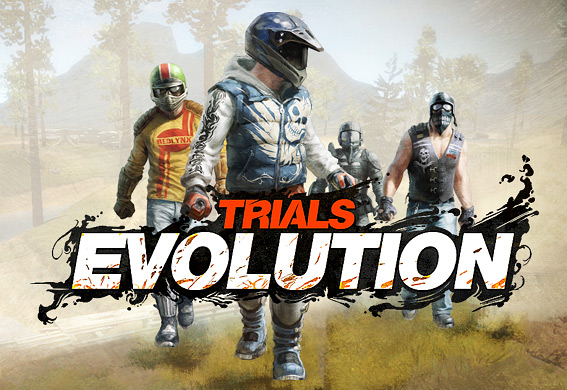
It all started in April 2012 with the release of a video game called Trials Evolution, created by the game designers at Redlynx.

trials_evo_frontpage_large

Trials Evolution is a motorcycle racing game that incorporates real-world physics into the gameplay, challenging players to complete obstacle-filled courses as fast as possible.

Now, this might not seem like the type of game to conceal a fiendish riddle, but players were actually expecting a challenging puzzle to be hiding within the game, because Trials HD, a previous installment of the series, featured a riddle to solve that helped build the Trials gaming community.

So expectations were high for whatever riddle was lurking inside Trials Evolution. And it did not disappoint.

First, players had to locate a series of wooden planks throughout the game, planks that featured encrypted writing on them. Once assembled and decrypted, the planks featured instructions for a special maneuver for players to perform in the game while a particular piece of music played.

Successfully completing this task earned the player a bonus song, which included lyrics suggesting players transform the song into a visual form. Cagey players realized this meant running a spectral analysis on the song — a visual graph of sound or energy — which revealed a hidden message in Morse Code.

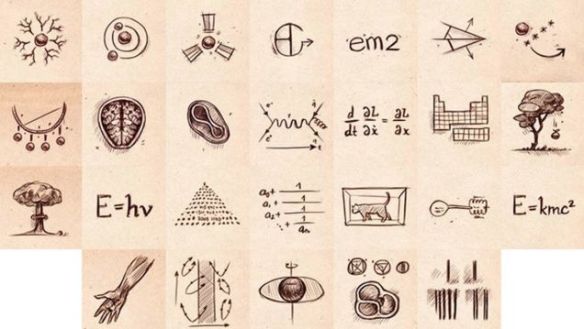
That message led to a website where the images below started appearing daily, one by one.

1293940361449154218

(It’s worth noting that these images started appearing in late 2013, more than a year after the game was released!)

Each image references a particular scientist. Once all twenty-six images were revealed, the indefatigable players had a visual alphabet to work with.

So when a message appeared using the images instead of letters, players cracked that code as well.

Still with me?

That code led to four sets of coordinates. Real world coordinates across the world! This riddle was only getting more complex the deeper players went!

globe_detailmap2

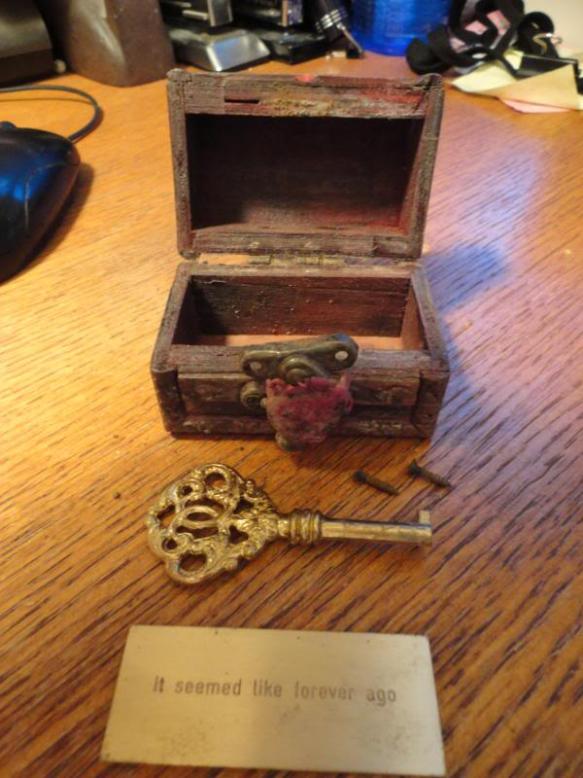
Something awaited intrepid players in San Francisco, California; Bath, England; Helsinki, Finland; and Sydney, Australia. In each location, players uncovered small chests, each containing a key and a metal plaque with the message “It seemed like forever ago” on it. (The Helsinki location also featured French documents, supposedly from 300 years ago, as well as an antique pocket watch.)

So, what do the keys open? What does it all mean?

Well, there was one last message. On the other side of the metal plaque included in each chest, there was a message:

Midday in Year 2113.
1st Sat in Aug
One of Five keys will open the box
Underneath the Eiffel Tower

That’s right. This riddle can only be unraveled nearly a century from now! This puzzle has gone from a hidden bonus feature in a video game to actual scavenger hunting in the real world, and is now becoming a multigenerational quest.

mauricemeyer

Take a moment and ponder that. It blows my mind to think about a puzzle that took dozens of people to conquer and will now become a story told to friends and sons and daughters as golden keys are passed down, all in the hopes of seeing what awaits us underneath the Eiffel Tower on a particular day in August in 2113.

And it all started with a motorcycle racing video game.

[For more details on the Trials Evolution riddle, check out this thorough write-up on Kotaku.]

Thanks for visiting PuzzleNation Blog today! You can share your pictures with us on Instagram, friend us on Facebook, check us out on TwitterPinterest, and Tumblr, and be sure to check out the growing library of PuzzleNation apps and games!