
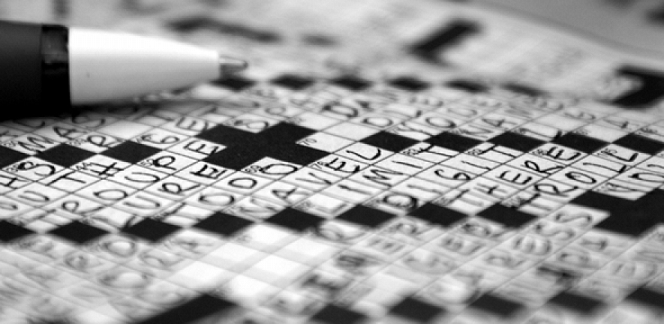
Puzzles bring joy to so many of us. They’re an escape, a challenge, a satisfying little test of our wits, our dedication, our creativity, and our flexibility of thought.
In uncertain times, in times of trouble, people often turn to puzzles. Puzzles were a refuge for many during lockdown when COVID hung over our heads. And now, when so much seems uncertain, if not downright unstable, people will no doubt turn to puzzles again.
That’s not to say that puzzle solving is a mere flight of fancy, a desperate bit of escapism, a Hail Mary avoidance of difficult circumstances, hard questions, and treacherous times to come. Quite the opposite, in fact.
If you turn to puzzles now, you’ll see a road map that proves things can get better.
Because, like it or not, misogyny once dominated the world of puzzles. It was baked into crosswords from the very beginning.
Yes, Arthur Wynne created the template for crosswords. Simon & Schuster are credited with publishing the first crossword puzzle book, as well as all the bestselling puzzle books that followed, serving as the foundation that helped build their brand.
But it was women who made crosswords into something more.
Women like Richard Simon’s aunt Wixie. She insisted Simon look into publishing a limited release crossword book. (UPDATE: I originally wrote that none of the stories mentioned her name, but I later found some that included her nickname, Wixie. I later discovered her actual name is Hedwig Simon.)
Women like Margaret Farrar. While serving as “an unofficial editor of the crossword-puzzle section,” she prevented errors and helped establish some of the baselines that still stand in crosswords today.
Women like Ruth Hale. Ruth was the founding president of the Amateur Cross Word Puzzle League of America, an organization that set crossword standards like limiting black squares and symmetrical grids, building off of Farrar’s work.
Women like Nancy Schuster. Schuster (no relation to the aforementioned publisher) not only ran Dell Crosswords but was the first winner of the American Crossword Puzzle Tournament.
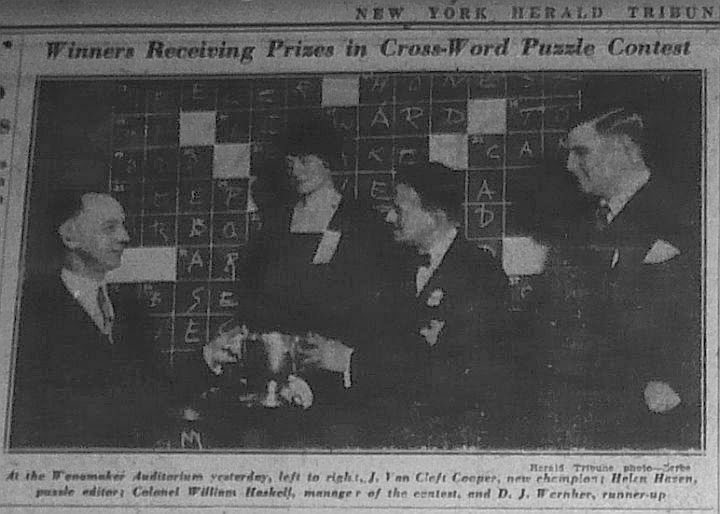
Women like Helen Haven. In the 1920s, Haven was the organizer of the first competitive crossword-solving contest and served as the puzzle editor for The New York Herald-Tribune.
As pointed out by Anna Shechtman in her book The Riddles of the Sphinx: Inheriting the Feminist History of the Crossword Puzzle, between 1913 and the 1960s, most crosswords were created by women.
Puzzles were literally women’s work! With all the connotations that phrase invites.
And crosswords were derided as a frivolous pastime because of it. Not only because women made crosswords, but because crosswords were predominantly solved by women.
The New York Times called the crossword “a primitive form of mental exercise” and female solvers were blamed for neglecting their families and wifely duties because of their “utterly futile finding of words the letters of which will fit into a prearranged pattern, more or less complex.”

Funny how their opinions changed just in time to profit on crosswords in the 1940s.
Much like the Beatles — who were dismissed as nothing more than a glorified boy band when thousands of women cheered at their shows, only for them to be recognized as a once-in-a-generation group of talents when men started paying attention — crosswords became “respectable” only when men took interest and took over.
The percentage of female constructors published in The New York Times went down during the Will Shortz era, as compared to the Will Weng and Eugene Maleska eras.
And like it or not, but “the average solver” concept — a problem I discussed years ago — is still using a white male yardstick for comparisons, to the detrimental of solving and constructing.
In a wonderful blog post on the subject of women in puzzles, the author of the piece opens with the line “I’ve always associated crossword puzzles with men.”
And I realized how lucky I was to NOT have that association. In fact, I don’t think I would be a puzzly guy without the women in my life.
My mother (the first female store manager in A&P history) still solves crosswords and jigsaw puzzles to this day, and encouraged my interest in puzzles in the first place. My oldest sister (a teacher) introduced me to wordplay. My older sister spent hours playing puzzle video games like Dr. Mario with me. My younger sister is not just a master jigsaw puzzle solver, but a fiend at trivia nights and escape rooms, forever challenging me to match her flow.
I was trained in crossword puzzle editing and construction by Penny Press’s crossword guru Eileen Saunders, and still lean on her creativity and wisdom every day (and marvel at her blistering speed and efficiency).
I was shepherded through the world of variety puzzles by Los Angeles Times crossword editor and puzzle badass Patti Varol. (Though it was probably more like dragging my deadweight body through molasses than “shepherding” if I’m being honest.)
And that’s not counting the undeniable and indispensable influence of Amy Roth (a shining light at Penny Press), Chris Begley, and so many other female voices that make Penny Press one of the best outlets for puzzles in the world.
I love puzzles because of those women. I have made a career in puzzles because of those women. I am better at puzzles because of those women.
The puzzle world is better because of women. It will continue to advance and innovate and thrive because of women.
How do I know this? Because women are doing incredible things in puzzles RIGHT NOW.
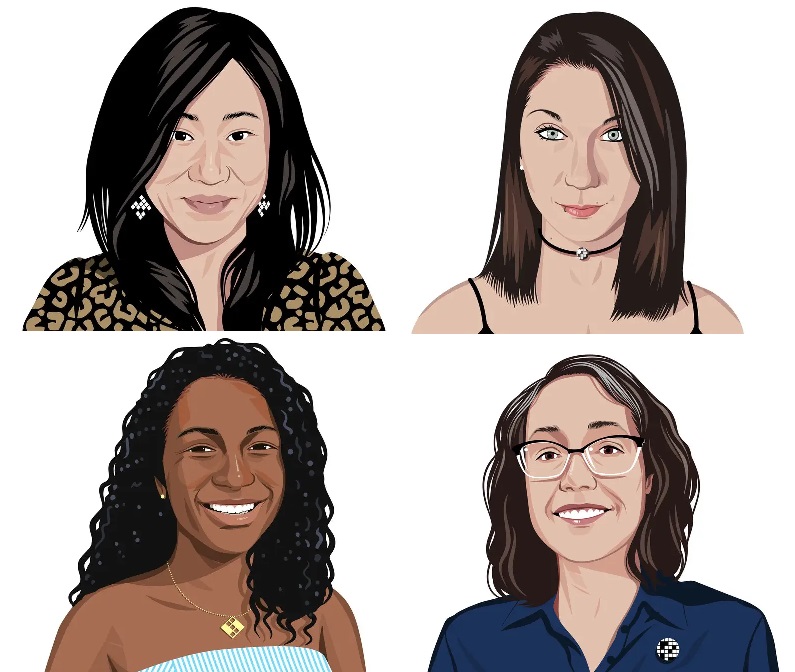
Look at The New York Times. Tracy Bennett, Wyna Liu, and Christina Iverson are delivering great daily puzzles like Connections, Strands, and Mini Crosswords not just consistently, but brilliantly.
The aforementioned Patti Varol is absolutely crushing it at The Los Angeles Times crossword. With Katie Hale and Angela Kinsella Olsen on Patti’s team, every month since mid-April 2022 has had a minimum of 50% women constructors and often exceeds that, all while delivering topnotch puzzles.
The New Yorker, USA Today, The Slate Crossword? Liz Maynes-Aminzade, Amanda Rafkin, Quiara Vasquez. Brooke Husic runs PuzzMo (where Rachel Fabi constructed my favorite puzzle of the year!) and Amy Reynaldo co-edits Crosswords With Friends.
Rebecca Goldstein just won the Orca for constructor of the year. Smarter people than me have called Stella Zawistowski a crossword boss in every sense of the word. Ada Nicolle won the 2024 Lollapuzzoola crossword tournament.
The impact of projects like Women of Letters and The Inkubator weren’t just the tip of the iceberg, they were the tip of the spear. A spear aimed directly at the heart of outdated notions of who makes crosswords and who solves them, dismantling the idea of some mythical “average solver” that has never truly represented the crossword audience.
As constructors, editors, and solvers, women in the past shaped puzzles as we know them. And women in the present are redefining puzzles. Not just in terms of representation (both as grid answers and creators behind the scenes), but in terms of acknowledgment, respect, and appreciation.
As for women of the future? I, for one, can’t wait to see what they have in store for us.
(And thank you to several of the women mentioned above for making this post far, far better than it started.)





 PuzzCulture