The Great Crossword Debate: Overused Vs. Obscure

exercise-brain-crossword-670x335

Making a great crossword puzzle is not easy. Heck, making a GOOD crossword puzzle is not easy.

You want the theme to be creative, innovative even, but still something that can be intuited from a clever title and crafty clues.

You want the clues to be engaging, challenging, funny, tricky, and loaded with wordplay and personality.

And you want the grid fill to be fresh and interesting, yet accessible. You want to avoid obscurities, abbreviations, nonsensical partial-phrases, and the dreaded Naticks where two difficult entries cross.

But you also want to add to the lexicon of grid fill, leaving behind the tired vowel-heavy words that have become cliche or crosswordese.

Even if you accomplish all that, you also want your puzzle to have an overall consistent level of difficulty. Having a bunch of easy words in the grid only highlights the hard words necessitated when you construct yourself into a corner. A sudden spike in vocabulary and eccentricity is always noticeable.

So completing every grid becomes a balancing act between new and old, pop culture-loaded and traditional, obscure and overused.

This raises the question posed in a Reddit thread recently:

Which bothers you more, words that you probably wouldn’t know without a dictionary OR filling out OLEO and ARIA for the millionth time?

Both options had their proponents, so I’d like to give you my thoughts on each side of this cruciverbalist coin.

obscure_language

Obscure Over Overused

A well-constructed grid can overcome the occasional obscure entry. After all, since you have Across and Down entries, several accessible Across answers can hand you a difficult Down answer that you didn’t know.

You can assist with an informative clue. It might get a little lengthy, but like a well-written trivia question, you can often provide enough context to get somebody in the ballpark, even if they don’t know the exact word or phrase they need. If it FEELS fair, I think solvers will forgive some peculiar entries, as long as you don’t go overboard.

Also, if you’re a crossword fan, you’re probably a word nerd, and who doesn’t like learning new words?

As one contributor to the thread said, “I’d rather eke out a solution than fill in EKE OUT or EKE BY again.”


News-Keep-Calm-and-Carry-This-Overused-Phrase-to-the-Grave-for-College-Students

Overused Over Obscure

The very nature of crosswords demands letter arrangements that are conducive to building tight grids. Your vowel-heavy entries, your alternating consonant-vowel ABAB patterns, the occasional all-consonants abbreviation or all-vowels exhalation or size measurement… these are necessary evils.

But that doesn’t mean the cluing has to be boring. I absolutely love it when a constructor finds a new twist on an entry you’ve seen a billion times. I laughed out loud when Patti Varol clued EWE as “Baa nana?” because it was a take I’d never seen before.

Here are a few more examples of really smart ways I’ve seen overused entries clued:

  • “It’s never been the capital of England (and it surely won’t be now)” for EURO (Steve Faiella)
  • “Name-dropper’s abbr.” for ETAL (Patrick Berry)
  • “It’s three before November” for KILO (Andy Kravis)
  • “Fix plot holes, maybe” for HOE (Peter Gordon)
  • “50/50, e.g.” for ONE (Michael Shteyman). This one really plays with your expectations.
  • “Hawaiian beach ball?” for LUAU (George Barany)

Still, this is no excuse for going incredibly obtuse with your cluing just to be different. Making an esoteric reference just to avoid saying “Sandwich cookie” for OREO might be more annoying to a solver than just the overused answer itself.

On the flip side, you can treat them as gimmes, cluing them with familiar phrasing and letting them serve as the jumping-off points for longer, more difficult entries or the themed entries the puzzle is constructed around. Some familiar words are always welcome, particularly if a solver is feeling daunted with a particular puzzle’s or day’s standard difficulty.

(One poster even suggested pre-populating the grid with common crosswordese like OLEO, kinda like the set numbers in a Sudoku. I don’t think I’ve ever seen that approach before.)


conman1112

So, have we come to any conclusions today? Probably not.

As I said before, it’s a tightrope every constructor must walk on the way to finishing a crossword. Every constructor has a different method for getting across, a different formula for success. Some even manage to make it look effortless.

What do you think, fellow puzzlers and PuzzleNationers? Do you favor overused entries or obscure ones? Let us know in the comments section below. We’d love to hear from you!


Thanks for visiting PuzzleNation Blog today! Be sure to sign up for our newsletter to stay up-to-date on everything PuzzleNation!

You can also share your pictures with us on Instagram, friend us on Facebook, check us out on TwitterPinterest, and Tumblr, and explore the always-expanding library of PuzzleNation apps and games on our website!

PN Updates: A New Puzzle Set! And More!

Hello puzzlers and PuzzleNationers!

Today we’re happy to spread the word about an exciting new puzzle set for the Penny Dell Crosswords App! It’s our latest deluxe set, Creature Features!

200929

Jam-packed with spoooooky special themed puzzles and loads of ghoulishly great crosswords at all difficulty levels for you to enjoy, this puzzle bundle is a seasonal treat with a few tricks as well to keep your puzzly wits sharp!

It’s available for in-app purchase now alongside lots of terrific puzzle sets — for instance, check out the Fall Set for the Daily POP Crosswords App! — waiting for your puzzly attention.

And say… while we’ve got you here, we’ve got a question for you:

pn news

Have you signed up for our PuzzleNation Newsletter yet?

It’s the best way to keep updated with all things PuzzleNation. There’s news, special offers, and you’ll be first to hear about any new projects, including sneak peeks, downloadable bonus puzzles, and more! (Plus we won’t bombard you with endless emails!)

Do yourself a favor and sign up! Just this week, for instance, we had some free puzzles and a special promotional offer for our fellow PuzzleNationers!

Don’t miss out! It’s never been easier to enjoy everything PuzzleNation has to offer, right from the comfort of home, at the touch of a button.

Happy puzzling, everyone!


Thanks for visiting PuzzleNation Blog today! You can share your pictures with us on Instagram, friend us on Facebook, check us out on TwitterPinterest, and Tumblr, and explore the always-expanding library of PuzzleNation apps and games on our website!
Mechanical Tables: Puzzle Furniture for the Ages

We previously did a post discussing puzzly furniture where we explored origami cardboard chairs, furniture that can be arranged in different ways like puzzle pieces, sofas with hidden footrests and tables, storage and couches made of soft Tetris pieces, and the buildable puzzly furniture of Praktrik.

And yet, we only scratched the surface of what clever designers and skilled craftspeople can do when they combine puzzly elements and beautiful furnishings.

Today, we return to the topic and up the stakes, as we delve into mechanical tables and other furnishings with delightfully challenging puzzle-inspired secrets.

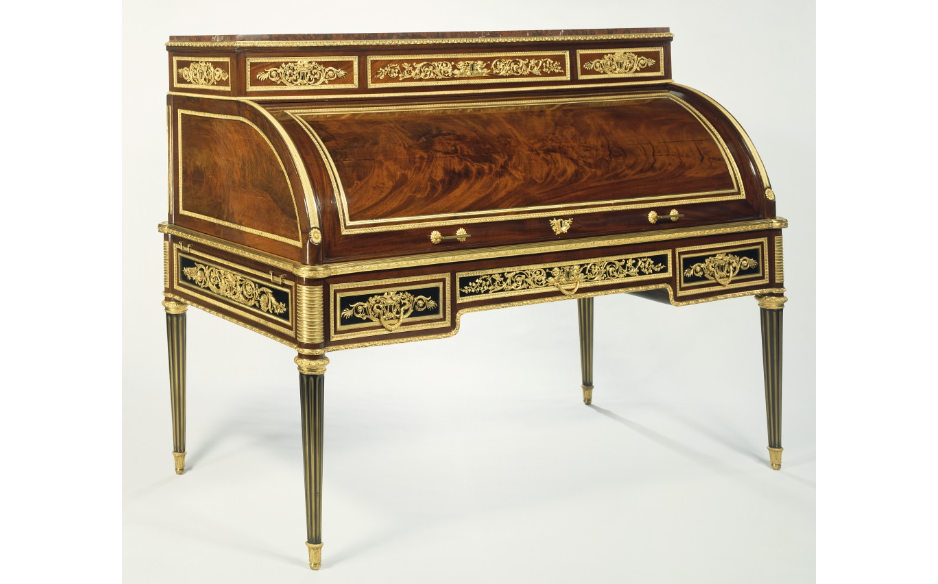
desk

Let us begin with the works of Jean-François Oeben.

You simply cannot discuss the topic of puzzle furniture or mechanical tables without mentioning this 18-century woodworker, furniture builder, and artisan. Oeben’s work is on display in museums all over the world: the Louvre, the J. Paul Getty Museum, the Museu Calouste Gulbekian, the Victoria and Albert Museum, and many more.

And the mechanisms that make his creations so unique are still working flawlessly more than 200 years later.

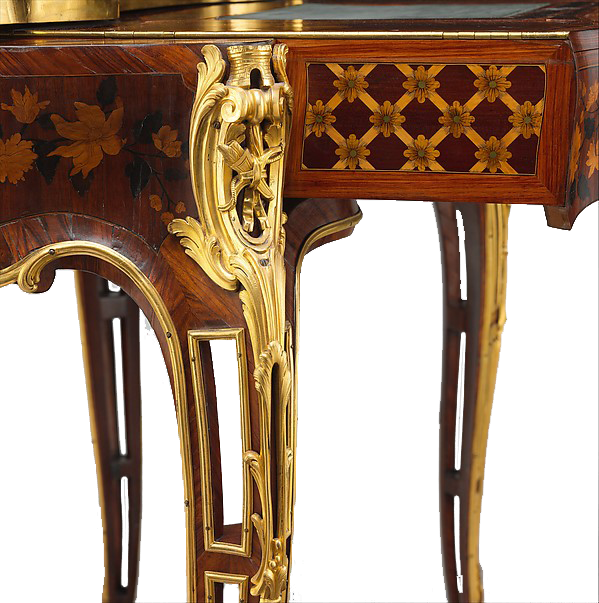
A maker of cabinets, commodes, desks, and more, Oeben was as celebrated for his ingenious mechanical devices as he was for his dazzling work in marquetry. Marquetry is the art of cutting thin sheets of wood, metal, mother-of-pearl, and other materials into intricate patterns and affixing them to the flat surfaces of furniture.

For example, he designed and built this table for Madame de Pompadour:

It’s not only gorgeous — featuring inventive elaborate legwork and numerous surfaces adorned with favorite designs of his patron — but it contains one of Oeben’s most impressive mechanical devices. The mechanism allows the top to slide back at the same time as the larger drawer moves forward, doubling the surface area in an instant. This also reveals a writing slope which revolves to offer two different surfaces, as well as hidden storage compartments. All of this is unlocked with a single turn of a key.

It simultaneously celebrates a desire for privacy and a need for ostentatious flourish. It is brilliantly space-efficient, yet thoroughly eye-catching. It is extravagant and reserved all at once, perfectly encapsulating the spirit of French consumerism at the time, combining luxury, efficiency, elegance, and functionality.

Oeben worked extensively for Madame de Pompadour; in the inventory drawn up after his death there were ten items awaiting delivery to her.

commode

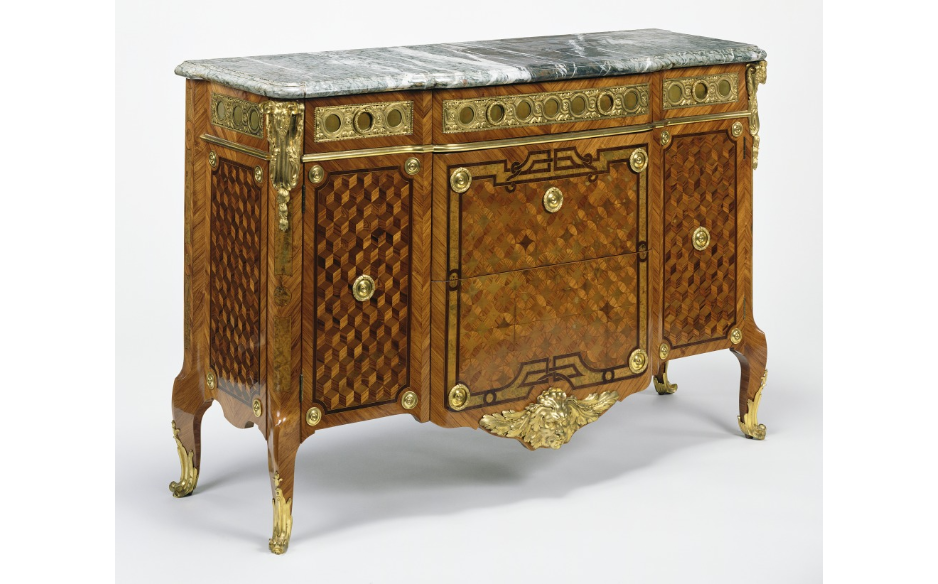
That single-lock design was also present in one of his famous commode designs, as one lock controlled the entire piece. Unless the center drawer was pulled out (ever-so-slightly), the side drawers could not be opened. There was a metal rod in the back of the drawer preventing them from opening unless the center drawer was in the correct position.

As you can see, the handles for each drawer are cleverly concealed, using circular pulls that look more like ornamental flourishes than utilitarian parts of the furniture. Again, privacy is combined with style, adding an individualistic touch to a beautiful piece.

(Although the mechanism sounds simple, you can explore how difficult Oeben mechanisms are to recreate by visiting this blog.)

His masterpiece is widely considered to be the bureau de roi, a desk he was building for the French king Louis XV at the time of his death. (The piece was finished by a younger associate, Jean-Henri Riesener, who also married Oeben’s widow. Talk about picking up where Oeben left off…)

However, I find this mechanical desk to be a much more impressive piece of cabinetry.

Now part of the Louvre’s expansive catalog of museum pieces, this Table a la Bourgogne is a transforming marvel. It conceals not only a removable laptop desk, but a prie-dieu (or kneeling surface) for private prayer. It also conceals a writing slope and a secret bookcase that rises from within the desk.

It is a mind-boggling piece that contains numerous important home elements all in one, and positively exudes luxury and elegance.


molitor desk

There is another name that deserves recognition, one that often exists in Oeben’s shadow: Bernard Molitor.

Molitor first rose to prominence after creating mahogany wood floor paneling for Marie Antoinette’s boudoir in Fontainebleau. This order led to other requests from the queen and members of the aristocracy.

His business was briefly shuttered during the French Revolution — many of his clients were killed or had fled — but he was later able to reopen his business and resume his lucrative practice. Dressers, tables, desks, cupboards, cabinets, and writing and dining tables flowed from his workshop, thanks to Molitor and a large array of artisans he employed.

Behold a staggeringly impressive work of Molitor’s: King Louis Bonaparte’s desk, commissioned by Emperor Napoleon as a gift for his brother, the appointed King of Holland.

Now residing at the Lightner Museum, this desk is adorned with false drawers at the front to mislead potential tampering. Instead, the desk not only contains its own chair, but more than 200 drawers, all organized with labels and concealed within, away from prying eyes.

As the roll-top desk’s cover slides back, the desk itself slides out for use, revealing several drawers. These drawers contain hidden locking mechanisms that reveal additional storage, workspaces, and further secrets.

It’s a gorgeous piece of furniture and a diabolical multilayered puzzle all in one.


What about furniture makers in the 21st century, you may ask? Who is carrying on this grand tradition of puzzly craftsmanship?

Well, if you’re looking for master puzzle furniture design these days, Craig Thibodeau should be on your radar.

We featured his magnificent Wisteria Puzzle Cabinet in a previous blog post, but it’s far from his only complex, stunning, and immensely intricate piece of puzzly furnishings.

The Automaton Table, featured above, is a wonderful simple-looking piece that contains multitudes. It has a rising spring-release center column, magnetic secret drawers, and additional hidden compartments that use a variety of concealed mechanisms.

And for a piece of puzzly mechanical furniture that will leave you reeling, check out this Spinning Puzzle Cabinet. Rotating it opens certain drawers, while others can only be opened through multi-step actions and a specific chain of button-pushes and actions.

It’s like a 4-dimensional game of Simon where everything must happen in order as you move around the piece constantly. It’s wonderful and maddening all at once.

It may lack the over-the-top ornamentation of Oeben and Molitor’s works, but it’s just as complex, just as engaging, and equally beautiful. Across centuries and different design styles, these pieces are amazing, sending puzzly minds whirling with sheer possibility.

Would you like to see more examples (both modern and historical) of puzzly furniture and mechanical tables, fellow puzzlers and PuzzleNationers? Let us know in the comments below. We’d love to hear from you!


Thanks for visiting PuzzleNation Blog today! Be sure to sign up for our newsletter to stay up-to-date on everything PuzzleNation!

You can also share your pictures with us on Instagram, friend us on Facebook, check us out on TwitterPinterest, and Tumblr, and explore the always-expanding library of PuzzleNation apps and games on our website!

Where Puzzles, Knitting, and Spycraft Combine!

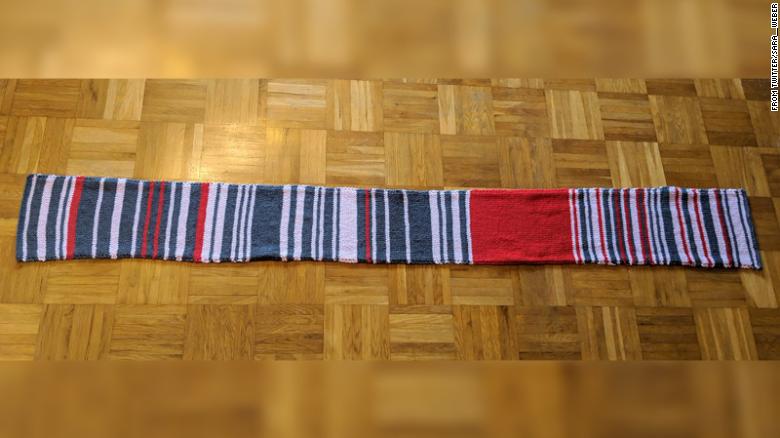
You might have seen the news story last year about a woman who chronicled numerous train delays with her knitting while she worked on a scarf. (Though you probably didn’t hear that it sold on eBay for over 7,000 Euros.)

Knitting is a clever way to both eat up downtime waiting for the train and also document how long that train made you wait. Moreover, it’s sending a message in an unusual fashion — an image that speaks volumes.

And one thing we’ve learned over the years is that when you can send a message without words, spy agencies will jump on that bandwagon.

So it should come as no surprise to you that knitting has been part of spycraft techniques for decades.

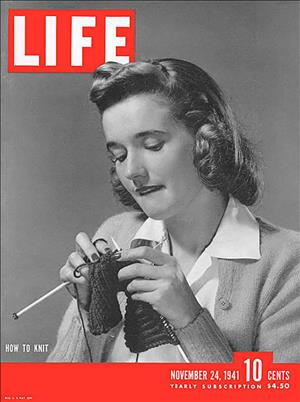
True, it is far more common from someone to simply passively observe the enemy WHILE knitting and hiding in plain sight. This was very common in countries all over Europe. When you consider how often volunteers were encouraged to knit warm hats, scarves, and gloves for soldiers during wartime, it wouldn’t be unusual to see people knitting all over the place.

Some passed secret messages hidden in balls of yarn. Elizabeth Bently, an American who spied for the Soviet Union during WWII, snuck plans for B-29 bombs and other aircraft construction information to her contacts in her knitting bag.

Another agent, Phyllis Latour Doyle, had different codes to choose from on a length of silk, so she kept it with her knitting to remain inconspicuous. She would poke each code she used with a pin so it wouldn’t be employed a second time — making it harder for the Germans to break them.

But there was a small contingent of folks who went deeper, actually encoding messages in their knitting to pass on intelligence agencies.

It makes sense. Knitting is essentially binary code. Whereas binary code is made up of ones and zeroes (and some key spacing), knitting consists of knit stitches and purl stitches, each with different qualities that make for an easily discernable pattern, if you know what you’re looking for. So, an attentive spy or informant could knit chains of smooth stitches and little bumps, hiding information as they record it.

When you factor Morse code into the mix, knitting seems like an obvious technique for transmitting secret messages.

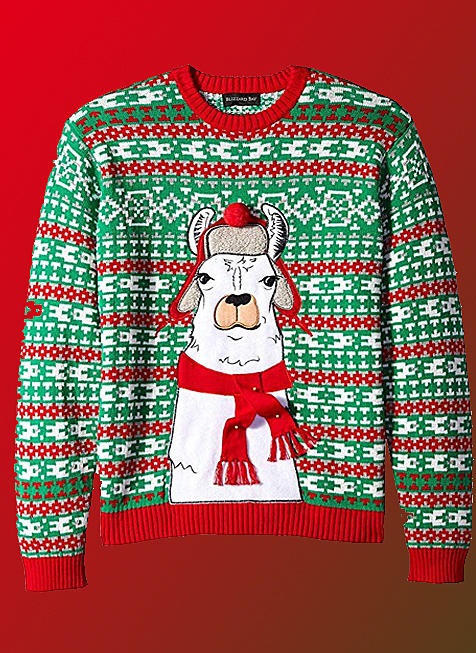
[What is this Christmas sweater trying to tell us?]

During World Wars I and II, this was used to keep track of enemy train movements, deliveries, soldiers’ patrol patterns, cargo shipments, and more, particularly in Belgium and France. There are examples of codes hidden through knitting, embroidery, hooked rugs, and other creations, often right under the noses of the enemy.

As more intelligence agencies picked up on the technique, it started to breed paranoia, even in organizations that continued to use knitters as passive spies and active encryption agents.

There were rumors that Germans were knitting entire sweaters full of information, then unraveling them and hanging the threads in special doorways where the letters of the alphabet were marked at different heights, allowing these elaborate messages to be decoded.

Of course, this could be apocryphal. There’s no proof such overly detailed sweaters were ever produced or unraveled and decoded in this manner. (Plus, a knitter would have to be pretty exact with their spacing for the doorway-alphabet thing to work seamlessly.)

During the Second World War, the UK’s Office of Censorship actually banned people from using the mail to send knitting patterns abroad, for fear that they contained coded messages.

Naturally, a puzzly mind could do all sorts of things with an idea like this. You could encode secret love notes for someone you admire or care for, or maybe encrypt a snide comment in a scarf for somebody you don’t particularly like. It’s passive aggressive, sure, but it’s also hilarious and very creative.

Now if you’ll excuse me, I need to unravel this gift from my aunt and see if she’s talking crap about me through my adorable mittens.

Happy puzzling, everybody!

[For more information on this topic, check out this wonderful article by Natalie Zarrelli.]


Thanks for visiting PuzzleNation Blog today! Be sure to sign up for our newsletter to stay up-to-date on everything PuzzleNation!

You can also share your pictures with us on Instagram, friend us on Facebook, check us out on TwitterPinterest, and Tumblr, and explore the always-expanding library of PuzzleNation apps and games on our website!
Crosswordese in a Random Picture

It’s always fun when you encounter crosswordese in the wild. By definition, crosswordese involves words you only see in crosswords, so a real-world encounter is a rare and curious thing.

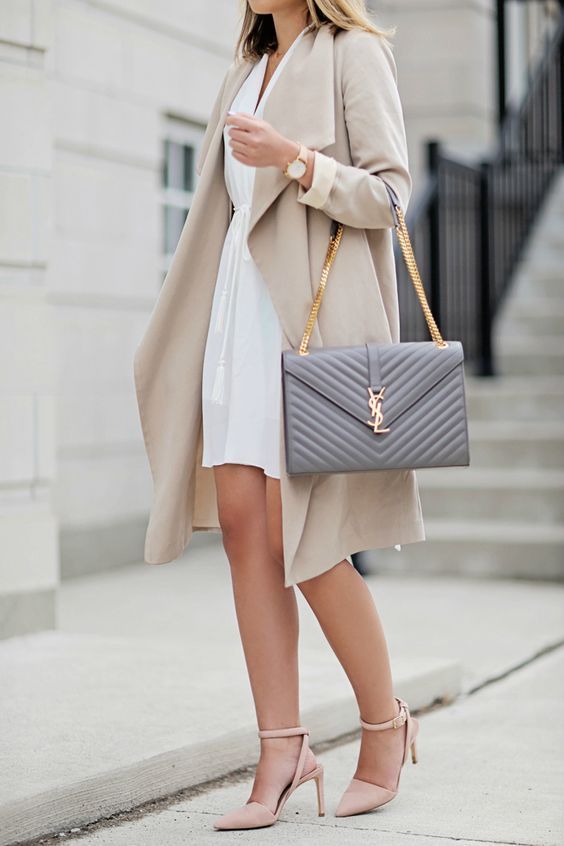
Someone posted the following picture on Reddit, in a post titled “How NYT constructors dress, presumably.”

(It differs wildly depending on the constructor, by the way.)

At first glance, there doesn’t seem to be much to it. But there are several classic crossword entries in this picture.

The A-LINE dress, the YSL on the purse, the ECRU shade. Quite the OLIO of puzzly elements.

Sure, the dress isn’t MIDI — though the coat might be! — but hey, beggars can’t be choosers.

Naturally, the commenters on that page suggested other crossword entries that might be out of sight, joking there’s an ETUI in her purse, an OBI missing from her coat, an EPEE in her concealed right hand, or ESTEE perfume in the air.

I for one suspect she’s close to her destination, her ETA just a SEC or two away.

Is she in EUR. somewhere? Perhaps near the RHINE or the RHONE or the AARE? Is she in OSLO?

Can you find any other examples of crosswordese lurking in this photo, fellow puzzlers and PuzzleNationers? Or maybe you have another picture packed with puzzly potential? Let us know in the comments section below! We’d love to hear from you.


Thanks for visiting PuzzleNation Blog today! Be sure to sign up for our newsletter to stay up-to-date on everything PuzzleNation!

You can also share your pictures with us on Instagram, friend us on Facebook, check us out on TwitterPinterest, and Tumblr, and explore the always-expanding library of PuzzleNation apps and games on our website!
A Magic Puzzle Box? (Solved on YouTube For Your Convenience)

One of the cooler bits of promotion I’ve seen from a gaming company recently was executed by the team at Magic: The Gathering for their new Zendikar Rising brand.

For the uninitiated, Magic: The Gathering is a collectible card game where players buy starter decks and booster packs of cards in order to build the best possible deck with which to battle their friends in card-playing combat. Each player is a wizard known as a planeswalker, playing cards that represent creatures summoned, spells cast, magical items used, and more.

So what was their intriguing promotional tactic?

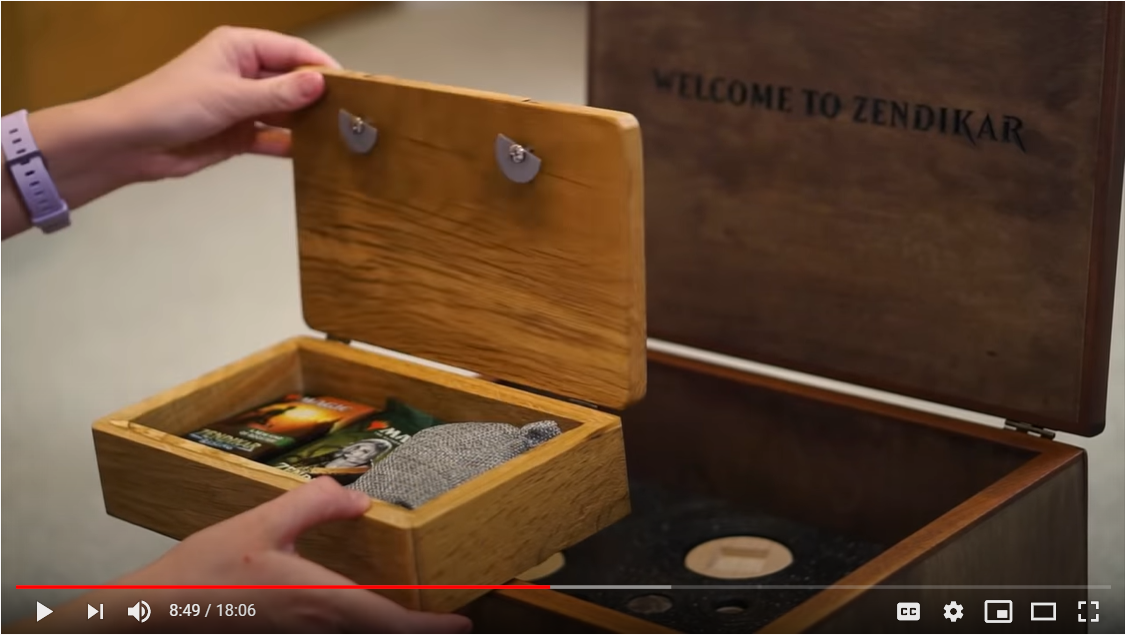
They sent out a bespoke chest — a puzzle box to entice players, gamers, and social media influencers — accompanied by a riddle which offered clues for each stage of the puzzle box to help solvers unravel its secrets.

Now, sending a puzzly chest of treasure to gamers is an instant win. If you’re a fan of fantasy narratives like those woven into the gameplay of Magic: The Gathering, this is the perfect enticement.

But that was only the company’s first stroke of genius in their Zendikar Rising campaign.

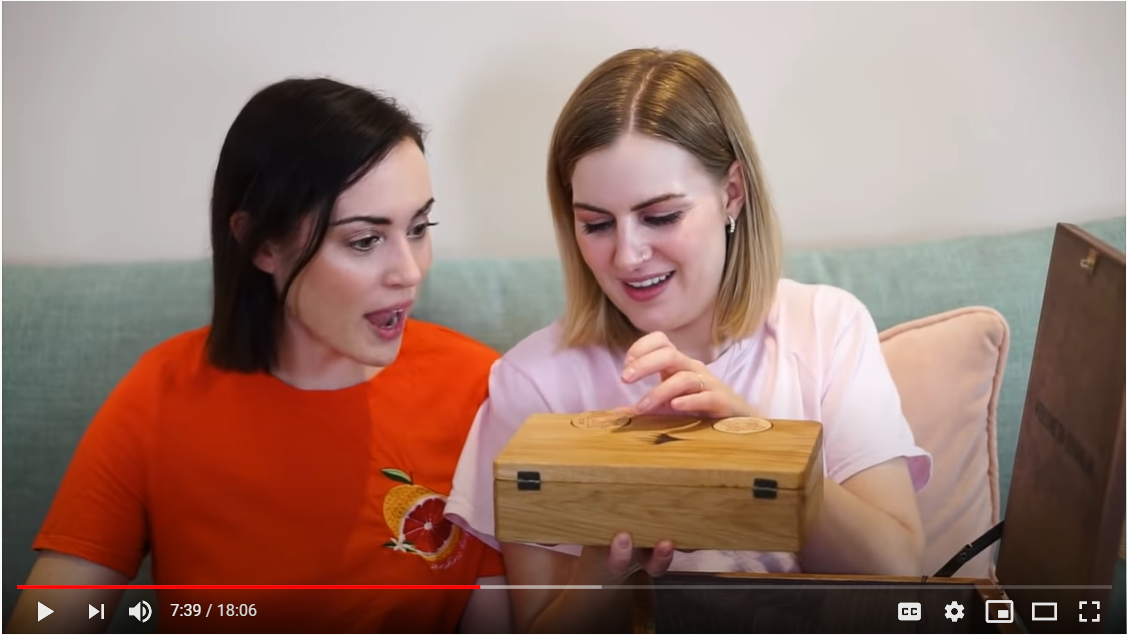
Their second was sending a box to YouTubers Rose Ellen Dix and Rosie Spaughton.

Rose and Rosie are a charming married couple who post all sorts of comedic content, social commentary, and slice-of-life vlog posts on YouTube. They also host a gaming channel where their specialty is being very bad at games.

So when I saw that they were tackling the M:TG bespoke mystery box for their next Let’s Play Games video, I knew it would make for terrific viewing.

I was not disappointed.

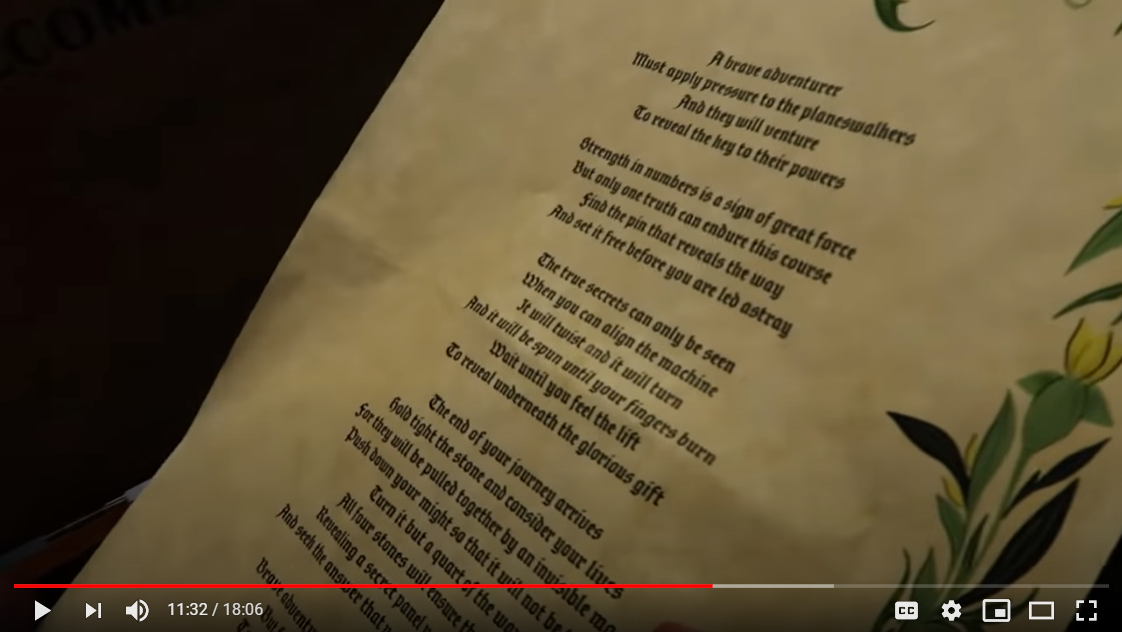
First, they read the letter accompanying the puzzle box, which detailed their role as adventurers trying to sort out this treasure box while the rest of the party continued on their adventure.

Their mission was to solve the riddle and uncover the treasure inside the mystery box.

Here’s the riddle that awaited them:

A brave adventurer
must apply pressure to the Planeswalkers
and they will venture
to reveal the key to their powers.

Strength in numbers is a sign of great force,
but only one truth can endure this course.
Find the pin that reveals the way,
and set it free before you’re led astray.

True secrets can only be seen
when you can align with the machine.
It will twist and it will turn
and it will be spun until your fingers burn.
Wait until you feel the lift
to reveal underneath the glorious gift.

The end of your journey arrives
Hold tight the stone and consider your lives.
For they will be pulled together by an invisible magic
Push down your might so it will not be tragic.
Turn it but a quarter of the way.
All four stones will ensure their sway,
Revealing a secret panel you must remove
and seek the answer that your talents will approve.

Brave adventurer, thy quest has come to an end,
but fear not, for your gifts will tend
to your strength in magic in Zendikar.

While Rose immediately suggests throwing the box or setting it on fire, Rosie focuses on the logo on top of the box, and Rose begins pressing on it. Eventually, Rosie pressed on the right spot, revealing a secret compartment and a key.

The key opened the outer box, which revealed two smaller puzzle boxes, both wrapped in fabric.

Rosie’s box had two dials on the lid, which both had to be turned to a certain point for the box to open. Rosie quickly figured this out, revealing two booster decks for their new Zendikar Rising game, as well as two small metal pyramids that would be needed for the next stage of the solve.

Rose’s box appeared to be nailed or screwed shut, but one of the pins could be removed, allowing the lid to slide open sideways and reveal the treasure inside: two more booster decks and two more small metal pyramids.

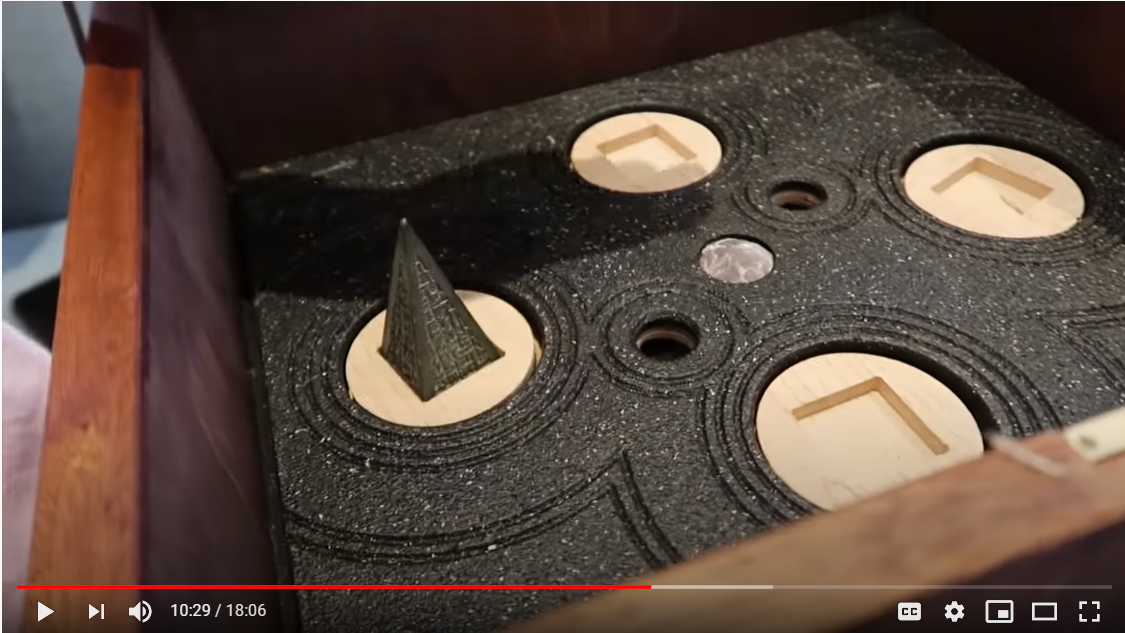
Inside the main box, below the two smaller treasure boxes, was an elaborate panel with four dials and two holes. The trick was to place the pyramids in the correct spaces, turn them a certain way, and lift the panel to reveal the treasure. This required a bit of trial and error, but the dynamic duo would not be denied.

The panel lifted, revealing two Zendikar Rising Commander Decks. The Commander Decks are designed specifically to introduce new players to the game and ease them into the world and gameplay. (The cards in the Booster Packs can augment and add to the Commander Decks.)

While the puzzle box is hardly the most challenging out there, it was an absolute delight to watch Rose and Rosie tackle it. They’re effortlessly hilarious, and their frustration (as well as the bickering that ensues) was very entertaining.

Also, it’s thoroughly enjoyable to hear two people who don’t play Magic: The Gathering describe the game. The mix of sheer enthusiasm and total vagueness regarding actual gameplay did a pretty solid job of making the game seem exciting and inviting.

I look forward to seeing them try their new Zendikar Rising sets out. It will probably be a terrific gateway video for new players.

Well played, Magic: The Gathering.


Thanks for visiting PuzzleNation Blog today! Be sure to sign up for our newsletter to stay up-to-date on everything PuzzleNation!

You can also share your pictures with us on Instagram, friend us on Facebook, check us out on TwitterPinterest, and Tumblr, and explore the always-expanding library of PuzzleNation apps and games on our website!