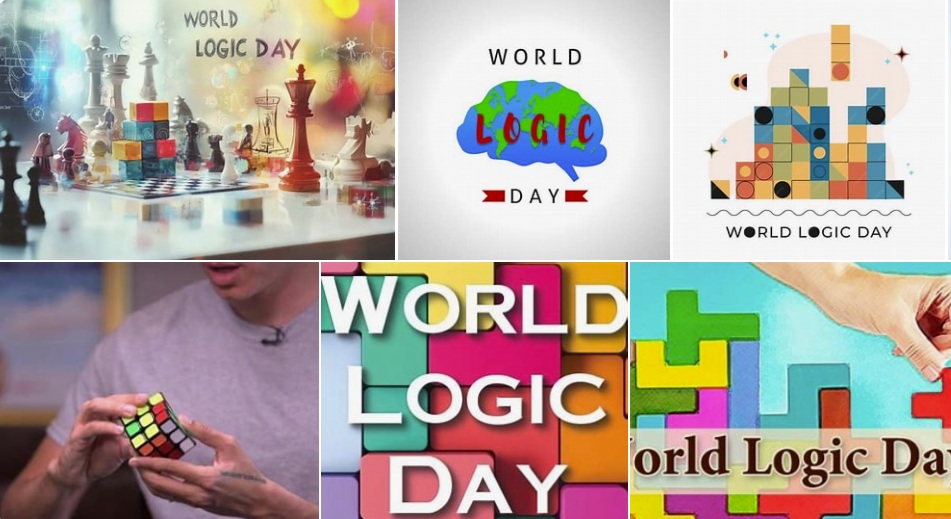
Yesterday was World Logic Day, a holiday that I must confess I didn’t realize was a holiday until yesterday.
It was started by UNESCO in 2019 as a way to get people invested in logical concepts and their practical applications to the world at large, celebrating humanity’s great successes through reason, knowledge, and logic.
Of course, as a puzzle guy, I’m all for a celebration of logic. I could’ve marked the day with a discussion of different logic puzzles, highlighting the marvelous human ability to make deductions from limited information and snatch unexpected revelations from a few simple clues or facts.
And maybe I will do that in the future.
But today, instead, I have a minor grievance to share.
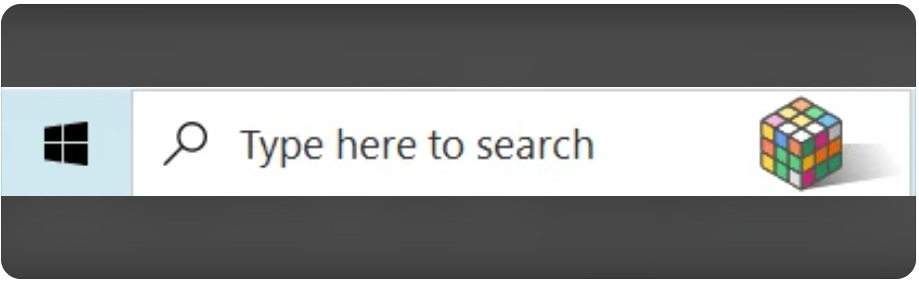
The built-in search bar for Microsoft had this little logo there for days. I didn’t notice because, honestly, I never use that search bar. But I happened to spot the Rubik’s cube yesterday and I was very confused.
Green, orange, white, yellow, dark pink, light pink, dark blue, light blue…
Many commenters pointed out that the colors are probably the result of shading to create the three-dimensional effect. Several even proved the pattern was legitimate by posting their own Rubik’s Cubes to match. (Although at least one was a tongue-in-cheek posting of a cube with the stickers moved and reattached.)
The cube appears to be modeled on the World Logic Day logo from 2024, based on the color choices, but the shadow effect really makes it look like a child had a coloring book page with a blank cube and just scribbled in it willy-nilly.
So maybe, in the future, on World Logic Day of all days, we could avoid making one of the most recognizable puzzles on the planet look weird?
UNLESS.
gasp
Unless it was intentional.
Unless this was all a master plan to raise awareness of World Logic Day by provoking neurodivergent thinkers with an image practically guaranteed to annoy them, thereby causing them to click on the image, driving more attention to World Logic Day!
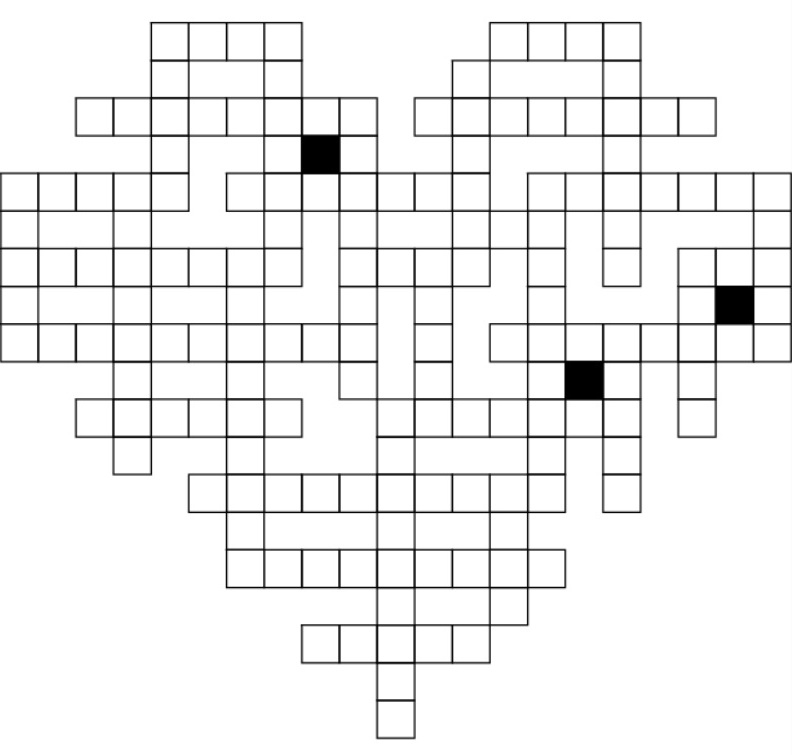
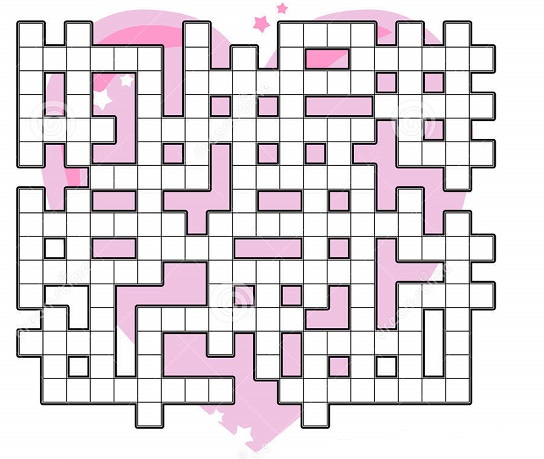
After all, diagonal symmetry is one of the fundamental rules of crossword grid design. (Along with the occasional example of vertical symmetry.)
Puzzlers are used to linguistic symmetry as well. A well-constructed palindrome, the same message reading forward and backward, has delighted and challenged many a puzzly mind. Go hang a salami, I’m a lasagna hog.
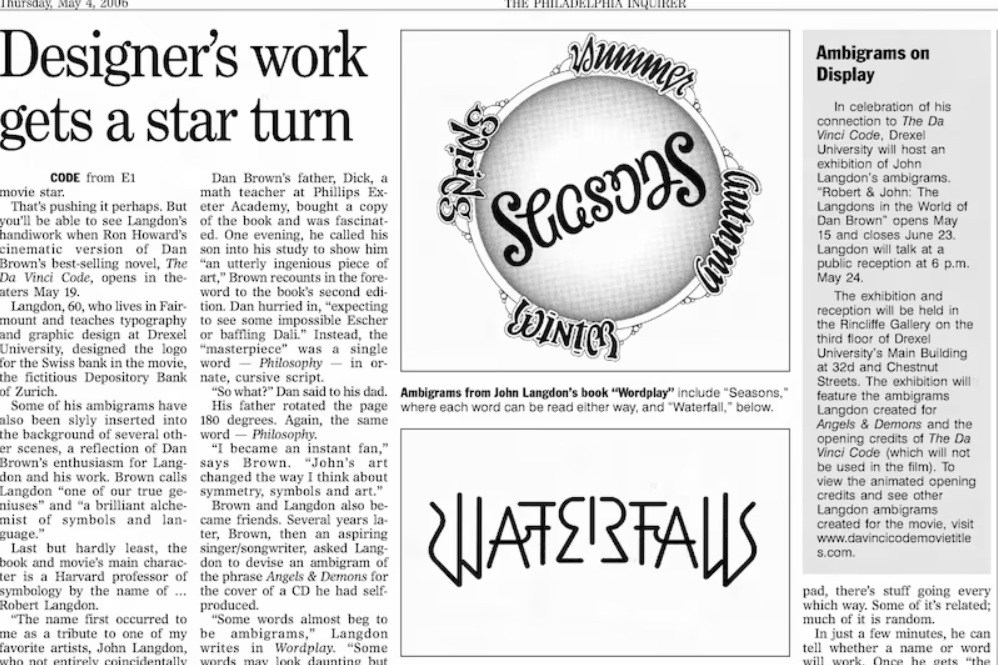
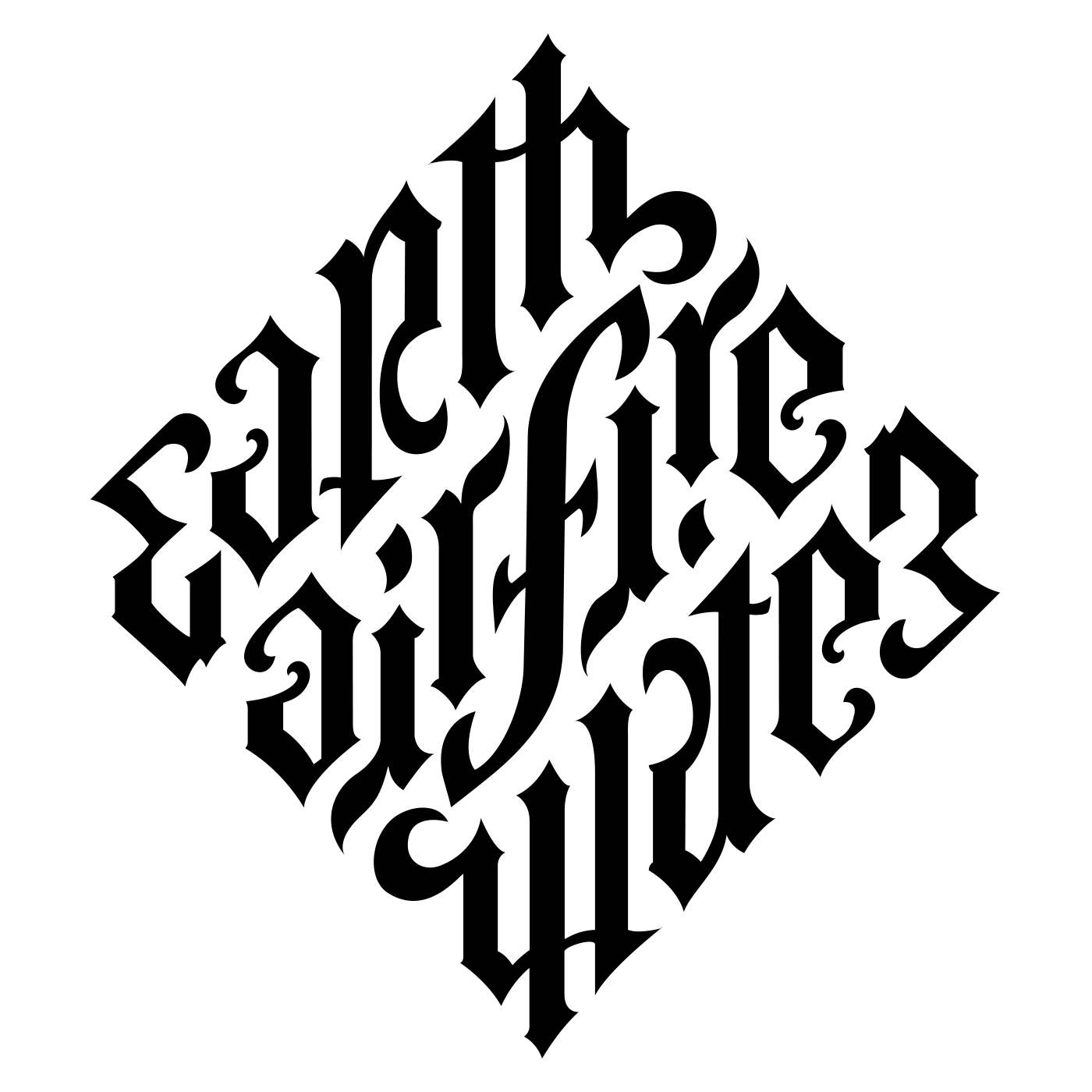
Ambigrams scratch the same itch, combining artistic flourish with clever letter placement to create a message with rotational symmetry, allowing you to rotate the image 180 degrees and see the same message.
The curious thing about ambigrams that they feel ancient, like an artistic work steeped in history from centuries past, but in reality, they’ve only been around since the 1970s! (The term itself was coined by Douglas Hofstadter in 1984.)
In an interview in 2006 with Newswise.com, he said, “In the early ’70s, I tried to do with words what Dali and Escher did with images.”
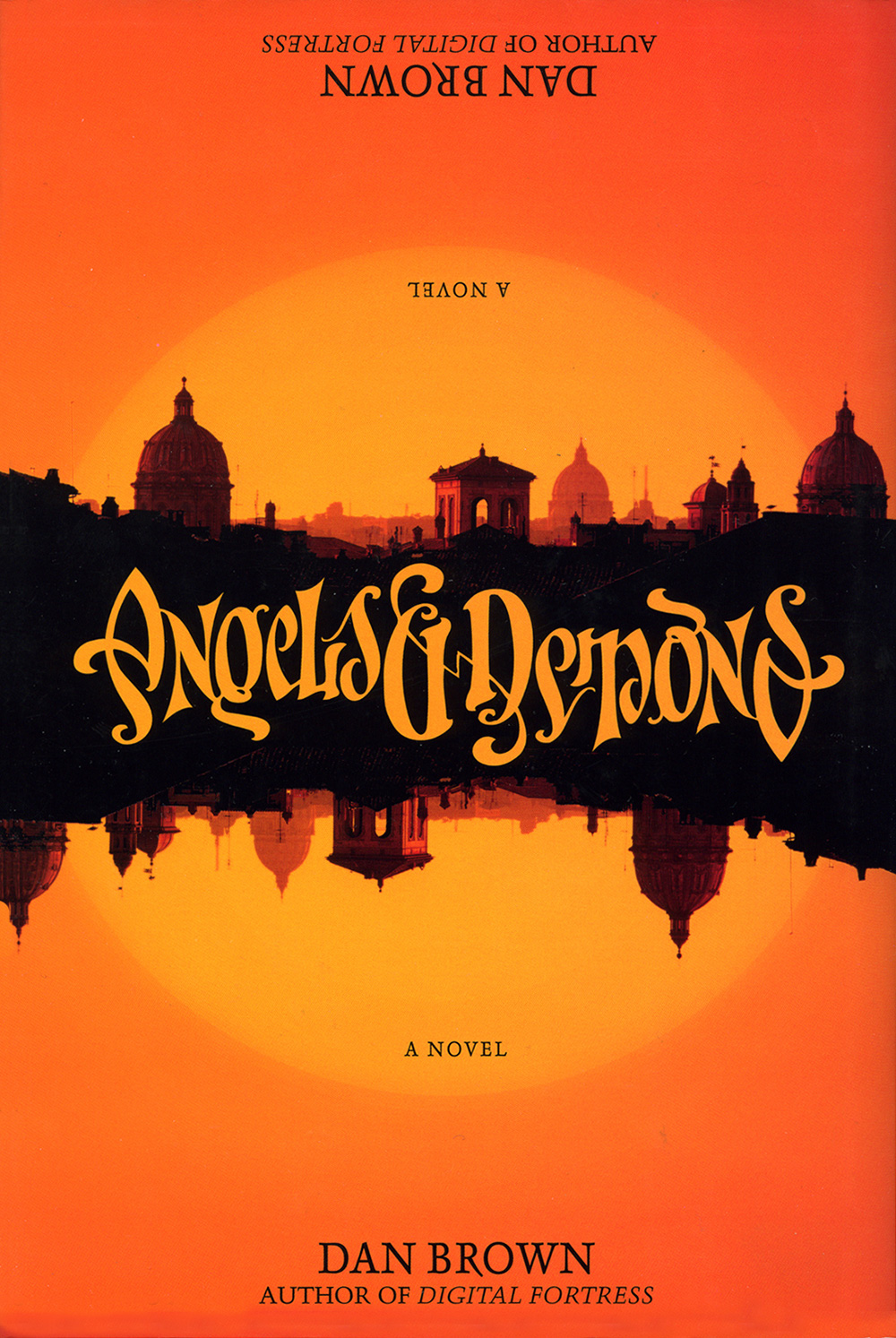
Most famously, he created several ambigrams for Dan Brown’s book Angels & Demons, adding a mystical aura to Robert Langdon’s adventures involving the church and the Illuminati.
Oh, yeah, you noticed that, did you? Yes, the protagonist of The Da Vinci Code and several other bestselling works is named after John Langdon.
In an interview, Brown shared the story of his father, a math teacher, showing him Langdon’s book Wordplay, and he was instantly hooked. “John’s art changed the way I think about symmetry, symbols, and art.”
We sadly lost John earlier this year at the age of 79, but his lasting influence in the world of wordplay is alive and well, not only with his literary legacy and namesake, but in the work of other ambigram artists.
The YouTube channel Write Words – Make Magic has gone viral over the last few years by creating ambigrams for viewers’ names, as well as other cultural touchstones, and it’s absolutely worth a watch. They happily show off their techniques for creating ambigrams, and it’s a true delight.
Ambigrams, and Langdon’s art in general, are all about revisiting one’s perspective. “Ambiguity makes people uncomfortable. But the lesson of Taoism is that if you have only one vantage point, you’re not seeing the truth.”
Puzzles are often about viewing things from another angle. Wordplay, punnery, manipulating language to surprise and playfully mislead… these are hallmarks of crosswords and crossword cluing.
A “very strong sense of legibility but also a marvelous sense of esthetics, flow, and elegance.” This could easily describe a great crossword puzzle, but it’s actually Douglas Hofstadter’s description of John Langdon and his work.
I guess it’s all a matter of perspective. Insight and wordplay, lurking within the symmetry.
If you just know how to look for it.
Do you have any favorite palindromes, ambigrams, or examples of symmetrical puzzling, fellow reader? Let us know in the comments section below! We’d love to hear from you.
New year, new… blog post. (Sorry for anyone who was hoping for a new me. It’s just the same ol’ friendly neighborhood puzzle nerd.)
Happy New Year cruciverbalists, gamers, RPGers, and puzzle enthusiasts!
Let’s ring in the new year right, with Lily Hevesh’s domino rendition of Auld Lang Syne:
So, with everyone thinking of New Year’s resolutions and (hopefully) feeling positive for the year to come, what does the future hold for PuzzCulture?
Honestly, I’m not sure, but I would like to share some of my goals (puzzly and otherwise) for 2026.
Ideally, writing them publicly will be an incentive to work harder and bring these goals to fruition! There’s nothing quite like braingaming yourself into genuine productivity!
Keep a running tally of puzzles solved
I’m genuinely curious how many puzzles I solve in a calendar year, so I’m going to keep track of my puzzles per week, just for the delightful data. Maybe I’ll learn something about myself or the puzzle world from it!
Read two books a month
When I commuted by train every day to work, I used to read an average of 5 books a week. (250 books a year was a regular occurrence!) But when the pandemic hit and I started working from work, my reading frequency PLUMMETED. I’m hoping to get back into it and read two books a month. (One a week feels a bit too ambitious, but who knows?)
Double the PuzzCulture readership and grow our social media presence
2025 was a good year for us across the blog and social media, but we can always do better. So if there’s something you’d like to see, or something you’re enjoying that you’d like to see more of, please say so!
Construct one puzzle each month for the PuzzCulture readers
I usually create a puzzle for the major holidays, but this year, there will be a puzzle to solve each month (probably near the end of the month for my own sanity). Any favorite puzzle types? Let me know!
Submitting a crossword for publication
Publishing a crossword is a lofty goal, one that is mostly out of my hands. But submitting something I think is publishing-worthy… that’s an achievable goal, even if it doesn’t end up making the cut at one of the major outlets.
Finish at least four short stories
Half-finished stories have piled up over the last two years, and I need to get these brainworms out to make room for exciting new brainworms!
I love solving tournament puzzles (as you can tell from my reviews), but except for Crossword Tournament From Your Couch, I’ve never competed. Travel is tough for me, but I think I’m gonna take a shot and attempt an At-Home solve for one of this year’s tournaments. I’ll keep you posted!
Do you have any puzzly (or non-puzzly) goals for 2026? Let me know in the comments section below. I’d love to hear from you!
It’s Christmas Day, fellow puzzlers, and it’s tradition around here to celebrate the holidays with a free puzzle to solve!
This year is no exception, as I’ve cooked up something festive and fun for you.
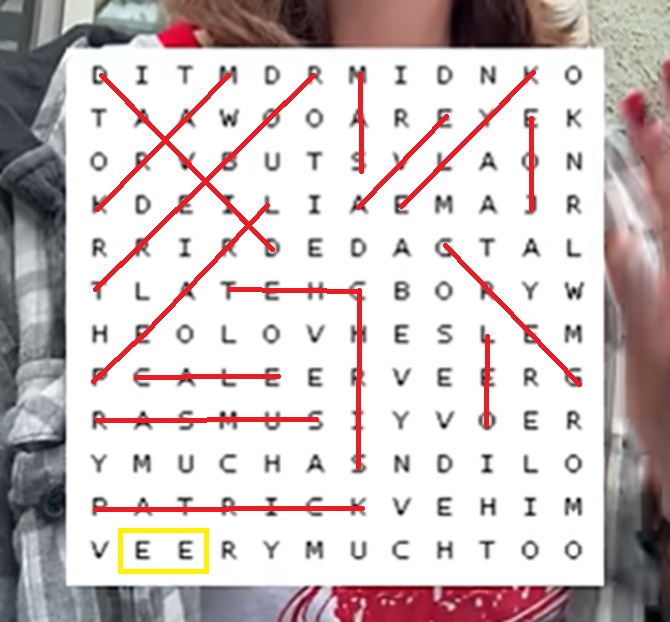
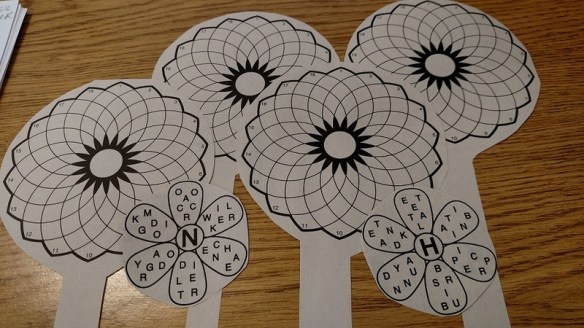
Our friends at Penny/Dell Puzzles have a puzzle called Wordfinder, and when I thought of it, I immediately had the idea to do a holiday-themed version of it.
Merry Christmas, friends. May the holidays be kind to you.
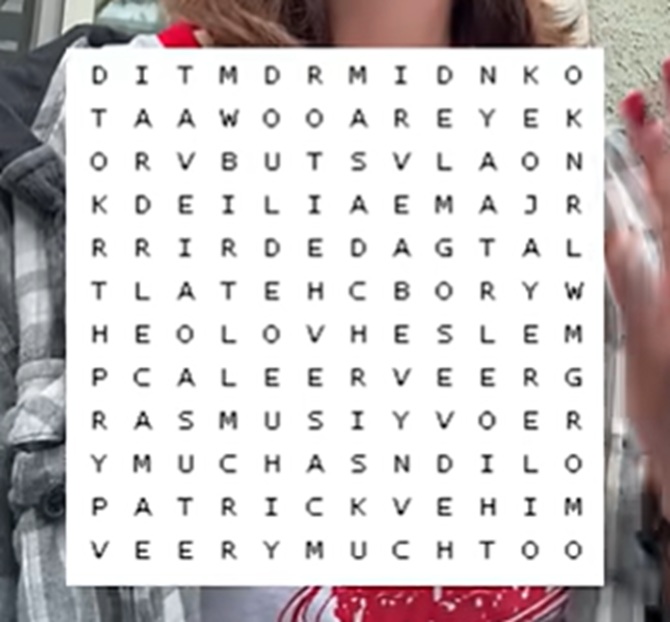
The answers to the clues are in the diagram in their corresponding rows across and down, but the letters are rearranged and mixed together. Each letter is used only once, so be sure to cross it out when you have used it. All the letters will be used. Solve ACROSS and DOWN together to determine the correct letter where there is a choice. The first letter of each word is shown outside the diagram and next to each clue. The first answer, TINSEL, has been filled in as an example.
If you’re a puzzle and game enthusiast, there are many dates and events to look forward to each year. There’s Free RPG Day, National Tabletop Day, the American Crossword Puzzle Tournament, and all sorts of tournaments and contests and reasons to gather.
But after Thanksgiving, as the holiday season arrives, there isn’t really a puzzly or game-fueled event that comes to mind. (Though the Boswords Winter Wondersolve is coming in February!)
That is, there isn’t an official puzzle or game holiday in December.
But in 2013, there was a holiday festivity that brought together the worlds of puzzles and games in truly delightful and chaotically creative fashion.
For 2013 marked the birth of the White Heffalump Gift Exchange.
A heffalump… according to Disney, anyway…
You’re probably familiar with the concept of the White Elephant gift exchange, wherein everyone supplies a gift, and then a game of keeping or swapping takes over, allowing people to take turns, develop friendly little rivalries, and generally enjoy a bit of holiday frivolity.
A White Heffalump gift exchange works the same way, but with one marvelous twist: every gift is imaginary.
That year, puzzle constructor and game designer Mike Selinker brought together more than 50 puzzlers, game designers, artists, and creators from all walks of life to participate in the first ever White Heffalump gift exchange.
Constructors like Eric Berlin, Brendan Emmett Quigley, and Debbie Manber Kupfer joined artists like Stan! and John Kovalic of Dork Tower fame. Game designers like Steve Jackson, Paul Peterson, Matt Forbeck, Elisa Teague, and James Ernest showed off their imaginary creations to other attendees like writer and RPG actual play icon Patrick Rothfuss and cookbook author / Geeky Hostess Tara Theoharis.
And the entire exchange took place on Twitter, so fans and friends alike could enjoy the madcap holiday cheer.
Just some of the amazing White Heffalump offerings from its inaugural year…
A pet squid, a pocket pet named Prudence that GRANTS WISHES, “time to play with toys”, a dapper platypus, and a 29-word crossword were among some of the other silly, impossible, imaginary gifts brought to the exchange.
And although we’ve never seen anything like it again — publicly, at least — there’s no doubt that this festive explosion of maniacal creative expression inspired others to organize their own White Heffalump exchanges.
How do I know this?
Well, because I’ve hosted one for fellow puzzlers for the last eight years now, and the array of ridiculous, delightful, impractical, and mind-bending gifts have been an absolute delight to see shared.
Bob Ross’s Happy Little Trees, complete and total dominion over the planet Pluto, a paid internship with Carmen Sandiego, the ability to harness the magic of unicorn farts (*unicorn not included), a puppy-summoning button, and Your Very Own “No Pickle” Person are just a few of the glorious gifts that have been bandied about over the years of our annual imaginary get-togethers.
It’s an absolute blast, a reason to gather (virtually OR in-person), and all it costs is a little time and imagination.
Given that puzzles and games all start with that — that elusive mote of inspiration, the spark that ignites a creative wildfire — nothing feels truer to both the spirit of the season and to the heart of gaming and puzzling than a bit of White Heffalump fun.
It certainly brightens my holiday season every year. Give it a shot and see if it stirs your soul as well.
Kryptos is one of the great remaining unsolved puzzles.
A flowing sculpture made of petrified wood and copper plating, sitting over a small pool of water. That’s what you see when you look at Kryptos.
It was revealed to the world in 1990, coded by former chairman of the CIA’s Cryptographic Center Edward Scheidt, and designed by artist Jim Sanborn. Designed to both challenge and honor the Central Intelligence Agency, for decades Kryptos has proven to be a top-flight brain teaser for codebreakers both professional and amateur.
Of the four distinct sections of the Kryptos puzzle, only three have been solved.
After a decade of silence, a computer scientist named Jim Gillogly announced in 1999 that he had cracked passages 1, 2, and 3 with computer assistance. The CIA then announced that one of their analysts, David Stein, had solved them the year before with pencil and paper. Then in 2013, a Freedom of Information Act request revealed an NSA team had cracked them back in 1993!
A curious game of one-upsmanship, to be sure. Something that foreshadowed what would follow years later…
Unfortunately for puzzle fans, K4 remained unsolved.
Eventually, Sanborn began offering hints. In 2006, he revealed that letters 64 through 69 in the passage, NYPVTT, decrypt to “Berlin.” In 2014, he revealed that letters 70 through 74, MZFPK, decrypt to “clock.” In 2020, he revealed that letters 26 through 34, QQPRNGKSS, decrypt to “northeast.”
On November 20th, 2025, the solution to Kryptos sold to an anonymous bidder for $962,500, far above the predicted $300,000 – $500,000 estimate from the auction house.
At the moment, we don’t know if this anonymous bidder will reveal the solution or become the new keeper of the mystery.
You might think that the story of Kryptos would conclude there, for the moment.
On September 3rd, not long after I wrote about the upcoming auction, Sanborn received an email with the solved text of K4 from Jarett Kobek and Richard Byrne. They had discovered the solution among Sanborn’s papers at the Smithsonian’s Archives of American Art, after the auction house had mentioned the Smithsonian in their auction announcement.
Kobek and Byrne had discovered Sanborn’s accidental inclusion of the solution in the papers donated to the Smithsonian ten years ago during his treatment for metastatic cancer. “I was not sure how long I would be around and I hastily gathered all of my papers together” for the archives, he said.
Suddenly, the auction was in doubt.
Sanborn confirmed to Kobek and Byrne that they indeed had the correct solution. Later that day, he proposed they both sign non-disclosure agreements in exchange for a portion of the auction’s proceeds. They rejected the offer on the basis that it could make them party to fraud in the auction.
Sanborn reached out to the Smithsonian and got them to block access to his donated materials until the year 2075, to prevent others from following in Kobek and Byrne’s footsteps and further endangering the auction. Meanwhile, lawyers for RR Auction threatened Kobek and Byrne with legal action if they published the text.
Sadly, Kobek and Byrne had been put in an impossible position. They have the solution that diehard Kryptos fans have desired for decades, and the possibility of coercing them into revealing the solution is hardly low. Sanborn’s computer has been hacked repeatedly over the years, and he has been threatened by obsessive fans, even claiming he sleeps with a shotgun just in case.
The auction house did disclose the discovery of K4’s solution to the bidding public, as well as the lockdown of the Sanborn archive at the Smithsonian’s Archives of American Art.
All parties waited to see what would transpire.
Still, with all this uncertainty looming, the auction closed with its $900,000+ bid, and thus far, neither the anonymous bidder nor the team of Kobek and Byrne have released the solution.
Byrne and Kobek say they do not plan to release the solution. But they are also not inclined to sign a legally binding document promising not to do so.
I waited to write about this story in the hopes that something would have been resolved in the weeks following the auction’s conclusion. But sadly, K4’s solution — and Kobek and Byrne’s potential roles in revealing it — remain unknown at the time of publishing this post.
Despite all this, the fact remains: Kryptos fans haven’t cracked K4.
But they know of four possible sources to find the solution: the Smithsonian (which is locked down), the anonymous bidder (similarly inaccessible), Sanborn (who has been fending them off for decades) and sadly, Kobek and Byrne, who remain in the crosshairs of the media, lawyers, and Kryptos enthusiasts. The pressure is mounting.
Jim Sanborn, until recently the steward and keeper of the Kryptos solution…
I suppose the best case scenario would be for someone to legitimately crack K4 and release their solution AND method for solving it.
That would free Kobek and Byrne from their burden and potential legal repercussions. That would be the triumph hoped for when Kryptos was conceived. The auction’s validity would remain intact.
Because even if the plaintext solution is revealed and someone reverse-engineers how it was encrypted, it’s a damp squib of an ending. Kryptos wasn’t solved. It wasn’t figured out. It would be a disappointing way for a rollercoaster of story to wrap up.