The Puzzle Room With David Kwong Debuts on Netflix Tomorrow!

Just a quick bonus post on this day, the Mother’s Dayest of all days, to spread the word about a delightful puzzly program that will be debuting on Netflix tomorrow.

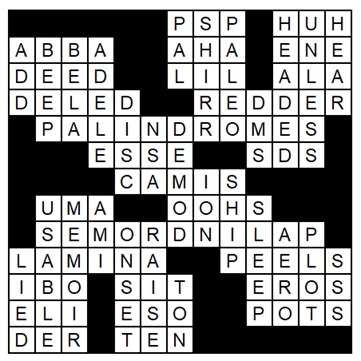
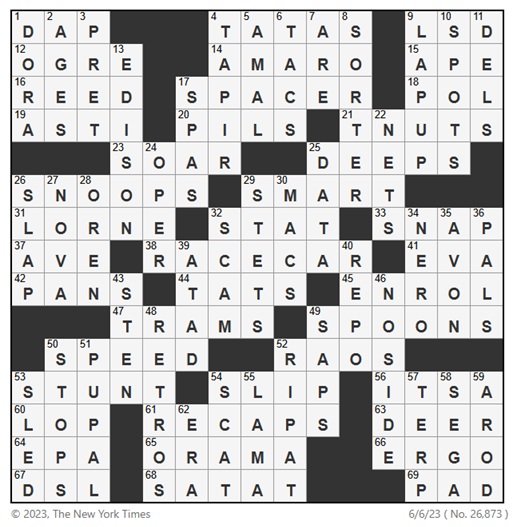
It’s called The Puzzle Room With David Kwong, and it’s a video podcast series. If you don’t know David, boy, you are missing out. He’s a crossword constructor, magician, and all-around expert in baffling people with both words and visuals.

He’s consulted on film and TV projects like Blindspot, Now You See Me, and The Imitation Game, and he’s previously combined magic and puzzles for his touring show, The Enigmatist.

Now he’s bringing his linguistic legerdemain and impressive works of mentalism to one of the world’s biggest streaming services.

Check out this promotional post from Netflix’s blog, Tudum:

Sometimes solving a challenging puzzle can feel like magic. That moment when the final piece clicks into place. The gasp before you lock in your answer. After all that time sweating, you finally feel like the smartest person in the room.

In the new video podcast series The Puzzle Room with David Kwong launching on May 11, every episode promises plenty of satisfying aha moments. The renowned magician, mentalist, and New York Times crossword constructor personalizes each puzzle for a pair of celebrity guests, leading to plenty of unexpected epiphanies and clues.

“We’re in a golden age of puzzles and games, and Netflix is the perfect home for viewers to stretch their brains with The Puzzle Room,” says Kwong. “From the intense strategy of Squid Game and the surprising twists of Knives Out, to the daily challenges of Netflix Puzzled and Best Guess Live, Netflix has long been the destination for smart entertainment. Get ready to put on your thinking caps, everyone! I can’t wait to puzzle with you all.”

Produced by Pod People, the series is designed in a way that viewers at home can play along, guests and fans face off in a race to see who can answer first. As the episode unfolds, the puzzles gradually increase in difficulty, with Kwong encouraging and celebrating every breakthrough. Each episode ends with a moment of mentalism or head-scratching illusions.

And no, Kwong won’t be sharing how he does it.

You can click here to check out a trailer for the show. Like one of his many magic tricks (either on stage or within the bounds of a crossword puzzle), I’m excited to see how David pulls this one off.

A Logic Puzzle Worthy of the Fey for Monster Week!

Some of the many fey creatures that populate Dungeons & Dragons
(image courtesy of WOTC / Nerdarchy)

It’s Monster Week, a yearly celebration of the many creatures and beings that make the world of fantasy roleplaying games so immersive. Created by D&D content creators Ginny Di and Pointy Hat, Monster Week is a celebration of roleplaying game creativity, and this year’s theme is the Fey.

Otherwise known as fairies, fae, the fairyfolk, or a number of other names, fey are known for making bargains, outwitting unsuspecting mortals, and toying with tricky words and devious deceptions.

So naturally, I couldn’t resist crafting a puzzle celebrating fey bargains and fantasy-fueled frippery. Please enjoy this deduction puzzle loaded with D&D-friendly flavor!

And be sure to check out ALL the awesome fey-inspired content over on YouTube.


A party of adventurers stepped into a fairy ring and found themselves transported to another realm: the mysterious domain of the fey. Each sought to acquire something from this strange place, well aware of the dangers that come with bargaining with the fairyfolk, but hoping to escape without any dangerous debts or unpleasant consequences.

Can you determine what each adventurer sought (one adventurer is Ludo the Quick, one adventurer sought the gift of eternal youth), in which order they were forced to bargain with the fey for their goal, and what cost or promise they made in exchange?

  1. On the night of the first day, while they were setting up camp for the evening, one adventurer promised a year of their life to the fey. It wasn’t Makavia Magehound, although Makavia also made their bargain that first night.
  2. On the morning of the second day, one adventurer made their bargain, promising to perform a song that would lure others into the fairy ring. Later that day, both Handsome Jak Two-Axe and the adventurer who sought a bountiful harvest made their fey bargains.
  3. On the second day, one adventurer made a pact with the fey, promising to spread a harmful rumor around his city when he returned. On the same day, the adventurer who sought an enchanted lute that could bring fame and fortune made their bargain with the fey.
  4. One adventurer promised their firstborn child to the fey. This was sometime after the adventurer who sought eternal beauty, but before Elowen Sharpthistle made their bargain.
  5. Either Bethany the Bold (who wasn’t the adventurer who sought a bountiful harvest) or the adventurer who sought a rare medicinal flower from the fey bargained away a treasured memory (which was not the first or second bargain made), and the other promised to perform a song that would lure others into the fairy ring.
  6. The adventurer who sought the rare medicinal flower did not make their bargain immediately before or immediately after Bethany the Bold.

Did you unravel my fey-filled logic puzzle? Do you have a favorite fairy or fey creature in your game? Let me know in the comments below! I’d love to hear from you.

Crossword News Roundup: Tournaments, Classes, Videos, and New Puzzles!

The American Crossword Puzzle Tournament was this past weekend, and once again, it was a highlight of the puzzly year! Congratulations to new champ Erik Agard and everyone who competed for Stamford’s last hurrah hosting the event.

If you want to watch the live-solved finale, you can check it out here:


While ACPT has come and gone, more tournament fun is on the way! Registration is now open for both Lollapuzzoola and the Midwest Crossword Tournament.

lolla-logo

Saturday, August 15 will be the Saturday in August for this year’s Lollapuzzoola 19.

New York City will again host the event, which features divisions for Express solvers (speed solvers), Local solvers, and Pairs solvers!

You can check out our thoughts on last year’s tournament puzzles here!

Saturday, October 3 marks the next edition of the Midwest Crossword Tournament.

The University of Illinois Chicago Student Center East will host this year’s event, which features divisions for Individual and Pairs solvers at two difficulty levels: Chicago Fire for the experienced solvers and Minnesota Nice for newer solvers. And you’re welcome to participate online as well!

Not only that, but they’re seeking a constructor from the Midwest or with ties to the Midwest to construct a themeless puzzle for this year’s event. What an opportunity!

And if you’re looking to get a better sense of MWXWT in a nutshell, I’ll be delving into last year’s tournament puzzles next week!


If you missed out on this year’s Crossword Con panels, they’ve been posted online for you to enjoy. Please make some time for them, they’re a glimpse into the present AND future of puzzles.

And while we’re discussing Puzzmo-centric events, they’re selling a Puzzmo Plus subscription for just $39.99. Click here to more details!


In other puzzle news, The Boston Globe has launched their own PuzzleMania-style publication in honor of the 130th Boston Marathon.

The Puzzle Marathon is only $8 and features 26 puzzles crafted by topnotch constructors from the Boston area.

It’s too late to get it in time for the Boston Marathon, but there’s still plenty of time for some mental athletics!


We’ve also got a few updates from the world of crossword constructors!

Veteran constructor Robin Stears has just launched her Patreon!

Robin is one of the most prolific cruciverbalists working today, with puzzles ranging from super-easy to deviously difficult. There’s literally something for everybody under Robin’s umbrella.

Be sure to check it out!

Constructor and author Eric Berlin has launched his new crossword variant, Patchwork.

This grid puzzle has entries reading across AND entries reading out in various patches that fit into the grid. So you have two overlapping chances to fill out each grid!

You can try out the puzzle for yourself here. Give it a try!


Finally, have you considered taking a class on the history and construction of crosswords?

Well, Natan Last has got you covered!

This four-session course runs throughout May at Union Hall in Brooklyn, NY, and costs $150 for all four sessions.

His book Across the Universe is a treasure trove of information about crosswords, so I have no doubt this course will be worth every penny!

Click here for more information and tickets!


Any crossword news we missed this week? Let us know in the comments section below. We’d love to hear from you!

The River Crossing Puzzle

Hey there, fellow puzzler. Stop me if you’ve heard this one before:

Image courtesy of Nuts & Volts.

A farmer with a wolf, a goat, and a cabbage must cross a river by boat. The boat can carry only the farmer and a single item. If left unattended together, the wolf would eat the goat, or the goat would eat the cabbage. The farmer must help them all cross the river without anything being eaten.

This is known as a river crossing puzzle, and there have been many versions over the years. In fact, the earliest known variation, printed in Propositiones ad Acuendos Juvenes (Problems to Sharpen the Young), dates back to the 9th century!

Depiction of the riddle from the Ormesby Psalter, dating back to 1250-1330

Sometimes the puzzle features missionaries and cannibals crossing a river, and you cannot allow the missionaries to be outnumbered at any point on either shore, lest they be eaten. Sometimes it features jealous husbands crossing a river with their wives, where none of the men will allow his wife to be alone with either of the other men. Sometimes it is knights and squires, and the squires are afraid to stay with the other knights.

I’m going to ignore the racial and misogynistic energy of those examples and focus on the wolf, goat, and cabbage version, which is the one people are most familiar with. (Although the animals do change from riddle to riddle. Sometimes it’s wolves, sheep, and cabbages, other times it’s foxes, chickens, and grain, or foxes, geese, and seeds.)

The traditional answer works for any variation:

  • you take the prey (goat, sheep, chicken) across
  • you come back with the boat otherwise empty
  • you take either the predator (wolf, fox) OR the prey’s food (grain, cabbage, seeds) across
  • you come back with the prey in the boat
  • if you took the predator first, you bring the prey’s food this time. If you took the prey’s food first, you take the predator this time. Either way, you leave the prey behind on this trip
  • you come back with the boat otherwise empty
  • you take the prey across

It’s fairly simple as brain teasers go, but the main trick is realizing that you can bring things back with you.

Image courtesy of Marek Bennett

Now, logistically speaking, I have to ask something. Whether it’s a goat or a chicken or a sheep, whether it’s a wolf or a fox, they can all swim, so why not tie a rope to one on one side of the boat, a rope to the other on the other side, and tow them along as you row the grain/seeds/cabbage across?

Yeah, I am one of those all-the-groceries-in-one-trip guys. How did you know?!

The impracticality of this has crossed the minds of others as well. My friend Krud wrote on Twitter:

The folks at XKCD also found a simpler way while asking a very reasonable question:

In an episode of the TV show Fargo, the riddle was posed involving a fox, a rabbit, and a cabbage, and one of the characters immediately gets stuck on the details before offering the following solution:

Pepper: A Turducken.
Budge: A what’s that now?
Pepper: He stuffs the cabbage in the rabbit and the rabbit in the fox, and he eats all of them.
Budge: That’s not the answer.
Pepper: It’s an answer.

Someone online noticed that Martin Freeman’s characters have encountered this riddle twice between The Office and Fargo:

I also found a post online where someone suggested this delightfully impractical solution: “He puts the fox and the seed in the boat and pushes it to the other side. Then he finds the nearest ledge and glides across with the chicken.”

You know what? It’s innovative. I’ll give ’em that.


This riddle has naturally made its way into pop culture. (Apparently it even appears in a Peppa Pig cartoon!)

In The Simpsons episode “Gone Maggie Gone,” Homer must solve the river crossing riddle. Santa’s Little Helper can’t be left with Maggie, or he’ll chew on her favorite stuffed animal. Maggie can’t be left with the jar of poison because it looks like candy.

Naturally, they manage to create their own variation on the riddle and lampoon the original all in one fell swoop:

In an episode of Dropout’s Make Some Noise, they actually reference the river crossing puzzle WHILE making fun of the Riddle of the Two Guards:

And of course, sometimes the wolf-sheep-cabbage problem escalates with the introduction of more factors to be considered.

XKCD shared how complicated the river crossing becomes with a few more unexpected additions:

An episode from the 2010s Powerpuff Girls TV show also dealt with a more elaborate version of the river crossing riddle. In the episode “Splitsville,” Bubbles tries to solve the riddle while dealing with further complications like tourists, a robber baron, and the Raptor King:


At this point the river crossing riddle has essentially become pop culture shorthand for any problem that is getting out of hand through overworked analysis.

Writer Cleolinda Jones referenced the problem while discussing the abject ridiculousness of The Twilight Saga:

Yeah, it’s like, Bella wants to be a vampire but she doesn’t want to be a vampire before she’s had sex as a human, and Edward doesn’t want her to be a vampire but he wants to get married, but Bella doesn’t want to get married unless she can be a vampire, but Edward won’t have sex with her until they get married, and then you put the fox and the grain in the boat and you leave the goose back on the riverbank.

XKCD has similarly used the problem as a punchline to a comic strip about overthinking things:


As you can see, while most of us will never encounter a real-life use for the river crossing puzzle in our lifetimes, at least we’re prepared for the possibility.

Now, if you’ll excuse me, I need to get this beaver, this kite-eating willow tree, and my favorite kite across the street to the park in time for the picnic. See ya!

Puzzles in Pop Culture: The Simpsons (re-revisited!)

The TV show The Simpsons is part of the fabric of American culture at this point. It has been on for decades, and although the show doesn’t put out banger after banger like they did in their heyday, they can still be counted on to put out fun shows and the occasional home run.

As part of their cultural influence, naturally puzzles have featured prominently from time to time.

Probably the most famous puzzly moment was when Lisa became a competitive crossword solver and Homer’s apology puzzle to her appeared in The New York Times. But they’ve also featured brain teasers, anagrams, and a Da Vinci Code-esque series of riddles.

And that legacy of puzzle-fueled storytelling hasn’t stopped since I wrote that post over a decade ago.


But it wasn’t through crosswords or brain teasers that puzzles have appeared on the Simpsons more recently. It was through Wordle.

Wordle has been mentioned enough times on The Simpsons that it actually has its own entry on the Simpsons Wiki.

We get a glimpse of a Wordle game in episode 2 of season 37, entitled “Keep Chalm and Gary On.”

Supernintendo Chalmers is fired from his job, and ends up working at the Nuclear Power Plant with Homer. After seeing how hard Chalmers was working, Homer teaches him how to APPEAR like he’s working hard.

During this montage, we get a glimpse of Chalmers playing Wordle.

But this was actually the second instance of this exact same Wordle game appearing on The Simpsons.

A few seasons earlier — episode 2 of season 34, entitled “One Angry Lisa” — Lisa finds herself on a jury, and is annoyed when she spots Judge Constance Harm playing Wordle during court.

Lisa points out that she’s playing games on the bench, and the judge realizes the answer word is, in fact, BENCH.

Wordle is also mentioned in episode 8 from season 36, entitled “Convenience Airways.” The pilot is making announcements:

Just a reminder, folks, the call button is only for real emergencies, like if you’re down to your last guess on Wordle.

The Simpsons also inspired their own variation on Wordle, Simpsle, where you try to figure out which Simpsons character the game has chosen.

You get hints — are they the same gender as your guess, older or younger, related to your guess, or had more or fewer appearances than your guess — in order to deduce the character’s identity in six tries or fewer.

It’s a good time, depending on your familiarity with the show. I’m a huge fan, so I managed to guess Kearney (one of the older bullies/miscreant kids in town) on my sixth guess.

(There was actually another Simpsons-inspired Wordle game at one point, Doh-dle, but it no longer appears to be active.)

And I would be remiss if I didn’t mention a personal anecdote involving puzzling and The Simpsons.

I was removing a repeat from a Penny Press crossword grid, and as I was working on the puzzle, I thought I’d found the perfect quick fix to fill the space.

I showed Patti Varol, future editor of The LA Times Crossword, my correction, and she pointed out that my fix, EMBIGGENS, despite being a perfectly cromulent word, wouldn’t be accepted.

It had not even occurred to me that EMBIGGENS wasn’t standard jargon. We both lamented that fact, and I got back to work on the grid.

Still, it shows the cultural impact of the show in general. From “Yoink!” and “meh” to “saying the quiet part out loud” and “old man yells at cloud,” it has literally changed how we speak.

And that goes for how we puzzle as well.


Do you have any favorite puzzly Simpsons moments? Or puzzly moments from other TV shows? Let us know in the comments section below! We’d love to hear from you.

I mean, a little more legibly than this, if you don’t mind…

Find Balance in This New Variation of Tetris: Uraomotetris!

When it comes to puzzly video games, Tetris is the granddaddy of them all.

Yes, there are some amazing puzzle games that have come along in the years since — Portal, The Talos Principle, and Baba Is You, to name just a few — but Alexey Pajitnov’s creation is ubiquitous. It’s part of our cultural fabric. Everyone knows Tetris with just a glance.

And people are still innovating with Tetris decades later.

Previously I’ve written about variations on Tetris that have caught my eye.

There’s Hatetris, where the computer gives you the worst possible piece on every turn, as well as Lovetris, where the computer gives you the exact piece you need to clear a single line.

schwerk2

There’s also Schwerkraftprojektionsgerät, aka 4-directional Tetris, where you have four Tetris games running at once.

So when a new version of Tetris catches my eye, you know I’m gonna give it a shot.

Say hello to Uraomotetris, aka Uraomote Tetris, the creation of gamer and programmer Hirai_Sun.

Uraomote (ウラオモテ) is a Japanese term meaning “two sides” or “front and back,” which is very thematically appropriate, particularly with the stark black and white color scheme.

And although it looks like a two-player game, like the old Push Mode from Tetris DS, this is actually a single-player game.

Your goal is to play the game simultaneously from above and underneath, using the white pieces falling from above and the black pieces rising from below.

You control the rotation of pieces with the arrow keys, and the placement of them with the A, S, D, and W keys. It takes a little getting used to, but once you get into the rhythm of placing one white piece, then one black piece, back and forth and back and forth, it becomes a really engaging puzzle.

You’re not just trying to think in terms of cancelling lines, you’re also trying to set yourself up for success from both sides. You begin plotting two and three moves ahead. You’re stoked when the same piece arrives from above and blow, so you can strategize.

Of course, then I would manage to hit the wrong key and mess it all up.

But a more dexterous player could have an absolute blast with this game.


Oh, and if you wanted a two-player competitive version, you can check out Tetrio.io. It allows you to play against the computer in single player or share your link with a friend to compete against them.

The goal is to push your opponent past their border (yours to the north, theirs to the south) by completing lines and lowering their playfield.

This is honestly a great way to practice for Uraomotetris. Once you’ve gotten into the habit of playing your side while defending against your opponent’s, it helps you visualize playing both sides simultaneously on your own.

There’s a wonderful sense of balance in Uraomotetris, because unlike most versions of Tetris, where you’re aiming for the bottom and eliminating lines and pieces, in this game, you really want to keep it as close to the center line as possible.

Your very goal is not to do what you do in every other version of Tetris.

It’s very zen, in a way, and quite lovely. (But also weirdly nerve-wracking at the same time.)


Have you tried any Tetris variants, fellow puzzler? Let me know in the comments section below! I’d love to hear from you.