You Autumn Pick Up These Puzzle Sets!

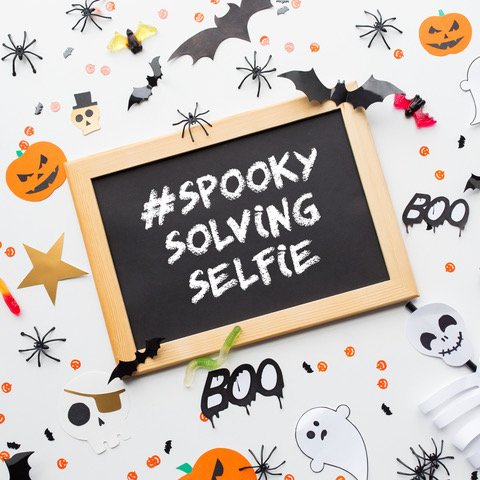
Fall is in full swing! The leaves are turning and falling, and Halloween is almost here! (Have you submitted any #SpookySolvingSelfies yet?)

We’re celebrating the season the way we know best: with some terrific Puzzle Sets for the Penny Dell Crosswords App!

That’s right, you have three fall combos to choose from! Each one is loaded with terrific easy, medium, and hard puzzles, plus seasonal theme puzzles as a bonus! That’s 70 puzzles in each combo!

And hey, would you like to pick up all three combos in one fell swoop AND save a little money on the deal?

We’ve got you covered there too, with our Fall Double Deluxe Bundle! All three Fall Combos together at last! That’s 210 quality crosswords, locked and loaded and ready to go, brought to you by the fine puzzlesmiths at PuzzleNation!

Plus they’re available for both iOS and Android users!

Happy puzzling, everybody!


Thanks for visiting PuzzleNation Blog today! Be sure to sign up for our newsletter to stay up-to-date on everything PuzzleNation!

You can also share your pictures with us on Instagram, friend us on Facebook, check us out on TwitterPinterest, and Tumblr, and explore the always-expanding library of PuzzleNation apps and games on our website!

PuzzleNation Product Review: Shadows in the Forest

[Note: I received a free copy of this game in exchange for a fair, unbiased review. Due diligence, full disclosure, and all that. And this concludes the disclaimer.]

Strategy games come in all shapes and sizes, so if you want to stand out these days, you have to bring something special or unique to the table. And with Halloween fast approaching, a strategy game with some spooky mechanics would really hit the spot.

ThinkFun’s latest strategy game, Shadows in the Forest, fits the bill nicely, delivering one bright idea with a twist: it’s played in the dark.
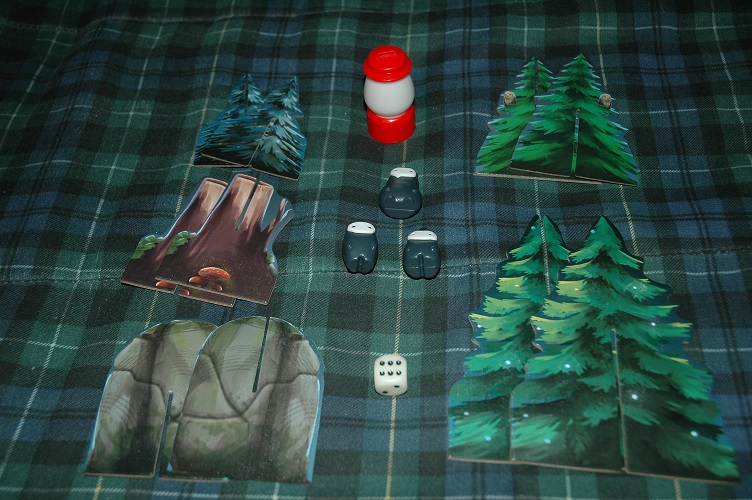
Designed for 2-7 players, ages 8 and up, Shadows in the Forest is essentially an elaborate round of Hide and Seek.

One player is the Seeker, a lantern-wielding explorer who is wandering the woods searching for Shadowlings, peculiar creatures that lurk in the shadows and are vulnerable to light. The other players are the Shadowlings, working together to stay out of the light and thwart the Seeker.

So how do you play?
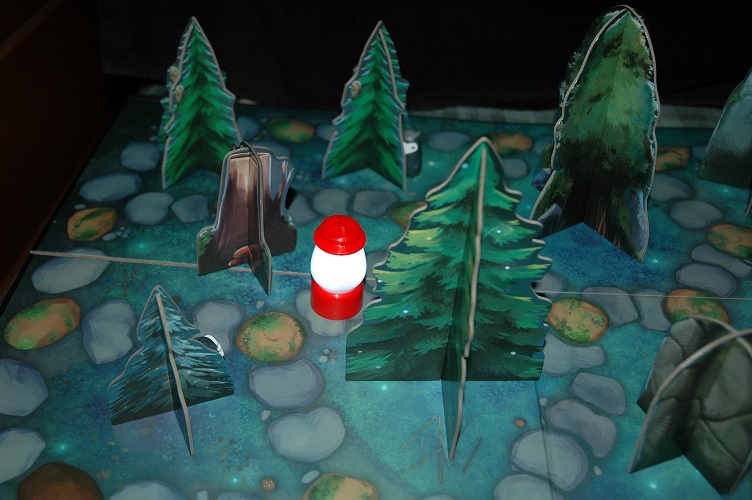
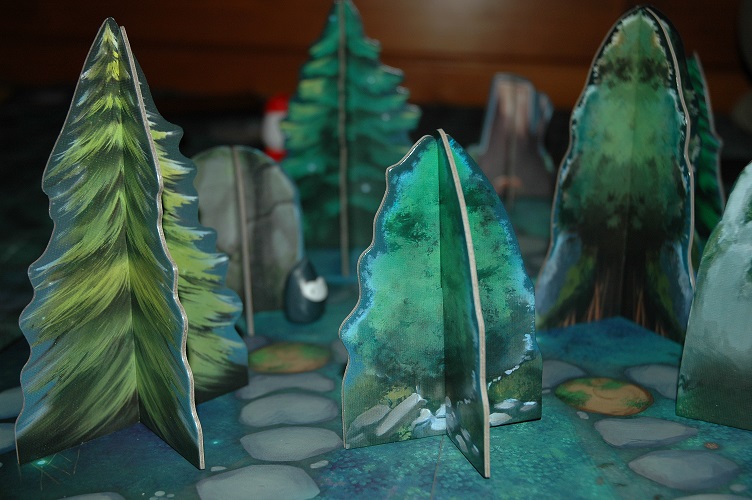
First, you set up the board, assembling and placing the physical obstacles — trees, stumps, rocks, etc. — that will create shadows for the Shadowlings to hide in.

Then, place the lantern on one of the red stones in the pathway on the board. Turn on the lantern and shut off the lights. (You’ll want it as dark as possible to really immerse everyone in the game and make the most of both the lantern and the glow-in-the-dark die that comes with the game.)

Now the Seeker has to shut their eyes as the other players place the Shadowlings in the shadows created by the lantern.

Once the Seeker opens their eyes, the game begins.
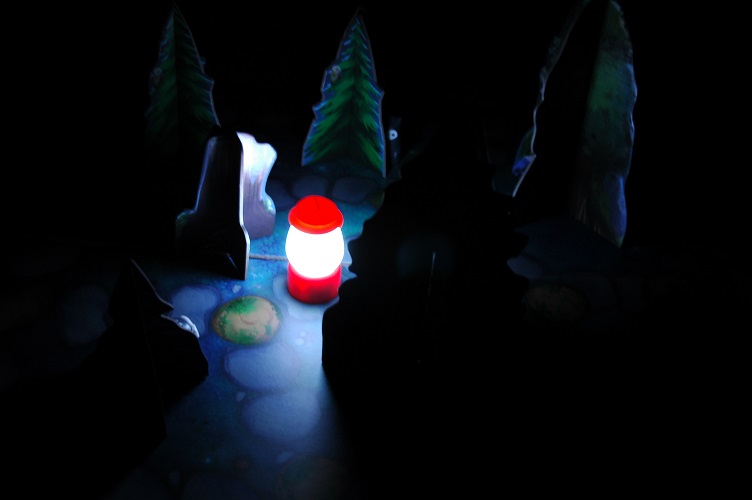
The Seeker uses the die to determine how many spaces the lantern moves. Any Shadowlings revealed by the lantern during the Seeker’s turn are frozen in place, and the Seeker takes their masks. Those unmasked Shadowlings are unable to move until they are unfrozen by other Shadowlings.

Once the Seeker’s turn is done, the Seeker closes their eyes, and the Shadowlings move. Unlike the Seeker (whose lantern has to stick to the path), the Shadowlings can be moved anywhere on the board. They don’t need to stick to the path or adhere to a die roll to determine how far they can travel.

The only rule for them? They cannot move anywhere the light touches. They must stick to the shadows. (There’s no jumping, climbing, or otherwise bypassing the light. The Shadowling’s movement can curve or turn, but must be an unbroken line along the board.)

[This Shadowling is caught in the light, and therefore frozen.]

The goal of the Seeker is to freeze all of the Shadowlings and take their masks. The goal of the Shadowlings (who play as a team) is to gather every Shadowling on the board in the same shadowy place.

It’s an intriguing hook for a game, but unfortunately, the instruction manual is vague and not terribly intuitive. It does a poor job of explaining both how the Shadowlings move and how they unfreeze Shadowlings touched by the light.
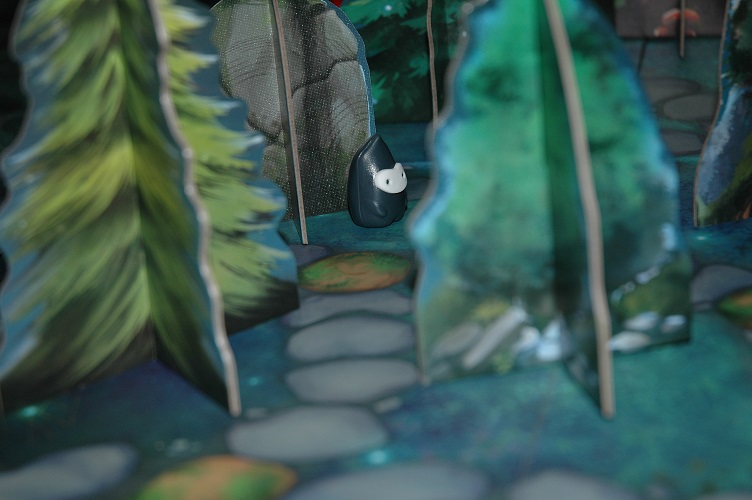
In each of our test games, we had to resort to house rules and clarifications in order to play the game. For instance, even while hiding, we decided the Shadowlings should face outward (away from the obstacle), so their masks would shine brighter if the light revealed them. Additionally, we made Shadowling players trace their intended path along the board with their finger first, in order to reveal if they touched the light of the lantern at any point.

As for the freezing/unfreezing rules, we decided that any Shadowling that lost its mask couldn’t move, even if the lantern’s movements plunge them back into the dark. Only when another Shadowling touched them in the dark could the mask be returned and the Shadowling unfrozen. (This may very well be the intended way to play, but the instructions are unclear, so it’s hard to tell.)

Once we’d established these ground rules, the game really came together.
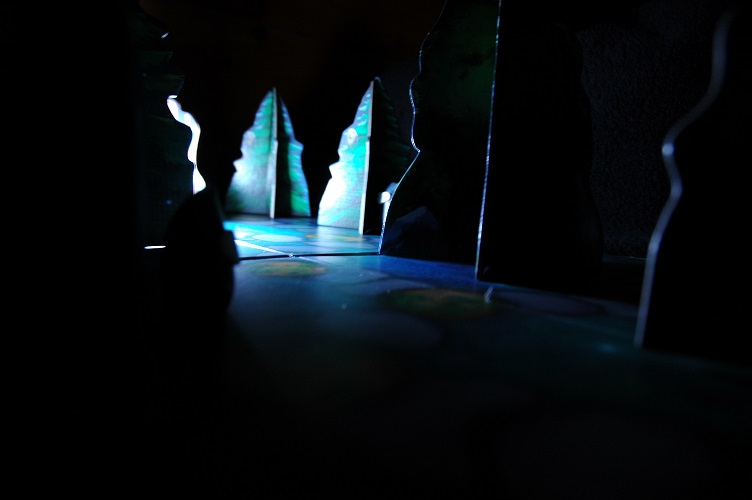
[Can you see both Shadowlings?]

It becomes a battle of strategy. The Seeker tries to reveal and freeze the Shadowlings in place while searching for others, while the Shadowlings must outmaneuver the lantern, stay in the shadows, rescue their pals, and mass in one place.

It’s amazing how a simple movement of the lantern piece can not only bisect the board and pin down the Shadowlings, but alter the shadows on the board in unexpected ways.

The obstacles are easy to assemble and disassemble, and the battery-operated lantern (batteries included!) throws off a surprising amount of light for its size. The Shadowlings are adorable, each with their own little look and personality, and yet, easily vanishing into the darkness. This game has style to burn.
Although adults can play the game, we found that games either ended very quickly (if the Seeker rolls poorly or the Shadowlings were massed on the far side of the board from the lantern) or lasted a very long time (similar to chess games where the pieces on both sides are depleted and players simply chase each other around the board endlessly).

But when playing with younger solvers, the Shadowling team play and the convention of playing in the dark made for a unique gaming experience — particularly if an adult is the Seeker, and one adult joins the Shadowling team of younger players. Seeing the kids conspire against the adult to lurk in the shadows is a delight.

In the end, Shadows in the Forest is a fantastic idea for a game that, while not executed to perfection, still makes for a fun time.

ThinkFun’s Shadows in the Forest is currently available at Target, Amazon, and participating retailers, for $24.99.


Thanks for visiting PuzzleNation Blog today! Be sure to sign up for our newsletter to stay up-to-date on everything PuzzleNation!

You can also share your pictures with us on Instagram, friend us on Facebook, check us out on TwitterPinterest, and Tumblr, and explore the always-expanding library of PuzzleNation apps and games on our website!

Time for Some Spooky Solving Selfies!

[An appropriately spooky crossword puzzle from 1927, London After Midnight.]

We love interacting with members of the PuzzleNation community, so we’ve cooked up something new that we think you’ll enjoy!

Welcome to our first round of Solving Selfies!

The game is simple! We’ll give you a theme, and you reply with a photo! We’ll randomly pick a winner each month for a terrific Daily POP Crosswords prize!

Ready to play? Great!

Today’s theme is “Spooky Solving Selfie!”

Show us your Halloween spirit! Do you deck out your house for the holiday? Or have a killer costume picked out? Do your kids or pets get involved in Halloween shenanigans? Or maybe your favorite place to solve is particularly spooktacular?

We’d love to see it! Send us your Spooky Solving Selfie today! And be sure to use the hashtag #SolvingSelfies or #SpookySolvingSelfies so we don’t miss it!

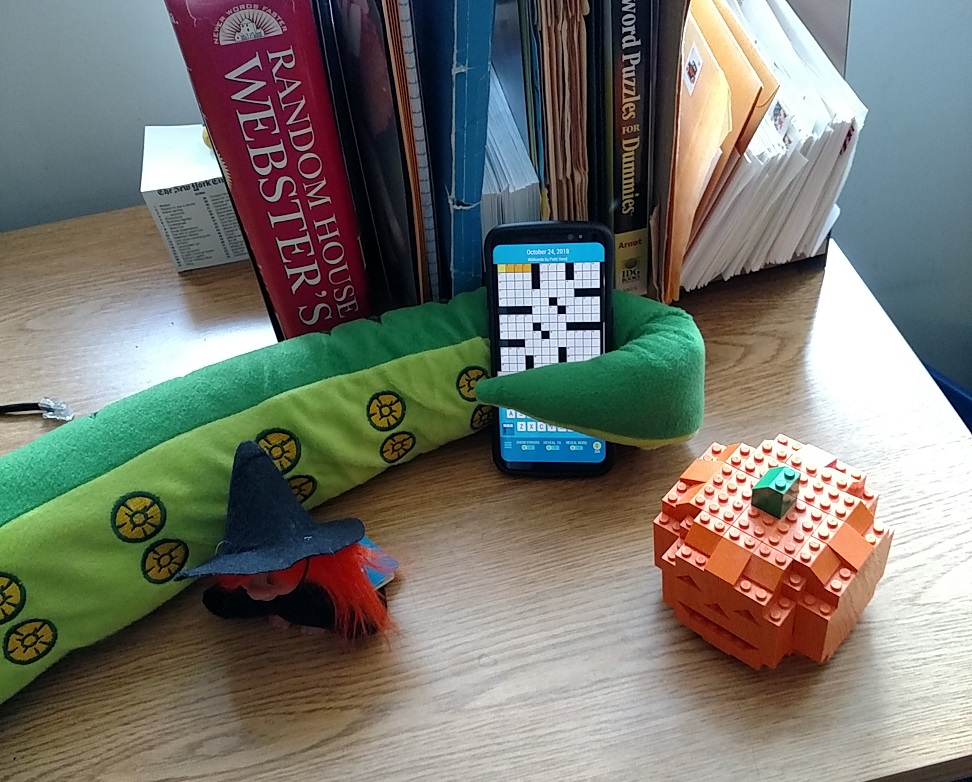
[Our resident office tentacle is getting into the Spooky Selfies spirit while solving!]


Thanks for visiting PuzzleNation Blog today! Be sure to sign up for our newsletter to stay up-to-date on everything PuzzleNation!

You can also share your pictures with us on Instagram, friend us on Facebook, check us out on TwitterPinterest, and Tumblr, and explore the always-expanding library of PuzzleNation apps and games on our website!

Brain Teaser: A Curious Way to Tell Time

We love tackling brain teasers, riddles, math puzzles, and mind ticklers here at PuzzleNation Blog.

Our friends at Penny Dell Puzzles also enjoy putting their puzzly skills to work by posting various brain teasers..

And one of our mutual readers was hoping we could explain how to solve a puzzle that recently made the rounds on Penny’s social media accounts.

We’d be happy to!

Today, let’s take a look at a brain teaser all about time.

So, where do we begin?

Let’s start by breaking that sentence down to make it easier to parse: “The number of hours left today is half of the number of hours already passed.”

Well, a simpler way of saying that is “the number of hours already passed is twice the number of hours left.”

So if you have the number of hours left — let’s call that X — then the number of hours already passed is twice X, or 2X. Between X and 2X, that’s your entire day covered.

Sorting that out gives us the simple formula of X + 2X = 24, since there are 24 hours in a day.

That easily becomes 3X = 24, and simple division tells us that X = 8.

So X, the number of hours left today, is 8. Which means that twice X, or 16, is the number of hours already passed.

And if there are 8 hours left in the day (or 16 hours already passed), that means it’s 4 PM.


Most of the time, brain teasers are all about efficiently organizing the information we have.

That allows us to figure out how best to use that information to move forward and solve the puzzle. This is just as true with a relatively straightforward brain teaser like this as it is with a complicated logic puzzle with all sorts of pieces to put together.

It’s all about figuring out what we know, what we don’t, and how what we DO know can lead us to what we don’t.

That’s just part of the fun.


Thanks for visiting PuzzleNation Blog today! Be sure to sign up for our newsletter to stay up-to-date on everything PuzzleNation!

You can also share your pictures with us on Instagram, friend us on Facebook, check us out on TwitterPinterest, and Tumblr, and explore the always-expanding library of PuzzleNation apps and games on our website!

PuzzleNation Product Review: Lexicon-GO!

[Note: I received a free copy of this game in exchange for a fair, unbiased review. Due diligence, full disclosure, and all that. And this concludes the disclaimer.]

You might think that if you’ve seen one letter-tile game, you’ve seen them all. But you’d be wrong.

Every word-forming game, from great-granddaddy Scrabble on down, has its own quirks and idiosyncrasies, and some of them have tricks up their sleeves that make for a truly unique puzzle game experience.

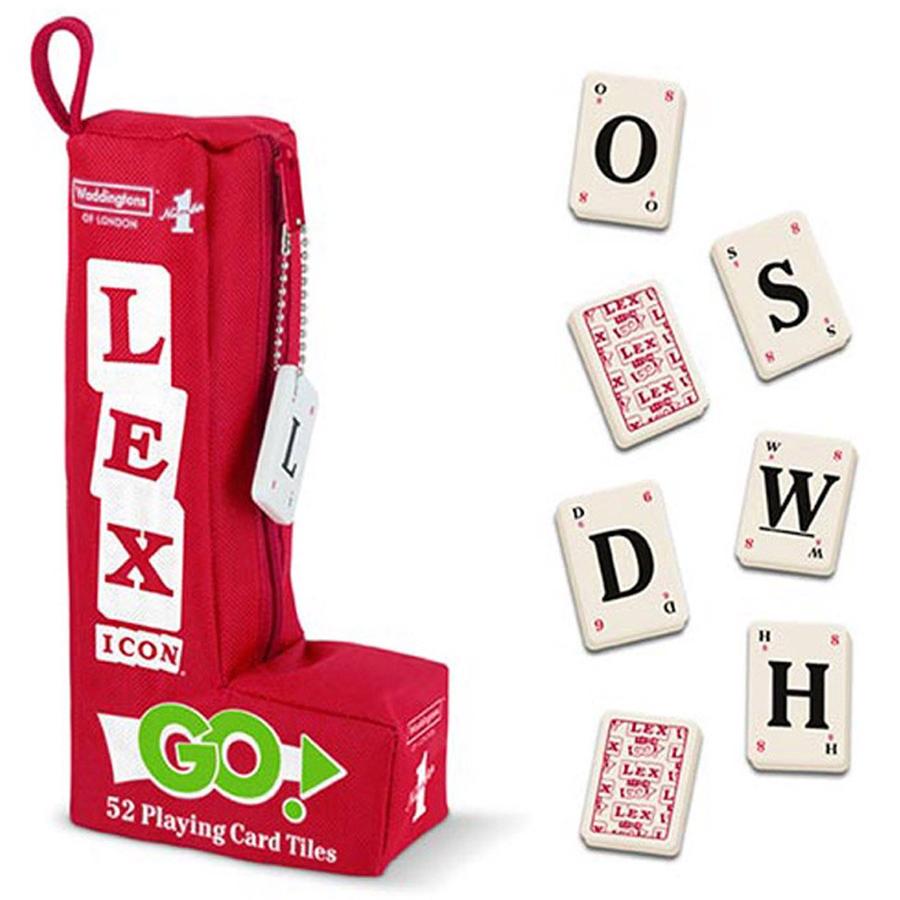
And very few of them have the urgency of Lexicon-GO!, a travel-friendly game distributed by Winning Moves UK.

Designed for 2-4 players, ages 8 and up, Lexicon-GO! is as devilishly simple as it is frenetic.

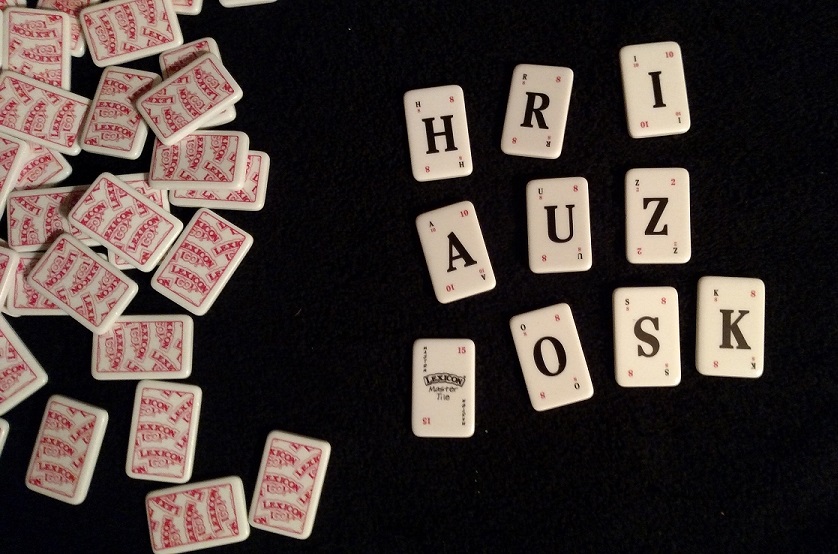
Each player draws ten tiles from the draw pile, and tries to form words with all ten of them faster than their opponents.

And not just any words will do. There are no one-letter words, plurals, proper nouns, acronyms, and abbreviations allowed as answer words.

In most letter-tile games, it’s all about your own anagramming and word-forming skills; there’s very little direct interaction with your opponents. (Unless you’re both going for the same tile in the draw pile, that is.)

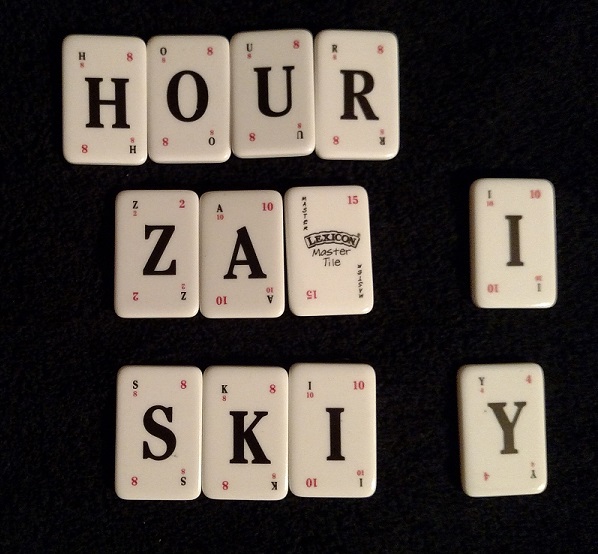
But Lexicon-GO! rewards both interactive thinking and aggressive, advantageous play. You can add your letters to the words being formed by other players (adding a T to the word SKI below to make SKIT, for instance).

Or you could swap out a letter in another player’s word with one of your own (making ZAP into ZIP and taking the A, or making SKI into SKY and taking the I, for instance).

Of course, this move only works if you’re forming a new, acceptable word. You can’t just throw in any letter and steal one you need.

[Once the wild card title is set, it remains that letter for the rest of the round, even if another player steals it. Until this round is done, for instance, the master tile is a P.]

Be the first one to use or dispose of all ten of your letters, and you win the round. The first player to win five rounds wins the game!

(Naturally, we’ve found that most players tend to focus on simply forming their words the fastest, ignoring chances to interact with and/or sabotage their opponents. So we introduced a house rule that every player must either swap a letter with another player’s word or add a letter to another player’s word. It certainly made for more strategic and chaotic gameplay!)

Now, you may have noticed that the tiles also have number values, not unlike the tiles in Scrabble and other tile-scoring games.

That’s because there’s a second path to victory, if you play Original Lexicon (or Master Lexicon) rules, which are helpfully provided with the game.

In Original Lexicon, the rules are the same, including winning a round by being the first to use or dispose of all ten tiles. But instead of everyone else simply conceding the round, they instead add up the point values of their letter tiles. After a few rounds, any player who passes 100 points is out, and the last player standing wins.

That variation makes the game much more tactical. If you know other players are faster at word-forming and anagramming than you, you can mitigate the damage to your score by getting rid of high-value tiles through swapping with the draw pile or adding your letters to the words of other players.

The larger tiles do mean that the game contains fewer letter tiles than other letter-tile games, which might hamper replayability in the long run.

Of course, on the flip side, larger tiles mean that both younger players and older players (who might have visual impairment issues, for instance) can enjoy Lexicon-GO! more than a game with smaller letter tiles.

As always, there’s a trade-off in any design choice.

Lexicon-GO! builds on the strong reputation of the letter-tile games that preceded it, while adding to the genre in engaging, fun ways.

The focus on lightning-quick play (as well as the encouragement to deviously interact with other players) adds some pleasant spice to the genre, rewarding outside the box thinking and puzzle-solving for younger minds and older alike.

This game gives the letter-tile classics a serious run for their money.

Lexicon-GO! is available from Winning Moves UK, Barnes & Noble, Amazon, and other participating retailers.


Thanks for visiting PuzzleNation Blog today! Be sure to sign up for our newsletter to stay up-to-date on everything PuzzleNation!

You can also share your pictures with us on Instagram, friend us on Facebook, check us out on TwitterPinterest, and Tumblr, and explore the always-expanding library of PuzzleNation apps and games on our website!
The First Viral Handheld Puzzle Game?

It’s fair to say that PuzzleNation knows a little something about the world of mobile puzzling. Mobile apps are our bread and butter, after all, and whether you’re talking about our Daily POP Crosswords App or the Penny Dell Crosswords App, we are connoisseurs of puzzles that fit in your pocket.

Of course, puzzle apps are a relatively new addition to the genre. Mobile puzzles, like matchstick puzzles, have existed for centuries.

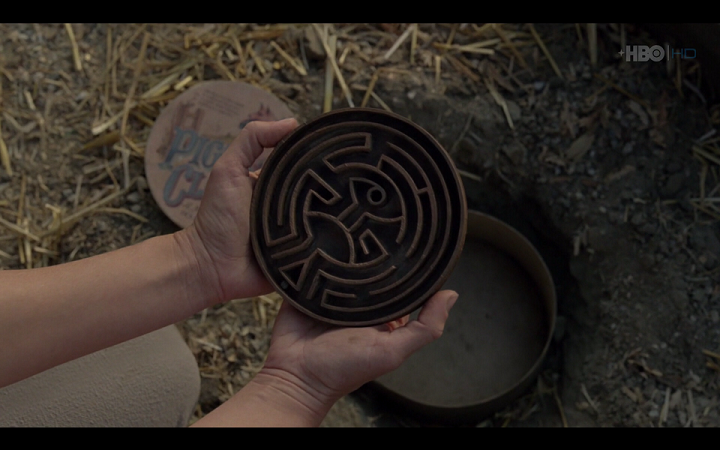
In fact, more than a hundred years ago, a mobile puzzle game went “viral” and became a cultural sensation. (And it has made a recent return to prominence thanks to the HBO drama Westworld.)

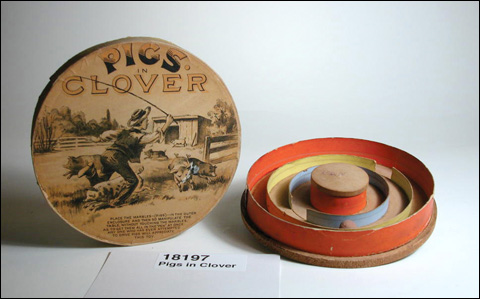
Today, let’s talk about Pigs in Clover.

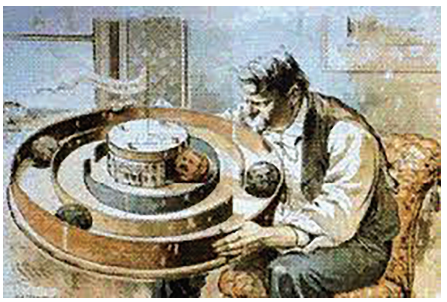
Pigs in Clover is a ball-in-a-maze puzzle invented in 1899 by toymaker Charles Martin Crandall. Although puzzle historians aren’t sure if Pigs in Clover was the first ball-in-a-maze puzzle created, it was definitely the first to capture the imagination of consumers.

You’ve probably solved a ball-in-a-maze puzzle at some point in your life. From the flat disc and labyrinth-inspired models to spherical and more complicated three-dimensional versions, they’re a fun test of both dexterity and strategic thinking.

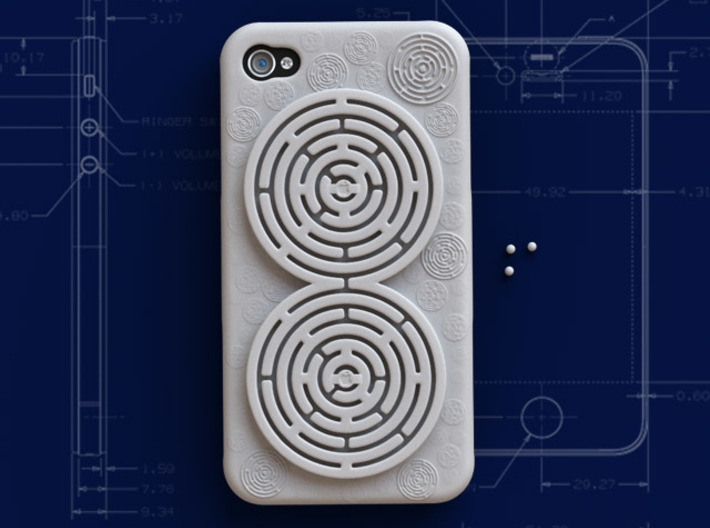
A quick Google image search turns up dozens of variations on the concept, including an iPhone case with two ball-in-a-maze puzzles built into it!

Pigs in Clover was a simpler design, involving only three rings and a center “pen” to herd the “pigs” into. But it’s one that was supposedly so popular upon launch in January of 1889, it impacted the actual operation of the U.S. government.

But how popular was “popular” in 1889?

Well, according to the Waverly Free Press, “The toy works are turning out eight thousand of ‘Pigs in Clover’ a day, and are twenty days behind with their orders.” According to some sources, over a million games were sold by late April 1889!

And one of those games found its way into the hands of William M. Evarts, senator from New York. Depending on the version of events you read, he purchased a copy of Pigs in Clover from either a street vendor or, curiously, an aggressive street fakir.

He then took it home and played with it for hours. At work the next day — and by work, I mean the Senate of the United States — another senator, George Graham Vest, borrowed it and went to the cloak room to try to solve the puzzle game.

Yes, a sitting U.S. senator went and hid in the coats to play this game. It’s sorta like hiding under all the coats at a Christmas party and playing Angry Birds, except in fancier clothing.

Oddly enough, Vest was soon joined in the cloak room by four other senators — Pugh, Eustis, Walthall, and Kenna — who were also interested in trying their hands at the popular game. Apparently, they were too impatient to share Evarts’ copy of the game, since a page was enlisted to go out and buy five more copies of Pigs in Clover for the distracted senators.

Once each had his own game in hand, they engaged in a pig-driving contest. It must’ve been harder than it looks, since it took Vest 30 minutes to herd all of his pigs into the pen.

Yup, at least half an hour of senate business was derailed by a few little metal balls in a cardboard maze. Amazing.

Naturally, the story got out, and a political cartoon in the New York World on March 17th commented on this peculiar delay in President Benjamin Harrison’s agenda, likening the political landscape to the game. With the White House as the pen and various lawmakers as the pigs, the cartoon asked, “Will Mr. Harrison be able to get all these hungry pigs in the official pen?”

It makes you wonder just how many man-hours were lost to Pigs in Clover! After all, a simple game — solved by many — can prove costly.

Remember the Google Doodle in 2010 that allowed you to play Pac-Man? It’s estimated it cost $120 million dollars, and nearly five million hours, in terms of productivity.

Sounds like President Harrison should count himself lucky it was just a half-dozen senators… as far as we know.

[Sources for this article: The Strong Museum of Play, Eli Whitney Museum and Workshop, Le Roy Historical Society, Antique Toy Collectors of America, Wikipedia, and A History of Video Games in 64 Objects.]


Thanks for visiting PuzzleNation Blog today! Be sure to sign up for our newsletter to stay up-to-date on everything PuzzleNation!

You can also share your pictures with us on Instagram, friend us on Facebook, check us out on TwitterPinterest, and Tumblr, and explore the always-expanding library of PuzzleNation apps and games on our website!