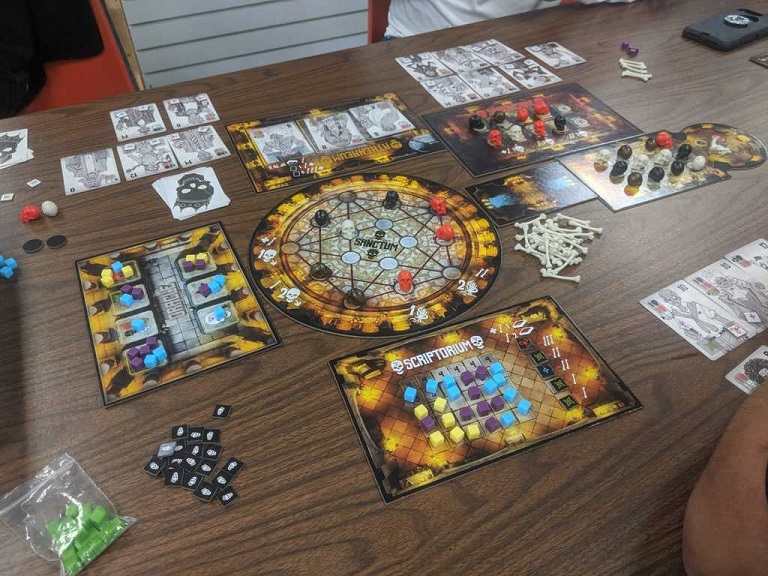
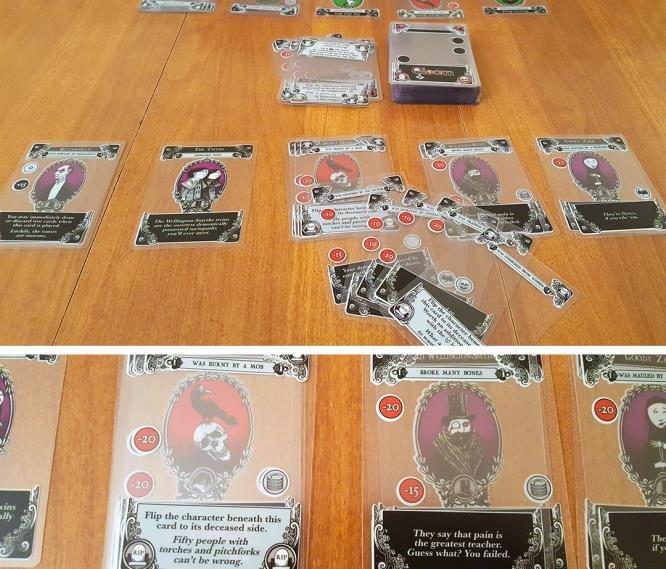
Escape Room Gameplay at Home: Unlock! and Exit: The Game

mind bender escape room

[Image courtesy of The Portland Press Herald.]

In yesterday’s post, we discussed different ways you can enjoy escape room-style puzzling at home. We covered books, apps, and audio formats, but we left the largest category for today’s post: escape room games.

There are a myriad of games that try to encapsulate the escape room experience — searching the space, finding clues, interacting with the environment, solving puzzles, and experiencing the narrative — with varying degrees of success.

Escape Room: The Game, Escape Room in a Box, Escape from Iron Gate, Escape from the Grand Hotel, and Escape Tales: The Awakening are just five examples that turned up with a cursory search. That’s just the tip of the iceberg, of course, when you consider games that incorporate escape room-style or timed elements, like Mission X-Code, Cut the Wire, Bomb Squad Academy, Fuse, and Two Rooms and a Boom.

But all of those games are dwarfed in the marketplace by the industry leaders — based on sheer number of available puzzly experiences, anyway — so we decided to sample those and explore escape room gameplay from.

I solved three games from the Exit: The Game franchise and three games from the Unlock! franchise.

Let’s dive in, shall we?


Exit-the-game-1024x550

[Image courtesy of Meeple Mountain.]

Exit: The Game products create an escape room experience by combining a deck of cards, a guidebook, a sliding decoder ring, and miscellaneous items to be used throughout the game. The deck of cards is divided into red riddle cards (labeled by letter), blue answer cards (labeled by number), and green help cards (labeled by symbol).

There is an app as well that hosts a tutorial, your timer, atmospheric sounds and music, and a star-based scoring mechanism rating your performance at the end of the playthrough.

In the easier games, the guidebook progresses page by page, and you’re meant to go no further until the answer cards tell you to do so. You’ll use what’s on each page, along with the information on the riddle card to solve each puzzle.

Most of the puzzles will result in a three-digit number, which you enter into the decoder wheel. The decoder wheel will reveal a card number, which you will pull from the answer card deck. If you’re completely wrong, you flip the card to reveal a red X and go back to the drawing board. If you’re on the right path, the answer card will have different card numbers for each of the different puzzle symbols. You find your symbol, then go to the card in the answer deck indicated.

For instance, if you’re solving a puzzle with a triangle symbol, you solve the puzzle with a three-digit code, and enter that code into the decoder wheel. It sends you to, say, card 29. On card 29, you look for the triangle symbol, and you go to the card number listed. If you’re correct, you move forward in the game with new riddles, rooms, and in the easier games, the next page in the guidebook. (In harder games, the entire guidebook is “in play” the whole time, and you must figure out which pages connect with which puzzles and riddle cards.)

Some of the riddle cards and guidebook pages must be cut, manipulated, or destroyed in order to complete the various puzzles, so each Exit game is a one-time play experience. Each also requires some outside-the-box thinking (sometimes literally!) in order to crack various riddles.

I found each game to be an enjoyably interactive experience, and it felt like many of the above activities associated with escape rooms were replicated nicely. (One of the harder games not only had the puzzles and riddles to solve, but a murder mystery as well, which really kept me on my toes, because I wasn’t just thinking about the next riddle and discarding the bits and bobs I’d used. I had to pore over every detail in order to solve the murder!)

In case you’re interested, the three games I tackled were The Haunted Roller Coaster (difficulty: 2/5), The Abandoned Cabin (difficulty: 2.5/5), and Dead Man on the Orient Express (difficulty: 4/5).


20181220_152554-min-1080x675

[Image courtesy of Escape Games Canada.]

Unlike the Exit series, Unlock! games consist of entirely of a deck of cards and your app. But that doesn’t make it any less interactive. Instead of the guidebook, decoder ring, and riddle cards being manipulated, more of those experiences are handed through the app.

The cards provide locations, challenges, helpful items, solutions, and warnings, all identified with numbered or lettered cards in the deck. So you can end up with quite an array of cards in front of you while you solve.

The app, on the other hand, hosts your timer, atmospheric sounds and music, a penalty button (which removes time from your timer!), a hint button, a machine button, and a code button. Any codes you unravel are entered into the code screen (instead of a decoder ring), and certain puzzles are mechanical, which you manipulate in the app. The app then tells you what number/letter card(s) to draw from the deck to proceed.

The number system for the Unlock! cards is interesting. Each card representing a puzzle to be solved or an item to be used has a number associated with it; to see if you solved the problem correctly, you add its two numbers (one for the challenge, one for the solution).

If you combine a helpful item’s card number with a challenge’s card number, the total equals another card in the deck. If you’ve solved the challenge correctly, the card matching that sum reveals something: an opened lock, a new room, additional puzzles and helpful items, etc. If you’ve combined items incorrectly, the card matching that sum reveals a time penalty. (For instance, if you have a key on card 16 and a keylock on card 25, you’d go to card 41 in the deck.)

There is no destroying cards or anything here, so if you wished, you could reshuffle the deck and allow someone else to try the game. (It wouldn’t be much challenge for you, since you know all the riddle solutions now. But it’s nice to know I could walk less experience escape room solvers through the game on a replay, enjoying their efforts. That’s not possible with an Exit game.)

In case you’re interested, the three games I tackled were The Night of the Boogeymen (difficulty: 1/3), The House on the Hill (difficulty: 1/3), and Squeek & Sausage (difficulty: 2/3).


Each brand has its pluses and minuses.

While the guidebooks in Exit are more detailed than the location cards in Unlock! games — and the miscellaneous items are a nice touch — I found I had to do more searching with the location cards. I would scrutinize every nook and cranny, because some numbers were hidden in shadow, or written at odd angles so your eye slides right past them. Exit is less devious with that aspect, but only because it has more space to play with for puzzles in the guidebook.

Both game systems had red-marked cards to indicate your failure on a given puzzle, but in Unlock!, you were penalized twice over, because you’ve already lost the time on the clock you spent on that dead end, and then you get the timer penalty as well.

Unlock! definitely makes greater use of its app. Honestly, except for the star-ranking system and some nice atmospherics, you could do without the Exit app. (Particularly since group solving can be pretty noisy, so the atmospherics are mostly lost unless you’re in quiet contemplation.)

I was thoroughly impressed by how both systems tried to recreate so many aspects of the escape room experience. Searching the space, finding clues, interacting with the environment, solving puzzles, and experiencing the narrative were all included to some degree, and I felt genuine pressure watching the minutes and seconds tick away as a particularly vexing puzzle left me baffled, if only momentarily.

I would recommend games from either series to anyone trying to recapture that escape room spirit in these trying times. But they’re also terrific icebreakers for people who have never tried an escape room, but don’t want to feel the pressure of being on-location, instead solving from the comfort of home.


I hope this brief look at these two puzzly franchises — I purposely stayed light on actual puzzle or scenario details to avoid ruining the experience for anyone — offered yet another avenue for you to explore as you enjoy escape room solving from home!

Don’t forget, tomorrow is the finale of Escape Room Puzzle Week, as we review ThinkFun’s latest diabolical creation, Escape the Room: The Cursed Dollhouse!


Thanks for visiting PuzzleNation Blog today! Be sure to sign up for our newsletter to stay up-to-date on everything PuzzleNation!

You can also share your pictures with us on Instagram, friend us on Facebook, check us out on TwitterPinterest, and Tumblr, and explore the always-expanding library of PuzzleNation apps and games on our website!

Escape Room-Style Solving From Home!

sidequest2

[Image courtesy of Yelp.]

Unfortunately, the ongoing global crisis is preventing a lot of people from feeling safe while engaging in communal puzzly events. While crossword tournaments (and events like the upcoming Boswords 2020 Fall Themeless League) have adapted to the online and remote-play spheres, escape rooms haven’t been so lucky.

Sure, some have reopened during this difficult time — and anyone familiar with escape rooms was probably using a fair amount of hand sanitizer to begin with, even before all this! — but there’s no doubt that the industry has taken a hit.

Some escape rooms have adapted, hosting virtual escape room experiences on Zoom and other platforms, and I’ve heard good things about those communal play experiences.

But there are other ways to harness that escape room-style solving vibe for yourself from the comfort of your own home. Today, we’re going to look at a few options.


Escape Room Apps

While The Room is probably the benchmark series for escape room apps, there is a vast world of escape room-inspired apps available for both iPhone and Android users.

A casual glance at each brand’s offerings give solvers a host of intriguing choices. Names like Forever Lost, RealMyst, Agent A, The Birdcage, All That Remains, Adventure Escape, House of Da Vinci, Rusty Lake, War Escape, Cube Escape, and Spotlight hint at hugely different solving experiences.

Some are point-and-click-style explorations of a space, ranging from a series of doorways to vast multi-room affairs loaded with secrets to uncover with the touch of a finger. Others, like our own Wordventures: The Vampire Pirate, give you an entire town to explore!

Some go beyond point-and-click, letting you actually manipulate objects, twisting knobs to open doors, spinning wheels on combination locks, moving puzzle pieces into place, and more.

And the different narratives behind each are virtually limitless. You might be a prisoner concealing your efforts to escape from the guards, or a bird trying to free yourself from your cage, or a person onboard the sinking Titanic, or a secret agent pursuing your nemesis.

For a relatively low price — or sometimes even free (with the occasional ad) — there are plenty of options available right in your pocket.


Escape Room Books

These come in all shapes and sizes, and can be delivered right to your door.

Some are constructed like Choose Your Own Adventure novels, allowing you to make different choices and explore the outcomes, both good and bad, resulting from your decisions.

Others are built like labyrinths to be explored and unraveled. A good example would be Brad Hough’s The Maze series, which offers a first-person perspective on labyrinths, as if you’re actually wandering into each room and new area.

Still others are page-by-page progressions, full of puzzles and wordplay that require you to solve certain challenges before you can proceed forward.

Each of these offer the sort of sequential chain-solving that escape room devotees look for. You can make choices, solve puzzles, and move forward in the narrative toward the next challenge!


[Image courtesy of I Googled Israel.]

Escape Room Audio

Yes, you can even solve interactive audio versions of escape rooms now! My sister showed me this recently — utilizing the voice-activated Alexa feature on her phone — and I’ve tackled several different scenarios.

It plays like an old text adventure game, where you give the game vocal commands and it responds with information. For instance, you can tell it to look left, look right, look up, look down, or look at a particular object, and it will tell you what you see.

As you build a visual idea in your mind of what the room and its contents look like, you must find useful items, crack codes, solve puzzles, and escape!

The quality of these can vary by setting; for the most part, they’re competently assembled and feature puzzles that wouldn’t feel out of place in a real escape room. (One of them, though, had a solution so nonsensical and wacky that I couldn’t believe THAT was the correct solution. As always, your mileage may vary.)


Do you have any other suggestions for escape room-style solving from home, fellow puzzlers and PuzzleNationers? Let us know! We’d love to hear from you.

And remember, we’re continuing this discussion on Thursday with a look at two of the top at-home escape room game brands on the market today, Unlock! and Exit: The Game, before reviewing ThinkFun’s new 3-D escape room puzzle game The Cursed Dollhouse on Friday!

Stay tuned, and happy puzzling!


Thanks for visiting PuzzleNation Blog today! Be sure to sign up for our newsletter to stay up-to-date on everything PuzzleNation!

You can also share your pictures with us on Instagram, friend us on Facebook, check us out on TwitterPinterest, and Tumblr, and explore the always-expanding library of PuzzleNation apps and games on our website!

What makes a great riddle?

[Image courtesy of PNG Find.]

I have always suspected that riddles were our first experiments with puzzles and puzzly thinking. Long before crosswords, Sudoku, codebreaking, and magic squares, the potential for wordplay and outside-the-box thinking would have appealed to storytellers, teachers, philosophers, and other deep thinkers.

Who doesn’t enjoy unraveling a riddle, parsing the carefully constructed sentences for every hint and nuance lurking within, and then extracting that tiny purest nugget of a solution from the ether?

Riddles appeal to our love of story and adventure, of heroes with wits as sharp as their swords. Riddles are the domain of gatekeepers and tricksters, monsters and trap rooms from the best Dungeons & Dragons quests.

And so, for centuries upon centuries, even up to the modern day, riddles have been a challenging and intriguing part of the world of puzzling.

We can trace them back to the Greeks, to Ancient Sumeria, to the Bible through Samson, and to mythology through the Sphinx. Riddles abound in literature; we find riddles in Shakespeare, in the works of Joyce, Carroll, and Austen, all the way up to the modern day with The Hobbit and Harry Potter. Every locked room mystery and impossible crime is a riddle to be unraveled.

[Image courtesy of Campbell County Public Library.]

But this raises a crucial question: what makes a good riddle?

At first glance, it should be confusing or elusive. But after some thought, there should be enough information within the riddle to provide a solution, either through wordplay/punnery OR through looking at the problem from a different perspective.

Let’s look at an example. In this instance, we’ll examine the riddle from Jane Austen’s Emma, which is posed to the title character by a potential suitor:

My first displays the wealth and pomp of kings,
Lords of the earth! their luxury and ease.
Another view of man, my second brings,
Behold him there, the monarch of the seas!

The answer is “courtship.”

The first half of the riddle refers to the playground of royalty — court — and the second half to the domain of her suitor — ship — and when combined they form the suitor’s desire. This riddle is confusingly worded, to be sure, but it makes sense when analyzed and it’s totally reasonable when the clever Emma figures out the answer… and turns down the suitor’s attempt at riddly courtship.

[Image courtesy of Yale.edu.]

So, what’s an example of a bad riddle? Well, unfortunately, we don’t have to look too hard for an example of one. Let’s examine Samson’s riddle from The Book of Judges in the Old Testament, which he poses to his dinner guests (with a wager attached):

Out of the eater,
something to eat;
out of the strong,
something sweet.

The answer, bafflingly, is “bees making a honeycomb inside the carcass of a lion.”

This is borderline nonsense unless Samson actually told you the story of killing a lion with his bare hands and later returning to the corpse to find bees building a hive inside. So, basically, this riddle not only screws over his dinner guests — who lost a wager to buy fine clothing if they couldn’t solve the rigged riddle — and serves as an excuse to brag about killing a lion. Samson is a jerk.

This is a bad riddle, because it’s designed to be confusing, but does not offer enough information to get to the desired solution. It’s purposely unsolvable, and that sucks. Riddles shouldn’t be arbitrary or nonsensical.

James Joyce pulled this in Ulysses. Lewis Carroll pulled it in Alice’s Adventures in Wonderland. And each of these examples give riddles a bad name. (Even if they do serve a literary purpose, as scholars claim they do in the Joyce and Carroll examples.)

Even if you want the hero to seem (or be) smarter than the reader, the riddle should still make sense. When confronted with five riddles by Gollum in The Hobbit, Bilbo Baggins solves four of them (and answers the fifth through charmingly dumb luck). It doesn’t hurt his character or make the reader feel like they’re being cheated when these riddles are resolved.

That’s another quality of a great riddle. Even if you don’t solve it, when you DO find the answer, it should feel like you were outwitted and you learned something, not that you were involved in a rigged game.

Oh, and speaking of learning, that reminds me of another example of a challenging yet fair riddle, one that comes from Ancient Sumeria (now, modern-day Iraq):

There is a house. One enters it blind and comes out seeing. What is it?

The answer, as you might have puzzled out, is “a school.”

Riddles can be devious or tricky; they can rely on misdirection, our own assumptions and biases, or careful word choice to befuddle the reader. But they should always be learning experiences, like the house you enter blind and leave seeing.

What are some of your favorite riddles, fellow puzzlers? Let us know in the comments section below. We’d love to hear from you!


Thanks for visiting PuzzleNation Blog today! Be sure to sign up for our newsletter to stay up-to-date on everything PuzzleNation!

You can also share your pictures with us on Instagram, friend us on Facebook, check us out on TwitterPinterest, and Tumblr, and explore the always-expanding library of PuzzleNation apps and games on our website!

An Act of Unintentional Puzzling?

Hey there, fellow puzzlers and PuzzleNationers. I’ve got a question for you today:

Have you ever accidentally created a puzzle for yourself?

It could take any number of forms.

A vase you accidentally knocked over and the pieces simply won’t fit back together (until you realize one of the pieces slipped under the table).

An item left in a prominent place, meant to remind you to do something, fix something, move something, accomplish something, complete something.

A Post-it note with a quickly scratched phrase that made total sense when you scribbled it down, but now proves to be nigh-incomprehensible gibberish. (Everyone at one point or another has jotted down a phone number and later struggled to decode it. At least, everyone before the advent of smartphones.)

Gizmodo writer Brian Menegus was presented with a scenario similar to our last example when his modem stopped working. After it didn’t respond to reboots, being unplugged, or “strong language,” he ended up with a new modem after a service call.

All he needed to complete the process and rejoin the greater Internet community was to enter his log-in and password.

And therein lies the puzzle.

wifi password

The password didn’t work as written. The problem was… some of those characters are a little ambiguous.

The first character could be a lowercase G or a 9. The third-to-last could be an 8, an ampersand, or a capital B. Chestnut could be one word or two. There were a litany of different possible interpretations of what was written here.

Multiple interpretations are at the heart of some visual puzzles. Long-time readers may remember the parking lot puzzle, where the solver must unravel how the numbering of spaces in this parking lot works:

The trick is simple: the numbers are upside-down.

Similarly, the wifi password employs a similar level of misdirection, although in this case, it’s quite unintentional.

As you can see from the scribblings at the bottom of the image, Menegus made a list of the possible permutations and tried them all one-by-one, a classic brute force form of puzzle-solving.

So, which version was it?

Well, after trying every combination and getting nowhere — and then resetting the modem to its factory settings — it turned out to be the most obvious one: 95-chestnut-2805.

Sadly, many of these self-made puzzles end up having frustratingly simple solutions.

Still, they do keep life interesting.


Thanks for visiting PuzzleNation Blog today! Be sure to sign up for our newsletter to stay up-to-date on everything PuzzleNation!

You can also share your pictures with us on Instagram, friend us on Facebook, check us out on TwitterPinterest, and Tumblr, and explore the always-expanding library of PuzzleNation apps and games on our website!

The Zebra Crossing Illusion!

opticalillusionrug

There’s nothing quite like an optical illusion to spark the imagination… or a debate online.

In previous years, we have engaged in fierce debates regarding viral illusions that read like the back catalog of a Nancy Drew-inspired puzzle mystery series: The Colorful Conundrum of That Dress, The Jacket That Baffled The Internet, The Mystery of How Many Girls?, and The Curious Case of the Shiny Legs.

And now, there’s a zebra photograph that’s playing tricks on viewers.

1_Sarosh-Lodhi

This photo, taken in Kenya at the Maasai Mara national game reserve by wildlife photographer Sarosh Lodhi, was shared on Twitter, and he asked a supposedly simple question:

Which zebra is the one facing the camera?

And yes, those with good memories may recall that this isn’t the first zebra-related optical illusion we’ve posted on the blog, but I do think it’s the most challenging.

Some solvers focused on the folds in the left one’s neck, or the position of its ears, to determine which was the zebra in question.

Others found ample evidence to believe it’s the zebra on the right.

A few even posited that they thought it was a trick, and there was a third one in the middle facing the camera.

So, which do you think it is, fellow puzzlers and PuzzleNationers?

Here’s the photo again, with some space to think, before we share the answer:

1_Sarosh-Lodhi

.

..

….

…..

Ready?

……

…….

……..

………

……….

Are you sure?

……….

………

……..

…….

……

Last chance to turn back!

…..

….

..

.

Okay, here we go! Did you guess left or right?

The correct answer, according to the photographer himself…

Is the zebra on the left.

How did you do? Did you get it right? Or are you still convinced there’s trickery afoot? Let us know in the comments section below! We’d love to hear from you.


Thanks for visiting PuzzleNation Blog today! Be sure to sign up for our newsletter to stay up-to-date on everything PuzzleNation!

You can also share your pictures with us on Instagram, friend us on Facebook, check us out on TwitterPinterest, and Tumblr, and explore the always-expanding library of PuzzleNation apps and games on our website!
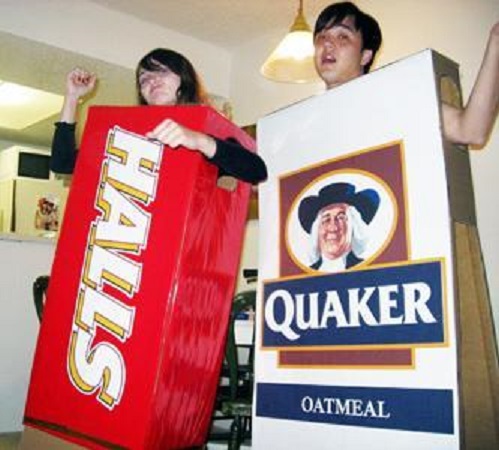
We’re Number Pun! We’re Number Pun! — The ReHASHtag Game

93621380_2954757837904277_3852074769562206208_n

You may be familiar with the board game Schmovie or hashtag games on Twitter.

For years now, we’ve been collaborating on puzzle-themed hashtag games with our pals at Penny Dell Puzzles, and this month’s hook was #PennyDellPuzzleSports. Today’s entries all mash up Penny Dell puzzles with teams, athletes, famous quotations, and more things associated with the world of sports!

Examples include: Seventh Inning Stretch Letters or Basketball For One.

(The entries leaned heavily towards baseball — understandably, since it only returned a few weeks ago.)

So, without further ado, check out what the puzzlers at PuzzleNation and Penny Dell Puzzles came up with!


Puzzly Athletes!

CrackerJackie Robinson

Simone Biles Says

Tara Blipsinski

Wayne Grepsky


Puzzly Teams!

Arizona Diamond Ringbacks

MilwauKeyword Brewers

Minnesota Twin Crosswords

Philadelphia Fill-Innies

Tampa Bay Sunrays

Washington Wizard Words

Orlando Magic Squares

Chicago Bull’s-Eye Spiral


Puzzly Sports Terminology!

FenWord Ways Park

Doubleheader Trouble

A Few Fielder’s Choice Words

Box Scoremaster / Lucky Box Score

Perfect Dart Game / Perfect Fit Game

Right of Way field

End Zone of the Line

End of the Line drive

BaseLine ‘Em Up

Base Pathfinder

Baseball Diamond Mine

Grand Tour slam

Draw the Defensive Lineman

False Start and Finish

Game, Set, Match-up!

Hall of Framework

These Three-Pointers

Super Bowl Game

Scramble Across & Touchdown

Picker-Upper Deck Home Runs


Puzzly Famous Quotations!

“Are you ready for some Quotefalls?!”

“…The Thrill of Victory and the Agony of Delete”

“I never said most of the Everything’s Relative I said.” – Yogi Berra

“This is like Deja vu All Four One again.” – Yogi Berra

“It ain’t Overlaps til it’s over.” -Yogi Berra

“Window Boxes isn’t everything, it’s the only thing” — Red Sanders

“…it seems to me they give these ball players now-a-days very peculiar names… Well, let’s see, we have… Guess Who’s on first, What’s Left on second, You Know the Odds is on third…”


Several of our puzzlers went above and beyond, crafting calls from the announcers at these puzzly events!

The Call of the Game presented by Hall of Framework puzzle announcer Neil Simon Says:

“There’s two Drop-Outs here in the bottom of the Nine of Diamonds, One & Only one man on base, and Wade Mind Boggler steps up to the plate for the Tampa Bay Sunrays. This will be his First and Last at bat of the Word Games World Series. The Pitcher Sleuth looks to his What’s Left, then checks his Right Angles, sets his feet and Square Deals the pitch. It’s swung on by Mind Boggler and holy cow it’s a walk-off Home Run! That Baseball for One was crushed to Bits & Pieces! The Scoreboard says it all folks with a Three-to-One victory for the Sunrays. Who in the world could Picture This kind of ending? Just wow!”


Wide World of Sports reporting from the National Figure Skating competition:

Today, during the synchronized figure skating event, The Ice Chips team, sponsored by Penny Dell Puzzles, began their program divided up into Pairs and glided out onto the ice Two at a Time, and Step by Step taking their positions Face to Face. They gracefully began their number, first skating in a Mirror Image, then dividing up into Odds and Evens. A Small Change in the pace of the music brought a sequence of fast mohawks, turns, spread eagles, swizzles, lifts, and a Shuffle.


Have you come up with any Penny Dell Puzzle Sports entries of your own? Let us know! We’d love to see them!

Thanks for visiting PuzzleNation Blog today! Be sure to sign up for our newsletter to stay up-to-date on everything PuzzleNation!

You can also share your pictures with us on Instagram, friend us on Facebook, check us out on TwitterPinterest, and Tumblr, and explore the always-expanding library of PuzzleNation apps and games on our website!