What makes a great riddle?

[Image courtesy of PNG Find.]

I have always suspected that riddles were our first experiments with puzzles and puzzly thinking. Long before crosswords, Sudoku, codebreaking, and magic squares, the potential for wordplay and outside-the-box thinking would have appealed to storytellers, teachers, philosophers, and other deep thinkers.

Who doesn’t enjoy unraveling a riddle, parsing the carefully constructed sentences for every hint and nuance lurking within, and then extracting that tiny purest nugget of a solution from the ether?

Riddles appeal to our love of story and adventure, of heroes with wits as sharp as their swords. Riddles are the domain of gatekeepers and tricksters, monsters and trap rooms from the best Dungeons & Dragons quests.

And so, for centuries upon centuries, even up to the modern day, riddles have been a challenging and intriguing part of the world of puzzling.

We can trace them back to the Greeks, to Ancient Sumeria, to the Bible through Samson, and to mythology through the Sphinx. Riddles abound in literature; we find riddles in Shakespeare, in the works of Joyce, Carroll, and Austen, all the way up to the modern day with The Hobbit and Harry Potter. Every locked room mystery and impossible crime is a riddle to be unraveled.
[Image courtesy of Campbell County Public Library.]

But this raises a crucial question: what makes a good riddle?

At first glance, it should be confusing or elusive. But after some thought, there should be enough information within the riddle to provide a solution, either through wordplay/punnery OR through looking at the problem from a different perspective.

Let’s look at an example. In this instance, we’ll examine the riddle from Jane Austen’s Emma, which is posed to the title character by a potential suitor:

My first displays the wealth and pomp of kings,
Lords of the earth! their luxury and ease.
Another view of man, my second brings,
Behold him there, the monarch of the seas!

The answer is “courtship.”

The first half of the riddle refers to the playground of royalty — court — and the second half to the domain of her suitor — ship — and when combined they form the suitor’s desire. This riddle is confusingly worded, to be sure, but it makes sense when analyzed and it’s totally reasonable when the clever Emma figures out the answer… and turns down the suitor’s attempt at riddly courtship.
[Image courtesy of Yale.edu.]

So, what’s an example of a bad riddle? Well, unfortunately, we don’t have to look too hard for an example of one. Let’s examine Samson’s riddle from The Book of Judges in the Old Testament, which he poses to his dinner guests (with a wager attached):

Out of the eater,
something to eat;
out of the strong,
something sweet.

The answer, bafflingly, is “bees making a honeycomb inside the carcass of a lion.”

This is borderline nonsense unless Samson actually told you the story of killing a lion with his bare hands and later returning to the corpse to find bees building a hive inside. So, basically, this riddle not only screws over his dinner guests — who lost a wager to buy fine clothing if they couldn’t solve the rigged riddle — and serves as an excuse to brag about killing a lion. Samson is a jerk.

This is a bad riddle, because it’s designed to be confusing, but does not offer enough information to get to the desired solution. It’s purposely unsolvable, and that sucks. Riddles shouldn’t be arbitrary or nonsensical.

James Joyce pulled this in Ulysses. Lewis Carroll pulled it in Alice’s Adventures in Wonderland. And each of these examples give riddles a bad name. (Even if they do serve a literary purpose, as scholars claim they do in the Joyce and Carroll examples.)

Even if you want the hero to seem (or be) smarter than the reader, the riddle should still make sense. When confronted with five riddles by Gollum in The Hobbit, Bilbo Baggins solves four of them (and answers the fifth through charmingly dumb luck). It doesn’t hurt his character or make the reader feel like they’re being cheated when these riddles are resolved.

That’s another quality of a great riddle. Even if you don’t solve it, when you DO find the answer, it should feel like you were outwitted and you learned something, not that you were involved in a rigged game.

Oh, and speaking of learning, that reminds me of another example of a challenging yet fair riddle, one that comes from Ancient Sumeria (now, modern-day Iraq):

There is a house. One enters it blind and comes out seeing. What is it?

The answer, as you might have puzzled out, is “a school.”

Riddles can be devious or tricky; they can rely on misdirection, our own assumptions and biases, or careful word choice to befuddle the reader. But they should always be learning experiences, like the house you enter blind and leave seeing.

What are some of your favorite riddles, fellow puzzlers? Let us know in the comments section below. We’d love to hear from you!


Thanks for visiting PuzzleNation Blog today! Be sure to sign up for our newsletter to stay up-to-date on everything PuzzleNation!

You can also share your pictures with us on Instagram, friend us on Facebook, check us out on TwitterPinterest, and Tumblr, and explore the always-expanding library of PuzzleNation apps and games on our website!
An Act of Unintentional Puzzling?

Hey there, fellow puzzlers and PuzzleNationers. I’ve got a question for you today:

Have you ever accidentally created a puzzle for yourself?

It could take any number of forms.

A vase you accidentally knocked over and the pieces simply won’t fit back together (until you realize one of the pieces slipped under the table).

An item left in a prominent place, meant to remind you to do something, fix something, move something, accomplish something, complete something.

A Post-it note with a quickly scratched phrase that made total sense when you scribbled it down, but now proves to be nigh-incomprehensible gibberish. (Everyone at one point or another has jotted down a phone number and later struggled to decode it. At least, everyone before the advent of smartphones.)

Gizmodo writer Brian Menegus was presented with a scenario similar to our last example when his modem stopped working. After it didn’t respond to reboots, being unplugged, or “strong language,” he ended up with a new modem after a service call.

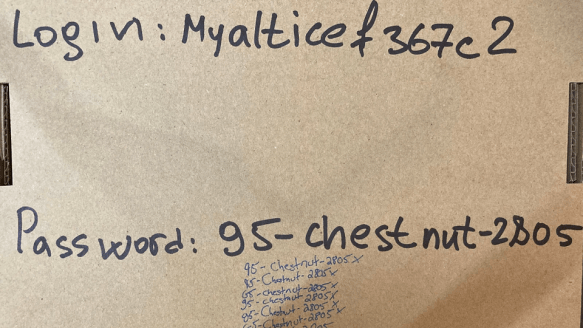
All he needed to complete the process and rejoin the greater Internet community was to enter his log-in and password.

And therein lies the puzzle.

wifi password

The password didn’t work as written. The problem was… some of those characters are a little ambiguous.

The first character could be a lowercase G or a 9. The third-to-last could be an 8, an ampersand, or a capital B. Chestnut could be one word or two. There were a litany of different possible interpretations of what was written here.

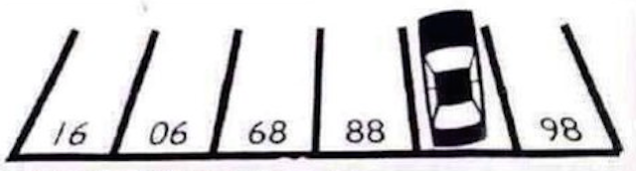
Multiple interpretations are at the heart of some visual puzzles. Long-time readers may remember the parking lot puzzle, where the solver must unravel how the numbering of spaces in this parking lot works:

The trick is simple: the numbers are upside-down.

Similarly, the wifi password employs a similar level of misdirection, although in this case, it’s quite unintentional.

As you can see from the scribblings at the bottom of the image, Menegus made a list of the possible permutations and tried them all one-by-one, a classic brute force form of puzzle-solving.

So, which version was it?

Well, after trying every combination and getting nowhere — and then resetting the modem to its factory settings — it turned out to be the most obvious one: 95-chestnut-2805.

Sadly, many of these self-made puzzles end up having frustratingly simple solutions.

Still, they do keep life interesting.


Thanks for visiting PuzzleNation Blog today! Be sure to sign up for our newsletter to stay up-to-date on everything PuzzleNation!

You can also share your pictures with us on Instagram, friend us on Facebook, check us out on TwitterPinterest, and Tumblr, and explore the always-expanding library of PuzzleNation apps and games on our website!
The Zebra Crossing Illusion!

opticalillusionrug

There’s nothing quite like an optical illusion to spark the imagination… or a debate online.

In previous years, we have engaged in fierce debates regarding viral illusions that read like the back catalog of a Nancy Drew-inspired puzzle mystery series: The Colorful Conundrum of That Dress, The Jacket That Baffled The Internet, The Mystery of How Many Girls?, and The Curious Case of the Shiny Legs.

And now, there’s a zebra photograph that’s playing tricks on viewers.

1_Sarosh-Lodhi

This photo, taken in Kenya at the Maasai Mara national game reserve by wildlife photographer Sarosh Lodhi, was shared on Twitter, and he asked a supposedly simple question:

Which zebra is the one facing the camera?

And yes, those with good memories may recall that this isn’t the first zebra-related optical illusion we’ve posted on the blog, but I do think it’s the most challenging.

Some solvers focused on the folds in the left one’s neck, or the position of its ears, to determine which was the zebra in question.

Others found ample evidence to believe it’s the zebra on the right.

A few even posited that they thought it was a trick, and there was a third one in the middle facing the camera.

So, which do you think it is, fellow puzzlers and PuzzleNationers?

Here’s the photo again, with some space to think, before we share the answer:

1_Sarosh-Lodhi

.

..

….

…..

Ready?

……

…….

……..

………

……….

Are you sure?

……….

………

……..

…….

……

Last chance to turn back!

…..

….

..

.

Okay, here we go! Did you guess left or right?

The correct answer, according to the photographer himself…

Is the zebra on the left.

How did you do? Did you get it right? Or are you still convinced there’s trickery afoot? Let us know in the comments section below! We’d love to hear from you.


Thanks for visiting PuzzleNation Blog today! Be sure to sign up for our newsletter to stay up-to-date on everything PuzzleNation!

You can also share your pictures with us on Instagram, friend us on Facebook, check us out on TwitterPinterest, and Tumblr, and explore the always-expanding library of PuzzleNation apps and games on our website!
We’re Number Pun! We’re Number Pun! — The ReHASHtag Game

93621380_2954757837904277_3852074769562206208_n

You may be familiar with the board game Schmovie or hashtag games on Twitter.

For years now, we’ve been collaborating on puzzle-themed hashtag games with our pals at Penny Dell Puzzles, and this month’s hook was #PennyDellPuzzleSports. Today’s entries all mash up Penny Dell puzzles with teams, athletes, famous quotations, and more things associated with the world of sports!

Examples include: Seventh Inning Stretch Letters or Basketball For One.

(The entries leaned heavily towards baseball — understandably, since it only returned a few weeks ago.)

So, without further ado, check out what the puzzlers at PuzzleNation and Penny Dell Puzzles came up with!


Puzzly Athletes!

CrackerJackie Robinson

Simone Biles Says

Tara Blipsinski

Wayne Grepsky


Puzzly Teams!

Arizona Diamond Ringbacks

MilwauKeyword Brewers

Minnesota Twin Crosswords

Philadelphia Fill-Innies

Tampa Bay Sunrays

Washington Wizard Words

Orlando Magic Squares

Chicago Bull’s-Eye Spiral


Puzzly Sports Terminology!

FenWord Ways Park

Doubleheader Trouble

A Few Fielder’s Choice Words

Box Scoremaster / Lucky Box Score

Perfect Dart Game / Perfect Fit Game

Right of Way field

End Zone of the Line

End of the Line drive

BaseLine ‘Em Up

Base Pathfinder

Baseball Diamond Mine

Grand Tour slam

Draw the Defensive Lineman

False Start and Finish

Game, Set, Match-up!

Hall of Framework

These Three-Pointers

Super Bowl Game

Scramble Across & Touchdown

Picker-Upper Deck Home Runs


Puzzly Famous Quotations!

“Are you ready for some Quotefalls?!”

“…The Thrill of Victory and the Agony of Delete”

“I never said most of the Everything’s Relative I said.” – Yogi Berra

“This is like Deja vu All Four One again.” – Yogi Berra

“It ain’t Overlaps til it’s over.” -Yogi Berra

“Window Boxes isn’t everything, it’s the only thing” — Red Sanders

“…it seems to me they give these ball players now-a-days very peculiar names… Well, let’s see, we have… Guess Who’s on first, What’s Left on second, You Know the Odds is on third…”


Several of our puzzlers went above and beyond, crafting calls from the announcers at these puzzly events!

The Call of the Game presented by Hall of Framework puzzle announcer Neil Simon Says:

“There’s two Drop-Outs here in the bottom of the Nine of Diamonds, One & Only one man on base, and Wade Mind Boggler steps up to the plate for the Tampa Bay Sunrays. This will be his First and Last at bat of the Word Games World Series. The Pitcher Sleuth looks to his What’s Left, then checks his Right Angles, sets his feet and Square Deals the pitch. It’s swung on by Mind Boggler and holy cow it’s a walk-off Home Run! That Baseball for One was crushed to Bits & Pieces! The Scoreboard says it all folks with a Three-to-One victory for the Sunrays. Who in the world could Picture This kind of ending? Just wow!”


Wide World of Sports reporting from the National Figure Skating competition:

Today, during the synchronized figure skating event, The Ice Chips team, sponsored by Penny Dell Puzzles, began their program divided up into Pairs and glided out onto the ice Two at a Time, and Step by Step taking their positions Face to Face. They gracefully began their number, first skating in a Mirror Image, then dividing up into Odds and Evens. A Small Change in the pace of the music brought a sequence of fast mohawks, turns, spread eagles, swizzles, lifts, and a Shuffle.


Have you come up with any Penny Dell Puzzle Sports entries of your own? Let us know! We’d love to see them!

Thanks for visiting PuzzleNation Blog today! Be sure to sign up for our newsletter to stay up-to-date on everything PuzzleNation!

You can also share your pictures with us on Instagram, friend us on Facebook, check us out on TwitterPinterest, and Tumblr, and explore the always-expanding library of PuzzleNation apps and games on our website!

Let’s Talk About Cheating in Crosswords!

cheating

[Image courtesy of Getty Images.]

I think most people who solve crosswords already know this, but for anyone who doesn’t, I’ll make this very simple for you.

Unless you’re in a tournament or competition setting, there’s no such thing as cheating at solving crosswords.

Are we cool? Sweet. *checks watch* Outstanding! Shortest blog post ever.

Okay, I’ll elaborate.

Recently, a high school friend of mine “confessed” on Facebook that she had never completed a crossword puzzle where she “didn’t cheat.”

I replied, “It’s not cheating. It’s learning new words so you can get better later.”

And her mother replied, “Don’t encourage her!”

I was a little baffled.

Crossword.

I mean, obviously you get better the more you solve crosswords, but if you keep coming across the same clues (or various clues for the same word) and you don’t know the word, how are you ever going to learn it if you don’t look it up?

You’re not going to suddenly KNOW a word or a person or a phrase if you don’t know it. As much as crosswords are about building skills like wordplay and figuring out what words fit different letter patterns, it’s also about building a personal lexicon and adding to your arsenal as a solver.

The average person does not know ETUI. If they see the clue “needle case,” they’re not going to suddenly know it. Even having one or two correct answers crossing it is not going to magically impart knowledge of the word ETUI.

It’s not cheating if you look up answers. You’re cheating yourself by NOT doing so.

Sure, in a tournament setting or a timed setting, it’s cheating. But in general solving, it’s just prep work that sets you up for greater success down the line.

120718_crossword_L

So, once more for those in the back or those who really want explicit permission:

Once you’ve tried your best, once you’ve filled in as many entries that cross it as possible, once you’ve wracked your brain, taken time away from it, and returned to try again but not succeeded, I hereby give you permission to “cheat.”

Okay? Okay. Happy solving, everyone!

[Oh, and just for clarification, this applies to solvers. There is absolutely cheating in crossword constructing. It’s called plagiarism, and it will not be tolerated.]


Thanks for visiting PuzzleNation Blog today! Be sure to sign up for our newsletter to stay up-to-date on everything PuzzleNation!

You can also share your pictures with us on Instagram, friend us on Facebook, check us out on TwitterPinterest, and Tumblr, and explore the always-expanding library of PuzzleNation apps and games on our website!

Board Games and Puzzle Games For Solo Gaming!

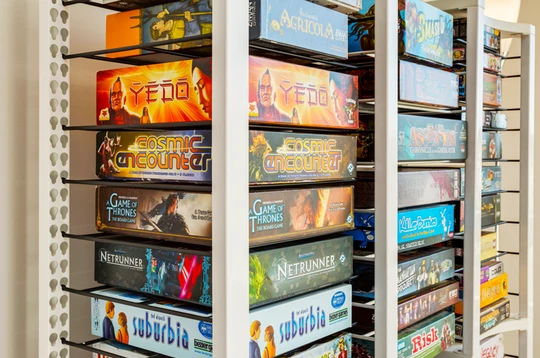
stack of games

[Image courtesy of StoreMyBoardGames.com.]

Friend of the blog Lori reached out to me last week and asked about the best puzzle games and board games for solo play. A pal of hers was in need of game-centric distraction, and given the current global circumstances, she had no one with whom to play.

Never fear, friend-of-friend! We’ve got you covered.

There are all sorts of puzzles and games out there to keep you busy, and we’ll do our best to collect a few examples from different play style to provide a host of options.

So, without further ado, let’s look at some single-play fun!


Puzzle Games

thinkfun many

ThinkFun

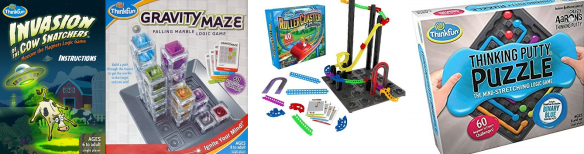
When it comes to one-player puzzle games, ThinkFun should be your first stop. They’ve got puzzles with magnets, electrical circuits, marbles, dominoes, putty, rollercoasters, robots, computer programming, and LASERS. Whether you like disentanglement puzzles, logic puzzles, or mechanical puzzles, any one of these games is a terrific place to start.

[Link for more details.]

Knot Dice

Inspired by Celtic knot designs, Knot Dice is a puzzle game where you must turn, twist, and spin these beautiful dice to complete elaborate patterns. A handbook full of single-player (and multi-player) puzzles is included to get you started, but honestly, sometimes you can just roll the dice out, arrange them, and then challenge yourself to complete the pattern!

[Link for more details.]

enigmasmall

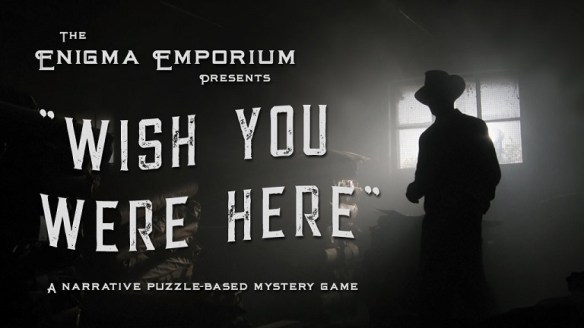
Wish You Were Here

Imagine an entire mystery hidden across a handful of postcards. That’s the multilayered puzzle experience offered by Wish You Were Here, where a series of coded messages awaits you. An entire narrative unfolds based on the clues you uncover and the puzzles you solve. It’s code-breaking, puzzling, and spycraft all in one.

[Link for more details.]

photo-1024x7682

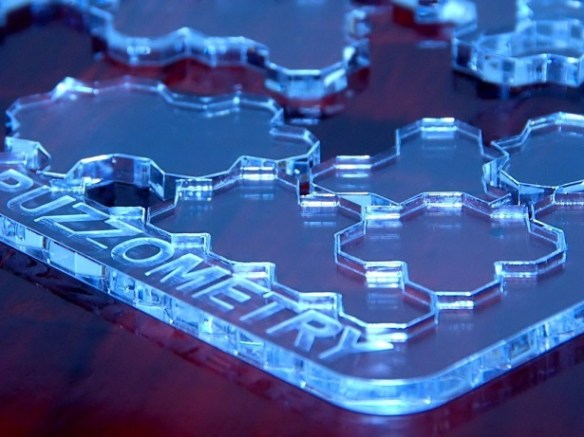
Puzzometry

If you’re looking for a jigsaw-style challenge, Puzzometry might be your puzzle of choice. These beautiful pieces can be combined in seemingly endless combinations, and yet, there’s only one solution. Available in seven different formats — including Puzzometry, Puzzometry Jr., Puzzometry Squares, and Puzzometry Hex — there are different levels of difficulty and different challenges posed by each.

[Link for more details.]


Board Games Designed for Solo Play

There is a small but thriving market for solo board games, which cleverly alter established game mechanics to pit you against the game itself.

black sonata

[Image courtesy of Board Game Geek.]

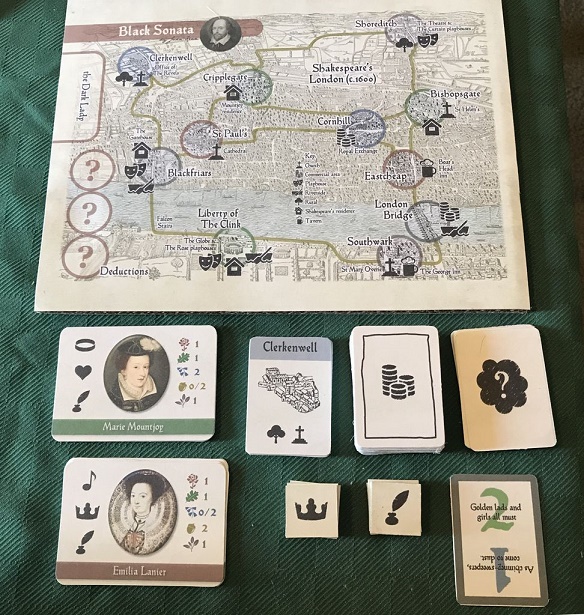
Black Sonata

In this movement and deduction game, you are a 17th-century detective, exploring London while trying to hunt down the identity of the Dark Lady who inspired Shakespeare’s sonnets. As you pick up clues to her identity and search for her in different locales, a stealth deck determines the Dark Lady’s movements. It’s a very cool mechanic that holds up after multiple replays.

[Link for more details.]

coffee roaster

[Image courtesy of Board Game Geek.]

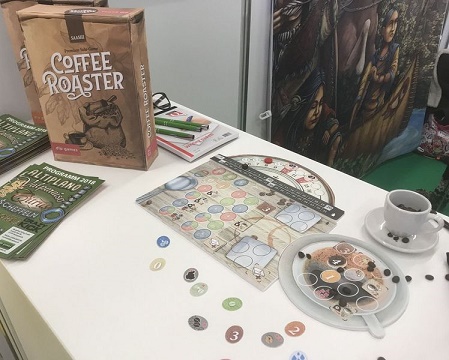
Coffee Roaster

Have you ever tried to brew the perfect blend of coffee? Then Coffee Roaster might be up your alley. In this game, you randomly draw tokens representing coffee beans in order to roast them and improve your score based on their taste value. The game quickly becomes a balancing act of roasting the bean to its target level while handling other tasks. This mix of skill and random draw adds spice to a game all about flavor.

[Link for more details.]

sherlock holmes

[Image courtesy of Board Game Geek.]

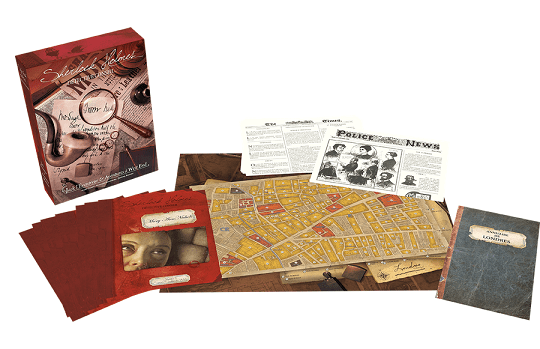
Sherlock Holmes Consulting Detective

Have you ever wanted to be the Great Detective, deciphering strange clues, finding evidence, and unraveling peculiar crimes? The closest thing I’ve found to being Holmes is playing Sherlock Holmes Consulting Detective, where a number of mysteries await the player. (You can play this game with up to 8 people, but the solo game proves to be a challenge worthy of master gamers and puzzlers.

[Link for more details.]

palm island

[Image courtesy of Board Game Geek.]

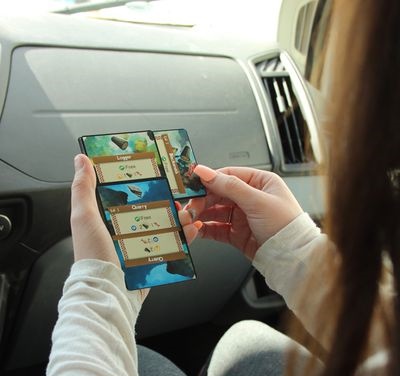
Palm Island

Many games are designed for ease of travel, but this is the only one I know that fits in the palm of your hand. Build your island, gather resources, and conquer challenges as you hold the fate of your island in your hand. With only 17 cards involved in the entire game, there’s a staggering amount of replay value included.

[Link for more details.]


Solo Mazes/Dungeons/Labyrinths

One subset of the single-player game genre is labyrinth-style gameplay, games where the player must explore and/or escape a labyrinth, dungeon, or other maze that unfolds in front of them and is different every time you play.

one deck

[Image courtesy of Board Game Geek.]

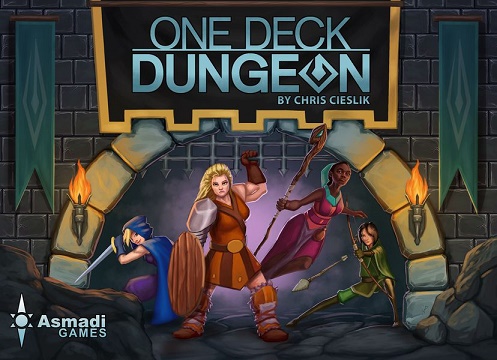
One Deck Dungeon

Essentially an entire roleplaying campaign distilled into a single-player experience, One Deck Dungeon allows you to defeat enemies, outwit other dangers, and explore a dungeon as your character develops new skills and gains valuable insights into their quest. You can play standalone games or an ongoing campaign as your character grows into a full-fledged master dungeon raider.

[Link for more details.]

(There’s another game, 5-Minute Dungeon, that scratches a similar itch.)

onirim

[Image courtesy of Board Game Geek.]

Onirim

Instead of a dungeon or a labyrinth, here you explore a realm of dreams, trying to find the keys necessary to unlock the doors and escape before the deck of cards runs out. With a 15-minute play time, a fun setup, and multiple expansions which add new wrinkles to future games, you’ll want to journey into the dreamworld again and again.

[Link for more details.]

The Abandons

Probably the toughest of the dungeon romp games, The Abandons pits you against a merciless labyrinth with limited resources and the deck literally stacked against you. You’ll need luck, quick decision making, and puzzly skill on your side to see daylight again with this one.

[Link for more details.]


Solo/Multi-Player Games

Finally, here are some great games that are best known as multi-player games, but with solo modes that still capture the playing experience.

jetpack6

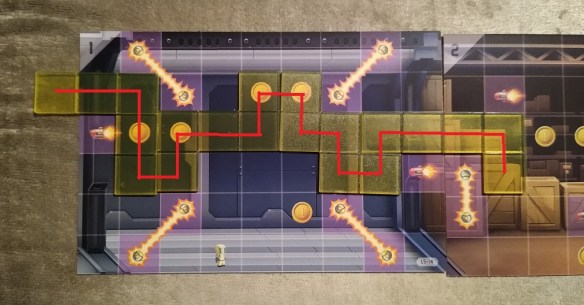
Jetpack Joyride

Plenty of games are about getting from Point A to Point B, but Jetpack Joyride makes the journey a puzzly delight. You must pilot yourself through a random collection of grids, using only a handful of Tetris-like game pieces to represent your path. You must complete your goals and escape, all without reusing a single Tetris piece. Jetpack Joyride combines puzzles and board games for a unique and fun gaming experience.

[Link for more details.]

Sagrada

One of the most beautiful strategy games on the market today, Sagrada is a singularly peaceful gaming experience. In this game, you’re trying to build a beautiful stained glass window out of dice while dealing with the requirements of your particular window AND the random dice rolled for your particular game. It’s challenging, soothing, and infinitely replayable.

[Link for more details.]

on the dot

[Image courtesy of eBay.]

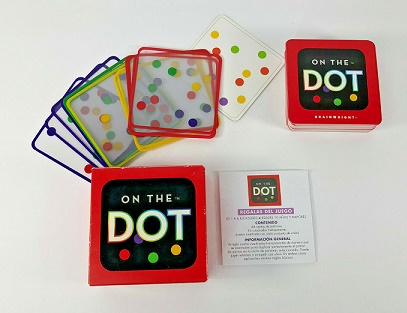
On the Dot

On the Dot is a pattern-matching game. You have four clear cards with randomly-placed colored dots on them, and you must arrange all four cards so that the colored dots showing match a given pattern. Although this game is usually played in groups with the first person to complete the pattern winning that card, you can easily challenge yourself to see how fast you can conquer the various patterned cards awaiting you.

[Link for more details.]

bananagrams

[Image courtesy of Board Game Geek.]

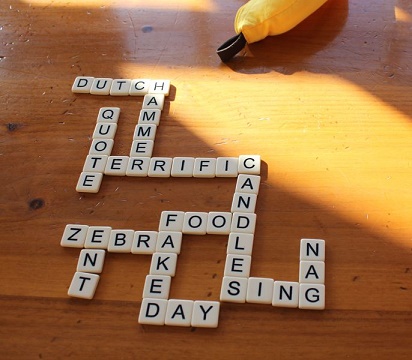
Bananagrams

Bananagrams is a tile game where, much like Scrabble, players pull letter tiles and try to form small crossword-like grids. But in Bananagrams, you can anagram and rearrange the grid as needed, instead of being locked into using the words you’ve already played. This game will test your vocabulary and your anagramming skills, but it’s always satisfying to hear the tiles click as they’re placed beside each other.

[Link for more details.]

castle panic

[Image courtesy of Board Game Geek.]

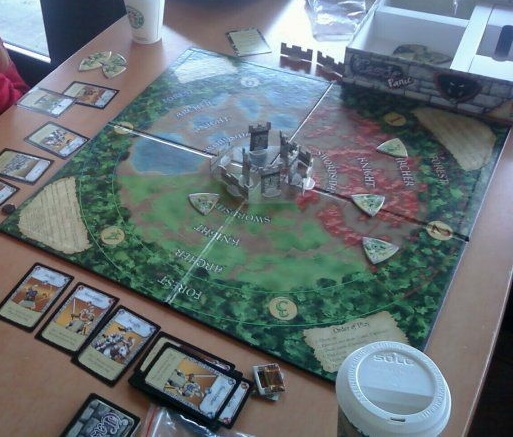
Castle Panic!

You have to defend your castle in the center of the board from monsters on all sides in this deviously enjoyable game. Careful strategy and planning is critical in stopping them from taking down your defenses, collapsing your towers, and leaving your castle in ruins. Randomness can play a big role in this game, but even when you lose, you still enjoy the adventure.

[Link for more details.]

Honestly, most cooperative games like Castle Panic! can be played solo, since it’s you vs. the game. (You just might have to play more than one character to do so.)

In Forbidden Island, you must collect treasures and escape a sinking island. In Flash Point, you’re a fireman trying to fight a building fire and rescue the trapped occupants. In Burgle Bros., you run a team of robbers trying to pull off a heist in a multi-story building you have to climb in order to escape with the loot.

These are just a few of the cooperative games that really adapt nicely to a one-player game experience. (Some folks would recommend Pandemic as well, but I’ve found that the expansion set Pandemic: In the Lab is a more satisfying solo experience.)

I also went with simpler games here, but for more intensive play sessions, you could tackle solo versions of Terraforming Mars, Scythe, Viticulture, Eldritch Horror, Elder Sign, and Ghost Stories. These games have more set-up and deeper, more complex gameplay, but also provide satisfying gameplay experiences for a single player.


Do you have any other suggestions for puzzle games and board games that are terrific for solo players, fellow PuzzleNationers? Let us know in the comments section below! We’d love to hear from you.

Thanks for visiting PuzzleNation Blog today! Be sure to sign up for our newsletter to stay up-to-date on everything PuzzleNation!

You can also share your pictures with us on Instagram, friend us on Facebook, check us out on TwitterPinterest, and Tumblr, and explore the always-expanding library of PuzzleNation apps and games on our website!