Max reviews the Boston Festival of Indie Games!

Hello Puzzlers and PuzzleNationers! Today we’ve got a special treat for you! The intrepid Max Galpern, 12-year-old game enthusiast and son of our Director of Digital Games Fred Galpern, will be taking over PuzzleNation Blog for the day!

[Max, trying out a new virtual reality game at Boston FIG.]

You may remember Max from his cameo appearance in our Laser Maze product review or his work in our first video review for Star Realms (alongside his dad).

I’m happy to hand over the reins to Max as he gives us the lowdown on the Boston Festival of Indie Games.

[Glenn’s note: the photo comments are my only contributions.]

Take it away, Max!


I went to the Boston Festival of Indie Games (FIG) on September 12 in 2015. This festival has been going on for many years now. It used to only show digital games and this year is the first year they’re introducing tabletop games.

[A brief glimpse of Boston FIG.]

First, I went into the tabletop showcase, and when I walked in I saw a big poster for EPIC, the card game. I’ve played EPIC before. Earlier this year, my dad backed the Kickstarter campaign, so we already have the game and really like it. I walked right over to the EPIC booth and played a game with my dad right away. I crushed him in the game we played!

[A sample of some of the stunning art featured in EPIC.]

EPIC is a card game that consists of 120 cards that are all different, and among them are 4 colors/factions: Red (evil), Green (wild), Yellow (good), and Blue (sage). If you know how to play Magic:The Gathering (MTG) you may pick this game up as easily as I did. It has many of the same abilities as MTG but worded differently. EPIC is a really fun game, and I totally recommend it.

After EPIC, I walked around and saw this game called PBL Robots.

[Here’s an illustration of a sample attack in PBL Robots.]

My dad and I walked past it and it looked pretty cool, so I wanted to check it out when we circled back. We walked around for awhile and then sat down to learn about PBL Robots. When the creators were explaining the rules, I realized I had thought of a game like this one many years ago.

You start with a base robot and a pilot. Then you play cards that may be an arm, a pair of legs, shoulders, an action, a hangar, crew members, or a better pilot. When you’re ready to attack, you roll dice according to the part you are attacking with and/or the part you are attacking. It was amazingly fun to play, and I hope to play it again.

After that I went to the video game section, where I tried a game called Space Jammers. It was pretty fun, and if you have a Windows computer you can play it at igs.io/spacejammers.

Next, I played a video game called Sylvio.

[Max, matching wits with Sylvio on a PC. Now THAT is focus…]

It’s a survival horror game where you take the role of a girl who records ghosts with a microphone. The sound in the game makes it even more creepy. It is a very fun game. If you like games like Slender you may like this too.

Last but not least, I played a game called Loose Nozzles by my Dad’s friend Chris Foster and his son Ian. It’s a fun game for iPad where you fly a rocket ship to save the stranded people below. I recommend this game for children of all ages to play.

[Ian welcomes you to give Loose Nozzles a try!]

This year’s Boston FIG was a blast, and I can’t wait for next year to revisit things I saw this year AND see new stuff.

P.S. My Dad bought a card game called Poop (it’s like Uno, but more gross). I accidentally left it at the festival but two awesome people who work there found it and are sending it to us. Thanks, Caroline & Shari!


Thanks for the terrific rundown, Max! We’ll have to have you back again soon.

For more info on the Boston Festival of Indie Games, click here! And if you’d like Max to take over more often, let us know in the comments below!

Thanks for visiting PuzzleNation Blog today! You can share your pictures with us on Instagram, friend us on Facebook, check us out on TwitterPinterest, and Tumblr, and be sure to check out the growing library of PuzzleNation apps and games!

DIY Pencil and Paper Puzzles!

pencil-paper

Picture this. You’re stuck somewhere with friends. The airport, a traffic jam, wherever. Nowhere to charge your phone, so you can’t play Trivia Crack or solve any of the great puzzles offered by the Penny/Dell Crosswords app.

All you’ve got is paper and pencils, and you’re in a puzzly mood. What do you do?

Well, you whip up some DIY puzzle fun, of course.

Now, the classic go-to pencil and paper game is Hangman. The goal is simple: guess the complete word or phrase by guessing one letter at a time. Each correct letter is filled in every time it appears (like on Wheel of Fortune), and each incorrect letter results in one piece of the Hangman being drawn. If you let too many incorrect guesses stack up before solving the puzzle, the Hangman is completed and you lose.

hangman

People have differing rules when it comes to the Hangman’s complexity. Some draw the gallows and noose as well as the Hangman, while others pre-draw the gallows and noose, only drawing the Hangman when wrong guesses occur. (I, for one, always liked drawing him a jaunty top hat before sending him to his demise.)

I can remember a time we played Hangman in high school because the professor for our physics class didn’t show up. One of the other students I didn’t know very well suggested it, and his first two puzzles were cracked pretty quickly. But then the third one had most of the class stumped.

It read: C A P T A I N ___ O ___

People kept guessing “Captain Ron,” even though there was clearly no N in that second blank. When I realized it was “Captain Lou,” I blurted out the answer, and suddenly, we were fast friends.

Because of Hangman.

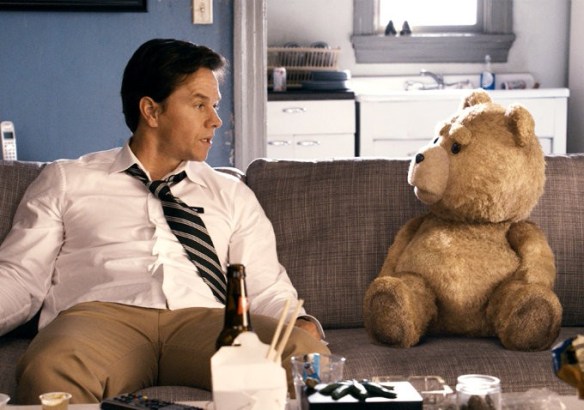
mark-wahlberg-plays-guessing-game-with-a-teddy-bear

Another simple game is Guess My Word. One person chooses a word, and the other narrows it down by guessing words and being told if those guesses precede or follow the secret word in the alphabet.

For instance, if the word was QUINTET and your first guess was HALLOWEEN, I would say after. So, in one guess, you’ve eliminated every word that comes before HALLOWEEN alphabetically.

And if you’d like to give it a shot, puzzle constructor Joon Pahk created a Guess My Word feature on his website that is great fun (and sometimes pretty challenging).

tic-tac-toe

I was going to mention Tic-Tac-Toe here — another staple of the pencil-and-paper puzzle game genre — until my mother mentioned a variation she read about in Parade magazine.

In the article, Marilyn vos Savant is credited with creating Toe-Tac-Tic, a reverse Tic-Tac-Toe game wherein getting three in a row means you lose.

It’s a completely different style of game play, adding a nice twist to a classic game. (Though, quite honestly, I’m not sure we can credit vos Savant with its creation, since I can remember seeing this played in the mid-2000s. I’m not sure anyone called it “Toe-Tac-Tic,” but the rules were the same.)

31b20lfvkhl

And finally, for fans of card games, you can always whip up a round of 1000 Blank White Cards.

Named for the only thing you need to play — a bunch of identical blank pieces of paper, index cards, or something similar — 1000 Blank White Cards is a game you design and play both before and during the game! You can also further refine the game in subsequent sessions.

As Wikipedia so aptly puts it:

A deck of cards consists of any number of cards, generally of a uniform size and of rigid enough paper stock that they may be reused. Some may bear artwork, writing or other game-relevant content created during past games, with a reasonable stock of cards that are blank at the start of gameplay.

Some time may be taken to create cards before gameplay commences, although card creation may be more dynamic if no advance preparation is made, and it is suggested that the game be simply sprung upon a group of players, who may or may not have any idea what they are being caught up in. If the game has been played before, all past cards can be used in gameplay unless the game specifies otherwise, but perhaps not until the game has allowed them into play.

Once your initial deck of cards is created, players draw a card from the deck and either play them, keep them, or add them to the active rules of the table so they affect everyone. In this way, gameplay is quite similar to another classic puzzle card game, Fluxx, especially with the ever-changing rules and malleable gameplay.

Not only has 1000 Blank White Cards appeared in GAMES Magazine, but it was also included in the 2001 revision of Hoyle’s Rules of Games.

11404929

I am a huge fan of customizable games, so I have played 1000 Blank White Cards many times. From cards that can cause immediate victory to cards that can negate those cards, from point cards and rule cards to cards that requiring singing or truth-or-dare challenges, the possibilities are endless.

Some of my favorite cards are just drawings of turtles, where another card grants you special powers or bonuses depending on how many turtle cards you have. Another allows you to create a new card on your turn, either to keep for yourself or to give to another player.

And the rules can depend entirely on who you’re playing with. Sometimes, you can make a new card every round, while other times, you can only introduce a new card when you’ve drawn a card that allows it. Heck, there might even be blank cards in the deck that you can draw and customize immediately! It is literally up to you and your fellow players how to play.

Fans of Calvin and Hobbes will no doubt draw comparisons between 1000 Blank White Cards and Calvinball, and rightfully so. (Savvy card-game players may also recognize similarities to the figure-out-the-rules-while-you-play game Mao.)

But whether you’re playing Hangman or guessing a word, getting three in a row or avoiding it at all costs, or even creating your own signature game, as long as you’ve got a partner in crime and an imagination, you’re never without a puzzle.


Thanks for visiting PuzzleNation Blog today! You can share your pictures with us on Instagram, friend us on Facebook, check us out on TwitterPinterest, and Tumblr, and be sure to check out the growing library of PuzzleNation apps and games!

It’s Follow-Up Friday: Welsh Landmarks edition!

Welcome to Follow-Up Friday!

By this time, you know the drill. Follow-Up Friday is a chance for us to revisit the subjects of previous posts and bring the PuzzleNation audience up to speed on all things puzzly.

And today, let’s return to the subject of vocabulary and pronunciation!

[Image courtesy of Savethewords.org]

One of the best things about doing puzzles is that you get to learn new words.

Whether they’re obscure or antiquated, hip new slang, borrowings from foreign languages, or simply neat words you’ve never encountered before, these words can be a delight to encounter while solving. (Even if you’re baffled while solving and have to look them up afterward.)

But the problem with some of these words is that if you only see them in print, you might not know how to pronounce them. For instance, it took me quite a long time to connect the written word “quinoa” with the spoken word that sounded like “keen-wah.” I know I’m not alone on that one.

So, imagine, if you will, you’re on vacation in the United Kingdom, and you stumble upon this small town:

Welcome to Llanfairpwllgwyngyllgogerychwyrndrobwllllantysiliogogogoch, a town in Anglesey in the UK.

This 58-character place name is actually only 51 letters long, as certain character groups in Welsh are considered as one letter (LL, NG, and CH among them).

Would you be able to pronounce it? I don’t think I would!

But check out this TV weatherman, who doesn’t blink twice at tackling this mind-boggling word:

Now that’s a puzzler who won’t be daunted by some uncommon vocabulary.


Thanks for visiting PuzzleNation Blog today! You can share your pictures with us on Instagram, friend us on Facebook, check us out on TwitterPinterest, and Tumblr, and be sure to check out the growing library of PuzzleNation apps and games!
PuzzleNation Product Review: Tak•tak

When it comes to strategy puzzle games, no matter how complex or how simple the actual game mechanics, the game itself hinges on the two players involved. After all, two extremely tactical puzzlers can make checkers look like chess.

Now, imagine a game that combines the pattern-matching of Uno, the strategy of chess, and the mechanics of Upwords, and adds a scoring element to boot. It might sound complicated, but I promise, it’s as simple as checkers.

Tak•tak is a two-player strategy scoring game designed by the folks at Twizmo Games, and it’s another puzzle game brought to life thanks to a successful crowdfunding campaign. Although Twizmo Games is best known for twisty puzzles (or Rubik’s Cube-style puzzles), they’ve taken a strong step into the traditional board game market with Tak•tak.

Each player starts with 12 tiles, each tile bearing a different score (10, 20, 30, or 40) and a different color (green, blue, or yellow). The two rows nearest the player form that player’s safe zone. The three rows in the middle are the war zone.

Your goal is to get as many points as possible into your opponent’s safe zone by stacking your tiles, crossing the war zone, and either capturing or maneuvering around your opponent’s tiles. You can only move forward (either straight or diagonally), so this is a game about tactics and initiative.

You build your stacks by matching either point values or colors. For instance, you can stack a yellow 20 and a yellow 40, or a yellow 30 and a green 30, and either of those new stacks would represent 60 points. This enables you to move more tiles around the board quickly. (But careful: once you’ve stacked tiles, they stay stacked for the rest of the game.)

But those matching rules also apply to your opponent’s tiles! When you and your opponent cross paths in the war zone, you can stack your tiles onto theirs and steal those points for yourself. (The stacks you make from your own tiles can only go three tiles high, but stacks made from your tiles AND your opponent’s tiles can go as high as you want! Heck, a stack might change owners several times and tower over the game board!)

The game ends when one player has no more available moves. (There are other ways to end the game if you choose to use the advanced game play rules, but we’ll stick with the basic rules for now.) And then it’s time to count your tiles.

You earn points for all of the tiles you’ve moved into your opponent’s safe zone (including any of your opponent’s tiles that are in stacks you control), plus points for any tiles your opponent never moved into the war zone. (Meaning they were never “in play.”) Highest score wins!

Tak•tak builds a lot of versatility and play possibilities into a game with checkers-simple mechanics, and the more you play, the more fun it is to delve deeper into tactics and strategy. It was worth losing 50 points for keeping a few tiles in my safe zone when they prevented a stack of my opponent’s tiles from scoring.

The clever mix of classic game-play elements not only makes Tak•tak so easy to dive into, but also ensures new players can more time actively playing and less time worrying about learning the rules (a common downfall for more complicated strategy games).

The designers claim the game is appropriate for ages 8 through 108, and I think they’re right on the money.


Thanks for visiting PuzzleNation Blog today! You can share your pictures with us on Instagram, friend us on Facebook, check us out on TwitterPinterest, and Tumblr, and be sure to check out the growing library of PuzzleNation apps and games!

TV Trivia for Tipplers!

[Geeks Who Drink, hosted by Zachary Levi from Disney’s Tangled and NBC’s Chuck.]

Back in July, I discussed The Chase, 500 Questions, and BOOM!, three game shows that represent a resurgence in TV trivia over the last year or so.

Naturally, a week or so after I posted, another trivia-based game show debuted, this time on SyFy: Geeks Who Drink.

Now, bar trivia fans may recognize that name, as Geeks Who Drink is a trivia company that licenses trivia questions for bars all over America to use on Trivia Nights to bring in customers. (My first Geeks Who Drink experience was in Alaska while visiting my sister, and I was pretty impressed by the wide variety of clever questions and themes.)

Like its namesake, punny team names are encouraged on the show. A few of my favorite team names include “Hot Pub Time Machine” and “Beer Me Up, Scotty.”

Unlike its namesake, the TV show version focuses pretty heavily on science fiction and fantasy movies, TV shows, and books. (Understandable, given its host network.)

Whether you’re putting horror movies in order based on the year they debuted, naming as many Stephen King novels as possible, or solving a math problem by adding the number of horcruxes in Harry Potter to the number of wheels on the DeLorean from Back to the Future, you’ll definitely find your knowledge of pop culture put to the test.

[Eric Christian Olsen from NCIS: Los Angeles leads the team “Han Solo Cups.”]

The show also incorporates celebrity guests as team captains and bar-game-style physical challenges — imagine a boozy version of Double Dare — to spice up the show. Now, we have to be a little liberal with the definition of “celebrity guest” here, in the same vein as the “Stars” on Dancing with the Stars, but they do add a lot of humor to each show.

Although it may be a bit too niche for most viewers, I think genre fans in the puzzle community will find plenty to enjoy here. And with each episode only running 30 minutes, it’s an easy time investment.

Geeks Who Drink airs on SyFy at 11 PM Eastern on Thursdays.


Thanks for visiting PuzzleNation Blog today! You can share your pictures with us on Instagram, friend us on Facebook, check us out on TwitterPinterest, and Tumblr, and be sure to check out the growing library of PuzzleNation apps and games!
It’s Follow-Up Friday: Labor Day Puzzles edition!

Welcome to Follow-Up Friday!

By this time, you know the drill. Follow-Up Friday is a chance for us to revisit the subjects of previous posts and bring the PuzzleNation audience up to speed on all things puzzly.

So let’s return to one of my favorite subjects: the Penny Dell Crosswords app!

In addition to offering a free daily puzzle, we’re constantly pushing to provide you with fresh puzzle content and the best crosswords on the mobile market today.

And just in time for your long weekend, we’ve got a brand-new puzzle set for you! It’s our September Deluxe Set!

That’s right, Labor Day weekend is upon us, and our September Deluxe set offers 35 terrific puzzles.

Not only do you get 30 easy, medium, and hard puzzles, but there are 5 themed bonus puzzles you can unlock as you solve! And it’s available for in-app purchase right now!

It’s the perfect puzzly treat for a three-day weekend!


Thanks for visiting PuzzleNation Blog today! You can share your pictures with us on Instagram, friend us on Facebook, check us out on TwitterPinterest, and Tumblr, and be sure to check out the growing library of PuzzleNation apps and games!