PDP Tabletop Tournament: Round 2

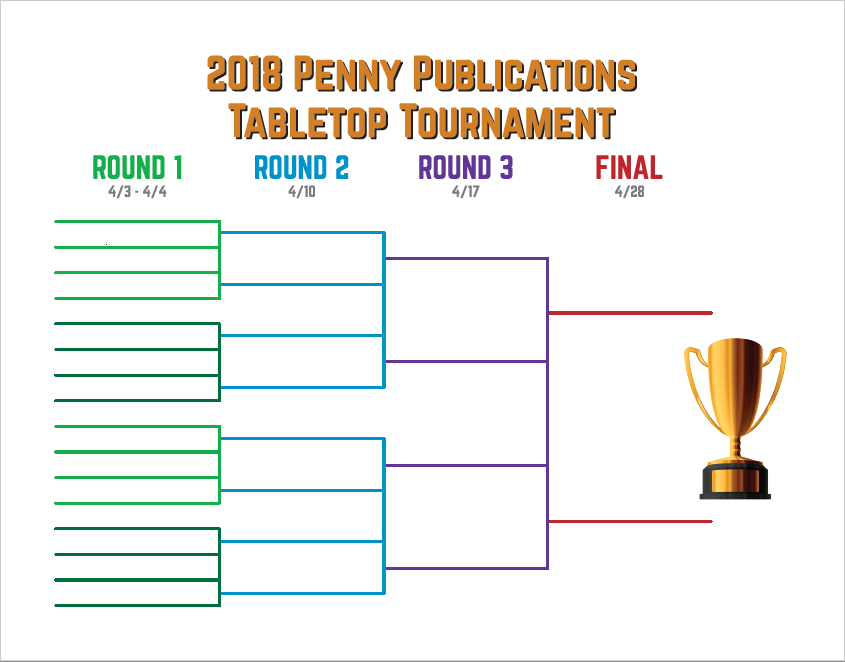
Last week, 15 intrepid members of the Penny/Dell Puzzles crew (as well as yours truly, your friendly neighborhood PuzzleNation blogger) embarked on the first stage of a four-week journey: The PDP Tabletop Tournament.

After fast and furious rounds of the anagram-fueled tile game Bananagrams and the pattern-matching card game On the Dot, the field was pared down from 16 enthusiastic puzzlers to 8 worthy contenders who triumphantly emerged, ready and willing to tackle whatever challenges awaited them in round 2.

Let’s find out what happened, shall we?

Round 2 kicked off in similar fashion to Round 1, as the 8 competitors were split into 4-person groups. Each group of four would play two games. Two winners — one from each game — would come from each foursome and move on to the next round.

The two games for Round 2? Qwirkle and Timeline.

Qwirkle is a tile game that mixes the gameplay of Mexican Train Dominoes with the Uno mechanic of matching colors or matching symbols. There are 6 different shapes and 6 different colors, and players score points by playing tiles from their hand on a communal gameplay area (similar to Scrabble or dominoes). Neighboring tiles can be the same color (a green square next to a green star) or the same shape (a red diamond next to a purple diamond). But you can’t repeat any tiles within a row (meaning that if a blue diamond is in a row of diamonds, you can’t play another blue diamond in that row).

You earn bonus points by completing Qwirkles — six-tile runs that either have 6 different symbols all of the same color or 6 different colored tiles with the same symbol. In our tournament, the player with the highest point total after 20 minutes would move on to Round 3.
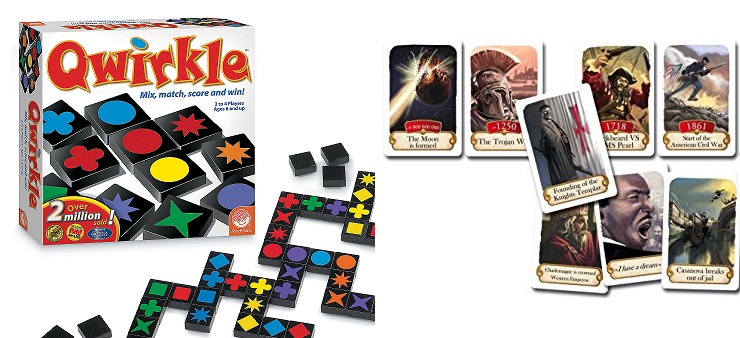
Timeline is a card game where every card depicts a different moment in history, and the players are trying to place cards from their hand into a historically correct timeline. Players take turns adding cards to the timeline, placing them before or after previously played cards. You don’t have to know the exact year the event on a given card took place; you simply have to figure out when it happened in relation to the other events that have already been played.

You play your card, and then flip it over to reveal the actual year the event occurred. If you’re correct, the card stays, and you have one fewer card in your hand. If you’re wrong, the card is removed from the timeline and you draw a new card. The first player to place every card in their hand wins. (And moves on to Round 3.)
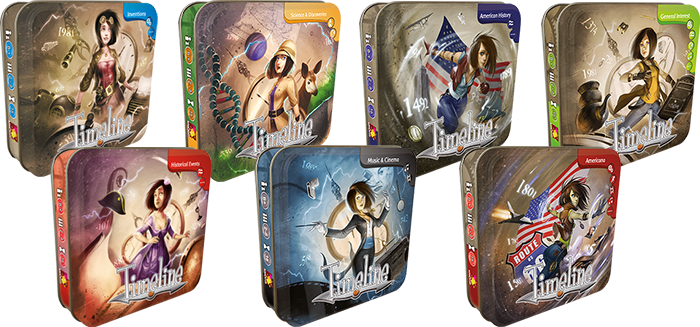
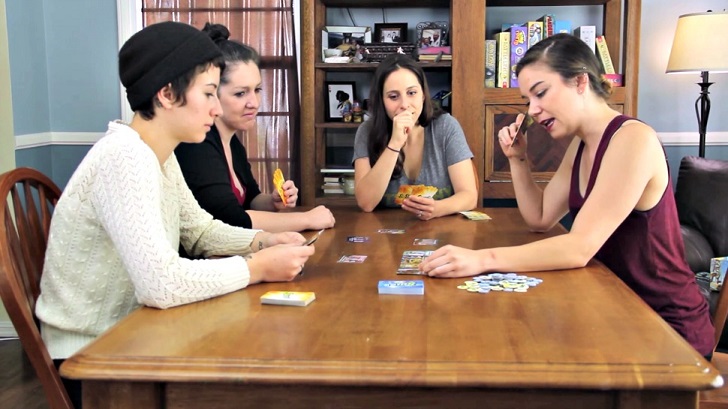
My group settled in for a game of Qwirkle while the other foursome set their sights on Timeline. (I didn’t name any players in Round 1 because that would’ve been 16 names for you to keep track of, but I’ll name players this time so you can follow along.)

Group 1 consisted of me, Nikki, Rick, and Sue; Group 2 consisted of Jen (last year’s champion), Jenn, Gordon, and Robin.

Qwirkle was an interesting choice for the second round, because it offered players less control than the games in Round 1. On the Dot has everyone using the same cards to match the pattern, so it comes down to speed and skill. Bananagrams has a random tile selection, but since you can change the grid at any time to accommodate new letter tiles, you have a lot of control in how you place things.

But with Qwirkle, you only have 6 tiles at a time to place, and you’re dealing with one communal play area. So you’re limited in what you can play by the tiles already on the board; if there are no diamonds on the board to match, for instance, you can’t play a diamond tile unless there’s another symbol on the board that’s the same color as your diamond tile.
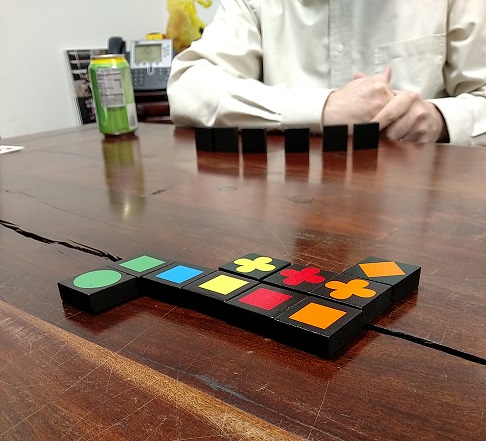
Plus, you can’t just play a lot of tiles, if you have several that match, because you don’t want to leave openings for your opponents. If you add three different colored star tiles to the two already on the board, great, you’ve got 5 points. But you’ve left the board open for someone to play the sixth-colored star tile and score a Qwirkle, which means bonus points.

So you have to play both offensively and defensively at the same time.

And my opponents were all solid players, so I knew I had my work cut out for me. At our annual International Tabletop Day event, Sue usually plays Qwirkle, so I knew she knew the game well. And Nikki and Rick are both smart, tenacious players. (In Round 1, Rick nearly won On the Dot, and the Bananagrams game that followed was so close that we needed a tie-breaker game of Slapzi to determine the winner.)
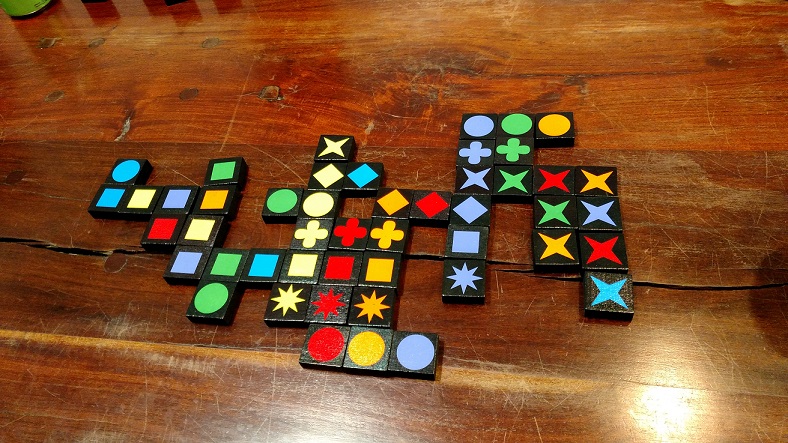
Everyone was playing cautiously, trying to prevent others from landing those precious Qwirkle bonus points. (Although I think I was the only one who was actively sabotaging Qwirkles where possible, because hey, that’s part of the game, right?)

At the end of our twenty-minute session, everyone had played well. We all finished within ten points of each other. Unfortunately, it was not meant to be for your PN-blogging pal, as I was knocked out of the tournament here, alongside Qwirkle-savvy Sue.
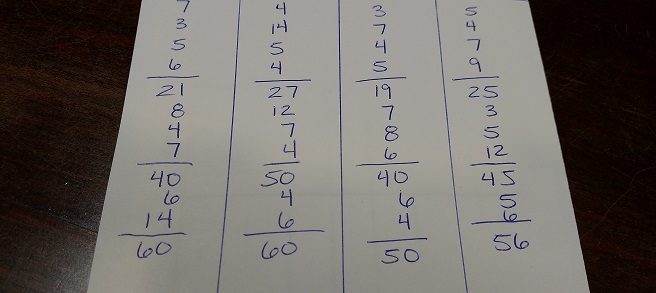
But who was moving on? We didn’t know yet. You see, Nikki and Rick had tied at 60 points apiece, so a tie-breaker was needed. Yes, once again, Rick would be playing Slapzi.

Since I was busy with my group, I didn’t see any of the highlights from Group 2’s session of Timeline. All I knew was that Jenn was going through to the next round.

We switched games, and Group 2 started their Qwirkle game while we settled our tie with a round of Slapzi.

Both Nikki and Rick were quick on the draw — though there were a few questionable plays like this one:
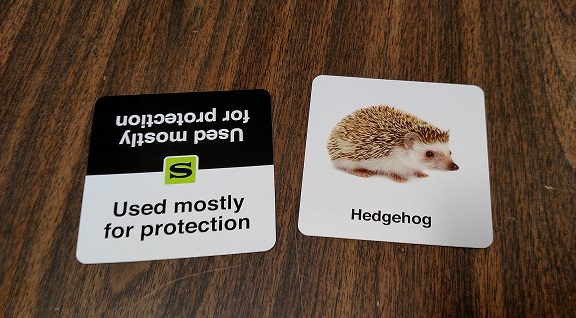
In the end, Nikki bested Rick and moved on to Round 3.

The four of us then settled in for our game of Timeline. There was still a chance for me to salvage the day and continue onward to Round 3 in the proud name of PuzzleNation.
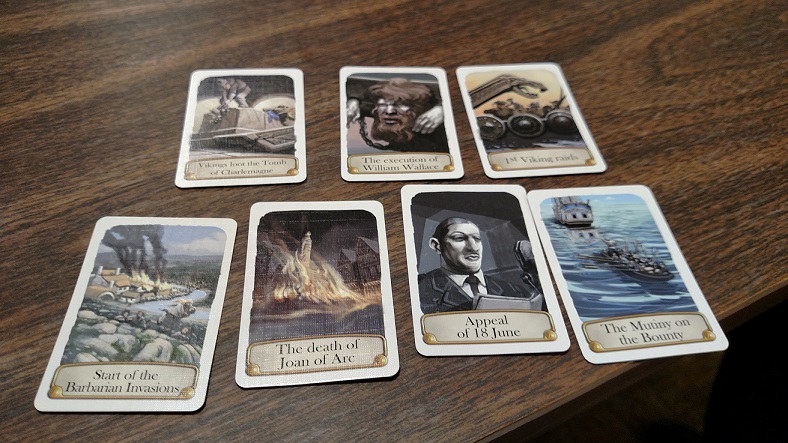
[My Timeline hand. Lots of Viking knowledge needed…]

Success in Timeline depends on two factors: how well you know the events in your hand, and which events get played on the timeline before your turn. For instance, you might have several events that you suspect took place in the 1800s, but you’re not sure when. If there are several cards with dates from the 1800s already in play, you could have a very hard time placing yours. But if the timeline features events from much earlier (like the taming of fire or the creation of the moon) or much later (like the creation of CDs or the launching of the space shuttle Discovery), then you’ll be able to place at least one of your cards with relative ease.

Naturally, the game gets tougher as the timeline fills out, and the gaps between cards get smaller.
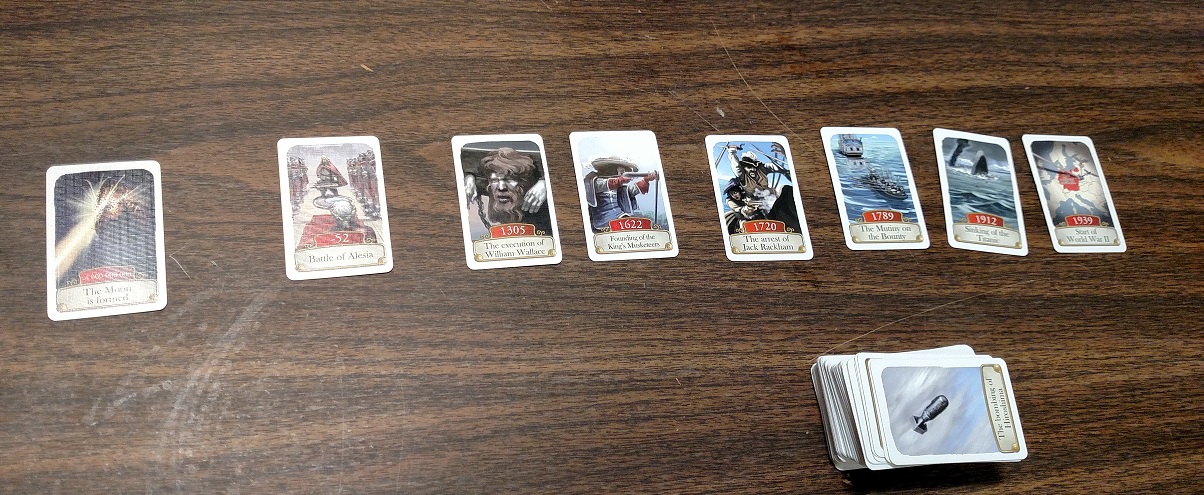
The first few turns went well for everyone. I think it was our third go-around before someone incorrectly placed a card. Rick and I jumped ahead with some lucky guesses (I mean, skillful application of vast historical knowledge), and soon, we were each down to three of our original seven cards.

Unfortunately, I botched two cards in a row — including stupidly placing the Appeal of 18th June AFTER the events of World War II — and Rick calmly swooped in, placing his final card — the invention of basketball — in the correct gap in the timeline.
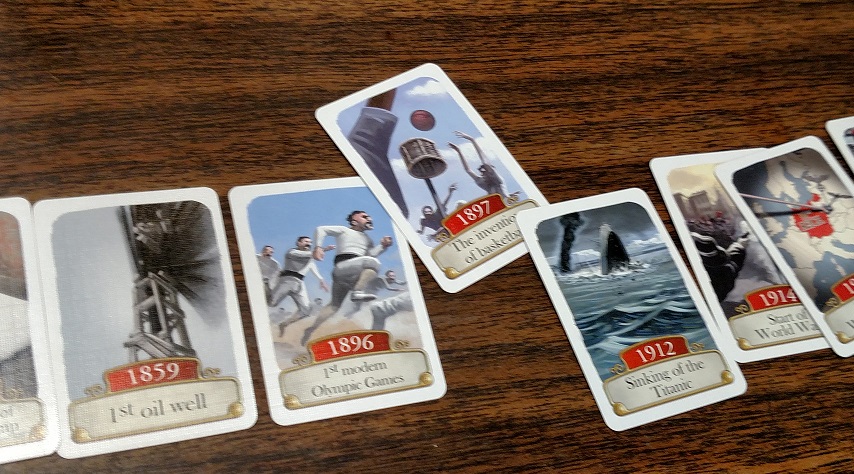
No tie-breakers for Rick this time; he was moving on to Round 3.
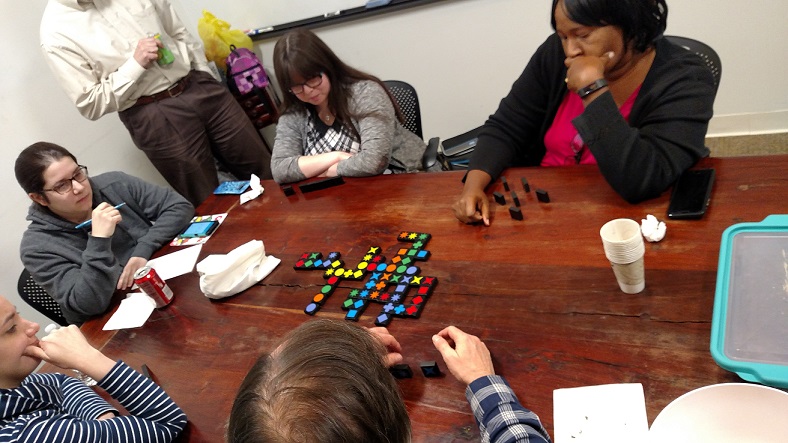
We wrapped up our game in time to settle in and watch the conclusion of Group 2’s Qwirkle match, which was a bit higher-scoring than ours. (There were definitely more Qwirkles scored in their game.)
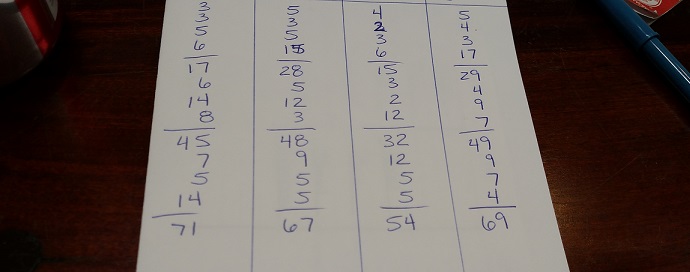
In the end, a surprise upset occurred, and last year’s champion Jen was knocked out of the running by Gordon, who joined Nikki, Rick, and Jenn as the contenders in Round 3. So no matter who wins this year, we’re guaranteed a new champion. Unexpected!

So, alas, I shan’t be competing in either the semi-final or final round of this year’s tournament. But then again, that does free me up to take pictures, observe, add my own unique brand of obnoxious color commentary, and document the event in full for your reading pleasure.

Next week, the remaining four players will try their hand at a game unlike any they’ve encountered in the tournament thus far. Next week, it’ll be about strategy, cunning, bluffing, cutting deals, and a fair bit of trickery, as Nikki, Rick, Gordon, and Jenn play Sheriff of Nottingham.
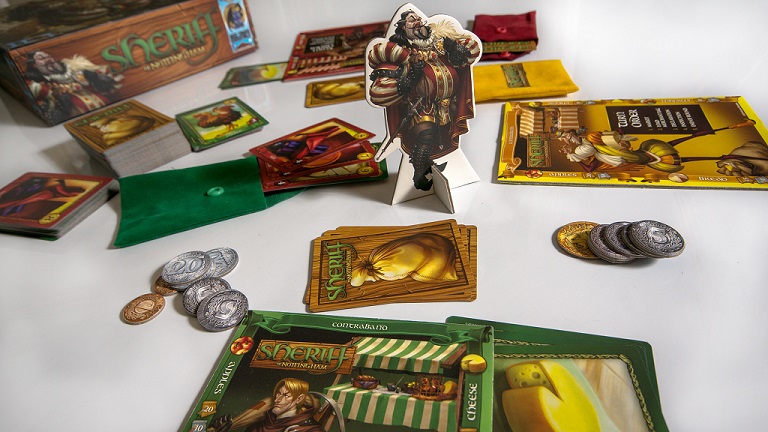
The two players who score the most points will move on to the finals, which will be held at our annual International Tabletop Day event in the last week of April!

And, of course, a crown, scepter, and Game Night Gift Pack await the eventual champion.
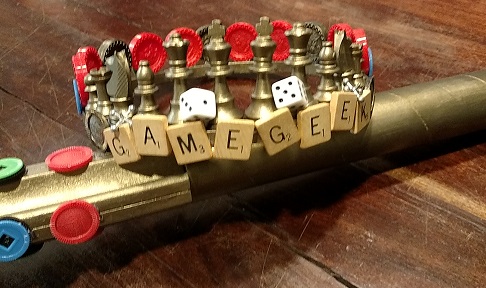
To be continued…

[You can check in on the next round of the tournament live on Tuesday on our Instagram account!]


Thanks for visiting PuzzleNation Blog today! Be sure to sign up for our newsletter to stay up-to-date on everything PuzzleNation!

You can also share your pictures with us on Instagram, friend us on Facebook, check us out on TwitterPinterest, and Tumblr, and explore the always-expanding library of PuzzleNation apps and games on our website!

Monopoly: Pondering the New Cheaters Edition

Monopoly is probably the most famous branded board game in the world. (I include the word “branded” because you can easily argue that Chess or Go or Mah-jongg are equally famous and/or played by as many people.)

There are hundreds of themed variations covering everything from state landmarks to Star Wars. It seems like everyone owns a copy of the game, even if it doesn’t seem to be all that popular these days.

Maybe that’s because we play it wrong. After all, in the instruction book, it plainly states that if a player lands on an unowned property and doesn’t wish to buy it, it immediately goes to auction to the highest bidder. Did you ever play with that rule? It certainly seems like it would speed things up!

And did you know that Edward Parker, former president of Parker Brothers, was quoted as saying that forty-five minutes was the appropriate length for a game?

Forty-five minutes? I can’t remember a single Monopoly game that lasted fewer than two hours.

Then again, maybe it doesn’t matter anymore. Things are about to change. The game is in the news once more after the announcement that Hasbro will be releasing a Cheaters Edition of the game.

[Cheaters that get caught are handcuffed to the board itself!
Image courtesy of USA Today.]

You might consider this to be a shameless attempt to cash in by being “edgy” or lean on cynicism already rampant regarding a game that seems to encourage selfish capitalist choices. That has certainly been the reaction of some game enthusiasts on the Internet.

I read a comment on Facebook where someone was disillusioned by this news, since “by buying this, you acknowledge that you’re playing a board game with someone who is likely enough to cheat that you bought a special version of the game with that exact expectation.”

The commentor went on to share his disappointment in the idea that “your response to that person cheating is not to stop playing games with them, but instead is to shame them by clipping them to the board game as though that were somehow more shameful than getting caught cheating your friends in a game with literally zero at stake.”

That’s certainly one way to look at it — though I suspect that’s partially colored by the fact that this person clearly didn’t enjoy the game in its original form to begin with.

[Image courtesy of Grey Mass Games.]

Of course, there’s an alternative view, one that encourages crafty gameplay over the monotonous steamrolling that many of us experienced in the past with a game like this. (Who doesn’t remember landing on the developed property of an older sibling and getting taken to the cleaners?)

Instead, the game encourages you to think outside the box. In that way, it could become something more akin to a poker game with tells and bluffing, or the casual manipulations you’d find in a round of Sheriff of Nottingham.

According to USA Today, “the game features naughty tasks to complete, such as skipping spaces or removing another player’s hotel from their property without them noticing.”

Since the game’s not out yet, we don’t know how far you’re allowed to go with your chicanery.

I’m sure some players will try to take more than $200 when they pass Go, but what about…?

  • Can you hide cash up your sleeve in order to avoid playing more Luxury Tax at 20%?
  • Can you gaslight players into forgetting that you mortgaged that property, flipping it over and collecting rent on it once more?
  • Can you bribe other players into letting you pass through their properties without paying?
  • CAN YOU SOMEHOW CHARGE FOR FREE PARKING?

[Image courtesy of Monopoly.wikia.com.]

We’ll have to wait and see.

Will you be picking up the Cheaters Edition of Monopoly, fellow puzzlers? Let us know in the comments section below!


Thanks for visiting PuzzleNation Blog today! Be sure to sign up for our newsletter to stay up-to-date on everything PuzzleNation!

You can also share your pictures with us on Instagram, friend us on Facebook, check us out on TwitterPinterest, and Tumblr, and explore the always-expanding library of PuzzleNation apps and games on our website!

5 Questions with Christina Aimerito of Girls’ Game Shelf!

Welcome to 5 Questions, our recurring interview series where we reach out to puzzle constructors, game designers, writers, filmmakers, musicians, artists, and puzzle enthusiasts from all walks of life!

It’s all about exploring the vast and intriguing puzzle community by talking to those who make puzzles and those who enjoy them! (Click here to check out previous editions of 5 Questions!)

And I’m excited to welcome Christina Aimerito as our latest 5 Questions interviewee!

Christina pulls double duty as both the creator and host of Girls’ Game Shelf, a YouTube series all about board games and card games. As the host, Christina introduces the game and explains the rules before she and a rotating panel of female players put the game to the test.

It’s the perfect one-two punch to learn about new games and classics alike, as you get the one-on-one how-to at the start, followed by a strong sense of what the actual gameplay looks and feels like. Couple that with insights from the other players, and you’ve got a recipe for a terrific show that highlights the best of both games and communal play.

Christina was gracious enough to take some time out to talk to us, so without further ado, let’s get to the interview!


5 Questions for Christina Aimerito

1. How did you get started with games?

I played games when I was younger, but the normal fare: Taboo, Scattergories, Stratego, MasterMind, and other classics. I’ve always had a fondness for games. But I started playing more modern games a little later in life. My husband wanted to get me into it, so he introduced me to Dominion, which was a pretty wise choice. I’ve always liked collecting things and had never played a deck-building game before. So yeah, that got me hooked and opened the door to the world of board games.

2. What, in your estimation, makes for a great gaming experience? What separates a good two-player game from a good group game?

I enjoy games the most when there’s a good mix of strategy and conversation. A good two-player game and a group game still require those elements for me since I play games to interact with people.

The difference for me in two-player vs. large group games is more of a personal one. When I play a 2-player game, it’s usually to play with folks who are competitive and like strategy games. But in the group I play with, we have a pretty big variety of gamers. Some of them enjoy RPGs, some like heavy strategy, and often we have a newcomer to the table.

[Image courtesy of Geek and Sundry.]

The unifying element I’ve found is a game that forces people to interact with others during their turn. Games that lead people into analysis paralysis aren’t ever as exciting, and when there’s a group game we like to keep the energy up. Social deduction games, or games like Cosmic Encounter or Sheriff of Nottingham, are great because they involve everyone around the table.

3. You have a film background and a theater background. How do those aspects of your experience contribute to the process of making GGS, either in terms of production or in terms of being an on-camera personality?

Those aspects absolutely help me behind the scenes. In fact my background in film and theatre are what led me to create the series. I wanted to create a show so that I could get back in that creator headspace. I’m happy when I make things. Choosing a show about board games was a no-brainer because it was marrying the two things I loved most.

While my experience helped me off-camera in terms of producing, editing, and crafting the episodes, it surprisingly didn’t help me one bit in front of the camera. Playing a character is VERY different than being yourself. It was a terrifying experience for me at first. The whole first season I think I was just learning how to be comfortable with being myself instead of “getting it right.”

4. What’s next for Girls’ Game Shelf?

Well, we just started a podcast, so that’s the new baby right now. If that goes well, I’m very eager to start working on an RPG series with the girls. Whatever the case, Girls’ Game Shelf will certainly continue to make the original series, and hopefully down the line we’ll have the means to release more than one episode per month.

5. If you could give the readers, writers, aspiring YouTubers/podcasters, and game fans in the audience one piece of advice, what would it be?

For me, the first and most important thing is to be a good listener. Putting your voice out there takes guts, but listening takes discipline. It separates the good content from the stuff that feels heavy handed or forced. Truly listen to your peers, people you agree with, and people you disagree with in regards to the content you’re creating. This is part of doing your due diligence, but it’s also part of being a strong voice and a good host. I am constantly working on this for myself. Luckily, playing board games is usually a good training ground for it.

And secondly, be completely yourself. THAT is what people want to see. And if you’re trying to be anything but that, it will be so obvious. If you’re going to be podcasting or YouTubing, and feel anxious about this, then I highly recommend recording yourself in a few private episodes, just so you can gain that comfort before you share your voice with the world.


A huge thank you to Christina for her time. Be sure to check out Girls’ Game Shelf on YouTube, and to keep up on all things GGS on Twitter. To support this terrific show, you can check out the GGS Patreon page, which is loaded with bonus content, raffles, and more!

Thanks for visiting PuzzleNation Blog today! Be sure to sign up for our newsletter to stay up-to-date on everything PuzzleNation!

You can also share your pictures with us on Instagram, friend us on Facebook, check us out on TwitterPinterest, and Tumblr, and explore the always-expanding library of PuzzleNation apps and games on our website!