Czech Games Responds to the Harry Potter Codenames Controversy!

Czech Games is the home of Codenames, one of the most recognizable board game brands on the market today. It has been licensed dozens of times to include different pop culture properties, and it is the lifeblood of a smaller board game publisher.

And they just crashed into a wave of pro-LGBTQIA+ sentiment after announcing their new release.

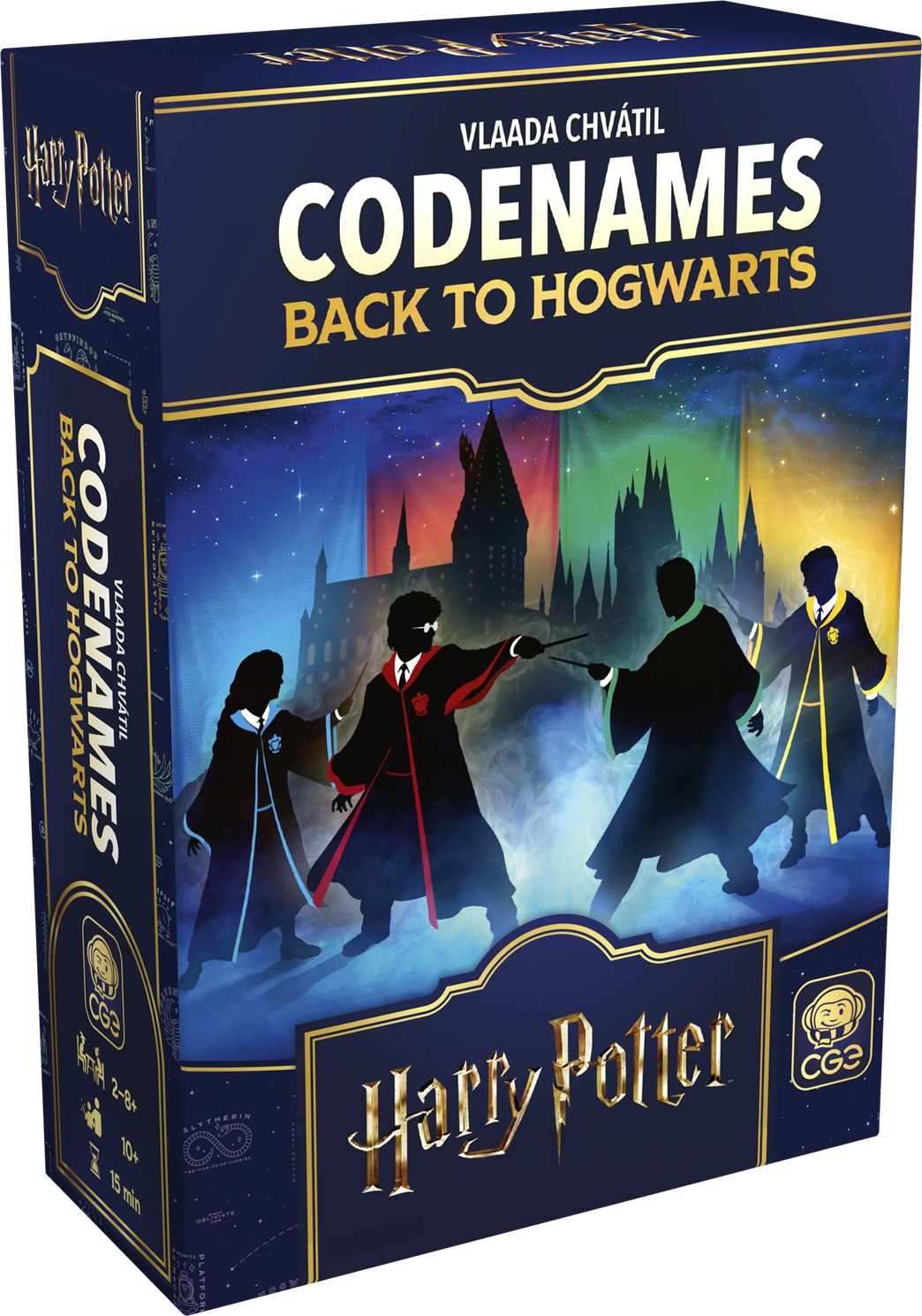
Codenames: Back to Hogwarts.

Now, you may wonder what the big deal is. After all, this isn’t even the first Harry Potter-themed Codenames game. One was released years ago.

Well, in case you’re unfamiliar, in the intervening years between the release of that game and the release of this new one, J.K. Rowling, the author of the Harry Potter books, has revealed herself to be an anti-trans zealot.

She has been on a campaign for years against the trans community (and LGBTQIA+ people, and virtually anyone else who stands up to her bigotry), and publicly celebrated laws in England that curtail the rights of trans individuals.

Moreover, she has promised that she will continue to use the money she earns from licensing Harry Potter to harm people.

Czech Games experienced a deluge of negative comments and feedback (as well as calls to boycott the company’s products), and has spent the last week or so promising to reassess.

To be honest, most in the board game community expected nothing to come from this. LOTS of companies still cut licensing deals with Harry Potter, like LEGO, and especially with the new TV show coming, there’s going to be more of this.


So I was pleasantly surprised when the company released the following statement:

We are all devastated that the project we were so excited to share with you caused harm instead of joy. We have been working to bring you the best possible games for years, and just like our other titles, we worked diligently to bring you this latest title, too.

In our excitement about creating a game within a universe many of us still treasure, we failed to see how that universe no longer brings joy to others. Over time, the harmful views of the story’s creator have escalated into harmful actions. We apologize unreservedly for not doing more to consider that possibility, and for subsequently announcing the game without taking preemptive actions to mitigate the pain it would cause.

Many of you have expressed your understandable anger, pain, and disappointment through a variety of platforms. Frankly, we were not prepared for the volume of the response. As a result, multiple accounts and comments were blocked or muted that should not have been. We would never want anyone experiencing the pain this situation has caused to then feel like they are being silenced. So for that, too, we want to sincerely apologize.

Like the world we live in, CGE is made up of individuals with various backgrounds, gender identities, sexual orientations, and belief systems. None of us would ever want to take actions that would hurt or restrict the rights of another human being. We commit to remaining supportive of an inclusive and welcoming community of gamers. We believe in the rights of all people to have their own identity, and we reject hate and bigotry in all their forms. Trans rights are human rights.

With the above in mind, and after many heartfelt and vital discussions both internally and with members of the affected community, we have decided to donate 100% of the profit from this game to appropriate charitable organizations. We will ensure that an amount equal to or greater than the fee paid to license this product will go directly to organizations that provide support for the trans community.

We evaluate profits and make charitable-giving decisions each December, and we will continue using this annual process to direct the game’s profits. We will listen to recommendations from the community to help guide our choices of organizations that provide support for the trans community. Our goal is to select those that offer direct, practical help to people in need — for example, services similar to the emergency hotline that was recently discontinued.

At CGE, we are committed to making decisions that come from the heart in everything we do. We opened discussions with members of the affected communities and we came together as a whole company to find a way forward that was a genuine reflection of our values and desire to do the right thing. We are sorry for the time it took us to communicate our path forward, but we hope you see that we did so with the care and consideration that you all deserve.



I think it’s the best we could have hoped for. An acknowledgment of the harm caused, a promise to do better, and a tangible response that the audience will be able to track.

Boycotts work, speaking up works, and I’m so proud of the board game community for making noise and pushing back, leading to a turnaround like this.

There is no ethical consumption of Harry Potter material, given J.K. Rowling’s intentions. If she makes a single dime from you, it will go towards hurting others. That’s simply the facts as presented.

And it’s entirely possible that there would be huge costs and even legal consequences if Czech Games didn’t fulfill the agreement they made over the HP license.

So this feels like the most positive outcome going forward. Czech Games isn’t a huge company like LEGO. If you don’t buy HP LEGOs, or stop buying LEGOs entirely out of protest, the company probably won’t notice. (You should STILL speak up, of course.)

But Czech Games will. Most board game companies are small, and profit margins are often razor-thin. A PR disaster like this could easily end a board game company.

I don’t look forward to all the HP nonsense we’re going to hear as the show looms closer, but I’m grateful that the board game community stood up, and Czech Games listened.

Here’s hoping we see more of that in the future.

Happy gaming, everyone.

The Best Puzzle Solvers in Fiction

bestlit1

Last year, we assembled super-teams of the best puzzle solvers in horror films and television respectively. The goal was to highlight characters who stood out, the ones you’d want on your side, because they’re clever, decisive, and immensely capable.

In the third installment in this illustrious series, we turn our attention to literature, seeking out the quickest minds and the deftest problem solvers from the printed page.

Yes, this list will be a bit detective-heavy, since they’re the protagonists most frequently put into situations where puzzly problem-solving becomes synonymous with the character. But we still think it’s a fair representation of the best puzzlers in the medium.


Oh, two quick notes before we get on with the post.

1.) Since both Batman and Sherlock Holmes were listed amongst the best puzzle solvers on television, we’ve opted to exclude them from this entry in order to make room for other individuals. Obviously they still make the cut, but it never hurts to share the spotlight.

2.) Fans of children’s books and young adult novels may be disappointed that the likes of Nancy Drew and Winston Breen didn’t make the list. But that’s for good reason. They’ll be getting their own list in the near future.


bestlit2

Inspector Morse (Colin Dexter)

[Image courtesy of eBay.]

Detective Chief Inspector Endeavour Morse is the protagonist of 13 novels and dozens of hours of television. This opera-loving detective is famous for enjoying cryptic crosswords, and several of his novels challenge the reader with a crossword clue early on, revealing the answer in a later chapter.

Possessing a keen intellect, Morse solves cases through diligence, intuition, and a near-photographic memory. When you factor in his puzzle skills, you end up with someone who can, for instance, effortlessly realize that the spelling mistakes in a piece of evidence are a hidden threatening message, not mere errors.

bestlit3

Lord Peter Wimsey (Dorothy L. Sayers)

[Image courtesy of LibraryCat.]

Although investigation is a hobby for Lord Peter Wimsey rather than a profession, that doesn’t make his efforts any less impressive or diligent. He offhandedly solves a cryptic clue for his valet during breakfast, something that will prove helpful later when he has to solve “The Fascinating Problem of Uncle Meleager’s Will.”

Resourceful in the extreme, Wimsey always manages to gather the necessary info to crack the case, whether that requires faking his own death or unraveling an entire cryptic puzzle in order to settle an acrimonious family gathering.

bestlit4

C. Auguste Dupin (Edgar Allan Poe)

[Image courtesy of Learnodo-Newtonic.]

Perhaps the first literary detective, this creation of Edgar Allan Poe combined a keen eye for observation with an impressive knack for abductive reasoning (inference or making good guesses, as Sherlock Holmes does). Equally at home solving mysteries or chasing forgotten manuscripts, Dupin is the template from which so many crime solving characters sprung.

A master at demystifying enigmas, conundrums, and hieroglyphics, Poe’s creation employed “ratiocination” to place himself in the shoes of criminals and work out not only what they’d done, but where they went after the crime. Surely no criminal mastermind or logic puzzle could withstand the skills of C. Auguste Dupin.

bestlit5

Mary Russell (Laurie R. King)

[Image courtesy of Goodreads.]

Fans of Sherlock Holmes know that he retired from crime solving and spent his twilight years beekeeping. But worry not, England, because Mary Russell ably fits the role Holmes left behind. As observant and strong-willed as her mentor, Mary is brilliant, proving herself a worthy student for Holmes while still a teenager.

A student of many languages, a theology scholar, and an avid reader, Mary is a fierce and intriguing character who embodies many of the puzzliest attributes of Holmes, but with her own idiosyncratic touches, even managing to resolve lingering threads from some of Holmes’s most famous cases.

bestlit6

George Smiley (John le Carré)

[Image courtesy of Amazon.]

There are many characters in literature that think ten steps ahead and manage to succeed, but George Smiley is one of the few who does so in believable fashion. The fictional spymaster and intelligence agent may not have Bond’s rakish good looks, but he has the puzzly chops to crack even the most diabolical schemes.

With an encyclopedic knowledge of spycraft and a perceptive mind capable of subtly getting information out of people, George Smiley is a master of looking at the chessboard of international gamesmanship and figuring out the best moves to make, which pieces to sacrifice, and how to read your opponent and outmaneuver him.

bestlit7

William of Baskerville (Umberto Eco)

[Image courtesy of Amazon.]

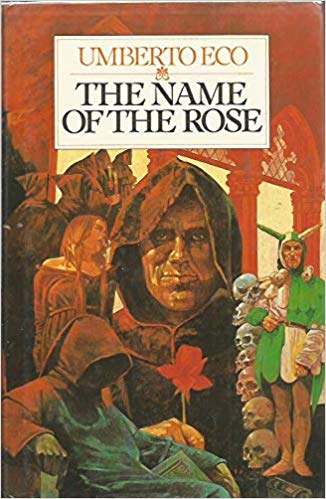
Given how many cryptic crossword constructors in England name themselves after Inquisitors, it’s appropriate to find a strong puzzle solver during the time of the Inquisition. Franciscan friar William of Baskerville, often regarded as insightful and humble, refused to condemn a translator as a heretic, deducing that he was innocent. Later, after leaving the ranks of the Inquisition, William is asked to help explain a series of strange deaths at a Benedictine monastery.

William manages to solve the case AND disprove the presence of a demonic force in the abbey, but not in time to prevent tragedy. Nonetheless, his impressive deductions and masterful efforts to unravel the mysteries at the heart of the case — braving labyrinths both real and invented — are key to the novel’s success.

bestlit8

Sirius Black (J.K. Rowling)

[Image courtesy of Boxlunch.]

Yes, he was a devotee of the Daily Prophet crossword, but it takes more than that to land you on this list. Although reckless at times after a long incarceration in Azkaban, Sirius proved on more than one occasion to have a quick, clever, and strategic mind, a trait shared by many great puzzlers.

He managed to sneak into Hogwarts twice, escaped the infamous Azkaban prison, and deduced where he could find the traitorous Peter Pettigrew. Not bad, especially when you consider the damage Dementors can do to someone’s psyche.

bestlit9

The Black Widowers (Isaac Asimov)

[Image courtesy of Amazon.]

A fictional dining club (men only, sadly), the Black Widowers often solve problems without ever leaving the dinner table. While many mystery novels walk you through the detective’s deductions and theories at the very end as the crime is solved, each Black Widowers case is solved in front of you, as they ask questions and pose solutions, before the final deduction (and correct solution) emerges.

Combining skills in chemistry, cryptography, law, art, and math, the Black Widowers are equipped to handle every puzzle, even if common-sense solutions occasionally elude them.


Did I miss any world-class puzzlers from famous (or obscure) works of literature? Let me know in the comments section below! I’d love to hear from you!

Thanks for visiting PuzzleNation Blog today! Be sure to sign up for our newsletter to stay up-to-date on everything PuzzleNation!

You can also share your pictures with us on Instagram, friend us on Facebook, check us out on TwitterPinterest, and Tumblr, and explore the always-expanding library of PuzzleNation apps and games on our website!