Product Review: Roman Lock Box and Archimedes’ Gear

[Note: I received a free copy of these puzzles in exchange for a fair, unbiased review.]

Forgive these somewhat shorter reviews, but it’s really hard to talk about brainteasers and puzzle boxes without accidentally spoiling them for users. So you get a two-for-one review today!
The perfect puzzle gift box needs to walk a difficult tightrope. It has to be challenging enough to justify the cost, intuitive enough that a person understands the basic idea without instructions, and yet not difficult enough to ruin the holiday or event by causing frustration.

(Cue a vivid Christmas memory of my sister shaking a puzzle box so hard she accidentally solved it and sent a gift card flying across the room.)

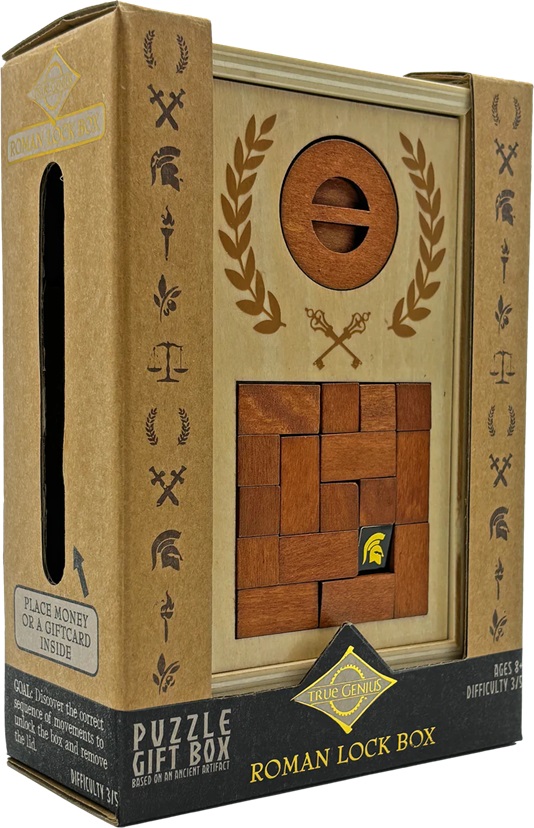
The Roman Lock Box walks that tightrope deftly. It manages to combine classic puzzle box elements (symbol clues, moving elements requiring careful positioning, parts that look seamless but aren’t) and combines them nicely with a sliding-block puzzle that offers a far different challenge than the usual puzzle box tricks.

Factor in the clean design, the well-made pieces, and the delightful slot in the side (allowing non-solvers to place their gift inside without actually having to solve the puzzle themselves!), and you have a suitably challenging way to keep your giftee busy for a bit.

[The Roman Lock Box is for ages 8 and up, and it’s available from Project Genius and participating websites, starting at $17.99.]
Our second brain teaser is a total 180 from the previous one. The Roman Lock Box has a number of moving parts and things to fiddle with and try out, offering a plethora of options to a solver.

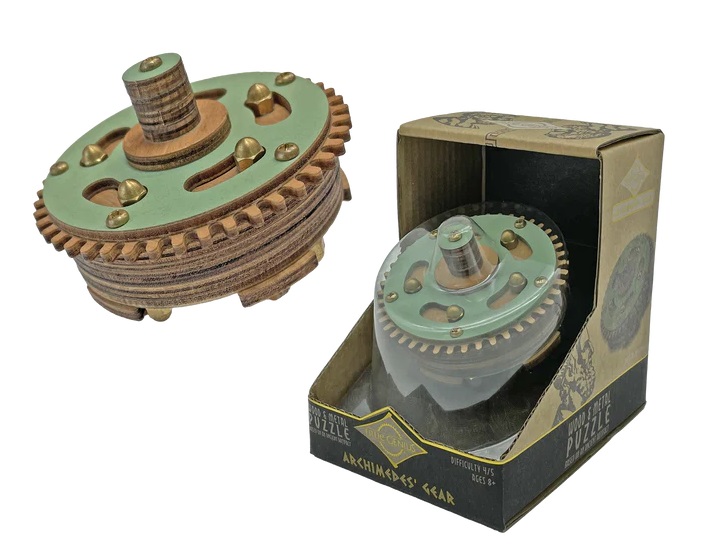
Archimedes’ Gear, on the other hand, is mind-scramblingly rigid. Brutally challenging in its simplicity. Twist and turn it, flip it, rearrange it, hold it at all angles, and it seems to give you nothing. I don’t know that I’ve ever been left so baffled at the start of a solve like I was with Archimedes’ Gear.

Naturally, that’s part of its genius. It really feels like a piece of ancient technology that fell into your hands, and you’re missing some valuable bit of insight that would help you operate it.

That initial bafflement does give you ample time to admire this absolutely beautiful puzzle, though. The color choices, the materials, the feel of the puzzle as you examine it from all sides. There’s even a lovely auditory quality to it, hinting at what awaits the solver inside if its secrets are uncovered.

This puzzle is ranked a 4 out of 5 in difficulty, and I think that’s very fair. I’ve solved a number of brain teasers and puzzles from Project Genius, and Archimedes’ Gear felt a step beyond most of them.

Of course, that only makes it more satisfying when you finally realize what’s going on here. Not a puzzle for the faint of heart (or those lacking in patience and determination), but still one definitely worth your time.

[Archimedes’ Gear is for ages 14 and up, and it’s available from Project Genius and participating websites, starting at $29.99.]

Let’s Try Within-onyms!

The heart of this blog is celebrating puzzles and wordplay in as many forms as possible, so for today’s blog, here’s a puzzle for you to solve!

I call this puzzle “Within-onyms” and the concept is simple. I’ll give you a combination of letters and blanks. Each blank represents a missing letter. The given letters spell out not only a word, but your clue as well. Because when you fill those blanks with the missing letters, you’ll spell out a larger word that’s a synonym of the given word.

For example, I give you this Within-onym:

G I _ A N T _ _

The given letters spell GIANT, but if you add a G, I, and C, you spell the word GIGANTIC, a synonym of GIANT!

Ready to try it for yourself? Careful, they get tougher as we go!

WITHIN-ONYMS

L A _ _ S T

_ _ N O _ _ B L E

_ _ T _ _ O M B

H _ _ _ I E S

M A _ _ _ L _ _ E

S P _ _ _ _ E D

_ _ S E _ _ E

U _ _ _ G _ _ L Y

_ _ H E _ I _ _ R

_ _ _ T A _ I N _ T _

_ R _ _ _ _ _ _ A _ I _ N

B _ _ _ _ I _ G _ _ _ _ _ _

Happy puzzling!


How many did you get? Let me know in the comment section below!

Answers to the Halloween Mashup Costume Game!

Halloween has come and gone, but the glorious costume memories remain.

That’s right, today we’ve got the answers to last week’s Mashup Costume Game!

Let’s take a look at those punny answers!


#1

Image courtesy of TDR1411 on reddit.

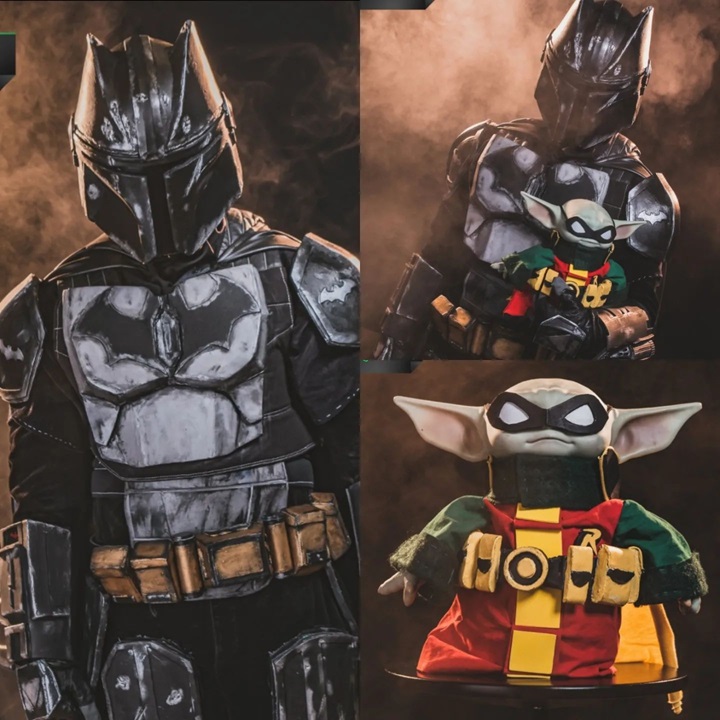
It’s the Batmandalorian!

#2

Image courtesy of EvolvedLurkermon on reddit.

It’s Ruth Vader Ginsburg!

#3

Image courtesy of Epbot.

It’s Stevie Wonder Woman!

#4

Image courtesy of pnuttbuttafly on reddit.

It’s SpongeBob Ross!

#5

Image courtesy of Maude Garrett.

It’s Harley Potter!

#6

Images courtesy of lithiumflame on reddit.

It’s a Van Gogh-stbuster!

#7

Image courtesy of reddit.

It’s Star Lord Voldemort!

#8

Image courtesy of EvolvedLurkermon on reddit.

It’s Salvador Dali Parton!

#9

Image courtesy of amandabomb on reddit.

It’s Willie Eilish!

#10

Image courtesy of Zacch on reddit.

It’s Carrot Toppenheimer!


How many did you get? Have you seen any great mashup costumes I missed? Let me know!

Product Review: Gravitrax Starter-Set XXL

[Note: I received a free copy of this game in exchange for a fair, unbiased review.]

There’s something immensely satisfying about building a contraption and then setting it into motion. Marble runs, Rube Goldberg devices, clockwork toys, chain reactions… they all involve a meticulous step-by-step creation process that builds anticipation as you go.

And then finally, you get to pull the string, throw the lever, drop the marble… and enjoy the clicky-clacky fruits of your labor.

But I don’t think I’ve ever encountered a game that makes it both as challenging AND as effortless as Gravitrax does.

Allow me to explain.

Gravitrax takes the traditional marble run formula — gravity x (tracks + ramps) = good times — and improves it in every way.

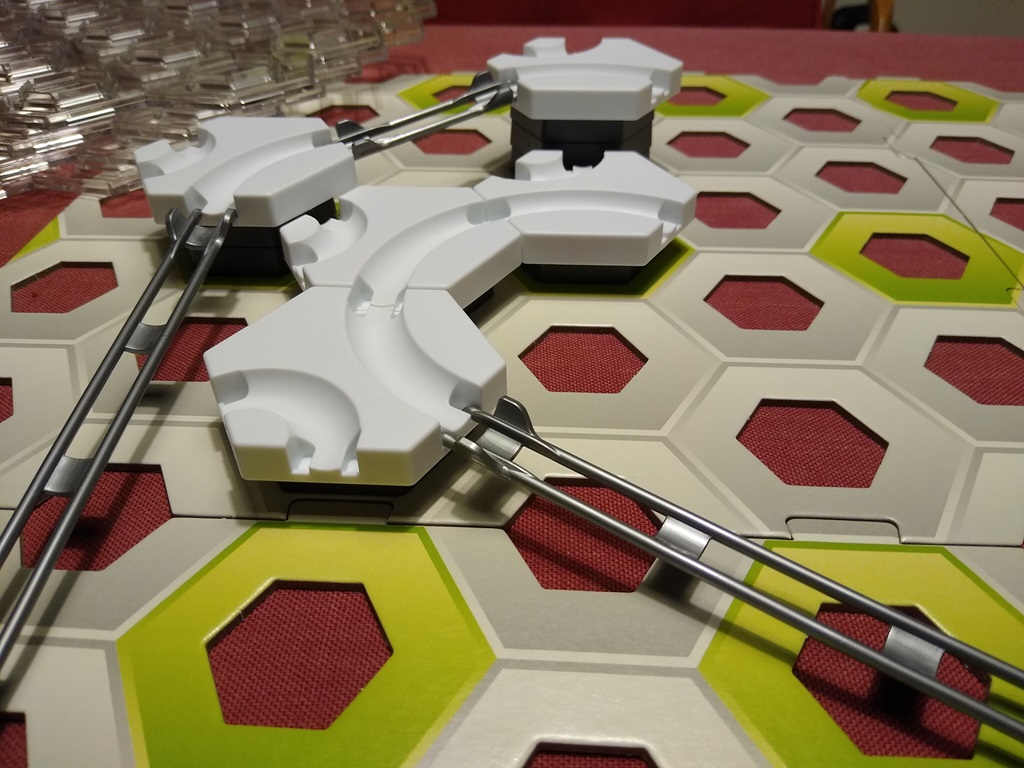
The hexagon matting provides a stable base that not only makes it easy to follow the instructions included for all sorts of designs, but makes the entire design perfectly steady. Every piece fits snugly into the hexagons, so there’s none of the wobbly uncertainty that can ruin a flawless marble run.

Factor in ALL of the pieces provided in the Starter-Set XXL — columns of two different thickness to raise pieces, plates to create entire new levels to build speed, curves and connectors galore, plus specialty pieces to add new tricks and challenges — and you have an amazing launchpad for creating your kinetic designs.

So much thought has been put into all of the pieces included. There’s a triple launcher so you can race multiple marbles along different paths OR set up different chain reactions all at once to dazzle the eye.

There’s even a magnetic accelerator that can launch a ball uphill to add further distance to your track!

The instruction books are another standout part of the package. Like a LEGO manual, they’re completely wordless, and yet, everything is crystal clear. The first book introduces all the pieces and how to use them, while the second (much thicker!) handbook offers all sorts of designs to try out, starting from simple to complicated and challenging ones. There are six difficulty ratings in all.

And the instructions lend themselves to puzzly minds. They show you the finished product first, so if you want to try to puzzle out how to build it yourself, you’re welcome to. If not, just keep reading, and you can follow the step-by-step instructions, complete with piece listings so you know exactly what you need for each step.

I’ve been a sucker for kinetic puzzles and games like this my whole life, and I can only imagine the crazy contraptions and high-speed runs younger me would have spent hours testing and assembling with a kit like this.

So when I say it’s both effortless and challenging, I mean it. This incredibly well-designed set can be picked up by a child immediately, and yet, there’s enough adaptability and opportunity here for new designs, more innovative builds, and limit-pushing attempts at speed and complexity.

I mean, it’s nearly 2 AM as I write this, because I spent two hours trying out a new idea I had instead of writing this review.

I’m not sure I can pay the Gravitrax Starter-Set XXL a higher compliment than that.

[The Gravitrax line of building toys is for any number of players, ages 8 and up, and it’s available from Ravensburger and participating websites (in numerous models and styles). The Gravitrax Starter-Set XXL starts at $129.99.]

A Punny Costume Mashup Challenge for Halloween!

Happy Halloween, puzzlers!

One of the best things about Halloween is guessing what people’s costumes are. Clever costumes can be great fun, and I’m a huge fan of costumes that combine humor and design because they really let your creativity shine through.

Mashup costumes offer ample opportunity to show off (and often require some fun wordplay to figure out), so it’s only appropriate that we celebrate Halloween in the puzzliest way possible — by looking at some punny mashup costumes!

I’ve compiled ten costumes for you to figure out. Let’s see how many you can get!


#1

Image courtesy of TDR1411 on reddit.

#2

Image courtesy of EvolvedLurkermon on reddit.

#3

Image courtesy of Epbot.

#4

Image courtesy of pnuttbuttafly on reddit.

#5

Image courtesy of Maude Garrett.

#6

Images courtesy of lithiumflame on reddit.

#7

Image courtesy of reddit.

#8

Image courtesy of EvolvedLurkermon on reddit.

#9

Image courtesy of amandabomb on reddit.

#10

Image courtesy of Zacch on reddit.

How many did you get? Have you seen any great mashup costumes I missed? Let me know in the comments section below. I’d love to hear from you. And Happy Halloween!

Product Review: That’s Not a Hat

[Note: I received a free copy of this game in exchange for a fair, unbiased review.]

Most memory games are pretty simple, falling into one of two categories: you either observe a pattern and repeat it, or you look at multiple items and remember where they are when hidden/concealed.

Memory games that include a social mechanic are rarer, and memory games with a social mechanic AND bluffing are rarer still.

Imagine a white elephant or Yankee swap gift exchange, except in reverse. You know what all the gifts are to start, but then they are wrapped one by one and traded around, and you need to remember what’s inside each one.

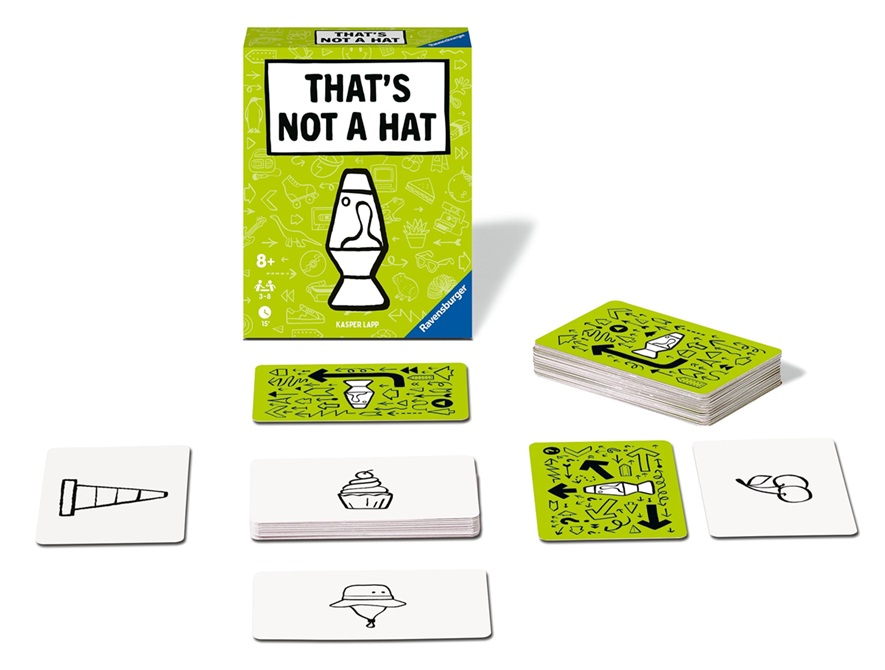
That’s the main idea behind Ravensburger’s social memory game That’s Not a Hat, and it’s brilliantly simple… until it is suddenly not so simple.

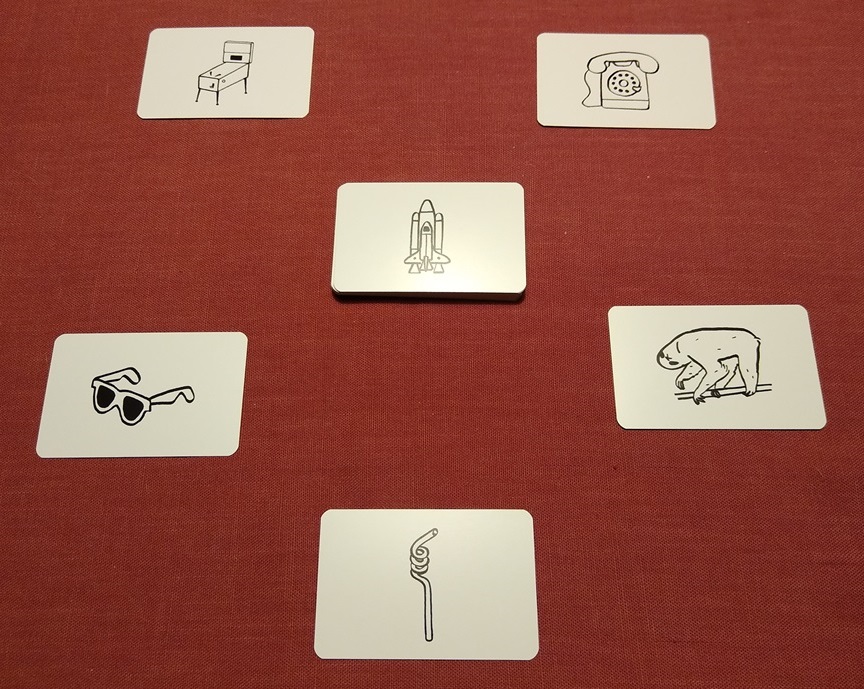
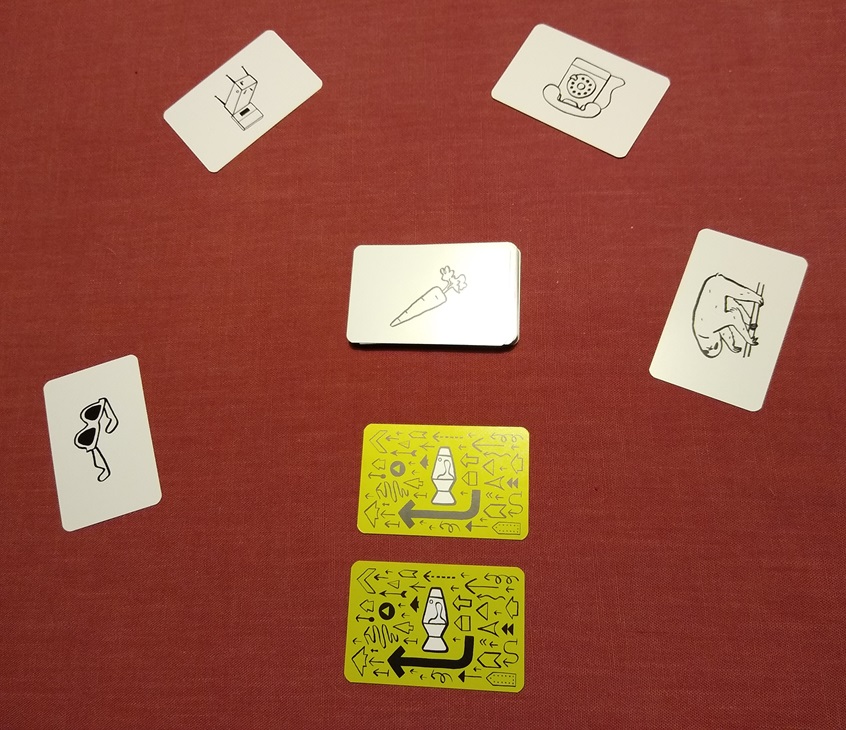
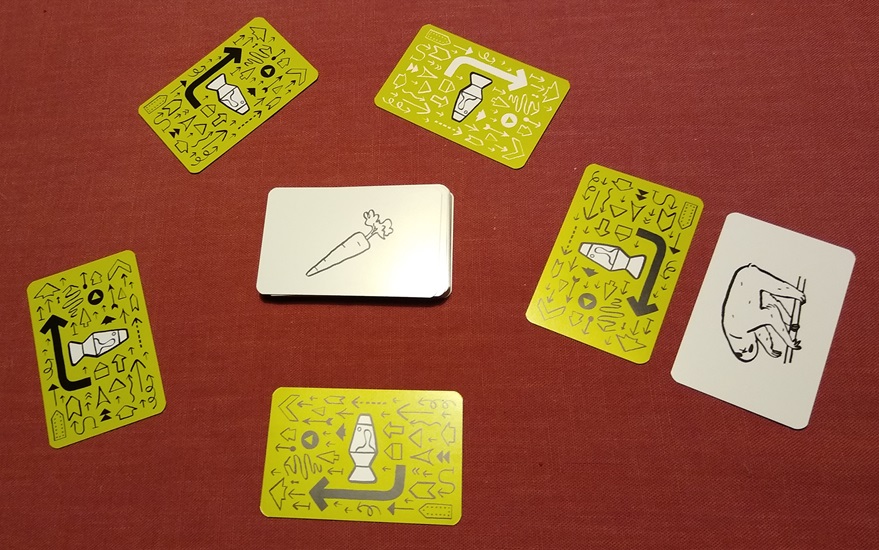
As you can see, everyone starts with a gift. The first player pulls a new gift from the stack in the center of the table, shows it to everyone, then places it facedown.

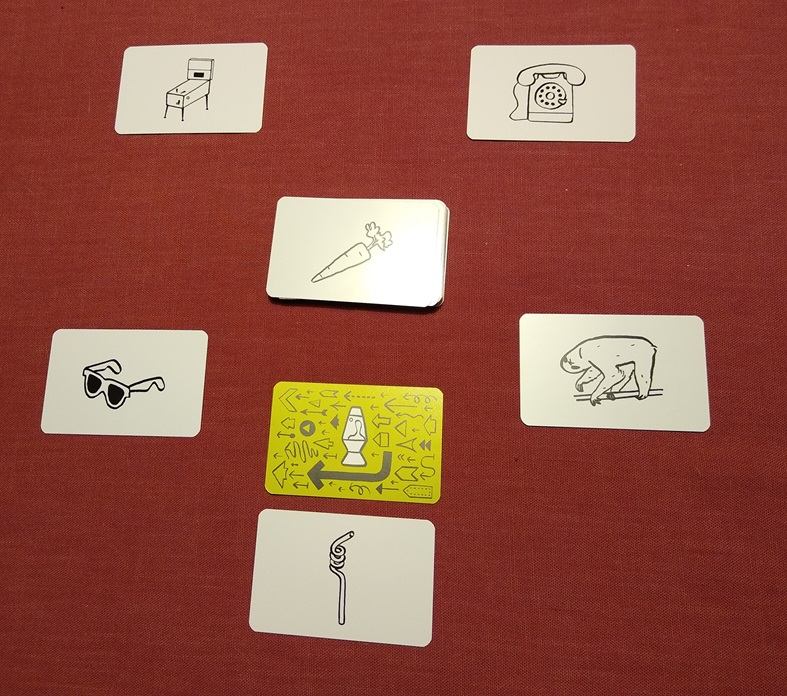
They then hand that gift to the player indicated by the arrow on the back of the card.

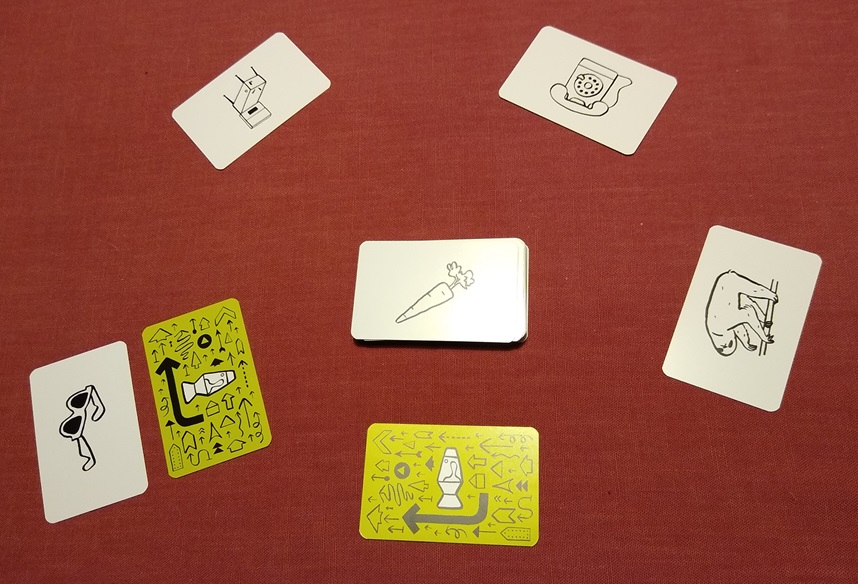
So the player to the right with the sloth card received the space shuttle, flipped it over, and handed it to the swizzle stick player to their left, saying “I have a nice space shuttle for you.”

The player receiving the gift has two options: accept the gift (meaning that they know it’s a space shuttle underneath and agree with the gift giver) or refuse the gift (meaning that they suspect the item underneath is NOT what the gift giver said).

In this case, the game has just started, so our swizzle stick player accepts the gift.

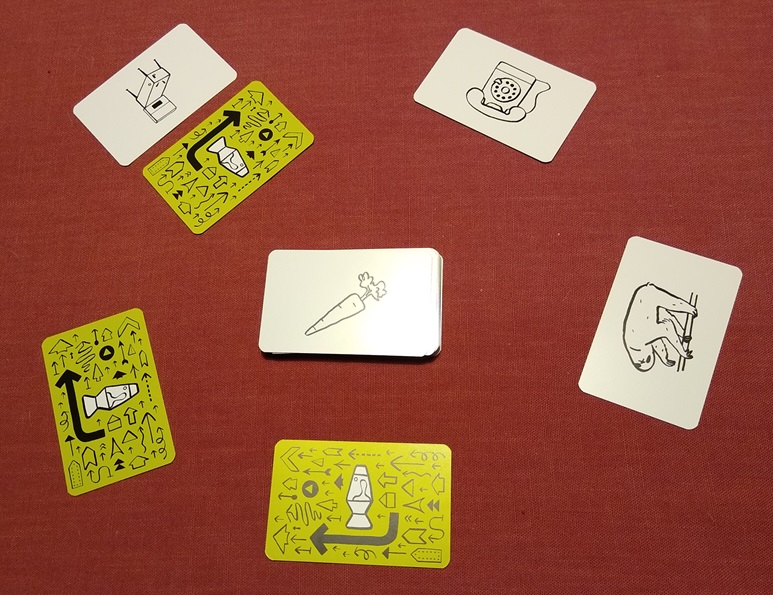
It would be rude to immediately regift what they were just given, so the swizzle stick player turns over their “old gift” and follows the arrow, saying “I have a nice swizzle stick for you” and giving that card to the player to the left (the sunglasses player).

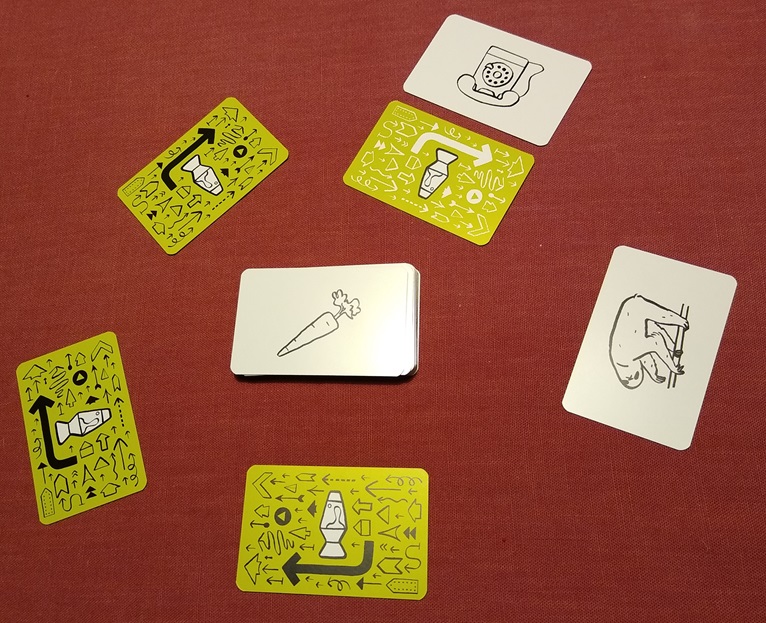
The sunglasses player accepts, turns over their old gift, says their line, and follows the arrow.

In this simplified version, the arrows only go in one direction, whereas in the regular game, arrows can go left or right (or, in the advanced play style, to any player, depending on the arrows).

Now, as the cards continue moving around from player to player, can you remember what was under all those cards? You’re gonna have to, because it gets harder and harder to remember what each card represents.

Eventually, someone is going to forget, and their “I have a nice __ for you” is going to be met with a refusal. If the refusing player is correct and the gift giver has forgotten what’s under the card, the gift giver takes that card and gets a point. If the refusing player is incorrect and the gift giver correctly remembered what’s under the card, then the refusing player takes the card and gets a point.

The game then resumes with a new present and all the previous cards STILL flipped over. The game ends when one player gets three points.


This combination of memory, interaction, and bluffing (if you forget what’s under your card) makes for a very fun, very mellow play experience, one that only grows tougher and more entertaining the more you play.

On the second game, I had so many images in my head from previous rounds that I immediately forgot what was under my card and earned a point.

With up to eight players at the table, 110 cards to choose from, plus mechanics to make the game easier or harder for the players, That’s Not a Hat is instantly replayable and never feels tired.

Now, you may start to worry about your memory before too long. It’s okay, though, because you’ll quickly be distracted by the laughter (and bad bluffs) to come.

[That’s Not a Hat is for 2 to 8 players, ages 8 and up, and it’s available from Ravensburger and participating websites (in two editions) starting at only $9.99!]