What’s a Shortz Number?

While I was researching Salomon Numbers for last week’s post, I discovered another crossword-centric number system with an S-name attached.

The Shortz Number.

Actually, I found several of them.

Allow me to elucidate.

XWordInfo lists a constructor’s Shortz Number as a reflection of when that constructor was first published in a daily puzzle during the Shortz Era of The New York Times crossword.

For instance, Jacob Reed debuts in today’s puzzle, and his Shortz Number is 1373.

Peter Gordon is 1. Merl Reagle is 26. Bernice Gordon is 77. Matt Gaffney is 97. Nancy Salomon is 143. Patrick Berry is 257. Deb Amlen is 378. Doug Peterson is 431. Patti Varol is 1000.

It’s an incredible insight into an ever-evolving roster of constructors.

According to a cursory Google Search, this seems to be the most legitimate definition of a Shortz Number.

But there are others.


The second and most specious definition seems to be a Shortzian take on the Salomon Number, connecting constructors to Shortz through a Kevin Bacon-like system of collaborations.

I only found a few references to this interpretation, so it seems more like a coincidence than actual cultural permeation.

But that still leaves one more version of a Shortz Number, and it’s my favorite one.
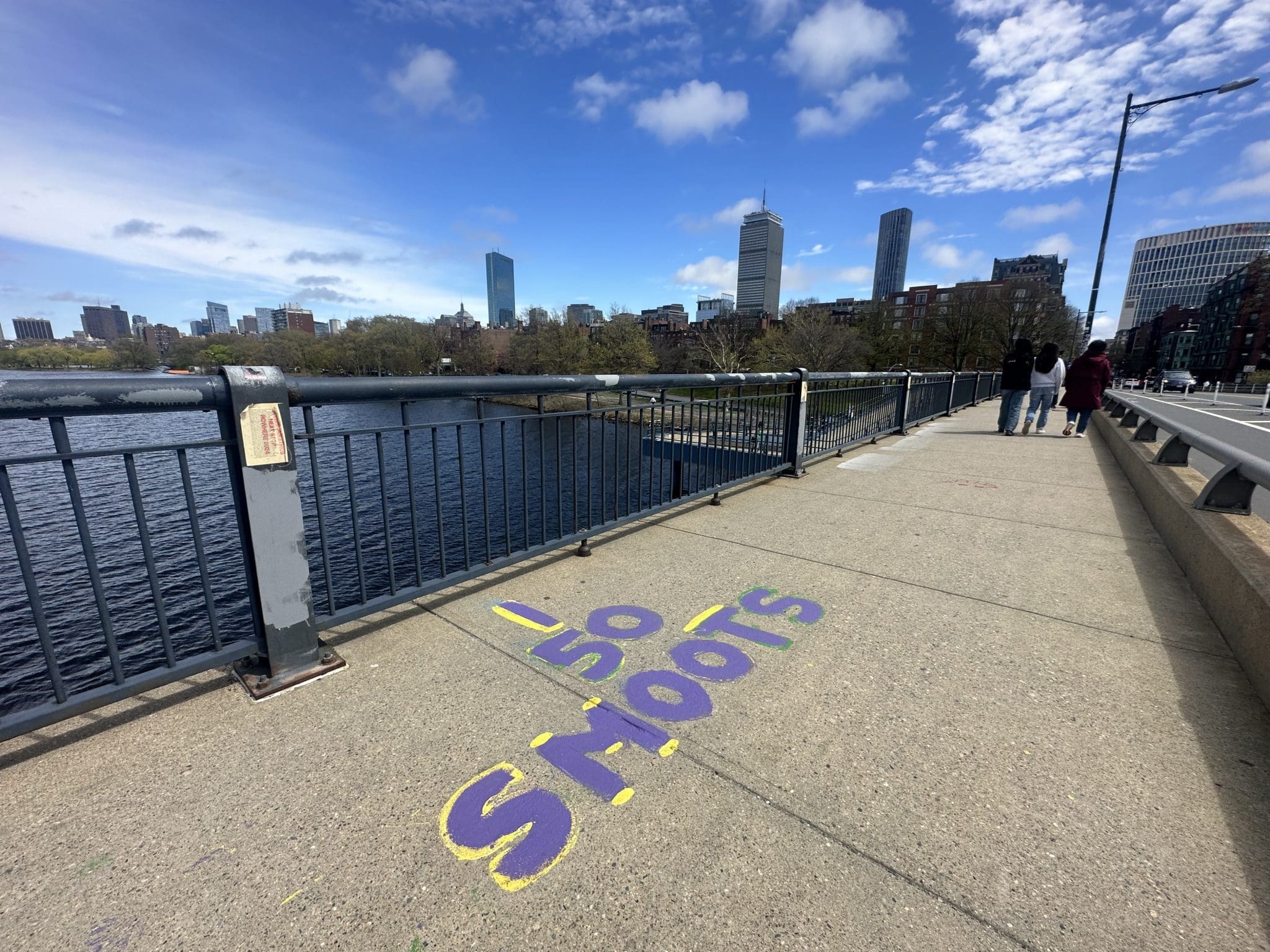

This version is actually referenced on Wikipedia under Humorous Units of Measurement and apparently originated as a Reddit post.

But in this instance, a Shortz is a unit of measurement for fame. More specifically, it’s the number of times a person’s name has appeared in The New York Times crossword as either a clue or a solution.

The brief post then goes on to state that Shortz himself is 1 Shortz famous. (I was unable to verify this through XWordInfo, either through SHORTZ, WILLSHORTZ, or WILL as grid entries.)

But as someone who enjoys weird statistics, I was definitely intrigued by this one. What’s the Shortz Number for common crosswordese and frequent fill?

I mean, RIPTORN only has a 6, but that’s an impressive number of times to get your first AND last name in a crossword.
So let’s dig in.


First things first, I’m jettisoning the clue aspect of the definition. Let’s stick to grid entries.

I’m also doing my best to eliminate shared names or ones with multiple definitions. ETTA has 241 uses in the Shortz Era, but I don’t want to parse between James and Jones. Same for ELLA (249), ANA (342), and ALOU (150).

Second, let’s stick to real people. It’s cool that SMEE has 114, ODIE 145, and ASTA a staggering 183. But the Bacon, Erdos, and Salomon Numbers rely on real people, so our Shortz Number will too.

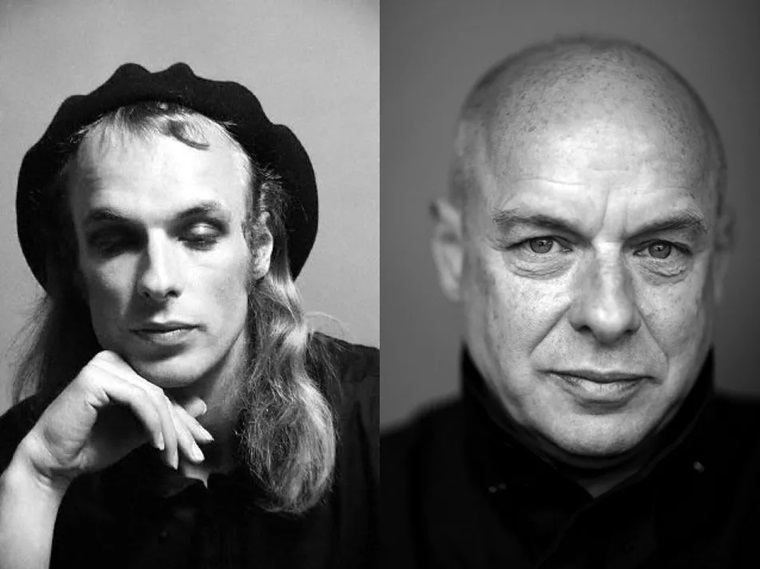
So allow me to present the people with the 8 highest Shortz Numbers I could find:

#8 ENYA – 149
#7 ALDA – 152
#6 UMA – 162
#5 OTT – 188
#4 ONO – 196 (minus a half-dozen or so fish references)
#3 ESAU – 226 (hard to stat out other biblical figures like Adam, Eve, Enos, because of other uses)
#2 ASHE – 264

and, as you might expect…

#1 ENO – 268!
It’s certainly a close race, and one that could easily change in the future!


Let’s add one more wrinkle before we go.

Because it’s interesting to track all the Shortz Era uses… but there are decades of puzzles before that, and XWordInfo has stats on them too.

So do the rankings change when you factor those puzzles in?

Absolutely.
Let’s call these Farrar Numbers and see how things shake out.

I mentioned ETTA earlier. The pre-Shortz puzzles cause their Farrar Number to be more than double, vaulting up to 516. Similarly, ELLA leaps to 688 and ANA to 758!

Some of our fictional friends also prosper, with SMEE moving from 114 to 332 and ASTA rocketing from 183 to 533! But ODIE only adds a handful more, moving from 145 to 156.

So how did our top 8 do?

ENYA (149) stayed in the exact same place. There were NO pre-Shortzian references.

UMA (167) drops from 6th to 7th, only gaining 5 more references. She swaps places with ALDA (270), who adds a lot of references (discounting the hundred or so mentioning his father or opera star Frances Alda).

Sadly, ENO (280) plummets from the #1 spot all the way to 5th, only adding another dozen or so references to make his Farrar Number.

ONO (390) stays in 4th despite nearly doubling the number of references, while OTT (432) leapfrogs over ONO, going from 5th to 3rd with an impressive pre-Shortzian showing.

ASHE (560) stays in 2nd despite more than doubling his references (and obviously disappearing from the pre-Shortzian rankings in the early 1960s).

This means ESAU (609) goes from 3rd to 1st in the Farrar Number rankings!


So, whether you prefer your Shortz Number to be chronological, Baconian, or grid-centric, you’ve got plenty of options.

But personally, I think the Farrar Number is gonna take the world by storm!

Okay… maybe not. But it’s certainly fun to think about.

Happy puzzling, everyone!
The ORCAS: The Oscars of the Crossword World!

Constructors are doing incredible things with crosswords, so it’s fitting that there’s an award show dedicated to the hardworking cruciverbalists of the world and their marvelously devious creations.

Originally called The Oryx Awards or the Oryxes, The ORCAS (an anagram of OSCAR) celebrate crossword excellence. For the 13th edition of the event, the team at Diary of a Crossword Fiend have lined up some seriously impressive puzzles and puzzlers.

Be sure to check out the full list of nominees and cast your votes! Here are the categories:

  • Best Easy Crossword
  • Best Themed Crossword
  • Best Themeless Crossword
  • Best Sunday-Sized Crossword
  • Best Clue
  • Best Tournament Crossword
  • Best Contest Crossword
  • Best Variety Crossword
  • Best Midi Crossword
  • Constructor of the Year

Voting closes at midnight ET on Monday, February 17 (President’s Day).

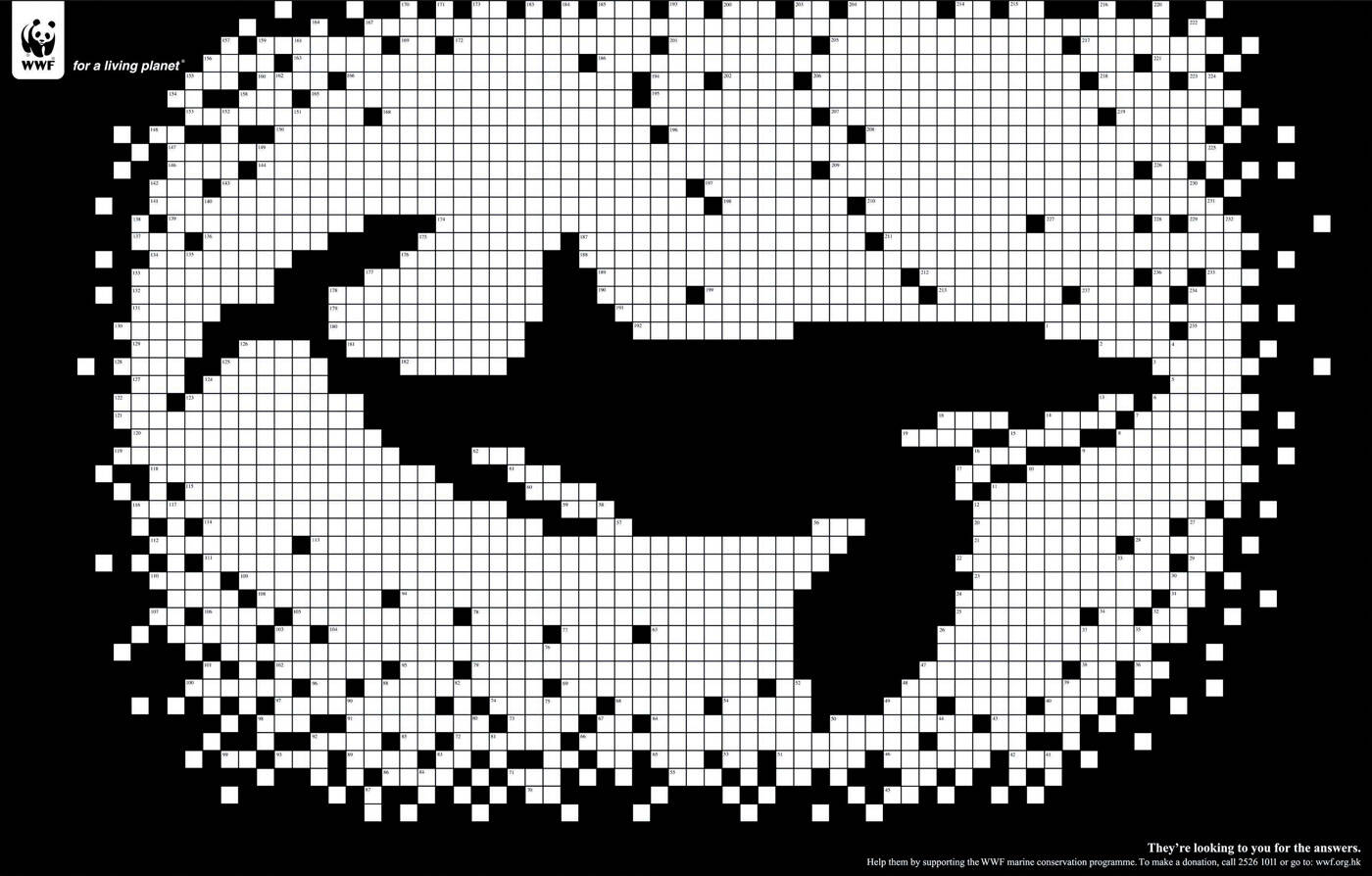
Image courtesy of the World Wildlife Fund.

I was very pleased to see a few favorite puzzles of mine make the cut (as well as a clue for CHARLIE BUCKET that melted my brain with its cleverness).

I also enjoyed checking out many of the nominees that hadn’t crossed my path. (Here’s a link to the publicly available puzzles nominated.)

Oh, and if you’d like to make sure YOUR favorites get included next year, here’s a link for 2025 nominations for next year’s edition of the ORCAS.

Good luck to all the creative contenders and happy solving to everyone checking out the nominees!

Constructors, What’s Your Salomon Number?

I’m a nerd.

I know that probably comes as a huge shock to you, fellow puzzler. Positively astonishing that a guy who has spent over twenty years making puzzles — more than ten writing about them here — and even more years running D&D games, LARPs, escape rooms, and murder mystery dinners is a nerd.

But that’s the truth.

And as a nerd, I love watching people quantify things in strange ways. Weird units of measurement like smoots, or how FEMA uses whether local Waffle Houses are open to determine the severity of natural disasters, or the Muta Scale used by wrestling fans to determine how bloody a wrestling bout is.

So when a recent Puzzmo crossword namedropped the Salomon number, I immediately wanted to know more.

Created by crossword constructor and super cool website owner Quiara Vasquez, the Salomon Number is named in honor of Nancy Salomon, a prolific and influential crossword constructor whose generosity, mentorship, and creativity still shapes the world of crosswords today.

Akin to the Bacon Number (how many steps it takes to link someone to Kevin Bacon through shared performances) and the Erdos Number (how many steps it takes to link someone to Paul Erdos through co-authored papers), the Salomon Number represents how many steps it takes to link someone to Nancy Salomon through collaborative puzzling.

Nancy Salomon collaborated with over forty constructors over the years, so there’s a very healthy talent pool to build a Salomon Number through.

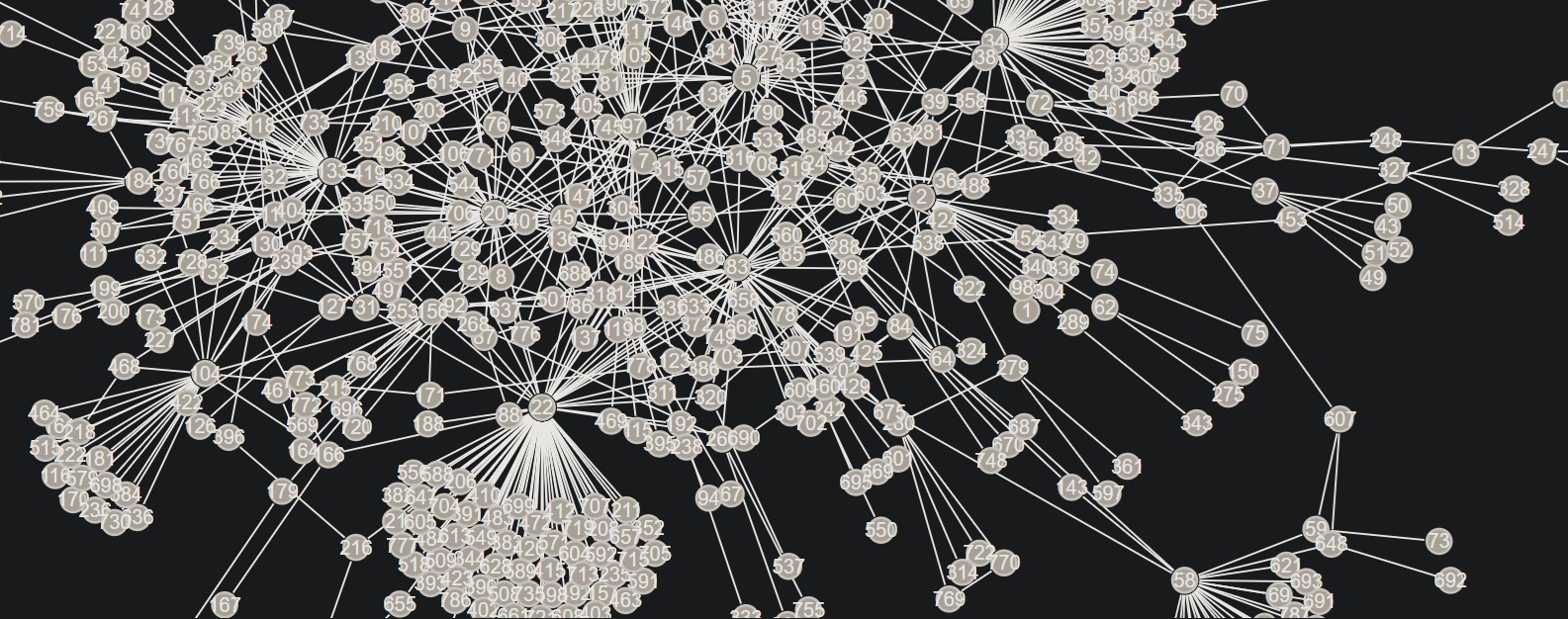
You’re welcome to play the game mentally, but if you need a helping hand, Alex Boisvert has created an automated system for generating Salomon Numbers!

A visual graph of the Salomon Number network.

I tested it by searching for several of my very favorite puzzle people.

I was pleasantly surprised to discover that Los Angeles Times crossword editor and puzzle badass Patti Varol had a Salomon Number of 2, thanks to a collaboration with Matt Skoczen.

Crossword gentleman Doug Peterson had a Salomon Number of 3, linked by Joon Pahk and Brendan Emmett Quigley.

As I explored the database, it quickly became apparent how small a world crosswords can be — despite all the wonderful new voices entering the field over the last few years — so I started to wonder…

What’s the largest Salomon Number in the system?

I started with the celebrity constructors during the 75th anniversary celebration of The New York Times a few years ago.

Weird Al Yankovic’s number was 4. A good start. But this quickly petered out, as many of those celebrities were paired with veteran constructors with strong Salomon Numbers.

I pored over the list for familiar names to see their scores. Gaby Weidling’s number was 5, which was the highest I’d seen so far.

But I was surprised to find some prolific cruciverbalists in the database with no Salomon Number at all. With so many indie crossword outlets, there’s a chance there are collaborations that aren’t included in the current database, so there’s always the possibility of a successful search later.

(I also couldn’t resist doing a little sleuthing myself to see if I could uncover connections that weren’t in the database. Nothing yet, but I definitely can’t resist more digging later.)

But as constructors collaborate and innovate going forward, it’s going to be fascinating to watch this network continue to expand and complicate.

Make sure to check out Quiara’s post, which dives deeper into Salomon Numbers and even ponders Bacon-Erdos-Salomon Numbers!

Happy puzzling, everyone!

A Chance to Construct for BosWords!

Hello fellow puzzlers!

Last week, I mentioned that the BosWords Winter Wondersolve was on the way. But I also discussed other marvelous puzzly events handled by the BosWords team, one of which is their Spring Themeless League.

And BosWords director John Lieb announced yesterday that they’re holding Open Submissions for one of the themeless puzzles in this year’s Spring Themeless League!

It’s only open to constructors who HAVEN’T had a themeless crossword published in The New York Times and also HAVEN’T constructed for a previous BosWords event.

Yes, it’s an opportunity for new faces and fresh talent to show what they can do!

You can find the full submission details on the BosWords website, including parameters for grid design, fill content, and words to avoid.

I think this is such a cool way to encourage interest in both the construction side of puzzles and the great fun to be had with themeless crosswords.

The submission deadline in February 15th, so if you’re feeling inspired, get to puzzling!

And if you haven’t already, please strongly consider checking out the Spring Themeless League. It’s a blast and really shows off the creativity and constructing skill it takes to make an enjoyable, compelling themeless crossword.

Good luck to all the potential cruciverbalists out there!

The Conundrum of Computers, Crosswords, and AI

Image courtesy of ESLTower.

AI continues to encroach on nearly every aspect of our lives, online or otherwise, and crosswords are not immune to this effect.

Actually, crosswords and computers have walked hand-in-hand for a long time.

Some companies use computer programs to generate their unthemed crosswords, no human intervention necessary. Computer programs like Crossword Compiler aid constructors in puzzle design and grid fill, allowing them to build and cultivate databases of words with which to complete their grids.

And computers are getting better at solving puzzles as well. Years ago, I wrote about a program that taught itself to solve Rubik’s Cubes.

Matt Ginsberg’s ever-evolving crossword-solving program Dr. Fill won the American Crossword Puzzle Tournament in 2021 — although the top prize still went to a flesh-and-blood solver — a first-time occurrence which garnered a lot of media attention:

The first computer to win the event, Dr. Fill completed most puzzles in well under a minute and only made three mistakes, edging out its top human competitor by 15 points.

To be fair, several constructors responded by vowing to make a crossword for the following year’s tournament that would thwart any computer. And I respect such inspired declarations immensely.

(I’ll have to do more research and find out if any of them succeeded!)

Really, we shouldn’t be surprised. They wrote an entire Crossword Mysteries movie on the Hallmark Channel about a crossword-clue-solving AI (and the people who would kill for the technology).

But I digress.

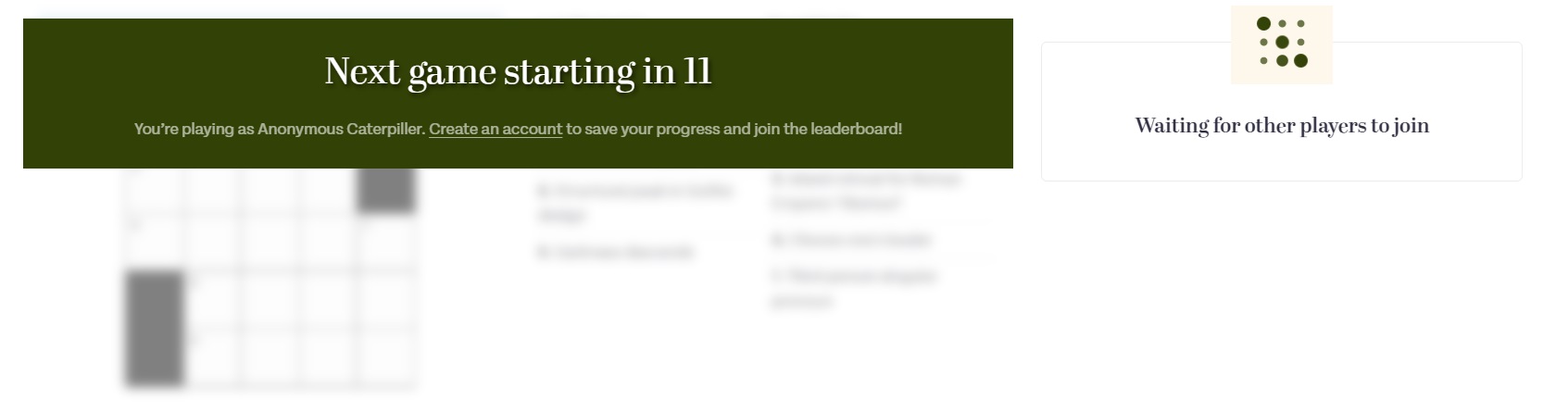
I have AI on the brain today because I just checked out an AI-fueled competitive mini-crossword arena, and I have mixed feelings about it.

It’s called Crossword Race, and it uses AI to generate 5×5 mini-crosswords, clue them, and load them up for solvers to complete in as fast a time as possible.

Yes, the cluing is very bland and overly technical (feeling more like oddly-worded dictionary definitions), but there seems to be a genuine desire to build and serve a puzzle-solving community.

And I can see the value.

If you’re a puzzler trying to get better at solving — especially if you have friends posting their mini-crossword results on the daily — this is a safe space to practice your solving, your grid navigation, and shake off the nerves that come with any timed competitive endeavor. (You can create a profile to track your stats or play anonymously.)

But I’m also a writer, a puzzler, a content creator, and such push-button “creativity” gives me the ick. Beyond the soullessness that comes with so many AI creations that lack the heart and inspiration of human touch, there are already too many computer-generated crosswords these days with crap clues, poor fill, and frustrating Naticks/crossings that would stump the average solver.

I looked at a puzzle book from one of these companies a few years ago. I mean, it was almost impressive that one computer-generated puzzle managed to cram FIFTEEN abbreviations into a 13×13 grid, often crossing or piled together in corners. It was an abysmal solving experience.

Now, abysmal is not a fair word to use when discussing Crossword Race’s grids. Let me be fair here. I don’t like the cluing, but the grids are reliably filled with beginner-appropriate vocabulary.

And I want PuzzCulture to be a place where we discuss what’s going on in the world of puzzles. That includes AI.

So it’s up to you, fellow puzzlers, if you decide to use Crossword Race or not, or if Crossword Race is a net good for puzzlers worldwide. Time will tell, I suppose.

In the meantime, I wish you happy puzzling, folks! And remember to support your friendly neighborhood cruciverbalist! Sign up for a Patreon, buy a puzzle book, attend a crossword tournament, every little bit helps!

The Winter Wondersolve Is Coming!

I did a roundup of Crossword News last week, but one important bit of news came through too late to be included, so it gets its own post today!

BosWords has only been around since 2017, but every year, they deliver several outstanding puzzly experiences.

Their flagship event has long been the Summer Tournament, but you’re missing out if you don’t participate in their other events. Their Spring and Fall Themeless League events are all-virtual weekly puzzles to solve over a two-month period. It’s a great way to stretch your solving muscles without the pressure of in-person tournament-style solving.

And speaking of at-home solving, they just announced that registration is open for the 2025 Winter Wondersolve event.

It’s taking place on Sunday, February 2, from 1-4:30 PM Eastern, and features three themed puzzles and a themeless. The best of both worlds!

Plus they’ve lined up a terrific team. You’ve got event directors John Lieb and Andrew Kingsley, puzzle editor Brad Wilber, and a quartet of constructors handling the puzzling this year: Alina Abidi, Kareem Ayas, Carly Schuna, and Andrew White.

Check out the Boswords website for all the details (including a video narrated by John Lieb).


Will you be participating in the Winter Wondersolve (or any other Boswords events this year), fellow puzzlers? Let us know! We’d love to hear from you.