The Conundrum of Computers, Crosswords, and AI

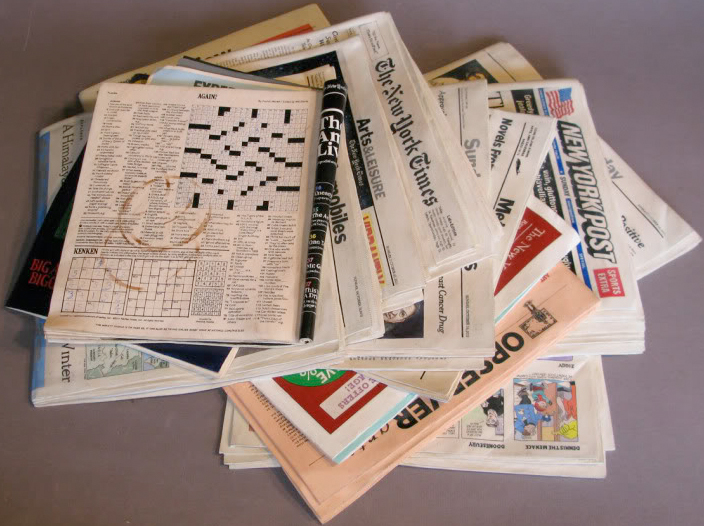
Image courtesy of ESLTower.

AI continues to encroach on nearly every aspect of our lives, online or otherwise, and crosswords are not immune to this effect.

Actually, crosswords and computers have walked hand-in-hand for a long time.

Some companies use computer programs to generate their unthemed crosswords, no human intervention necessary. Computer programs like Crossword Compiler aid constructors in puzzle design and grid fill, allowing them to build and cultivate databases of words with which to complete their grids.

And computers are getting better at solving puzzles as well. Years ago, I wrote about a program that taught itself to solve Rubik’s Cubes.

Matt Ginsberg’s ever-evolving crossword-solving program Dr. Fill won the American Crossword Puzzle Tournament in 2021 — although the top prize still went to a flesh-and-blood solver — a first-time occurrence which garnered a lot of media attention:

The first computer to win the event, Dr. Fill completed most puzzles in well under a minute and only made three mistakes, edging out its top human competitor by 15 points.

To be fair, several constructors responded by vowing to make a crossword for the following year’s tournament that would thwart any computer. And I respect such inspired declarations immensely.

(I’ll have to do more research and find out if any of them succeeded!)

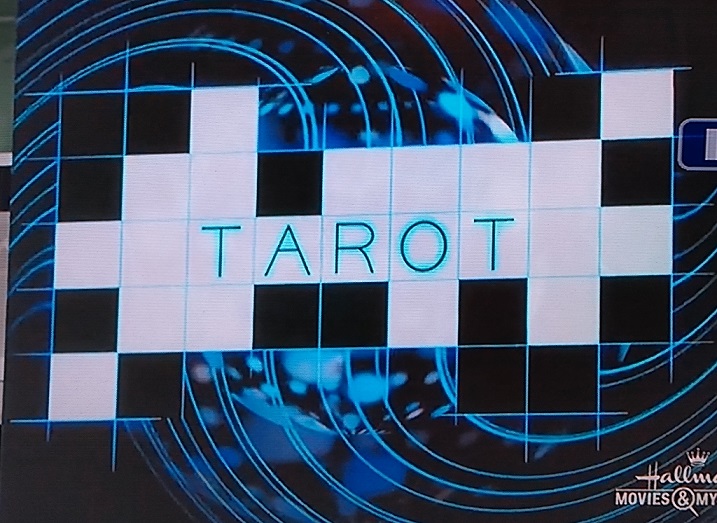
Really, we shouldn’t be surprised. They wrote an entire Crossword Mysteries movie on the Hallmark Channel about a crossword-clue-solving AI (and the people who would kill for the technology).

But I digress.

I have AI on the brain today because I just checked out an AI-fueled competitive mini-crossword arena, and I have mixed feelings about it.

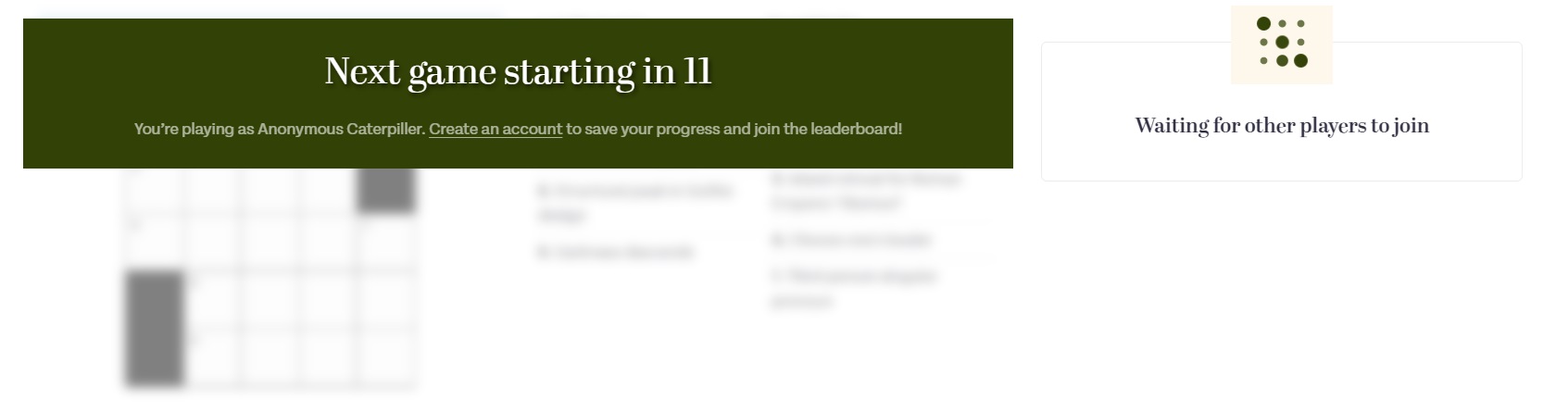
It’s called Crossword Race, and it uses AI to generate 5×5 mini-crosswords, clue them, and load them up for solvers to complete in as fast a time as possible.

Yes, the cluing is very bland and overly technical (feeling more like oddly-worded dictionary definitions), but there seems to be a genuine desire to build and serve a puzzle-solving community.

And I can see the value.

If you’re a puzzler trying to get better at solving — especially if you have friends posting their mini-crossword results on the daily — this is a safe space to practice your solving, your grid navigation, and shake off the nerves that come with any timed competitive endeavor. (You can create a profile to track your stats or play anonymously.)

But I’m also a writer, a puzzler, a content creator, and such push-button “creativity” gives me the ick. Beyond the soullessness that comes with so many AI creations that lack the heart and inspiration of human touch, there are already too many computer-generated crosswords these days with crap clues, poor fill, and frustrating Naticks/crossings that would stump the average solver.

I looked at a puzzle book from one of these companies a few years ago. I mean, it was almost impressive that one computer-generated puzzle managed to cram FIFTEEN abbreviations into a 13×13 grid, often crossing or piled together in corners. It was an abysmal solving experience.

Now, abysmal is not a fair word to use when discussing Crossword Race’s grids. Let me be fair here. I don’t like the cluing, but the grids are reliably filled with beginner-appropriate vocabulary.

And I want PuzzCulture to be a place where we discuss what’s going on in the world of puzzles. That includes AI.

So it’s up to you, fellow puzzlers, if you decide to use Crossword Race or not, or if Crossword Race is a net good for puzzlers worldwide. Time will tell, I suppose.

In the meantime, I wish you happy puzzling, folks! And remember to support your friendly neighborhood cruciverbalist! Sign up for a Patreon, buy a puzzle book, attend a crossword tournament, every little bit helps!

A Labyrinth of Stone and Puzzly Invention

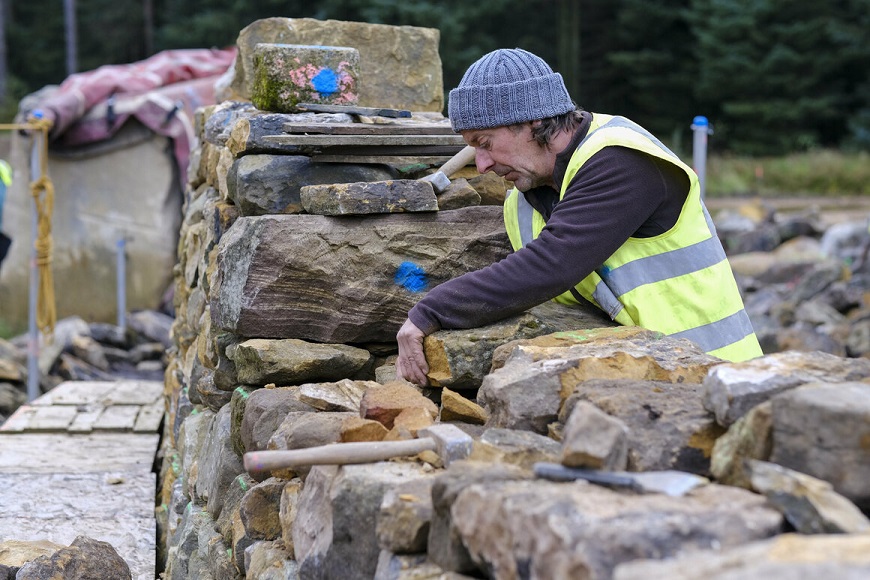
Many artistic and creative endeavors have a puzzly element to them. But it’s hard to think of one more intricate and puzzly than the construction of dry stone walls and structures.

Dry stone walls are built without mortar, relying entirely on careful selection and placement of stones that interlock and reinforce each other. Anyone who has ever enjoyed a game of Tetris, solved a brain teaser about fitting pieces into a particular space, or packed a bag for a long vacation has engaged in this sort of puzzling.

But dry stone structures put those piece placement skills to the test. They’re load-bearing collaborations.

Stone creations built in this manner can be found all over the world, from the English countryside to the mountainous heights of Machu Picchu.

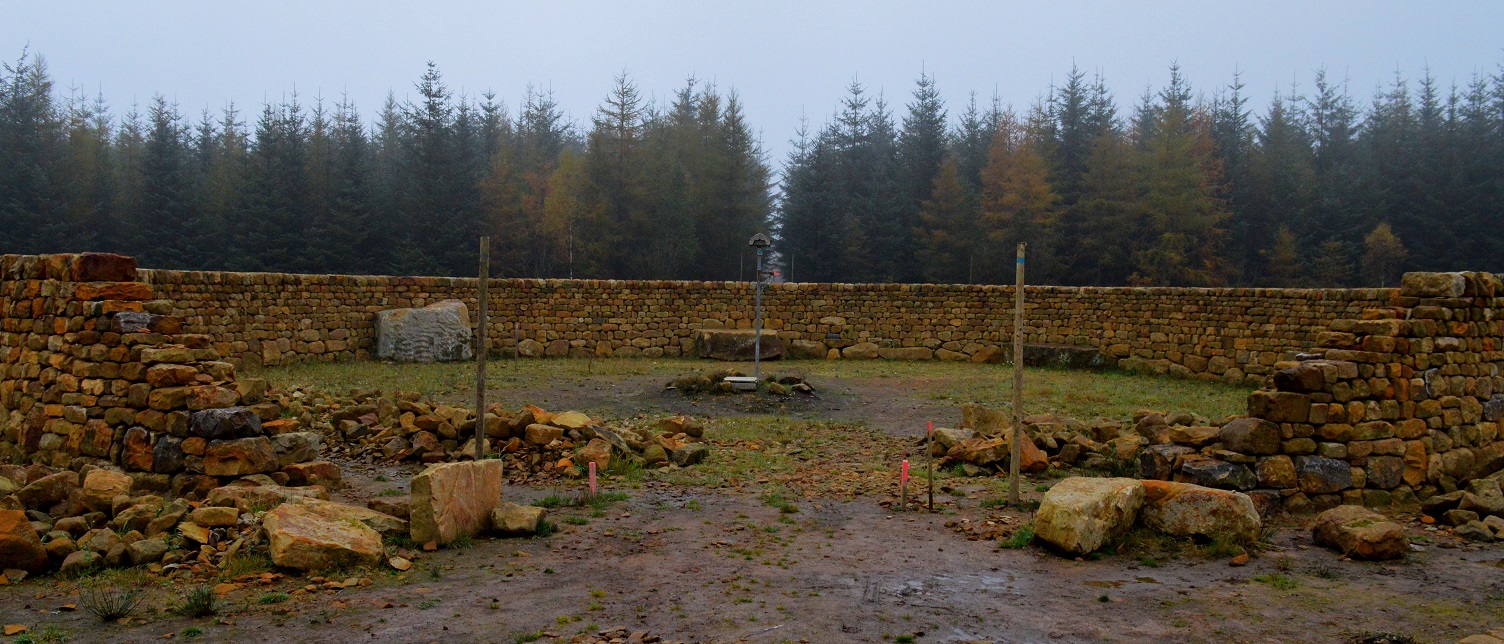
But in the Dalby Forest, inside North York Moors National Park in England, ambitious puzzlers are taking this marvelous endeavor a step further.

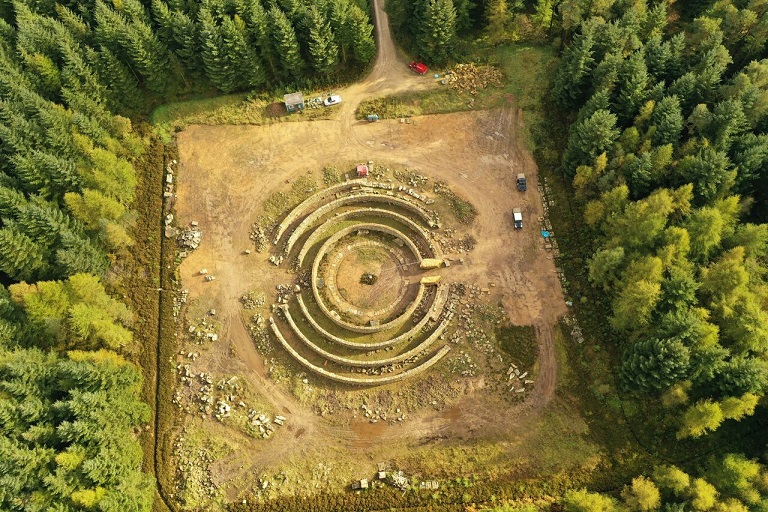
They’re creating a labyrinth entirely from dry stone walls.

Yes, if all goes to plan, by 2024 this will be the home of the world’s largest dry stone wall maze.

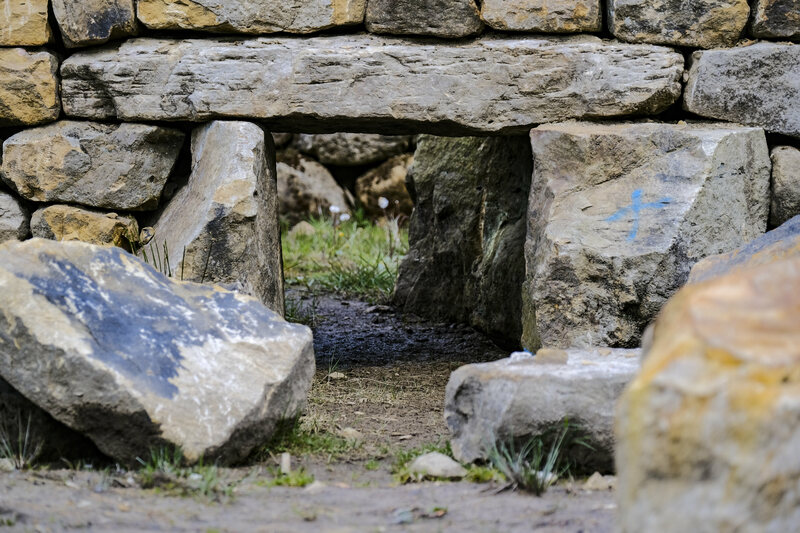
Four inner circular walls, surrounded by five square outer walls, as well as small holes for wildlife and children to use as shortcuts (known as smout holes), will form a 260-square-foot labyrinth.

(Plus the designers plan to periodically update and rearrange the maze through the use of phantom gates — a technique for disguising passageways not in use — to encourage return solvers.

The first stone was placed in 2014, and a decade later, more than four thousand TONS of sandstone will reside there, assembled into a mind-boggling artifact of monstrous puzzly proportions.

Made from nothing more than stone and human ingenuity, we could soon see the completion of an iconic work of puzzly wonder. I for one cannot wait to see how it all turns out.


   dailypopwsicon

Treat yourself to some delightful deals on puzzles. You can find them on the Home Screen for Daily POP Crosswords and Daily POP Word Search! Check them out!

Thanks for visiting PuzzleNation Blog today! Be sure to sign up for our newsletter to stay up-to-date on everything PuzzleNation!

A Cracking Collection of Crossword Clues

Someone recently asked me about my favorite crossword clue, and after mentioning four or five off the top of my head, I cut myself off and tried to explain that it’s impossible for me to pick one.

So many clues are out there that surprised me, or outwitted me, or made me laugh, or made me think in an unexpected way. I could never narrow it down..

Regular readers who have seen my reviews of various crossword tournament puzzles will recall I like to highlight favorite clues.

I actually keep track of clues from constructors as I solve various crosswords. Not only are they often witty, hilarious, and/or impressive, but they inspire me as a puzzler to always try to find entertaining, engaging new angles for these crucial crossword elements.

So today, I’d like to pull some favorites from my personal clue vault and give them some time in the spotlight.

(I’m crediting the constructor listed on the byline for each clue. These clues may have been created elsewhere and reused, created by the constructor, or changed by an editor, I have no way of knowing. So I’m just doing my best to give credit where credit is due.)

Misdirection

I love a good misdirection clue, because it not only has a straightforward meaning that sends you one way, but it has a true secondary meaning that usually only emerges once you’ve considered the clue for a bit.

Constructor Amanda Rafkin has a knack for these sorts of clues, delivering terrific examples with “Decline a raise?” for FOLD and “One who’s pro con?” for NERD.

It’s particularly great when a constructor can use a misdirection clue to put a new spin on a word you’ve seen dozens of times before. Peter Gordon did just that with both TYPO (“Character flaw?”) and AHS (“Sounds made with depressed tongues”), and even manages to be topical whilst doing so, as he did with the clue “Page with lines of dialogue” for ELLIOT.

Yacob Yonas took an awkward RE- word — all too common in crossword grids — and made it shine when he clued REHEM as “Take up again, say.” Priyanka Sethy did the same with a multi-word answer when she clued IGOTIT with the delightful “Catch phrase?”

Brendan Emmett Quigley covered up an ugly abbreviation answer — ECG — with a banger of a clue: “Ticker tape?”

As you can tell, misdirection clues are absolutely a favorite of mine.

hofstadter

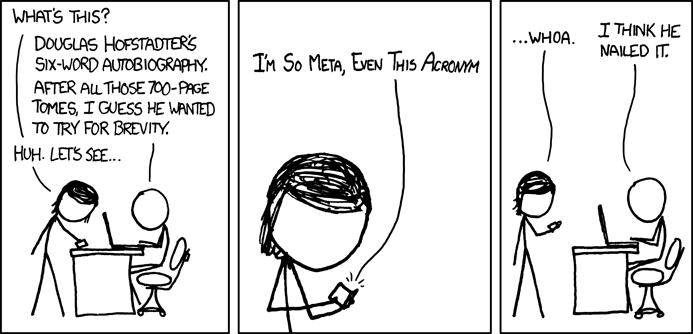
[Image courtesy of XKCD.]

I also can’t resist clues that get a little meta, playing with the format of cluing itself.

TYPO appears for a second time in today’s post, but the cluing is totally different, as Andrea Carla Michaels offered this meta treat: “Something annnoying about this clue but hopefully no others!”

And Francis Heaney went out of his way to word to clue the word AUTOMOBILES in a manner you’ll never forget: “‘Humorous People in ____ Acquiring Caffeinated Drinks’ (Jerry Seinfeld series whose name I might be remembering incorrectly)”

Using multiple examples in a clue not only shows off the variety of definitions some words have, but allows constructors to juxtapose these meanings in entertaining fashion.

Janie Smulyan deftly shows off this technique by cluing SPELLS “Some are dry, some are magic.” Concise and clever.

“Beehive part, or beehive parter” for COMB was Sid Sivakumar’s tricky way to use multiple meanings twice!

And although this Hannah Slovut offering isn’t as concise as the others in this clue for SEE, it’s still a terrific example of employing multiple uses of a word: “Different tense of ‘saw’ that may precede ‘saw'”

ghilchip

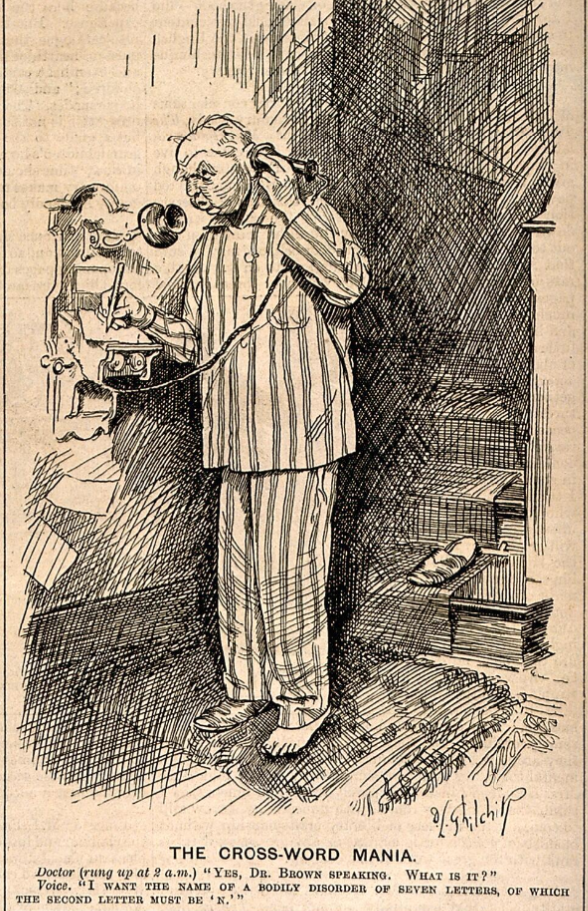
[Image courtesy of David Louis Ghilchip.]

I know some crossword outlets aren’t fans of using clues that specifically reference each other — “With 21-Across, name of Charlie Chaplin film,” for instance — but other publishers are completely fine with this style of cluing.

Naturally, that allows constructors to have some fun making connections and using clues to reference each other.

Hannah Slovut utilized this technique in a recent puzzle, cluing STYE as “Ailment that might be seen near 63-Across.” (63-Across was the exclamation MYEYE.)

There are all sorts of cluing styles we didn’t cover in this post — trivia clues, fill-in-the-blank, clues that use capitalization or pronunciation to mislead the solver — but hopefully we’ll get to them in a future blog post.

misdirection-image-1486812621

In the meantime, how about a few more misdirection clues for the road?

Brooke Husic made readers take a second look at a familiar word — “Surroundings?” — when she used it to clue SIEGES.

Catherine Cetta’s “Spot early on?” definitely sends you down the wrong path before you double-back and find the correct answer: PUP.

And we happily conclude with a clue from puzzle master Mike Shenk, who clearly had some fun with this one, cluing ANKLES with “They’re just over two feet.” Absolutely shameless.

Gotta love it.

What are some of your favorite crossword clues, fellow puzzlers and PuzzleNationers? Let us know in the comments section below! We’d love to hear from you.


dailypopwsicon

Halloween is almost here, and we have some spookily good deals for you to check out. You can find them on the Home Screen for Daily POP Crosswords and Daily POP Word Search! Check them out!

Thanks for visiting PuzzleNation Blog today! Be sure to sign up for our newsletter to stay up-to-date on everything PuzzleNation!

The Ultimate Jigsaw Puzzle Table?

puzzle tables

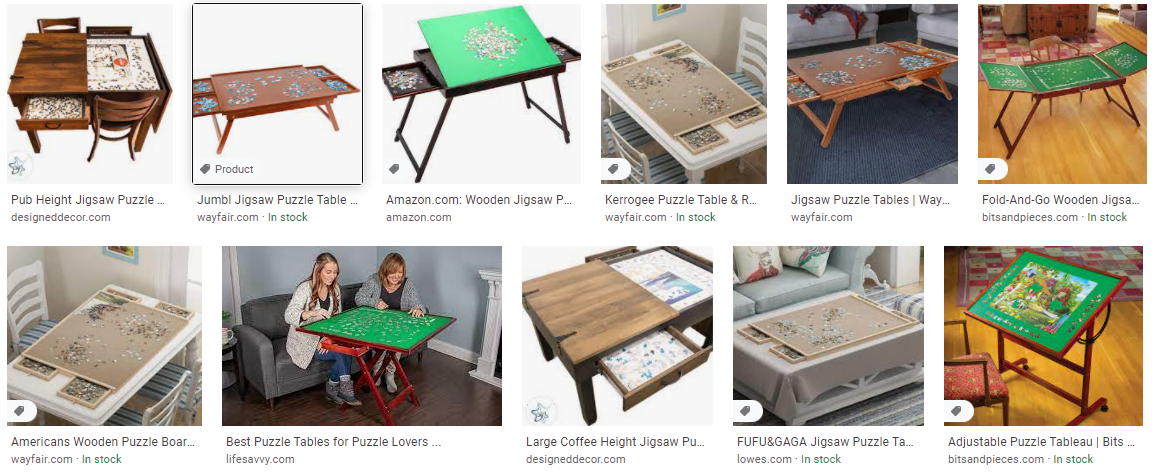
Whether you’re a jigsaw puzzle solver or a tabletop game enthusiast, you’ve probably seen puzzle and game tables. A relatively new addition to the furniture options available for puzzlers and game fans, these tables generally come in one of two forms.

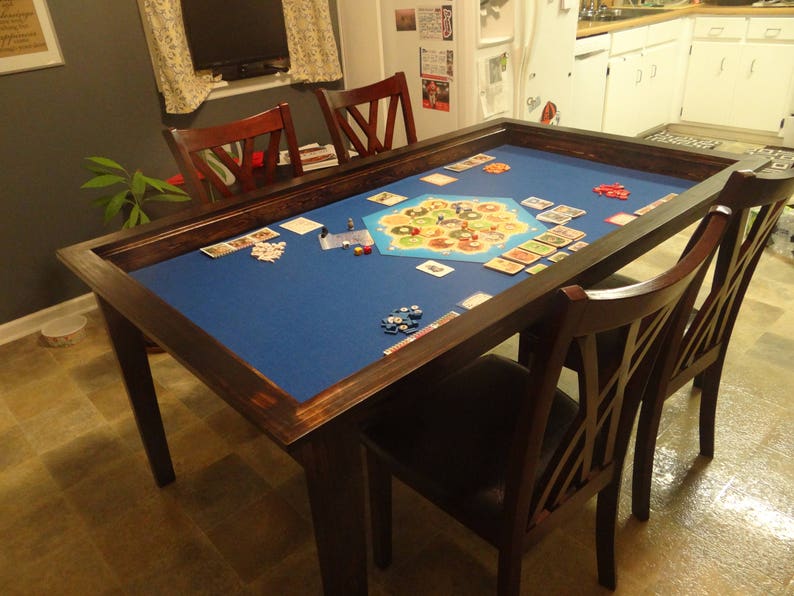
Either they have a removable top with a recessed area underneath to keep your puzzles mid-solve or games mid-play, or they have a central solving surface and side drawers to contain separated pieces. Sometimes this solving surface tilts up / tilts toward you to make it easier to work on.

But those are generally what you’ll see when it comes to puzzle / gaming tables.

il_794xN.1390654132_bmcv

[This table is available on Etsy.]

Each has its pluses and minuses. With the removable top version, you have to put the top somewhere, and then you have the deeper solving space, which some solvers find uncomfortable.

With the center table and drawers, you’re still dedicating most of a table to puzzles, and many of them struggle to keep your work in place when folded up or moved around. (Some of these have a removable tray, which can slide into the body of the table, but this can also be unwieldy.)

simone table 3

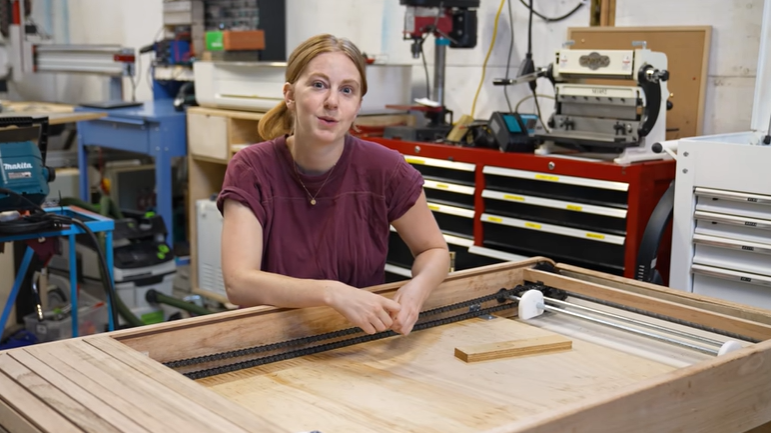
As they say in the infomercials, there’s gotta be a better way. And YouTuber/inventor/DIY guru Simone Giertz came up with her own solution.

Simone is known for her wacky, inventive, hilarious, and creative construction projects, many of which involve robotics or moving parts. So let’s see what she came up with.

Puzzle-Table-feature-image-10012021

Her table features two hand cranks, each of which solves one of the problems with the removable top version of a puzzle/gaming table.

The first crank turns gears which roll the table top underneath and out of the way, revealing the hidden puzzle-solving space inside. This prevents you from having to worry about storing or handling a heavy or cumbersome tabletop while you solve.

simone table 2

The second crank raises the solving space until it’s flush with the sides of the table. This removes any need to lean down into a recessed play area or solving space to enjoy your puzzles and games. The puzzle literally comes to you!

simone table 4

Plus, this solves some of the issues with other solving tables. There’s no removable tray to navigate, or sliding drawers or flaps that could cause what you’ve already built to shift or fall apart. It simply lowers into the body of the table itself, otherwise resting just as you left it.

simone table

This video shares the entire construction process, including missteps, problems, new solutions, and the eventual successful reveal. (Fair warning: the video is mostly safe for work, but there are two random f-bombs in it, so be aware.)

As you can see, the final product is absolutely beautiful, and unlike virtually every other puzzle or game table you see on the market today.

Pretty much every jigsaw solver I know — and a fair few board game players — would love a piece like this in their house, myself included.

simone table 5

What do you think, fellow puzzlers and PuzzleNationers? Would you like to have this lovely table in your house? Or is there another piece of puzzly furniture that’s caught your eye? Let us know in the comments section below! We’d love to hear from you.


dailypopwsicon

Well, summer’s over, but we still have deals galore for you to check out. You can find them on the Home Screen for Daily POP Crosswords and Daily POP Word Search! Check them out!

Thanks for visiting PuzzleNation Blog today! Be sure to sign up for our newsletter to stay up-to-date on everything PuzzleNation!

5 Questions for Author and Crucinova Editor Lisa Bunker

Welcome to 5 Questions, our recurring interview series where we reach out to puzzle constructors, game designers, writers, filmmakers, musicians, artists, and puzzle enthusiasts from all walks of life!

It’s all about exploring the vast and intriguing puzzle community by talking to those who make puzzles and those who enjoy them! (Click here to check out previous editions of 5 Questions!)

And we’re excited to welcome Lisa Bunker as our latest 5 Questions interviewee!

Lisa Bunker is a lifelong puzzle fan and a constructor whose work has appeared in Games Magazine, The New York Times, and Simon & Schuster publications. Of course, this is in addition to her work as an author, an activist, and a representative for the state of New Hampshire.

But now having returned to the world of puzzles, Lisa is probably best known these days as the creator and editor of Crucinova, one of the most ambitious and innovative puzzle outlets on the rise in the puzzleworld today. (You might have seen them included in the Boswords puzzle packet, on r/crossword, or on Twitter!)

Lisa was gracious enough to take some time out to talk to us, so without further ado, let’s get to the interview!


5 Questions for Lisa Bunker

1. How did you get started with puzzles? Where did the idea for Crucinova originate?

Since infancy I’ve been fascinated by words, numbers, and the beautiful patterns that can be made with them. My childhood collection, still with me, was mechanical puzzles. My earliest memory of crosswords in particular is of becoming aware that my parents were interested in them, and then trying to make one for my father. I think this would have been when I was about eight.

It was a free-form vocabulary-style puzzle, and I recall my young brain delighting in discovering how you could cross two words at a shared letter, and then add more words and build something. By high school I had a hand-drawn grid in the back of a notebook that I would work on when I was bored in class, so by then I was figuring out how interlocking fill worked. I erased some squares so many times that I wore holes in the paper.

Crucinova arose out of several factors. One was my frustration at being unable to place unconventional puzzle ideas with any of the mainstream outlets. Also, on the solving side, my wife and I started doing the New York Times puzzle every day, and while we enjoyed it and still do, they did all seem to fall within narrow conventions with regard to themes, grid design, and cluing – the same conventions I remembered from twenty years ago.

I’ve always been interested in reinventing things, so I started thinking, surely there are other constructors with creative ideas they’re having trouble placing, and surely there are other solvers who would enjoy exciting new solving experiences. And when I found out that there was now a platform available that empowered anyone to offer online solving – PuzzleMe, from AmuseLabs – the last piece fell into place.

2. You have recently returned to constructing after a hiatus. How has the puzzle world changed over time? As you start to interact with the puzzle community at large again, what have you learned along the way?

I hesitate to set myself up as an expert on the Crossworld of yore, but obviously the Internet has changed everything. Back in 2006, the last time I was active nationally, most puzzles were still printed in daily publications rather than posted online, and submissions to the Times were still by snail mail. If there was online community around solving, I was not aware of it.

Now we have not only online solving from all the major outlets (including new ones like the Atlantic and the New Yorker), but also several indie subscription services and dozens of free personal constructor blogs, a thriving solver’s blog scene, indie tournaments, and abundant spaces on social media platforms for both constructors and fans to gather and share their enthusiasm. There are even Twitch TV channels where you can watch live solving, which I love. As an editor I find it so valuable to be able to witness someone solving a grid I edited.

What I’ve learned along the way is that the denizens of the Crossworld are truly lovely humans, generous, smart, funny, and kind. I’ve learned that there is a wonderful tribe to which I didn’t even know I belonged. What a delightful discovery!

3. Over the last few years, there has been a push for greater representation in crosswords for women, people of color, and members of the LGBTQIA+ community. And there has been some movement forward, particularly for women in constructing and in editorial positions. How do we keep this momentum going? What are some useful things that allies can do to assist?

One way, obviously, to keep the momentum going is by supporting and celebrating diverse creators. As a Rainbow Human myself (I identify as trans, non-binary, and queer), I took inspiration from The Inkubator‘s mission to feature the work of female-identified constructors and to include more diverse content in fill and clues.

I’m also impressed with Sid Sivakumar’s new Juggernaut puzzles, which specifically foreground South Asian culture and content, and by the Queer Qrosswords project, which has sought to raise money for LGBTQ+ causes. I think there’s a ton of room for more culture-specific work like this, created by people from the cultures in question.

Another thing we can all do to help is to continue to encourage more new diverse folk to get involved in constructing. I would estimate that three quarters of submissions to Crucinova still come from straight white men. All submissions are welcome…but what can we do to empower everyone else? How do we continue to deconstruct unspoken assumptions about who is and isn’t allowed to do this work? It’s an endless project in which we are all involved.
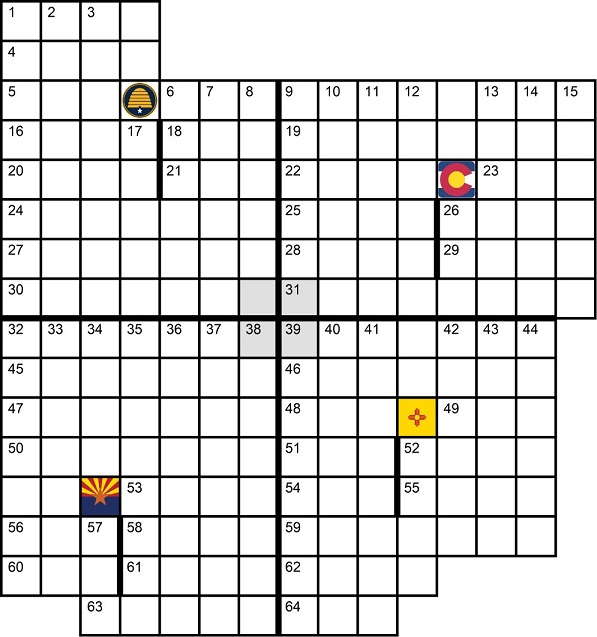
[The diabolical grid from Michael Buerke’s Quadripoint puzzle,
one of the free sample puzzles on the Crucinova website.]

4. What’s next for Lisa Bunker? What’s next for Crucinova?

Crosswords are actually not my main gig. I’m a writer first and foremost. At the moment I have two books out on submission, one a Young Adult fantasy with gender-revolutionary elements, the other a pointed political novel for adults about what we all went through together in the year 2020.

I also have an exciting new collaboration in the works about which I’m not yet at liberty to say anything specific, and I have ideas for three or four more books in the pipeline. So, my plan for the foreseeable future is to just keep writing, while also keeping Crucinova humming along, turning out an excellent puzzle each week.

As for Crucinova, it is still in its early stages, so for now the plan is to keep trying to grow the business. I’ve committed to paying my constructors, so I need a certain number of subscribers to break even, and so far we are some hundreds of memberships away from that goal.

Long term, if we manage to become self-sustaining, I can imagine putting out books of Crucinova grids, and possibly some special projects – spearheading the effort to get a crossword emoji, for example. Crucinova is a business, and I think it’s crucial for businesses to find a way to give back, so as soon as we have any profits to share, I’ll be wanting to find a way to share them.

5. What’s one piece of advice you would offer fellow solvers, aspiring constructors/setters, and puzzle enthusiasts?

To solvers I would say, please consider paying for your puzzles. I know that many excellent constructors are offering their work for free, which is their right and which benefits us all, but at the same time, constructing is an art, and I think artists should be paid for their work.

My advice to constructors comes from what I’ve learned transitioning from constructor to editor. When you’re making puzzles, you are free to imagine all kinds of wild and amazing things. Coolness of concept can become an end in itself, and I totally get that. But when you are selecting and editing puzzles, you have to think about giving solvers a satisfying puzzle experience. I get so many submissions to which my response has to be, I’m amazed by what you’ve made here, but I can’t see how to turn it into something fun and fair for my subscribers. So the advice is, think of the solver.

To puzzle enthusiasts everywhere, of whatever stripe, I would simply say, I feel you. I share your geeky joy. Let’s keep doing what we love, and keep lifting each other up.


A huge thank you to Lisa for her time. You can follow her on Twitter for updates on all of her various projects, and be sure to check out Crucinova for some very cool, experimental, and outside-the-box puzzles. Whatever she and the Crucinova constructors cook up next, you know it’s going to be great.


dailypopwsicon

Have you checked out our special summer deals yet? You can find them on the Home Screen for Daily POP Crosswords and Daily POP Word Search! Check them out!

Thanks for visiting PuzzleNation Blog today! Be sure to sign up for our newsletter to stay up-to-date on everything PuzzleNation!

Too Topical? Too Safe? Too Family Friendly? — What Belongs in Crosswords?

Building a great crossword is a balancing act.

Your grid entries need to be interesting, yet accessible. You need to navigate long crossings and tight corners without resorting to too many abbreviations, too much crosswordese, or creating the dreaded Natick, a crossing of two obscure entries. Some solvers don’t like partial phrases, others don’t like proper names or brand names.

Your cluing has to be clever but not impenetrable. How much wordplay is too much? How many fill-in-the-blank clues before your clue section resembles your grid? The cluing must be fresh and vibrant yet timeless and not too of-its-era to make the cut for reprint and collection later.

No matter how you clue it, older solvers may decry newer names, slang, terminology, or pop culture references, while younger solvers will bemoan not just older references they consider passe, but long-established crossword-friendly words they quickly tire of seeing.

And that’s all without considering the difficulty in creating engaging, interesting themes or gimmicks for the puzzle.

Man, it’s amazing crosswords get made at all.

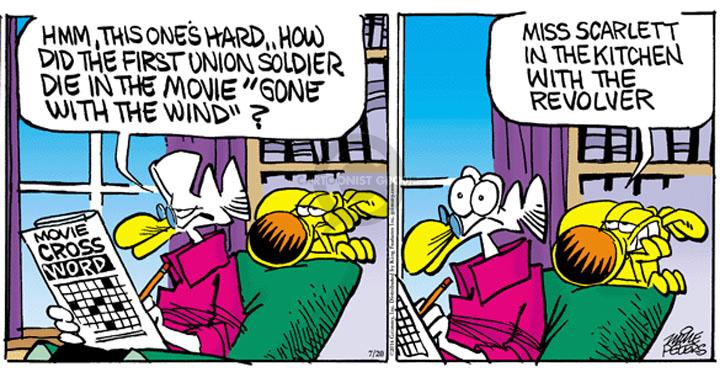
cg53bed4980c7a1

[Image courtesy of Mike Peters and The Comic Strips.]

That question of fresh entries and cluing vs. older/more familiar fare is a curious one. It raises further questions.

For instance, how much can you talk about what’s going on in the world?

By referring to unpleasant topics, however topical, will you alienate solvers who use the crossword as an escape? Or do you risk the puzzle feeling too sanitized and safe by NOT acknowledging the circumstances of the world at the time of the puzzle’s publication?

There are arguments for both sides. I mean, who wants to see ADOLF in a grid? (But then again, it’s not like IDI AMIN has a hard time finding his way into grid fill.)

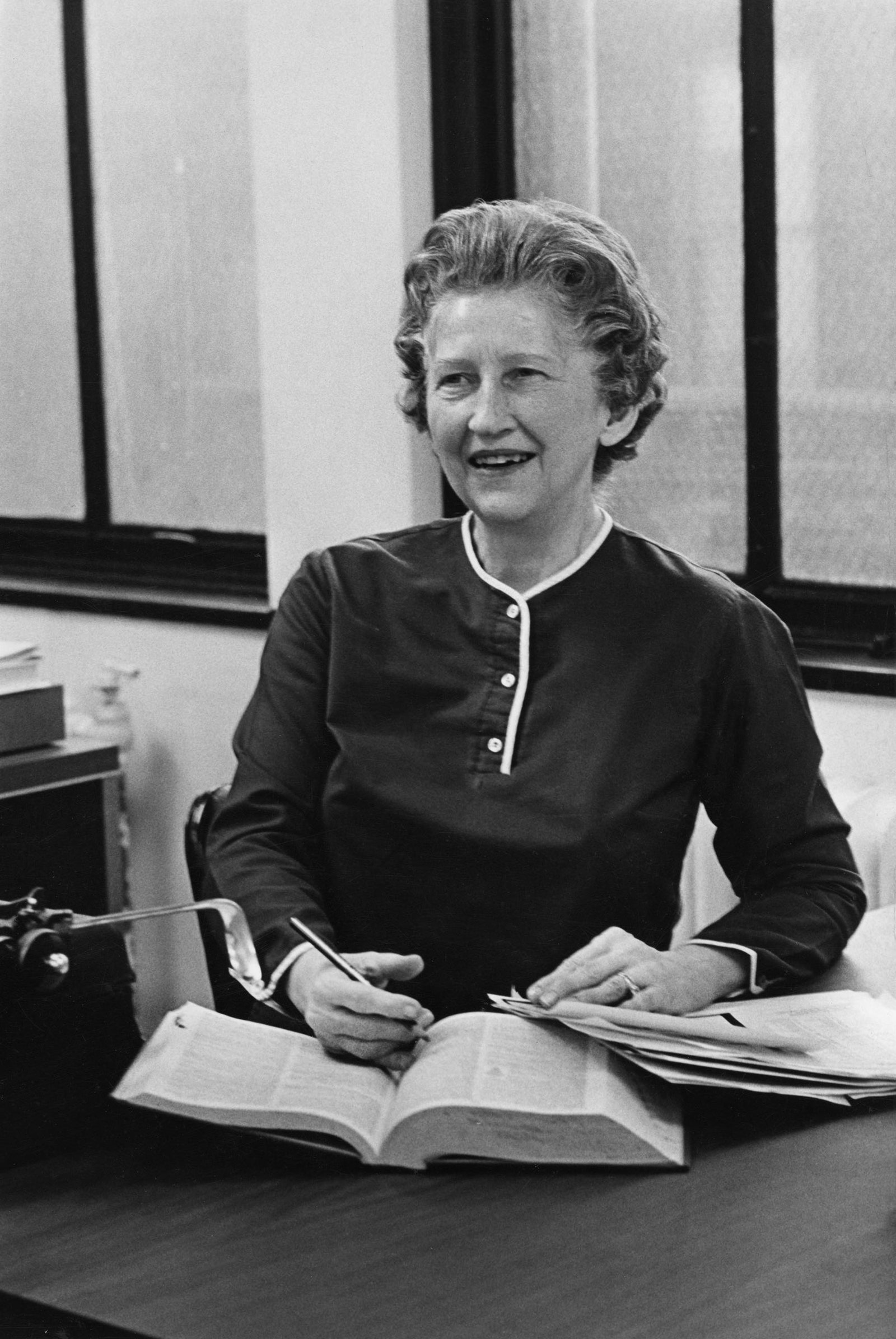
farrar

Margaret Farrar believed that crosswords should avoid “death, disease, war and taxes.” Purposely avoiding unpleasant fill and cluing is informally known as the “Sunday Morning Breakfast Test.” (Our friends at Penny Press know plenty about this, as they shy away from unpleasant entries with diligence.)

But on the flip side, to ignore the unpleasantness of the world potentially ignores the people that unpleasantness affects.

As we continue to push for greater representation in crosswords in both editorial staff and constructors, you cannot deny that including the experiences of women, people of color, and members of the LGBTQIA+ community somewhat necessitates facing those unpleasant aspects of our history and our society.

To exclude them is to exclude potentially thought-provoking and important fill and cluing. (One could easily argue that the vast majority of our own Eyes Open crosswords would not pass the Sunday Morning Breakfast Test.)

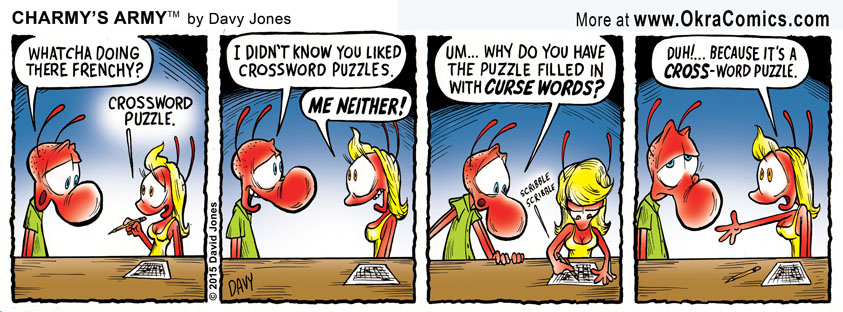
9d7c4-14606390052169604336

[Image courtesy of Charmy’s Army.]

Not everyone greets adding new cultural fill with open arms, of course. A few years ago, an LA Times crossword solver complained to us (on our holiday gift guide post, of all places) about “ignorant ghetto language” in the crossword. He referred specifically to innocuous entries like “sup,” “did,” and “street cred.”

Thankfully, he is an outlier.

But on the topic of excluding words from crosswords, when Will Shortz was asked about it, he had an interesting response:

If a word or term is used in the columns of The Times, or in cultured society in general, I think it’s probably O.K. for a crossword, even if it’s touchy or slightly unpleasant. I strive to have crosswords reflect real life as much as possible. … I don’t believe in banning words, except for the very worst. And I’d be happy to abolish the term ‘breakfast test’ completely.

breafkast

I think this is a topic I’m going to ask crossword solvers about more often. I’d be curious to see where they stand on crossword content and topicality.

I suspect opinions will vary, but I also suspect that most solvers welcome new fill, new entries, and new references in clues. Every crossword is an opportunity to learn and expand one’s knowledge, and add to the mental lexicon of crossword knowledge we each build as we solve.

So where do you stand, fellow puzzlers? Do you prefer your crosswords as an escape or as a puzzly reflection of the world around us? Let us know in the comments section below! We’d love to hear from you.


dailypopwsicon

Have you checked out our special summer deals yet? You can find them on the Home Screen for Daily POP Crosswords and Daily POP Word Search! Check them out!

Thanks for visiting PuzzleNation Blog today! Be sure to sign up for our newsletter to stay up-to-date on everything PuzzleNation!