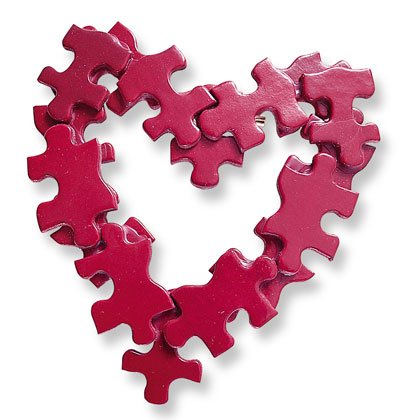
Valentine’s Day is fast approaching…

puzzle-pin-valentines-day-craft-photo-420-ff0299vala16

Valentine’s Day is this Saturday, and it can be tough to find something appropriate for your significant other that’s sincere and interesting and heartfelt. This is as true for puzzle lovers as it is for everyone else.

So, in the spirit of romance, love, affection, and all things Valentine’s Day, I’ve compiled a few puzzly suggestions for what to give your significant other.
4903-13710

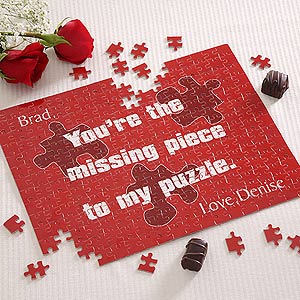
Now, you can always start with something simple, like a subscription to a puzzle service like The Uptown Puzzle Club, The American Values Club Crossword, or Matt Gaffney’s Weekly Crossword Contest. New puzzles every week or every month are a great gift. (Especially the Valentine’s Deluxe Set for the Penny Dell Crosswords app on PuzzleNation! *wink*)

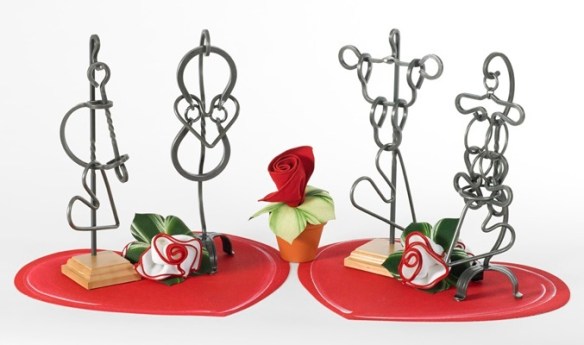
If they’re more into mechanical puzzles, our friends at Tavern Puzzles offer several brain teasers that incorporate a heart shape.
heartpuzzle

But if you’re looking for something more personalized, why not make a crossword for them yourself?

(Yes, you can also commission a top puzzler to do one for you — Brendan Emmett Quigley for one — but you’d usually want to get the ball rolling on something like that well before Valentine’s Day.)

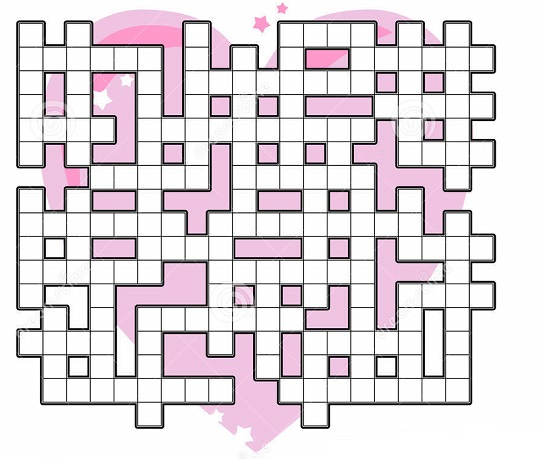
Now, to be fair, crosswords can be tough and time-intensive to make, so if that feels a little daunting, why not try a Framework puzzle instead? It involves the same crossing style, but doesn’t require you to use every letter.
valentine-s-day-love-wedding-criss-cross-word-game-romance-themed-puzzle-also-known-as-fill-blanks-crossword-puzzle-36632791

[This grid is presented fill-in style, in case you
don’t want to use crossword-style numbering.
Check out the original here.]

It allows you to maintain a terrific word list all about you and your significant other without all the effort of filling in every square crossword-style.

Some themed entries could include where you first met, favorite meals, favorite movie… heck, if you’ve been together a long time, the names of your kids, or your favorite vacation spots.

Or you could write the object of your affection a coded love letter! All throughout history, people have employed different tricks and techniques to keep their private messages away from prying eyes, and you could do the same! Whether it’s a simple letter-shifting cipher or something more complex, make sure your message is worth reading. =)

If that’s not your cup of tea, maybe do a scavenger hunt! You could leave clues around leading to a gift, or a romantic dinner, or some other grand finale. Maybe a rose with each clue.
img_8721

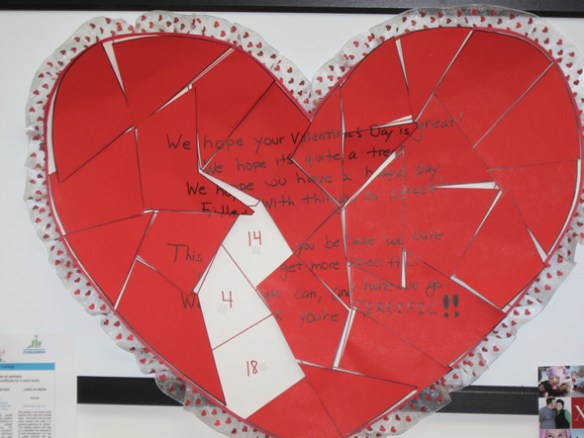
Or you could hide jigsaw pieces around the house that, when put together, spell out a Valentine’s message or a picture of the two of you.

Put your own spin on the idea. A little bit of effort can go a long way, plus it doesn’t cost anything.

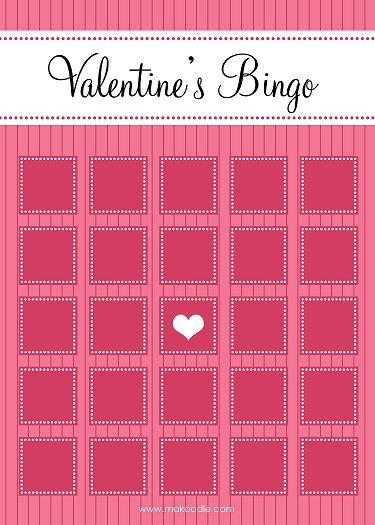
You could even make a game of it! Play Valentine’s Day Bingo.
valentines-bingo-stripes-blank-blog

[I found this blank template on Makoodle.com.]

Maybe go for a walk or take your loved one out to dinner, and see if they can get bingo by observing different things. A couple holding hands as they walk, a Valentine’s Day proposal, outrageously priced flowers…

The possibilities are endless when you put your mind to it.

A friend of mine did something puzzly and romantic for his girlfriend, creating cryptic crossword clues she had to solve in order to receive each birthday gift he’d gotten her. When all of the clues were solved, they spelled out a special message. (You can check out the story here.)

And let me know if you or your significant other have ever shared any puzzly romantic moments!

Thanks for visiting PuzzleNation Blog today! You can share your pictures with us on Instagram, friend us on Facebook, check us out on TwitterPinterest, and Tumblr, and be sure to check out the growing library of PuzzleNation apps and games!

Prep for College the Puzzly Way!

It’s summer here in the United States, which means many high-school graduates are already looking forward to starting college. But for those soon-to-be freshmen, as well as high schoolers looking for an edge before university, have you considered puzzles and board games?

Now, it comes as no shock to me, but this article from the U.S. News and World Report website might surprise some, since it lists puzzles and board games as two of its five tools to develop critical thinking skills before college!

Naturally, I’ve been an advocate of puzzles as a learning tool for a long time, so it’s gratifying to see a major publication sharing the same views and ideas.

From the article:

Collections of crossword puzzles, logic problems, riddles, sudoku, word problems and word searches can be found at your local bookstore or library. The puzzles in these books are a wonderful strategy to activate different parts of your brain for a round or two of mental gymnastics, and many collections even discuss what each puzzle is meant to target within the mind.

Allow me to expand on this for a bit. Different puzzles can target different skills, so which puzzles you solve can make a big difference when it comes to critical thinking.

Crosswords encourage deduction (figuring out words from a few common letters) and a facility with wordplay (dealing with crafty clues and alternate definitions), while word searches offer great practice in pattern recognition and quick reaction times.

And the demand that Sudoku puzzles place on active attentiveness and concentration exercises parts of the brain associated with forming new memories, encouraging better memory retention.

[All three of the above pics come from our line of puzzle apps! Perfect for puzzly pre-college practice! Shameless plug now concluded!]

But the article also mentioned that certain board games can be excellent tools for honing valuable mental skills for college.

Choose board games that require more than luck – namely, strategy – for players to win. Any game where players must carefully consider their next move, recognize patterns and remember details will aid in honing critical thinking skills.

The article goes on to suggest some classics, like Chess, Checkers, and Mastermind for learning chain-thinking (planning several steps ahead) as well as Scrabble and Boggle (speedy information analysis, as well as word formation) and Clue and Risk (anticipating and reacting to the gameplay of others).

But I think they’re excluding some prime examples of board games that could benefit younger minds.

  • You could pick a cooperative game like Pandemic or Forbidden Island, which not only encourage strategic thinking, but teamwork and the free exchange of ideas (something that forced group exercises in school never really managed).
  • You could choose a rapid-change game like Fluxx (either the board game or the card game), which forces the players to adapt quickly to constantly changing rules and gameplay (a perfect microcosm of problem-solving in the real world, where things rarely remain static for long).
  • You could select a mixed-play game like The Stars Are Right, which incorporates several forms of gameplay (in this case, pattern-forming, tile-shifting, and a strategic card game akin to Magic: The Gathering or Munchkin) and forces players to exercise different forms of strategy and puzzle-solving all at once.

Just think about it. You could turn Family Game Night or Family Puzzle Time into College Prep Time in a snap. It’s win-win, or perhaps even win-win-win. What could be simpler, or more fun, than that?

Thanks for visiting PuzzleNation Blog today! You can share your pictures with us on Instagram, friend us on Facebook, check us out on TwitterPinterest, and Tumblr, and be sure to check out our library of PuzzleNation apps and games!