Puzzly Techniques Help Reveal Secrets From the Dead Sea Scrolls!

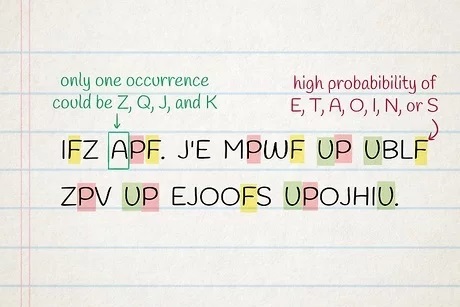
[Image courtesy of WikiHow.]

Have you ever solved a cryptogram? (Or another coded puzzle where each letter is replaced with a different letter, digit, or symbol?)

While the solve can vary in difficulty, the solving experience is fairly simple: you look for and identify patterns in the encrypted message, then use that information to figure out which letter/number/symbol represents each letter.

Maybe you see QYR’P and XHR’P, and deduce that R and P are actually N and T because of the apostrophe. Maybe you see the letter pattern BRV at the end of several words and realize it’s -ING.

By finding these patterns, you can turn a pile of gibberish into a message, essentially creating your own Rosetta Stone for this particular puzzle.
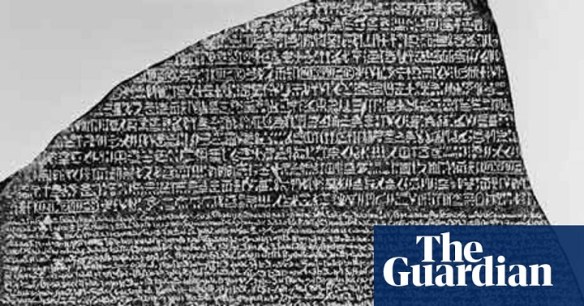
[Image courtesy of The Guardian.]

It’s not just the repetition of characters and pattern recognition that reveal everything that can be learned from text, even text in a foreign language.

After all, plenty of crime stories rely on recognizing the handwriting from a random note or a threatening letter and matching it to a writing sample from another character in the story.

Taking this concept a step further, purveyors of handwriting analysis sometimes claim to be able to tell you about the writer (whether they’re male or female, how educated they are, and more). Beyond that, some assert they can infer details about the writer’s emotional state WHILE writing a given message, based on angles of pen strokes, closeness of letters, and so on.
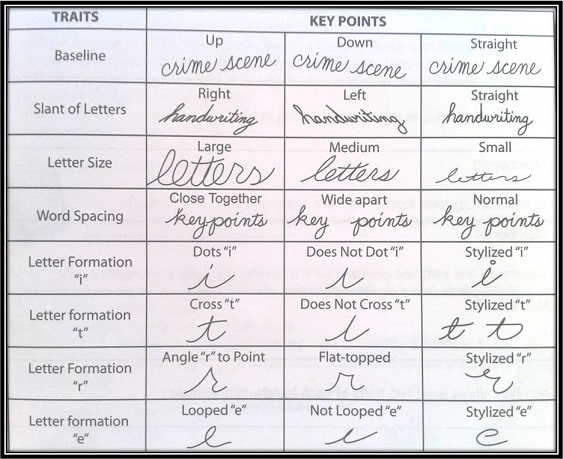
[Image courtesy of PBL Forensic Investigations.]

While handwriting analysis is more a mix of pattern recognition, assumptions, and interpretation than a straightforward science, it’s still amazing what can be gleaned from the written records people leave behind.

And as it turns out, when you add computers to the mix, you can do the same on a more massive scale to uncover some pretty impressive insights.

Yes, we’re not just learning about languages and the contents of messages written long ago. As we implied above, we’re also starting to find clues about the authors themselves.

Take, for instance, this story about a recent computer analysis of the Dead Sea Scrolls.
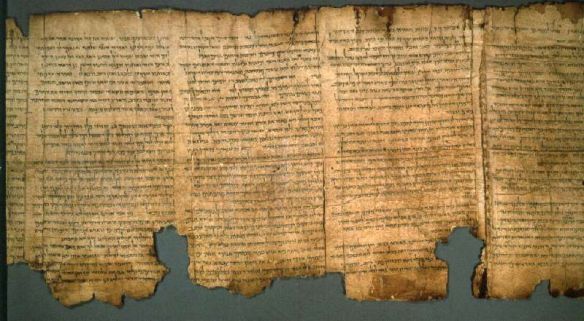
[Image courtesy of Artnet.]

Dead Sea Scrolls are a collection of ancient Jewish and Hebrew religious manuscripts discovered in the Qumran Caves, near the Dead Sea. They consist of some of the oldest known surviving manuscripts of works later found in the Hebrew Bible and other important texts. In fact, they include fragments from every book in the Old Testament (except for the Book of Esther).

Mladen Popovic, professor of Hebrew Bible and Ancient Judaism at the Faculty of Theology and Religious Studies at the University of Groningen, teamed up with a colleague who has been working on software and hardware that would allow computers to “read” handwriting, particular handwriting from historical materials. Lambert Schomaker, professor of Computer Science and Artificial Intelligence, focused on one particular scroll from the Dead Sea Scrolls, known as the Great Isaiah Scroll.

This scroll was chosen because, although the writing appears to be uniform, some scholars believed there were two scribes involved in writing it, suggesting that after column 27, a second scribe had taken over duties on the scroll.

From the article:

‘This scroll contains the letter aleph, or “a,” at least five thousand times. It is impossible to compare them all just by eye.’ Computers are well suited to analyse large datasets, like 5,000 handwritten a’s. Digital imaging makes all sorts of computer calculations possible, at the microlevel of characters, such as measuring curvature (called textural), as well as whole characters (called allographic).
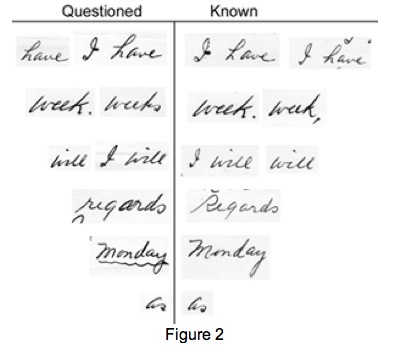
[Image courtesy of FDE-Sperry.]

And what did this study reveal?

His analysis of textural and allographic features showed that the 54 columns of text in the Great Isaiah Scroll fell into two different groups that were not distributed randomly through the scroll, but were clustered, with a transition around the halfway mark.

Popovic expanded on this discovery, stating that “we can confirm this with a quantitative analysis of the handwriting as well as with robust statistical analyses. Instead of basing judgment on more-or-less impressionistic evidence, with the intelligent assistance of the computer, we can demonstrate that the separation is statistically significant.”

Yes, there were two scribes involved in writing the Great Isaiah Scroll. And this is just the tip of the iceberg of what we could learn about the many scrolls discovered in the Qumran Caves.

By taking these puzzly observational techniques and using the incredible computing power and analysis capabilities available to modern researchers, we’re slowly unraveling more mysteries from the past.

Who knows what we’ll unearth next?


dailypopwsicon

Have you checked out our special summer deals yet? You can find them on the Home Screen for Daily POP Crosswords and Daily POP Word Search! Check them out!

Thanks for visiting PuzzleNation Blog today! Be sure to sign up for our newsletter to stay up-to-date on everything PuzzleNation!
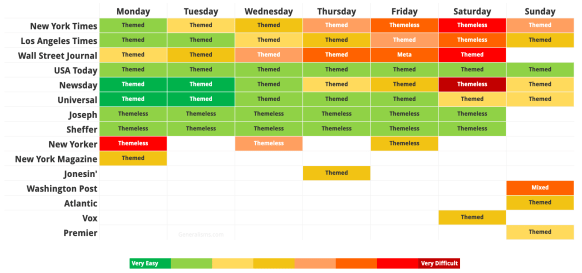
Bringing People Back to Puzzles After a Bad Solving Experience

About a month ago, we discussed crossword difficulty and how it can be daunting to get started in puzzles.

In that post, we shared Lloyd Morgan’s crossword difficulty matrix, a cart that allows new and unfamiliar solvers to seek out different venues based on their difficulty, ensuring they can ease into crosswords and not immediately get discouraged by a puzzle tougher than they’re ready for.

I mentioned the post to a friend of mine who isn’t terribly puzzle-savvy, and he asked, “But what about people who have already had bad experiences with crosswords and might be gun-shy about attempting them again, no matter what difficulty level is promised?”

And that’s a very fair question. How many folks do you know who try something once, and then never again after an unpleasant first encounter? I know several people who won’t touch logic problems because the grid is intimidating and they weren’t eased into the solving style. Cryptograms, Kakuro, puzzle hunts… all of them can be tainted for someone with one bad solving experience.

crisscross

You might think that crisscross-style puzzles (like the one above) would be less intimidating, since they don’t have the same dense grid surrounded by clues that crosswords have, but I’ve found that folks don’t warm to those quickly. No matter how well-constructed the crisscross, it tends to remind people of activity books for kids, and no one wants to feel patronized when trying out a new hobby or giving it another go.

I do have a suggestion, though. I’ve tried this with several friends and acquaintances who had sworn off crosswords entirely, and it not only introduced them to a new puzzle they didn’t know, but opened their eyes to the possibility of more puzzle-solving in the future.

My solution was: Fill-Ins.

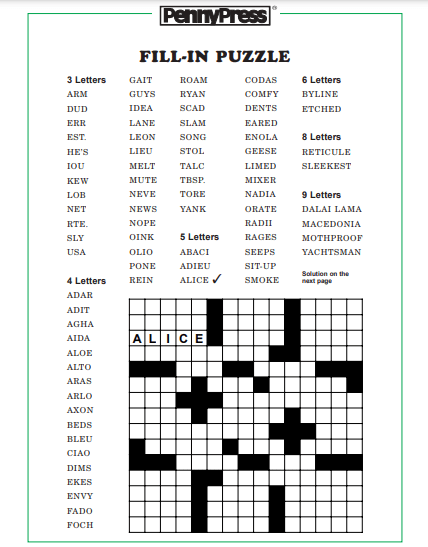
fillin sample

[A sample puzzle from our friends at Penny Dell Puzzles. Check out their fill-in library here!]

For the uninitiated, fill-ins utilize the same general grid style as a crossword. But instead of answering numbered clues to place the words in the grid, you’re already given the answer words, organized by word length. Your task is to place them all into the grid, using other words and letters in the grid to guide you.

Solving fill-ins helps remove the intimidation factor of crosswords in three ways.

1. No trivia or outside knowledge is required, which removes a huge burden from a solver who has probably felt overwhelmed by crossword cluing in the past.

2. It makes empty crossword grids less intimidating. Do you ever have those moments where you read three or four crossword clues in a row and you don’t immediately conjure up answers? And then you look at all those empty spaces in the grid and feel dumb? It happens. But fill-ins often have a set word to get you started, and once you start placing letters, recognizing useful crossings, and filling the grid, all that goes away.

3. Fill-ins help strengthen another skill valuable in crossword solving: letter-blank recognition. If you see B _ U _ , a regular solver instantly starts listing off possibilities: BOUT, BLUE, BLUR, BAUD, etc. But a new solver can look over at the four-letter words, scan the list, and see what fits, helping to build that mental lexicon for future solving.

120718_crossword_L

After solving a handful of fill-ins, word placement goes quicker, confidence in filling in those letter blanks increases, and empty grids become fields of potential puzzle fun, not stark empty spaces.

And honestly, it’s a pretty cool feeling to make puzzles enjoyable again for someone. When I get a phone call a month or so after introducing them to fill-ins, and they ask what other puzzles are out there, or where a good place to start with crosswords might be, that’s a win.

Then, of course, I direct them to Daily POP Crosswords. Because we’re the best. (And also to other puzzle outlets like our friends at Penny Press, of course.)

Do you have any suggestions for helping restore a love of puzzles to those previously burned, spurned, or disappointed, fellow puzzlers and PuzzleNationers? Share them in the comments section below! We’d love to hear from you.


dailypopwsicon

Have you checked out our special summer deals yet? You can find them on the Home Screen for Daily POP Crosswords and Daily POP Word Search! Check them out!

Thanks for visiting PuzzleNation Blog today! Be sure to sign up for our newsletter to stay up-to-date on everything PuzzleNation!
Answers to our International Tabletop Day Puzzle (Plus a Special Offer!)

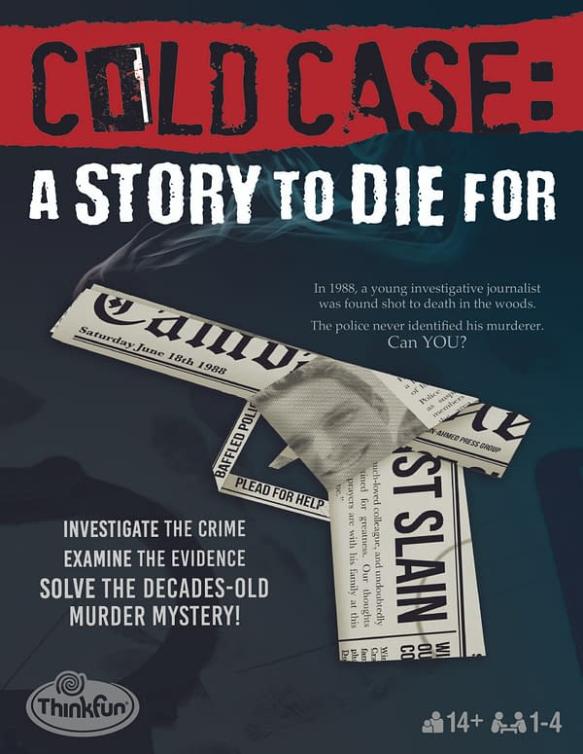
a story to die for box

Before we start with today’s blog post, we’ve got a special offer for you from the puzzly folks at ThinkFun!

Have you checked out our reviews of their new unsolved crime series of puzzle games? In Cold Case, you’re tasked with going through the evidence and solving the case!

There are two editions of Cold Case; A Story to Die For is available for preorder now, and A Pinch of Murder will be available for preorder on June 14th!

And if you click this link and use the promo code 20COLDCASE, you’ll get the puzzle game for 20% off!

Enjoy!


tabletopday_logo

Last week, we celebrated International Tabletop Day with some puzzly recommendations, suggestions, and an anagram mix-and-match puzzle, all in the spirit of celebrating gathering with friends and loved ones — in person or virtually — to play games together.

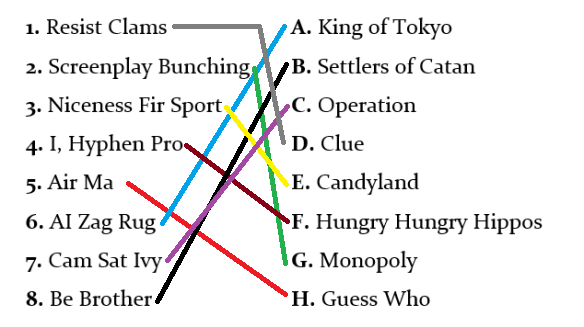
The challenge was to unscramble the names of famous board game characters from the entries on the left, and then match them up with the correct board game from the list on the right.

We’re sure you managed to unravel all those jumbled phrases, but just in case, let’s take a look at the solution.

First, let’s look at the anagrams.

  • Resist Clams = Miss Scarlet
  • Screenplay Bunching = Rich Uncle Pennybags
  • Niceness Fir Sport = Princess Frostine
  • I, Hyphen Pro = Henry Hippo
  • Air Ma = Maria
  • AI Zag Rug = Gigazaur
  • Cam Sat Ivy = Cavity Sam
  • Be Brother = The Robber

And now, for a splash of color, here is the solution for the matching portion of the puzzle.

tabletop-day-mix-and-match-solution

How did you do with the puzzle? Did you enjoy International Tabletop Day? Let us know in the comments section below! We’d love to hear from you.


dailypopwsicon

Have you checked out our special summer deals yet? You can find them on the Home Screen for Daily POP Crosswords and Daily POP Word Search! Check them out!

Thanks for visiting PuzzleNation Blog today! Be sure to sign up for our newsletter to stay up-to-date on everything PuzzleNation!
The Mind-blowing Variety of Puzzles

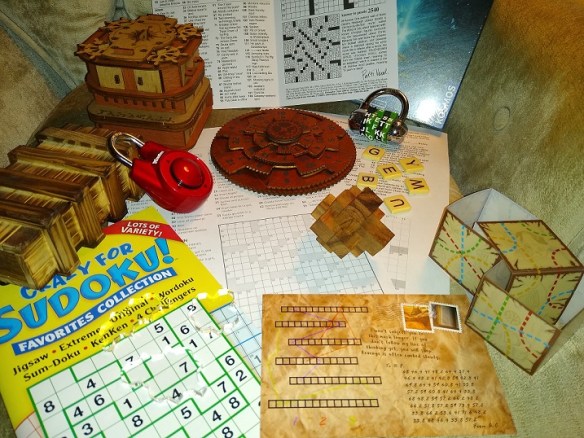
[A sampling of puzzles of many sorts: crosswords, puzzle boxes,
mechanical brain teasers, tile puzzles, riddles, and more!]

It really is incredible how many forms puzzles can take.

Think about it. Whether you’re talking Rubik’s Cubes, cryptograms, jigsaws, Sudoku, brain teasers, riddles, crosswords, escape rooms, tangrams, word seeks, sliding tiles, deduction problems, coded messages, or anagrams, they all fall under the umbrella of puzzles.

A puzzle can be as simple as pencil and paper or as complex as a multi-stage puzzle hunt or escape room, replete with codes, keys, hidden buttons, mechanical devices to assemble or utilize, and more. The folks at ThinkFun, for instance, have employed everything from ropes and magnets to lasers and mirrors in their puzzles.

That’s some extreme variety.

And the field of possibilities only widens when we add video game puzzles to the mix. We’ve previously talked about games like Tetris and Portal, where you must think in 2D and 3D respectively. We’ve seen games where you change the rules of the world to proceed or even interfere with the coding of the game itself to solve problems.

In the last few years, indie game designers and big studios alike have produced puzzle games that continue to push the boundaries of puzzly minds.

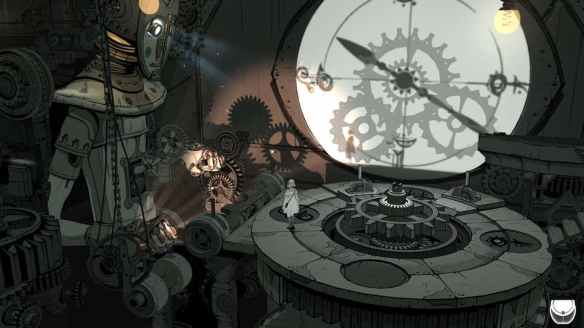
For instance, in Iris Fall you solve puzzles and maneuver around obstacles by playing with light and shadow. By moving light sources and interacting with the environment, both the light and the shadows it creates allow your character to play with perspective and illusion in order to accomplish tasks. It’s very cool!

In a similar vein, the game Superliminal challenges you to solve puzzles and move from room to room by shifting perspective. For instance, if you pick up a small item and then pull it close to you so that it looks bigger, it BECOMES bigger.

Check out this playthrough to see this mindbending puzzler in action:

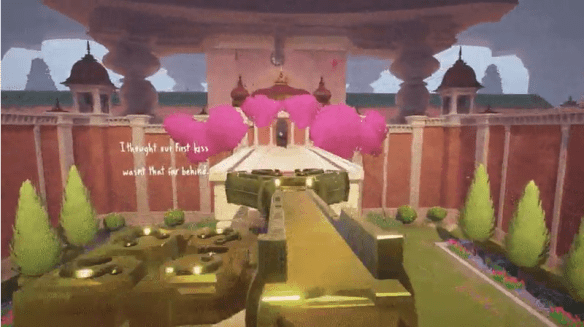
The game Maquette works off of a similar concept, but requires you to think in both big and small terms. In Maquette, you have a city to explore, and in order to do so, you also need to manipulate a miniature version of the city that affects the world outside.

For instance, there’s a bridge with the center path missing. How can you reach the other side with only a key in your hands?

Easy. You take the key, place it over the same bridge gap in the miniature, and then walk back to the real bridge, where a giant version of that key is now spanning the gap.

And now there’s Viewfinder, a game where you use a Polaroid-style camera to take pictures that you can then place into a three-dimensional world and turn them into structures you can interact with and solve problems!

These sorts of puzzle games help reinforce one of the fundamental rules of puzzle-solving: always be willing to change your perspective and come at the puzzle from another angle. It works with wordplay, it works with brain teasers, and it works in three-dimensional perspective puzzles in video games.

What’s your favorite flavor of puzzles, fellow PuzzleNationers? Have you learned something from one kind of puzzle that you’ve been able to apply in another style of puzzling? Let us know in the comments section below! We’d love to hear from you.


dailypopwsicon

Have you checked out our special summer deals yet? You can find them on the Home Screen for Daily POP Crosswords and Daily POP Word Search! Check them out!

Thanks for visiting PuzzleNation Blog today! Be sure to sign up for our newsletter to stay up-to-date on everything PuzzleNation!
Themeless Crosswords Vs. Themed Crosswords?

exercise-brain-crossword-670x335

When you think of crossword puzzles, what comes to mind? The grid first, or maybe the clues? When you picture your default crossword, is it a themed puzzle or themeless?

I ask because something of a kerfuffle was sparked on Twitter over the weekend regarding themeless puzzles vs. themed puzzles, and as you might expect, fellow puzzler, I have thoughts on the subject.

So how did all this start? With a blog post by crossword reviewer Rex Parker.

If you’re unaware, Rex is a constructor in his own right, but is far better known in the crossword world for his curmudgeonly reviews of the New York Times crossword. He frequently makes fair points, but they can be lost amid his personal views regarding particular clues and entries. (Often, if he doesn’t know it, it’s obscure. Which is not the same thing at all.) He’s sort of a “you love him or you don’t” figure in the crossword sphere.

I genuinely believe his commentary, however inconsistent or caustic at times, comes from a sincere desire to be engaged, entertained, and wowed by the puzzles he is so clearly invested in. But again, sometimes he can’t see the forest for the trees, and when your brand is “guy who bellyaches about crosswords,” you often play into what people expect from you.

cloud

[Now, to be fair, Rex is no Grandpa Simpson. But I simply couldn’t resist, given how he’s become synonymous with “grumpy fan who knows better than you.” And I’m so so very tired of gatekeeping fandom in general.]

And on Sunday, he carved into a Robyn Weintraub 21x themeless crossword with some serious vitriol:

This is very good for what it is, but unfortunately (for me), what it is is a Sunday themeless, and these are just never going to be interesting to me. As I’ve said before, it’s a giant (literally, giant! 21×21!) shrug. A Sunday-sized “we give up, here’s some stuff.” It’s too easy to be that interesting, and since the grid is so big, the construction doesn’t feel particularly special.

That is, yeah, you can get a lot of longish answers into a 21×21. There’s lots of room. I just don’t care as much as I ought to care. And today’s grid shape was really vanilla. No, wait, I like vanilla. A vanilla malt is the best thing in the world. Let’s call it “boilerplate” instead. It looks like a template of some kind. It’s a very clean grid, and many of the entries here are interesting, but the overall effect of said entries in a Sunday themeless is ho-hum.

There’s a reason the NYTXW didn’t do Sunday themelesses until, what, like two or three years ago? It’s because they’re a cop-out. I hear that some people enjoy them. I’m happy for them. For me, they’re a non-event. There’s no real low, no real high, just … middle middle middle. Time passes, and then the puzzle is done. Solving one of these unthemed Sundays, even a very competent one like this, isn’t necessarily better than solving a disastrous themed Sunday, to be honest. Certainly, from a blogging perspective, this is much much worse, as there’s really hardly anything to say.

Wow.

Now, this post is not intended to be a burial of Rex and his opinions. Even though I wholeheartedly disagree with his dim view of his puzzle.

It’s worth discussing because I’m someone who didn’t initially get the appeal of themeless crosswords.

weintraub themeless

[Robyn’s thoroughly impressive Sunday themeless grid.]

I’ve always liked puzzles, and tried my hand at solving New York Times-level crosswords many times before I ended up as part of the puzzle world. Once I really immersed myself in themed puzzles, I quickly started to appreciate the amount of skill, creativity, and hard work that went into a satisfying themed crossword.

I was slower to come around on themeless puzzles. I liked figuring out the trick of a themed puzzle, and I didn’t give themeless puzzles much thought. Thankfully, friends of the blog Patti Varol and Keith Yarborough (both of whom also helped open my eyes to so many terrific puzzle outlets and constructors) encouraged me to solve themeless puzzles more.

And I started to see that you don’t need a theme to show off the same skill, creativity, and hard work that goes into a crossword.

As I said in my wrap-up of the Boswords 2020 Fall Themeless League (yeah, I went from never solving themeless crosswords to eagerly anticipating a two-month tournament full of them!):

I really enjoyed seeing what creative constructors could do with crosswords once freed from the shackles of a theme. The long, crossing entries can certainly be intimidating at the start — especially if you read three or four clues in a row and feel like your brain has gone blank — but the sheer inventiveness of the entries you get to see, often stacked close together, is really cool.

And, like a jigsaw puzzle, the solving experience sneaks up on you. You get a few words here, a few letters there, and suddenly everything starts to fall into place. Clues that eluded you make total sense on a second or third reading, or the now-obvious wordplay punches you in the face.

Eventually, you’re left with a full grid and a real sense of accomplishment. (Not to mention a growing sense of wonder that the constructor managed to make all those crossings work.)

tumblr_inline_ojfzuuUgZr1rmajvb_500

And it’s disappointing that an influential voice in crosswords sees a themeless Sunday puzzle as a waste of time. (Constructor Eric Berlin has rightfully noted that Rex isn’t against all themeless puzzles, and has stated in the past that he often looks forward to the Friday themeless.)

Which makes it all the more strange that he’d choose to die on this particular hill. Robyn is a well-respected constructor, and her byline alone is a welcome sight for many puzzle fans, themeless or themed. The response online to this themeless puzzle was very positive overall; even in the comments section of Rex’s blog post, the majority of the responses celebrated Robyn’s themeless as a terrific solve.

I would argue that the occasional Sunday themeless puzzle is a good thing. Not only is it a nice break from the expected norm, but having puzzles the caliber of this one will bring more eyes to the merits of themeless crosswords in general.

The sheer variety in fresh, exciting, and thought-provoking grid entries alone makes them worthwhile. Themed puzzles are great, obviously, but they can also severely limit how interesting you can make the rest of the grid once the theme has been figured out.

Great constructors and engaging cluing can overcome that, but it’s a limitation that themeless crosswords simply don’t have. The fill is EVERYTHING, and that pushes constructors to be as creative as possible with their grid designs, the often ambitious crossings and stacks of long entries, and all that delightfully unexpected vocabulary.

Rex says, “Solving one of these unthemed Sundays, even a very competent one like this, isn’t necessarily better than solving a disastrous themed Sunday, to be honest.”

I think you’ll find many solvers and constructors disagree. There’s as much beauty and value in a skilled themeless as there is in a deftly-constructed themed puzzle.

And to say a well-constructed themeless is on par with a “disastrous” themed puzzle is just ridiculous. Sure, for his brand, he gets more mileage taking apart a bad puzzle than discussing a good one, but a good solve and good blog fodder aren’t the same thing at all.

As I said before, you can learn a lot from Rex’s blog. Plenty of constructors have gleaned valuable lessons about theme entries, grid fill, and more from his critiques. But punching down against a particular style of crosswording benefits no one, particularly when it can easily be misconstrued as a shot against themeless puzzles in general..

Thank you, Robyn Weintraub, for a banger of a Sunday puzzle, and thank you, Evan Birnholz, for championing the cause of themeless crosswords (and bringing this to my attention.)

Do you enjoy themeless puzzles, fellow PuzzleNationers? Let us know in the comments section below! We’d love to hear from you.


dailypopwsicon

Have you checked out our special summer deals yet? You can find them on the Home Screen for Daily POP Crosswords and Daily POP Word Search! Check them out!

Thanks for visiting PuzzleNation Blog today! Be sure to sign up for our newsletter to stay up-to-date on everything PuzzleNation!
Answers to our Double Feature Movie Title Opposites Game!

double-feature

Last Friday, we closed out the week with a movie title game for you. We paired off film titles that were opposites, and offered a few clues for each pairing.

With only the genre of each film, the year of release for each, and one star from each film, could you puzzle out each double feature?

We posted fifteen pairings for you to figure out! Let’s go to the movies and see the results!


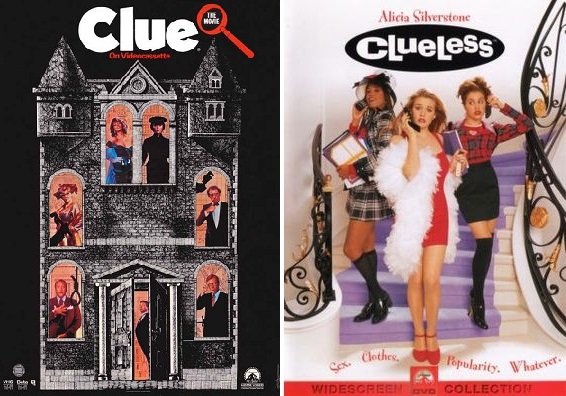
#1
-Comedy, Romcom
-1985, 1995
-Madeline Kahn, Paul Rudd
(Bonus hint: Tim Curry, Alicia Silverstone)

double feature 1

#2
-Action/Crime, Drama/Crime
-1995, 1990
-Will Smith, Robert DeNiro
(Bonus hint: Martin Lawrence, Joe Pesci)

double feature 2

#3
-Holiday/Musical, Horror
-1954, 1974
-Rosemary Clooney, Margot Kidder
(Bonus hint: Bing Crosby, Olivia Hussey)

double feature 3

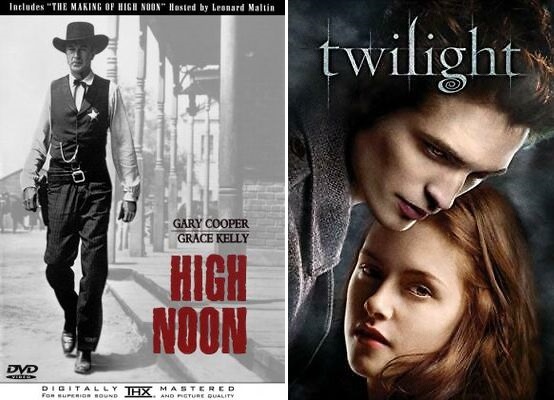
#4
-Western, Fantasy/Romance
-1952, 2008
-Gary Cooper, Kristen Stewart

double feature 4

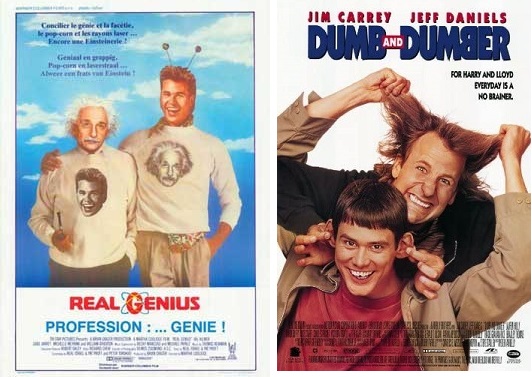
#5
-Comedy, Comedy
-1985, 1994
-Val Kilmer, Jim Carrey

double feature 5

#6
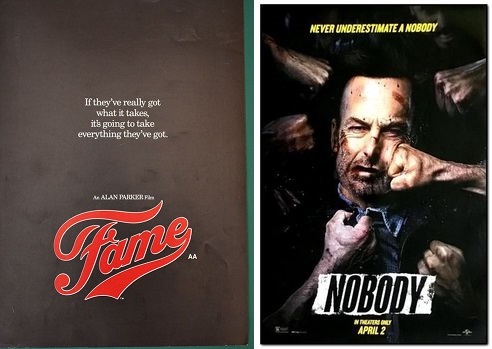
-Drama/Musical, Action
-1980, 2021
-Irene Cara, Bob Odenkirk

double feature 6

#7
-Comedy/Drama, Drama
-2006, 1988
-Steve Carell, Tom Cruise
(Bonus hint: Abigail Breslin, Dustin Hoffman)

double feature 7

#8
-Holiday/Comedy, Animation/Adventure
-1990, 2001
-Macauley Culkin, Hayao Miyazaki

double feature 8

#9
-Romcom, Sci-Fi/Action
-1986, 2014
-Rob Lowe, Tom Cruise

double feature 9

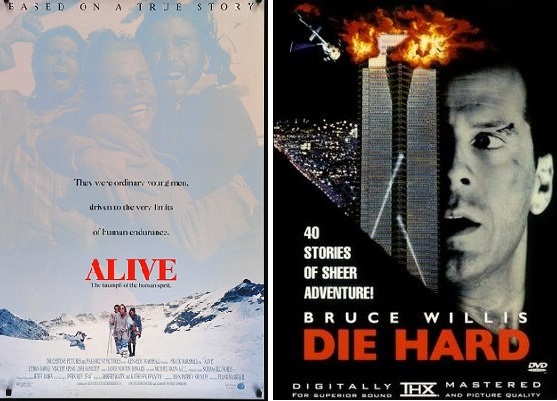
#10
-Drama/Biographical, Action
-1993, 1988
-Ethan Hawke, Bruce Willis

double feature 10

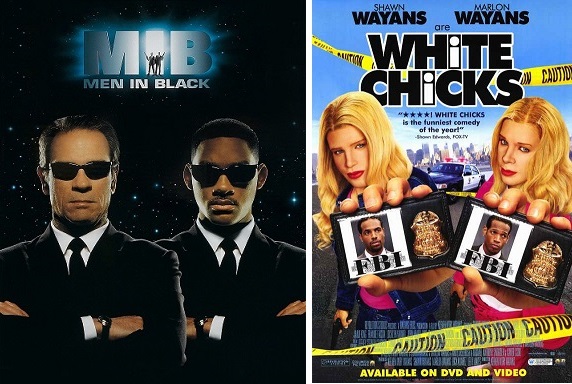
#11
-Sci-Fi/Comedy, Comedy(?)
-1997, 2004
-Tommy Lee Jones, Marlon Wayans

double feature 11

#12
-Horror, Romance
-1987, 1995
-Bill Paxton, Ethan Hawke

double feature 12

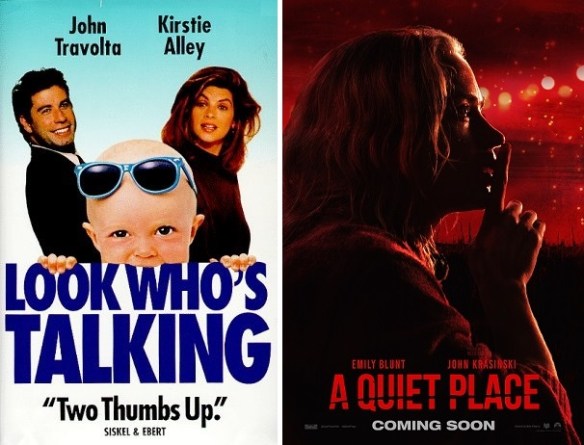
#13
-Comedy, Horror
-1989, 2018
-John Travolta, Emily Blunt

double feature 13

#14
-Action/Crime, Horror
-1973, 2017
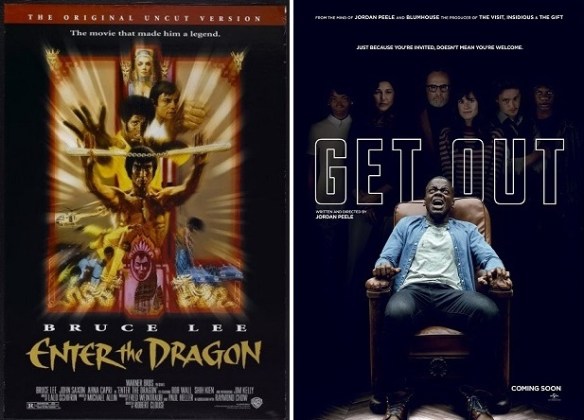
-Bruce Lee, Daniel Kaluuya

double feature 14

#15
-Drama, Sci-Fi/Comedy
-1994, 1993
-Winona Ryder, Daryl Hannah

double feature 15


How many did you figure out, fellow puzzlers and PuzzleNationers? Let us know in the comments section below! We’d love to hear from you.

Thanks for visiting PuzzleNation Blog today! Be sure to sign up for our newsletter to stay up-to-date on everything PuzzleNation!
You can also share your pictures with us on Instagram, friend us on Facebook, check us out on TwitterPinterest, and Tumblr, and explore the always-expanding library of PuzzleNation apps and games on our website!