[Note: I received a free copy of this game in exchange for a fair, unbiased review.]
Most memory games are pretty simple, falling into one of two categories: you either observe a pattern and repeat it, or you look at multiple items and remember where they are when hidden/concealed.
Memory games that include a social mechanic are rarer, and memory games with a social mechanic AND bluffing are rarer still.
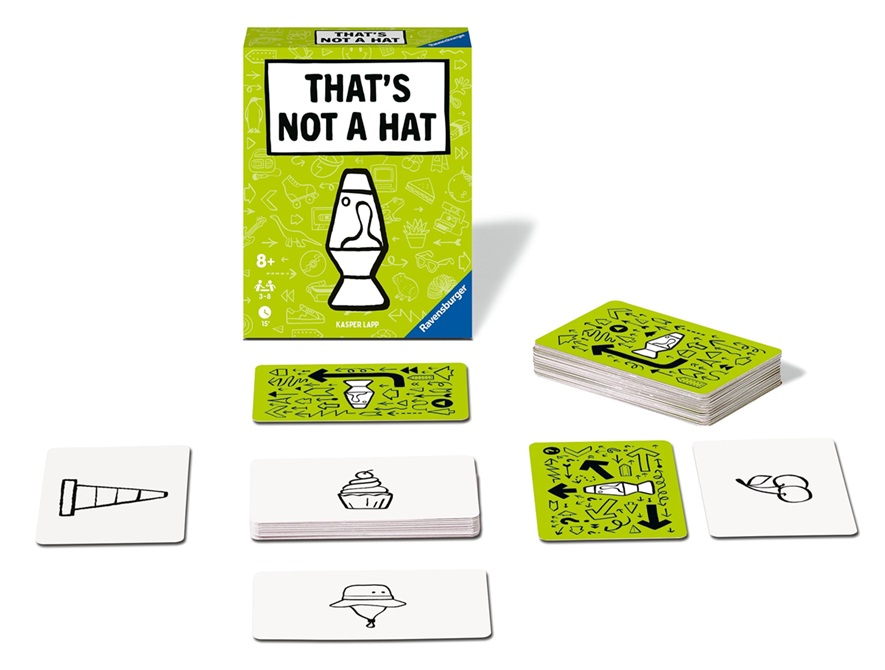
Imagine a white elephant or Yankee swap gift exchange, except in reverse. You know what all the gifts are to start, but then they are wrapped one by one and traded around, and you need to remember what’s inside each one.
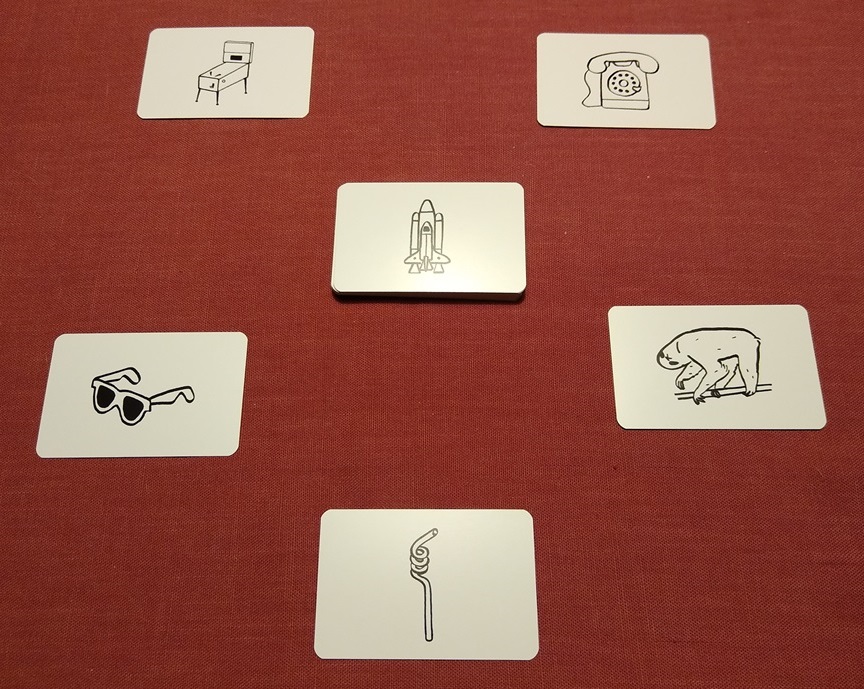
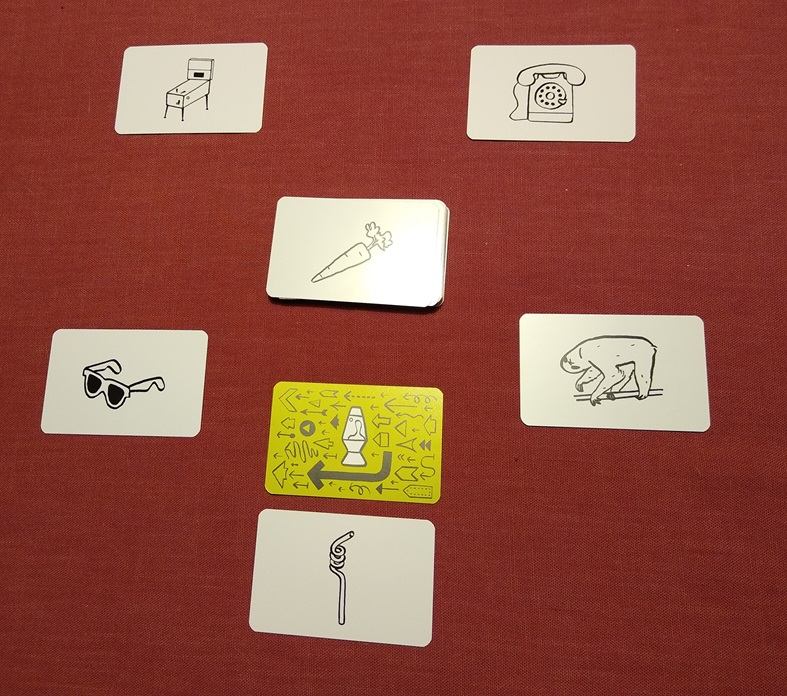
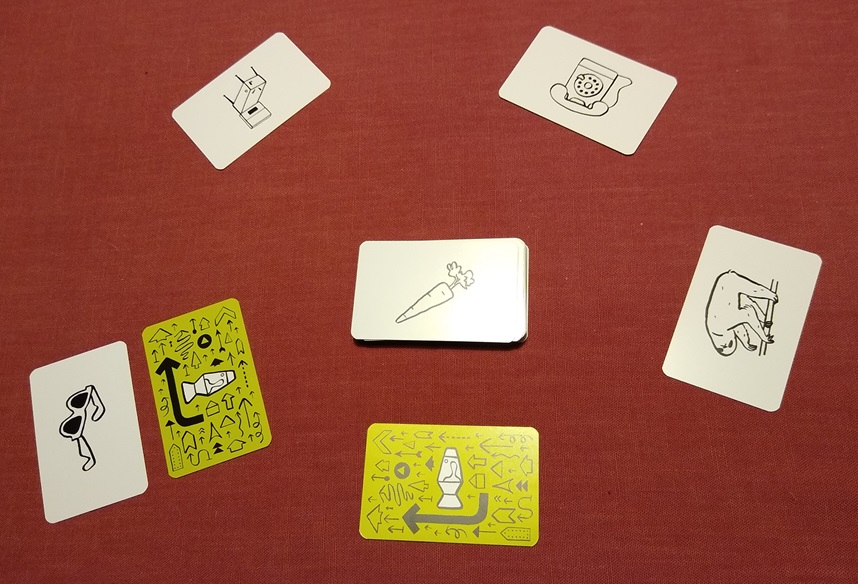
As you can see, everyone starts with a gift. The first player pulls a new gift from the stack in the center of the table, shows it to everyone, then places it facedown.
They then hand that gift to the player indicated by the arrow on the back of the card.
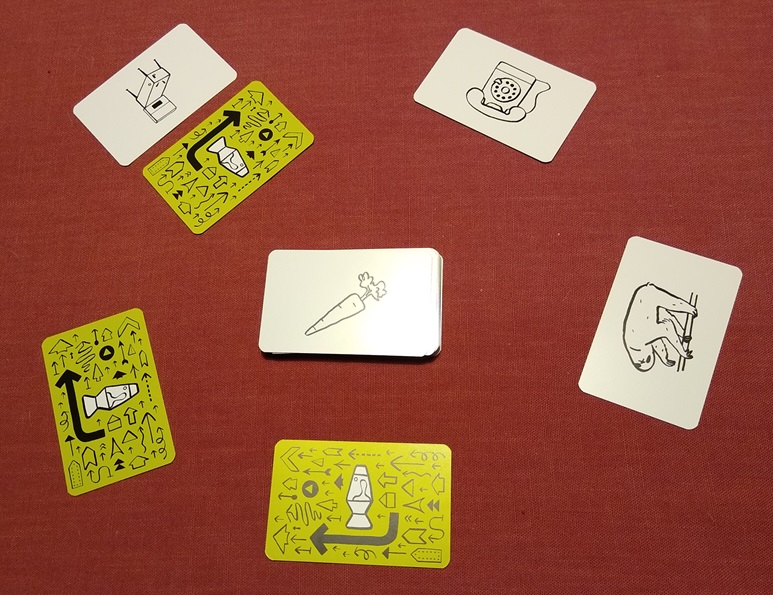
So the player to the right with the sloth card received the space shuttle, flipped it over, and handed it to the swizzle stick player to their left, saying “I have a nice space shuttle for you.”
The player receiving the gift has two options: accept the gift (meaning that they know it’s a space shuttle underneath and agree with the gift giver) or refuse the gift (meaning that they suspect the item underneath is NOT what the gift giver said).
In this case, the game has just started, so our swizzle stick player accepts the gift.
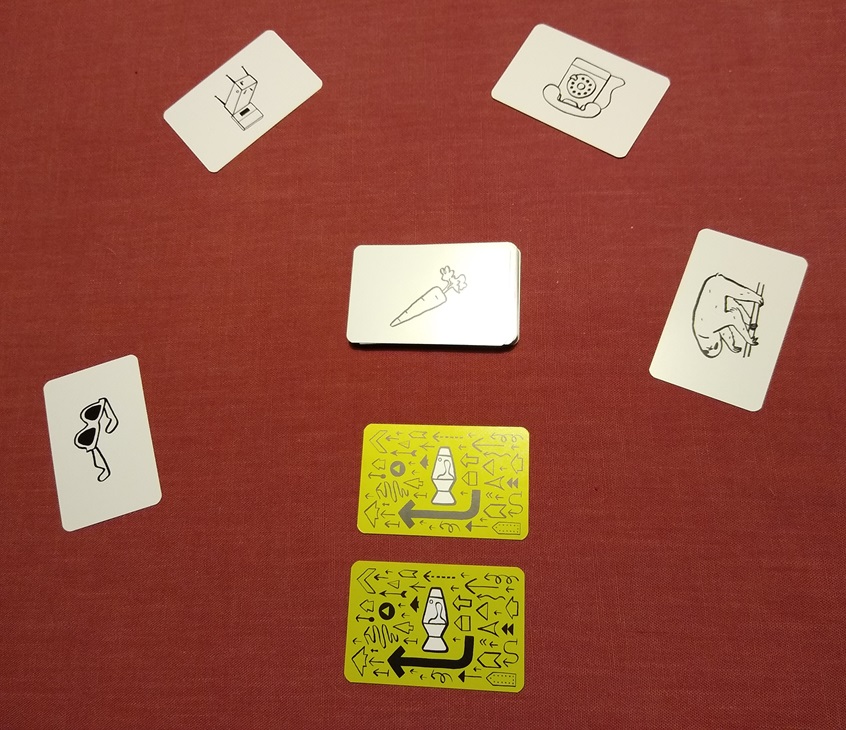
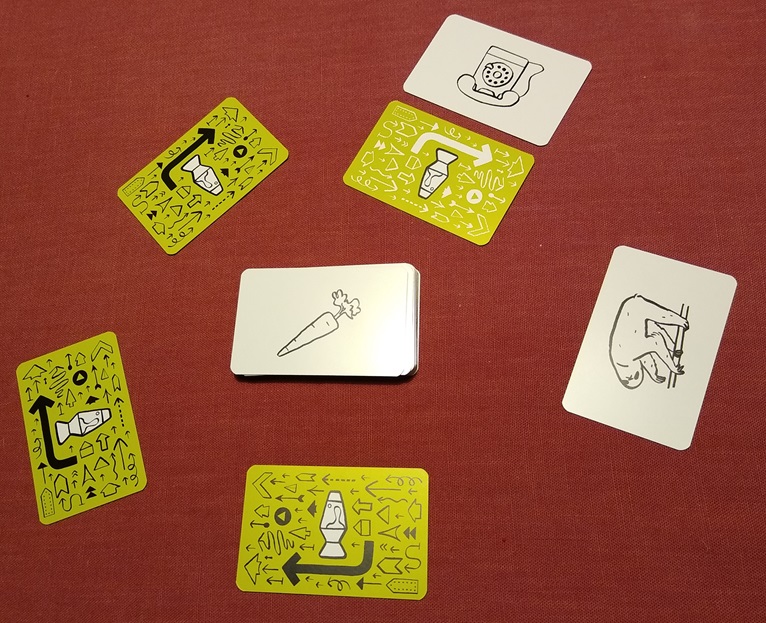
It would be rude to immediately regift what they were just given, so the swizzle stick player turns over their “old gift” and follows the arrow, saying “I have a nice swizzle stick for you” and giving that card to the player to the left (the sunglasses player).
The sunglasses player accepts, turns over their old gift, says their line, and follows the arrow.
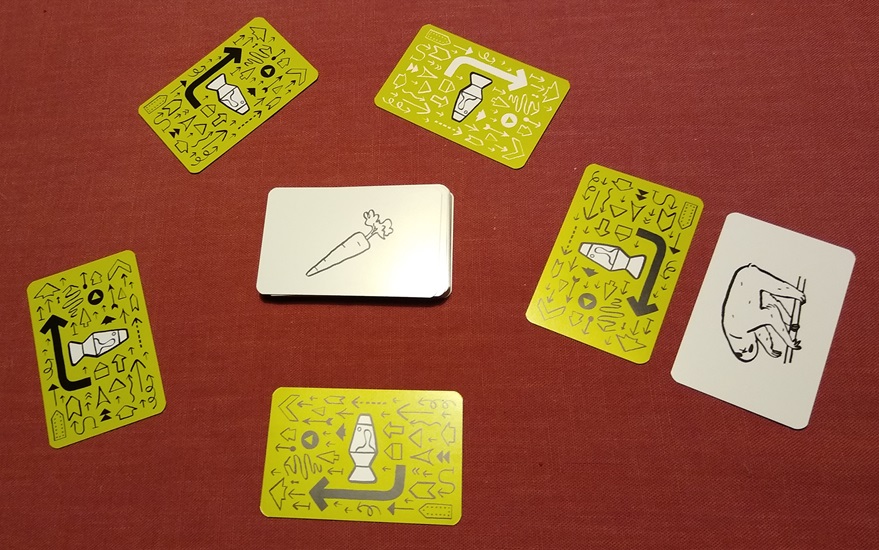
In this simplified version, the arrows only go in one direction, whereas in the regular game, arrows can go left or right (or, in the advanced play style, to any player, depending on the arrows).
Now, as the cards continue moving around from player to player, can you remember what was under all those cards? You’re gonna have to, because it gets harder and harder to remember what each card represents.
Eventually, someone is going to forget, and their “I have a nice __ for you” is going to be met with a refusal. If the refusing player is correct and the gift giver has forgotten what’s under the card, the gift giver takes that card and gets a point. If the refusing player is incorrect and the gift giver correctly remembered what’s under the card, then the refusing player takes the card and gets a point.
The game then resumes with a new present and all the previous cards STILL flipped over. The game ends when one player gets three points.
This combination of memory, interaction, and bluffing (if you forget what’s under your card) makes for a very fun, very mellow play experience, one that only grows tougher and more entertaining the more you play.
On the second game, I had so many images in my head from previous rounds that I immediately forgot what was under my card and earned a point.
With up to eight players at the table, 110 cards to choose from, plus mechanics to make the game easier or harder for the players, That’s Not a Hat is instantly replayable and never feels tired.
Now, you may start to worry about your memory before too long. It’s okay, though, because you’ll quickly be distracted by the laughter (and bad bluffs) to come.
[That’s Not a Hat is for 2 to 8 players, ages 8 and up, and it’s available from Ravensburger and participating websites (in two editions) starting at only $9.99!]
[Note: I received a free copy of this game in exchange for a fair, unbiased review.]
If you’re not currently in school, you probably haven’t thought about Order of Operations in a while. Maybe six little letters will bring it all back to you: PEMDAS. Parentheses, Exponents, Multiplication, Division, Addition, Subtraction. (I learned to remember it as “Please excuse my dear Aunt Sally.)
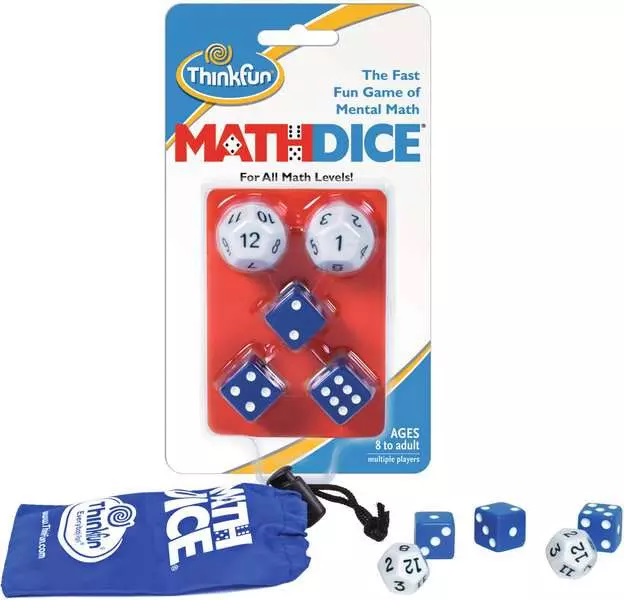
This was a handy mnemonic device to explain how to break down complex equations into simpler ones. But it’s also the basis for ThinkFun’s latest puzzly game: Math Dice.
Math Dice challenges players to put their mathematical skills to the test, using randomly rolled dice and their own numerical ingenuity to get the closest to a given number.
But before we get started with the actual gameplay, I want to take a moment to appreciate how the instruction manual eases new players (and players with less confidence in their math skills) into the game.
After explaining the rules, and offering several techniques to make the game easier or harder, depending on player comfort levels, the manual offers numerous examples to make new players more familiar with all the options available to them.
It’s a terrific way to allay player uncertainty and show them some of the creative ways to mix different operations to make different totals.
Now let’s take a look at the gameplay:
For example, the two 12-sided dice rolled a 12 and a 1. When multiplied, you get your target number of 12. Now the players must try to either match 12 or get closer to 12 than any other player, using the 2, 3, and 6 rolled on the 6-sided dice.
Simple addition will get you to 11. (3 x 2) + 6 will get you to 12. (6 – 2) x 3 will also get you to 12. Can you find any other ways to make 12 from those dice?
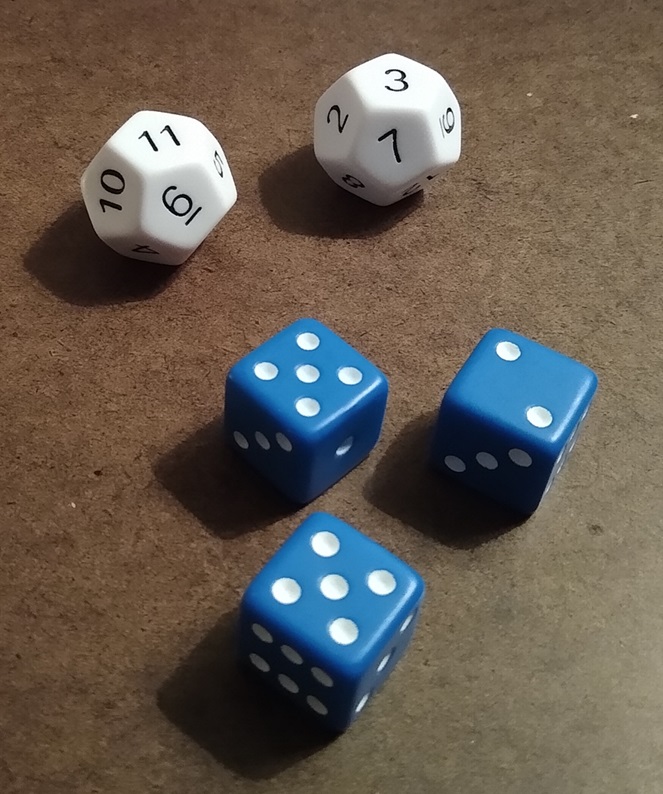
This one is a little tougher. The two 12-sided dice rolled an 11 and a 3, giving us a target number of 33. We also have less flexibility with the 6-sided dice, since we have a 2 and two 5s.
(5 x 5) + 2 will get you to 27. Pretty good! 5^2 + 5 will get you to 30. 2^5 + 5 will get you to 37.
In this case, player who got 30 wins a point!
As someone who is always idly playing with words and numbers during mental downtime or between tasks, this game really appeals to the playful side of my puzzly brain. The challenge of making two sets of numbers balance is both challenging and soothing in the best way, like the purely mental equivalent of a fidget toy or other tool to keep your hands and mind engaged.
But this is also a clever launchpad to introduce younger puzzlers to the idea that numbers aren’t just classwork or homework, they’re something to play with. They’re puzzle pieces to rearrange and put together in all sorts of ways to create new results.
ThinkFun excels at turning learning experiences into engaging puzzles and games. Over the years, they’ve done so with logic problems, optics, programming, gravity, deduction, mechanical puzzles, and more, so it’s no surprise they’ve managed to do the same quite deftly with the basics of mathematics.
[Math Dice is for 2 or more players, ages 8 to Adult, and it’s available from ThinkFun and participating websites starting at only $6.99!]
If you’re a Wordle fan, it’s not hard to get your daily five-letter fix of deductive goodness, either on your computer or your phone. (Or one of the many, many, many, MANY variations out there.)
But maybe that’s not enough for you.
Maybe you need to take your Wordling up a notch.
Maybe you need to experience Wordle in a whole new way.
Maybe you need an extra dimension of Wordle.
A third dimension.
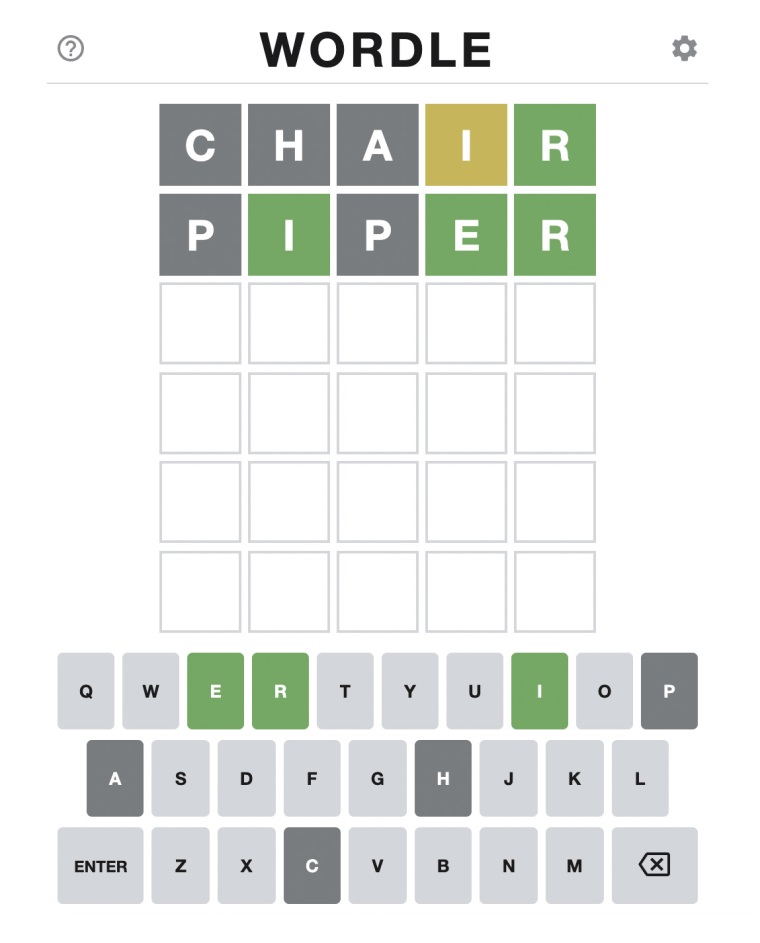
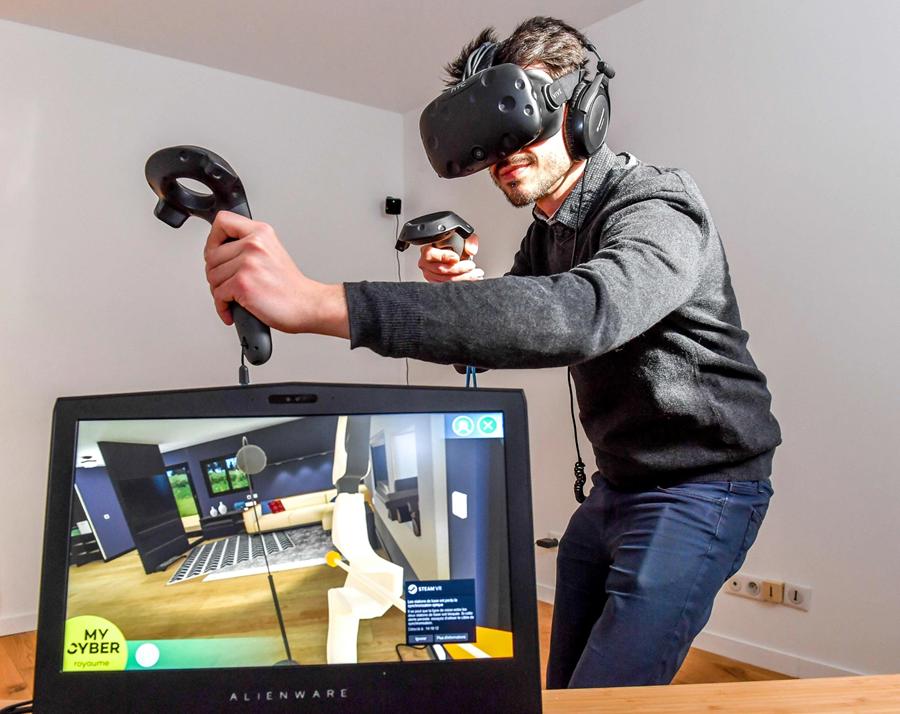
Oh yes, Wordle is now available for solving in VR, thanks to the Meta Quest 3 Wordle app. (Though users of the Meta Quest 2 and the Meta Quest Pro can both always play.)
However, please forgive me as I ask one simple question…
WHY?
This isn’t like Beat Saber or Five Nights at Freddy’s or Resident Evil VII… there’s nothing about Wordle that particularly lends itself to the 3-dimensional virtual environment.
Letters don’t float around you in the ether to be plucked and tossed into the void to make words. The Wordle hovers in front of you, a little window. A 2-D pop-up. An interactive poster in a virtual room.
Otherwise, it’s just Wordle.
Oh, with one further little caveat…
There’s currently no way to connect your account to the VR play experience. So, if you do the VR version instead of your current method, you’ll lose your streak.
And we know how protective solvers are about their streaks!
Even without that streak-busting hurdle, I don’t see this making a big impact for regular Wordle solvers unless they add some bells and whistles to the VR solving experience.
What sorts of bells and whistles, you ask? Well, I have some suggestions:
— maybe stealing a page from the Octordle (but not as intense) and having multiple windows around you to solve at once — a dancing mechanic where you must earn your next guesses through performance — a dancing mechanic where you immediately display your victory dance to anyone who views your Wordle stats for the day — a dancing mechanic, you know, in the jumpsuit and all, maybe with a wrench — some dancing squirrels encouraging you as you solve — actual bells and whistles, plus a kazoo or vuvuzela — your favorite puzzle constructor or game show host, looking at you disapprovingly with every new guess you make
Just a few ideas, you know. Throwing them out there. Have your people call my people, VR Wordle People.
As for the rest of us Wordlers, I guess I’ll see you on social media. Mom, I got it in three today!
There are a lot of interactive puzzle experiences out there. Scavenger hunts, puzzle hunts, murder mystery dinners, treasure hunts, geocaching… it’s an amazing array of puzzly options.
But I think escape rooms are probably my favorite. There’s something about the combination of the ticking clock and the mechanic of working as a team to defeat the room itself that is so immensely satisfying.
It builds communication skills, it challenges you to use both your logical and associative thinking patterns, and
Ideally, everyone gets a moment to shine in an escape room.
Some people are better seekers, finding items or hints or pieces of a particular puzzle for others to put together.
Some are better connectors, realizing which of those items could combine to crack a problem or a code.
Some are better puzzlers, figuring out how those combinations of found items and context clues leads to a solution.
Some are better organizers, sorting found items, putting aside items already used in solutions to help keep track of what hasn’t been used and still could contribute to a later puzzle.
Some are better leaders, assigning tasks to best utilize everyone’s hands and minds to get the ball rolling.
Some are better realists, accepting when the group is truly stumped and/or needs a hint or a clue, recognizing when an answer isn’t coming and helping move the game along in a timely manner (with the group’s agreement, of course).
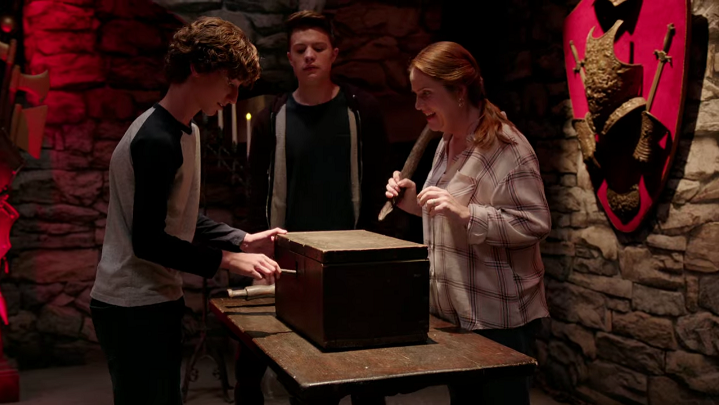
At least someone’s having fun in this escape room scene from Crazy Ex-Girlfriend…
Even when my team has failed to escape a room in the allotted time, I’ve never felt like the effort was wasted. I still had a blast, and I learned from it, and I got better for next time.
And one unexpected consequence of frequenting escape rooms has been hearing horror stories from staff members regarding players who took things too far.
So let’s go over some escape room etiquette together as I share some tidbits escape room operators have shared with me over the years.
#1: You don’t have to pull hard.
Now, it’s true that some locks stick. If that’s the case, then grasp the loop in one hand and the body of the lock in the other and pull.
But don’t yank the lock and damage how it’s attached to something. Don’t pull hard on doors. Don’t force things. The VAST majority of doors, hatches, trunks, and other items that open in an escape room do so EASILY. If you have to force it, you’re probably not doing it right.
The very first time I hosted an escape room event at a convention, one of the boxes got broken open by an overexcited teenager. Because the magnetic opener didn’t work the first time they tried it. So they immediately went HULK SMASH on the poor little false book disguising a hidden trove.
I’ve seen escape rooms with warnings about not RIPPING cabinets off the wall by trying to open them, complete with the obvious repair jobs that went along with returning said cabinets to the wall. People need to seriously calm down.
This leads nicely into my second bit of escape room etiquette:
#2: It’s not a rage room.
I saw this written on the whiteboard in capital letters at an escape room once. Because, apparently, someone broke every bit of glassware in the room. It’s not clear if they thought it was part of the game or they just had poor impulse control.
It’s a little sad that they have to include that on a board that otherwise offers fun little advice and tips for first-timers.
I heard about a group of constructor workers that went to an escape room as a team-building exercise, and the staff member running their room overheard them discussing how thick the sheetrock was. They were genuinely considering just GOING THROUGH THE WALL instead of playing the game.
I mean, it’s cool that they were bringing their particular skillset to the experience, but guys, dial it back a notch. They didn’t give you sledgehammers, after all. I don’t want every escape room to need signs that say, “Please don’t smash through this wall.”
So, in short, be nice to the room. Whether it’s the trunks/cabinets or the walls or the many knickknacks and bits of color they put in the room to help with the immersion, just be gentle with it all so other solvers can enjoy the same experience.
And speaking of enjoyment:
#3: Winning isn’t the only goal.
Yes, the goal is to escape the room before the time limit expires. Lots of places post the best escape times, and there are folks that will sacrifice an immersive experience just to beat that particular room’s record escape time.
And, as previously stated, some people take it too far.
One operator told me a guy snuck a Swiss army knife into the room with him, unscrewed the screws holding the final box together, took the key, and opened the door. Out the door within the first first minutes, bypassing the ENTIRE game for everyone involved.
I don’t know if he didn’t want to do the whole room, or he was trying to show off how clever he was by cheating, or what the thought process was. But he spoiled it for everyone.
Communicate with your fellow players. Show them what you find, don’t hoard it for yourself. Encourage discussion and theorizing. It’s way more fun to solve as a group than to solve alone. A close call with a few minutes to spare — but one where everyone got to contribute — is better than a quick escape that only one or two people in the group got to enjoy. And it makes for a better story to retell later.
Do you have any favorite escape room stories? Are you an escape room staffer with a horror story to share? Either way, I’d love to hear from you!
With Wordle’s surging popularity earlier this year came a slew of derivatives like Nerdle, Queerdle, and Trekle, all fighting for second place in the guessing game spotlight. Heardle, it seems, was the real breakthrough hit. Launched in February by product designer Glenn Angelo, Heardle gives listeners six tries to figure out a song’s identity, based on increasingly lengthy clips from the song’s intro. Angelo’s initial inspiration was just the pun of the name, though the concept can be traced back to the television game show Name That Tune,or to its radio-based predecessor, Stop the Music.
Like Wordle, Heardle updates daily, uniting players in listening to a single song together, creating the illusion of people all over the world huddling around the same jukebox. Some days unite the crowd more than others, depending on how avid a tune’s fanbase. I’ve recently seen a couple of different viral social media posts excitedly imploring people to play the day’s Heardle, once when it featured One Direction’s “What Makes You Beautiful,” and again when the answer was My Chemical Romance’s “Welcome to the Black Parade.” (Full disclosure: I recognized the One Direction song immediately.)
Student Gigi Vincent, who plays Heardle every day, explained the game’s appeal by contrasting it with the movie-clip trivia game Framed. She noted that while the brain behind Framed “clearly has a specific taste, so you can really narrow things down once you understand their repertoire, Heardle is more democratic [in its song choices], and therefore harder,” making for a compelling challenge.
Just as the strength of Wordle’s appeal lead to a purchase by The New York Times, Spotify has heard the acclaim for Heardle and snatched it up in response. This is Spotify’s first game acquisition—the company’s previous purchases have primarily been forms of podcast technology. Spotify’s press release about the acquisition quotes the company’s Global Head of Music, Jeremy Erlich, as saying “We are always looking for innovative and playful ways to enhance music discovery and help artists reach new fans.” According to the release, the company intends to eventually “integrate Heardle and other interactive experiences more fully into Spotify,” building on the eye-catching, meme-able feature of Spotify Wrapped to further gamify music streaming.
The illusion of democracy.
I spoke to media specialist, musician, and Heardle dabbler Sam Hozian about his strong disapproval of the acquisition. He said that it runs directly opposite to the Heardle ethos that Vincent highlighted above, elaborating, “Spotify is the anti-democratization of music. It creates an illusion of democracy because people have a sense that anyone can upload to Spotify and become a hit, but it’s one-in-a million that this will happen . . . It’s not easy for Spotify to make money off of independent artists,” so that’s not where the corporation puts its resources.
Hozian isn’t the only disapproving player. Last week, the BBC ran an article entitled, “Heardle Spotify move hits sour note with some fans.” Complaints lodged in the article include that winning streak stats have been deleted, and that the website is now showing as unavailable in some countries.
Joanna Newsom has been among Spotify’s most outspoken critics.
Until Spotify sees through its plans to more fully integrate Heardle, the main difference is that the challenging songs are now hosted by the streaming app itself, rather than by SoundCloud. Angelo’s original choice to use SoundCloud for the game was not politically motivated. Instead, he’s cited convenience as the reason; the SoundCloud player was quick and easy to set up within a day. SoundCloud, however, would seem to be more in line with Heardle’s democratic ethos. SoundCloud touts itself as “the first music company to introduce fan-powered royalties, where independent artists can get paid more because of their dedicated fans.” Compare this to oft-repeated criticisms that Spotify underpays artists for streaming their work.
Lest I sound like Spotify’s biggest detractor, rest assured that I am a daily user of the platform. Access to algorithmically generated playlists and the playlists of strangers worldwide opens the door to musical discoveries I would otherwise never have made. In this age of attacks on the Internet Archive, when the ubiquity of Amazon’s cloud services make fully boycotting Amazon an uphill battle, it’s tempting to go quietly into the future of the internet—a future in which everything is owned by a small handful of monopolies, pay-walled and demanding access to our IRL identities. Still, I believe that it is important to resist this new wave of the web in whatever ways you can. Maybe you’ll switch from Google Chrome to Firefox; maybe you’ll download some indie games; maybe you’ll give up Spotify for SoundCloud. We all have our parts to play in shaping the fair, equitable, weird, creative internet that we want to see.
infinitely more complex than any map of the path could ever be.
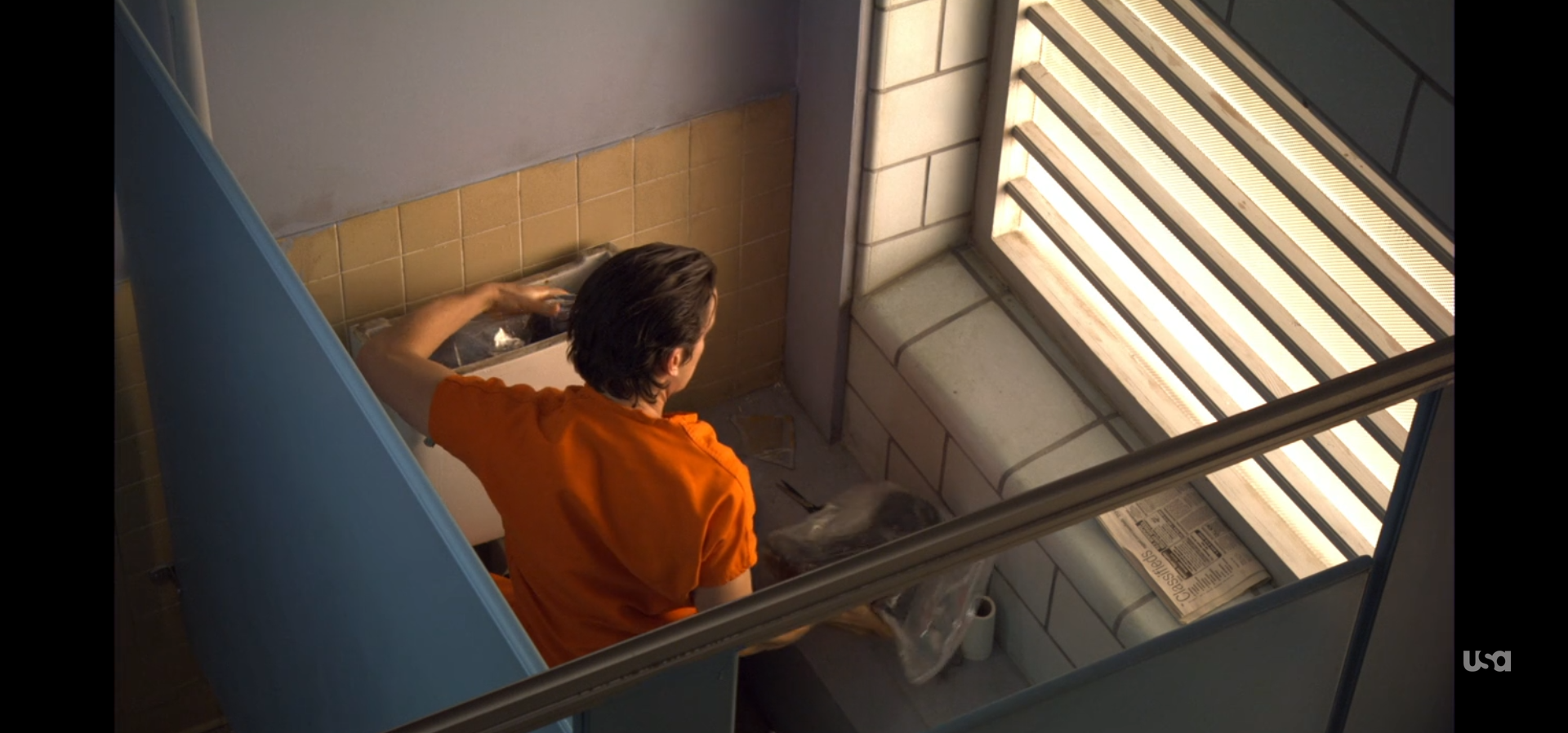
White Collar begins with an escape. Not from an escape room—the stakes are much higher; I’m talking about a prison break. Art thief, bond forger, and all-around con artist Neal Caffrey (played by Matt Bomer) has devised a plan to escape from his super-maximum security correctional facility. He changes his appearance rapidly by shaving, slicking his hair back, and donning a prison guard uniform stashed in a staff bathroom toilet tank. Accompanied by jaunty music, he strolls unrecognized past guards and fellow inmates. When he slides a key card through a gate’s reader, the light turns green. He’s free.
Four hours after Neal has disappeared into Manhattan, Peter Burke (Tim DeKay), the FBI agent who first arrested Neal, is called, and begins to interrogate the warden and marshals about the details of Neal’s escape on the way to Neal’s cell. Where did Neal get the guard uniform? Online uniform supply company. Where’d he get the credit card to buy the uniform? It belonged to the warden’s wife.
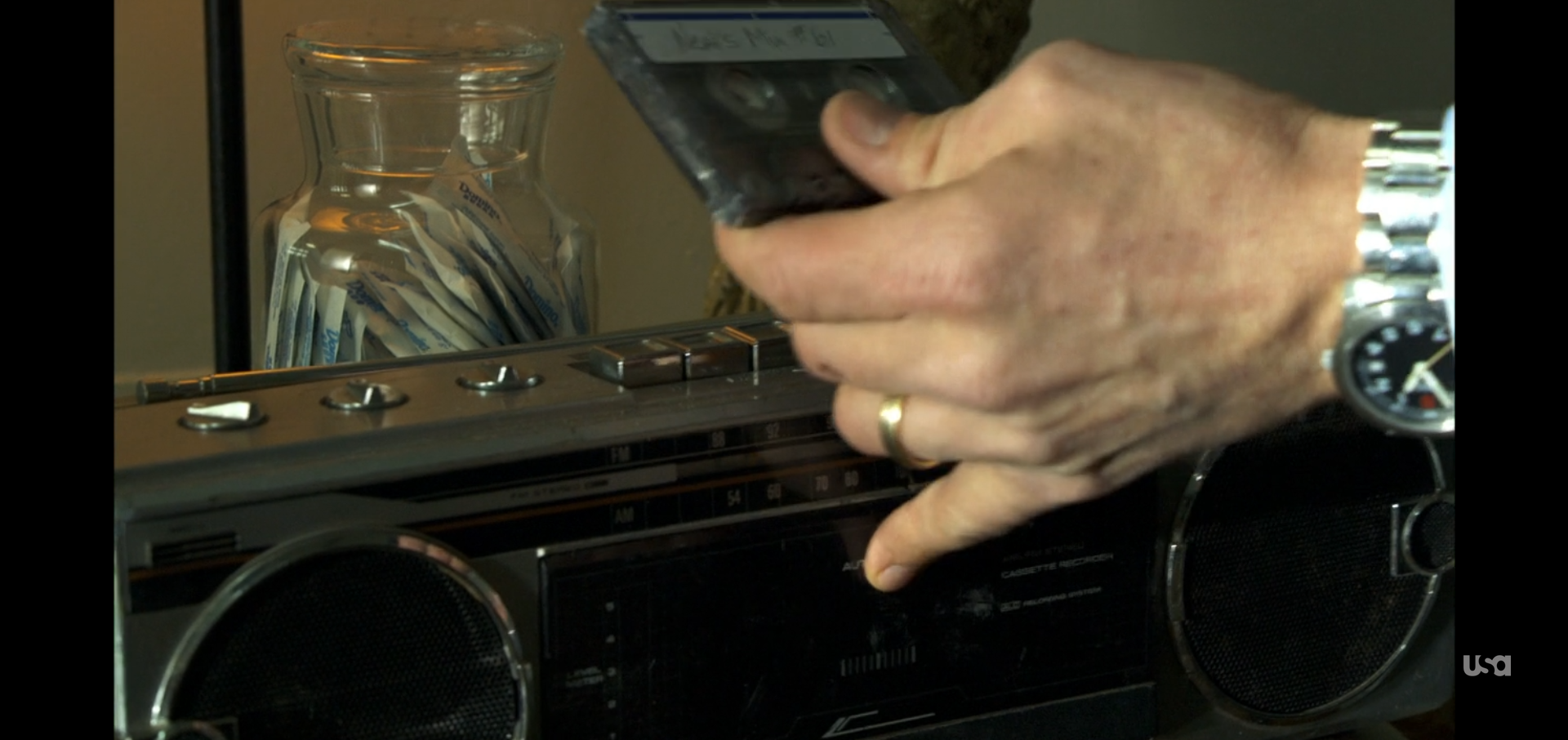
Neal’s cell is heavily decorated—with sketches, hash marks, poetry magnets. Where’d Neal get the key card for the gate? “We’re thinking he restriped a utility card using the record head on that,” the Warden says, nodding at the tape player. Peter examines the tape player, the wall decorations, the books and brochures on Neal’s bed. From all of the accumulated detritus of Neal’s imprisoned life, Peter begins to piece together where Neal would go and why. Neal’s escape was low on puzzles compared to an escape room, but the real puzzle comes now for Peter. Peter is an expert puzzler—his house is full of New York Puzzlethon trophies.
The solution is anticlimactic. Peter finds Neal on the floor of Neal’s ex-girlfriend’s emptied apartment, moping over her absence. Neal makes no further attempt to flee, but does make an opening gambit in the long game of securing his freedom; he asks Peter to meet with him back in prison if he can provide crucial intel on the elusive criminal Peter’s been chasing. What would have been four years in prison for running becomes four years released into Peter’s custody as an FBI consultant. With a GPS tracking device around his ankle, Neal walks into the sunlight once again. Thus, the show’s premise is established: Peter and Neal, FBI agent and con artist, taking down white collar crime together while going endlessly back and forth on whether they can trust one another.
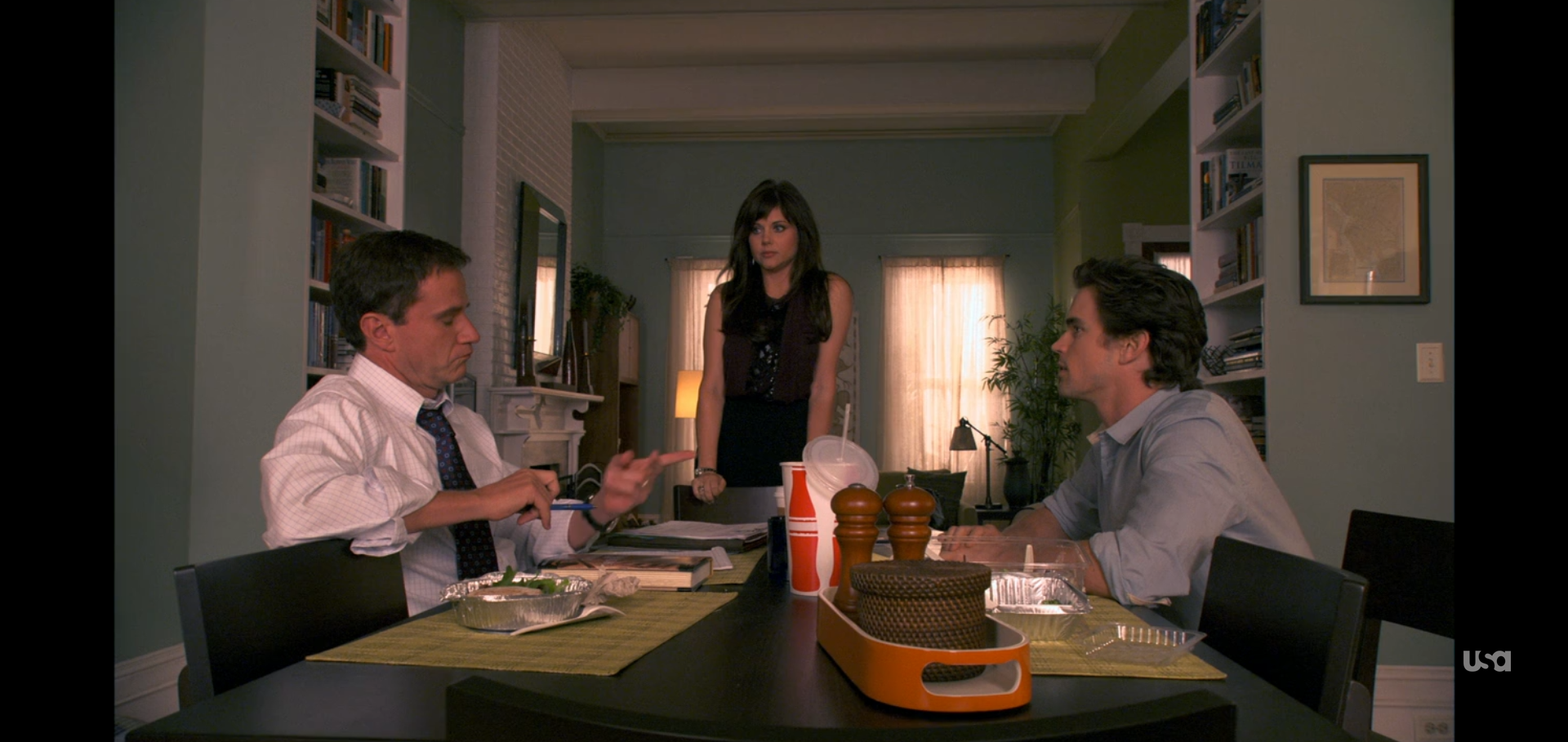
Peter, Elizabeth, and Neal congregate in the Burke home.
Though it has its moments of suspenseful intrigue and poignant drama, White Collar is more lighthearted than many crime procedurals. The mood is kept buoyant partially by Neal’s charm, and by the chemistry between the leads (including Tiffani Thiessen as Elizabeth Burke—Peter’s wife—and Marsha Thomason and Sharif Atkins as Peter’s fellow FBI agents). Beyond that, however, there is an infectious playfulness woven into the screenwriters’ approach to storytelling. Whether the characters are planning heists or solving crimes, it feels like the show is presenting us with a game.
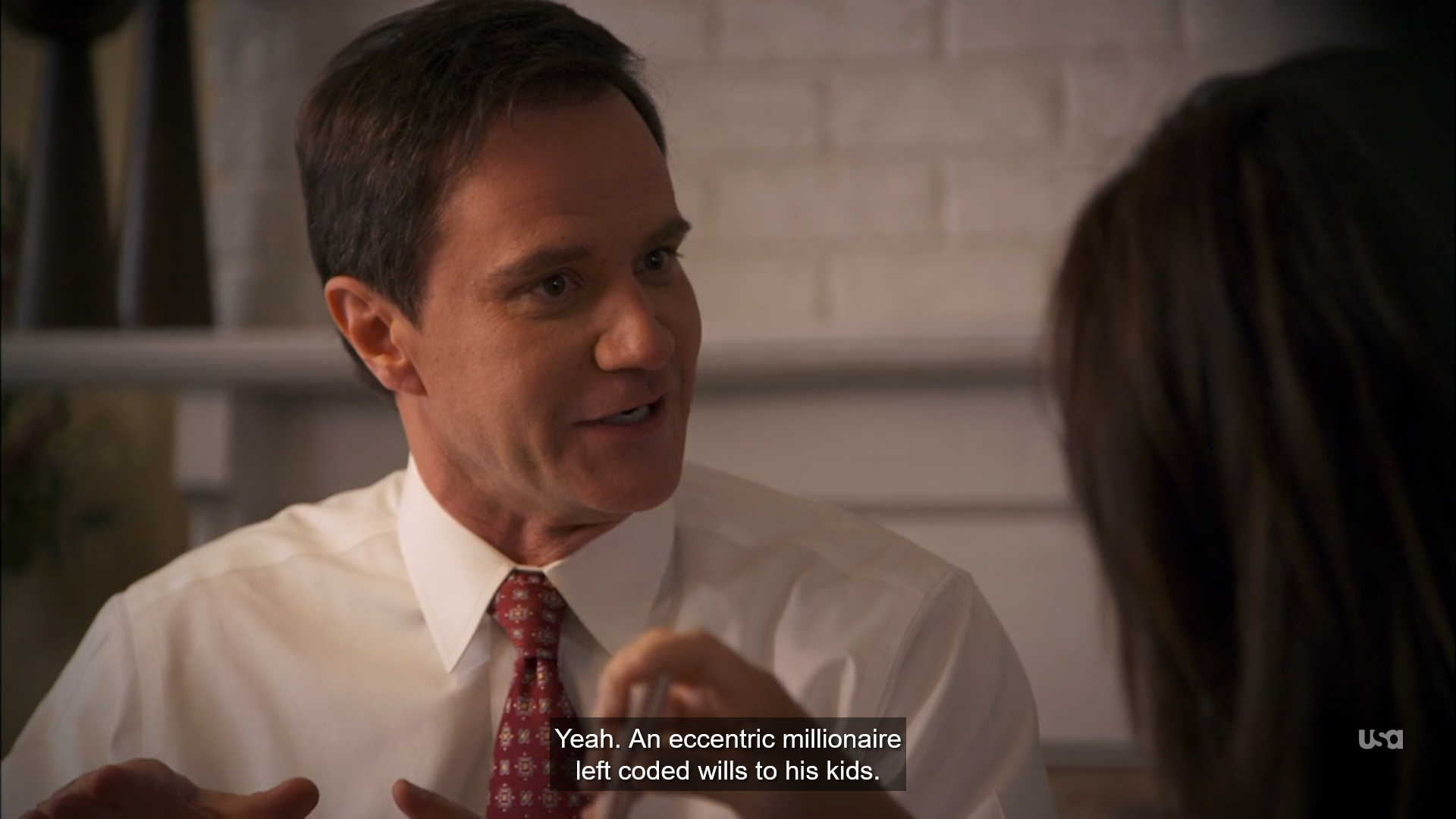
One episode draws out this undercurrent of playfulness, as Peter and Neal are literally presented with a game. The season three episode “Where There’s a Will” centers around a dispute over a $40 million inheritance. Brothers James (Danny Masterson) and Josh Roland (Christopher Masterson) each have a supposed copy of their father’s will, one with a relatively equitable distribution of funds, and one saying that James gets everything. Neal, as an expert forger, has been called in by the bureau to authenticate the wills.
Neal, noticing that the same person is responsible for all of the signatures on both wills, determines that both are forged, but it gets weirder. Handwriting analysis concludes that the deceased himself forged all of the signatures on his own wills. Weirder still, the witness names are anagrams of one another. Peter and Neal get to work puzzling out what other names might be hidden in those letters, and come to the same conclusion: Tycho Brahe, a 16th century Danish astronomer.
Then comes the biggest surprise thus far. Holding the stacked wills up to the sunlight, Neal realizes that, when overlaid, the wills include a drawing that resolves into what look like streets and a compass rose. “This isn’t a message,” Neal says. “This is a map.” The Roland sons have a slightly different take, recognizing the “compass rose” as actually “the sundial in La Monde Garden” (a fictitious location). The sons go on to imply that treasure hunts are an activity their dad once engaged in often, but neither seems interested, even when Neal posits that the real will is likely at the end of the hunt.
Peter is happy to return the wills to evidence. Neal, however, is still intrigued, trying his hardest to entice Peter into joining him at the sundial. Peter won’t bite, so Neal meets up at La Monde Garden with his criminal accomplice and best friend, Mozzie (Willie Garson). They notice faint numbers along the bottom of the wills’ pages, probable times, but those times on the sundial don’t seem to point to anything. Alternatively, they theorize that maybe something will happen when the sun hits 4:30—four hours from now.
Neal texts Peter, who’s at home with Elizabeth, for help, and Peter and Elizabeth dive into the puzzling readily. When Peter spots a little drawing of a tulip next to the times, Elizabeth supplies that tulips stand for spring and rebirth, and Peter’s inspiration is sparked. It isn’t spring now, but with the use of a sextant and a couple of mirrors, they can recreate the shadow that the angle of the springtime sun would cast at 4:30. Each of the times, in fact, have a different seasonal symbol associated with them.
Elizabeth and Peter join Peter and Mozzie to create the necessary shadows. Each shadow they cast points to a different letter on the sundial, spelling out “BSH,” an acronym that means nothing to any of them. Their stumped wondering is interrupted by a call with a startling revelation; James Roland’s young daughter has been kidnapped, and the kidnapper demands $6.4 million. This is enough motivation for Josh Roland to get involved in the treasure hunt, since the real will should give him the ability to pay his niece’s ransom. He knows what “BSH” stands for: Big Sky Hunting, what his dad always called going to the planetarium. Peter and Neal are off to their next destination.
I’ll refrain from spoiling the second half of the episode, but rest assured, even as the mood should have darkened with the girl’s kidnapping, an undampened spirit of playfulness remains threaded throughout. We’re back in the realm of the high-stakes escape room. Now, though, rather than orchestrating his own escape, Neal is playing a game for someone else’s freedom. Rather than scheming by himself, he’s relying on a gaggle of allies to help him each step of the way. The show may have started with Neal and Peter each as independent figures facing off against one another, but as I said, that form of game-play only leads to anticlimactic reveals. Real satisfying drama, in the world of White Collar, comes from games played together, absent self-reliance and self-interest.
With the GPS tracker around his ankle, Neal might not be as free as he was the moment he first stepped out of prison in the pilot. With friends on his side, however he’s much better equipped to mastermind a real escape. A real win.