PN Product Review: GeoLogic

[Note: I received a free copy of this puzzle in exchange for a fair, unbiased review.]

Imagine embodying the forces behind the Big Bang. Science fiction writers do this all the time, bringing into being entire new planets, studding them with swathes of land and bodies of water, devising chemically unfamiliar atmospheres. While I am a writer, fiction is not my forte, meaning that the wonders of world-building are typically out of my wheelhouse—at least, they were. Enter Thinkfun’s GeoLogic: World-Changing Logic Puzzle. This puzzle sells itself as an opportunity to “create your own world,” and “become a planetary architect,” promises that appeal to me as a science fiction fan. The puzzle is recommended for ages eight and up, and requires only one player, though planet-building can be a team activity too.

GeoLogic offers a route to science-fictional world-building other than the written word, bringing the invention of alien landscapes into the hands-on, three-dimensional realm. Born from a conversation between inventors Ken and Jeremy about the concept of a thirty-sided game die, the puzzle consists of a thirty-sided planetary core, fourteen snap-in-place pieces representing five biomes, and sixty challenge cards. Cards range from easy to expert, each indicating where certain biome pieces should go on the planetary core to start. The solver is then left to figure out where to insert a list of remaining biome pieces in order to completely cover the globe’s surface.
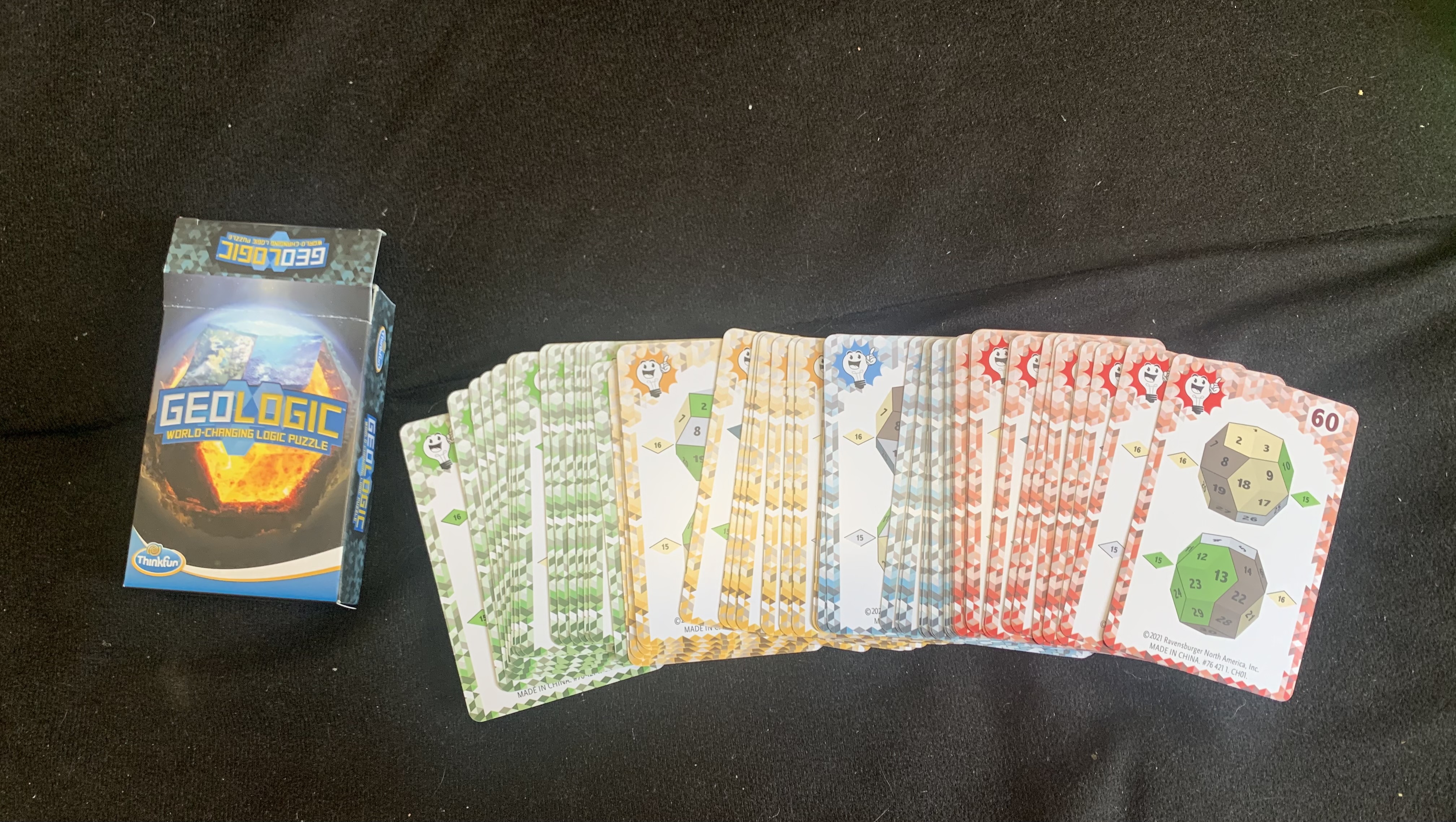
The challenge cards are optional; they are intended for players who would prefer to test spatial-logical skills rather than engage in more free-form, creative play. This mode of engaging with GeoLogic still has a science-fictional appeal; it just happens to fall more into the category of consuming science fiction than acting as its mastermind. If you dream of discovering new planets through a process of trial-and-error, then you’ll likely find using the challenge cards a perfect way to spend an afternoon, working your way up the ladder of difficulty levels.

If you’d rather ignore the challenge cards instead, you can take the game up on its suggestion that you “get creative and design your own planets.” As the box asks, “Want to create the largest landmass known to humans? Or oceans that span half the globe?” Now’s your chance! This approach to GeoLogic does require a certain amount of spatial-logical skill, as the goal remains the same: cover all thirty sides of the planetary core in some combination of awkwardly-shaped desert, forest, mountains, tundra, and ocean. If you are looking for a purely creative exercise, you might find the limitations of where the different biome pieces fit to be a frustrating hindrance to your imagination running wild.
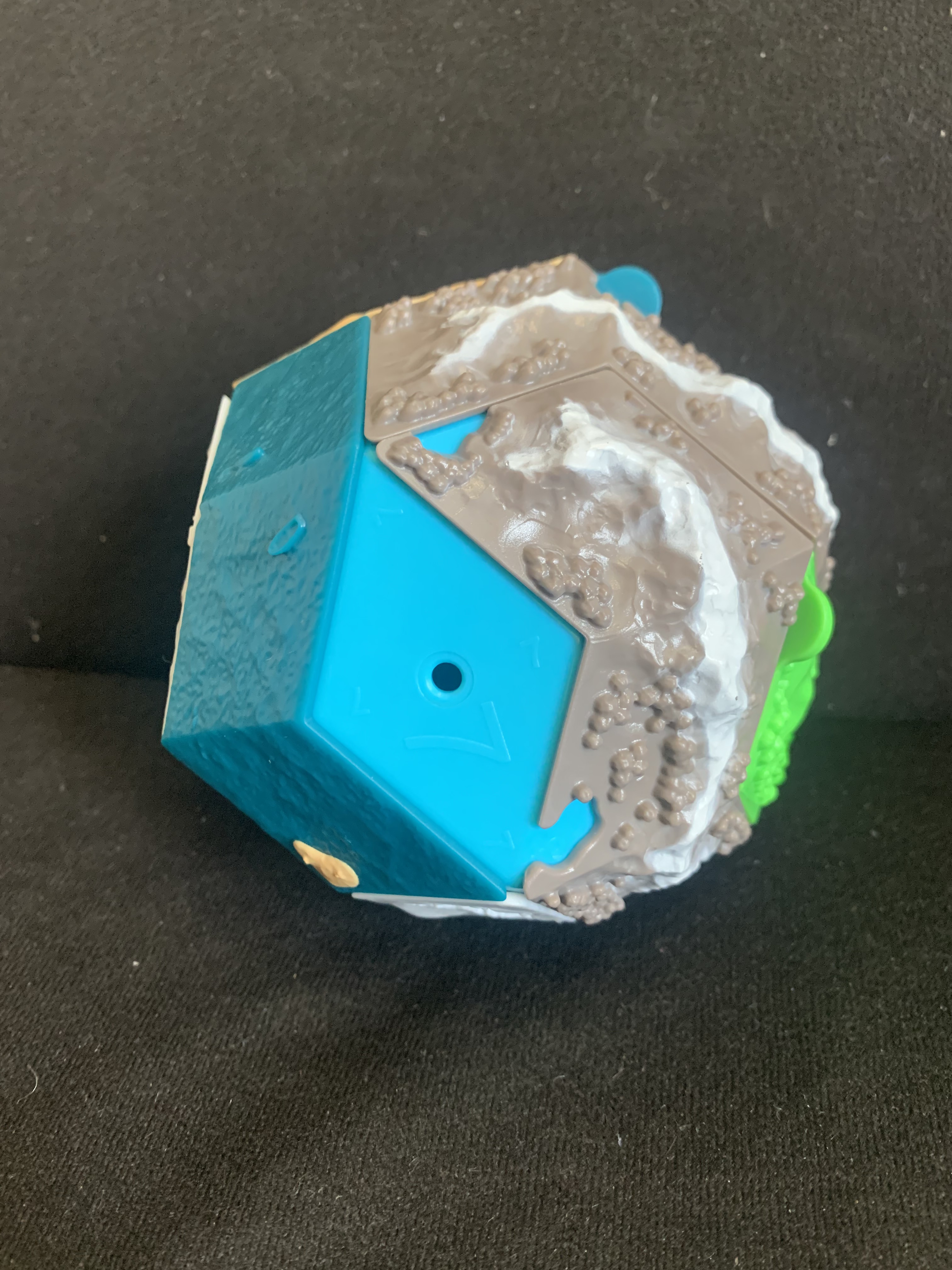
An example of a built world that does not meet the goals of the game.

The solver most likely to be enchanted by GeoLogic, by my estimate, is the Tetris fan who longs for a more tactile experience—snapping the pieces into place on the core is very satisfying—and who can appreciate a sprinkling of science-fictional creativity. Those driven to the product by the idea of creating new worlds are less likely to feel fulfilled, but the core and biomes could certainly be used as a jumping-off point for contemplating what different worlds are possible. Dreaming big and freely when it comes to alternate worlds is important, yes. Possibly more important, for those interested in changing the world we’ve been handed, is knowing how to still dream big when complex limitations are imposed upon us from outside.


You can find delightful deals on puzzles on the Home Screen for Daily POP Crosswords and Daily POP Word Search! Check them out!

Thanks for visiting PuzzleNation Blog today! Be sure to sign up for our newsletter to stay up-to-date on everything PuzzleNation!

Puzzly Podcasts: 99% Invisible and Revisiting the “Average Solver”

A geodesic dome.

Buckminster Fuller, inventor of the geodesic dome and the World Game, once said, “Ninety-nine percent of who you are is invisible and untouchable.” This quotation inspired the title of 99% Invisible, a podcast about aspects of the designed and built world that typically go overlooked. Hosted by journalist Roman Mars, 99% Invisible began in 2010 as a joint effort between the San Francisco-based American Institute of Architects and SF public radio station KALW. Since April 2021, the podcast has been owned by broadcasting giant Sirius XM, but has remained essentially the same. On a weekly basis, Mars continues to provide listeners with calmly narrated explorations of topics like efforts to track the pandemic, the history of grocery store “ethnic food” aisles, and the skull logo representing Marvel’s Punisher character, including its memetic use among reactionaries.

It might sound counterintuitive, or in Mars’ words, like a “perversity,” to break down elements of design in a purely sound-based format. Without accompanying visuals, how are we meant to truly appreciate a discussion of graphic design in film and television, or the history of Hawaiian shirts? Mars considers the absence of images a boon, saying, “I thought the concept of doing a design radio show where you strip away the visual aesthetics actually made sense, it got to the parts of design I really loved, which was the problem solving.”

This element of problem solving at the core of every episode will likely appeal to any die-hard puzzler. If you’re interested in episodes more explicitly aligned with your love of puzzles and games, I would recommend starting with episode 189, “The Landlord’s Game,” about Monopoly, or episode 335, “Gathering the Magic,” about—you may have guessed—Magic the Gathering, or even episode 349, “Froebel’s Gifts,” which more broadly considers the history of play as a tool of intellectual development.

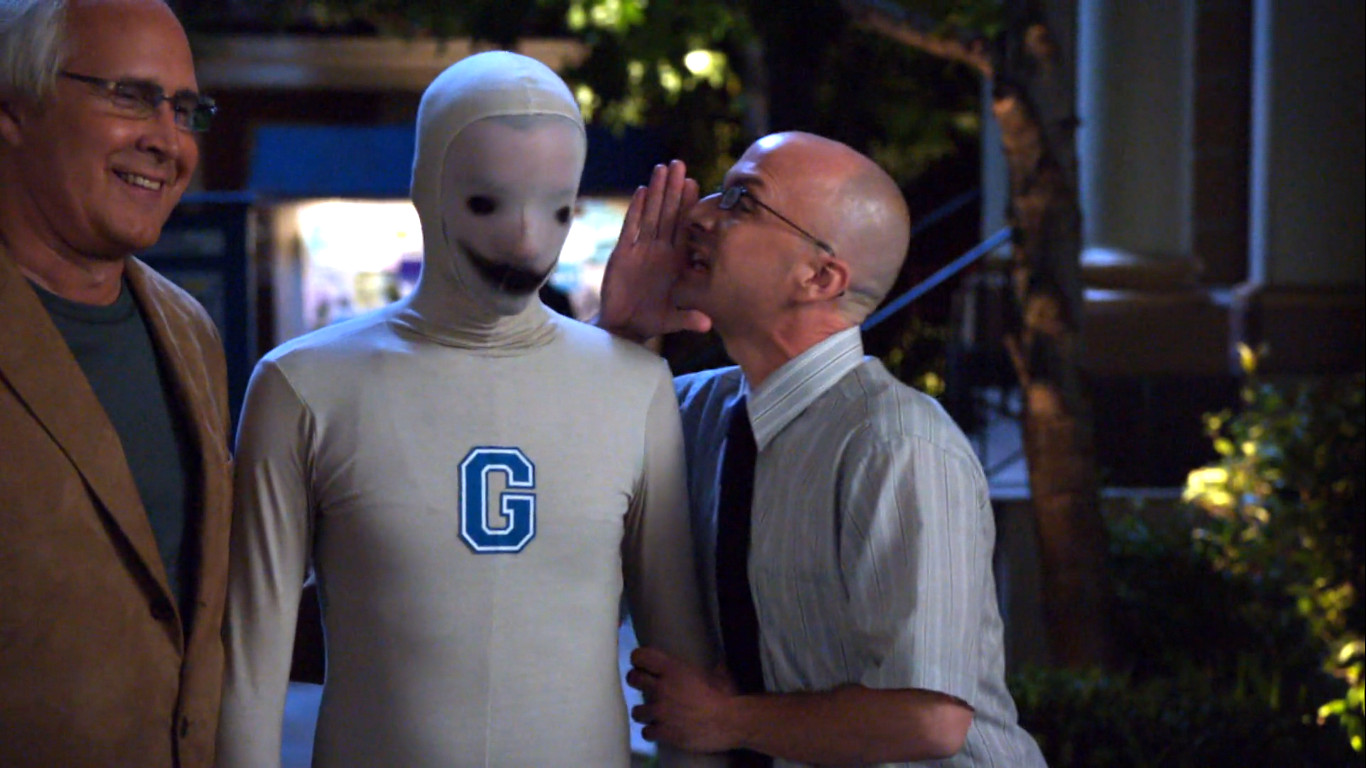
In Community, the attempt to represent an average human being led to this terrifying mascot.

Then there’s episode 226, “On Average.” My predecessor on the blog previously discussed the issues with the concept of the “average” crossword solver, questioning popular ideas that the average solver might not be familiar with spoon theory or arepas, and what these assumptions imply about the average solver’s identity. “On Average” takes Glenn’s questioning a step further, walking listeners through a nineteenth-century astronomer’s innovation of reducing human populations to statistical averages. The episode focuses most closely on the practice of flattening people out to bodily averages, but also discusses average calculation for social phenomena like marriages and murders, and the rise of the idea that the “average” is “morally the way to think about people.”

99% Invisible‘s host and guests take the stance of critiquing the average as ideal. One example the episode traces is the WWII design of Air Force planes for the average pilot. Most WWII pilots were not anywhere near average; in fact, zero of the 4,063 pilots measured in one study came anywhere close to perfectly fitting the average, and even when standards were relaxed, only a meager handful had average measurements. Todd Rose, author of The End of Average, sums the issue up thusly: “If you are designing something for an average pilot, it’s literally designed to fit nobody.”

The same might be said of puzzles. If we construct a puzzle for the average solver, are we really constructing a puzzle for anyone at all? Or has all the life been sucked out of the puzzle, all the potential for anyone to connect with its quirks? To settle into the cockpit and soar? If ninety-nine percent of who we are is invisible and untouchable, then ninety-nine percent of who we are cannot be reduced to statistics, cannot be turned into averages. Whether physically or mentally, people are more than patterns, more than perfectly proportioned crash test dummies, and every aspect of the world should be designed with this in mind, from planes to puzzles.


You can find delightful deals on puzzles on the Home Screen for Daily POP Crosswords and Daily POP Word Search! Check them out!

Thanks for visiting PuzzleNation Blog today! Be sure to sign up for our newsletter to stay up-to-date on everything PuzzleNation!
Puzzles (and Games) in Pop Culture: “Strange Things Happen at the One Two Point”

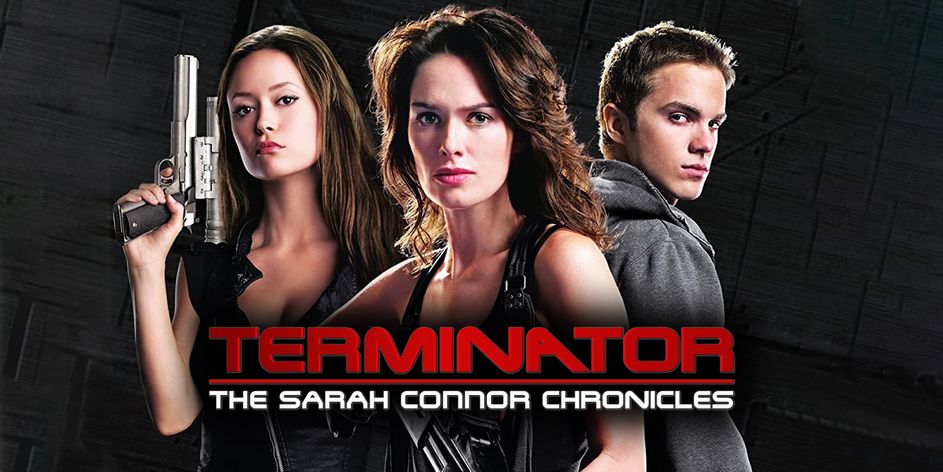
“Strange things happen at the one-two point,” is a proverb based on the ancient East Asian board game Go. As summarized by cybernetic Cameron (played by Summer Glau) in Terminator: The Sarah Connor Chronicles,“It means the usual rules don’t always apply.” More specifically, the proverb refers to the strategic idiosyncrasies of certain playing positions on the Go board; “the heuristic principles of fighting along the sides or in the [center] often fail in the corner,” Go wiki Sensei’s Library clarifies. When we fight our way into tight corners, the laws of reality that we previously knew shimmer and warp. The more boxed-in we become, the more we need to expect the unexpected.

This is a fitting sentiment to feature in Terminator: The Sarah Connor Chronicles, the fourth installment in a media property dealing with time travel and its resultant paradoxes and alternate timelines. The show depicts its characters having fought their way deep into tight, reality-bending corners in their attempts to prevent apocalypse. By the second-season episode titled for the Go proverb, the rules established in 1984’s The Terminator—what we can expect from time travel, who’s an ally and who’s an enemy, what to do if you want to live—have been thoroughly warped.

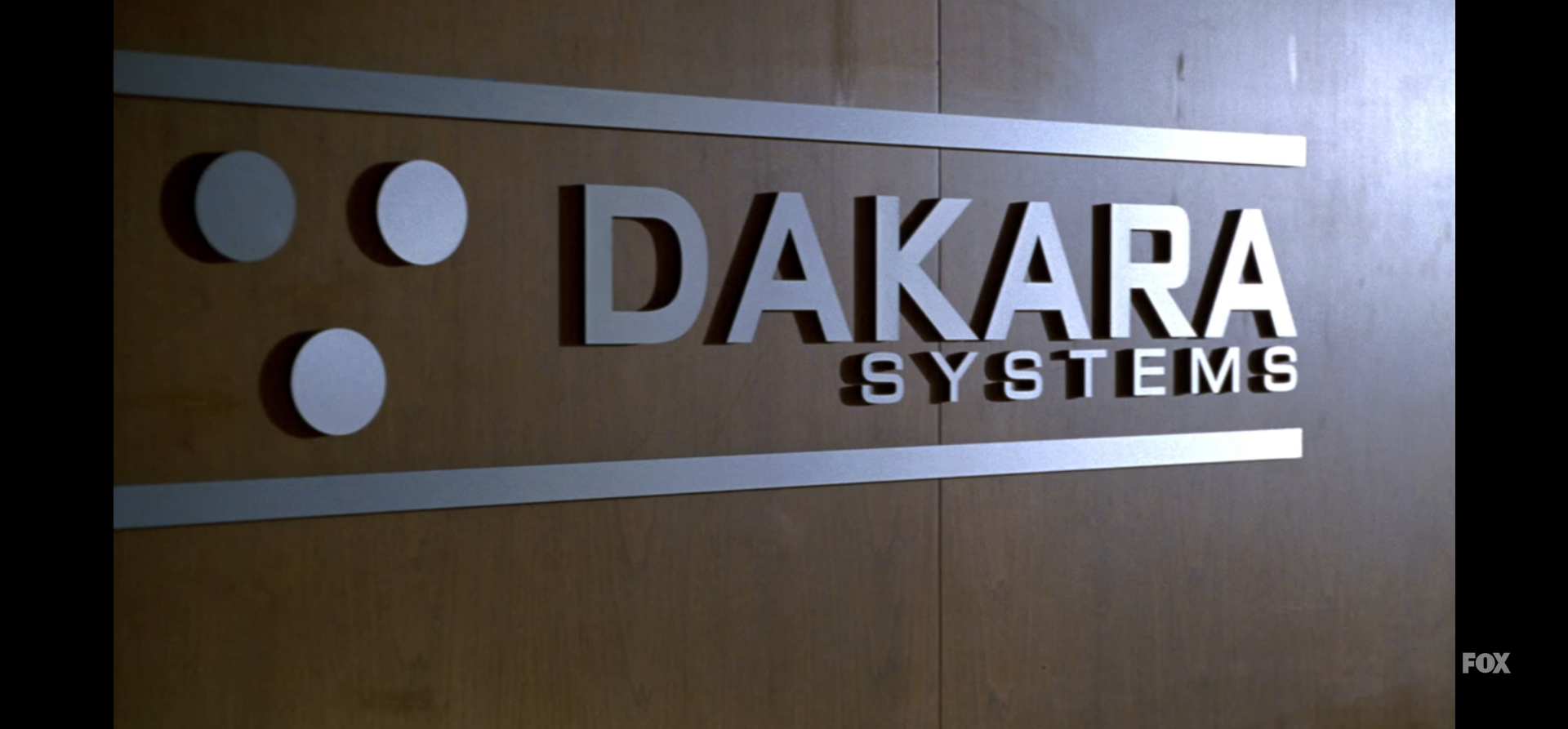
In the episode “Strange Things Happen at the One Two Point,” Sarah Connor (Lena Headey) is deeply fixated on a pattern of three dots. Earlier in the series, another time traveler left her a message in blood on a safe house wall: a list of important names with three dots next to it. Seeing these dots in her dreams, Sarah is convinced that there’s more to them then the smeared fingerprints of a dying comrade; her investigation leads her to Dakara Systems, a tech start-up with a logo of three dots. She and Derek (Brian Austin Green) break in late at night, stealing all of the computers’ hard drives and bringing them back to Sarah’s teenage son, John (Thomas Dekker), an accomplished hacker.

On the hard drives, John discovers designs for an artificial intelligence system, a find that sets off Sarah’s internal alarms, but John explains that the designs are useless in light of Dakara Systems’ lack of processing power. Derek calls it a dead end, accusing Sarah of instigating a wild goose chase, an accusation she rebuts with, “Artificial intelligence, the company logo, the three dots—”

“Are fingerprints,” Derek says. “It’s just blood.”

“Everything on that wall has meant something,” Sarah argues. “It’s all blood.”

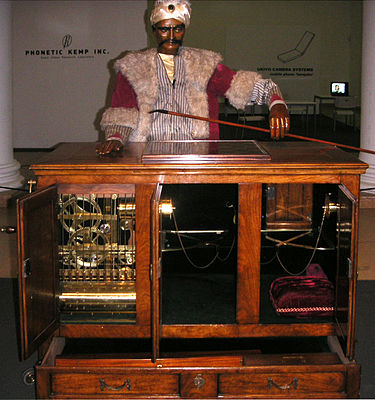
Sarah is sure that The Turk, the chess-playing AI that she’s been hunting for since it was stolen from inventor Andy Goode, can be traced to Dakara Systems. Derek has lost faith. While John initially has his doubts too, by the next morning, he’s made Sarah and Cameron an appointment to meet with the heads of Dakara Systems. He explains his change of heart: “Andy Goode was building a chess program . . . It always starts small.”

A 1980s reconstruction of the original chess-playing Mechanical Turk.

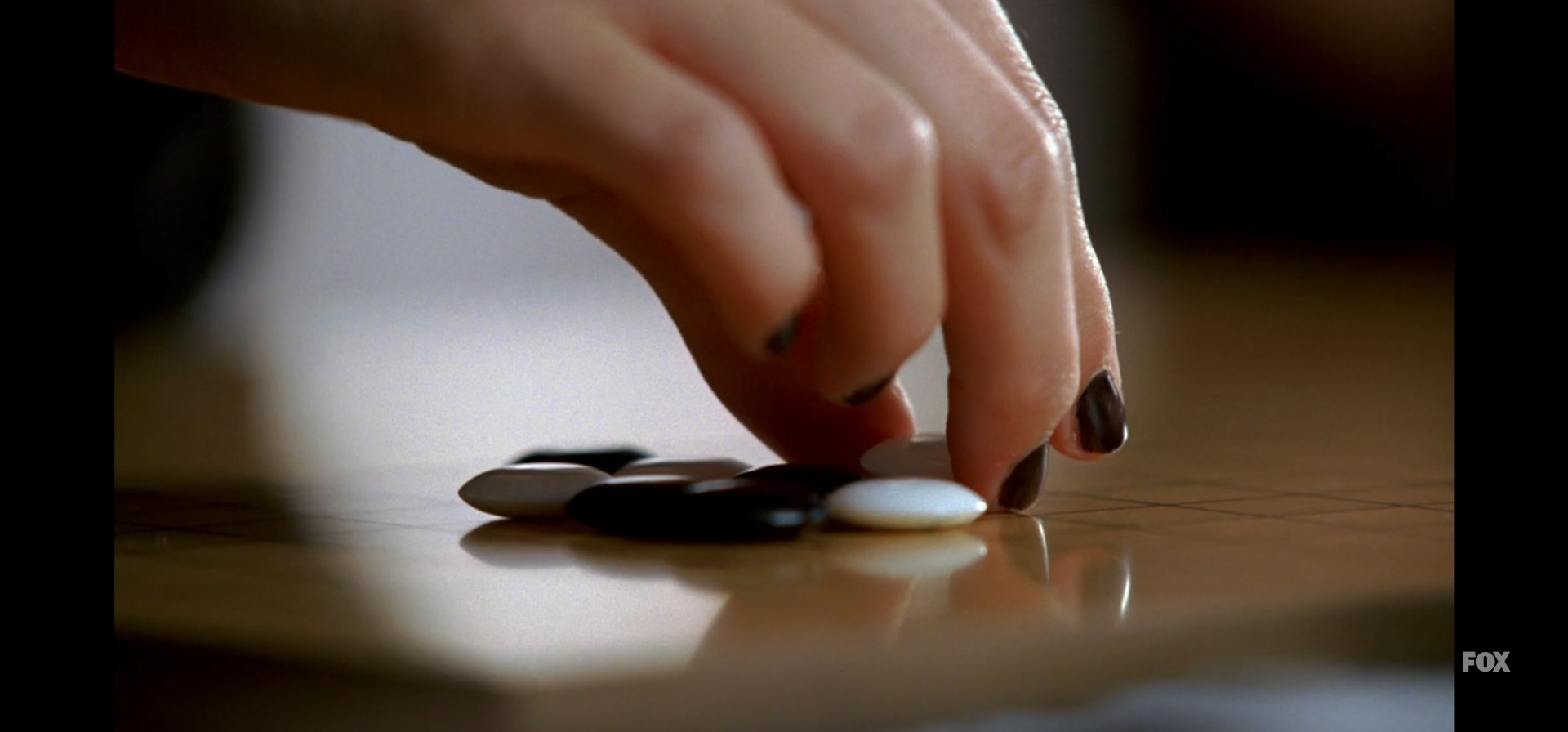
Dressed up in their best wealthy-investor chic, Sarah and Cameron meet with father-and-son team Alex (Eric Steinberg) and Xander (Eddie Shin) Akagi of Dakara Systems. Probing for connections to The Turk, Cameron poses a crucial question to Xander while Sarah and Alex grab coffee: “Do you like chess?” Later, when Sarah asks her what all of the evidence is adding up to, Cameron says, “Not The Turk. Xander doesn’t play chess. He prefers Go.” She pulls out a folding wooden board inscribed with a grid. “Xander said it’s been calculated that there are more possible Go games than atoms in the universe,” she continues, laying out black-and-white discs in the board’s center. “He’s offered to teach me how to play.

Sarah counters, “Did he offer to tell you about his AI?” and when Cameron reiterates that Xander’s AI is not The Turk, Sarah says, “But it could be a piece of the puzzle. We’ve seen that before.”

Cameron responds, “Strange things happen at the one-two point.”

I won’t spoil for you which strange things happen here, at this point where Sarah Connor and her allies have boxed themselves in strategically by changing reality countless times in an effort to stave off nuclear apocalypse. Instead, let’s dwell together on the beauty of that phrasing, the “strange things,” as a way of describing action in a game so deceptively simple: black and white stones laid out on a grid. They don’t seem like they should stack up next to the strange things that happen in a work of science fiction—the way the air crackles and sparks with blue light whenever a new time traveler tears a hole through the decades; how a Terminator’s robotic skeleton designs a chemical bath for itself that allows its flesh and skin to regrow; the liquid metal CEO played by Garbage lead singer Shirley Manson, whose arms extend at will into gleaming daggers.

By placing Go on the same playing field as these miraculous, speculative sights, Terminator: The Sarah Connor Chronicles reminds us that games needn’t be elaborate to be magical, needn’t be novel to be surprising. As long as each player is an elaborate, novel human being, an ancient game like Go can continue to startle and move, to belong meaningfully alongside us in the twenty-first century—and further onward still.

have thought to look for otherwise.


You can find delightful deals on puzzles on the Home Screen for Daily POP Crosswords and Daily POP Word Search! Check them out!

Thanks for visiting PuzzleNation Blog today! Be sure to sign up for our newsletter to stay up-to-date on everything PuzzleNation!
Six Characters in Search of Free Will

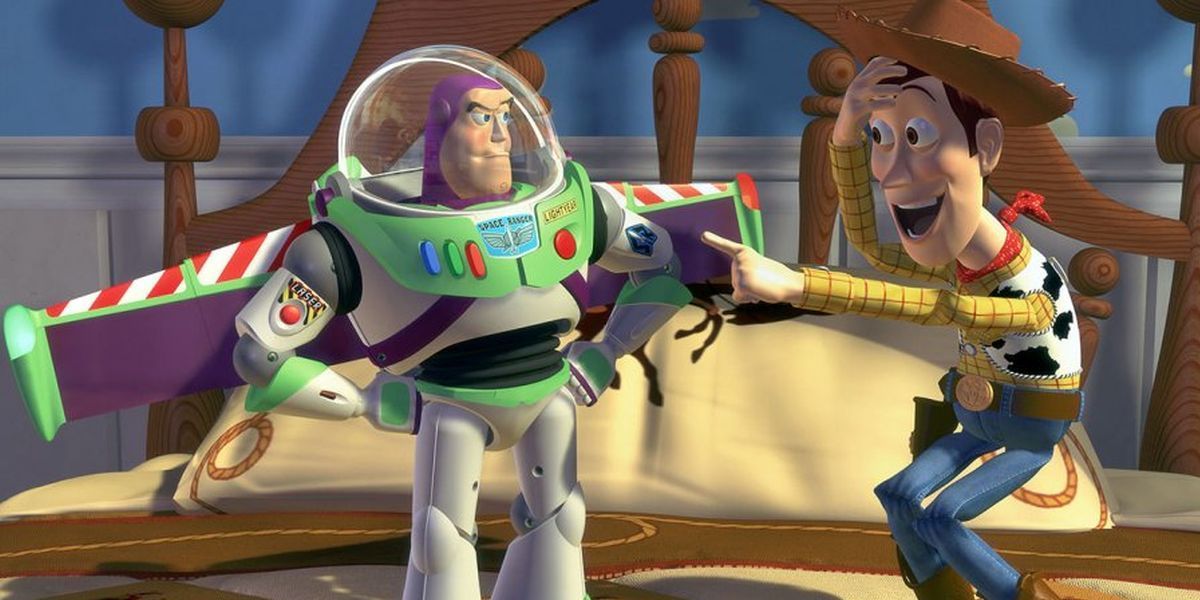
Last week, we traveled back in time, before the dawn of escape rooms, to what was nonetheless a perfect example of escape room horror: the Twilight Zone episode “Five Characters in Search of An Exit.” Now, let us jump forward, past the present, into the near-future. A clear thematic descendant of “Five Characters in Search of An Exit,” Black Mirror‘s speculative “USS Callister” takes the “everyone is a toy” premise of “Five Characters” further than the Twilight Zone episode carried it (the Black Mirror showrunners have even described the episode as “Adult Toy Story).

In contrast to “Five Characters,” the setup of “USS Callister” is not especially simple. We begin in a clear Star Trek homage as the starship USS Callister‘s crew, helmed by Captain Robert Daly (Jesse Plemons), celebrates a victory. Abruptly, the show cuts from this slick, primary-colored setting, to a world much drabber and closer to our own. Daly is revealed to be the unassuming founder of a virtual-gaming company called Callister, and a fan of the retro sci-fi television show Spacefleet. Each of his crew members from the opening scene reappears in the Callister office as a different coworker; all, at best, seem indifferent to Daly’s existence.

Enter newly hired programmer Nanette Cole (Cristin Milioti), who is as big a fan of Daly’s work as Daly is of Spacefleet. She and Daly awkwardly hit it off, until the company’s co-founder, James Walton (Jimmi Simpson), waltzes in and steals Cole’s attention. Next thing we know, Daly returns home to sign into his VR game and reappear on the USS Callister‘s bridge. There, we see a side of him that was not immediately obvious before: he is power-hungry, violent, reveling in belittling the crew.

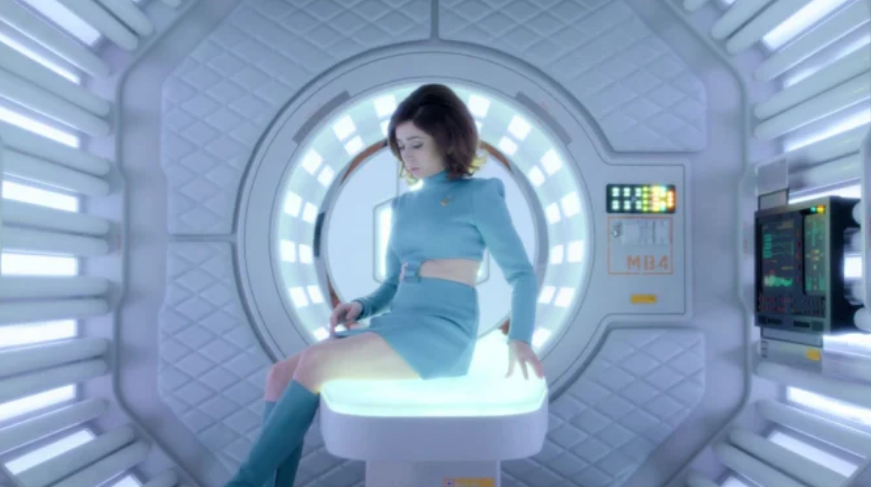
The next time Daly is in the office, he steals Cole’s thrown-away coffee cup and takes it home, where he uses her DNA to create a sort of virtual clone of her. This clone, despite Daly’s desire to play god, is not a mere plaything; she is fully sentient, retaining all of the original Cole’s memories, feelings, and personality. When she awakes on the USS Callister, miniskirted and vintagely coiffed, she is terrified. Without Daly present, the other crew members explain the situation, that she is stuck forever in a modded version of the VR game the original Cole programs: Infinity. They are all digital clones, all stuck.

Walton describes the situation as “an eternal waking nightmare from which there is no escape,” but Cole tries to escape regardless, running through the ship’s halls until Daly transports her back onto the bridge. She refuses to play along with the Spacefleet roleplay premise, so he uses his God-like powers to torture her until she agrees to cooperate. Still, that first flight from the bridge is not Cole’s last attempt to wiggle free of Daly’s clutches. Her schemes just get more strategic. Even when she learns that the reason Walton plays along is that Daly has Walton’s son’s DNA on a lollipop in his minifridge, Cole sees this as further motivation to take Daly’s toys away from him.

After another fumbled escape attempt that provokes Daly’s sadistic ire, Cole finally hits upon a winning plan. She spots a wormhole out the ship’s window, representing an incoming update patch to the game. Cole suggests flying straight into the wormhole, thereby deleting all of their code, killing them. Freeing them. First, however, it’s necessary for someone out in the real world to destroy the DNA hoarded in Daly’s minifridge.

The plan is for Cole to go on a mission to a planet’s surface alone with Daly, where she distracts him. Meanwhile, the crew beams up the device that Daly uses to control the game and contact the outside world. The crew is able to contact the real-world Cole, and blackmail her with the cloned Cole’s knowledge. They compel her to order a pizza to Daly’s apartment so that he’s forced to temporarily exit the game, then, while he’s occupied, to: 1. steal all of the DNA in the minifridge, and 2. replace the nodule he uses to connect to the game with a decoy that does nothing.

Cole distracts Daly by luring him into a lake.

The end result is that the crew of the USS Callister is able to successfully fly into the update patch wormhole without Daly’s interference. Contrary to their prediction, this does not erase their code; they are not killed, but they are free. They are transported from Daly’s personal, modded version of Infinity to the greater Infinity, which lives in the Cloud. Meanwhile, Daly, in his attempt to chase after them, has gotten himself stuck in his own game.

This is a much more optimistic ending than that of “Five Characters.” The characters not only are able to transform themselves from playthings to game-players; in doing so, they escape the confines of their limited world—within reason. While they are no longer imprisoned within Daly’s computer, able instead to roam the Cloud-stored game universe, they are still technically bound, forever, to the starship.

If we classify this as escape room horror, with a requirement of the genre being that someone must escape the room alive, then we are working with a more ephemeral, existential understanding of what constitutes a “room.” The characters’ ultimate goal is not to escape their physical surroundings, but to escape the game rules that have been put in front of them. The horror herein is not about literal claustrophobia, but about the gnawing psychological claustrophobia that comes from an absence of free will. They are not escaping from the ship; they are escaping from hierarchy. It is the perfect distillation of escape rooms as a team-building exercise, driving home that there is no “dictator” in “team.”

A review of the episode in The Atlantic pointed out that whereas so much of Black Mirror‘s storytelling is about “the terror of being connected,” “USS Callister” goes in the opposite direction. What begins as a seeming cautionary tale against the horrors of video games becomes, instead, an ode to collaborative approaches to gaming. The fact that the crewmembers still have each other and an infinite universe to explore is presented, unequivocally, as a happy ending. It’s a happy ending that anyone who finds joy in shared game experiences like escape rooms, multiplayer video games, or tabletop role-playing will no doubt find resonant. Hell is not other people; it is other people having undue power, and stripping us of our personhood.


You can find delightful deals on puzzles on the Home Screen for Daily POP Crosswords and Daily POP Word Search! Check them out!

Thanks for visiting PuzzleNation Blog today! Be sure to sign up for our newsletter to stay up-to-date on everything PuzzleNation!
Escape Rooms and Bottle Episodes: A Condensed, Horrific History

When they appear in sitcoms, escape rooms are played for laughs and sentimentality, true to their common real-life role as a fun diversion and a team-bonding activity. On the other hand, horror media has a lot to say about the sinister side of being trapped in a room and dependent on only your wits to free you; a whole bevy of twenty-first-century films depict escape rooms from Hell. Consider the horrific potential of pairing claustrophobia with psychologically intricate tasks, and it makes sense that the recent rise of escape rooms as a pastime would be accompanied by a rise in twisting that pastime for terrifying purposes.

Escape room horror is not, however, a new concept, despite the modern appellation. Before No Escape Room (2016), Riddle Room (2016), Escape Room (2018), Escape Room (2019), Escape Room 2: Tournament of Champions (2020), and even before Fermat’s Room—which came out in 2007, the same year as the first documented real-life escape room—there was the 1997 movie Cube. In Cube, six strangers are trapped within a harrowingly booby-trapped setup of cubic rooms, and must rely on math and logic to escape death.

“It’s like something out of that twilighty show about that zone,” Homer said before entering his three-dimensional predicament in this Halloween episode of The Simpsons.

I am not here to recommend that you watch Cube, not unless you’re a fan of creative, vivid gore. Still, it is remarkable as a precursor to escape room horror directly inspired by actual escape rooms. Back in 1994 when director and writer Vincenzo Natali first completed the script, the closest relative to Natali’s vision was the Twilight Zone episode “Five Characters in Search of an Exit.”

“Five Characters” originally aired in December 1961, sandwiched between episodes about time travel and World-War-II-era body-swapping. Compared to those premises, the episode’s set up is simple. Frustratingly so; the lack of bells and whistles is the source of the horror. The characters who wake up trapped together don’t even have names: they are simply, according to narrator Rod Serling, “Clown, hobo, ballet dancer, bagpiper, and an army major—a collection of question marks.”

These question marks play out the episode in essentially a featureless void. There are no brainteasers or riddles to unravel, no booby traps to dodge or calculations to perform. Rather, the puzzles are both larger and more bare-bones, existential: who are they, where are they, and is it possible to be somewhere else? Is it worth it to be somewhere else?

We might also call this story an example of bottle episode horror. In a 2014 interview, New Girl showrunner Elizabeth Meriweather said about the bottle episode, “Background Check,” “For a bottle episode, the stakes have to be very, very high, or else you’re feeling the claustrophobia of not leaving the loft.” This is a good rule of thumb for a sitcom, but what about a horror show, wherein you want to feel the claustrophobia? I’d argue that high stakes are just as necessary for bringing the claustrophobia home as for obscuring its presence; the line between effective comedy and effective horror, here, is thin.

The Community episode “Cooperative Calligraphy” makes no effort to obscure the claustrophobia of the situation; rules were made to be broken.

Does “Five Characters” offer the emotional depth and palpable claustrophobia necessary to bring out the horror of the situation? A review posted on The Twilight Zone Project seems divided on the issue, speaking to the episode’s building suspense but also calling the characters “cartoonish” and the twist “cheap.” “Five Characters,” you see, concludes with the reveal that the clown, hobo, ballet dancer, bagpiper and army major aren’t just playing a game of escape; they themselves are playthings, dolls in a charity toy drive bucket.

I have seen this episode several times, and still don’t know what exactly to make of this twist. What meaning can be gleaned from it, what metaphor? Uncertain what exactly the cast’s toy status tells us about humanity or anything else that lofty, I’d rather think of the episode as an historical artifact, and situate the concept of the players as the playthings in the context of the escape room and/or bottle episode horror television that has followed in its wake. Stay tuned for next week, when I examine a clear, modern descendant of “Five Characters in Search of An Exit.” (No, it’s not Cube.) Let the suspense build . . .


In the meantime, you can find delightful deals on puzzles on the Home Screen for Daily POP Crosswords and Daily POP Word Search! Check them out!

Thanks for visiting PuzzleNation Blog today! Be sure to sign up for our newsletter to stay up-to-date on everything PuzzleNation!
An Immersion Course in the Language of Images

A lot can happen inside a series of squares. An Oscar-winning actor might meet a basketball star, or your favorite song might intersect with the punny punchline of a joke. Gimmicky grid construction might reveal hidden gems! Gotham might be saved from the Riddler’s clutches! Calvin and Hobbes might sculpt an army of gruesome snowmen! Krazy Kat might introduce newspaper readers to gender fluidity! You might discover new facets of your own artistic voice!

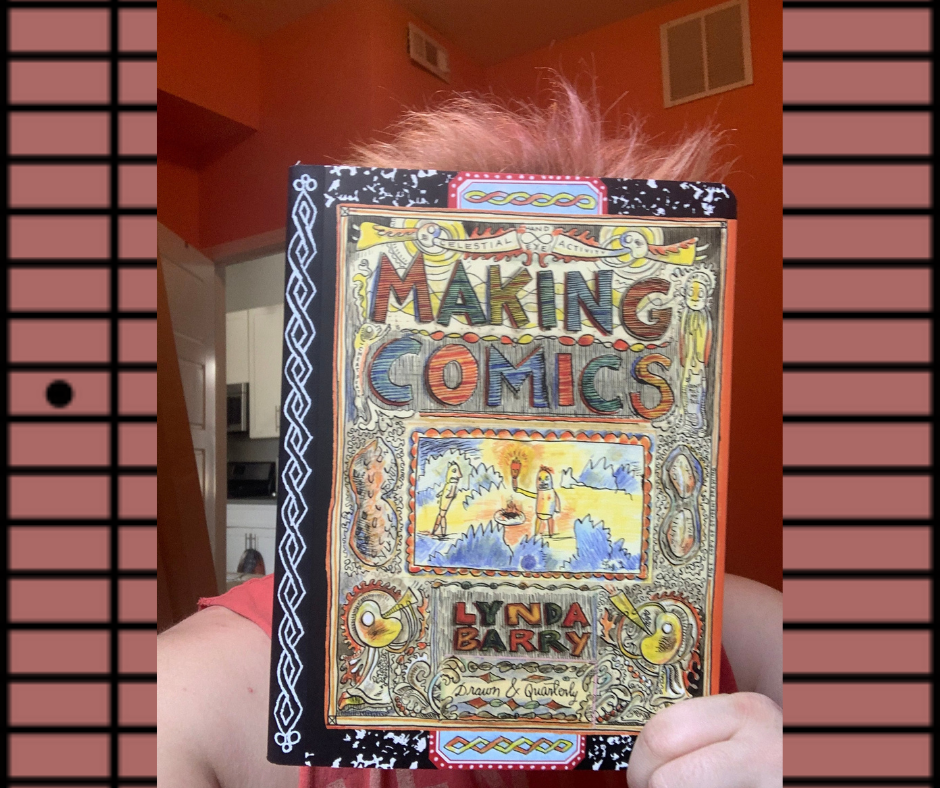
There’s a good chance you already fill in creative arrangements of squares on a regular basis, enriching your brain’s language centers by solving crosswords. Why not take this ritual a step further? Lynda Barry’s Making Comics begins with the reminder, “There was a time when drawing and writing were not separated for you,” and she shows us that it is possible to return to such a time. By partaking in the book’s exercises, you can learn to reunite images and language in your mind, to “practice the language of the image world.”

If you feel like your language centers need a good jolt, comic-making might be a perfect new hobby, and Making Comics is the perfect introductory text for puzzle fans. As Barry explains, the book’s exercises “take advantage of a basic human inclination to find patterns and meaning in random information,” and who loves patterns more than puzzlers? For instance, one simple exercise she says that anyone can do is drawing a scribble and then figuring out how to turn it into a monster. It’s that simple.

Your blogger with the book in question.

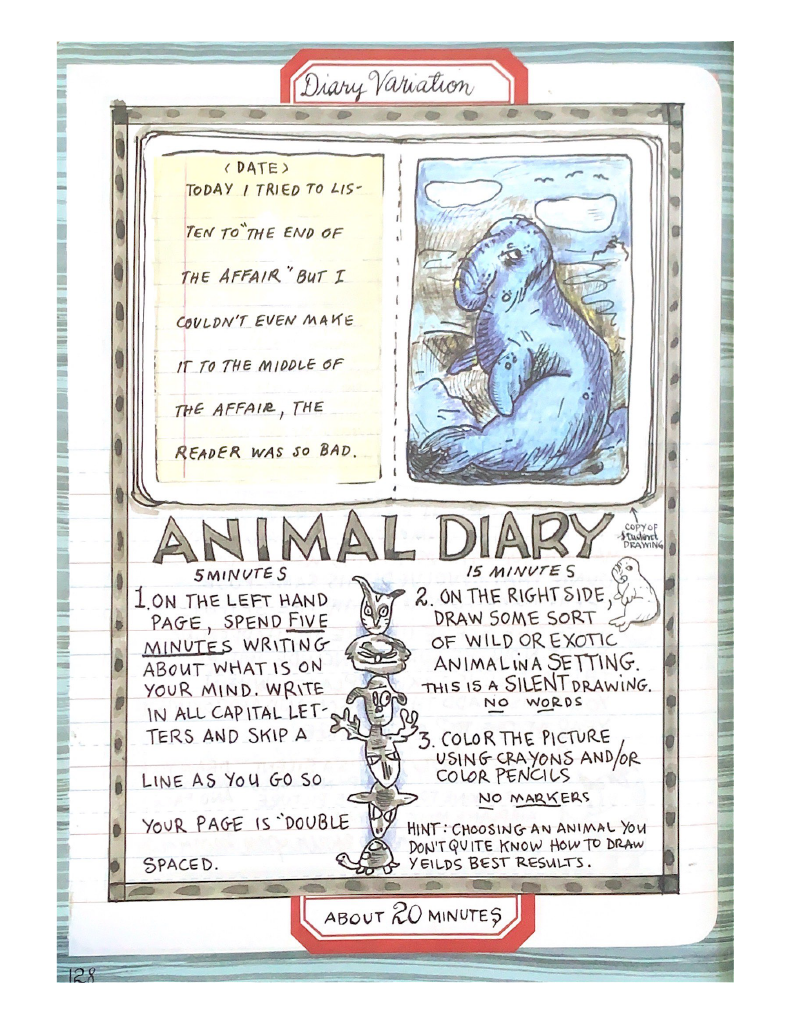
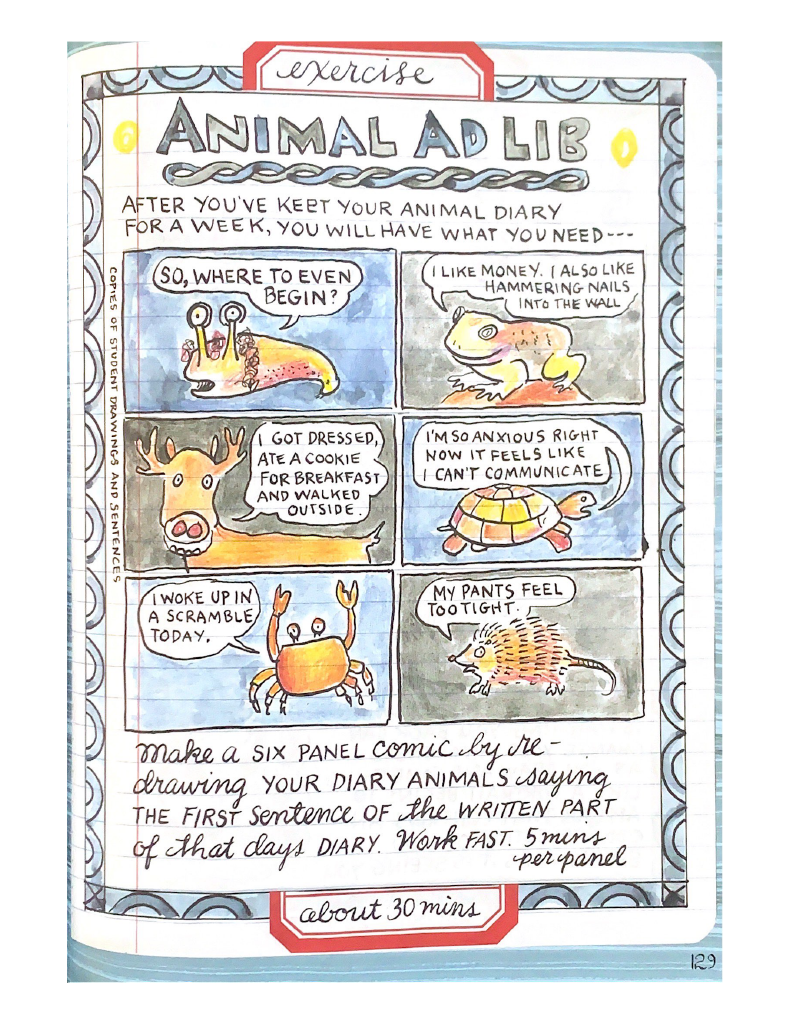
Many of the pattern-finding exercises in Making Comics’ treasure trove are collaborative, depending on a classroom setting or simply a creative partnership among friends. Others, however, can be done in solitude, including the exercises I’m going to take you through below. To prepare: Barry recommends, when just starting out, working with black Flair pens, a composition notebook (preferably not made from recycled materials), index cards (blank on one side), and basic 8.5×11 printer paper. She describes the composition notebook as “a place rather than a thing,” and says that you should try to keep it by your side like a faithful dog. “Making comics involves the same daily practice that learning any language does,” so keeping your materials handy is crucial.

Do you have your materials? Great! Let’s dive into the Animal Diary and consequent Animal Ad Lib, instructions pictured below!

More of Barry’s comics wisdom can be found on her Tumblr and Instagram, or of course, if you’re hooked, you can always pick up a copy of the book. It’s a full immersion course in a new language, in a new way of seeing.


For more fun, daily forays into the world of language, there’s Daily POP!

You can find delightful deals on puzzles on the Home Screen for Daily POP Crosswords and Daily POP Word Search. Check them out!

Thanks for visiting PuzzleNation Blog today! Be sure to sign up for our newsletter to stay up-to-date on everything PuzzleNation!