
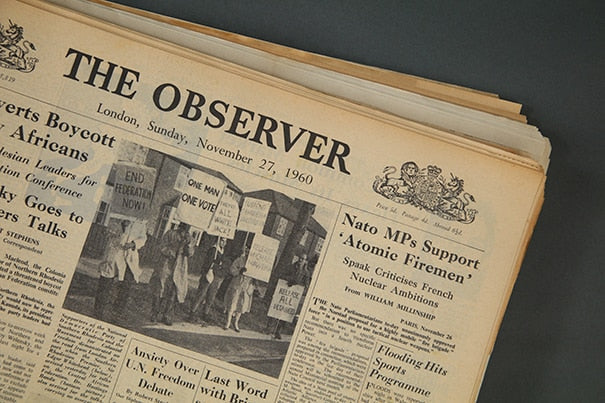
1913 marked the birth of the crossword as we know it, but cryptic (or British-style) crosswords have been around nearly as long as the American version!
In fact, this past Saturday — Pi Day — marked an important anniversary in the history of cryptic crosswords.
On March 14th, 1926, Edward Powys Mathers, under the pseudonym Torquemada, published the first of 670 cryptic puzzles under the umbrella of The Observer, launching a crossword dynasty that continues to this very day.
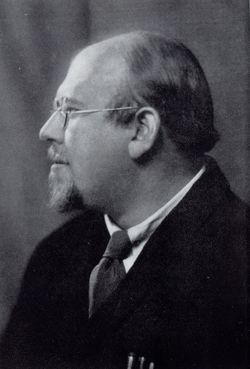
Mathers was a poet and a translator, and quite accomplished in both fields. Two years before his Observer debut as Torquemada, he was actually working for The Observer, but as a reviewer of thriller books. Apparently, he preferred to suggest how each book might be improved, rather than criticizing the book as is.
He noticed the American crossword craze crossing the ocean, but didn’t think much of them. (At the time, crossword cluing was very straightforward, consisting mostly of dictionary definitions. There was no wordplay, no misdirection, no humor. Cluing was VERY dry.)
In 1925, his first cryptic puzzles — a series of 12 crosswords where pairs of clues were rhyming couplets — appeared in The Saturday Westminster Gazette. This was where he first introduced himself to the puzzling public as Torquemada, taking the name of the Spanish Grand Inquisitor.
Well, sort of. The first puzzle was constructed for the entertainment of friends, but one of those friends took it to The Saturday Westminster Gazette against his wishes. The editors of The Gazette then managed to convince Mathers to create more. They were boldly advertised:
I recall how thrilling the green poster looked: “Crosswords for Supermen.” Alas, your tired commuter of today would swallow that first puzzle, verse and all, and correctly disgorge it between Charing Cross and Waterloo. — Torquemada, 1935
(Later those twelve puzzles were collected as “Crosswords for Riper Years.”)
After his run with The Saturday Westminster Gazette was finished, The Observer asked him to contribute puzzles to their outlet. They were called “Feelers,” as Mathers sought to widen the scope and audience of his puzzles, slowly “feeling his way” to better and more satisfying cluing.
It’s unlikely that Torquemada was the first setter to use cryptic-style cluing, but he was the first to ONLY use cryptic clues in his puzzles. But that wasn’t his only cryptic crossword innovation. He abandoned American-style grids as well, including these black bar grids:
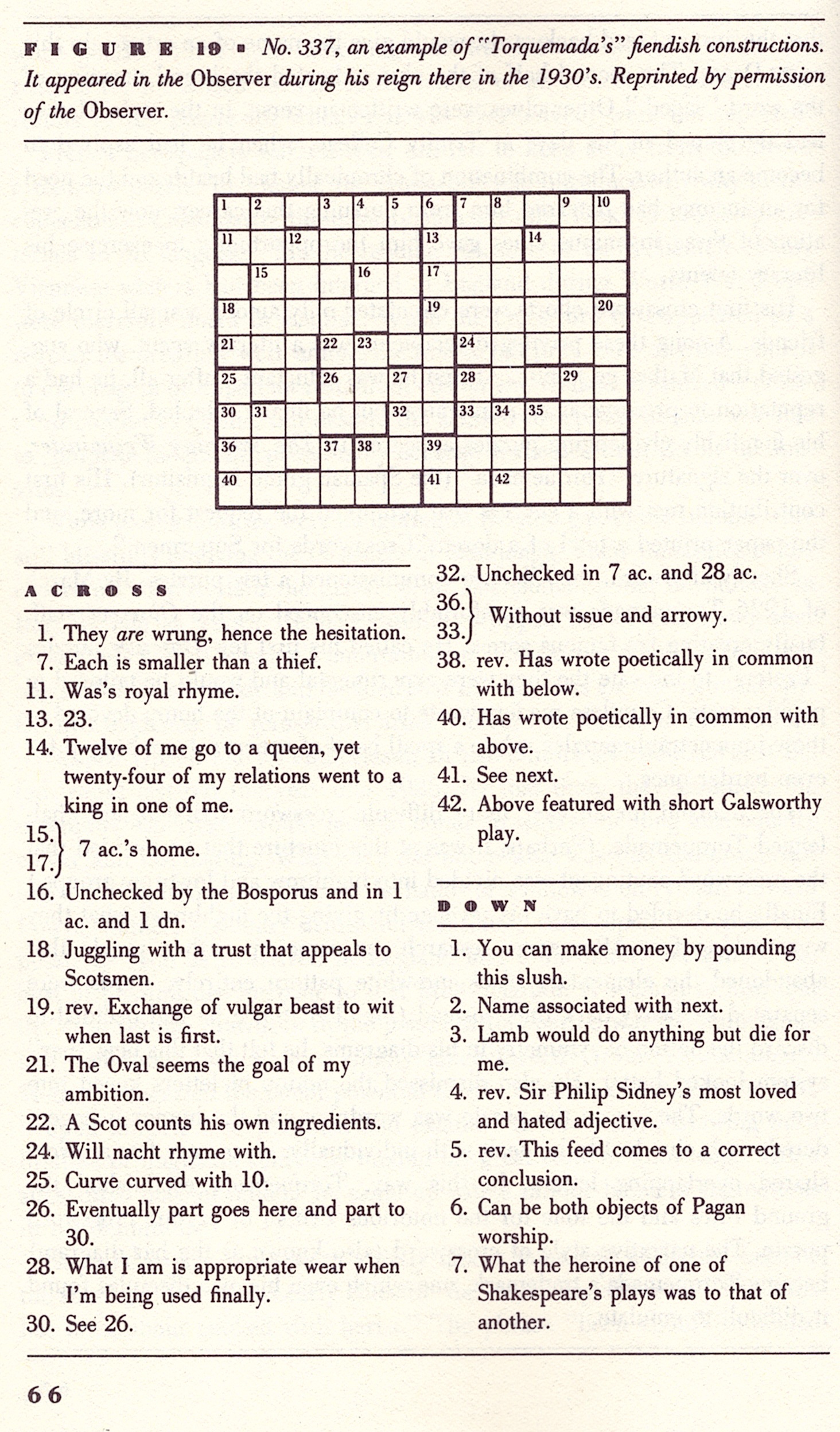
Apparently he was successful in feeling out his audience; no matter how difficult his puzzles seemed to many, The Observer would receive as many as seven THOUSAND correct solutions from solvers all around the world, hoping to be among the lucky few selected to win a prize. (Prizes went to the first three correct solutions opened each week at The Observer offices.) It’s estimated another twenty thousand solvers out there were regularly completing his puzzles and not sending in their solutions.
Torquemada’s wife Rosamond later recalled that solvers would thank him for helping them “rediscover forgotten beauties in prose and verse to which we might never have returned but for the stimulus of the weekly chase”.
Torquemada’s prolific puzzling and creative cluing led some to suspect that there was actually a team of constructors toiling away under a shared sobriquet, but Torquemada’s only collaborator was Rosamond. He would choose the topic/theme for the grid, providing her with a list of words to include, and she would construct the grid.
Sadly, his time shepherding cryptic crosswords came to end when he passed away on February 3rd, 1939, at the age of 46.
After his passing, Rosamond read through over thirty thousand of his clues. She found the same word used fifty times in his puzzles, and every single time, the clue was different. Fifty different clues for the same word!
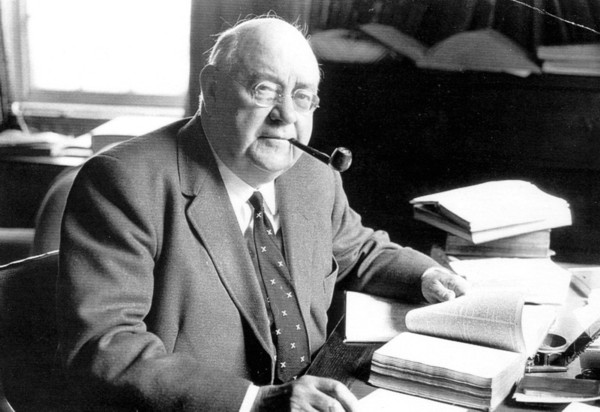
The unenviable task of taking over for Torquemada fell to Derek Somerset Macnutt, who adopted the name Ximenes for his constructing career. (Ximenes, as you might expect, was the name of a Grand Inquisitor in the Spanish Inquisition who succeeded the real Torquemada.)
Taking that particular set a very high bar, a challenge that Macnutt readily accepted. He aspired to increase the vocabulary of his audience, hoping for 30 percent of the answer words in the grid to be new to solvers.
Interestingly, his interest in puzzles was inspired by Torquemada but his singular brand of cluing was more reminiscent of Afrit, aka Alistair Ferguson Ritchie, who constructed cryptics for The Listener.
Ximenes adopted a symmetrical grid — a standard which remains to this day — as well as a maximum and minimum number of unches in the grid. (Unches, for you portmanteau lovers, means unchecked squares.) He also considered some of Torquemada’s puzzles unfair, and sought to standardize cluing, ensuring each had both wordplay and definition included, even while making them more creative and inventive.
In 1966, he published Ximenes on the Art of the Crossword, which pulled back the curtain on his constructing and inspired many constructors and setters in the years to come. (One of the most famous is the setter Eric Chalkley, aka Apex, who literally named himself after Ximenes in his endeavors to “ape X.”)
He also helped kickstart the cryptic crossword movement in America. After solving some of Frank Lewis’s puzzles for The Nation, Stephen Sondheim discovered the work of Ximenes, and started to learn the ins and outs of cryptic crosswords.
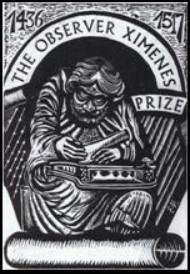
He even participated in Ximenes’s weekly clue-writing competitions:
Ximenes would then judge all the clues, conferring a first prize, a second prize, a third prize, and then two levels of honorable mentions: HC (Highly Commended) and VHC (Very Highly Commended). “And you would get in the mail a slip of paper giving the winners’ names and the winning clues.”
The slip was usually four inches wide by twelve inches long. In this way, even though Sondheim was in New York City, he became part of an international community of puzzle solvers matching minds with Ximenes. “I never got past honorable mention,” he lamented, “but I did get honorable mention.”
As it turns out, Sondheim received seventeen honorable mentions, fourteen HCs and three VHCs. One of those VHCs was for the clue “Pop art panel, derived from Dada” for PATERNAL.
Later accepting the challenge of the cryptic crosswords in The Listener (which were, and are, infamous for their difficulty), he introduced them to his collaborator on West Side Story, Leonard Bernstein.
And when Sondheim and Bernstein’s creative differences got the better of each other, they would reunite over a cryptic crossword, and then get back to work.
Sondheim would go on to create cryptic crosswords for New York Magazine, starting in the late 1960s, helping to introduce American audiences to that devious and challenging variety of crosswords. He also cultivated a library of cryptic puzzles and puzzle magazines, passing part of that collection (all of his Listener cryptic crosswords up through 1984) to Will Shortz.
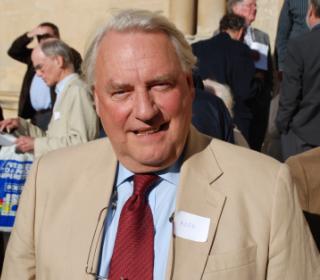
Macnutt passed away in 1971, but the final Ximenes puzzle, number 1200, was published in 1972. In March of that same year, stewardship of The Observer cryptic crossword passed to Jonathan Crowther, who took up the name Azed. Not only does this sound like it covers the alphabet (A to Zed), but it reverses the name of another Grand Inquistor, Diego de Deza.
He had been a solver of Ximenes’s puzzles since 1959, as well as a setter for The Listener. He also continued Ximenes’s clue-writing contest as the Azed Prize.
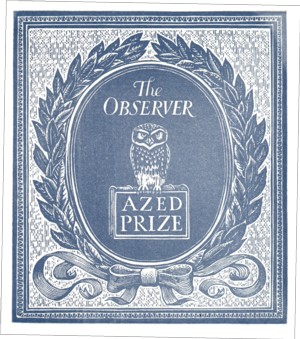
At this point, Azed has been setting the Observer cryptic crossword for longer than both his predecessors combined.
Also, you can’t help but love that he also sets occasional puzzles under the pseudonym Ozymandias. On his Wikipedia page, it even quotes the poem: “Look on my works, ye Mighty, and despair!”
Cryptic crosswords are alive and well. The Observer, The Guardian, The Independent, The Daily Telegraph, The Spectator, and The Sunday Times, in England, among others. The Ottawa Citizen, Toronto Star and The Globe and Mail in Canada. Harper’s in the US. Nearly every Australian newspaper has cryptic crosswords.
With Parsewords making the scene and hoping to demystify cryptic crossword cluing for new solvers, there’s no telling how many more solvers will discover or rediscover these challenging, playful puzzles.
And the folks at The Observer are marking the puzzle centenary with a special event on Thursday, March 19th!
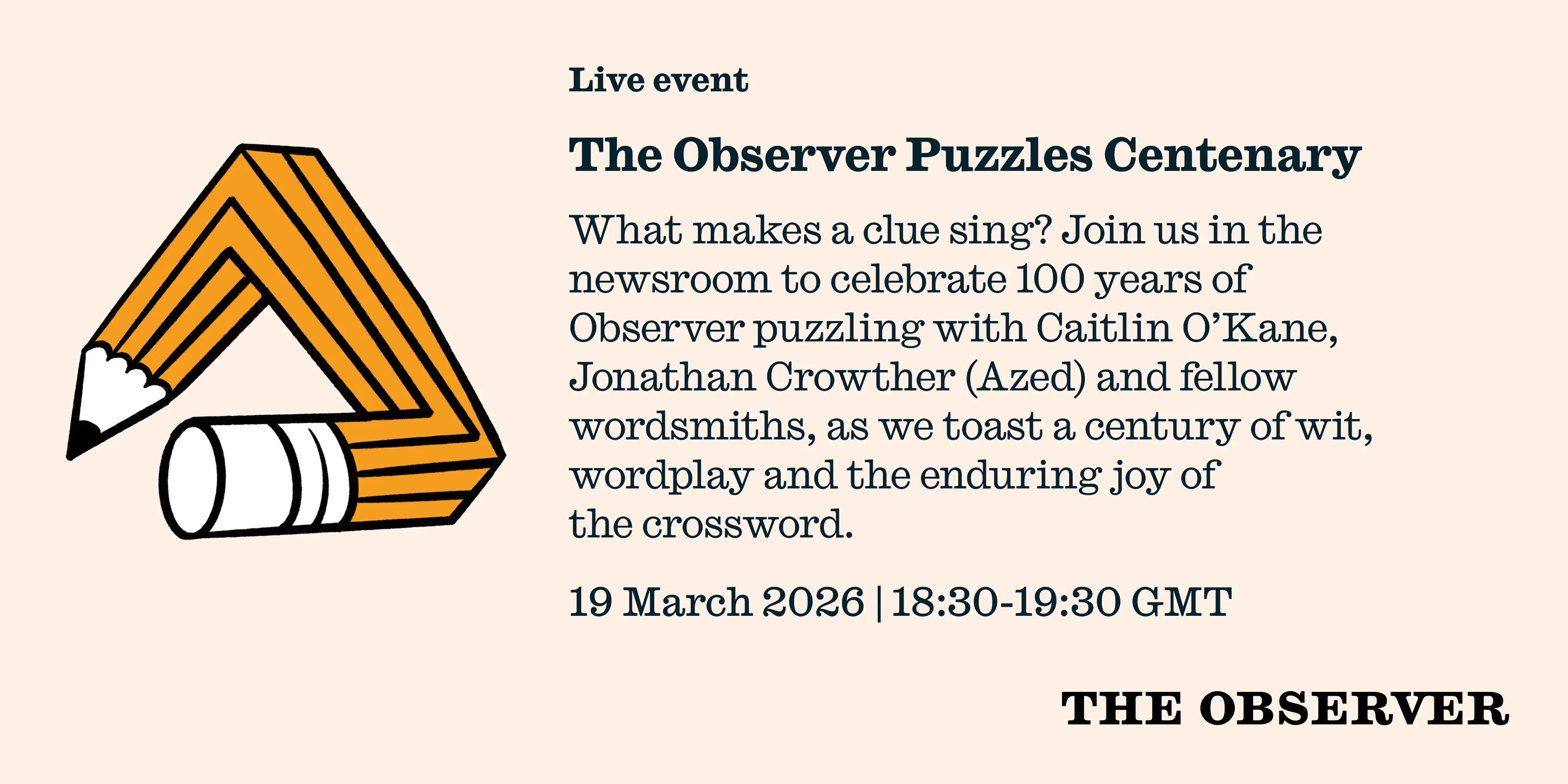
Caitlin O’Kane (their Puzzles Editor) and Azed himself will be in attendance, alongside other crossword setters and cryptic crossword enthusiasts, to enjoy an evening of live-solving and celebration:
From the invention of the cryptic to the rise of the modern brainteaser, they’ll unpack the secrets of their craft – what makes a clue sing, how setters think, and why a good puzzle keeps us hooked. Expect lively chat, unexpected revelations, and at least one enigma that demands to be cracked.
Raise a glass, meet other aficionados, and celebrate a century of wit, wordplay and ingenuity with the people keeping The Observer’s puzzling spirit alive.
So whether you’re attending The Observer‘s Puzzle Centenary, tackling a Parseword puzzle, or trying one of the numerous cryptic crossword outlets across the world, be sure to give a cryptic crossword a chance this week and be a part of one hundred years of puzzly challenge and creativity!
Happy solving, fellow puzzlers (and setters)!
Sources:
- The Centenary of the Crossword by John Halpurn
- What’s Gnu: A History of the Crossword Puzzle by Michelle Arnot
- The Strange World of the Crossword by Roger Millington
- Matching Minds with Sondheim: The Puzzles and Games of the Broadway Legend by Barry Joseph
- The Puzzle Edit
- Derek Harrison’s The Crossword Centre
 PuzzCulture