Czech Games Responds to the Harry Potter Codenames Controversy!

Czech Games is the home of Codenames, one of the most recognizable board game brands on the market today. It has been licensed dozens of times to include different pop culture properties, and it is the lifeblood of a smaller board game publisher.

And they just crashed into a wave of pro-LGBTQIA+ sentiment after announcing their new release.

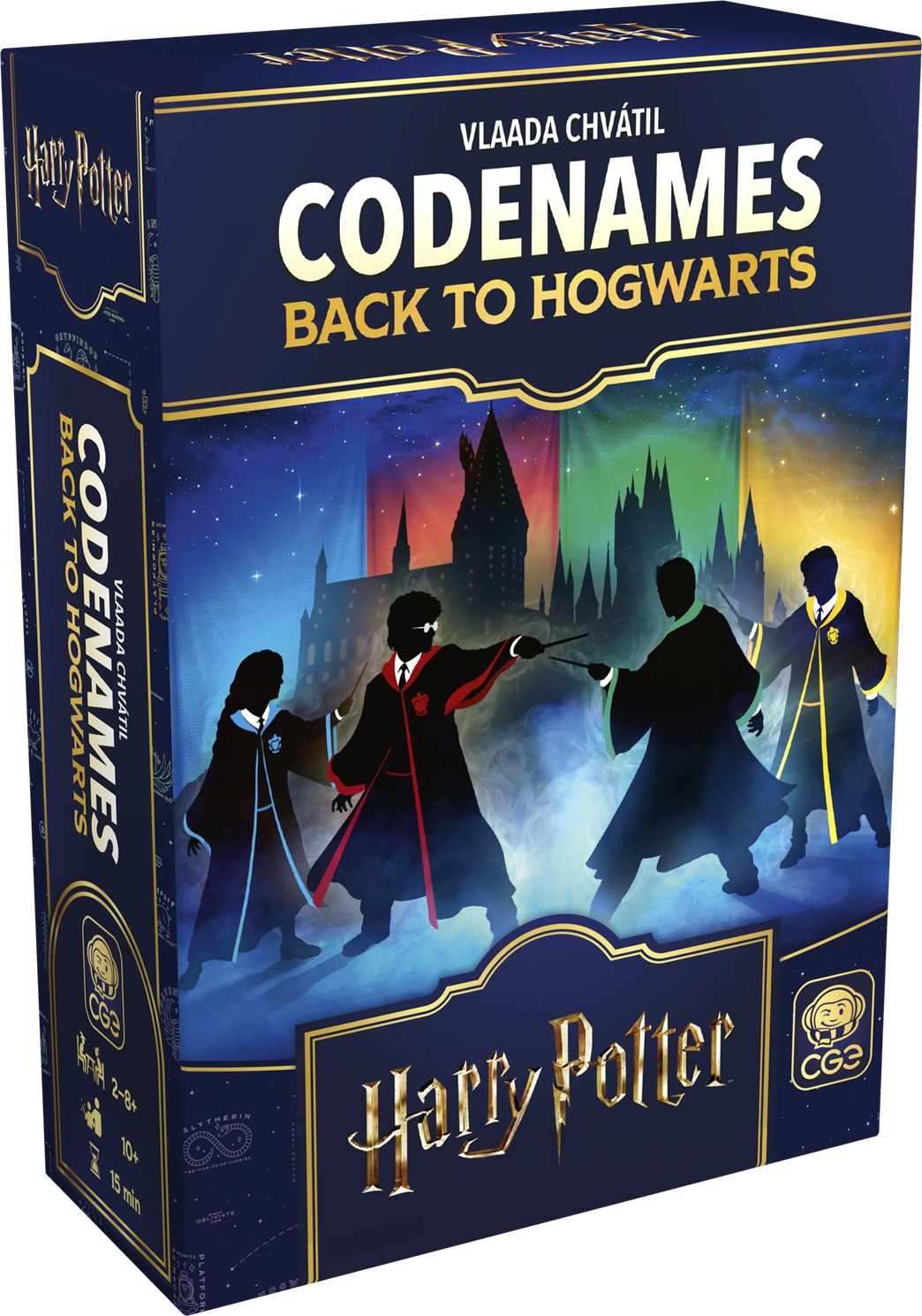
Codenames: Back to Hogwarts.

Now, you may wonder what the big deal is. After all, this isn’t even the first Harry Potter-themed Codenames game. One was released years ago.

Well, in case you’re unfamiliar, in the intervening years between the release of that game and the release of this new one, J.K. Rowling, the author of the Harry Potter books, has revealed herself to be an anti-trans zealot.

She has been on a campaign for years against the trans community (and LGBTQIA+ people, and virtually anyone else who stands up to her bigotry), and publicly celebrated laws in England that curtail the rights of trans individuals.

Moreover, she has promised that she will continue to use the money she earns from licensing Harry Potter to harm people.

Czech Games experienced a deluge of negative comments and feedback (as well as calls to boycott the company’s products), and has spent the last week or so promising to reassess.

To be honest, most in the board game community expected nothing to come from this. LOTS of companies still cut licensing deals with Harry Potter, like LEGO, and especially with the new TV show coming, there’s going to be more of this.


So I was pleasantly surprised when the company released the following statement:

We are all devastated that the project we were so excited to share with you caused harm instead of joy. We have been working to bring you the best possible games for years, and just like our other titles, we worked diligently to bring you this latest title, too.

In our excitement about creating a game within a universe many of us still treasure, we failed to see how that universe no longer brings joy to others. Over time, the harmful views of the story’s creator have escalated into harmful actions. We apologize unreservedly for not doing more to consider that possibility, and for subsequently announcing the game without taking preemptive actions to mitigate the pain it would cause.

Many of you have expressed your understandable anger, pain, and disappointment through a variety of platforms. Frankly, we were not prepared for the volume of the response. As a result, multiple accounts and comments were blocked or muted that should not have been. We would never want anyone experiencing the pain this situation has caused to then feel like they are being silenced. So for that, too, we want to sincerely apologize.

Like the world we live in, CGE is made up of individuals with various backgrounds, gender identities, sexual orientations, and belief systems. None of us would ever want to take actions that would hurt or restrict the rights of another human being. We commit to remaining supportive of an inclusive and welcoming community of gamers. We believe in the rights of all people to have their own identity, and we reject hate and bigotry in all their forms. Trans rights are human rights.

With the above in mind, and after many heartfelt and vital discussions both internally and with members of the affected community, we have decided to donate 100% of the profit from this game to appropriate charitable organizations. We will ensure that an amount equal to or greater than the fee paid to license this product will go directly to organizations that provide support for the trans community.

We evaluate profits and make charitable-giving decisions each December, and we will continue using this annual process to direct the game’s profits. We will listen to recommendations from the community to help guide our choices of organizations that provide support for the trans community. Our goal is to select those that offer direct, practical help to people in need — for example, services similar to the emergency hotline that was recently discontinued.

At CGE, we are committed to making decisions that come from the heart in everything we do. We opened discussions with members of the affected communities and we came together as a whole company to find a way forward that was a genuine reflection of our values and desire to do the right thing. We are sorry for the time it took us to communicate our path forward, but we hope you see that we did so with the care and consideration that you all deserve.



I think it’s the best we could have hoped for. An acknowledgment of the harm caused, a promise to do better, and a tangible response that the audience will be able to track.

Boycotts work, speaking up works, and I’m so proud of the board game community for making noise and pushing back, leading to a turnaround like this.

There is no ethical consumption of Harry Potter material, given J.K. Rowling’s intentions. If she makes a single dime from you, it will go towards hurting others. That’s simply the facts as presented.

And it’s entirely possible that there would be huge costs and even legal consequences if Czech Games didn’t fulfill the agreement they made over the HP license.

So this feels like the most positive outcome going forward. Czech Games isn’t a huge company like LEGO. If you don’t buy HP LEGOs, or stop buying LEGOs entirely out of protest, the company probably won’t notice. (You should STILL speak up, of course.)

But Czech Games will. Most board game companies are small, and profit margins are often razor-thin. A PR disaster like this could easily end a board game company.

I don’t look forward to all the HP nonsense we’re going to hear as the show looms closer, but I’m grateful that the board game community stood up, and Czech Games listened.

Here’s hoping we see more of that in the future.

Happy gaming, everyone.
A Way to Make Impossible Objects… Less Impossible?

One of the most remarkable things about humans is that we can envision impossible things. Our imagination allows us to go well beyond what is physically and scientifically achievable to ponder the furthest reaches of creativity.

And no, I’m not just talking about the mythical 15×15 crossword with only fifteen words across and no black squares. THOUGH WE CAN DREAM, CAN’T WE?

Sorry, I digress.

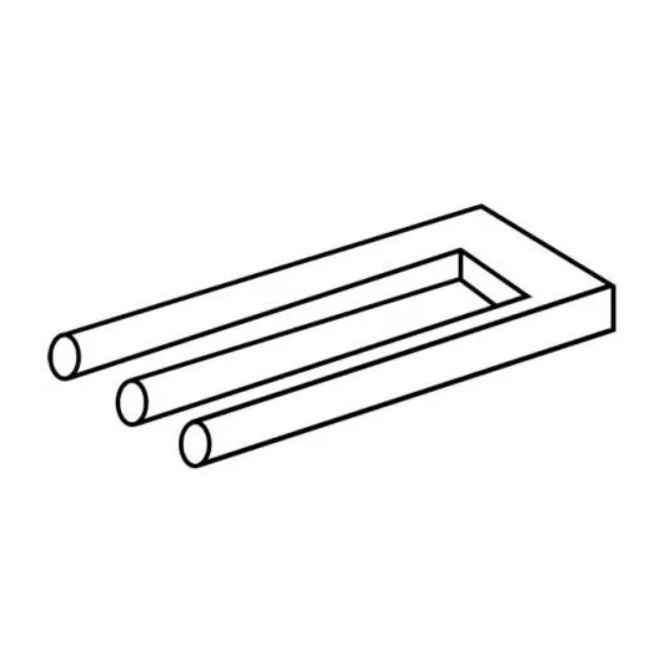
When I say impossible objects, I’m talking about things like the impossible trident (pictured above) or the Penrose triangle (pictured below).

These are impossible objects, things that play with our perceptions in a two-dimensional environment like a drawing, but cannot be created in a three-dimensional environment without cutting or bending them.

Or they couldn’t, until very recently.

Researchers at MIT have announced their new software program, which they call Meschers, designed to create representations of these impossible objects with greater dimension than a drawing.

It’s not quite three-dimensional, because the shapes are impossible, but these “2.5-dimensional” representations allow us to process them visually as if they were completely three-dimensional.

Usually, the optical illusion of an impossible object falls apart when viewed from a different angle.

But the Meschers program — the name combines M.C. “Escher” and “meshes” — allows scientists and mathematicians a better model they can use to perform calculations and study different variables without the limits of two-dimensional representations.

It’s hard to predict where programming like this will take us. MIT PhD student Ana Dodik says the program could eventually aid in research across fields as varied as thermodynamics, architecture, and geometry.

They also said the code for the software will be released to the public, so you’ll have the opportunity to create some impossible objects yourself soon!

But, until then, please enjoy this Meschers rendering of the impossible dog, complete with different lighting effects.

Happy visualizing, everyone!

Big Changes in the TTRPG and Live Play Markets! Will Daggerheart Triumph?

There have been some huge announcements in the actual play / live play space on YouTube, Twitch, and elsewhere, and it has huge ramifications for the RPG industry in general.

(If you’re unfamiliar with roleplaying games, I’ll have a brief glossary at the bottom of the post explaining the bolded terms in today’s post. Let me know if I should add more, or create a separate RPG glossary page to link to!)


I previously reported on staff leaving / being fired from Wizards of the Coast, the company that owns the Dungeons & Dragons brand. I also reported that several of those prominent names have since gone to work for D&D competitor Darrington Press on their new tabletop roleplaying game, Daggerheart.

So not only are industry icons Jeremy Crawford and Chris Perkins working on material for Daggerheart, but it was announced that Keith Baker is creating a new setting for Daggerheart!

(This video by Todd Kenreck — another popular public face for D&D, and another recent loss for WOTC after they unceremoniously fired him — details all the exciting new developments for Daggerheart.)

Most RPG games have core rulebooks that explain the game mechanics (why and how and when to roll dice) and a system for building characters to play, but it takes an exciting, immersive setting to help build a fanbase of players that want to return to the game again and again.

Keith Baker created Eberron, one of the most popular D&D settings ever, so his contributions are a big plus for the burgeoning Daggerheart gameplay space.

Darrington Press are making smart moves to position Daggerheart as a genuine challenger for the tabletop RPG market’s top spot, one that D&D has been losing its stranglehold on after years of unpopular business and creative choices.

But that’s not the only industry-shaking news being made by the Critical Role / Darrington Press camp.

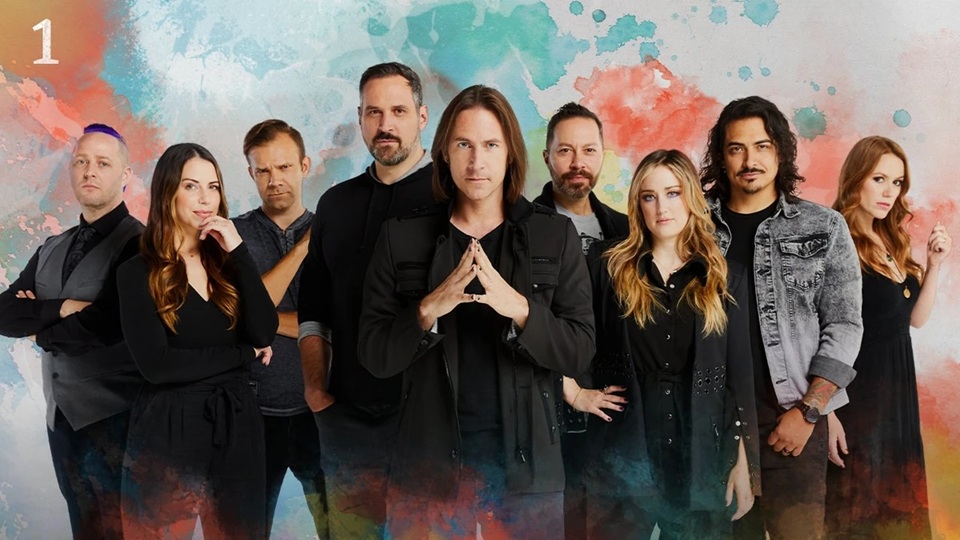
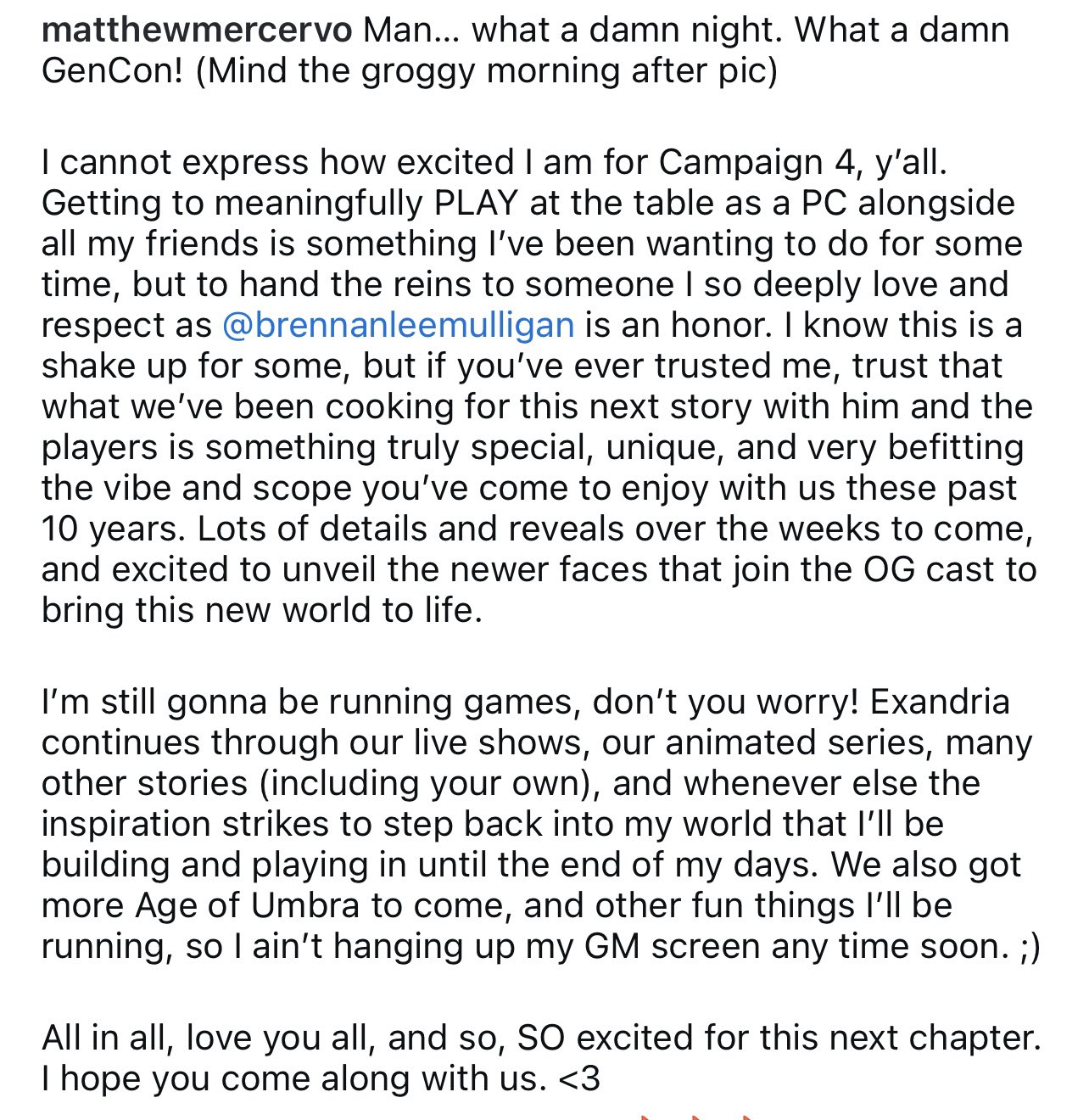
They recently announced during one of their live shows that their upcoming fourth campaign — a years-long storytelling endeavor hotly anticipated by their fans — will have a new game master. For a decade now, Matt Mercer has told three epic-length stories with the Critical Role cast, all set in his homebrew setting of Exandria.

But for Campaign 4, there will be a new setting, new characters, and a new GM.

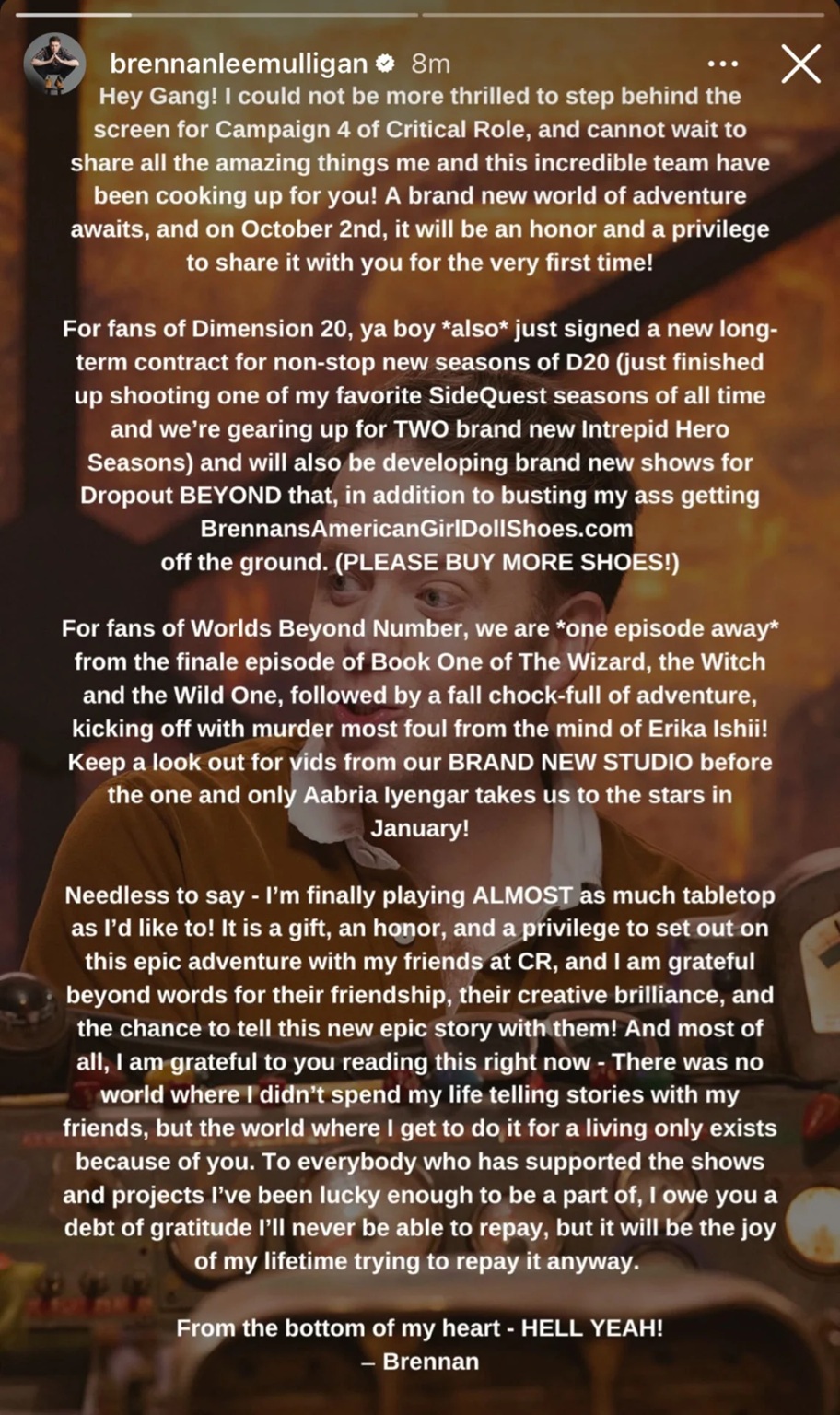
Brennan Lee Mulligan will be shepherding the Critical Role crew through Campaign 4, and Matt Mercer will finally get to step out from behind the GM screen and play a long-term PC on his own show.

Now, Brennan Lee Mulligan is a popular name in the liveplay TTRPG world. He GMs for Dropout’s Dimension 20 series, as well as running the wonderful audio-only RPG podcast Worlds Beyond Number, which will be wrapping up their flagship campaign “The Wizard, The Witch, and The Wild One” very soon.

Despite signing on for a potentially years-long storytelling adventure with the Critical Role team, Brennan claims that his GM work at Dropout will NOT be slowing down.

I envy him both his energy and his creative output.

As for all of this potentially industry-altering RPG news…

I have some thoughts.


1. Yay Keith Baker!

Keith Baker is absolutely one of my favorite creators in the world of games and RPGs. Eberron is a wonderful game setting that he continues to add to and enhance with blog posts and worldbuilding through his Patreon. (He also created one of my all-time favorite card games, Gloom.) He’s brilliant and I cannot wait to see what he creates for Darrington Press.

(This is not meant to downplay the good work being done at Darrington Press already OR to ignore the forthcoming creative contributions from Chris Perkins and Jeremy Crawford. I’m excited to see what they have in store as well.)

2. Wizards of the Coast/Hasbro seriously needs to watch out.

While they have been making money-first decisions for years and burning decades of good will with the players (the OGL scandal, the Spelljammer cultural insensitivity kerfuffle, sending actual Pinkertons after someone for leaking Magic: The Gathering details), Darrington Press has been quietly building and expanding their efforts.

They’re actively seeking out new game ideas and systems to diversify what they can offer their audience. They’ve got in-house D&D alums with DECADES of experience, and they’re collaborating with other prominent names in the RPG world (as well as the crew from the popular D&D podcast Tales of the Stinky Dragon).

While D&D keeps stumbling, Darrington Press is rolling. The next year or so is going to tell us a lot about the future of the industry.

3. I’m stoked for Matt Mercer.

He’s been running Critical Role’s game for over ten years, creating a world not just for his friends and fellow players, but for an audience of tens or hundreds of thousands of viewers. That’s daunting, even when you do love GMing (as Matt clearly does).

But the chance to set that aside, recharge your creative batteries, and play instead of run? I hope Matt gets to really spread his storytelling wings in a different way and enjoy Campaign Four.

4. A new setting, a new Game Master, and a reshuffling of players could breathe new life into Critical Role.

Their third campaign was divisive, and I think a clean break could not only offer some excellent roleplay and storytelling opportunities, but it could help the audience MISS the setting of Exandria for a while. Absence makes the heart grow fonder, and this might just be what both the audience and the cast and crew of Critical Role need to continue telling hilarious, engrossing, emotionally-affecting stories around the table with some dice. Here’s hoping.

5. Brennan Lee Mulligan is an absolute madman.

I mean, I get it; at one point, I was running four weekly games AND playing in a fifth. I once roleplayed eight days in a row, and my week feels weird if there’s only one game that happens. Gods forbid there’s a week with NO games. It’s a hobby, a release, and it brings me joy.

But still, he’s putting a lot on his plate. Someone on social media referred to him as “the world’s most employed man,” and it’s hard to disagree.

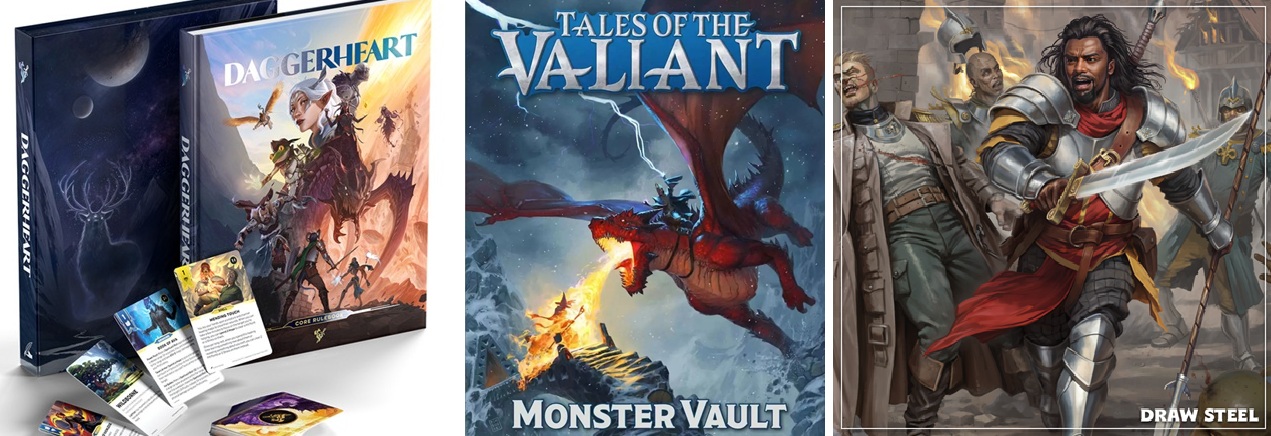
6. With all the talk about D&D and Daggerheart, it’s a little bit of a bummer that I’m not hearing more about Matt Coville’s Draw Steel and Kobold Press’s Tales of the Valiant.

When the OGL Scandal exploded a few years ago, they were among the three games constantly touted as a rising competitor to D&D (Daggerheart was the third). But it feels like Daggerheart is taking up a lot of the oxygen in the room these days, so I hope that Draw Steel and Tales of the Valiant can also carve themselves out a nice chunk of the market space D&D is ceding.


The live play TTRPG space is vast, and there are so many great live plays to choose from, big and small. (Maybe I should do a future post about my favorites!)

It’s certainly going to be interesting to see if Daggerheart live plays begin to gain traction on YouTube and Twitch, and D&D live plays fall out of favor over the next few years. (With the company’s new franchise business model focusing on monetizing the brand over relying on D&D gameplay and sourcebooks as a lure, they might’ve already unconsciously ceded some territory online to their competitors.)

And speaking of competition, a lot of people view Dimension 20 and Critical Role as competitors. Sure, any companies that operate in the same space are in competition somewhat, but I prefer to think of them as siblings scrambling for slices of the same fresh-baked pie. No one is cutting throats over pie, after all.

In the end, I just want people to be excited to sit around a table (either a real one or a virtual one) and play roleplaying games with their pals. If any of these big changes, collaborations, or endeavors mean we get more players trying RPGs, then I’m calling it a win.


How do you feel about all of this RPG live play hullabaloo, fellow dice-rollers? Let me know in the comments section below! I’d love to hear from you.

Brief RPG Glossary!

Campaign: Shorthand for all of the creative work that goes into running a D&D game for any length of time. The campaign is the mix of your choice of game, the players, the setting, and the story you all tell together. Campaigns can be as short as a few sessions or run as long as decades, all depending on player interest, scheduling, and enthusiasm for the game. For comparison, Dimension 20’s live play campaigns range from 4 sessions to multiple chapters with 10-20 sessions per season.

Session: A single instance of gameplay. If you play a game four times in the same story in the same world as a continuing narrative, you’ve had four sessions of gameplay.

Players & Player Characters / PCs: Those who play the game. They create a character that explores the world, interacting with the other players as well as NPCs performed by the DM

Non-Player Characters / NPCs: Characters played by the DM/GM. Everyone the players interact with in the game, friend or foe.

DM / GM / Dungeonmaster / Game Master / Storyteller: the person who runs the game. They describe what the players see and experience, they play all of the characters the players interact with, and they explain the consequences and results of all the dice rolls the players make. They create villains to fight, conflicts to be solved, and provide every voice, sound, and piece of description the players encounter. A good description for the GM is “everyone and everything else.” (Thanks to the audio-only D&D podcast Worlds Beyond Number for that perfectly concise phrasing.)

Setting: The world where the story and the game’s events take place, described to the players by the GM. Some settings are created especially for a given RPG (and can have dozens of sourcebooks dedicated to them), but many GMs create their own settings (which are known as “homebrew” settings). An intriguing and exciting setting can be crucial to helping an RPG attract and retain an audience of players.

Actual play / live play: Dungeons & Dragons or other RPGs played live on YouTube, Twitch, or other online video services. Some are run/played by professional actors or comedians (Critical Role, Dimension 20), others by enthusiastic players outside the entertainment sphere. Production values can vary, and some are audio only. But there’s a whole world of them out there to explore.