
The insane stupid rodeo of tariff threats, retractions, delays, and new threats continues, and the board game industry is reeling.
Some companies are pausing Kickstarter pledge managers and rollouts until they consult with lawyers and printers. Others are cancelling projects outright.
And these companies are being incredibly honest and forthright with their audiences. I’ve seen at least a half-dozen posts from across the industry, and there are probably many others I’ve missed.
But I want to share one in particular.
The CEO of Steve Jackson Games, Meredith Placko, put out a post about the tariff situation and how it’s affecting the industry.
Feel free to click the link to check it out, but I’m going to post much of the text here as well, because it’s straightforward and informative. It avoids hyperbole and confronts the unpleasantness awaiting board game companies going forward. Plus it gives us real numbers to crunch.
(Meredith’s comments are in quotation marks, my comments in italics.)
“On April 5th, a 54% tariff goes into effect on a wide range of goods imported from China. For those of us who create boardgames, this is not just a policy change. It’s a seismic shift.
At Steve Jackson Games, we are actively assessing what this means for our products, our pricing, and our future plans. We do know that we can’t absorb this kind of cost increase without raising prices. We’ve done our best over the past few years to shield players and retailers from the full brunt of rising freight costs and other increases, but this new tax changes the equation entirely.”
Covering the board games industry has been a rollercoaster since COVID 19 reports in China emerged and factories began shutting down. Board game companies adapted quickly, but many suffered, and more than a few closed their doors.
I was hoping that would be the worst of it for the industry, but sadly, that’s obviously no longer the case. I can only imagine what the last five years have been like for board game creators.
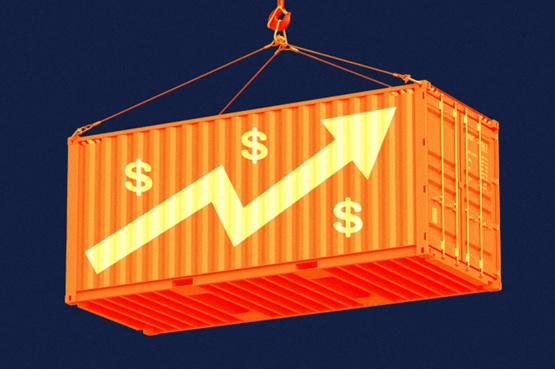
“Here are the numbers: A product we might have manufactured in China for $3.00 last year could now cost $4.62 before we even ship it across the ocean. Add freight, warehousing, fulfillment, and distribution margins, and that once-$25 game quickly becomes a $40 product. That’s not a luxury upcharge; it’s survival math.”
Getting real numbers has been a revelation, and I’ve been sharing this post all over in the hopes of people realizing the genuine effect these tariffs will have on businesses.
“Some people ask, “Why not manufacture in the U.S.?” I wish we could. But the infrastructure to support full-scale boardgame production – specialty dice making, die-cutting, custom plastic and wood components – doesn’t meaningfully exist here yet. I’ve gotten quotes. I’ve talked to factories. Even when the willingness is there, the equipment, labor, and timelines simply aren’t.
We aren’t the only company facing this challenge. The entire board game industry is having very difficult conversations right now. For some, this might mean simplifying products or delaying launches. For others, it might mean walking away from titles that are no longer economically viable. And, for what I fear will be too many, it means closing down entirely.
Tariffs, when part of a long-term strategy to bolster domestic manufacturing, can be an effective tool. But that only works when there’s a plan to build up the industries needed to take over production. There is no national plan in place to support manufacturing for the types of products we make. This isn’t about steel and semiconductors. This is about paper goods, chipboard, wood tokens, plastic trays, and color-matched ink. These new tariffs are imposing huge costs without providing alternatives, and it’s going to cost American consumers more at every level of the supply chain.”
This is the real lesson here for anyone supporting these tariffs. You can’t just say you’re bringing manufacturing back to America. You have to DO it. You have to have the facilities, the manpower, the training, the materials, and the wherewithal. These tariffs aren’t just putting the cart before the horse, it’s pushing the cart down the hill and blaming gravity when it crashes.
“We want to be transparent with our community. This is real: Prices are going up. We’re still determining how much and where.
If you’re frustrated, you’re not alone. We are too. And if you want to help, write to your elected officials. Ask them how these new policies help American creators and small businesses. Because right now, it feels like they don’t.
We’ll keep making games. But we’ll be honest when the road gets harder, because we know you care about where your games come from – and about the people who make them.”
Hey folks, it’s your friendly neighborhood puzzle guy back again. (Just wanted to make it clear that everything you read going forward is me, not Meredith.)
It’s a rocky road ahead for board game companies.
Thankfully, we are already seeing industry leaders making moves to handle Trump’s tariffs.
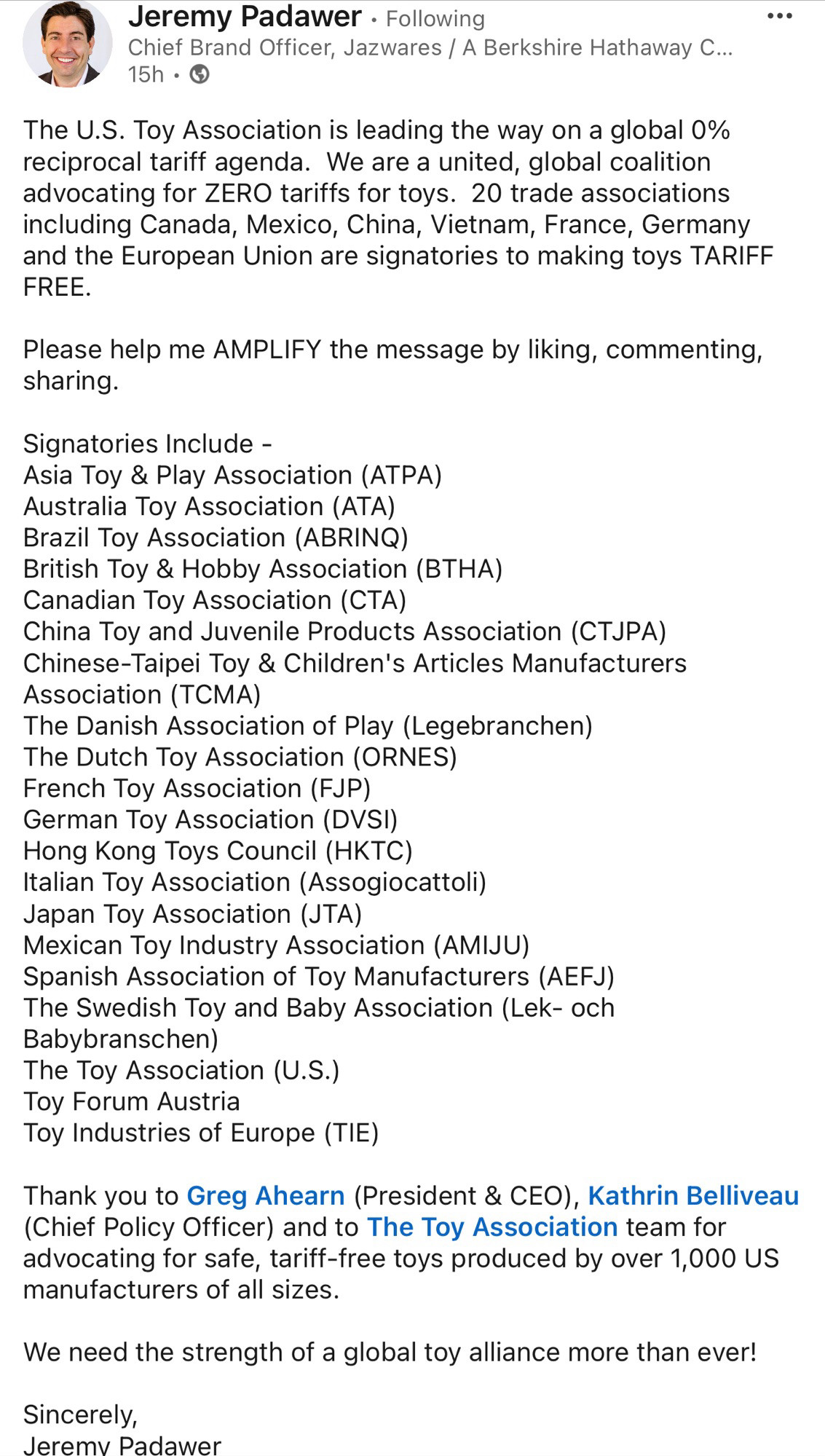
The U.S. Toy Association (founded over a hundred years ago!) is trying to forge a coalition with toy and trade associations across the world with the lofty goal of a global 0% reciprocal tariff on toys.
The list of organizations agreeing to work on this is impressive… and inspiring. Sure, it’s a business decision. My cynical little heart sees that.
But imagine if they succeeded and made toys tariff-free across the globe. What a gift to parents and children around the world that would be! What a boon that could be to game designers.
(I reached out to the U.S. Toy Association to confirm if board games and RPGs fall under the toy umbrella, but have not heard back yet.)
So, what can you do in the meantime?
Well, if you have the means to do so, reach out to your officials. Support local game companies. Speak up, loudly and often.
When you think of the board game industry, you probably think of the big companies, the big brands… but there’s only a few of them.
The VAST majority are small businesses led by passionate designers, creative minds, and hardworking people of all ethnicities, ages, backgrounds, and gender identities. They are a chorus of voices that make gaming better, that tell us stories about ourselves through gameplay, that bring history alive and challenge our minds, our reflexes, our collaboration, and our cunning.
THAT is the board game industry I want to see succeed.
I hope they can weather the storm.





 PuzzCulture