The King of the Monsters Rampages Across the World of Board Games!

monopolyvariations

When it comes to licensing and variant titles, no board game comes close to the empire of different versions available that has been amassed by Monopoly.

Not only can you get one tailored to every one of the 50 states, but there’s a version of Monopoly for practically every pop culture phenomenon out there, covering everything from Game of Thrones and Star Wars to Spongebob Squarepants and The Office. There are versions with credit cards instead of cash, and even a cheater’s edition where players can be handcuffed to the board.

Sure, other classic board games are following suit. You can find versions of Clue centered around The Golden Girls or Dungeons & Dragons, and a Nightmare Before Christmas version of Operation out there.

But that’s a drop in the ocean compared to the myriad versions of Monopoly that are available for board game fans.

Even Godzilla is getting in on the fun.

monopolygodzilla

[Image courtesy of Mental Floss.]

Yes, there’s a Godzilla-themed Monopoly game now, complete with renamed properties, monster-influenced money, special game pieces, and rebranded Chance and Community Chest cards.

There are even factories and bases to build instead of houses and hotels.

But I must ask the obvious question. If you’re moving a monster token around the board, why aren’t you smashing houses and hotels instead of building bases and factories? I mean, the only monopoly your average kaiju is looking for is a monopoly on destruction, am I right?

Maybe a few intrepid players will cook up some fun variant rules that encounter the monsters to rampage rather than rebuild.

Of course, if you’re looking for an excuse for destruction, maybe the accompanying Godzilla-themed Jenga will be more up your alley.

godzilla-jenga

[Image courtesy of Bloody Disgusting.]

Yes, it’s just like normal Jenga, except the tower pieces are painted to look like pieces of a building, and Godzilla is slowly marching toward it, his atomic breath glowing as he anticipates the unbridled joy of knocking over yet another skyscraping edifice.

That’s certainly more in keeping with the King of the Monsters and his traditional manner for dealing with massive man-made structures. It won’t be as destructive as, say, Smash City or Terror in Meeple City, but it’s certainly a step in the right direction.

And, honestly, if there are two games that could use a little destructive sprucing up, it’s Monopoly and Jenga.


Thanks for visiting PuzzleNation Blog today! Be sure to sign up for our newsletter to stay up-to-date on everything PuzzleNation!

You can also share your pictures with us on Instagram, friend us on Facebook, check us out on TwitterPinterest, and Tumblr, and explore the always-expanding library of PuzzleNation apps and games on our website!

Did a Typo Help Defeat the Enigma Code and Win World War II?

During World War II, the Enigma code was one of the most daunting weapons in the German arsenal. Cracking the code would be the key to intercepting crucial information and outmaneuvering the Nazi war machine. In fact, unraveling the secrets of Enigma was so important that both England and the United States poured massive resources into building their own codebreaking operations, Bletchley Park and Arlington Hall, respectively.

Loads of fascinating information about the day-to-day operations of Bletchley Park and Arlington Hall have emerged over the last decade or so, and one of the most peculiar anecdotes to make the rounds recently claims that a typo is partially responsible for cracking Enigma.

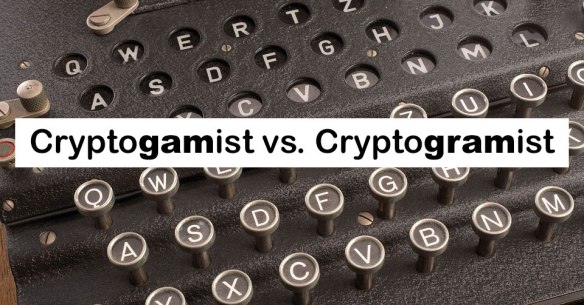
As the story goes, a man named Geoffrey Tandy was recruited by the UK Ministry of Defense to work at Bletchley Park as part of their growing team of cryptography experts. Scholars and professions from all over the country were being enlisted in the war effort, and cryptographers (or cryptogramists) were at the top of the list.

But Tandy wasn’t a cryptogramist. He was a cryptogamist, aka an expert on mosses, algae, and lichen.

Despite the error, Tandy remained at Bletchley Park, and a year or two after his mistaken hiring, his expertise proved invaluable when a German U-boat was sunk and cryptographic documents relating to Enigma were recovered. You see, his experience preserving water-damaged materials and specimens helped salvage the water-logged documents so they could be used to crack the German code.

And thus, a typo helped end World War II.

cryptogam

[Image courtesy of Did You Know Facts.]

It’s a great story. And like many great stories, there’s a hint of truth to it. There’s also a lot of exaggeration to make it a tale for the ages.

It was no fluke that Tandy was recruited for Bletchley Park. In addition to his cryptogamist credentials, he was assistant keeper of botany at the National History Museum of London. His work included managing the voluminous library, working with fragile documents and samples, and a facility with multiple languages.

Those linguistic skills and organizational talents made him a perfect choice for Bletchley Park, since they were recruiting all sorts of experts. Remember that the field of cryptography was in its early stages. You couldn’t just go looking for cryptographers. You had to build them from scratch, as well as the folks who would be support staff for those codebreakers-in-training.

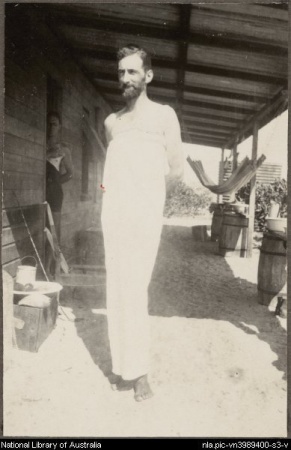
That would be Tandy’s role. He was part of a division known as NS VI, responsible for archiving foreign documents and helping the cryptographers deal with any technical jargon they might encounter, particularly in foreign languages.

tandy

[Image courtesy of the National Museum of Australia.]

So where did the typo idea come from?

Well, it’s entirely possible it came from Tandy. The cryptogram/cryptogam mistake is just the sort of joke that would appeal to linguists and other professorial types, so either another member of the Bletchley Park team or Tandy himself could have downplayed his credentials in tongue-in-cheek fashion with the story of an erroneous typo.

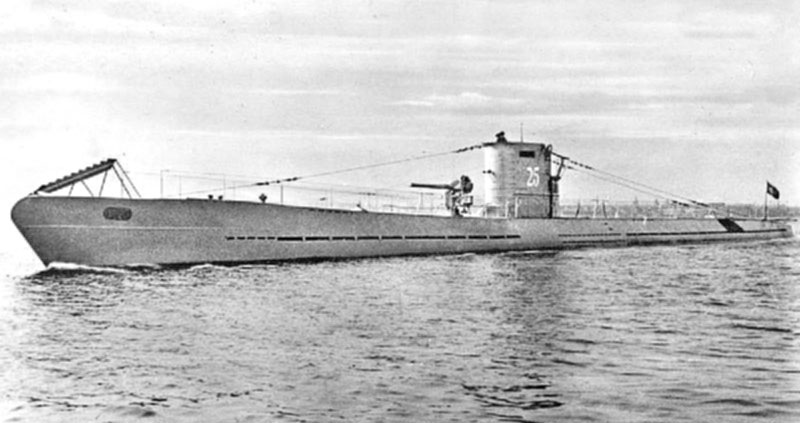
As for the other part of the story — where he saved the documents — there is some debate as to whether that happened. As the story goes, he used his knowledge of preserving documents to save a waterlogged set of cryptographic codes from a sunken U-boat.

[Image courtesy of Military Factory.]

The anecdote as reported usually cites the year 1941, whereas many books about Bletchley Park’s codebreaking efforts reference a U-boat from 1942, U-559, where documents AND a working Enigma machine were recovered.

I believe he DID participate in rescuing/preserving documents from a U-boat because it’s not some great heroic deed, it’s literally part of why he was hired in the first place. The crux of the anecdote is on the wordplay and the faux-fortuitousness of his employment, not on the actual events.

So, in the end, no, a typo didn’t help end World War II. But Geoffrey Tandy certainly did.


Thanks for visiting PuzzleNation Blog today! Be sure to sign up for our newsletter to stay up-to-date on everything PuzzleNation!

You can also share your pictures with us on Instagram, friend us on Facebook, check us out on TwitterPinterest, and Tumblr, and explore the always-expanding library of PuzzleNation apps and games on our website!