
Optical Illusions Made of Wood!

Learning about the science behind optical illusions has been one of my favorite parts of this job. More and more, scientists are figuring out WHY optical illusions work on us, utilizing combinations of color, shadow, perspective, and how we process information to create impossible images, illusions of movement, and visual wonders to challenge how we interpret the world.

And I love seeing how people have responded by pushing the boundaries of what we can do with optical illusions. Earlier this year, I wrote about the glitch quilt, a fascinating and eye-wobbling work of brain-melting color play and meticulous execution.

In a world increasingly reliant on computer assistance and push-button AI-fueled shortcuts, there’s something both comforting and immensely charming about glitch quilts being handmade.

So it should come as no surprise to you, fellow puzzler, that I was overjoyed to discover another example of handmade optical illusion crafting… this time, made of wood.
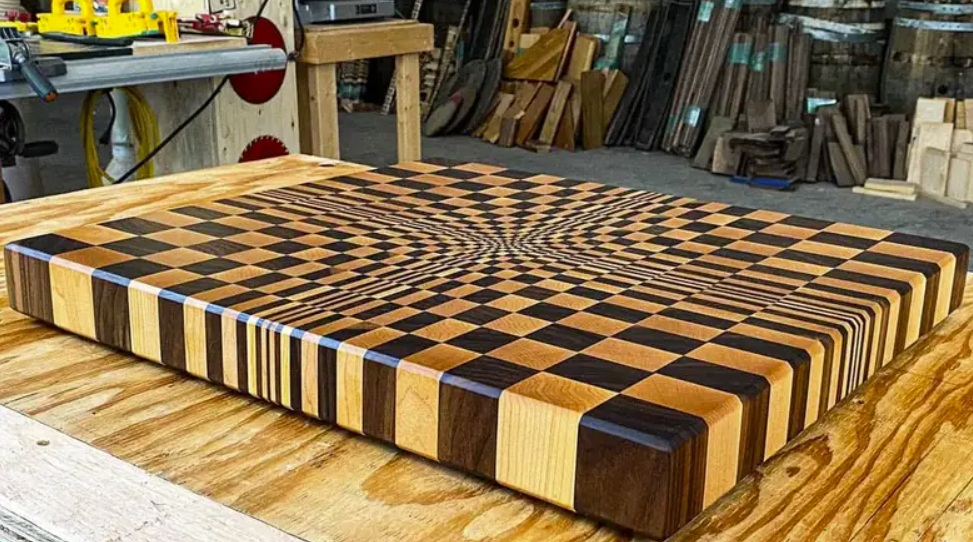
This is the end grain optical illusion cutting board. It appears to bend and swirl and warp as you stare at it, despite being made of straight lines and alternating colors.

Although I discovered it through Obsessed Woodworking, this particular piece is the handiwork of Ryan Hawkins, who has a woodworking YouTube channel where he detailed the elaborate step-by-step process involved in creating this sturdy perspective-twisting delight:

Ryan, to his credit, pointed to another woodworking content creator who supplied the design plans for the cutting board: mtmwood.

mtmwood has numerous examples of handcrafted visual tricky, employing tessellations and tricks of perspective to fool the eye into following intricately laid patterns, and my favorite is easily one that they call the butterfly board:

Employing a similar technique to the optical illusion cutting board, but managing to shape four twisting patterns, is truly impressive and a testament to the hard work, skill, and technique required to bring these stunning pieces to life.

And, as you might expect, this sent me down a YouTube rabbit hole looking for other wooden optical illusions, and there are plenty to choose from.

This is a nicely executed attempt at showing dimension and depth to get us started.

Whereas this one walks us through all the stages of preparing to take a familiar optical illusion from a drawing to a three-dimension form:

I confess, I watched this next one three times in a row, trying to spot the seams:

I could go on and on, but honestly, instead of closing out on the illusions, I’d like to end this celebration of creativity and artisanship with a simple photo showing the preparation and painstaking work it takes to bring these pieces to life.
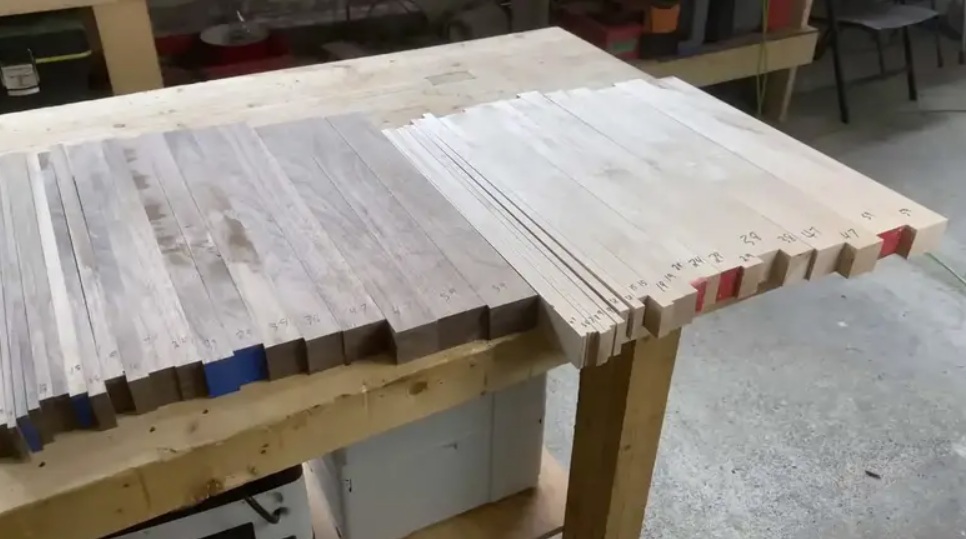
This is the optical illusion cutting board in its embryonic stage, a lineup of different pieces and thicknesses of wood. All marked and cut with precision, waiting for the next step in assembly. I stare at this picture, and consider every mark, every cut, every spin of the table saw’s blade as the creator runs piece after piece after piece through those whirling metal teeth, each of them perfect and crisp.

It’s a remarkable thing to ponder, and a joy to watch in both progress and in final realization. I’m glad I could share that with you today.

Happy puzzling, everyone!

The Fine Art of Puzzle Cabinetry

Earlier this year, I wrote a post about puzzle furniture, a small but growing niche of the puzzle world. We explored modular sofa, chair, and desk designs, as well as impressive tables designed by the puzzle wizards at Praktrik.

But what happens when you combine a designer of fiendishly clever puzzle boxes and a furniture designer with an impeccable knack for melding mechanical puzzles and beautiful woodworking?

You get the Wisteria Puzzle Cabinet, an absolute masterpiece that serves as both a stylish cabinet and an incredibly complex puzzle box.

It’s the most beautiful and complicated safe you could ever want, and it would hide in plain sight in your home.

Check out this video detailing some — but I suspect not all — of its secrets, including hidden compartments, an internal elevator, and multi-piece keys that must be uncovered, assembled, and reused:

The puzzly aspects were designed by Robert Yarger (also known as Stickman in the puzzle box world) and the actual cabinet built by Craig Thibodeau, and together, they’ve brought this mind-blowing piece of puzzle art to life.

Granted, the price of an piece like this is pretty steep.

On his website, Thibodeau states that his “latest work exploring mechanical furniture, puzzles and hidden compartments is the most expensive furniture I build due to the highly complex design and fabrication process. These pieces typically start at around $30,000 and go up from there due to the complexity of the internal mechanisms and the variety of hidden details incorporated into the design of these highly unique pieces.”

Although that’s out of my price range, it’s a testament to how much preparation, design, and labor goes into a puzzle as gorgeous and labyrinthine as this cabinet. Even at five figures, it seems well worth the price.

Oh, and if you’re looking for more puzzly furniture, you can also check out the table designs of David Lundell on YouTube, like this magic-themed coffee table:

Now, if you’ll excuse me, I’m going to go check every piece of furniture in my house for secret compartments. You know, just in case.


Thanks for visiting PuzzleNation Blog today! Be sure to sign up for our newsletter to stay up-to-date on everything PuzzleNation!

You can also share your pictures with us on Instagram, friend us on Facebook, check us out on Twitter, Pinterest, and Tumblr, and explore the always-expanding library of PuzzleNation apps and games on our website!

The Art of the Wooden Puzzle

Several varieties of puzzle fall under the umbrella of “wooden puzzles,” from sliding tile puzzles and jigsaws to puzzle boxes and brain teasers. Heck, I devoted an entire post to wooden puzzles last year, sharing several from my personal collection.

With the advent of more affordable laser-cutting machines, we’ve seen several puzzly Kickstarter campaigns (like Baffledazzle and Codex Silenda) successfully launched, pushing wooden puzzles into the 21st century with more ambitious designs and greater functionality than ever before.

So you can imagine both my surprise and my excitement when The Metagrobologist posted a link to a Popular Woodworking article on how to make your own wooden puzzles!

There are step-by-step instructions on how to create three different 3D wooden “burr” puzzles, and this article covers everything from construction to assembly. Exact measurements are included.

It’s clear the author is all about quality, understanding both the art behind these mechanical 3D puzzles and all the necessary steps to ensure a safe and successful build.

If only shop class in school had offered me the chance to make something like this!

In all seriousness, this post offers fascinating insight into how some of these mechanical brain teasers are made, but when you consider the care and precision it takes to produce one of these puzzles, even knowing how it’s done doesn’t make the puzzle any less fun. What a treat.


Thanks for visiting PuzzleNation Blog today! Be sure to sign up for our newsletter to stay up-to-date on everything PuzzleNation!

You can also share your pictures with us on Instagram, friend us on Facebook, check us out on Twitter, Pinterest, and Tumblr, and explore the always-expanding library of PuzzleNation apps and games on our website!