
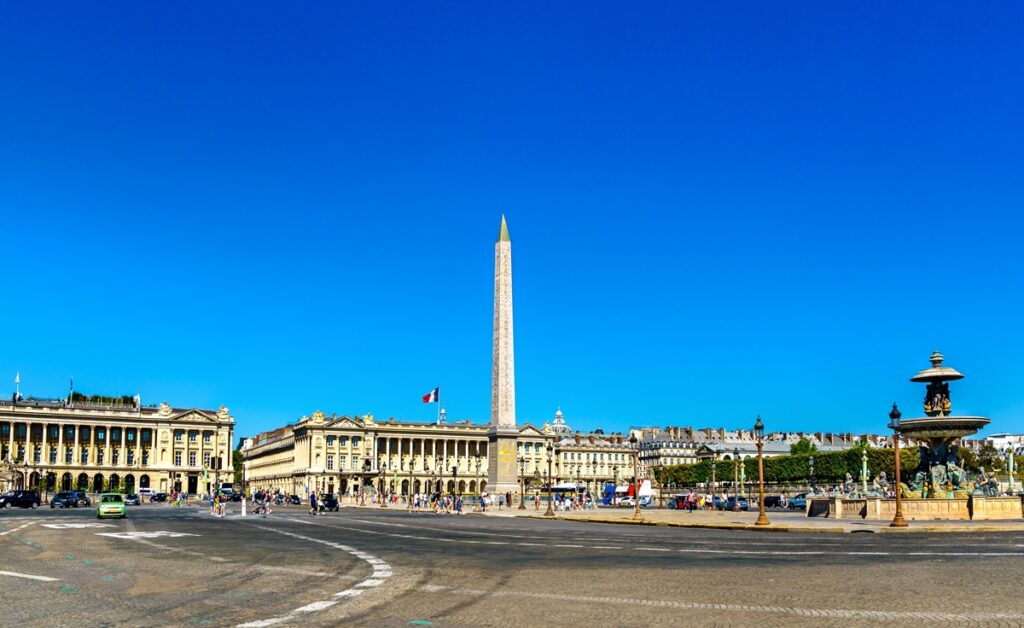
Thirty-three hundred years ago, an obelisk was carved in ancient Egypt. It stood at the entrance of the Luxor temple as part of a pair.
Almost two hundred years ago, the obelisk was given to France by Egypt’s ruler. It stands at the Place de la Concorde in Paris, thousands of miles from its sibling in Egypt.
Two centuries of students and tourists and philosophers and photographers and scholars gazing at the obelisk, reading the intricately carved hieroglyphs.
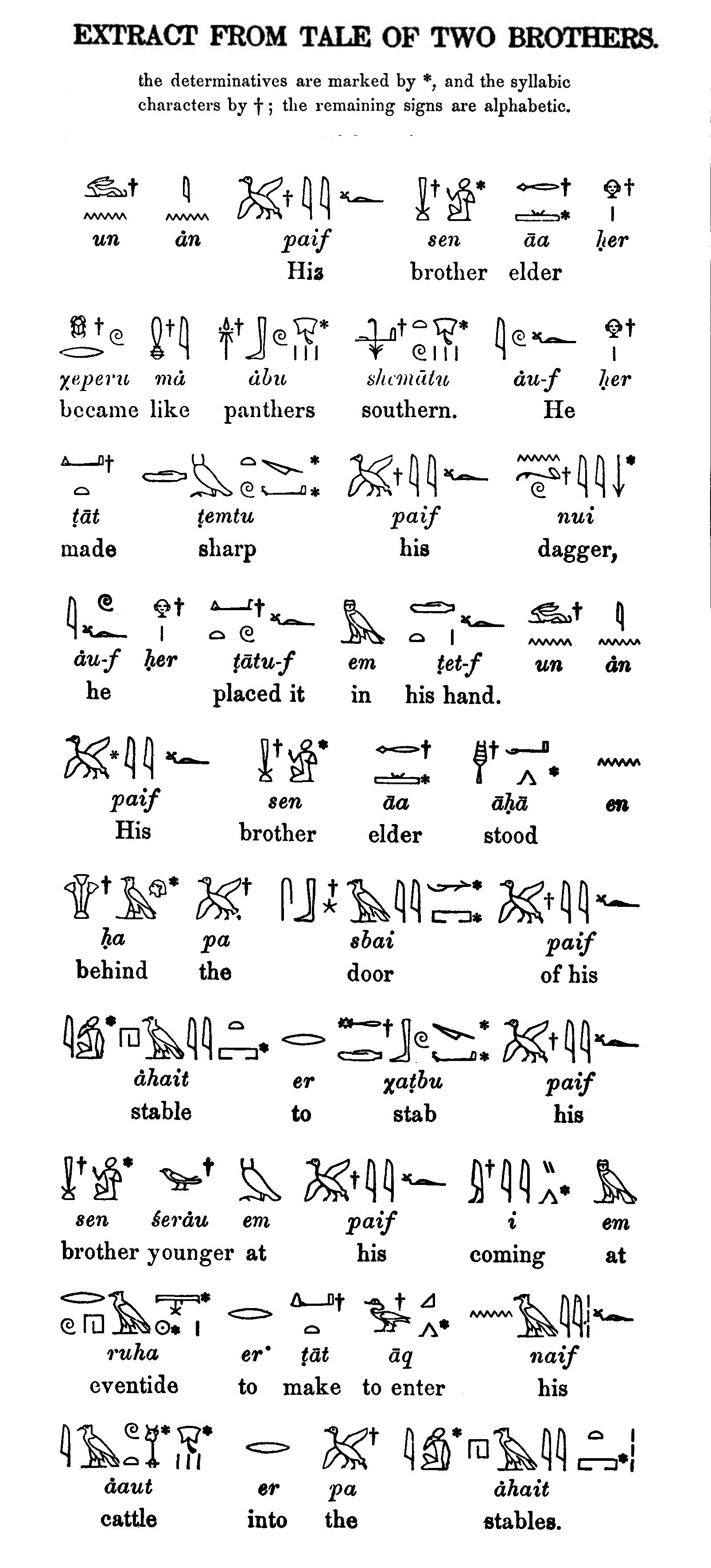
Hieroglyphs were traditionally written in columns reading downward. But there are also left and right directional markers, marking the beginning of a sentence, often indicated by which direction a human or animal figure is facing.
As you can see, the placement of different symbols allows them to combine with others, both vertically and horizontally, to create different words or concepts.
And whomever did the inscriptions on the obelisk used the multidirectionality of the language to conceal messages in plain sight.
Even after centuries of study, it took a keen eye and some lucky conditions for Egyptologist Jean-Guillaume Olette-Pelletier to uncover the hidden messages.
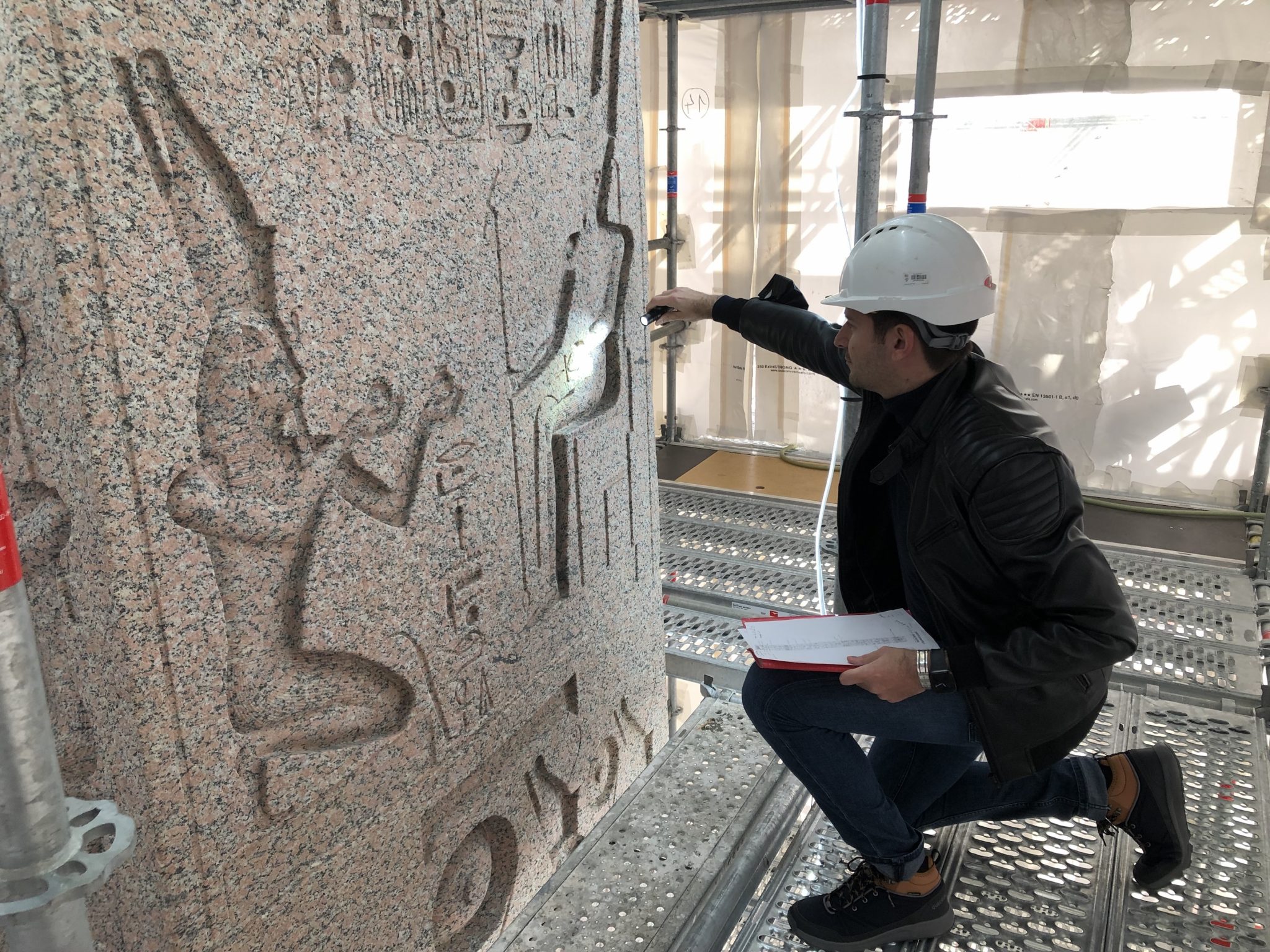
You see, the obelisk was surrounded by scaffolding as part of its renovations, and this allowed Olette-Pelletier to get up close to the highest point of the obelisk and observe the inscriptions rarely seen by casual observers.
The hidden messages required him to read the hieroglyphs horizontally rather than vertically, and at a particular angle as well. This three-dimensional study of the inscriptions, known as crypto-hieroglyphs, allowed the creator to conceal messages that didn’t simply sing the praises of Pharaoh Ramses II, but actually point to his rulership as divine right, claiming his power came directly from the gods themselves.
It was propaganda, intended to reinforce the pharaoh’s status in the eyes of the elites of Egypt, cloaked in messages for the common people. (One of the messages, for instance, could only be seen by those arriving by boat, a privilege available only to the elite.)
For example, from an article in EuroWeekly News:
“People had not noticed that under [one of the drawings] of the god Amun, there is an offering table. This allows us to discover a sentence where no element is missing: an offering that the king gives to the god Amun,” Olette-Pelletier told BFMTV. Combinations of the newly identified inscriptions produce additional meanings in what’s called three-dimensional cryptography. In total, the Egyptologist identified seven encrypted messages across the obelisk’s various facades. He explained that the enigmatic text can only be understood by walking around the monument.
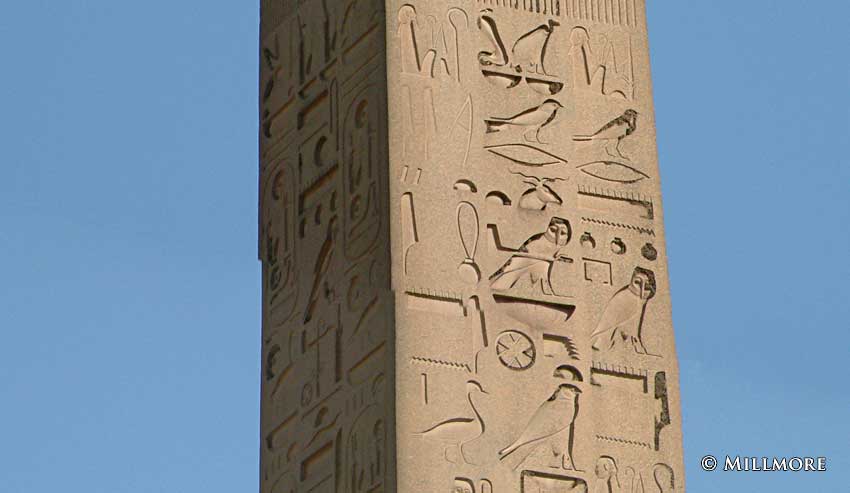
Imagine the creator of the obelisk, carving with specific angles and readers in mind, an iconic gift to the pharaoh… only for the code to be cracked thousands of miles away, thousands of years in the future, by a different kind of elite.
The puzzly kind.
That’s amazing.
 PuzzCulture