

While I was researching Salomon Numbers for last week’s post, I discovered another crossword-centric number system with an S-name attached.
The Shortz Number.
Actually, I found several of them.
Allow me to elucidate.

XWordInfo lists a constructor’s Shortz Number as a reflection of when that constructor was first published in a daily puzzle during the Shortz Era of The New York Times crossword.
For instance, Jacob Reed debuts in today’s puzzle, and his Shortz Number is 1373.
Peter Gordon is 1. Merl Reagle is 26. Bernice Gordon is 77. Matt Gaffney is 97. Nancy Salomon is 143. Patrick Berry is 257. Deb Amlen is 378. Doug Peterson is 431. Patti Varol is 1000.
It’s an incredible insight into an ever-evolving roster of constructors.
According to a cursory Google Search, this seems to be the most legitimate definition of a Shortz Number.
But there are others.
The second and most specious definition seems to be a Shortzian take on the Salomon Number, connecting constructors to Shortz through a Kevin Bacon-like system of collaborations.
I only found a few references to this interpretation, so it seems more like a coincidence than actual cultural permeation.
But that still leaves one more version of a Shortz Number, and it’s my favorite one.
This version is actually referenced on Wikipedia under Humorous Units of Measurement and apparently originated as a Reddit post.
But in this instance, a Shortz is a unit of measurement for fame. More specifically, it’s the number of times a person’s name has appeared in The New York Times crossword as either a clue or a solution.
The brief post then goes on to state that Shortz himself is 1 Shortz famous. (I was unable to verify this through XWordInfo, either through SHORTZ, WILLSHORTZ, or WILL as grid entries.)
But as someone who enjoys weird statistics, I was definitely intrigued by this one. What’s the Shortz Number for common crosswordese and frequent fill?
I mean, RIPTORN only has a 6, but that’s an impressive number of times to get your first AND last name in a crossword.
So let’s dig in.
First things first, I’m jettisoning the clue aspect of the definition. Let’s stick to grid entries.
I’m also doing my best to eliminate shared names or ones with multiple definitions. ETTA has 241 uses in the Shortz Era, but I don’t want to parse between James and Jones. Same for ELLA (249), ANA (342), and ALOU (150).
Second, let’s stick to real people. It’s cool that SMEE has 114, ODIE 145, and ASTA a staggering 183. But the Bacon, Erdos, and Salomon Numbers rely on real people, so our Shortz Number will too.
So allow me to present the people with the 8 highest Shortz Numbers I could find:
#8 ENYA – 149
#7 ALDA – 152
#6 UMA – 162
#5 OTT – 188
#4 ONO – 196 (minus a half-dozen or so fish references)
#3 ESAU – 226 (hard to stat out other biblical figures like Adam, Eve, Enos, because of other uses)
#2 ASHE – 264
and, as you might expect…
#1 ENO – 268!
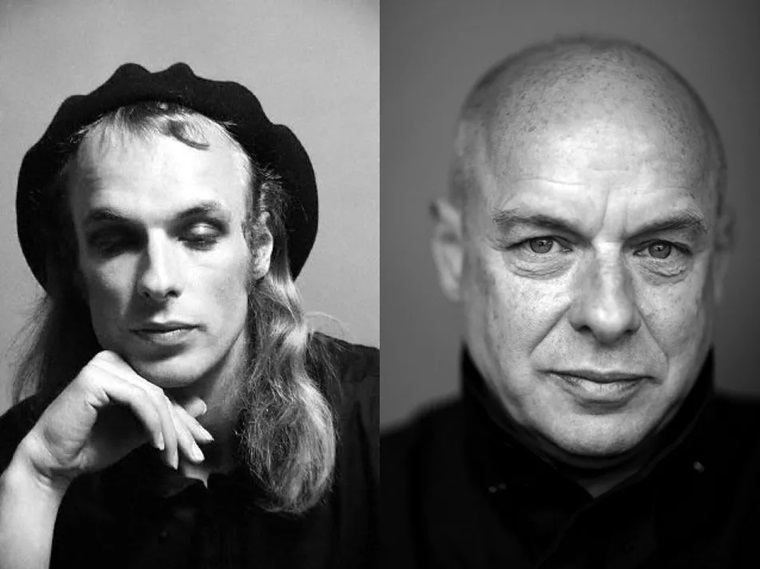
It’s certainly a close race, and one that could easily change in the future!
Let’s add one more wrinkle before we go.
Because it’s interesting to track all the Shortz Era uses… but there are decades of puzzles before that, and XWordInfo has stats on them too.
So do the rankings change when you factor those puzzles in?
Absolutely.
Let’s call these Farrar Numbers and see how things shake out.
I mentioned ETTA earlier. The pre-Shortz puzzles cause their Farrar Number to be more than double, vaulting up to 516. Similarly, ELLA leaps to 688 and ANA to 758!
Some of our fictional friends also prosper, with SMEE moving from 114 to 332 and ASTA rocketing from 183 to 533! But ODIE only adds a handful more, moving from 145 to 156.
So how did our top 8 do?
ENYA (149) stayed in the exact same place. There were NO pre-Shortzian references.
UMA (167) drops from 6th to 7th, only gaining 5 more references. She swaps places with ALDA (270), who adds a lot of references (discounting the hundred or so mentioning his father or opera star Frances Alda).
Sadly, ENO (280) plummets from the #1 spot all the way to 5th, only adding another dozen or so references to make his Farrar Number.
ONO (390) stays in 4th despite nearly doubling the number of references, while OTT (432) leapfrogs over ONO, going from 5th to 3rd with an impressive pre-Shortzian showing.
ASHE (560) stays in 2nd despite more than doubling his references (and obviously disappearing from the pre-Shortzian rankings in the early 1960s).
This means ESAU (609) goes from 3rd to 1st in the Farrar Number rankings!
So, whether you prefer your Shortz Number to be chronological, Baconian, or grid-centric, you’ve got plenty of options.
But personally, I think the Farrar Number is gonna take the world by storm!
Okay… maybe not. But it’s certainly fun to think about.
Happy puzzling, everyone!

 PuzzCulture