A Rhyming Puzzle For You!

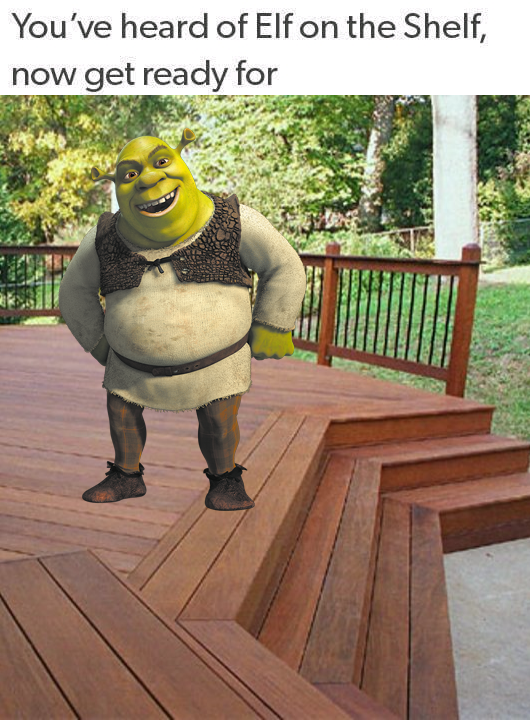
One of my favorite memes is “You’ve heard of Elf on a Shelf, now…”

Inspired by the family-friendly surveillance toy that took the world by storm, this meme (which dates back to 2016!) gives you the format of “elf on a shelf” and sets you up with a little visual puzzle to solve.

The image above, for instance, gives you Shrek on a deck!
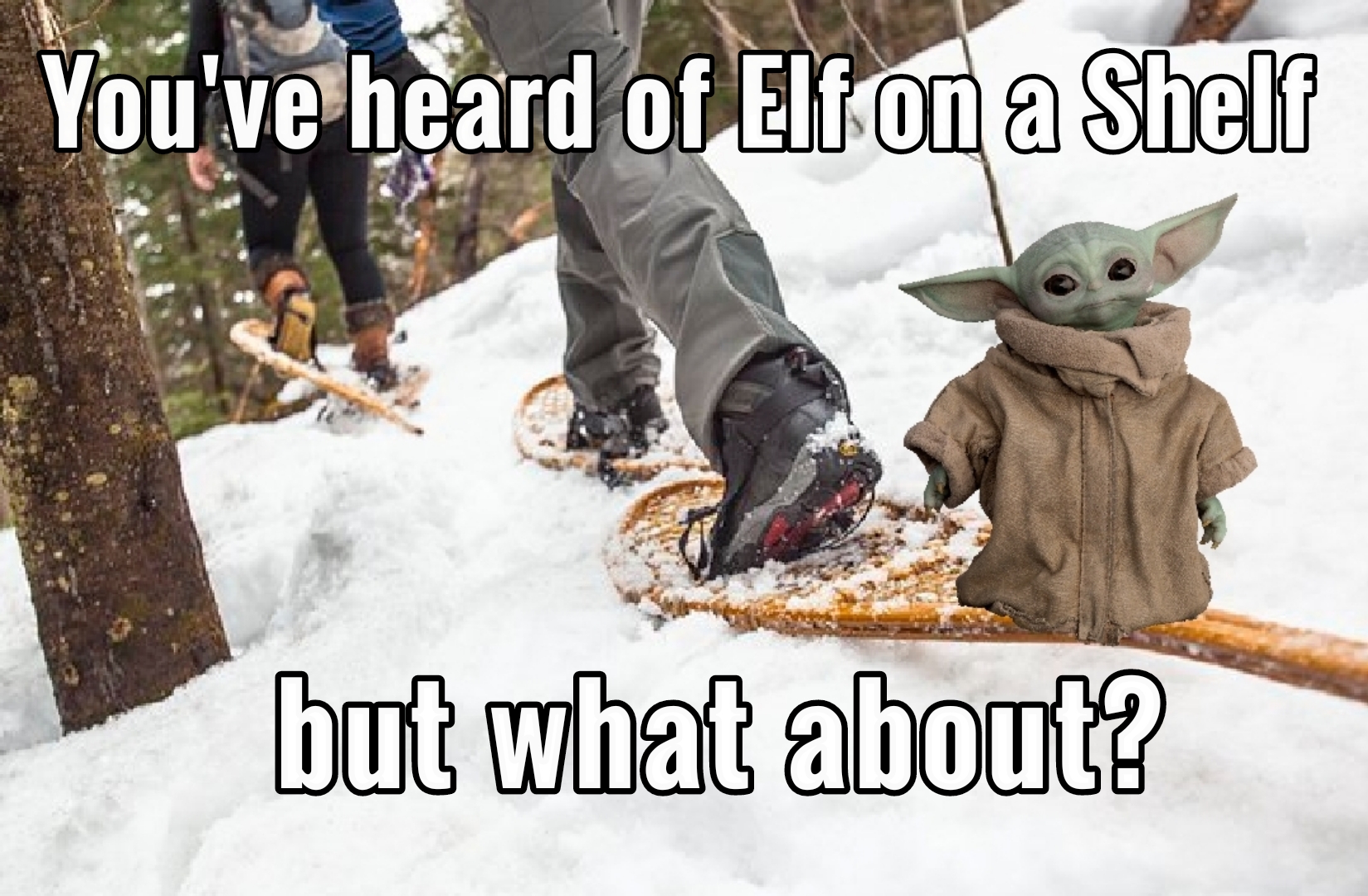
And this one gives us Grogu on a snowshoe!

Now, my Photoshop skills are pretty much nonexistent, but my cluing skills are fairly sharp, so I’ve opted to create a bunch of clues for you.

All you have to do is come up with an “elf on a shelf”-style rhyme that fits the clue.

Ready? Here we go!


Grumpy person on a sofa

Golf helper in a rice field

Magical boy atop an aquatic mammal

Tucker or Turner on an award

Female scientist on a panel

Mythical creature on a pitcher

Alcoholic drink poured over Mr. Morris or Mr. Levi

Public defender on an excursion

Chewy candy at a steak/lobster restaurant

Food storage atop a crane

Ruse involving a pastry store

Greater attention to detail regarding a coup asea

Prodigious author atop a candy egg

Infectious agent atop an old thin writing surface

Distress call regarding a check

Building material atop a musician or a whale

Camel located in cafeteria

Ball of air atop a device in space

Plants growing on industrial devices

Guide to freedom atop a horse-drawn ride

A Gibb brother on a cleaning device

Famed magician atop a sandwich

Autocratic rule in the Iberian peninsula

Arthropod atop a city transport terminal

Sports official atop an ape


These last few are a little tougher, good luck!

French poet using federal health insurance

Correction for a stitch

My French brother atop ceramics

“The Wolf of Wall Street” star in Arab city

Old-fashioned person in a gory home office


How many did you get? Did any stump you? Let me know in the comments below!
Roll Them Bones!

Meme culture is constantly evolving. As new memes emerge, others are updated. They mutate, they cross over with other meme styles. It’s virtually a language at this point, a hyper-dynamic vernacular where the rules change as fast as the imagery.

And yet, old memes can resurface for new audiences and make an unexpected impact, like the one I stumbled across this week.

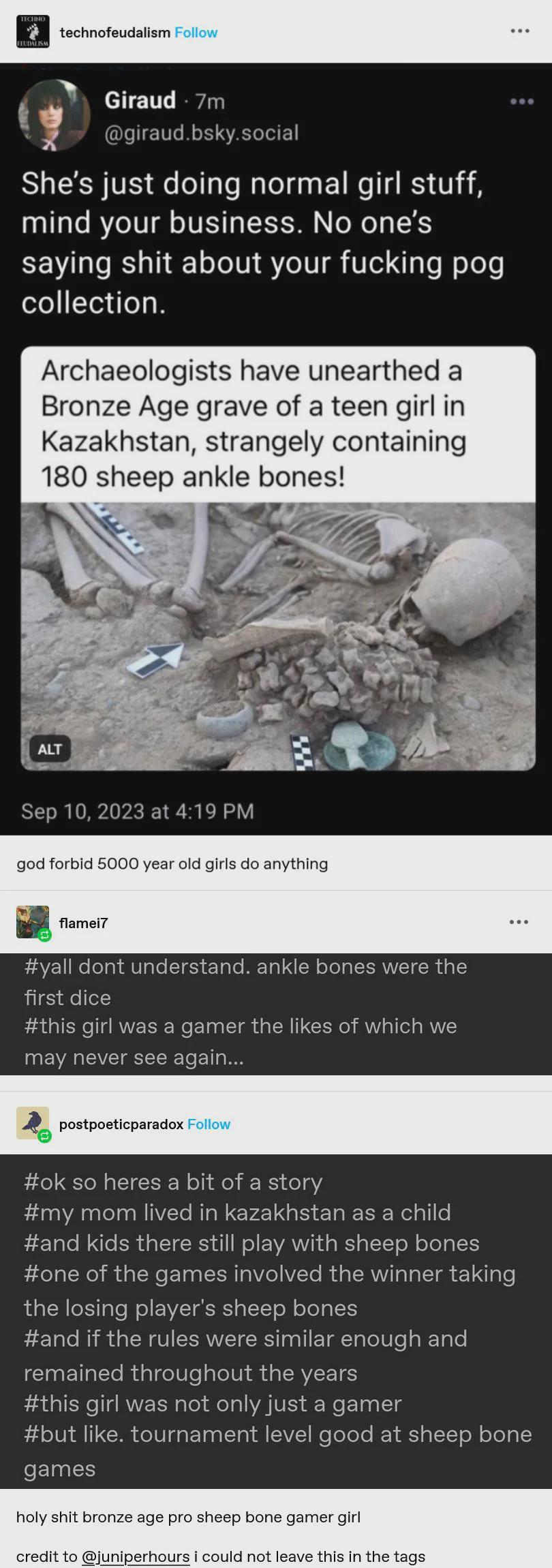
Two years ago, an archaeology report hit internet news feeds. Archaeologists in Kazakhstan uncovered the burial mound of a young girl, somewhere between the ages of 12 and 15. The grave dated back to the Bronze Age, about 5000 years or so.

But that wasn’t what caught the Internet’s attention.

It was the sheep bones that captured everyone’s imagination.

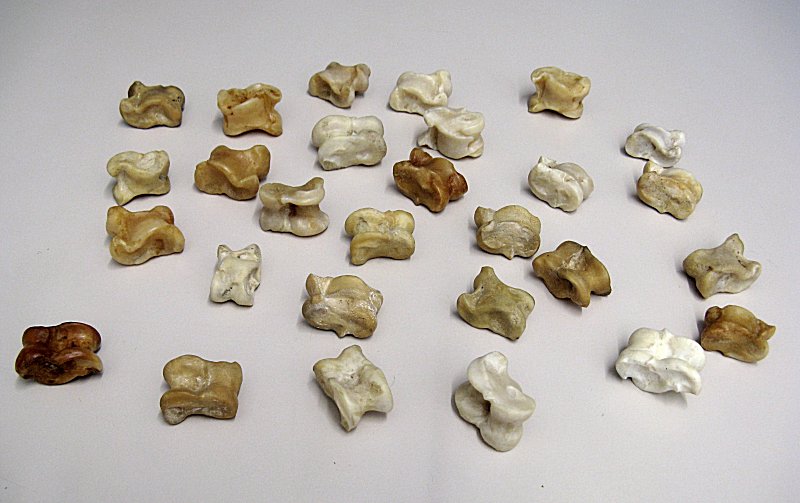
You see, she was buried with 180 ankle bones, also known as astragalus bones, from dozens and dozens of sheep.

Researchers were unsure of the significance of these bones, attributing them to cult practices, totems for meditation, or symbols of good luck to wish the deceased well in their transition to a new world.

Internet readers came to a different conclusion. They believed this young girl was a world-class gamer and these were her trophies, the spoils of victory.

Knuckle bones, ankle bones, and other small, easily-rolled bones have been associated with gaming for centuries. For many cultures, they were the first readily-available dice. This is true in Kazakhstan as well.

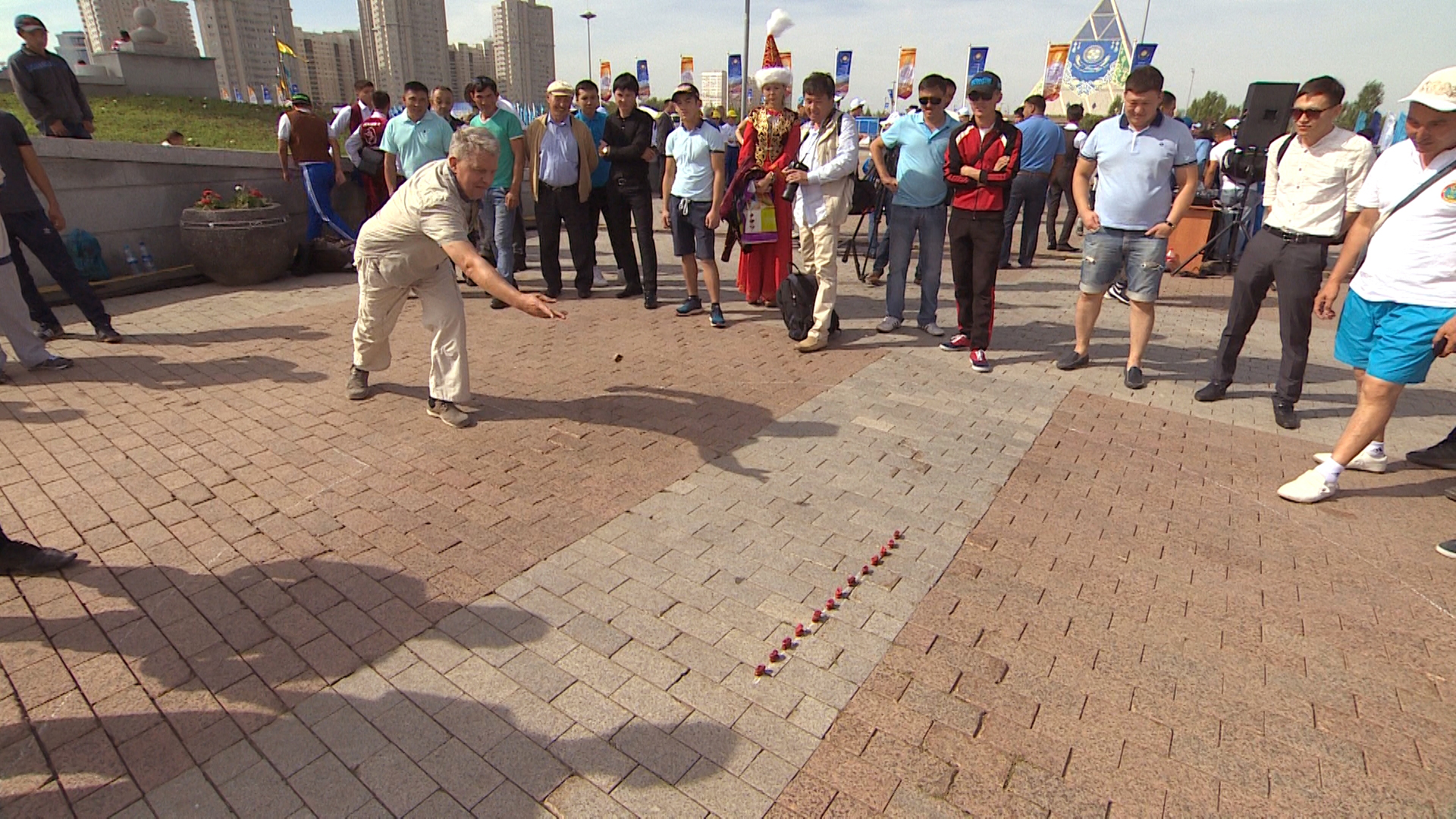
In fact, there is a Kazakh game called Assyk, and it’s similar to marbles. Players take an ankle bone and try to knock other ankle bones from the game space. It requires considerable skill, since you’re tossing the assyk from a distance.

Rules vary depending on your sources, but according to some articles about this traditional Kazakh game, winners would keep the ankle bones they knock out of the circle, just like in marbles, pogs, and other games of this nature.

So, if our Bronze Age assyk master followed this rule — and based on the number of bones in her grave, it’s a distinct possibility — that means she didn’t just dabble in this game… she dominated at it, collecting dozens of victories.

Appropriately, the Internet celebrated her as a pro gamer, a tournament-level champion with the hand-eye coordination to dominate modern games as easily as she did games of assyk around her village.

And honestly, how can you not love something like that? Everybody needs a hero, gamers included. A 5000-year-old Bronze Age astragalus-hoarding game sniper is not a bad place to start.

Happy sheep-bone-tossing, everyone!

An Excluded Solver Strikes Back!

sculpture

Many people find crossword puzzles daunting.

For some, it’s the crosswordese, those obscure or curious words that you only encounter in crossword grids. Whether it’s European rivers or needlecases, these entries never make casual conversational appearances.

For others, it’s the pop culture that often feels dusty and out-of-touch. It’s not like many silent movie stars are household names these days.

Thankfully, many current outlets and constructors have moved away from this stodgy approach to grid construction and cluing, working hard to keep cultural references fresh and up-to-date, and striving for fluid grid-filling entries that remain both accessible and interesting.

Unfortunately, the reputation of crosswords as behind-the-times is still prevalent in many circles, including among younger solvers.

But I was amused to find one younger solver who sought to balance the scales a bit by taking matters into her own hands.

Tumblr user Greater-than-the-Sword created and shared her own crossword. (Well, technically a criss-cross to puzzle aficionados like ourselves, but the average person would call this a crossword.)

In her own words:

Tired of your parents always doing better than you at crossword puzzles just because they’re old and get the ancient pop culture references? I made this Millennial’s Crossword Puzzle™. Guaranteed to make your parents feel old and less smug.

Sample clues included “is either white and gold or blue and black” for DRESS (referencing the optical illusion that took over the Internet for a day or two) and “Popular Youtuber” for PEWDIEPIE.

Although the puzzle didn’t make me feel old or less smug, it did make me laugh, since I found several of the entries completely baffling and impenetrable. It also reminded me of how amazingly fast cultural references emerge and vanish in the age of the Internet. I got about half of the reference in the puzzle, many of which applied to memes and pop culture from the last few years.

(Though I must confess that it took me an embarrassingly long time to realize the clue “bendy cabbage patch” meant BENEDICT CUMBERBATCH.)

I was unable to reach Greater-than-the-Sword to ask her what sort of feedback she received on the puzzle — either from millennials or from older solvers who accepted the challenge — but I found it to be a delightful response to lazy crossword construction.

You’re welcome to try your luck against the puzzle here.


Thanks for visiting PuzzleNation Blog today! Be sure to sign up for our newsletter to stay up-to-date on everything PuzzleNation!

You can also share your pictures with us on Instagram, friend us on Facebook, check us out on TwitterPinterest, and Tumblr, and explore the always-expanding library of PuzzleNation apps and games on our website!

It’s Follow-Up Friday: That Dress edition

Welcome to Follow-Up Friday!

By this time, you know the drill. Follow-Up Friday is a chance for us to revisit the subjects of previous posts and bring the PuzzleNation audience up to speed on all things puzzly.

And today I’d like to return to the subject of optical illusions.

Yes, by popular demand, I’m talking about The Dress.

untitled-12-660x334

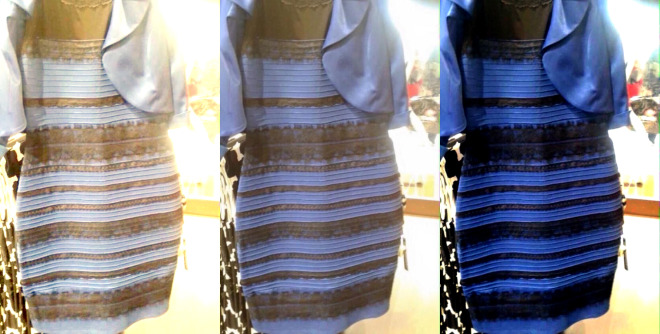
[The original photo is in the middle. To the left, the photo has been color-corrected toward white and gold. To the right, the photo has been color-corrected toward black and blue.]

For those who haven’t heard — and wow, I’m sincerely amazed you haven’t by now — the above picture of a dress was uploaded to Tumblr not too long ago, and the Internet collectively lost its mind debating whether the dress was white and gold or black and blue.

Some people think that color blindness has something to do with the different opinions on the dress, but the answer is simpler than that.

I’ve written about optical illusions in the past, and this photo is another prime example. As for why people are seeing two different sets of colors, it’s all about visual context and how we interpret contrasting colors.

The photo is saturated with sunlight, which skews the color of the dress. But for some people, when their eye color-corrects to determine what they’re looking at, they discount the blue in the photo, and end up seeing white and gold. Other people discount the gold in the photo, and see blue and black.

(This was also one of those cases where actually tilting your laptop screen could significantly change how the colors looked, since changing the angle of your screen altered how the image interacts with whatever light sources are nearby.)

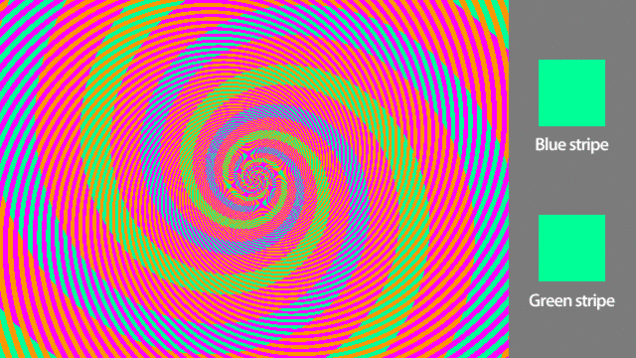
I’ll give you another example. Check out this image from Gizmodo:

18kyr2pu3n22hgif

These green and blue spirals, contrasted against the pink and orange, appear to be different colors, but they are actually the exact same color. Our eyes are fooled into seeing them as different shades by the alternating stripes around them. (The “green” have orange contrast while the “blue” have pink.)

The differing interpretations of The Dress operate under the same principle.

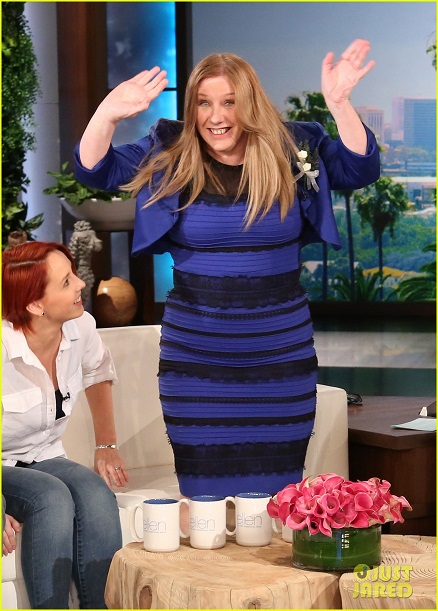
Oh, and for the record, here’s the dress without the sunlight skewing the color scheme, as seen on Ellen DeGeneres’s show:

people-behind-the-dress-appear-on-ellen-02

So which camp were you in, fellow puzzlers? White and gold or black and blue?

Thanks for visiting PuzzleNation Blog today! You can share your pictures with us on Instagram, friend us on Facebook, check us out on TwitterPinterest, and Tumblr, and be sure to check out the growing library of PuzzleNation apps and games!