The Mind-blowing Variety of Puzzles

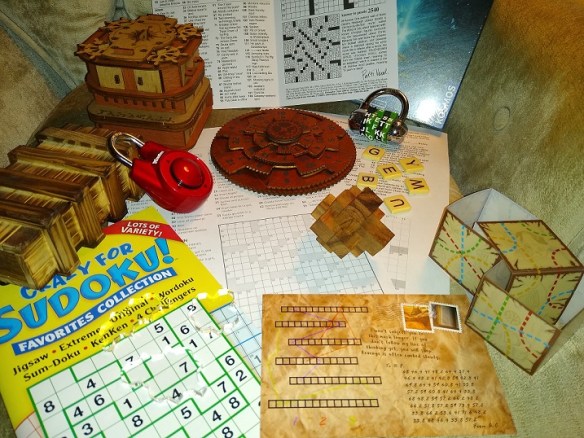
[A sampling of puzzles of many sorts: crosswords, puzzle boxes,
mechanical brain teasers, tile puzzles, riddles, and more!]

It really is incredible how many forms puzzles can take.

Think about it. Whether you’re talking Rubik’s Cubes, cryptograms, jigsaws, Sudoku, brain teasers, riddles, crosswords, escape rooms, tangrams, word seeks, sliding tiles, deduction problems, coded messages, or anagrams, they all fall under the umbrella of puzzles.

A puzzle can be as simple as pencil and paper or as complex as a multi-stage puzzle hunt or escape room, replete with codes, keys, hidden buttons, mechanical devices to assemble or utilize, and more. The folks at ThinkFun, for instance, have employed everything from ropes and magnets to lasers and mirrors in their puzzles.

That’s some extreme variety.

And the field of possibilities only widens when we add video game puzzles to the mix. We’ve previously talked about games like Tetris and Portal, where you must think in 2D and 3D respectively. We’ve seen games where you change the rules of the world to proceed or even interfere with the coding of the game itself to solve problems.

In the last few years, indie game designers and big studios alike have produced puzzle games that continue to push the boundaries of puzzly minds.

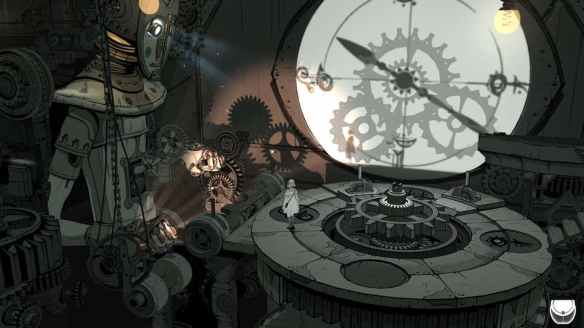
For instance, in Iris Fall you solve puzzles and maneuver around obstacles by playing with light and shadow. By moving light sources and interacting with the environment, both the light and the shadows it creates allow your character to play with perspective and illusion in order to accomplish tasks. It’s very cool!

In a similar vein, the game Superliminal challenges you to solve puzzles and move from room to room by shifting perspective. For instance, if you pick up a small item and then pull it close to you so that it looks bigger, it BECOMES bigger.

Check out this playthrough to see this mindbending puzzler in action:

The game Maquette works off of a similar concept, but requires you to think in both big and small terms. In Maquette, you have a city to explore, and in order to do so, you also need to manipulate a miniature version of the city that affects the world outside.

For instance, there’s a bridge with the center path missing. How can you reach the other side with only a key in your hands?

Easy. You take the key, place it over the same bridge gap in the miniature, and then walk back to the real bridge, where a giant version of that key is now spanning the gap.

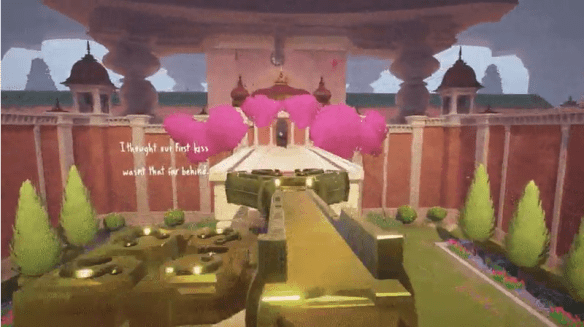
And now there’s Viewfinder, a game where you use a Polaroid-style camera to take pictures that you can then place into a three-dimensional world and turn them into structures you can interact with and solve problems!

These sorts of puzzle games help reinforce one of the fundamental rules of puzzle-solving: always be willing to change your perspective and come at the puzzle from another angle. It works with wordplay, it works with brain teasers, and it works in three-dimensional perspective puzzles in video games.

What’s your favorite flavor of puzzles, fellow PuzzleNationers? Have you learned something from one kind of puzzle that you’ve been able to apply in another style of puzzling? Let us know in the comments section below! We’d love to hear from you.


dailypopwsicon

Have you checked out our special summer deals yet? You can find them on the Home Screen for Daily POP Crosswords and Daily POP Word Search! Check them out!

Thanks for visiting PuzzleNation Blog today! Be sure to sign up for our newsletter to stay up-to-date on everything PuzzleNation!

Themeless Crosswords Vs. Themed Crosswords?

exercise-brain-crossword-670x335

When you think of crossword puzzles, what comes to mind? The grid first, or maybe the clues? When you picture your default crossword, is it a themed puzzle or themeless?

I ask because something of a kerfuffle was sparked on Twitter over the weekend regarding themeless puzzles vs. themed puzzles, and as you might expect, fellow puzzler, I have thoughts on the subject.

So how did all this start? With a blog post by crossword reviewer Rex Parker.

If you’re unaware, Rex is a constructor in his own right, but is far better known in the crossword world for his curmudgeonly reviews of the New York Times crossword. He frequently makes fair points, but they can be lost amid his personal views regarding particular clues and entries. (Often, if he doesn’t know it, it’s obscure. Which is not the same thing at all.) He’s sort of a “you love him or you don’t” figure in the crossword sphere.

I genuinely believe his commentary, however inconsistent or caustic at times, comes from a sincere desire to be engaged, entertained, and wowed by the puzzles he is so clearly invested in. But again, sometimes he can’t see the forest for the trees, and when your brand is “guy who bellyaches about crosswords,” you often play into what people expect from you.

cloud

[Now, to be fair, Rex is no Grandpa Simpson. But I simply couldn’t resist, given how he’s become synonymous with “grumpy fan who knows better than you.” And I’m so so very tired of gatekeeping fandom in general.]

And on Sunday, he carved into a Robyn Weintraub 21x themeless crossword with some serious vitriol:

This is very good for what it is, but unfortunately (for me), what it is is a Sunday themeless, and these are just never going to be interesting to me. As I’ve said before, it’s a giant (literally, giant! 21×21!) shrug. A Sunday-sized “we give up, here’s some stuff.” It’s too easy to be that interesting, and since the grid is so big, the construction doesn’t feel particularly special.

That is, yeah, you can get a lot of longish answers into a 21×21. There’s lots of room. I just don’t care as much as I ought to care. And today’s grid shape was really vanilla. No, wait, I like vanilla. A vanilla malt is the best thing in the world. Let’s call it “boilerplate” instead. It looks like a template of some kind. It’s a very clean grid, and many of the entries here are interesting, but the overall effect of said entries in a Sunday themeless is ho-hum.

There’s a reason the NYTXW didn’t do Sunday themelesses until, what, like two or three years ago? It’s because they’re a cop-out. I hear that some people enjoy them. I’m happy for them. For me, they’re a non-event. There’s no real low, no real high, just … middle middle middle. Time passes, and then the puzzle is done. Solving one of these unthemed Sundays, even a very competent one like this, isn’t necessarily better than solving a disastrous themed Sunday, to be honest. Certainly, from a blogging perspective, this is much much worse, as there’s really hardly anything to say.

Wow.

Now, this post is not intended to be a burial of Rex and his opinions. Even though I wholeheartedly disagree with his dim view of his puzzle.

It’s worth discussing because I’m someone who didn’t initially get the appeal of themeless crosswords.

weintraub themeless

[Robyn’s thoroughly impressive Sunday themeless grid.]

I’ve always liked puzzles, and tried my hand at solving New York Times-level crosswords many times before I ended up as part of the puzzle world. Once I really immersed myself in themed puzzles, I quickly started to appreciate the amount of skill, creativity, and hard work that went into a satisfying themed crossword.

I was slower to come around on themeless puzzles. I liked figuring out the trick of a themed puzzle, and I didn’t give themeless puzzles much thought. Thankfully, friends of the blog Patti Varol and Keith Yarborough (both of whom also helped open my eyes to so many terrific puzzle outlets and constructors) encouraged me to solve themeless puzzles more.

And I started to see that you don’t need a theme to show off the same skill, creativity, and hard work that goes into a crossword.

As I said in my wrap-up of the Boswords 2020 Fall Themeless League (yeah, I went from never solving themeless crosswords to eagerly anticipating a two-month tournament full of them!):

I really enjoyed seeing what creative constructors could do with crosswords once freed from the shackles of a theme. The long, crossing entries can certainly be intimidating at the start — especially if you read three or four clues in a row and feel like your brain has gone blank — but the sheer inventiveness of the entries you get to see, often stacked close together, is really cool.

And, like a jigsaw puzzle, the solving experience sneaks up on you. You get a few words here, a few letters there, and suddenly everything starts to fall into place. Clues that eluded you make total sense on a second or third reading, or the now-obvious wordplay punches you in the face.

Eventually, you’re left with a full grid and a real sense of accomplishment. (Not to mention a growing sense of wonder that the constructor managed to make all those crossings work.)

tumblr_inline_ojfzuuUgZr1rmajvb_500

And it’s disappointing that an influential voice in crosswords sees a themeless Sunday puzzle as a waste of time. (Constructor Eric Berlin has rightfully noted that Rex isn’t against all themeless puzzles, and has stated in the past that he often looks forward to the Friday themeless.)

Which makes it all the more strange that he’d choose to die on this particular hill. Robyn is a well-respected constructor, and her byline alone is a welcome sight for many puzzle fans, themeless or themed. The response online to this themeless puzzle was very positive overall; even in the comments section of Rex’s blog post, the majority of the responses celebrated Robyn’s themeless as a terrific solve.

I would argue that the occasional Sunday themeless puzzle is a good thing. Not only is it a nice break from the expected norm, but having puzzles the caliber of this one will bring more eyes to the merits of themeless crosswords in general.

The sheer variety in fresh, exciting, and thought-provoking grid entries alone makes them worthwhile. Themed puzzles are great, obviously, but they can also severely limit how interesting you can make the rest of the grid once the theme has been figured out.

Great constructors and engaging cluing can overcome that, but it’s a limitation that themeless crosswords simply don’t have. The fill is EVERYTHING, and that pushes constructors to be as creative as possible with their grid designs, the often ambitious crossings and stacks of long entries, and all that delightfully unexpected vocabulary.

Rex says, “Solving one of these unthemed Sundays, even a very competent one like this, isn’t necessarily better than solving a disastrous themed Sunday, to be honest.”

I think you’ll find many solvers and constructors disagree. There’s as much beauty and value in a skilled themeless as there is in a deftly-constructed themed puzzle.

And to say a well-constructed themeless is on par with a “disastrous” themed puzzle is just ridiculous. Sure, for his brand, he gets more mileage taking apart a bad puzzle than discussing a good one, but a good solve and good blog fodder aren’t the same thing at all.

As I said before, you can learn a lot from Rex’s blog. Plenty of constructors have gleaned valuable lessons about theme entries, grid fill, and more from his critiques. But punching down against a particular style of crosswording benefits no one, particularly when it can easily be misconstrued as a shot against themeless puzzles in general..

Thank you, Robyn Weintraub, for a banger of a Sunday puzzle, and thank you, Evan Birnholz, for championing the cause of themeless crosswords (and bringing this to my attention.)

Do you enjoy themeless puzzles, fellow PuzzleNationers? Let us know in the comments section below! We’d love to hear from you.


dailypopwsicon

Have you checked out our special summer deals yet? You can find them on the Home Screen for Daily POP Crosswords and Daily POP Word Search! Check them out!

Thanks for visiting PuzzleNation Blog today! Be sure to sign up for our newsletter to stay up-to-date on everything PuzzleNation!

5 Questions for Crossword Constructor Malaika Handa!

Welcome to 5 Questions, our recurring interview series where we reach out to puzzle constructors, game designers, writers, filmmakers, musicians, artists, and puzzle enthusiasts from all walks of life!

This feature is all about exploring the vast and intriguing puzzle community by talking to those who make puzzles and those who enjoy them.

And this marks the sixth edition of our series of interviews where we turn our eyes to the future of crosswords. Instead of interviewing established talents in the field, I’ve been reaching out to new and up-and-coming constructors and asking them to share their experiences as a nascent cruciverbalist.

And we’re excited to welcome Malaika Handa as our latest 5 Questions interviewee!

You have to be fairly ambitious to get into constructing crosswords, but Malaika Handa is setting the bar pretty high.

Less than a year into her cruciverbalism career, she’s already been published in outlets like Grids These Days, Matthew Stock’s Happy Little Puzzles, and the American Values Club Crossword.

But she’s best known as the creator and curator of 7xwords, an attempt to create a puzzle for every possible 7×7 crossword grid in a single year. If that’s not impressive enough, she launched 7xwords after having only constructed crosswords for a few months!

Malaika was gracious enough to take some time out to talk to us, so without further ado, let’s get to the interview!


5 Questions for Malaika Handa

1. How did you get started with puzzles?

I started solving the New York Times puzzle about two years ago, when I got a job that had a commute. Eventually, we switched to working from home, but I still would solve the puzzle every morning. I didn’t realize regular people could make puzzles (“crossword constructor” felt akin to “astronaut” in terms of attainability) until a crossword blogger I liked refilled a corner as an example of how to make it better. That blew my mind! I started making mini puzzles in Excel, and then finally bought Crossfire around October 2020. Hand gridding is not for me, I’ve learned!

2. What, in your estimation, makes for a great puzzle?

I really don’t think there’s such a thing as a canonical great puzzle– or if there is, I am frankly uninterested. Appealing to every single solver seems like an impossible task, and a good way to end up with a puzzle that’s a little flat and lifeless. I like to solve puzzles that are fun for me, Malaika Handa, to solve! (I hope that framing doesn’t seem selfish.) Puzzles with pop culture references that I know, computer / math stuff, make-up / fashion stuff, Twitter slang.

Adam Aaronson had a puzzle with SYNTACTIC SUGAR in it, and I plunked it in with no crossings. I solved the rest of the puzzle floating on a cloud. I love that term so much– when I was a teaching assistant in college (one of my favorite jobs I’ve had) I taught it to my students, and I think it is a lovely and evocative phrase. I bet a lot of people had never heard of SYNTACTIC SUGAR before, so maybe that was really tough for them, but that’s okay. We don’t have to have the same opinion on everything.

What do you most enjoy — or try hardest to avoid — when constructing your own? 

When I write puzzles, I like to use fill and clues that make me really excited, even if it’s things other people might not have heard of. (I think that’s called “voice,” by the way.) Once I clued ISLA as [Stephanie Perkins’ heroine] and all my test solvers said they had never heard of that reference. I kept it in the puzzle anyway.

Then my older sister solved it and when she got to that clue, she texted me with a zillion exclamation points and we freaked out over how good Stephanie Perkins’ books are. My number one advice to other constructors is: If a particular entry doesn’t make you excited, what is it doing in your puzzle? (By the way, sometimes the answer is “it’s holding in place three other entries that make me excited” and I think that’s fine.)

Do you have any favorite crossword themes or clues, either your own or those crafted by others?

I love hearing people’s favorite clues. Mine are Robyn Weintraub’s [Batting equipment?] for FAKE EYELASHES, and Mollie Cowger’s [“Thank God it’s Friday”?] for SHABBAT SHALOM, both of which I, no exaggeration, think about probably once a week. My favorite clues that I’ve written are always clues from my most recent puzzles. So right now there’s 50-Across from this puzzle ((Editor’s note: Great clue, but NSFW)), or [Wireless device] from this puzzle.

3. Your 7xwords puzzle blog has become something of a sensation in the puzzle world, shouted out by fellow constructors like Erica Wojcik, Kevin Trickey and May Huang. Where did the concept for 7xwords come from? What have you learned from the project so far? Will 7xwords reach its ambitious goal by week 52?

The site started with the discovery that there are 312 legal 7×7 crossword grids, which works out to a six-days-a-week midi puzzle. (I talk more about the 7xwords origin story and the math behind it in this episode of Fill Me In, at around 24:30. And if you’re curious about the code I used to build the grids, feel free to message me on Twitter!)

I’ve learned so much from this project, I don’t even know where to start. Stuff like “How to make an html page exist on the Internet instead of just locally on my computer” and “Having a separate email address for a project like this will make your life one hundred times easier.” I’ve also gotten a lot better at articulating why a particular clue or crossing feels like it needs improvement. That’s a skill that has come from copy editing *checks notes* about 150 midi puzzles. Back in January, I was operating mostly under vibes (“this feels like it could be better”) but now I can usually identify what needs fixing, and how to fix it.

As for whether we’ll reach the goal… I do have a constructor locked down for every single grid. So it feels very promising. I have also seen that final grid, with no black squares, and it exists. So, even more promising!

4. What’s next for Malaika Handa?

The most concrete thing coming up is my puzzle in the Boswords summer tournament! Registration will open on July 1. Join us!! It’s going to be a super fun time.

5. What’s one piece of advice you would offer fellow solvers, aspiring constructors/setters, and puzzle enthusiasts?

I would love for solvers to remember that just because they personally didn’t like a puzzle doesn’t (necessarily) mean the puzzle should not have been published. (Sometimes it does, of course. Like Woody Allen tribute puzzles– we can just stop with those.)

Also, when you’re solving, look up entries that you don’t know! It’s a game, not a test.


A huge thank you to Malaika for her time. You can follow her on Twitter for all of her crossword endeavors, and be sure to check out her 7xwords puzzle site for both the 7×7 puzzles and her other crosswords! Whatever she does next, I’m sure it will be brilliant!

Thanks for visiting PuzzleNation Blog today! Be sure to sign up for our newsletter to stay up-to-date on everything PuzzleNation!
You can also share your pictures with us on Instagram, friend us on Facebook, check us out on TwitterPinterest, and Tumblr, and explore the always-expanding library of PuzzleNation apps and games on our website!

The 2021 Boswords Spring Themeless League: Looking Back

boswords new

After two months of challenging, engaging, and thoroughly enjoyable weekly solving, the Boswords 2021 Spring Themeless League came to a close a few weeks ago.

If you’re unfamiliar, the Boswords 2021 Spring Themeless League spreads out a tournament-style solving experience over nine weeks, one themeless crossword per week. Each puzzle is scored based on your answer accuracy (incorrect letters, empty squares, etc.) and how quickly you complete the grid.

While each week’s puzzle only had one solution, there were three sets of clues, each representing a different difficulty level for solvers. Smooth was the least challenging, Choppy was the middle ground, and Stormy was the most challenging. (When solvers registered to participate, they chose the difficulty level that suited them best.)

Hundreds of solvers signed up for the challenge of two months of themeless puzzle solving and a bit of friendly competition, and now that it’s over, I’d like to share a few thoughts about my experience in the League.

exercise-brain-crossword-670x335

When I participated in the 2020 Fall Themeless League, I didn’t really know what to expect. I didn’t have much experience with themeless puzzles, and I rarely solve online, so even though I’m very familiar with crosswords, it felt like a new experience.

But with last season’s league under my belt, I went into the 2021 Spring Themeless League excited to again test my skills with some top-flight puzzles, a touch more confident in my themeless solving than last time.

As you might expect, being freed from the shackles of themed puzzle building allows constructors to really flex their creative muscle, indulging all sorts of curious and unexpected vocabulary as they cross long entries and employ staggeringly few black squares in these impressive grids.

tumblr_nnl5c43Ov61qd4fqho1_500

Aimee Lucido opened up week one with three 13-letter entries across the center of the grid, giving new solvers a taste of just what constructors can do with a themeless grid, and offering established solvers some terrific crossings and fun vocabulary.

Peter Wentz’s week two puzzle and the week three offering from Brynn Diehl and Mark Diehl continued to set the tone for the season, mixing some clever wordplay in their cluing with ambitious grid construction. (Week three’s puzzle had stacks of 10-letter entries in every corner, which was impressive.)

Rachel Fabi provided week four’s puzzle — which really tickled me by having “advice column” as a down entry, i.e. a column — and Ryan McCarty’s week five puzzle was one of my smoothest solves of the tournament. Plus, he had “doggos” in the grid, and I am fully onboard with “doggo” becoming crosswordese.

I stupidly submitted my grid with an empty square in Patti Varol’s week six, which hurt my score somewhat. I still enjoyed the puzzle, though. Crossing SPANKED with BUCKNAKED was certainly a style choice. Also, Patti always teaches me new words with her puzzles. This time around, it was “vaporetto.”

Week seven’s offering by Ricky Cruz really impressed me with some difficult letter placements — particularly the plethora of Xs in the lower-left corner. (Unfortunately, I missed the submission deadline for this one, so I got a zero for this puzzle.)

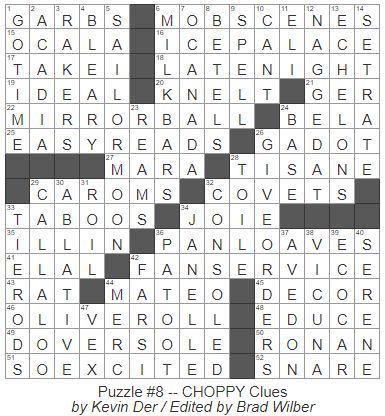
That was followed by Kevin Der’s amazing week eight grid. This one took me ten minutes longer than my average time for the rest of the tournament puzzles.

I mean, look at this grid:

kevin der grid

Week nine’s championship puzzle was constructed by Brooke Husic, and it was the perfect closer to two months of solving. It was sharp and well-constructed, sending everyone home happy.

All in all, I enjoyed the Spring Themeless League more than the Fall League because I felt much more comfortable with the solving interface and I had a better handle on themeless solving overall. My times were stronger — although far from the blistering pace set by many of the top solvers — and I felt like I was making smarter choices in my solving. It’s always nice to both see and feel improvement in your puzzling.

I ended up placing 262nd out of around 600 competitors — had I actually gotten puzzle seven submitted, I would’ve been closer to 115th or so — which is about on pace for how I did in the Fall Themeless League.

But the tournament experience was delightful. Having a new challenge awaiting you every week is a treat, especially with the fantastic roster of talent they assembled in this season’s constructors.

And with the promise of future Boswords-hosted events in 2021 like the Summer Tournament on July 25th and the Fall Themeless League in October and November, it’s nice to have exciting puzzle events to look forward to in the near future.

Kudos to everyone who helped bring this marvelous project together, and kudos to everyone who participated. It was so much fun.


Thanks for visiting PuzzleNation Blog today! Be sure to sign up for our newsletter to stay up-to-date on everything PuzzleNation!
You can also share your pictures with us on Instagram, friend us on Facebook, check us out on TwitterPinterest, and Tumblr, and explore the always-expanding library of PuzzleNation apps and games on our website!

Vague Cluing: Yea or Nay?

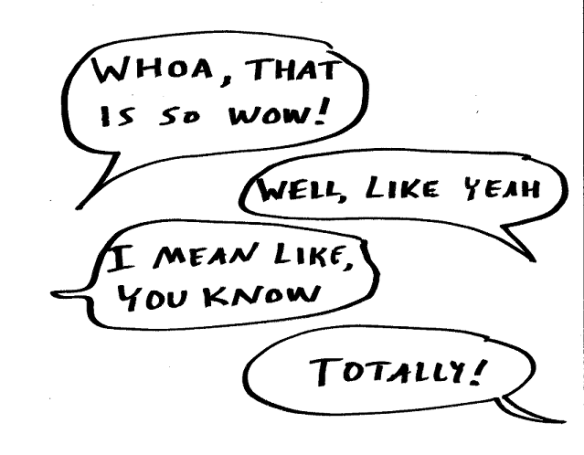
vague

When is vagueness in crossword cluing a bad thing?

That’s kind of a loaded question, because I think it depends on the clue and the solver’s knowledge base. But there are definitely good vague clues and bad vague clues.

Someone on Reddit’s r/crossword forum mentioned the clue “Son of Zeus,” which got a laugh from folks who remember their Greek mythology and just how… prolific Zeus was.

But to me, this isn’t necessarily a bad clue. You know the number of letters (4 in this particular case), which helps narrow down the field a lot.

There are some synonym-style clues that do lend themselves to multiple answers, which can be frustrating for solvers.

Problem-solving-crossword

For instance, if you have a 5-letter word and the clue is “Kingly,” you could have REGAL or ROYAL, and those shared letters add a level of uncertainty and challenge to the grid. Similarly, if you have a 5-letter word and the clue is “Escape” or “Sidestep,” you’ve got EVADE, ELUDE, AVOID, and DODGE all as possibilities. That’s a little tougher.

But all of these clues seem fair to me. The vague cluing style that really irks me is “Certain [blank]”.

“Certain cat,” for example, might as well just be “Cat.” The word “certain” adds literally NOTHING to the clue. “Type of [blank]” and “Kind of [blank]” clues can also fall into this trap, but there are a fair number of cases where those clues point toward a category, not just an example of that particular group, so “Type of” and “Kind of” still provide some context.

But “certain” is a waste of typing. You could have given me a helpful adjective, or a misleading one, or a funny one. Instead, it’s the least helpful addition possible.

That sort of vague cluing is infuriating, because there’s no cleverness or art to it. Obviously, the only exception here would be some sort of wordplay involving the definition of “certain.” Something like “Certain thing?” for LOCK or GIVEN. But those are pretty rare.

In the end, vagueness can be a tool for clever cluing or a bit of filler in a long-overused clue. It’s all up to the constructor.

Are there are any vague clues or cluing tropes that get your goat, fellow puzzlers and PuzzleNationers? Let us know in the comments section below! We’d love to hear from you.


Thanks for visiting PuzzleNation Blog today! Be sure to sign up for our newsletter to stay up-to-date on everything PuzzleNation!
You can also share your pictures with us on Instagram, friend us on Facebook, check us out on TwitterPinterest, and Tumblr, and explore the always-expanding library of PuzzleNation apps and games on our website!

The Robots Have Come For Our Crosswords!

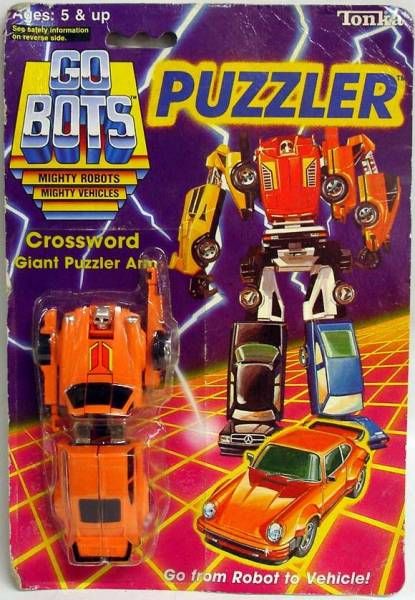
robo-machine---puzzler-robot---crossword-p-image-262284-grande

Well, it was bound to happen. We’ve seen it in chess, and Go, and Scrabble. Now, crosswords are the latest pastime to fall to the inevitable machine takeover of civilization.

Okay, I’m being a tad hyperbolic here. Robots aren’t snatching crossword puzzles out of peoples’ hands and solving them, after all.

But we have reached a peculiar milestone in AI and crossword history: a computer program won the American Crossword Puzzle Tournament. Sorta.

Dr. Fill, the crossword-solving creation of Matt Ginsberg, was able to balance the occasional solving mistake with a blistering solving speed in order to overtake any human competitors in its total tournament score.

But not by much. Former ACPT champion Erik Agard was only 15 points behind Dr. Fill on the seven tournament puzzles. Dr. Fill then went on to solve the championship puzzle in 49 seconds (while actual winner Tyler Hinman did so in three minutes).

acptlogo

But, as it turns out, this isn’t the old Dr. Fill that has been competing in the ACPT for years. No, this year’s Dr. Fill is a curious hybrid of the original programming and a neural network known as the Berkeley Crossword Solver.

And this Frankenstein’s monster of puzzle-solving machinery is what toppled the competition in the first-ever virtual edition of the tournament.

According to an article on Slate:

An alliance came naturally. Ginsberg and the Berkeley crew started working together just two weeks before the tournament, plugging the latter system into the former, and the centaur program finally ran with just days to go.

The result, hastily constructed though it was, was a marvel, its pieces working hand in glove to solve crosswords. Ginsberg’s system handled the grid and the colder, mathematical side of things, searching and placing answers, while the Berkeley team’s system unriddled the hazier, “human” side of the language of the clues, crosswords’ music.

You know, it’s kind of reassuring that it took TWO computer programs working in tandem to best the top puzzle solvers.

Also, it’s not like Dr. Fill can actually win a tournament. Not until it can hold a marker and solve in person in front of everybody while Greg Pliska and Ophira Eisenberg crack wise about it, at least.

It does make next year’s tournament more intriguing. Will Dr. Fill perform as well “in person”? Or will the master cruciverbalists retake the title?

And hey, if anyone is building a body for Dr. Fill, please stop. Stop, rewatch every sci-fi movie about AI and robots, and then rethink your life choices.


Thanks for visiting PuzzleNation Blog today! Be sure to sign up for our newsletter to stay up-to-date on everything PuzzleNation!

You can also share your pictures with us on Instagram, friend us on Facebook, check us out on TwitterPinterest, and Tumblr, and explore the always-expanding library of PuzzleNation apps and games on our website!