The Man Who Found Forrest Fenn’s Treasure

One of the biggest stories in puzzles last year revolved around Forrest Fenn’s treasure hunt, which had left treasure hunters and puzzle fans baffled and searching for almost a decade.

The hopes of thousands of would-be rich treasure seekers were dashed when Fenn announced that his treasure had been found.

It was under a canopy of stars in the lush, forested vegetation of the Rocky Mountains and had not moved from the spot where I hid it more than 10 years ago. I do not know the person who found it, but the poem in my book led him to the precise spot.

I congratulate the thousands of people who participated in the search and hope they will continue to be drawn by the promise of other discoveries.

So the search is over. Look for more information and photos in the coming days.

But in the days and months that followed, controversy ensued. The identity of the hunter who found the treasure was kept secret, only referenced as someone “from back East.” Some treasure hunters demanded more proof, positing that Fenn had retrieved the treasure himself, or that he’d never hidden it at all.
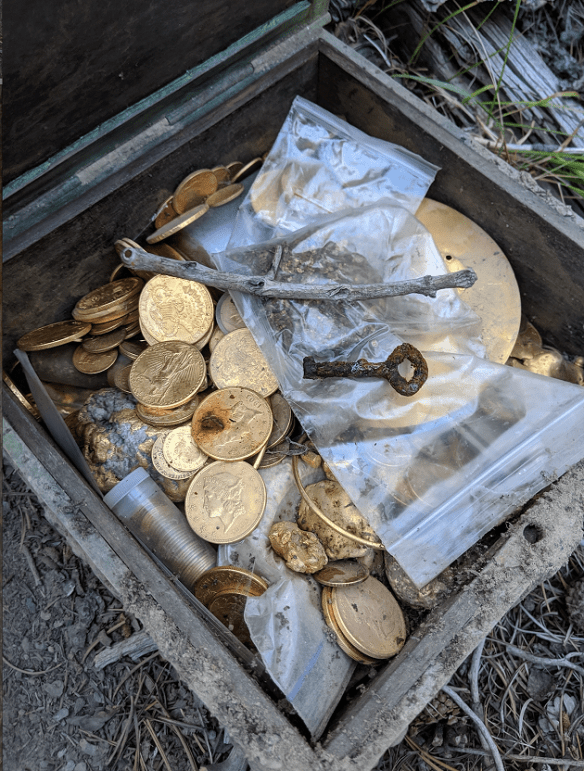
fennfound3

Lawsuits were filed, alleging that the mysterious treasure hunter had stolen his solution from someone else, or that Fenn had faked the entire decade-long endeavor.

In September, a few months after the announcement that the treasure had been found, Forrest Fenn passed away. Depending on what you believed, it was either oddly poignant or terribly convenient that his passing would follow the discovery of his long-hidden treasure.

Eventually, though, as these things go, the story grew quiet.

A reader of the blog recently asked me if there had been any updates on Fenn’s treasure. As it turns out, there had, but they’d flown relatively under the radar.

Back in December, a gentleman named Jack Stuef came forward as the finder of the Forrest Fenn treasure.

According to an article on NPR, Stuef claimed he pored over Fenn’s poem for two years, as well as interviews with Fenn, “teasing out clues from his words to understand what kind of person he was and where he might be inclined to hide his riches.”

As for why he remained anonymous, he further stated:

For the past six months, I have remained anonymous, not because I have anything to hide, but because Forrest and his family endured stalkers, death threats, home invasions, frivolous lawsuits, and a potential kidnapping — all at the hands of people with delusions related to his treasure. I don’t want those things to happen to me and my family.

The U.S. District Court for New Mexico has ruled that Forrest’s estate must provide some of my personal information to a woman I do not know and with whom I have never communicated who has brought a meritless lawsuit against me. This would make my name a matter of public record, so I chose to come forward today.

The entire piece is interesting, sharing his solo efforts to solve the mystery and find the treasure, as well as debunking a number of false reports, accusations, and various attempts at conspiracy theorizing.
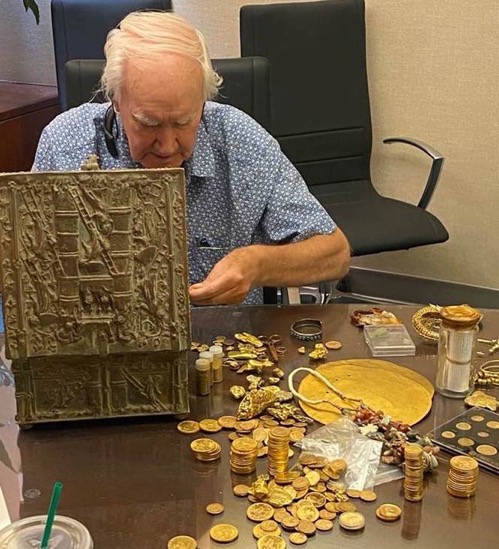
fennfound6

But he also refuses to disclose where he found the treasure or how he arrived at that solution, which will no doubt frustrate and confound some of the more obsessive folks that spent the last decade trying to find Fenn’s treasure. (As for people claiming he was working with Fenn or that the treasure being found is still a hoax, I doubt they will ever be satisfied with ANY answers, short of them finding the treasure themselves.)

Still, with the expectation that any and all lawsuits related to the Fenn treasure hunt will be thrown out, this brings one of the strangest and most interesting puzzle mysteries of the last decade to a close.

Jack Stuef apparently managed to do what thousands of armchair adventure seekers (and more than a few real-life wildlife trekkers and treasure hunters) failed to: unravel Fenn’s riddle.

As a closing thought, I do hope that Stuef or someone connected to Fenn’s estate place some sort of marker where the treasure was found, if only to offer something for future treasure hunters to find. It would be a nice way to keep the spirit of the mystery alive, hopefully without the rancor or nonsense involved.


Thanks for visiting PuzzleNation Blog today! Be sure to sign up for our newsletter to stay up-to-date on everything PuzzleNation!

You can also share your pictures with us on Instagram, friend us on Facebook, check us out on TwitterPinterest, and Tumblr, and explore the always-expanding library of PuzzleNation apps and games on our website!

Ask a Puzzler: What’s your puzzly pet peeve?

pet-peeves

Originally this post was going to be a nitpicky little thing where I focused on one of my puzzly pet peeves.

But it occurred to me that this might not just be a pet peeve of mine. It might similarly irk other puzzle people I know.

I then reached out to some of the constructors I know to ask what their puzzly pet peeves are. And, as it turns out, there are lots of silly little things in crosswords and other puzzles that catch the ire of constructors and puzzle-minded folks.

So please join us as we kvetch and complain a little bit and let off some steam about one of our favorite pastimes.

Welcome to Ask a Puzzler: What’s one of your puzzly pet peeves?


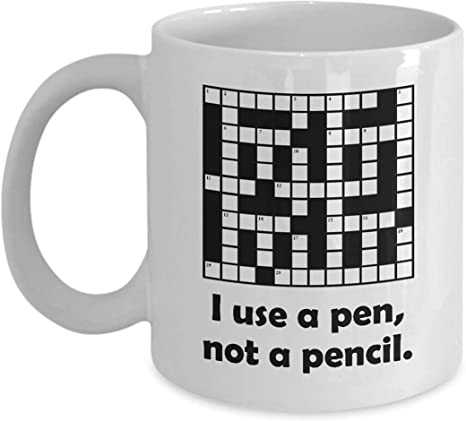
crossword mug

Constructor Joanne Sullivan:

The myth that solving in pen is the highest achievement.

Winners of the ACPT have told me that they never solve in pen. Almost all solvers (including the expert speed-solvers) use pencils at crossword tournaments. You could write a whole article on serious crossword solvers’ pencil preferences–wood vs. mechanical, .5 mm vs. .7 mm lead, disposable vs. refillable, etc.

When I’ve worked as a judge at crossword tournaments, I’ve been irked by solvers who solve in pen and then wrote over their original answers when they made mistakes because they couldn’t erase them. If they insist on using pens, at least they should use ones with erasable ink. Sloppy handwriting in tournament puzzles is also a pain for judges. What’s worse than mere sloppy handwriting is inconsistency. If a contestant always uses the same squiggle to represent a certain letter, it’s easier to determine their intent, but if they form the same letter different ways in different squares, it can be maddening for judges.


Washington Post Crossword editor Evan Birnholz:

A pet peeve of mine is the tendency to refer only to classical or Romantic-era music pieces when writing clues about keys (A MINOR, C MAJOR, etc). Mozart and Beethoven and Chopin are great, but there are other genres and musicians who used those keys, too.


Universal Crossword editor David Steinberg:

I’d say my puzzly pet peeve is when a crossword has too many cross-reference clues (like “See 19-Across”), since it’s always sort of frustrating to be sent all over the grid.


Constructor Doug Peterson:

Clues that want me to think the answer is a “good name” for a certain profession.

For example STU as a [Good name for a cook?] or SUE as a [Good name for a lawyer?]. OTTO for a chauffeur, OWEN for a debtor, PHILIP for a gas station attendant. The list goes on and on. I love third grade riddles as much as anyone, but for some reason these stick in my craw. =)

In my opinion, this sort of thing only works for pets. OREO is a great name for a black-and-white kitten!

oreo


Fireball Crosswords constructor Peter Gordon:

The best I can come up with is when someone feels the need to cross off the clue number after filling in the answer. Why bother doing that?

[PN Blog: I confess. I do this.]


Wordplay blogger Deb Amlen:

It took me a really long time to understand when there was a rebus element in a puzzle. I spent a lot of time cursing at my empty grid before I realized that something must be up.


Daily POP Crosswords constructor Robin Stears:

Puzzle books for little kids, particularly the ones in the dollar stores.

Very often, they’re nothing more than scaled-down grids with clues written for adults. And for some reason, they all contain the word ARIA, which I doubt children even know, unless Peppa Pig has a friend named Aria. I actually saw one with a Blackjack clue for ACE! Are these kids today playing poker on the playground? At my school, we didn’t learn how to count cards until the eleventh grade. 😉


Constructor Neville Fogarty:

My biggest pet peeve in the world of puzzles is actually in the world of cryptics — indirect anagrams! I can’t stand when a clue involves rearranging letters that you aren’t given. That’s just not fair; there are too many possibilities!

Fortunately, most publishers of cryptics edit these out, but I still see these on occasion from newer setters and indie sites. Yikes!


Oh, and what was the pet peeve that inspired this entry in the first place?

When people call things crosswords that aren’t crosswords.

I get it. You see a clued puzzle where words cross, and you think crossword. But it’s not. It’s a crisscross. It’s a perfectly valid puzzle, but it’s not a crossword.

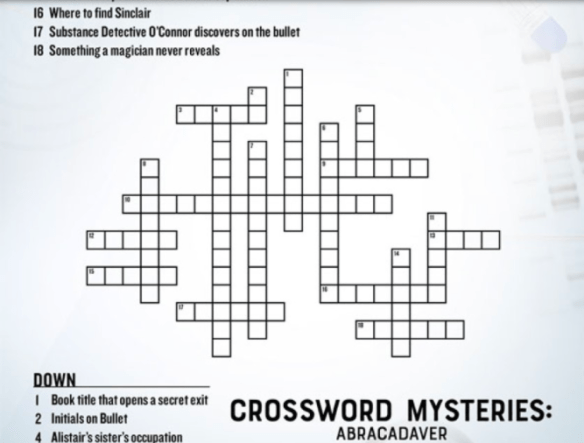
Perhaps the most egregious example recently was featured on the Hallmark website page for the Crossword Mysteries series of films. They advertise a crossword tie-in to each show. And when you click on it, you get this:

crisscross

That’s not a crossword. And this happens all the time. a blog page or an activity book or a tie-in product related to some pop culture property, you’ll be told there’s a crossword to solve…

And you get a crisscross instead.

Several of my fellow puzzlers chimed in on this topic when I mentioned it as my example of a puzzly pet peeve.

Joanne Sullivan: Oh, don’t get me started! Criss-crosses being passed off as crosswords are bad enough, but I think it’s even worse when clueless designers try to emulate real crosswords but make all kinds of mistakes like lack of symmetry, noncontiguous white squares, unchecked squares, and worst of all, nonsensical numbering. I can’t stand it when fake crosswords in cartoons or fabrics have numbers thrown in them willy-nilly.

Robin Stears: Dang it, you stole my pet peeve. I was just complaining to someone the other day about a book cover with a pseudo-crossword grid that wasn’t really a crossword puzzle at all!

Oh, and puzzle books for kids very often try to pass off criss-crosses as crosswords, too. It’s not just Hallmark — that new People crossword game is not a crossword either. Six words that vaguely overlap do not a crossword puzzle make, and you can quote me on that.


Did you enjoy this fun little venting session, fellow PuzzleNationers? Let us know in the comments section below, and we might do another Ask a Puzzler post in the future! (But not too often. I don’t want them to start dreading emails from me.)

Thanks for visiting PuzzleNation Blog today! Be sure to sign up for our newsletter to stay up-to-date on everything PuzzleNation!

You can also share your pictures with us on Instagram, friend us on Facebook, check us out on TwitterPinterest, and Tumblr, and explore the always-expanding library of PuzzleNation apps and games on our website!
Voltaire and Frederick the Great: Puzzle Pals?

frederick and voltaire

One of the most curious – and tumultuous – friendships in history was that of Frederick the Great and Voltaire.

Voltaire, the 18th-century philosopher and writer, never shied from criticizing the monarchy in his outspoken defenses of civil liberties. That makes it all the more curious that he became friends with the Prussian King Frederick II, aka Frederick the Great.

They bonded over a shared interest in the arts — a passion for Frederick all his life, despite his father’s disapproval.

From Joshua Figueroa’s marvelous article on KMFA.org:

Through Frederick’s public admiration, Voltaire was given a status few other philosophers of the era had. Likewise, Voltaire helped spread the word of Frederick’s flattering image as a philosopher-king.

As it turns out, they were mutual wordplay enthusiasts as well.

The story goes that Frederick the Great wanted to invite Voltaire to lunch, but did so with a rebus:

the question

Voltaire replied simply:

the answer

Which left Frederick confused as to why Voltaire would reply in German. Voltaire retorted that he hadn’t.

There’s a lot going on here, all to do with how things sound when said aloud.

Let’s look at Frederick’s message first:

the question

You have the letter P above the number 1 and the word Si above the number 100, with the letter a between them.

Anyone familiar with rebuses knows that a horizontal line between two words means “over/above” or “under.”

But remember that we’re working in French. So that’s un for 1 and sous for under. Un sous p.

Aloud you get un souper, or “a supper.”

Following the same logic, you’ve got 100 (cent) under (sous) si, which sounds like Sanssouci, Frederick’s castle.

Put it all together, and it’s the lunch invite Frederick intended, souper à Sanssouci. Pretty clever.

But what about Voltaire’s reply?

the answer

It sure looks like the German word for yes.

But if you’re very literal about what you’re seeing, you’ve got a large J and a small A.

Large in French is grande (as Starbucks customers know). Small in French is petit.

J grande A petit.

Or, said aloud, J’ai grand appétit. Which means “I have a great appetite.”

You know, I’m starting to see why these two became pals.


Thanks for visiting PuzzleNation Blog today! Be sure to sign up for our newsletter to stay up-to-date on everything PuzzleNation!

You can also share your pictures with us on Instagram, friend us on Facebook, check us out on TwitterPinterest, and Tumblr, and explore the always-expanding library of PuzzleNation apps and games on our website!

5 Questions for Crossword Constructing Duo May Huang and Kevin Trickey!

Welcome to 5 Questions, our recurring interview series where we reach out to puzzle constructors, game designers, writers, filmmakers, musicians, artists, and puzzle enthusiasts from all walks of life!

This feature is all about exploring the vast and intriguing puzzle community by talking to those who make puzzles and those who enjoy them.

And this marks the fourth edition of a new series of interviews where we turn our eyes to the future of crosswords. Instead of interviewing established talents in the field, I’ve been reaching out to new and up-and-coming constructors and asking them to share their experiences as a nascent cruciverbalist.

And we’re excited to welcome May Huang and Kevin Trickey as our latest 5 Questions interviewees (and our first duo interview)!

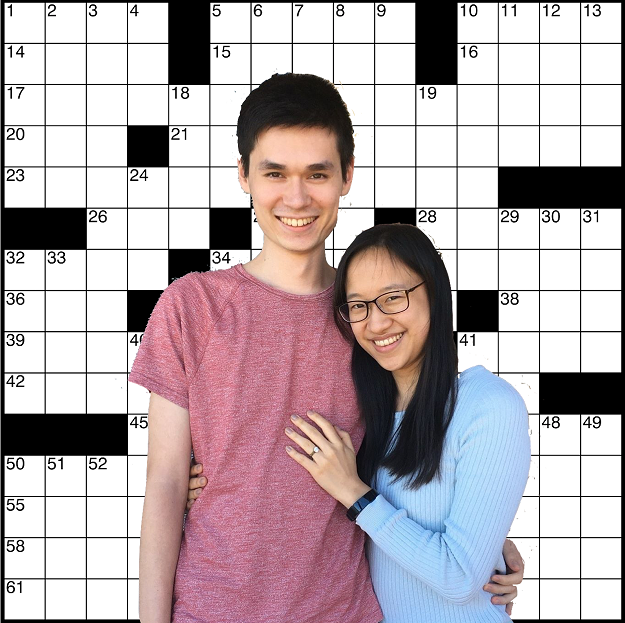
Kevin and May - crossword background

For many modern constructors, making crosswords isn’t simply about building grids or writing clues. It’s also about contributing to the greater crossword community in a meaningful way.

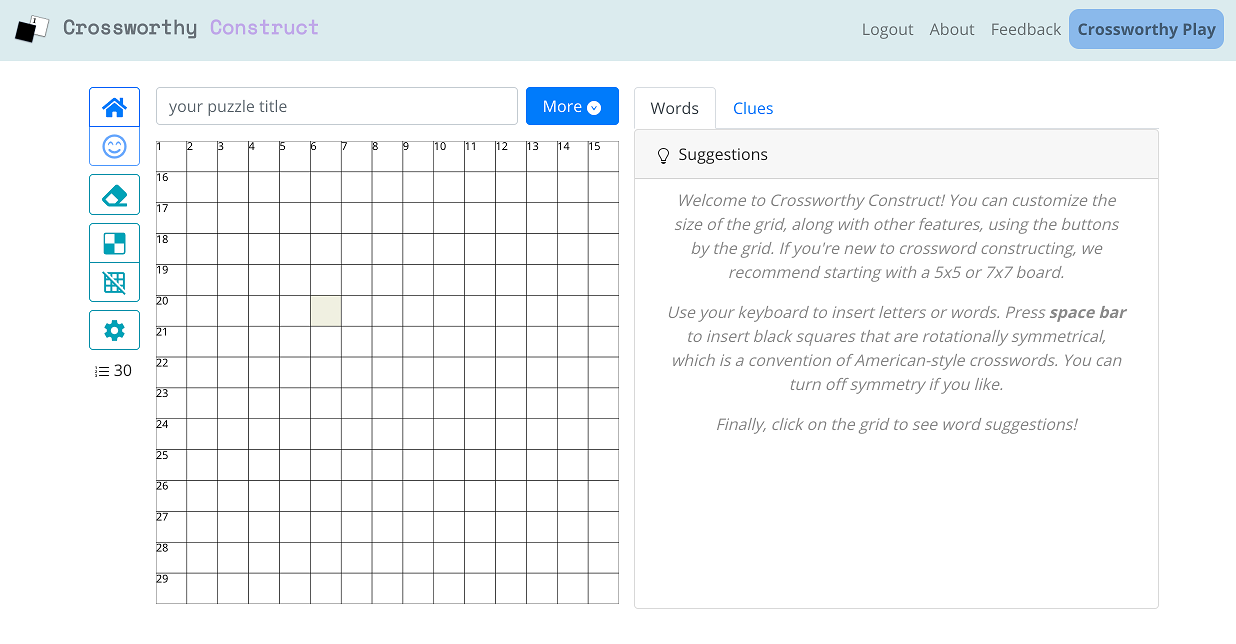
And you’d be hard-pressed to find two people making bigger strides in that direction than constructor May Huang and programmer Kevin Trickey. They have launched their own free puzzle site, Crossworthy, to share a new puzzle every week, and May’s puzzles have found their way into outlets like The Inkubator.

But they’ve gone above and beyond by creating a free-to-use crossword construction tool, Crossworthy Construct. With the price of quality crossword-constructing software often proving a major hindrance to new puzzlers, Crossworthy Construct is an amazing resource for any aspiring cruciverbalist to try out.

May and Kevin were gracious enough to take some time out to talk to us, so without further ado, let’s get to the interview!


5 Questions for May Huang and Kevin Trickey

1. How did you get started with puzzles?

In the early months of quarantine, May started playing the NYT minis and eventually began making her own minis that she would send out to friends and family throughout the month (her newsletter was called “May’s Minis”). As Kevin watched May iterate through fills on Microsoft Word, he started writing an algorithm that could churn out larger grids more quickly. In June, we started Crossworthy, a website for publishing our algorithm-generated and hand-made grids.

Unlike some constructors we know, we didn’t start out as avid crossword players before starting to make our own puzzles. But the creative and technical challenges of crossword construction align with our mutual interests — May is a literary translator who enjoys wordplay, while Kevin is a casual programmer who fancied a challenge. Now, of course, we love both playing crosswords as well!

2. You have your own puzzle website (and editing software!), in addition to publishing through outlets like The Inkubator. As you start to interact with the puzzle community at large, what have you learned along the way? What has been the most surprising part of the process for you?

When we first started making puzzles, we didn’t expect this hobby to really take off, but it really has! We went from constructing puzzles using Microsoft Word (a good learning experience, but not sustainable) to developing our own software that streamlines our construction process.

Along the way, however, we were surprised to see how many resources already exist — tools and communities we wish we had known about sooner! We sometimes tweet about our construction questions and we’re always heartened by how instantly helpful fellow constructors can be. The best thing we’ve learned is that the crossword community can be a very kind and welcoming place.

Crossworthy Construct page

[Crossworthy Construct, May and Kevin’s crossword custom editing
software. Click here to check it out for yourself.]

What, in your estimation, makes for a great puzzle? What do you most enjoy — or try hardest to avoid — when constructing your own?

A great puzzle, to us, is both personal and accessible; it should have words and clues that really resonate with the constructor, as well as elements that will speak to any player. Because we have different interests, however, we often clash over clues.

For example, most of May’s pop culture clues fly over Kevin’s head, whereas the biology terms Kevin tends to include are equally obscure to her. In this way, we keep each other in check, and try to produce well-balanced puzzles. Nonetheless, we’re still rookies in the field: we’re still learning about what makes a theme set stand out and which words make for sparkly fill.

3. Do you have any favorite crossword themes or clues, either your own or those crafted by others? Who inspires you as a constructor?

Recent puzzles we’ve really enjoyed include Paolo Pasco’s “Busting Moves” puzzle (January 3rd, 2021) as well as Matthew Stock’s “Karaoke Bars” (February 21, 2021). Malaika Handa’s daily 7×7 project is fantastic, and Evan Birnholz’s meta puzzle “5×5” in the Washington Post was super eye-opening. We’re inspired by too many constructors to name — Barbara Lin, Caitlin Reid, Natan Last, Ross Trudeau, Kam Austin Collins…the list goes on!

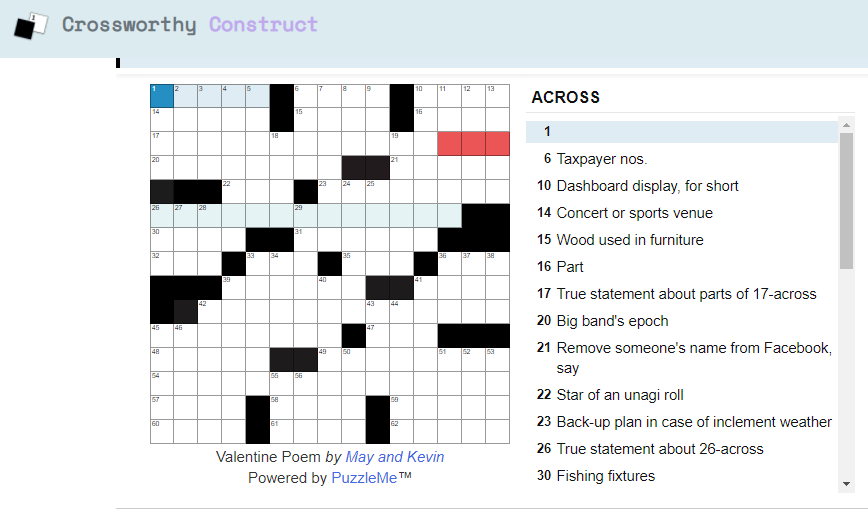
We tend to like puzzles with themes that make us smile, and reveal an aspect of the constructor’s personality. Some of our own puzzles that fall into our category include “Valentine Poem,” whose theme words spell out a crossword-themed love poem, and “A President’s Ponderings,” a puzzle that includes presidential puns in its theme set.

crossworthy valentine

4. What’s next for May Huang and Kevin Trickey?

While we plan to continue publishing weekly puzzles on Crossworthy every Sunday, we also hope to start publishing more puzzles in other venues (May has a puzzle coming out from the Inkubator soon!).

We’re also spending a lot of time building out new features for Crossworthy Construct, our own free construction software. Our goal is to reduce the barriers to entry for new and aspiring constructors like us. Currently, anyone can use our site to construct their own puzzles, and we’d love to hear from as many people as possible about their ideal construction software.

5. What’s one piece of advice you would offer fellow solvers, aspiring constructors/setters, and puzzle enthusiasts?

Kevin’s advice: Find an angle that interests you the most. Like everything else in life, crossword constructing is the convergence of many disciplines, and you can choose to play to your strengths. For me, it was the technical challenge of coding that got me started, and it’s kept me invested a year later.

May’s advice: Don’t be discouraged if you have trouble solving the NYT puzzle; in fact, look beyond the NYT! There are so many more crossword publication venues and indie sites out there making great puzzles. There are many diverse voices in the crossworld and you can definitely be one of them.


A huge thank you to May and Kevin for their time. You can follow them on Twitter for all of their crossword endeavors, and be sure to check out their website Crossworthy to solve puzzles and try out their crossword constructing software! I cannot wait to see what they cook up next!

Thanks for visiting PuzzleNation Blog today! Be sure to sign up for our newsletter to stay up-to-date on everything PuzzleNation!

You can also share your pictures with us on Instagram, friend us on Facebook, check us out on TwitterPinterest, and Tumblr, and explore the always-expanding library of PuzzleNation apps and games on our website!
Learning How to Drive From a Board Game?

ipgsycot_elearning-board-games

You can learn a lot from board games.

You can test your dexterity with games like Flick ‘Em Up, Flipships, or Pitchcar. You can test the steadiness of your hand with Jenga or Operation. You can test your deduction skills, your memory, your trivia, your tactical ability, your pattern matching, and your luck in all sorts of games. And along the way, you can learn history, strategy, negotation, and deception.

But, according to an article sent in by a fellow puzzle fan, there’s a board game out there that teaches you the rules of the road as well.

in-sierra-leone-a-board-game-will-grant-you-a-drivers-licenseeventually-80452-7

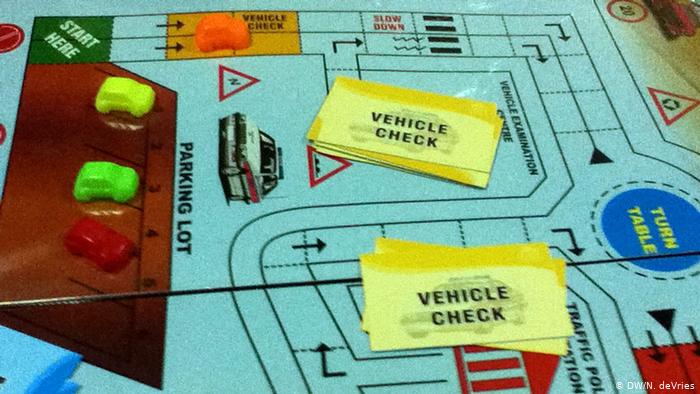
It’s called The Driver’s Way, and in the African country of Sierra Leone, it became law that you had to purchase and play this board game to learn road safety.

The game was actually designed by the assistant inspector general of police in Sierra Leone, Morie Lengor, and he designed the game in the hopes that it would reduce the accident rate for drivers in his country.

Now, this is a pretty cool idea, and I think more skills should be taught through board games. Do detectives need to play Clue or Deception: Murder in Hong Kong in order to learn their trade? Should we have exterminators playing Mousetrap and virologists playing Pandemic?

Just imagine if a court could order someone to play Sorry until they respected the meaning of the word.

17305512_303

Anyway, I thought this was a weirdly fascinating factoid, so I went on the hunt for more details. There weren’t many.

The news regarding this story broke in 2013, and the vast majority of articles about the game date back to that initial media blitz. Practically all of them carry the headline “You Have to Play a Board Game Before You Can Get a Driver’s License in Sierra Leone.”

Moreover, almost all of the articles were in some way factually incorrect, because they were thirdhand or worse reports, copying and paraphrasing from another article which did the same from another article which MIGHT have linked to the original.

Recent search results (and by recent, I mean 2018, which is the latest reference I found to it) are scarce, and parrot the same information from 2013. Most articles don’t even have an actual image of the game, using any image with a road — be it The Game of Life or just one of those small town rugs from kindergarten class with roads drawn all over.

multi-colored-jungtier-kids-rugs-kcp010032-2x5-64_1000

Descriptions of the game vary. Some refer to “spotlight-themed dice” and answering questions, while others compared the game to “a cross between Monopoly, Snakes and Ladders, as well as Scrabble.” I have no idea what form that game would take, and I suspect the person who wrote it has even less of a clue.

I can’t find anything that verifies this became a widespread tool for driver safety. A planned global production expansion appears to have dried up quickly, and I can’t find anything on the 3000 copies of the game articles claim were already manufactured and distributed. There’s not even an entry for the game on Board Game Geek, which is an otherwise exhaustive resource of board game info.

And yes, I did go as far as to actually reach out to the Sierra Leone Road Safety Authority about this, but they haven’t gotten back to me.

So, sadly, until we can find out more, we must consider this story a delightful flash-in-the-pan and not the start of a board game-learning revolution that could transform us all into Battleship-hunting, Forbidden Island-exploring, Kerplunk masters of a thousand different legally-bonded skills.

For now, anyway.


Thanks for visiting PuzzleNation Blog today! Be sure to sign up for our newsletter to stay up-to-date on everything PuzzleNation!

You can also share your pictures with us on Instagram, friend us on Facebook, check us out on TwitterPinterest, and Tumblr, and explore the always-expanding library of PuzzleNation apps and games on our website!
5 Questions for Crossword Constructor Mollie Cowger!

Welcome to 5 Questions, our recurring interview series where we reach out to puzzle constructors, game designers, writers, filmmakers, musicians, artists, and puzzle enthusiasts from all walks of life!

This feature is all about exploring the vast and intriguing puzzle community by talking to those who make puzzles and those who enjoy them.

And this marks the third edition of a new series of interviews where we turn our eyes to the future of crosswords. Instead of interviewing established talents in the field, I’ve been reaching out to new and up-and-coming constructors and asking them to share their experiences as a nascent cruciverbalist.

And we’re excited to welcome Mollie Cowger as our latest 5 Questions interviewee!

Less than a year into her crossword career, Mollie Cowger has already built a reputation for creative themes, strong cluing, and well-constructed grids. Heck, she made my list of favorite clues of the year with “Protector of the crown?” for ENAMEL.

Her puzzles have appeared in Matt Gaffney’s Weekly Crossword Contest, Matthew Stock’s Happy Little Puzzles, and several times in the USA Today crossword, and that list will be growing by leaps and bounds in the near future.

Mollie was gracious enough to take some time out to talk to us, so without further ado, let’s get to the interview!


5 Questions for Mollie Cowger

1. How did you get started with puzzles?

My mom has always been an avid crossword solver, so I got started young. I’ve solved crosswords (originally just NYT, now many others) with varying degrees of regularity since at least high school (so, 2010-ish). I’ve been messing around with construction for a few years, but didn’t start devoting serious time and energy to it until summer 2020. My published debut was in October 2020 with a meta crossword for Matt Gaffney’s Weekly Crossword Contest.

2. What, in your estimation, makes for a great puzzle? What do you most enjoy — or try hardest to avoid — when constructing your own?

I love a good a-ha moment; I love a puzzle that makes me laugh; I love seeing pop culture that’s in my wheelhouse; I love learning new things. There are so many ways a puzzle can be great! I also think “greatness” is a subjective judgment. I’ve solved many puzzles that are technically impressive and thoughtfully constructed that just don’t vibe with me for whatever reason. But that’s fine! Not everyone has to like every puzzle.

When I’m making a puzzle, I love having an entry where I know there’s great wordplay to be found, and then having my own constructor aha moment when I finally land on it. I try to put things in my puzzles that I would be excited to see as a solver, or that I can imagine someone else being excited to see.

I try to use “do I think people who know this will be happy to see it” as a guiding question for proper noun-ish fill and cluing, rather than “do I think everyone will know this.” As many others have pointed out more eloquently than I can, trying to guess what “everyone” will know tends to reinforce existing inequalities.

3. Do you have any favorite crossword themes or clues, either your own or those crafted by others? Who inspires you as a constructor?

I don’t keep track of favorite clues, but I do keep a folder of favorite puzzles. Some recent-ish additions to that folder include Rachel Fabi’s June 1st, 2020 USA Today puzzle (“6/1”), Erik Agard’s February 1st & 2nd 2021 Universal puzzles, and Paolo Pasco’s blog puzzle “Entry-Level Stuff”. I don’t want to spoil them, so I won’t explain why they’re great. Go solve them!

There are so many constructors I admire and am inspired by that it feels foolish to try to name them all. It’s phenomenal how many people are making puzzles these days, and it seems like the community is only continuing to grow, which is wonderful.

[Her tag team solving is next-level.]

4. What’s next for Mollie Cowger?

Puzzling, gardening, maybe finishing knitting a half-done scarf that’s been taunting me for years (that one’s pretty aspirational), getting that sweet sweet COVID vaccine needle into my arm as soon as I’m eligible. In the longer term? Who knows!

5. What’s one piece of advice you would offer fellow solvers, aspiring constructors/setters, and puzzle enthusiasts?

If you’re thinking of diving into constructing, you should absolutely do it– the community is filled with kind people who will help you along. And, more broadly, don’t forget to have fun.


A huge thank you to Mollie for her time. You can follow her on Twitter for all of her crossword endeavors, and be sure to check out her puzzle blog Crosswords From Outer Space for new puzzles every other Monday! Whatever she creates next, I’m sure it will be terrific.

Thanks for visiting PuzzleNation Blog today! Be sure to sign up for our newsletter to stay up-to-date on everything PuzzleNation!

You can also share your pictures with us on Instagram, friend us on Facebook, check us out on TwitterPinterest, and Tumblr, and explore the always-expanding library of PuzzleNation apps and games on our website!