Let’s Talk Escape Room Etiquette!

There are a lot of interactive puzzle experiences out there. Scavenger hunts, puzzle hunts, murder mystery dinners, treasure hunts, geocaching… it’s an amazing array of puzzly options.

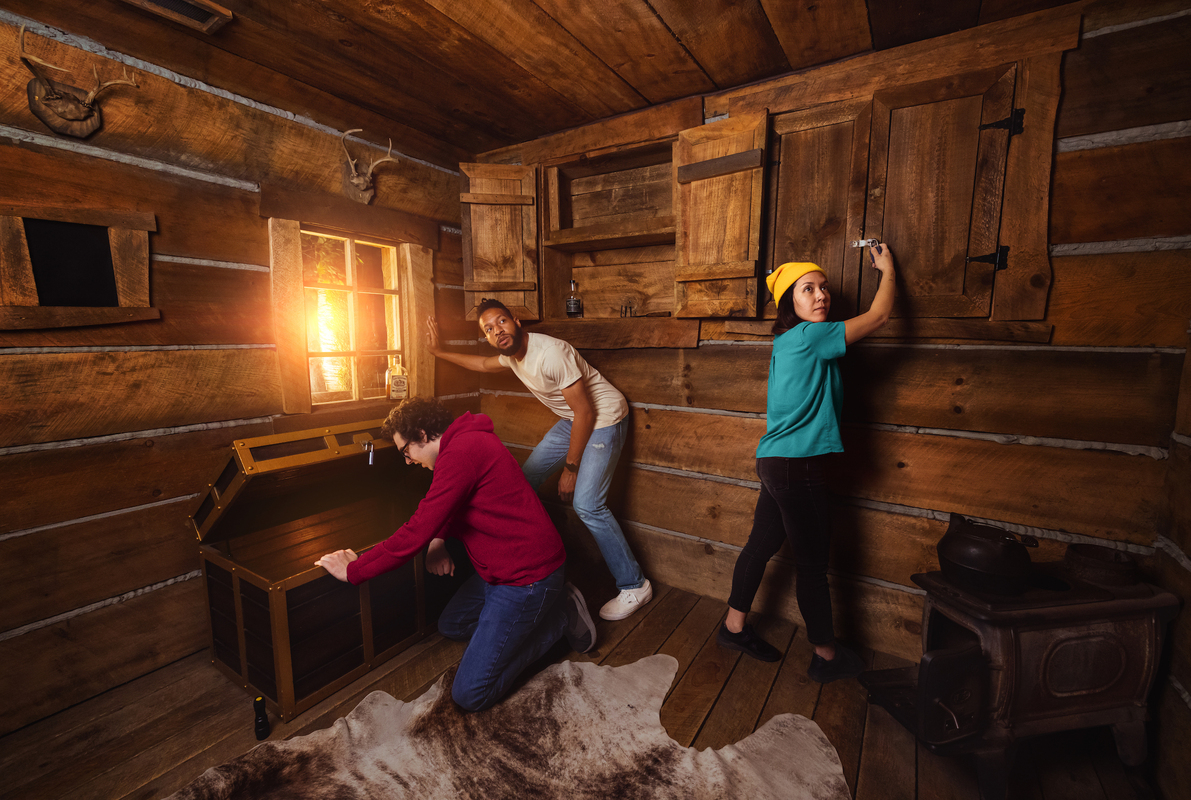
But I think escape rooms are probably my favorite. There’s something about the combination of the ticking clock and the mechanic of working as a team to defeat the room itself that is so immensely satisfying.

It builds communication skills, it challenges you to use both your logical and associative thinking patterns, and

Ideally, everyone gets a moment to shine in an escape room.

  • Some people are better seekers, finding items or hints or pieces of a particular puzzle for others to put together.
  • Some are better connectors, realizing which of those items could combine to crack a problem or a code.
  • Some are better puzzlers, figuring out how those combinations of found items and context clues leads to a solution.
  • Some are better organizers, sorting found items, putting aside items already used in solutions to help keep track of what hasn’t been used and still could contribute to a later puzzle.
  • Some are better leaders, assigning tasks to best utilize everyone’s hands and minds to get the ball rolling.
  • Some are better realists, accepting when the group is truly stumped and/or needs a hint or a clue, recognizing when an answer isn’t coming and helping move the game along in a timely manner (with the group’s agreement, of course).
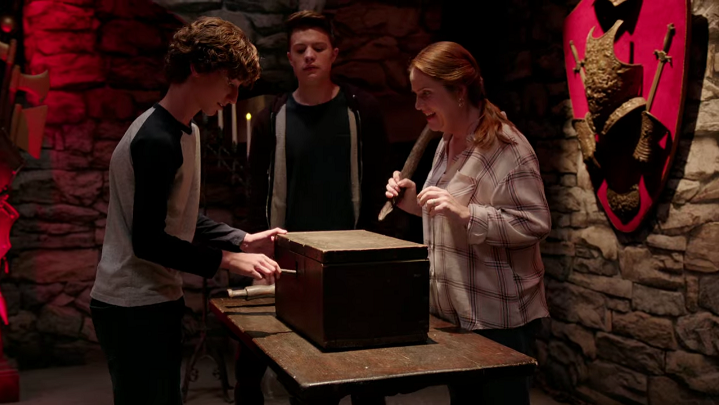
At least someone’s having fun in this escape room scene from Crazy Ex-Girlfriend…

Even when my team has failed to escape a room in the allotted time, I’ve never felt like the effort was wasted. I still had a blast, and I learned from it, and I got better for next time.

And one unexpected consequence of frequenting escape rooms has been hearing horror stories from staff members regarding players who took things too far.

So let’s go over some escape room etiquette together as I share some tidbits escape room operators have shared with me over the years.

#1: You don’t have to pull hard.

      Now, it’s true that some locks stick. If that’s the case, then grasp the loop in one hand and the body of the lock in the other and pull.

      But don’t yank the lock and damage how it’s attached to something. Don’t pull hard on doors. Don’t force things. The VAST majority of doors, hatches, trunks, and other items that open in an escape room do so EASILY. If you have to force it, you’re probably not doing it right.

      The very first time I hosted an escape room event at a convention, one of the boxes got broken open by an overexcited teenager. Because the magnetic opener didn’t work the first time they tried it. So they immediately went HULK SMASH on the poor little false book disguising a hidden trove.

      I’ve seen escape rooms with warnings about not RIPPING cabinets off the wall by trying to open them, complete with the obvious repair jobs that went along with returning said cabinets to the wall. People need to seriously calm down.

      This leads nicely into my second bit of escape room etiquette:
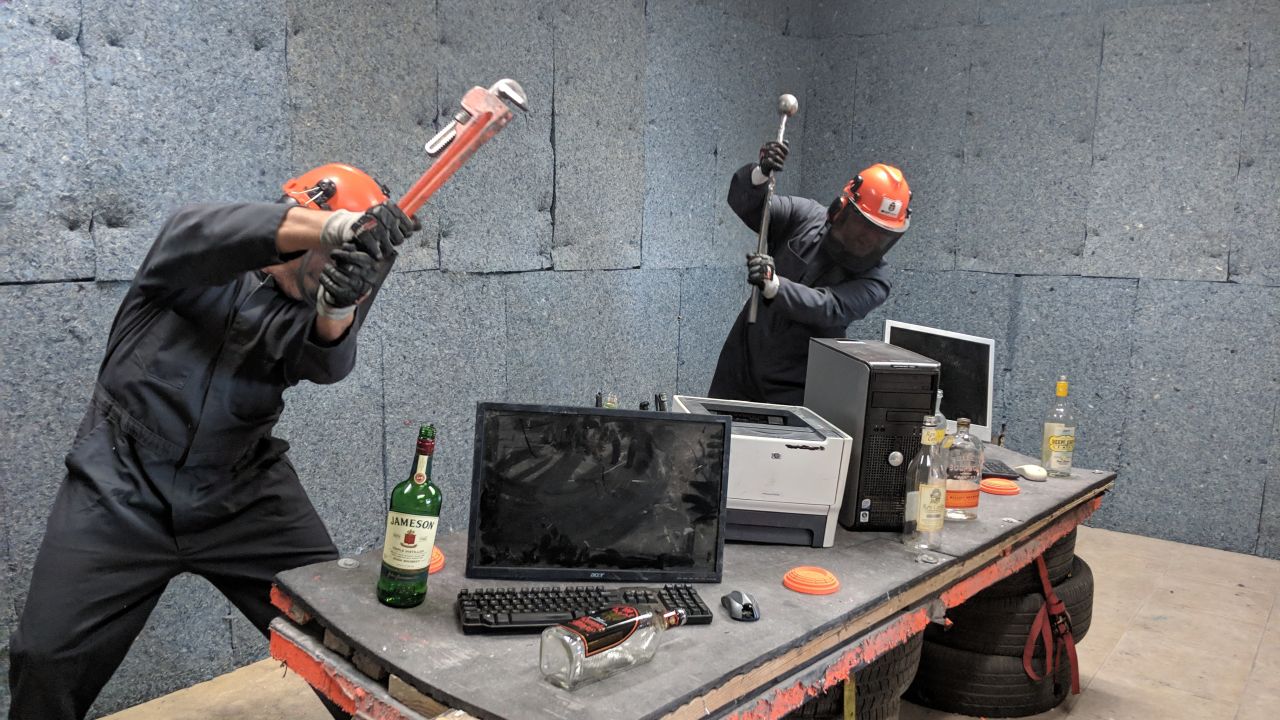
      #2: It’s not a rage room.

        I saw this written on the whiteboard in capital letters at an escape room once. Because, apparently, someone broke every bit of glassware in the room. It’s not clear if they thought it was part of the game or they just had poor impulse control.

        It’s a little sad that they have to include that on a board that otherwise offers fun little advice and tips for first-timers.

        I heard about a group of constructor workers that went to an escape room as a team-building exercise, and the staff member running their room overheard them discussing how thick the sheetrock was. They were genuinely considering just GOING THROUGH THE WALL instead of playing the game.

        I mean, it’s cool that they were bringing their particular skillset to the experience, but guys, dial it back a notch. They didn’t give you sledgehammers, after all. I don’t want every escape room to need signs that say, “Please don’t smash through this wall.”

        So, in short, be nice to the room. Whether it’s the trunks/cabinets or the walls or the many knickknacks and bits of color they put in the room to help with the immersion, just be gentle with it all so other solvers can enjoy the same experience.

        And speaking of enjoyment:
        #3: Winning isn’t the only goal.

          Yes, the goal is to escape the room before the time limit expires. Lots of places post the best escape times, and there are folks that will sacrifice an immersive experience just to beat that particular room’s record escape time.

          And, as previously stated, some people take it too far.

          One operator told me a guy snuck a Swiss army knife into the room with him, unscrewed the screws holding the final box together, took the key, and opened the door. Out the door within the first first minutes, bypassing the ENTIRE game for everyone involved.

          I don’t know if he didn’t want to do the whole room, or he was trying to show off how clever he was by cheating, or what the thought process was. But he spoiled it for everyone.

          Communicate with your fellow players. Show them what you find, don’t hoard it for yourself. Encourage discussion and theorizing. It’s way more fun to solve as a group than to solve alone. A close call with a few minutes to spare — but one where everyone got to contribute — is better than a quick escape that only one or two people in the group got to enjoy. And it makes for a better story to retell later.

          Do you have any favorite escape room stories? Are you an escape room staffer with a horror story to share? Either way, I’d love to hear from you!

          Happy puzzling!
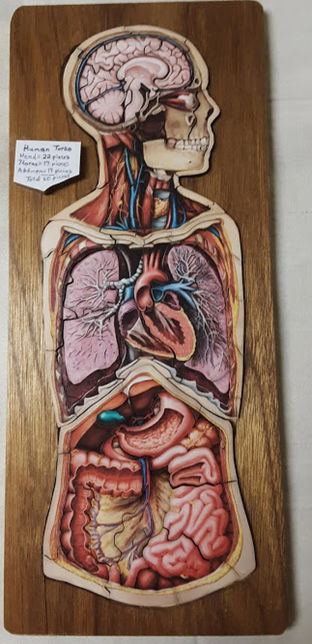
          Puzzling Bodies

          My eye was recently caught by the headline, “Retired Professor Builds Wooden Anatomy Puzzles.” The article in question is a human-interest piece detailing the woodworking career of former biology professor Roman Miller. AP Journalist Jillian Lynch writes, “Of interest to both oddity-seekers and students, Miller’s anatomy puzzles are a unique offering that blends his love of woodworking and understanding [of] the functions of organs in the human body.”

          Interestingly, anatomy puzzles appear to make up only a small percentage of Miller’s recent artistic output. His website features several animal puzzles, a handful of numerically or alphabetically themed puzzles, two abstract shape puzzles, and—among the other miscellaneous wares—a single puzzle showing off the insides of a human head and torso. Yet the article chose to shine the spotlight on the anatomy puzzles, noting that Miller has made twenty such works over the course of his time operating a scroll saw. Lynch clearly knows that there is an allure to what lies inside of us, likely to reel in readers. Human anatomy is, after all, puzzling in real life, much more so than the alphabet or shapes.

          An EMT’s worst enemy.

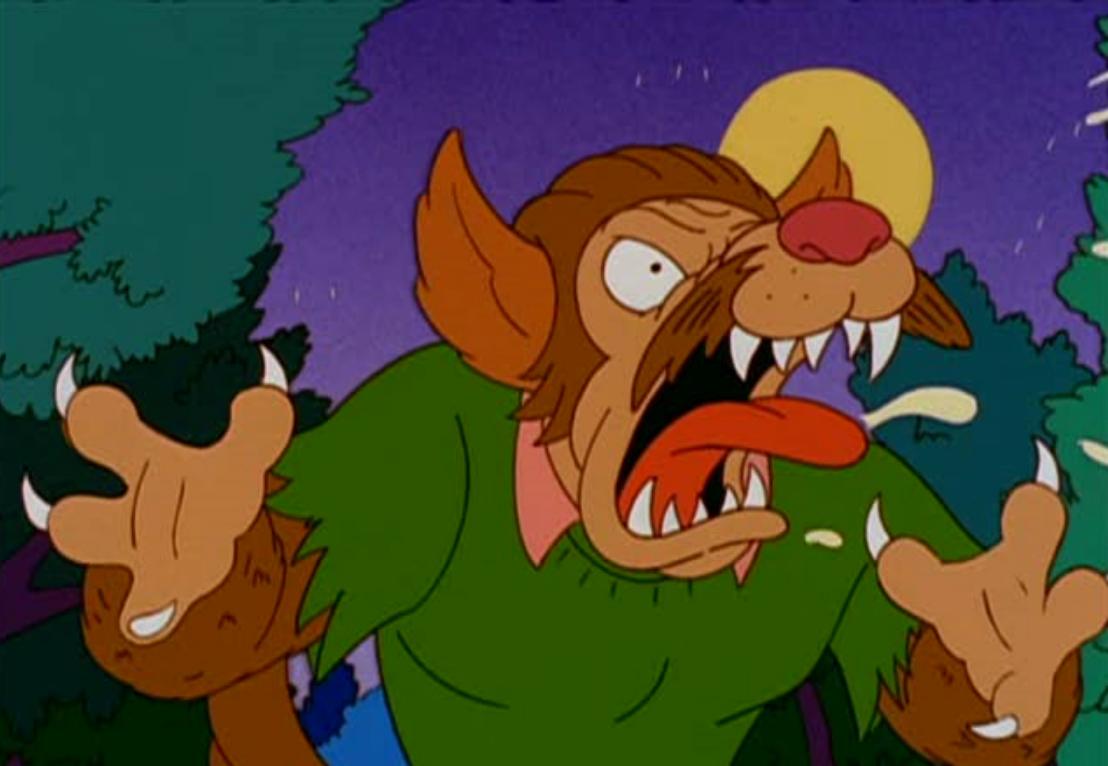
          Several years ago, I trained to be an EMT. A regular class exercise was “trauma assessment,” during which a teaching assistant would invent a gruesomely injured patient. Students would evaluate this fictional character and then determine how best to treat them. One T.A. favored mythical creatures gone rogue—unicorn-horn stabbings and vampiric exsanguination. The assessment that stuck most clearly in my head revolved around an imaginary man’s evisceration-by-werewolf. I clearly remember concluding that a cool, damp cloth should be placed over the patient’s abdomen. The T.A. agreed, reminding us all never to try placing a patient’s intestines back inside their body. “Internal organs are a complex puzzle,” he said. “You do not have the training to put that puzzle back together correctly.”

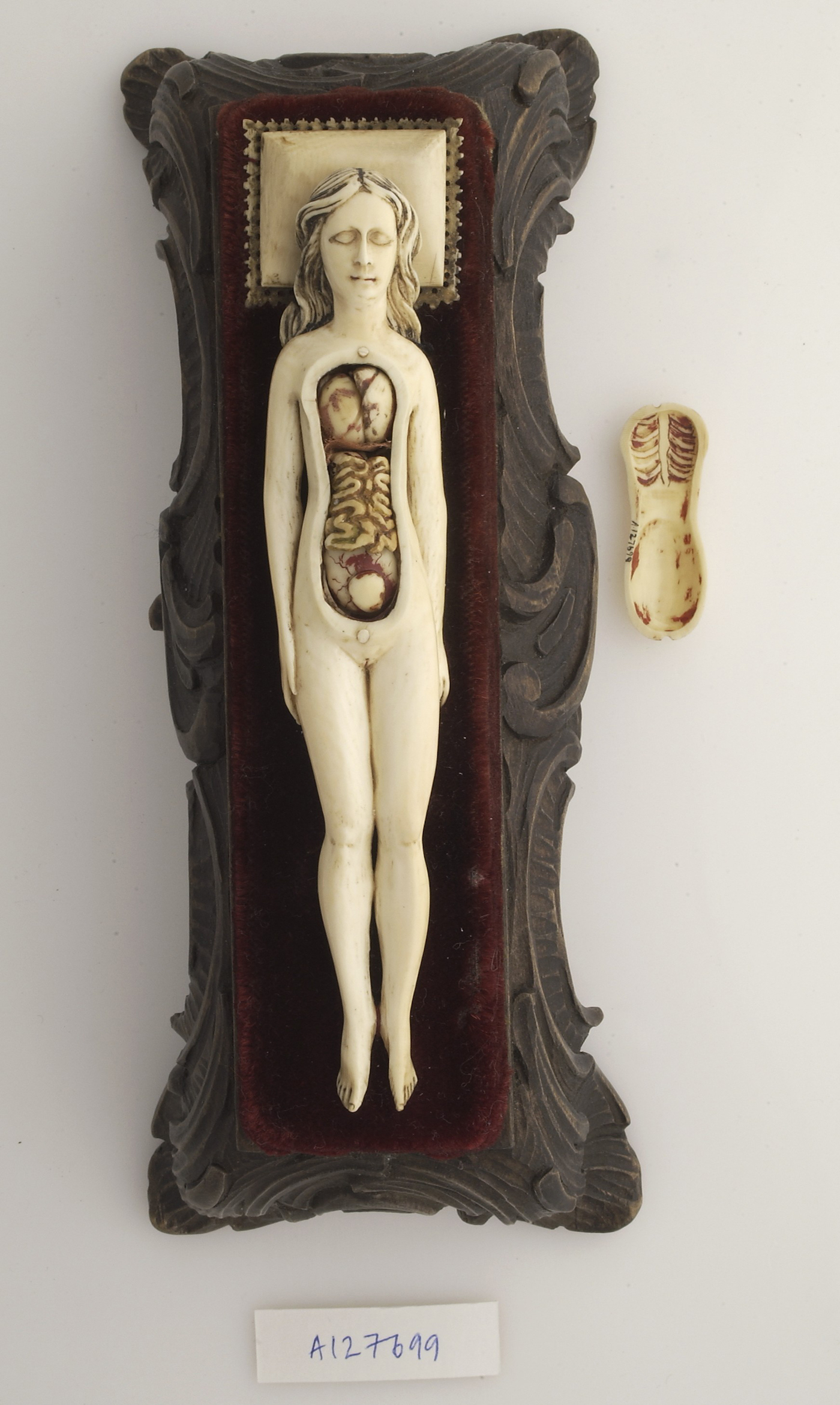
          Miller’s motivation for making those twenty puzzles was a desire to help young children learn the basics of anatomy, preparing them for further education in biology. Maybe those children would go on to become surgeons—those who do have the training to put the puzzle of the organs back together in the wake of a werewolf attack. While Miller is quoted in the article as saying, “Nobody makes anatomy puzzles,” the use of puzzles to teach anatomy is actually a very old concept, dating at least back to the 18th century. Dissectible wax models known as “anatomical venuses” provided medical students with an alternative to illustrations or cadavers when learning the body’s workings.

          An ivory obstetrical model.

          Although these models were strangely idealized in their femininity as compared to a bare-bones wooden rendering like Miller’s, they were undeniably puzzles—one essay opines, “18th century obstetrical models represent women simultaneously as ideals of graceful femininity and as puzzle boxes of removable parts.” Here in the 21st century, three-dimensional models representing humans as puzzle boxes of removable parts are readily available online, luckily with fewer misogynist undertones; for a lower price, you can download a digital human anatomy puzzle with timed challenges. Between models, computer games, and jigsaw puzzles, anatomical knowledge today is much more accessible than it would have been in the 18th century.

          Still, there is perhaps no better manifestation of the theory that the map is not the territory. If you know how to put an alphabet puzzle in order, then we can likely say that you know the alphabet. A talent for piecing together a representational puzzle of a human’s internal organs, however, does not indicate that you’re equipped to put a real human’s intestines back where they belong. Unless you’re a surgeon—AKA a next-level puzzler—if you’re ever in the company of someone who has been eviscerated by a werewolf, I don’t recommend trying to transfer your skills to a flesh-and-blood context. Miller presents his jigsaw puzzles as a simple starting point for biological education. Ahead of that starting point lies a long and winding path, infinitely more complex than any map of the path could ever be.


          You can find delightful deals on puzzles on the Home Screen for Daily POP Crosswords and Daily POP Word Search! Check them out!

          Thanks for visiting PuzzleNation Blog today! Be sure to sign up for our newsletter to stay up-to-date on everything PuzzleNation!

          5 Questions with Constructor Christina Iverson

          Welcome to 5 Questions, our recurring interview series where we reach out to puzzle constructors, game designers, writers, filmmakers, musicians, artists, and puzzle enthusiasts from all walks of life!

          It’s all about exploring the vast and intriguing puzzle community by talking to those who make puzzles and those who enjoy them. (Click here to check out previous editions of 5 Questions!) Today I’m excited to introduce our latest interviewee, Christina Iverson!

          Christina is a crossword constructor and the assistant editor for the LA Times Crossword. When she’s not working on puzzles, she can often be found reading, knitting, biking or hiking. She lives with her husband and two young children in Ames, IA. Find Christina on Twitter at @xtinaiverson.


          1. How did you get started with puzzles?

          I’m a first generation crossword solver. I grew up with a love of words, books, games, and puzzles, but no one in my family solved crosswords. In my mind, crosswords were just about trivia, and using big words that no one really uses in real life. Not true! 

          I realized that in 2018 when my son was a baby. My husband and I were trying to get him to fall asleep in his own bed at night before we went to bed (!). He’d usually last about 10 minutes before waking up again, crying. 

          One night while our TV show was paused, I came back from our son’s room to find my husband working on a crossword puzzle. We realized that crosswords were more easily interrupted than TV shows, and started solving them pretty regularly together. I was really terrible at them at first, so I started solving puzzles by myself to get extra practice; it’s not as fun to solve puzzles with someone who knows the answer before you even understand what the clue is getting at.

          It wasn’t very long before I started trying to construct my own puzzles. I’ve always been interested in creating puzzles and games; I invented my first board game when I was probably 5 or 6, made treasure hunts for my brother in grade school, and designed logic puzzles for my geometry teacher in high school. So it didn’t seem like much of a stretch to go from solving to constructing. 

          The first puzzle I made was a puzzle for my husband, about our cat, George Melvin. I constructed on my own for a couple of months before I reached out to some mentors in the crossword community. Jeff Chen, Amanda Chung, and Ross Trudeau all gave me invaluable assistance at the beginning of my journey, and I don’t think I would have gotten published without their help.

          2. What, in your estimation, makes for a great puzzle? What do you most enjoy—or most commonly avoid—when constructing your own? What do you think is the most common pitfall of constructors just starting out?

          I think a great puzzle is one that brings a smile to your face. For me, it’s mostly about having fun theme entries and a good “aha” moment, and also keeping the grid clean and free from yucky crossword glue. 

          I think the most common pitfall of new constructors is that they can be so enthusiastic that they move on to the next constructing stage too quickly. They often underestimate the importance of the theme entries, and move on to making a grid before having a solid theme set. The theme makes or breaks the puzzle, so if the theme isn’t well-conceived and well-executed, it doesn’t matter how great the rest of the puzzle is. They also often move on to writing clues before ironing out issues in a grid. I think many new constructors remember too vividly the times that they have run into words they didn’t know in a puzzle, and can have the attitude that all crosswords are full of obscure words and lots of abbreviations. (I definitely had this misconception when I first started out!) 

          3. Do you have any favorite crossword themes or clues, either your own or those crafted by others?

          My favorite puzzles to solve and construct are Sunday grids, and I especially like ones with wacky theme entries. I always try to make the theme entries as silly and fun as possible. One of my favorite puzzles I’ve made was in The New York Times with my frequent collaborator Katie Hale, and had R sounds switched for Ws. For example, “Cause for celebration at a pachyderm sanctuary?” led to AN ELEPHANT IN THE WOMB. 

          And one of my favorite clues that always stands out for me was in a themeless puzzle by Matthew Stock—“Ground shaking stuff?” was the clue for PEPPER. So clever!

          An elephant recently out of the womb.

          4. How did you end up as Patti Varol’s assistant editor for The LA Times? And what’s next for Christina Iverson?

          I have been submitting puzzles to the Crosswords Club and Daily POP for a while, so Patti was familiar with me and my work. In February, I had made a puzzle for the Boswords Winter Wondersolve, an online crossword competition. The constructors were all interviewed over Zoom, and Patti was watching. I mentioned in the interview that I’d love to be doing crossword things full time some day. About two minutes later, I had an email in my inbox from her about a potential job opportunity. Rich Norris was retiring in March, and she was looking for an assistant once she took over as editor for The LA Times. I enthusiastically said yes, and I’m so glad I did! I think we work together well and make a great team. 

          I really like what I’m doing right now, and don’t see any big changes coming up on the horizon. I do hope that I’ll have more time for constructing once my son starts school in the fall, as right now I’m mostly just constructing on the weekend, and doing LA Times work during the week.

          5. If you could give the readers, writers, aspiring constructors, and puzzle fans in the audience one piece of advice, what would it be?

          You do you, and don’t let other people dictate what the right way is to solve puzzles. Puzzles are all about challenging yourself in a fun way. If it’s more pleasant for you to solve with a thesaurus and Wikipedia, then do that. If you enjoy speed solving, have fun that way.

          And for new solvers and new constructors both, remember that no one is amazing the first time they do something, and that it takes time and practice, but you can have fun the whole time. 


          Christina’s work can often be found in the Daily POP Crosswords app! Download now and keep an eye out for her name, and enjoy our other contributors’ puzzles while you’re there. You can find delightful deals on the Home Screen for Daily POP Crosswords and Daily POP Word Search!

          Thanks for visiting PuzzleNation Blog today! Be sure to sign up for our newsletter to stay up-to-date on everything PuzzleNation!

          Puzzles in Pop Culture: The Escapism of White Collar

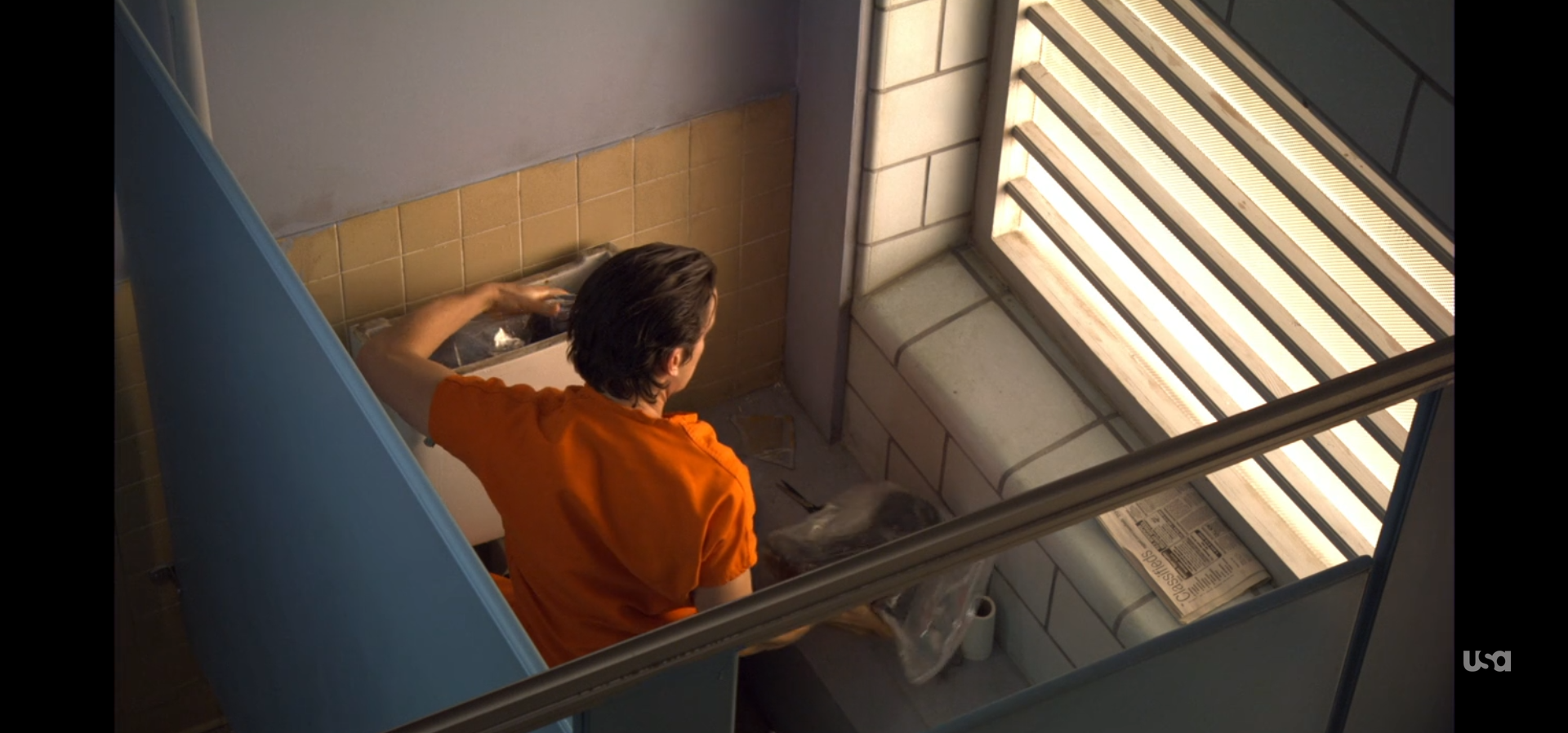
          White Collar begins with an escape. Not from an escape room—the stakes are much higher; I’m talking about a prison break. Art thief, bond forger, and all-around con artist Neal Caffrey (played by Matt Bomer) has devised a plan to escape from his super-maximum security correctional facility. He changes his appearance rapidly by shaving, slicking his hair back, and donning a prison guard uniform stashed in a staff bathroom toilet tank. Accompanied by jaunty music, he strolls unrecognized past guards and fellow inmates. When he slides a key card through a gate’s reader, the light turns green. He’s free.

          Four hours after Neal has disappeared into Manhattan, Peter Burke (Tim DeKay), the FBI agent who first arrested Neal, is called, and begins to interrogate the warden and marshals about the details of Neal’s escape on the way to Neal’s cell. Where did Neal get the guard uniform? Online uniform supply company. Where’d he get the credit card to buy the uniform? It belonged to the warden’s wife.

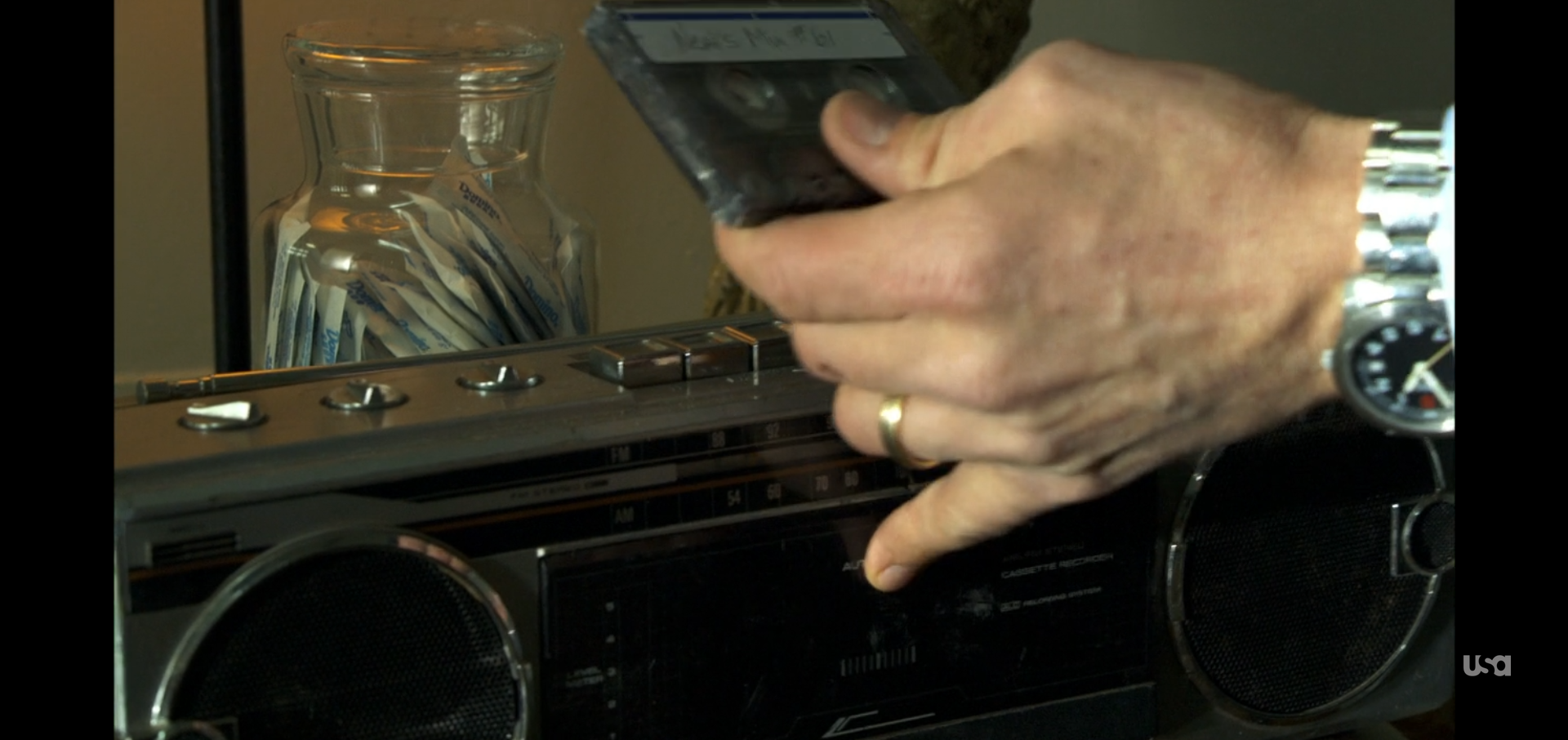
          Neal’s cell is heavily decorated—with sketches, hash marks, poetry magnets. Where’d Neal get the key card for the gate? “We’re thinking he restriped a utility card using the record head on that,” the Warden says, nodding at the tape player. Peter examines the tape player, the wall decorations, the books and brochures on Neal’s bed. From all of the accumulated detritus of Neal’s imprisoned life, Peter begins to piece together where Neal would go and why. Neal’s escape was low on puzzles compared to an escape room, but the real puzzle comes now for Peter. Peter is an expert puzzler—his house is full of New York Puzzlethon trophies.

          The solution is anticlimactic. Peter finds Neal on the floor of Neal’s ex-girlfriend’s emptied apartment, moping over her absence. Neal makes no further attempt to flee, but does make an opening gambit in the long game of securing his freedom; he asks Peter to meet with him back in prison if he can provide crucial intel on the elusive criminal Peter’s been chasing. What would have been four years in prison for running becomes four years released into Peter’s custody as an FBI consultant. With a GPS tracking device around his ankle, Neal walks into the sunlight once again. Thus, the show’s premise is established: Peter and Neal, FBI agent and con artist, taking down white collar crime together while going endlessly back and forth on whether they can trust one another.

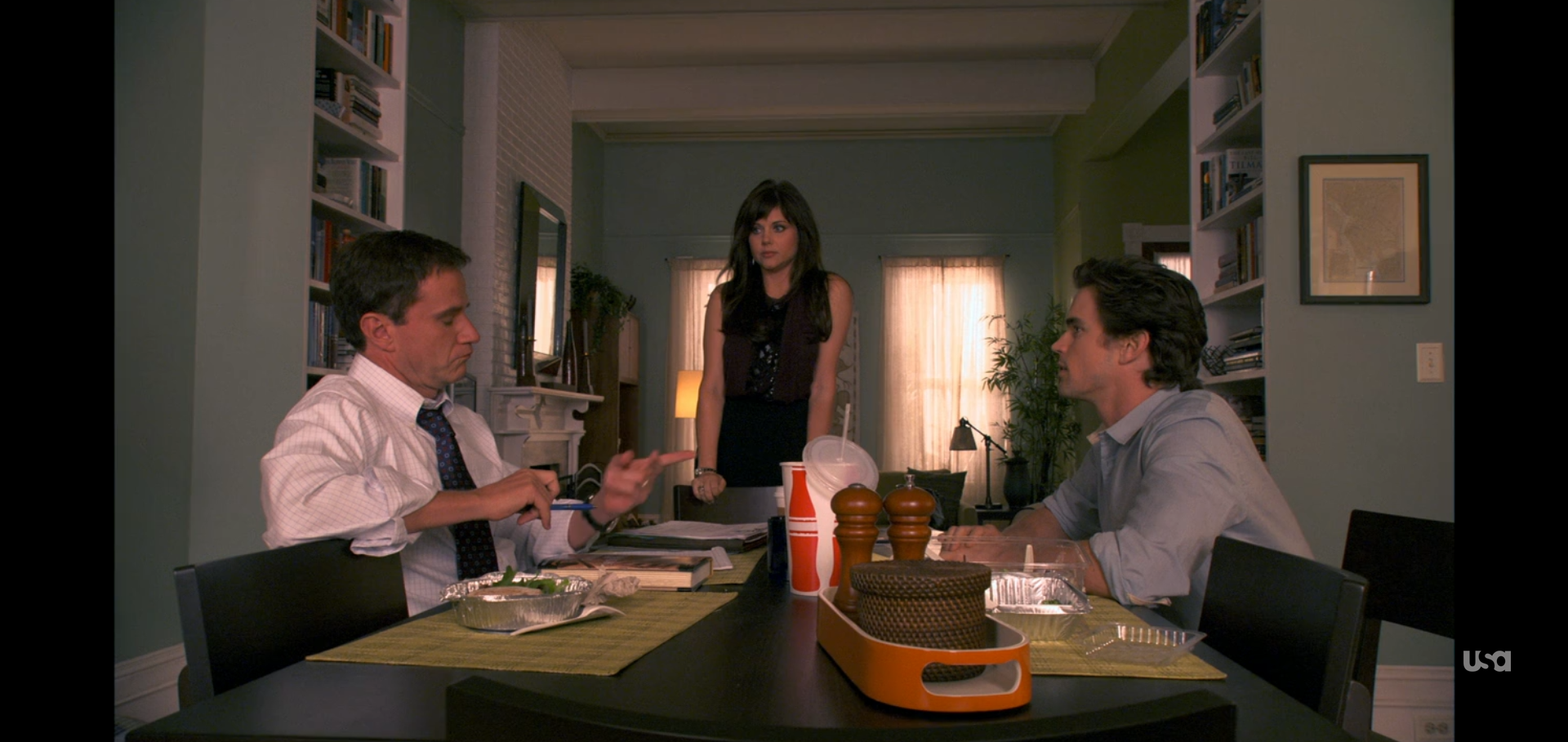
          Peter, Elizabeth, and Neal congregate in the Burke home.

          Though it has its moments of suspenseful intrigue and poignant drama, White Collar is more lighthearted than many crime procedurals. The mood is kept buoyant partially by Neal’s charm, and by the chemistry between the leads (including Tiffani Thiessen as Elizabeth Burke—Peter’s wife—and Marsha Thomason and Sharif Atkins as Peter’s fellow FBI agents). Beyond that, however, there is an infectious playfulness woven into the screenwriters’ approach to storytelling. Whether the characters are planning heists or solving crimes, it feels like the show is presenting us with a game.

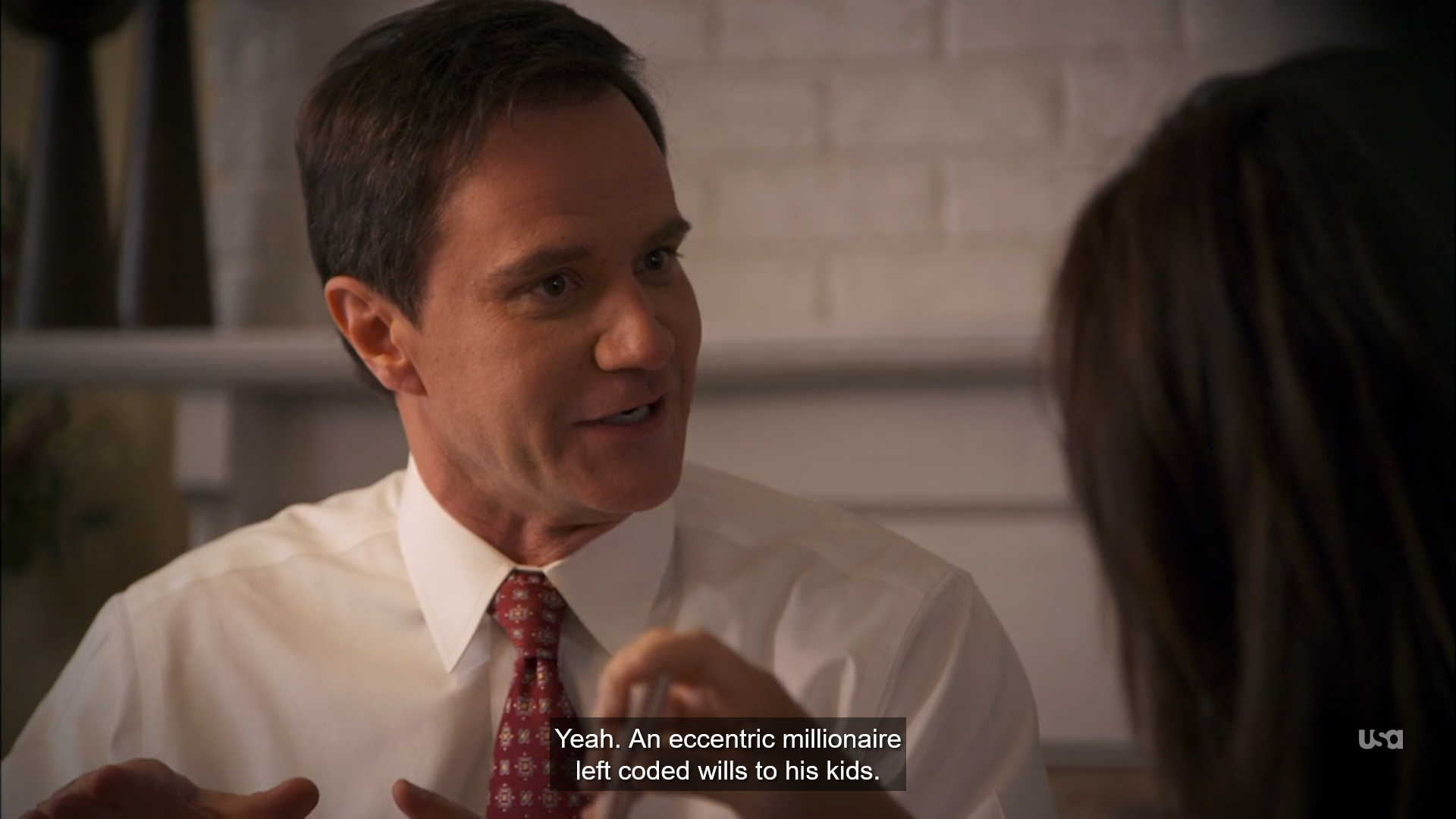
          One episode draws out this undercurrent of playfulness, as Peter and Neal are literally presented with a game. The season three episode “Where There’s a Will” centers around a dispute over a $40 million inheritance. Brothers James (Danny Masterson) and Josh Roland (Christopher Masterson) each have a supposed copy of their father’s will, one with a relatively equitable distribution of funds, and one saying that James gets everything. Neal, as an expert forger, has been called in by the bureau to authenticate the wills.

          Neal, noticing that the same person is responsible for all of the signatures on both wills, determines that both are forged, but it gets weirder. Handwriting analysis concludes that the deceased himself forged all of the signatures on his own wills. Weirder still, the witness names are anagrams of one another. Peter and Neal get to work puzzling out what other names might be hidden in those letters, and come to the same conclusion: Tycho Brahe, a 16th century Danish astronomer.

          Then comes the biggest surprise thus far. Holding the stacked wills up to the sunlight, Neal realizes that, when overlaid, the wills include a drawing that resolves into what look like streets and a compass rose. “This isn’t a message,” Neal says. “This is a map.” The Roland sons have a slightly different take, recognizing the “compass rose” as actually “the sundial in La Monde Garden” (a fictitious location). The sons go on to imply that treasure hunts are an activity their dad once engaged in often, but neither seems interested, even when Neal posits that the real will is likely at the end of the hunt.

          Peter is happy to return the wills to evidence. Neal, however, is still intrigued, trying his hardest to entice Peter into joining him at the sundial. Peter won’t bite, so Neal meets up at La Monde Garden with his criminal accomplice and best friend, Mozzie (Willie Garson). They notice faint numbers along the bottom of the wills’ pages, probable times, but those times on the sundial don’t seem to point to anything. Alternatively, they theorize that maybe something will happen when the sun hits 4:30—four hours from now.

          Neal texts Peter, who’s at home with Elizabeth, for help, and Peter and Elizabeth dive into the puzzling readily. When Peter spots a little drawing of a tulip next to the times, Elizabeth supplies that tulips stand for spring and rebirth, and Peter’s inspiration is sparked. It isn’t spring now, but with the use of a sextant and a couple of mirrors, they can recreate the shadow that the angle of the springtime sun would cast at 4:30. Each of the times, in fact, have a different seasonal symbol associated with them.

          Elizabeth and Peter join Peter and Mozzie to create the necessary shadows. Each shadow they cast points to a different letter on the sundial, spelling out “BSH,” an acronym that means nothing to any of them. Their stumped wondering is interrupted by a call with a startling revelation; James Roland’s young daughter has been kidnapped, and the kidnapper demands $6.4 million. This is enough motivation for Josh Roland to get involved in the treasure hunt, since the real will should give him the ability to pay his niece’s ransom. He knows what “BSH” stands for: Big Sky Hunting, what his dad always called going to the planetarium. Peter and Neal are off to their next destination.

          I’ll refrain from spoiling the second half of the episode, but rest assured, even as the mood should have darkened with the girl’s kidnapping, an undampened spirit of playfulness remains threaded throughout. We’re back in the realm of the high-stakes escape room. Now, though, rather than orchestrating his own escape, Neal is playing a game for someone else’s freedom. Rather than scheming by himself, he’s relying on a gaggle of allies to help him each step of the way. The show may have started with Neal and Peter each as independent figures facing off against one another, but as I said, that form of game-play only leads to anticlimactic reveals. Real satisfying drama, in the world of White Collar, comes from games played together, absent self-reliance and self-interest.

          With the GPS tracker around his ankle, Neal might not be as free as he was the moment he first stepped out of prison in the pilot. With friends on his side, however he’s much better equipped to mastermind a real escape. A real win.


          You can find delightful deals on puzzles on the Home Screen for Daily POP Crosswords and Daily POP Word Search! Check them out!

          Thanks for visiting PuzzleNation Blog today! Be sure to sign up for our newsletter to stay up-to-date on everything PuzzleNation!

          Puzzles in Pop Culture: Ten-Letter Word for “Fundamental”

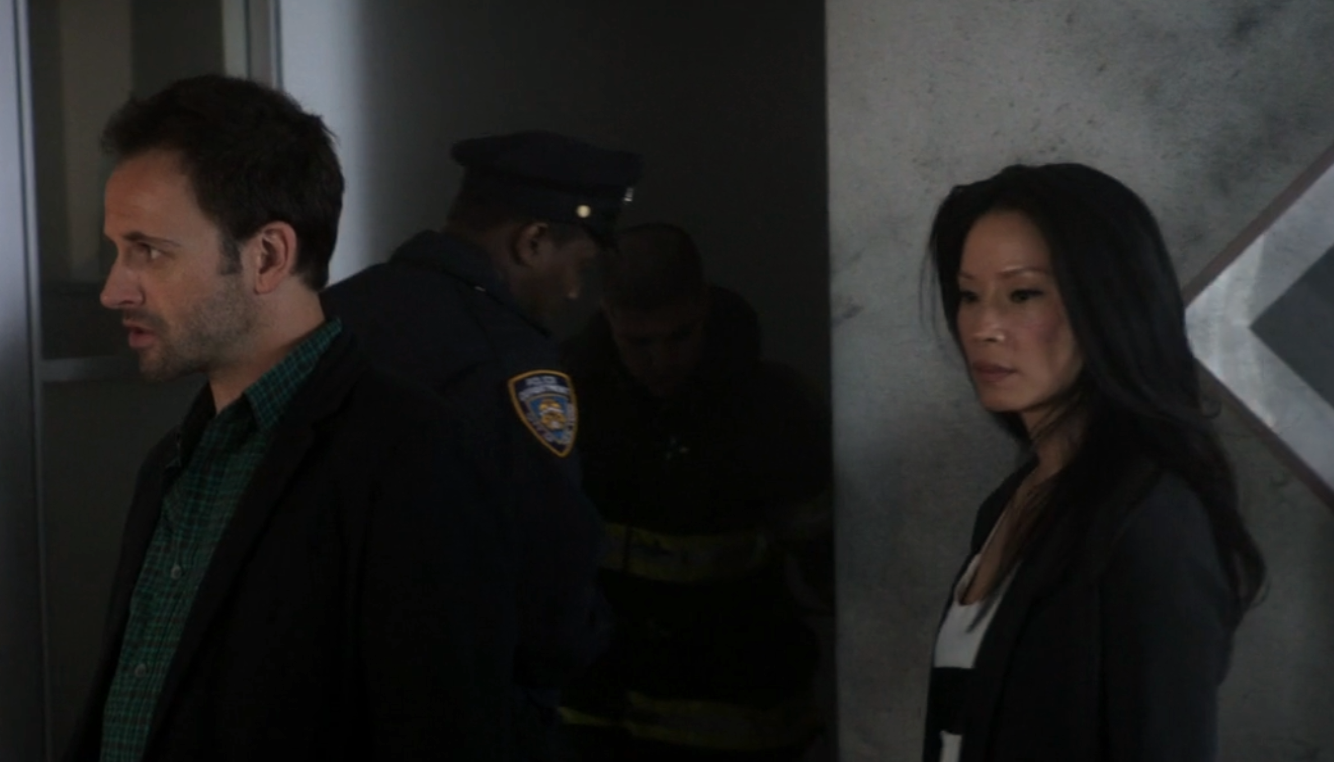
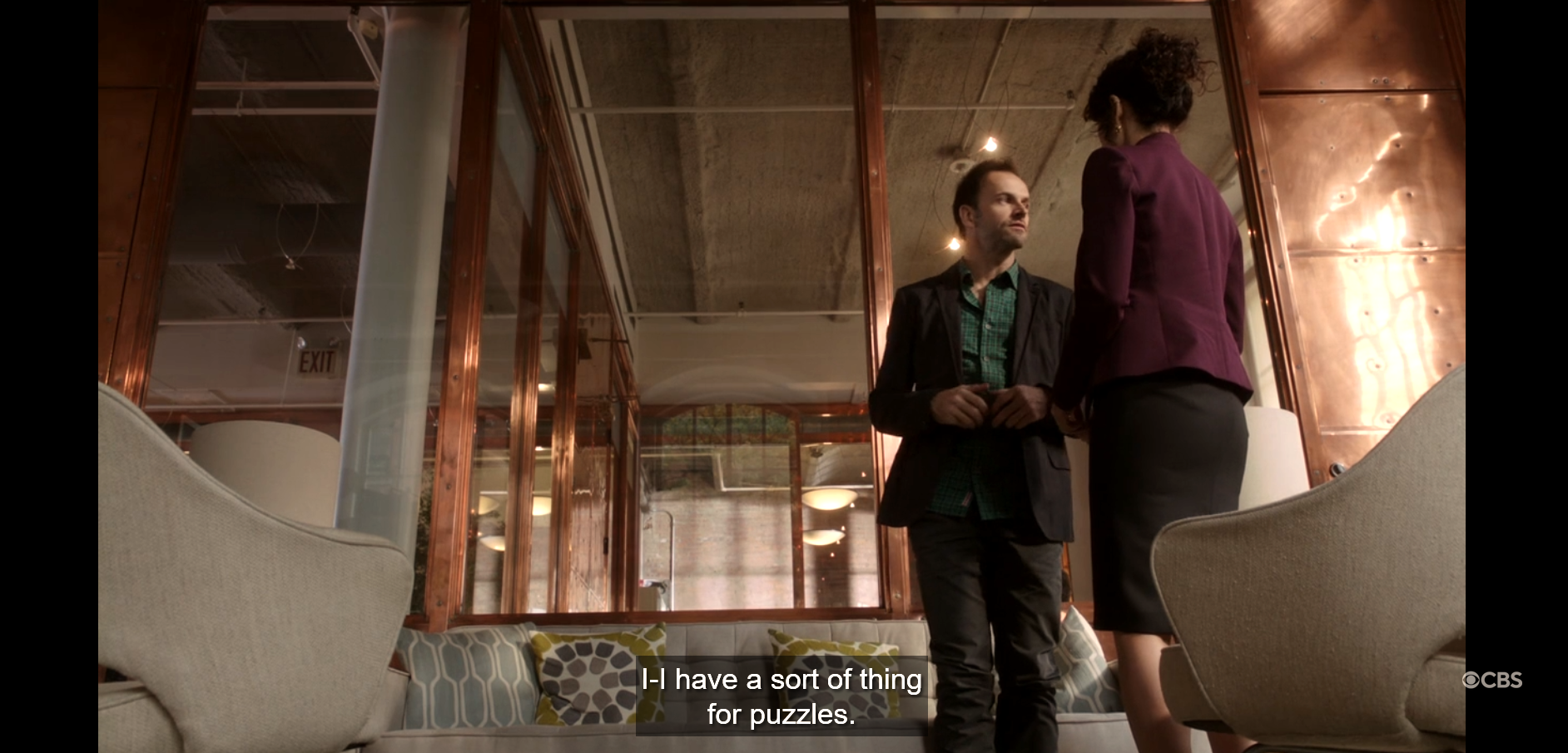
          Arthur Conan Doyle’s tales of Sherlock Holmes have myriad adaptations, some with a cast of mice, some medical dramas, some featuring aliens and government conspiracies. Still others hew closer to the original nineteenth-century stories, whether in the form of a period piece, like the films starring Robert Downey Jr., or a modernization, like BBC’s Sherlock. My favorite of this genre is the undersung CBS police procedural/drama Elementary, which ran from 2012 to 2019. Starring Jonny Lee Miller as Sherlock Holmes and Lucy Liu as Joan Watson, Elementary is set in modern-day New York, with Sherlock acting as a pro-bono consultant to the NYPD (he describes himself as a specialist in “deductive reasoning”). While former surgeon Joan Watson eventually becomes Sherlock’s partner in crime-solving, initially, her role is to be his sober companion.

          Elementary stays faithful to Arthur Conan Doyle’s depiction of his protagonist as a drug user, opening with Sherlock escaping early from rehab, only to find Joan waiting for him, as she was hired by his father to help him stay sober. His struggles with addiction, time in 12-step meetings, and relationships with other addicts remain mainstays of the series throughout all seven seasons. The work that Sherlock performs, using his deductive reasoning skills for the police, is considered by both him and Joan to be an integral part of his recovery process. Crime-solving keeps his mind busy, giving him constant puzzles to solve.

          At its heart, this is a show about solving puzzles. Sherlock’s job is putting together murder motives and methods; his hobbies are picking locks and stockpiling trivia. He gazes at the world as though it is one big jigsaw puzzle and everything needs to be placed just so to make sense. All the pieces are there; you just need to know how to look at them correctly. One episode even hinges on a love of crosswords.

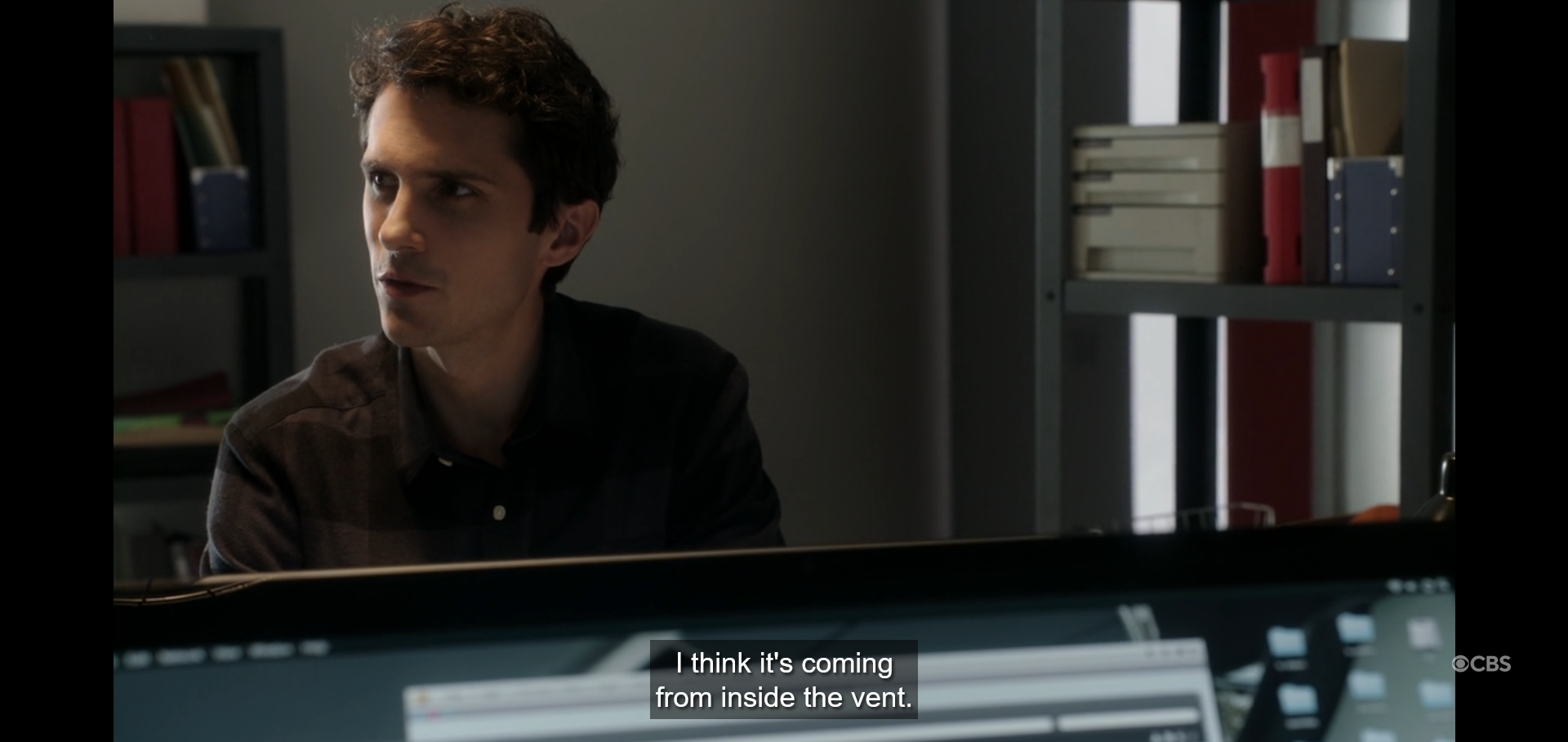
          Season one, episode eight, “The Long Fuse,” depicts a bomb going off in the vent of a web design firm’s office. When Sherlock and Joan are called to consult, they discover that the bomb was built four years prior to detonation. The episode is set in 2012, but the logo on the bomb’s battery is from October 2008, as are the newspaper pieces that were stuffed inside. Pieced together, the newspaper shows a Barack Obama who was still only a senator. The man who detonated the bomb did so by mistake: intending to order a sandwich, he called the detonating pager instead of the deli.

          Meanwhile, the specter of Sherlock’s addiction reappears. He goes to investigate the company that rented the bombed office four years prior, rifling through the threatening letters they’ve received from ecoterrorists. The company’s head, Heather Vanowen—played by House’s Lisa Edelstein—walks in on Sherlock’s research and says that she recognizes him as a fellow addict. The moment is tense, until she clarifies, “Crosswords.” She used to have her habit under control, but ever since The New York Times put their archives online, she can’t get enough.

          This confession is her undoing. Sherlock didn’t just discover the October 2008 date on the newspaper; he also found the imprints of someone writing on a page above—the word NOVOCAINE, which happened to be the answer to the clue “Pain’s enemy” in that day’s crossword. NOVOCAINE serves as a sufficient sample of the perpetrator’s handwriting; all it takes is asking Heather to fill out a few forms, and presto! Her handwriting can be matched to the crossword, clearly identifying her as the bomb’s builder.

          The episode comes to an end with Sherlock’s new 12-step sponsor, Alfredo (Ato Essandoh) pulling up to Sherlock and Joan’s brownstone with a shiny new car. A former carjacker and current security consultant, he’s been tasked with trying to break into the car’s security system. Knowing Sherlock’s love of puzzles, he figured he would first let Sherlock take a crack at it.

          Earlier in the episode, Alfredo explained the key to being Sherlock’s sponsor: patience. He needs someone to be patient and methodical, the way anyone solving a puzzle must be. As I said, puzzles are the heart of the show, not just in the sense that they’re at its core, but that they permeate the emotional aspects as well. In the world of Elementary, one must be patient and methodical to solve a murder, to solve a crossword, to break into a car’s security system, and to grow and heal.


          To think, a prison sentence could have been avoided had Heather simply stuck to solving digital crosswords like Daily POP’s. No ink-stained muss, no legal fuss, no trace of handwriting or physical evidence left lying around in an office vent, waiting to explode.

          You can find delightful deals on puzzles on the Home Screen for Daily POP Crosswords and Daily POP Word Search! Check them out!

          Thanks for visiting PuzzleNation Blog today! Be sure to sign up for our newsletter to stay up-to-date on everything PuzzleNation!

          Queer Games Bundle: Undoing the Curse

          For the second year in a row, queer indie game developers and gamers alike are celebrating Pride Month with the Queer Games Bundle. Until the end of June, interested parties can download almost 600 games and game-adjacent zines for $60, with a cheaper option available to those for whom that cost is prohibitive. Described as “an initiative to collaboratively support as many queer indie/micro/art devs and makers as possible,” the bundle is a project of swampbabes, a small New York organization of game artists. Swampbabes, as a collective, is “interested in sharing experimental, non-commercial, renegade games-related art and projects and providing a platform for diverse voices and bodies outside the structures of already established hierarchies.” 

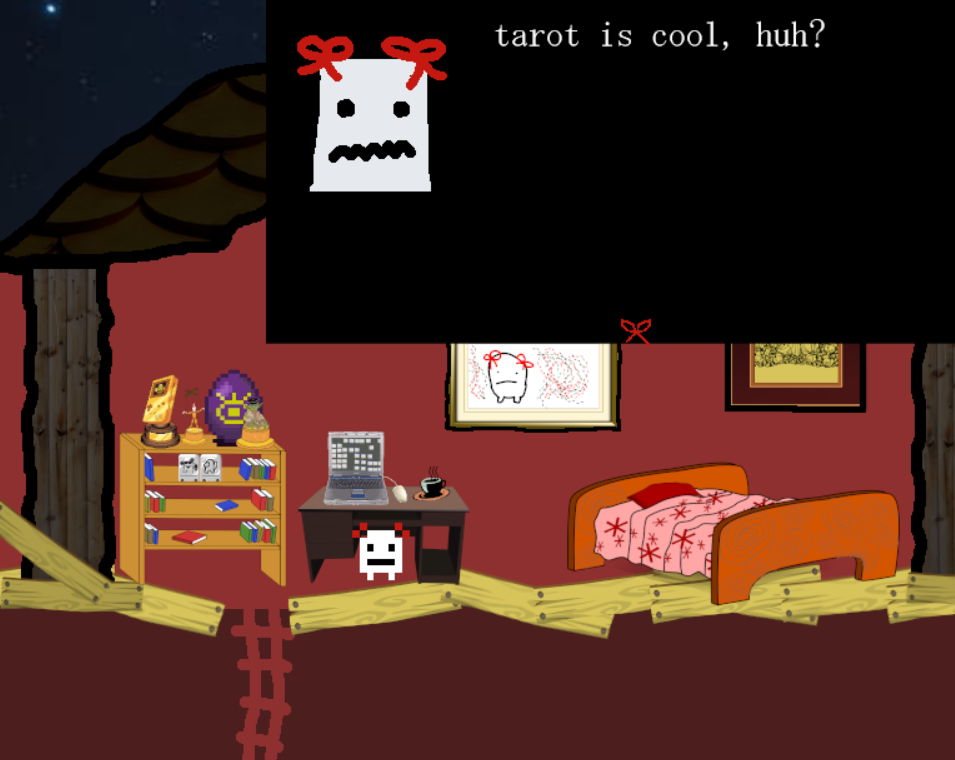
          “kate sees your future,” by game creator Bagenzo

          The bundle certainly provides a platform for diverse voices. There is a massive amount of content in the bundle, so much so that the selection might be intimidating. Let me provide some starting points. For those intrigued by last week’s blog post, there are two volumes of a zine chockablock with Twine tips and tricks, called “The Twine Grimoire.” Wordle fanatics might be entertained by Herdle,” which casts Wordle’s distinct collections of squares as farm animals in need of herding. Did my post about stealing back your time via poetry resonate with you? You might find joy in “Time Bandit,” a game for Windows and MacOS that forces the player to slow down.

          If tabletop roleplaying is your preferred gaming mode, never fear—included TTRPG guides range from the adorable and arguably self-explanatory “Rodents With Guitars” to the cyberpunk “Escape from Neo-Millenia.”  I was pleasantly surprised by the number of bundle entries incorporating tarot, like the solo journaling game “My One True Wish,” the browser-based “kate sees your future,” digital tarot deck, “Slimegirl Tarot,” and “A Note in Time,” a TTRPG about writing a letter to your younger self.

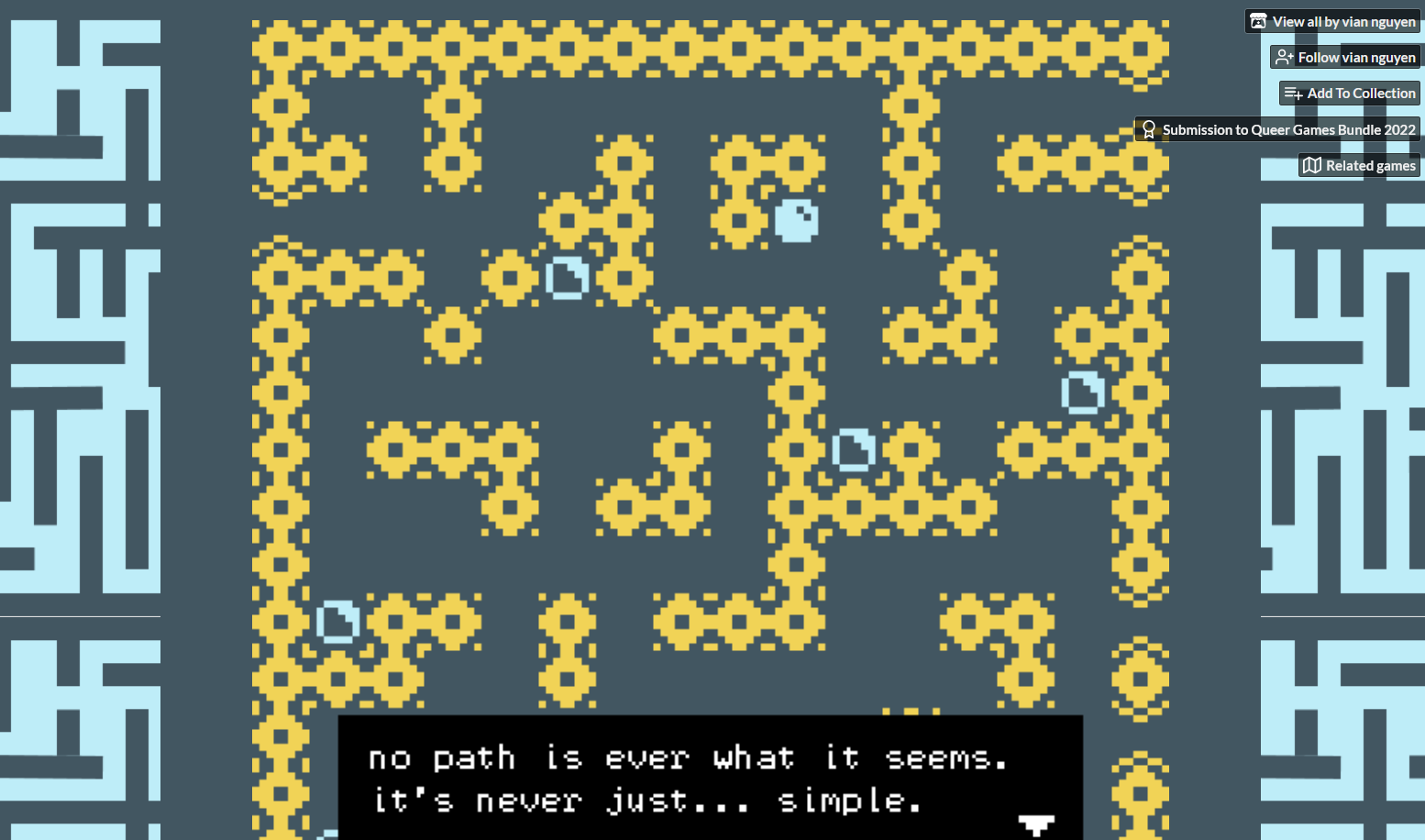
          “people are labyrinths” by game creator Vian Nguyen

          The puzzle-minded among you are likely to enjoy the game RESYNC, available for Windows, MacOS, and Linux (the bundle can be filtered according to the operating systems compatible with each game). RESYNC challenges you to work with robots as allies, solving puzzles to “uncover the true purpose of the mysterious outpost” on which your character has crash-landed. Then there’s the browser-based “people are labyrinths,” a collection of mazes studded with wistful dialogue boxes meditating on topics such as loss, the complex inner workings of other people, and an unwanted job.

          Swampbabes states on their website that they hope the community their work fosters “begins to undo the curse inherited from mainstream video game culture.” They leave up to the imagination what exactly that curse is, but if you too feel that mainstream video game culture is cursed, and want to do something about it, purchasing the Queer Games Bundle is a win-win situation: hours of fun for you, and financial support for queer game developers. As of this writing, over a thousand gamers have purchased the bundle, raising almost $66,000 that will be split among the creators at Pride Month’s end.  


          You can find delightful deals on puzzles on the Home Screen for Daily POP Crosswords and Daily POP Word Search! Check them out!

          Thanks for visiting PuzzleNation Blog today! Be sure to sign up for our newsletter to stay up-to-date on everything PuzzleNation!