Puzzly World Records: Redux!

guinness20205

[Image courtesy of Amazon.]

A few years ago, I wrote a post chronicling some of the puzzly world records I’d found while reading the latest edition of the Guinness Book of World Records. Back then, I was surprised to see a two-page spread dedicated to puzzle-centric records.

As I perused this year’s edition of the iconic record-keeping tome, there was a two-page spread dedicated to Rubik’s Cube world records alone. (There were numerous other puzzly records scattered throughout the book as well.)

So, since 2019 is drawing to a close in the next few weeks, why not dedicate one of the last blog posts of 2019 to the most up-to-date puzzly world records I can track down?

Shall we? Let’s shall.
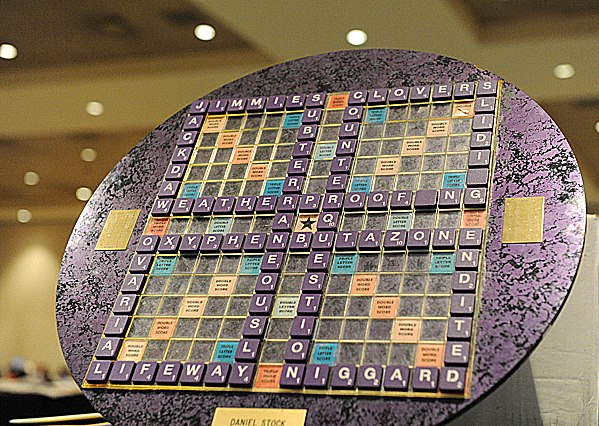
Let’s start with a few Scrabble records.

On January 21, 2012, Singapore’s Toh Weibin amassed the highest score ever recorded in a Scrabble tournament at the Northern Ireland Scrabble Championship in Belfast, scoring 850 points.

January is apparently a good month for word-tile world records, as on January 5, 2015, Lakshan Wanniarachchi set a record for playing the most opponents in Scrabble simultaneously — 40! — in Colombo, Sri Lanka. He defeated 31 of the 40 players in order to qualify for the record.

(So, yeah, you might have more Words with Friends games going at once than Wanniarachchi did, but did you win that many? Probably not.)

guinness20201

[Image courtesy of Chess.com.]

Instead of multiple opponents, how about one opponent for 20 hours and 15 minutes?

That’s how long chess masters Ivan Nikolic and Goran Arsovic faced off in Belgrade on February 17, 1989, where they set a world record for the most moves played in a single chess game: 269.

We can stick around Europe for one more puzzly world record, this time in Wageningen, Netherlands, as the Ceres Student Association teamed with Hasbro to create a Monopoly board the size of three-and-a-half tennis courts. Yes, on November 30, 2016, they unveiled a 9,687-square-foot version of the famously frustrating game board.

9,687 square feet? That’s pretty big, I guess. Unless, of course, you’re talking about a world record set in Dubai in the United Arab Emirates, where everything is ludicrously oversized and lavish.

guinness20202

[Image courtesy of DMCC.]

On July 7, 2018, the Dubai Multi Commodities Centre (DMCC) unveiled the world’s largest jigsaw puzzle, a 65,896-square-foot puzzle that commemorated the late Sheikh Zayed.

And speaking of jigsaw puzzles, students at the University of Economics Ho Chi Mihn City in Vietnam set a record by completing the jigsaw puzzle with the most pieces — 551,232 pieces! — on September 24, 2011, breaking the record previously set in Singapore — 212,323 pieces — which had stood since 2002.

guinness20203

[Image courtesy of Guinness.]

According to the Guinness article covering the event:

It took the students 17 hours to first break up the 3,132 sections, each containing 176 pieces, into which the jigsaw puzzle had been divided, and then re-assemble them to create the puzzle.

Seventeen hours of puzzling is ambitious, but what about 24 hours of puzzling?

That’s what Richard Bragg, Daniel Egnor, Amanda Harris, and Ana Ulin — aka Bloody Boris’s Burning Bluelight Brigade — tackled when they set the world record for most escape rooms attended in one day. On October 3, 2018, they visited 22 escape rooms in 24 hours in Moscow, Russia. The team’s success rate was just as impressive; the team escaped all but one of the rooms in the allotted time.

Now that’s an escapade.

Of course, we couldn’t have a world records puzzling post without talking about the Rubik’s Cube.

The official fastest time for solving a standard 3x3x3 Rubik’s Cube is held by Feliks Zemdegs, who set an average time of 5.8 seconds in the 2017 Malaysian Cube Open. (In competition solving, the average time across three different solves comprises your official time.)

The unofficial record for the fastest 3x3x3 solve — meaning it was outside of tournament conditions — was set in China: 3.47 seconds by Du Yesheng.

But that’s only the official size. What about other Cubes? Let’s look at the fastest solves (that I can verify):

  • 7x7x7: 1 min 47.89 sec by Max Park
  • 6x6x6: 1 min 13.82 sec by Max Park
  • 5x5x5: 37.28 sec by Max Park
  • 4x4x4: 18.42 sec by Max Park (starting to see a pattern here…)
  • 2x2x2 (average solve): 1.51 Lucas Etter
  • 2x2x2 (single solve): .49 sec by Maciej Czapiewski

And, just to show off, Stanley Chapel holds the record for a blindfolded 4x4x4 solve: 1 minute, 29 seconds.

guinness20206

[A different blindfolded solver. Image courtesy of Le Rubik’s Cube.]

Of course, now that we’ve mentioned one weird way to solve a Cube, let’s explore a few others.

Feliks Zemdegs set another world record by solving a 3x3x3 one-handed in 6.88 seconds. On March 1, 2015, Bhargav Narasimhan solved five Rubik’s Cubes one-handed in a blistering 1 minute, 23.93 seconds.

Daniel Rose-Levine holds the record for solving a 3x3x3 with his feet: 16.96 seconds. Not to be outdone, Que Jianyu unscrambled a trio of Rubik’s Cubes with his hands and feet simultaneously in just 1 minute, 36.38 seconds, in Xiamen, Fujian Province, China. (For the record, he solved one in each hand and one with his feet).

He later hung from a pole to record the fastest time to solve a Rubik’s Cube upside-down: 15.84 seconds. (He also holds the record for solving three Cubes while juggling, doing so in 5 minutes, 2.43 seconds.)

Jack Cai solved one blindfolded in 16.22 seconds. On July 22, 2018, at the Delhi Monsoon Open in Ghaziabad, Uttar Pradesh, India, Shivam Bansal shattered the field with the most Rubik’s Cubes solved while blindfolded: 48 out of 48 in under 1 hour.

George Turner holds the record for solving on a pogo stick: 24.13 seconds.

Krishnam Raju Gadiraju solved 2 Cubes simultaneously — underwater! — in 53.86 seconds. Kevin Hays achieved a world record for solving eight 3x3x3 Cubes underwater on August 19, 2015. He held his breath for 2 minutes and 4 seconds.

[Here’s a YouTube video of a different, but still impressive, underwater solve.]

Now let’s get truly ridiculous.

Phillip Kwa’han Espinoza holds the world record for most 3x3x3 Cubes solved while running a marathon. On November 14, 2015, he solved 839 Cubes over the course of 4 hours, 56 minutes, and 1 second during the 26.2 mile run in the REVEL Canyon City Marathon in Azusa, California, shattering the previous record of 175 Cubes.

26.2 miles is pretty good. But what about 12,000 feet?

That’s how high up Dan Knights was in June of 2003 when he jumped from a plane and solved a Rubik’s Cube in freefall while skydiving. He solved it in 34 seconds… which is good, because he only had 40 seconds before he’d have to deploy his parachute to safely execute a 12,000-foot fall.

To close things out today, let’s look at some Rubik’s records about quantity.

What about the most cubes solved:

  • one-handed while treading water in one hour? 137 by Shen Weifu
  • on a unicycle? 250 by Caleb McEvoy
  • on a bicycle? 1,010 by P K Arumugam

Finally, in January 27, 2018, the Kaligi Ranganathan Montford Group of Schools set a world record by bringing together the most people simultaneously solving Rubik’s Cubes — 3,997 — at Jawaharlal Nehru Stadium in Chennai, India. The average time to solve for the assembled students? A few minutes.

guinness20204

[Image courtesy of Guinness.]

Imagine the records people will set in the 2020s.


Thanks for visiting PuzzleNation Blog today! Be sure to sign up for our newsletter to stay up-to-date on everything PuzzleNation!

You can also share your pictures with us on Instagram, friend us on Facebook, check us out on TwitterPinterest, and Tumblr, and explore the always-expanding library of PuzzleNation apps and games on our website!

December Deal of the Day!

Hello fellow puzzlers and PuzzleNationers!

Have you been checking out our Deals of the Day? If not, then you are missing out, my friends!

Every single day through the end of 2019, we’ll be offering a special deal for our puzzle apps!

We’re talking sales, discounts, special promotions, the works! And the best part? It’s something exciting and unique every single day!

And today is no different. Check out this awesome deal!

191208

It’s the December Deluxe Bundle, loaded with terrific seasonal puzzles and clues guaranteed to keep your puzzly wits engaged!

With 105 puzzles to solve, full of wintry fun and holiday cheer, plus the top-notch construction PuzzleNation is known for, how can you go wrong?

And don’t forget to keep your eyes peeled across all our social media (Facebook and Twitter especially!) for new announcements each and every day for the rest of the year!


Oh, and while you’re here, be sure to check out our Holiday Puzzly Gift Guide! It’s been updated with links to full reviews for some of the latest puzzly products included, as well as a few last-minute additions and surprises!

Happy shopping and happy solving!


Thanks for visiting PuzzleNation Blog today! Be sure to sign up for our newsletter to stay up-to-date on everything PuzzleNation!

You can also share your pictures with us on Instagram, friend us on Facebook, check us out on TwitterPinterest, and Tumblr, and explore the always-expanding library of PuzzleNation apps and games on our website!
PuzzleNation Product Review: Bananagrams Duel

bananagramsduelsmall

[Note: I received a free copy of these games in exchange for a fair, unbiased review. Due diligence, full disclosure, and all that. /end disclaimer]

When it comes to word-forming tile games, the folks at Bananagrams are the masters. Their fruit-inspired packaging is synonymous with that particular brand of puzzling, giving Scrabble a run for its money in terms of letter-tile games. And they have an uncanny knack for putting new spins on classic puzzle-game tropes, breathing new life into the genre.

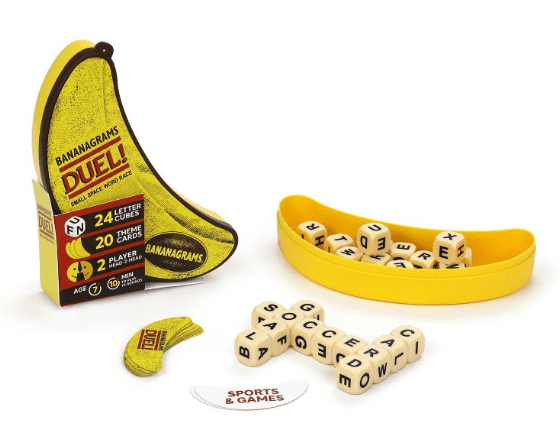
For instance, Bananagrams Duel replaces the iconic Bananagrams tiles with letter dice. Does this really make a difference in the game play? Let’s find out together.

bananaduel1

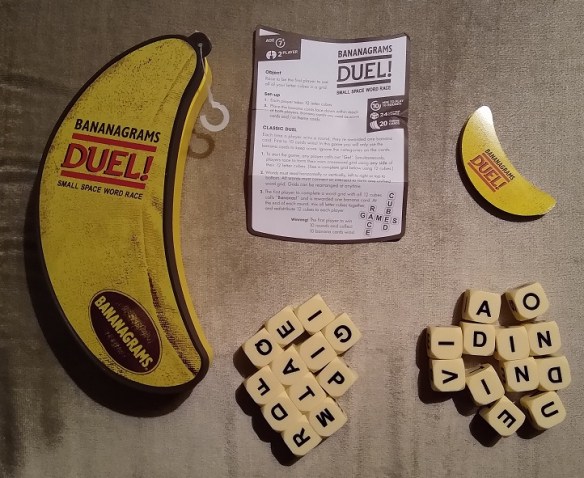
Bananagrams Duel is a two-player word/grid-forming game, consisting of 24 six-sided letter dice, a handful of banana cards, and a handy carrying case. When it comes to travel-friendly puzzle games, it doesn’t get much simpler than this.

Instead of pulling from a shared pool of letter tiles, each player gets 12 of the 24 letter cubes. The goal is the same as a traditional Bananagrams game: to create a criss-crossing grid of recognizable words. You’re allowed to shift and flip any of your dice to other letters as needed, and the grid can change at any time. (Unlike, say, Scrabble, you’re not locked into a word if you’ve already spelled it. Anagramming is always an option.)

The first player to use all 12 letter dice and call out “Bananas!” wins the round and is awarded one banana card for the victory. First player to 10 banana cards wins.

bananaduel2

But those little banana cards do more than help you keep score. On the other side of each card is a theme. In one of the variant rule sets detailed in the little instructional guide, your completed grid must now contain at least one word that fits the given theme.

That little tweak can make a traditional Bananagrams game much more challenging. After all, if you’ve ever played the regular version of the game, you know how words can just evaporate from your vocabulary during play, only to suddenly return once your opponent has completed a grid. Now imagine that same feeling, but with a theme of sports or six-letter words attached to it.

In one of our test games, we actually made this harder on ourselves by trying to make EVERY word in the grid fit the theme.

bananaduel3

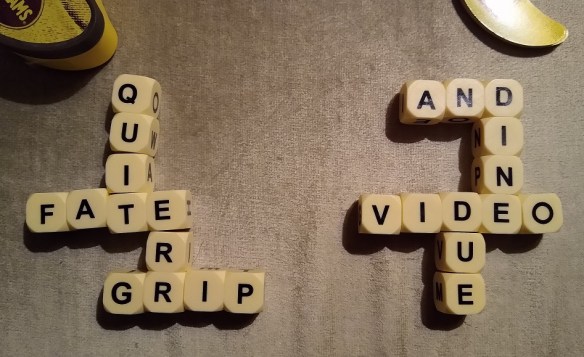
As you can see here, we were allowed to choose our own theme, and we chose “Space/Astronomy.” I was devilishly close to completing my grid, but lacked the “L” I needed to spell Pluto. Meanwhile, my opponent went with a two-word grid that gelled nicely.

I don’t recommend trying it this way — unless you’re looking for a serious challenge — because the usual themed rules are tough enough.

Although an occasional bad pool of letter cubes can leave you without a letter — like, for instance, an L you really need — for the most part, it didn’t feel like the letter cubes were more restrictive or limiting than a traditional pool of Bananagrams letter tiles. All the dice shifting made for a different, yet familiar solving experience.

Plus it’s super-easy to come up with your own variant rules to enrich repeated games. The instructions list 5 alternate rule sets, and I would gladly recommend one that went well with us: having your opponent roll one of your dice for you and making you use it as the starting letter for a grid word.

Bananagrams Duel manages to boil down the Bananagrams formula to its most essential and playable form yet. And with a much faster clean-up (or pack-up and stash-away, if you’re on the road/in the airport), it’s more travel-friendly than ever before. They’re not lying when they call it a small space word race.


Bananagrams Duel is available from Bananagrams and participating local and online retailers, and it’s featured in this year’s Holiday Puzzly Gift Guide!

Thank you for visiting PuzzleNation Blog today! Be sure to sign up for our newsletter to stay up-to-date on everything PuzzleNation!

You can also share your pictures with us on Instagram, friend us on Facebook, check us out on TwitterPinterest, and Tumblr, and explore the always-expanding library of PuzzleNation apps and games on our website!
PuzzleNation Product Review: Puzzle Books Galore!

As part of our Holiday Puzzly Gift Guide, we reached out to companies far and wide to explore as big a swathe of the puzzle/game world as we could. And a plethora of puzzle books arrived in response.

With eight in total to cover in this review, we’re going to work from simplest to toughest in terms of difficulty, whilst bundling some books with similar puzzles or styles of presentation together for ease of navigation.

So please enjoy as we peruse offerings from USA Today, the Puzzle Society, and Andrews McMeel Publishing.


ampws

We start our puzzle book journey with objectively the easiest type of puzzle in the group: word searches.

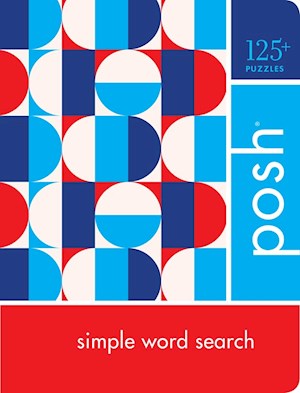
Posh Simple Word Search collects grids and lists of hidden words to test your word recognition skills. The different sizes, themes for puzzles, and variations of word search puzzles (like an Eiffel Tower-shaped grid!) across more than 100 puzzles will have you looping words to your heart’s content.

Factor in a spiral binding that allows you to lay each page flat as you solve, and you’ve got a perfect intro to puzzles.

amppocketxwd1      amppocketxwd2

From word searches to another iconic and traditional puzzle type: crosswords.

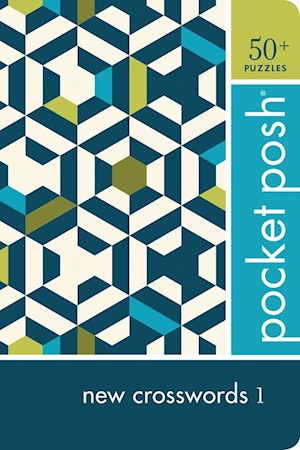
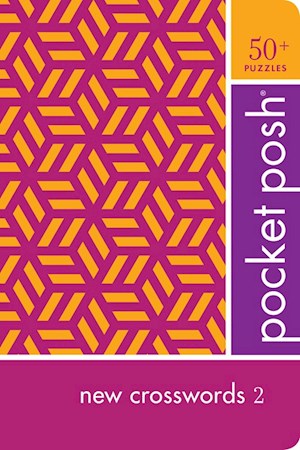
For a travel-friendly puzzle book with eye-catching cover designs and enjoyable pocket-sized puzzles, look no further than Pocket Posh New Crosswords 1 and New Crosswords 2.

With fun, accessible clues and grids designed to test newer, less experienced solvers, Pocket Posh New Crosswords won’t stand in the way of a New York Times-level solver, but they will serve as a satisfying puzzle experience for solvers working their way up the difficulty ladder.

Featuring more than 50 puzzles each, these books are loaded with content created by The Puzzle Society’s pool of talented constructors. (All of whom are credited by name!)

ampxwd

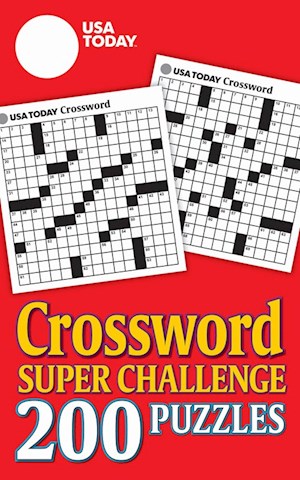
For a step-up in difficulty and notoriety, check out USA Today’s Crossword Super Challenge.

Packed with 200 puzzles previously published in USA Today, this collection offers a range of difficulty levels depending on the constructor. And the names here are top-notch. Puzzly elites like Elizabeth Gorski, Martin Ashwood-Smith, Gail Grabowski, Frank Longo, and George Barany are featured in the collection, along with numerous contributions by USA Today‘s Crossword Editor, the inimitable Fred Piscop!

This array of 15×15 grids presents loads of different types of themed clues, serving as an ideal crash course in crosswords for solvers with a bit more experience but also have room to grow. Perfect for anyone who enjoys your local daily/weekly syndicated newspaper crossword.

It’s a little thick to make a great travel book — not as pocket-friendly as the Pocket Posh series — but it’s just right for an afternoon or two of cozy armchair solving.

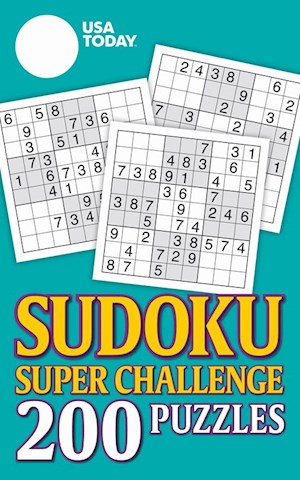
ampsudoku

We then move from one world-conquering puzzle style to another that more recently took the world by storm: Sudoku.

Another in the USA Today series of Super Challenge titles, USA Today’s Sudoku Super Challenge is armed to the teeth with 200 Sudoku puzzles to challenge any fan of the infamous puzzle juggernaut.

Each puzzle is ranked on a scale of 1 to 5 stars in terms of difficulty, so you’ll be solving your way through increasingly tricky number puzzles the deeper you get into this book.

And despite being packed with hundreds of puzzles, this one will easily fit into a pocket, purse, or carry-on for any trip.

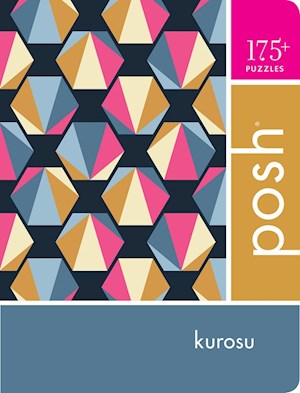
ampkurosu

Are you a Sudoku-savvy solver looking to test your number-placement skills in a new way? Posh Kurosu might just have what you’re seeking.

With dozens of examples of Kurosu puzzles — also known as noughts and crosses — this puzzle book packs a surprising amount of variety into a simple solving mechanic. Instead of nine digits to fill the grid, all you have are Xs and Os. And you can’t have more than two Xs or Os next to each other in any column, row, or diagonal.

This is the only kind of puzzle in this selection of puzzle books that I’d never encountered before, and it was a welcome change of pace to try my hand at something that felt familiar and yet fresh all at once. Posh Kurosu tests your logic and deduction chops in fun, unexpected ways.

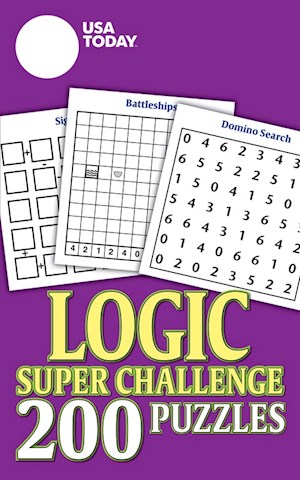
amplogic

After collections of Sudoku and Kurosu puzzles, it feels appropriate to follow up with a puzzle book loaded with puzzles that test your logic and deduction skills in other ways.

USA Today’s Logic Super Challenge fits the bill nicely, mixing traditional story-driven logic problems (complete with those iconic solving grids to help you weed out false paths) with other logic-based puzzles like Killer Sudoku, Battleships, and Domino Search.

All of these puzzles will bend your brain around corners as you try to hold multiple facts in your head at the same time, waiting for them to fall into place and reveal a new piece of the overall puzzle solution.

And with 200 logic problems in various forms, you certainly won’t run out of devious deduction puzzles anytime soon.

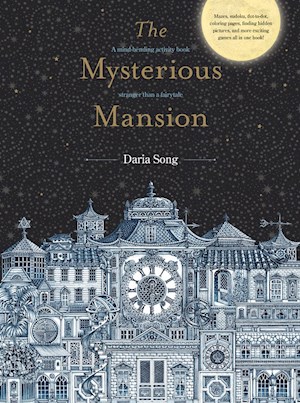
mysteriousmansionsmall

But if you’re looking for a unique solving experience, something that is as visually immersive as it is engagingly puzzly, then you can’t go wrong with Daria Song’s The Mysterious Mansion.

Mixing lushly illustrated scenes with black and white drawings meant for you to color in, this narrative puzzle book incorporates mazes, spot-the-difference games, word searches, and other puzzly endeavors in a story about one girl’s journey through a strange and confusing mansion.

Designed to relax, engage, and puzzle the reader in equal measure, this book is one you could lose yourself in for hours. The gorgeous full-color illustrations are a feast for the eyes, and the puzzles are seamlessly woven into the art and story of each scene.

Daria Song gleefully takes activity books to the next level with this beautiful puzzle experience, a fairy tale that you not only help write, but make your own by doing so.


All of these puzzle books are available from Andrews McMeel Publishing as well as some local and online retailers. They’re also part of this year’s Holiday Puzzly Gift Guide!

[Note: I received a free copy of each puzzle book in exchange for a fair, unbiased review. Due diligence, full disclosure, and all that.]


Thank you for visiting PuzzleNation Blog today! Be sure to sign up for our newsletter to stay up-to-date on everything PuzzleNation!

You can also share your pictures with us on Instagram, friend us on Facebook, check us out on TwitterPinterest, and Tumblr, and explore the always-expanding library of PuzzleNation apps and games on our website!
PuzzleNation Product Review: Waiter’s Tray, The Curated Collection, and Ghost Cube

Whether it’s a puzzle box, two joined pieces of twisted metal, or an elaborate wooden network of interconnected pieces, a mechanical brain teaser offers a physical dimension to puzzling that is often lacking in pen-and-paper puzzles and other traditional puzzle forms.

And in today’s product review, we’ve got three different varieties of brain teaser to test out, all courtesy of the creative minds at Project Genius.

So without further ado, let’s get solving!


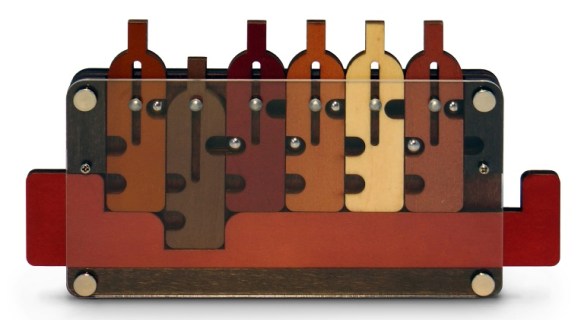
waitersmall

The goal in Waiter’s Tray is simple: maneuver the tray out from under the wine bottles. You can only lift one wine bottle at a time, though. Oh, and some of the bottles are locked in by marbles, so those have to be moved before the wine bottles can be lifted.

Okay, so maybe it’s not so simple.

Waiter’s Tray is a devious mechanical brain teaser that requires patience and a knack for planning in order to shift the wine bottles enough to free the tray.

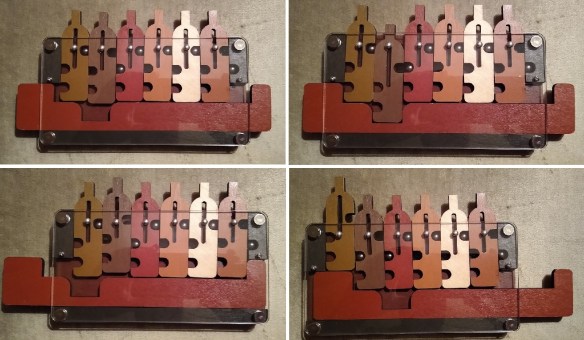
wt1

The peculiar shape of the tray both helps and hinders you, since you can lower one wine bottle with the dip in the tray, but the higher lip of the left-hand side of the tray often prevents you from moving forward and manipulating the other wine bottles.

But once you get into the rhythm of the solve, it’s a pretty satisfying feeling to see the tray slide closer and closer to escape.

wt2

Yeah, I’m posting this one to prove I solved it. =)


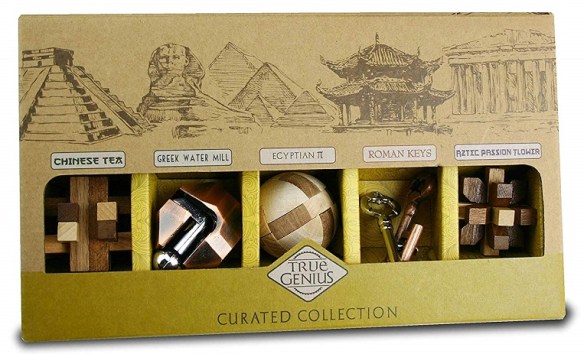
curatedsmall

The five traditional brain teasers that compose The Curated Collection each represent a different culture and time period, adding a touch of historical context and beauty to some tricky and portable puzzles.

Each is ranked in difficulty from one to five stars — the Roman Keys are considered the easiest (2 stars) while Chinese Tea and Aztec Passion Flower top out at 5 stars — but the goal of each is the same: separate the pieces of each puzzle.

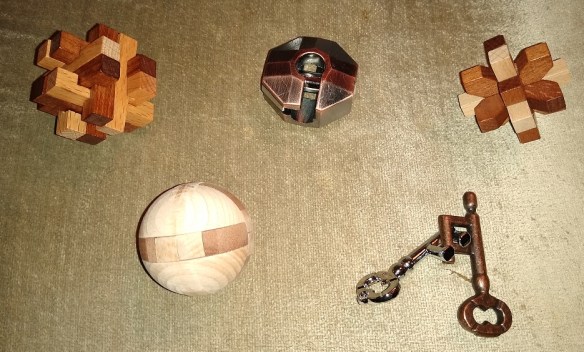
curated

Some of these brain teasers will look familiar, since puzzles like Chinese Tea and Egyptian Pi have been around forever, but there’s a good chance at least one of these puzzlers will be unfamiliar to solvers, offering multiple chances to keep you from cracking all five mysteries too quickly.

Personally, I found the star-rating system misleading, but your mileage may vary. (Also, some of the wooden puzzle pieces stuck together a bit, so more than once, I almost felt like I was breaking the puzzle, not solving it.)

That being said, getting to test my puzzly abilities in five curious ways at once was a real treat.


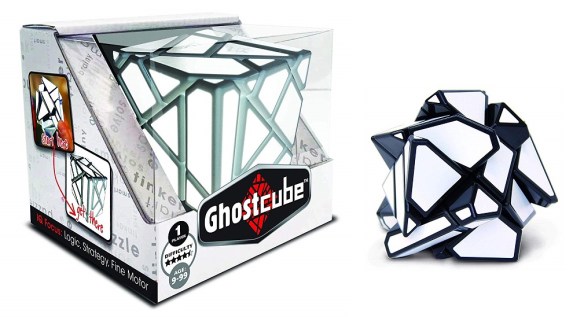
ghostcubesmall

With enough practice, the secrets of the Rubik’s Cube can be revealed. Those six colors, 3 rows, and 3 columns can be conquered. But what if the colors were gone and the rows and columns replaced with angles and unexpected twists?

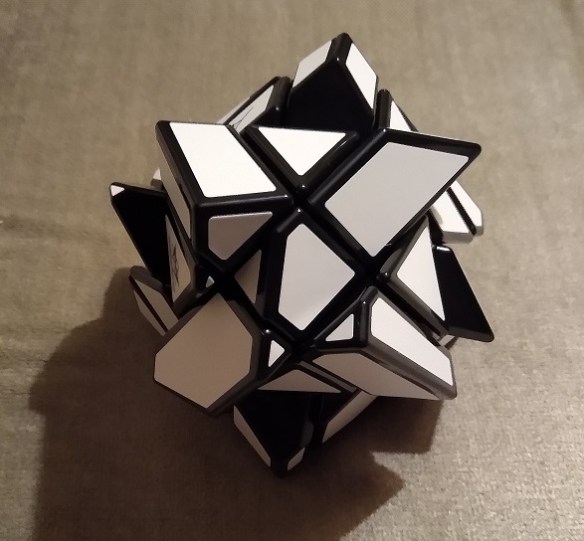
Ghost Cube offers an engaging variation on the classic twisty puzzle by making all the pieces spin and shift on an angle. Whereas the usual Rubik’s Cube is a riot of colors, the Ghost Cube is a maddening pointy shape instead.

gcube

Yet I find solving the Ghost Cube much more fun and satisfying than solving a Rubik’s Cube. (And trust me, I am not exactly a proficient Rubik solver.)

There’s just something about a tactile solve — rather than a color-based one — that makes manipulating the cube more engaging. I found myself prolonging the solving experience simply because I enjoyed working the Ghost Cube back and forth. It’s immersive in a way I didn’t expect.


Waiter’s Tray, The Curated Collection, and Ghost Cube are all available through Project Genius as well as certain online retailers.

Whether you’re looking for a deduction puzzle, a disassembly puzzle, or a twisty puzzle, one of these impressive brain teasers from Project Genius is sure to hit the spot. And all three are part of this year’s Holiday Puzzly Gift Guide, so check it out!

[Note: I received a free copy of each brain teaser in exchange for a fair, unbiased review. Due diligence, full disclosure, and all that.]


Thank you for visiting PuzzleNation Blog today! Be sure to sign up for our newsletter to stay up-to-date on everything PuzzleNation!

You can also share your pictures with us on Instagram, friend us on Facebook, check us out on TwitterPinterest, and Tumblr, and explore the always-expanding library of PuzzleNation apps and games on our website!

PuzzleNation Product Review: Smart10

smart100

[Note: I received a free copy of this game in exchange for a fair, unbiased review. Due diligence, full disclosure, and all that.]

If you’re familiar with trivia games, then you know there’s one answer per question, one crack at a pie wedge or a Linkee letter or a few steps forward or an answer point or whatever.

The subject of today’s post turns that convention on its head with a clever tweak: there are up to ten possible answers to each question, so you get more than one chance to earn points with your trivia knowledge.

Yup, you get multiple opportunities to “smarten” up with Smart10, the latest trivia game from the crew at Bananagrams.

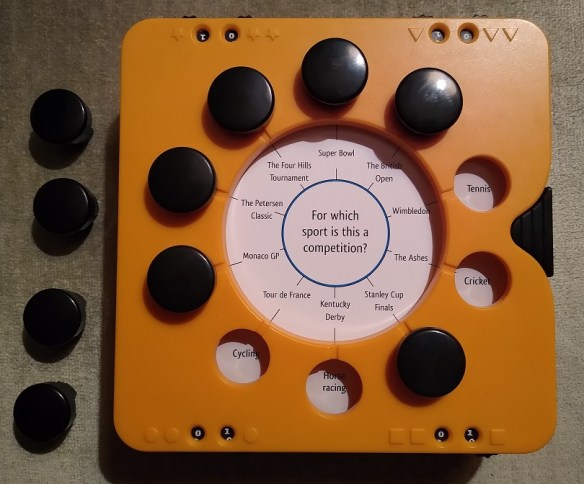
smart102

[Here you can see the Smartbox playing case, as well as the trivia question, the answer markers, and the score markers along the edge of the Smartbox.]

The concept is fairly straightforward. Once the trivia cards are loaded into the Smartbox, you pass it around, allowing each player/team the chance to answer the question and pull one of the answer markers. If they’re correct, they keep the answer marker in front of them. Then, pass the Smartbox to the next player.

The round ends when all the markers are pulled or players agree that there are no more correct answers to the question. Once the round is over, you add a point for each answer marker to the total indicated by your scoring wheel on the Smartbox. Then reset all the answer markers, pull the question card out, and put it at the bottom of the deck, and you’re ready for a new round.

smart101

Now, if you’ve never played this game before, you might be confused by how the round ends, since I mentioned two possibilities — all the markers being pulled or the players agreeing that there are no more correct answers. That’s because there are different kinds of trivia questions you’ll encounter while playing Smart10. There are six categories, each represented by a different colored circle that surrounds a given trivia question.

Some of them are true/false style, where you only want to pull the answer markers for the true answers. Others offer ten variations on a theme — like listing a piece of music and asking for the composer — which means the Smartbox gets passed around until all 10 variations have been answered.

This variety of question styles — covering everything from history and math to pop culture and language — keeps the game from becoming bogged down or repetitive. (The fact that every card is two-sided, meaning you have LOADS of questions to try, also helps in this respect.)

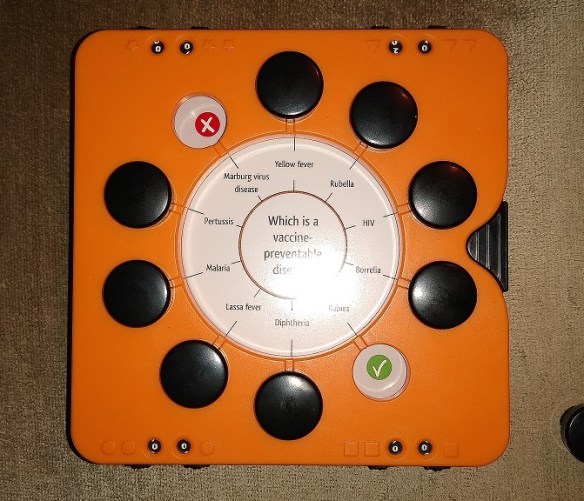
smart103

[Here you can see the checkmarks for the true/false type of question.]

Plus, the entire game is self-contained. You’ve got questions, answers, and score-keeping all built into one portable device. There are no decks of questions or game boards and pieces to tote around. That makes the game both travel-friendly and perfect for tossing around at a party without a lot of set-up time wasted.

The questions balance nicely between moderate difficulty and greater difficulty, so there’s little chance of the game feeling too easy or exclusionary in its challenge level. Pretty much the whole family can get in on the trivia goodness. And since you can play with up to 8 players (or teams), no one needs to feel left out of the fun.

All in all, Smart10 makes for a enjoyable and satisfying trivia experience that still feels mellow enough for casual get-togethers.

[Smart10 is published by Bananagrams and available from local and online retailers, plus it’s part of this year’s Holiday Puzzly Gift Guide!]


Thank you for visiting PuzzleNation Blog today! Be sure to sign up for our newsletter to stay up-to-date on everything PuzzleNation!

You can also share your pictures with us on Instagram, friend us on Facebook, check us out on TwitterPinterest, and Tumblr, and explore the always-expanding library of PuzzleNation apps and games on our website!