Mo(i)re Mind-Bending Art!

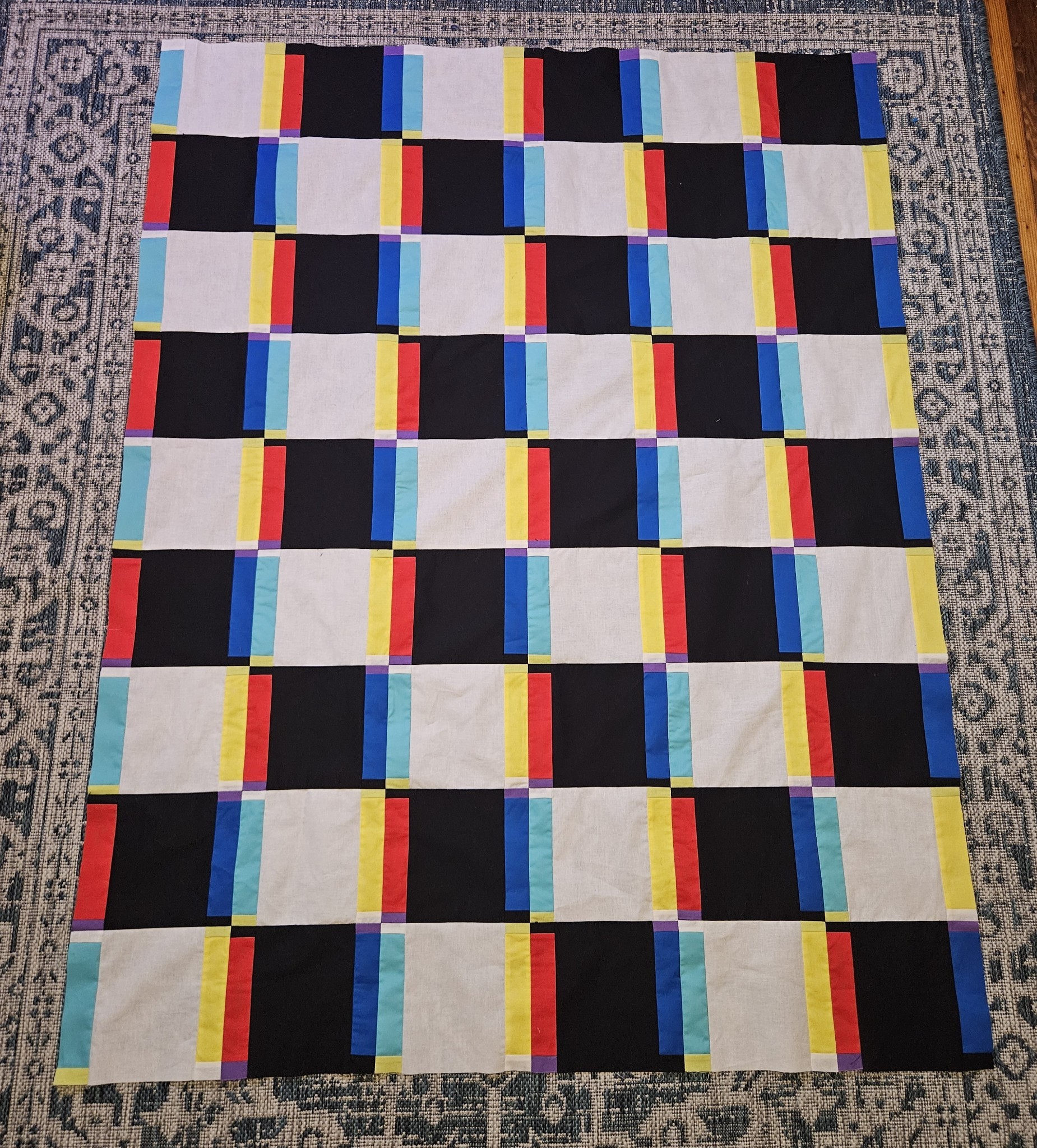
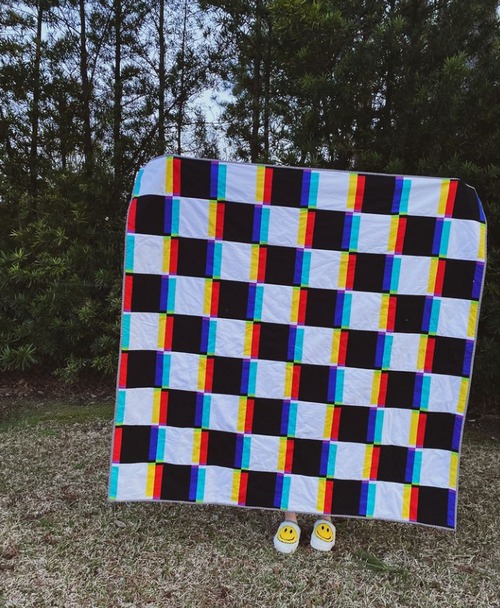
Back in January, I shared a visually baffling image I’d stumbled across: a glitch quilt. The quilt was purposely sown with opposing colors to make it look BLURRY, and it’s as clever as it is hard to look at.
I’ve always been a sucker for optical illusions, which I consider puzzles for the eye. They’re a visual treat that tricks you into seeing things that aren’t there. These inspired bits of perceptual trickery can fool you into thinking near is far, big is small, or two dimensions are really three.

And I’ve been fascinated ever since by this growing subset of glitch art where incredible precision is required to create physical art that looks fuzzy, uncertain, or even moving from the right angle.

So you can imagine my joy when I found this YouTube short:

This is the work of artist Enzo Prina, a physical media artist who specializes in Moiré art.

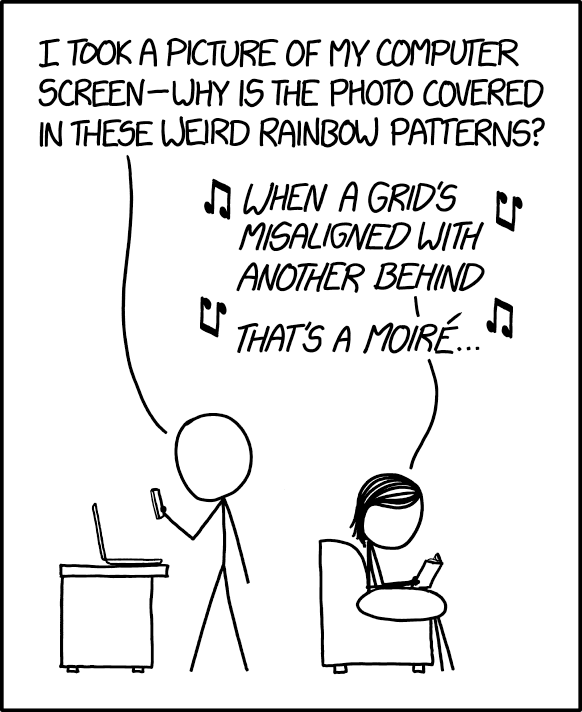
What is Moiré, you may ask? Well, XKCD has a fun explanation:
But please allow me to elaborate.

Moiré, which is both a mathematical and an artistic term, is the use of two or more overlapping grid patterns with regular spacing to create an interference pattern.
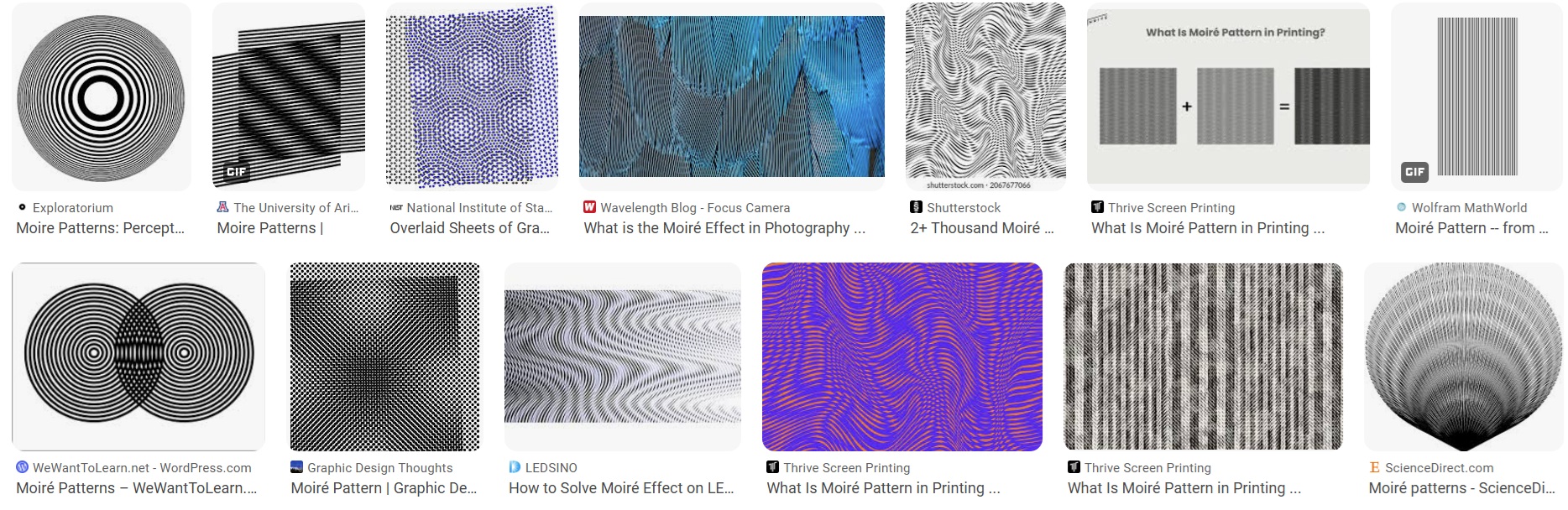
By overlapping these intricately formed and carefully spaced patterns at an angle to each other (and not directly lined up), you create the eye-catching patterns you see above.

Moiré patterns are all around us. If you’ve ever seen a Houndstooth jacket on an old television program, or tried to photograph a TV screen or computer screen at the wrong angle, you’ve no doubt noticed a Moiré pattern.

Here’s an example a bit too close to home: one of the images from my recap and review of Mystery Island: Winner Takes All.

While making Moiré patterns isn’t difficult, you can see that Prina’s work is far more complex than simply layering two patterns. He maps out his designs with tape, meticulously pulling layer by layer of tape strands from his work as he paints it, making the creation process as gorgeous and mind-bending as the final product.

It’s truly something to behold, both during and after.

Prina claimed on LinkedIn back in January that he’d just started making art again after a ten-year break, and clearly that break has reenergized him, as his work continues to evolve and diversify in fascinating ways.
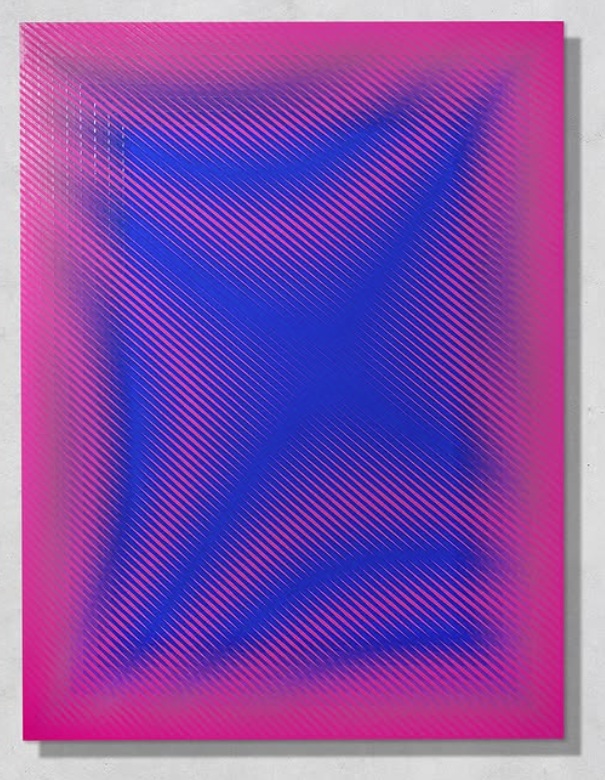
This intersection of art and mathematics really struck a chord with me. It’s not surprisingly, really, given that I’ve had Tom Lehrer on the brain for days, and he similarly combined math and artistic whimsy to create works of art that played with perception and imagination.

What a treat.

Now everyone, go stare at something boring and rest your eyes for a while.

Happy puzzling, everyone!
Optical Illusions Made of Wood!

Learning about the science behind optical illusions has been one of my favorite parts of this job. More and more, scientists are figuring out WHY optical illusions work on us, utilizing combinations of color, shadow, perspective, and how we process information to create impossible images, illusions of movement, and visual wonders to challenge how we interpret the world.

And I love seeing how people have responded by pushing the boundaries of what we can do with optical illusions. Earlier this year, I wrote about the glitch quilt, a fascinating and eye-wobbling work of brain-melting color play and meticulous execution.

In a world increasingly reliant on computer assistance and push-button AI-fueled shortcuts, there’s something both comforting and immensely charming about glitch quilts being handmade.

So it should come as no surprise to you, fellow puzzler, that I was overjoyed to discover another example of handmade optical illusion crafting… this time, made of wood.

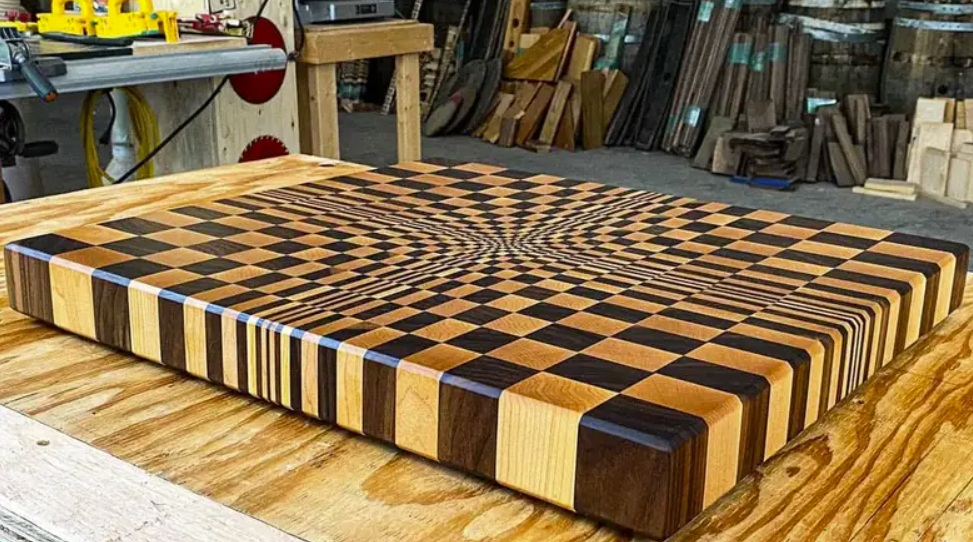
This is the end grain optical illusion cutting board. It appears to bend and swirl and warp as you stare at it, despite being made of straight lines and alternating colors.

Although I discovered it through Obsessed Woodworking, this particular piece is the handiwork of Ryan Hawkins, who has a woodworking YouTube channel where he detailed the elaborate step-by-step process involved in creating this sturdy perspective-twisting delight:

Ryan, to his credit, pointed to another woodworking content creator who supplied the design plans for the cutting board: mtmwood.

mtmwood has numerous examples of handcrafted visual tricky, employing tessellations and tricks of perspective to fool the eye into following intricately laid patterns, and my favorite is easily one that they call the butterfly board:

Employing a similar technique to the optical illusion cutting board, but managing to shape four twisting patterns, is truly impressive and a testament to the hard work, skill, and technique required to bring these stunning pieces to life.

And, as you might expect, this sent me down a YouTube rabbit hole looking for other wooden optical illusions, and there are plenty to choose from.

This is a nicely executed attempt at showing dimension and depth to get us started.

Whereas this one walks us through all the stages of preparing to take a familiar optical illusion from a drawing to a three-dimension form:

I confess, I watched this next one three times in a row, trying to spot the seams:

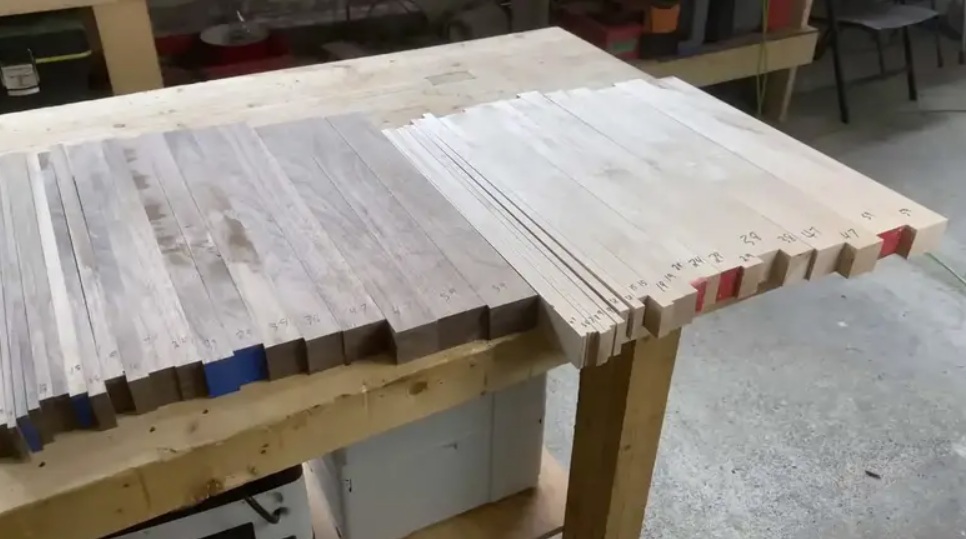
I could go on and on, but honestly, instead of closing out on the illusions, I’d like to end this celebration of creativity and artisanship with a simple photo showing the preparation and painstaking work it takes to bring these pieces to life.

This is the optical illusion cutting board in its embryonic stage, a lineup of different pieces and thicknesses of wood. All marked and cut with precision, waiting for the next step in assembly. I stare at this picture, and consider every mark, every cut, every spin of the table saw’s blade as the creator runs piece after piece after piece through those whirling metal teeth, each of them perfect and crisp.

It’s a remarkable thing to ponder, and a joy to watch in both progress and in final realization. I’m glad I could share that with you today.

Happy puzzling, everyone!

A New Medium for Optical Illusions: Quilting?

Optical illusions are puzzles for the eye, a visual treat that tricks you into seeing things that aren’t there. These inspired bits of perceptual trickery can fool you into thinking near is far, big is small, or two dimensions are really three.

The advent of computers has helped push the boundaries of optical illusions, with eye-catching tessellations and visual effects that confuse the eye into thinking they see moving objects or impossible figures.

This makes it all the more impressive when people can accomplish the same in a purely physical medium.

Like quilting.

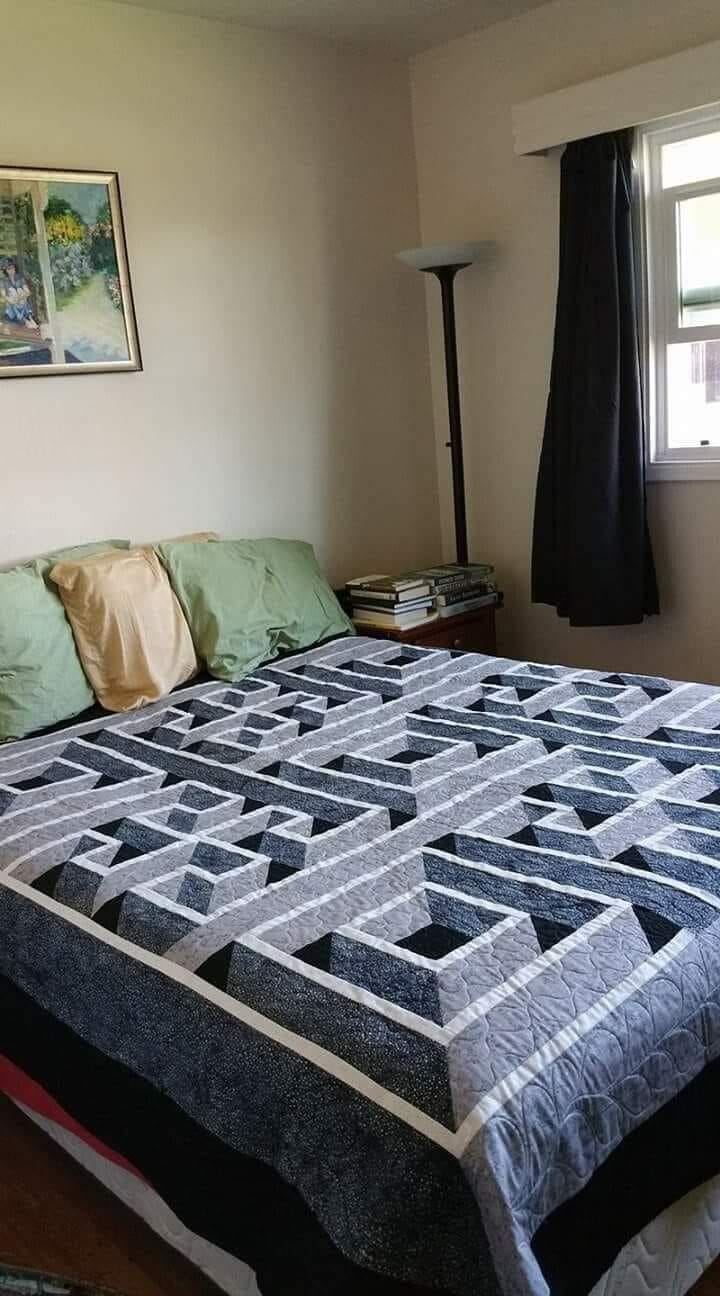
People accomplish some amazing designs with quilting, like this labyrinth quilt:

The dimension in this one is fantastic. (Though the puzzle nerd in me must point out that it’s not exactly solvable. Even to a minotaur.)

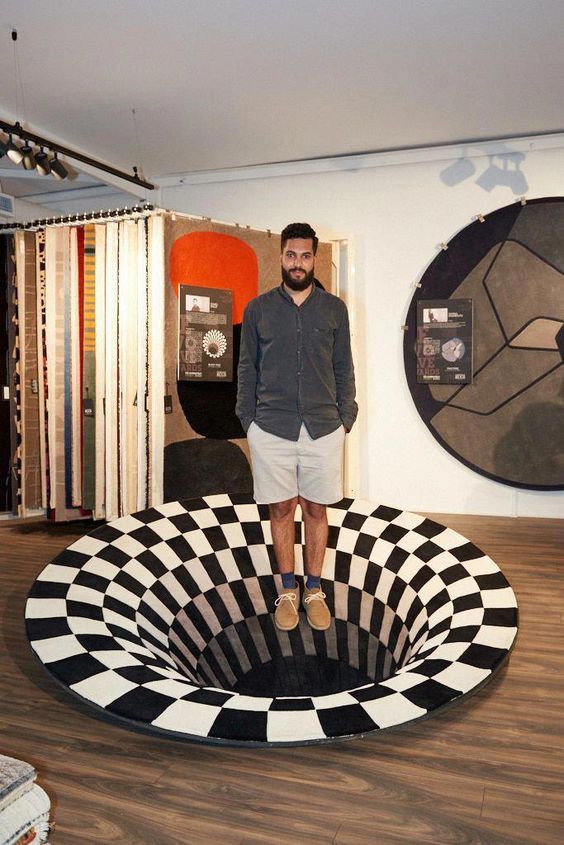
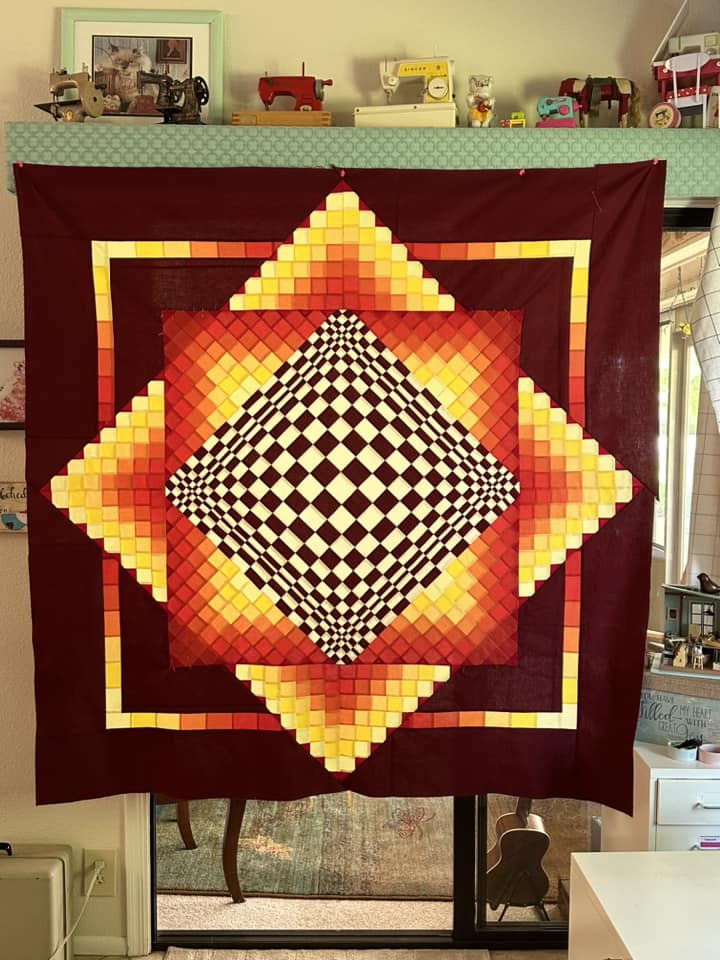
And then there’s this eye-popping wonder:

I can only imagine the amount of work required to get all of those squares cut and positioned the right way to create that bulging illusion in the middle of the checkerboard pattern. Talk about ambitious!

Quilts like those above are incredible efforts. But they feel doable. They feel natural when you look at them, even as they wow you with their exacting detail.

But nothing has amazed me quite as thoroughly as this glitch quilt pattern designed by Modern Groove Quilts.

The precision and color play required to create this illusion is a mathematical wonder.

It’s literally hard to look at! My eyes keep protectively sliding away from the design just to prevent my brain from struggling with it.

It feels like my computer screen is malfunctioning.

Using a rug as a backdrop is one thing, but in the wild, where nature is crisp and clear and the quilt appears blurry, it’s a baffling visual experience.

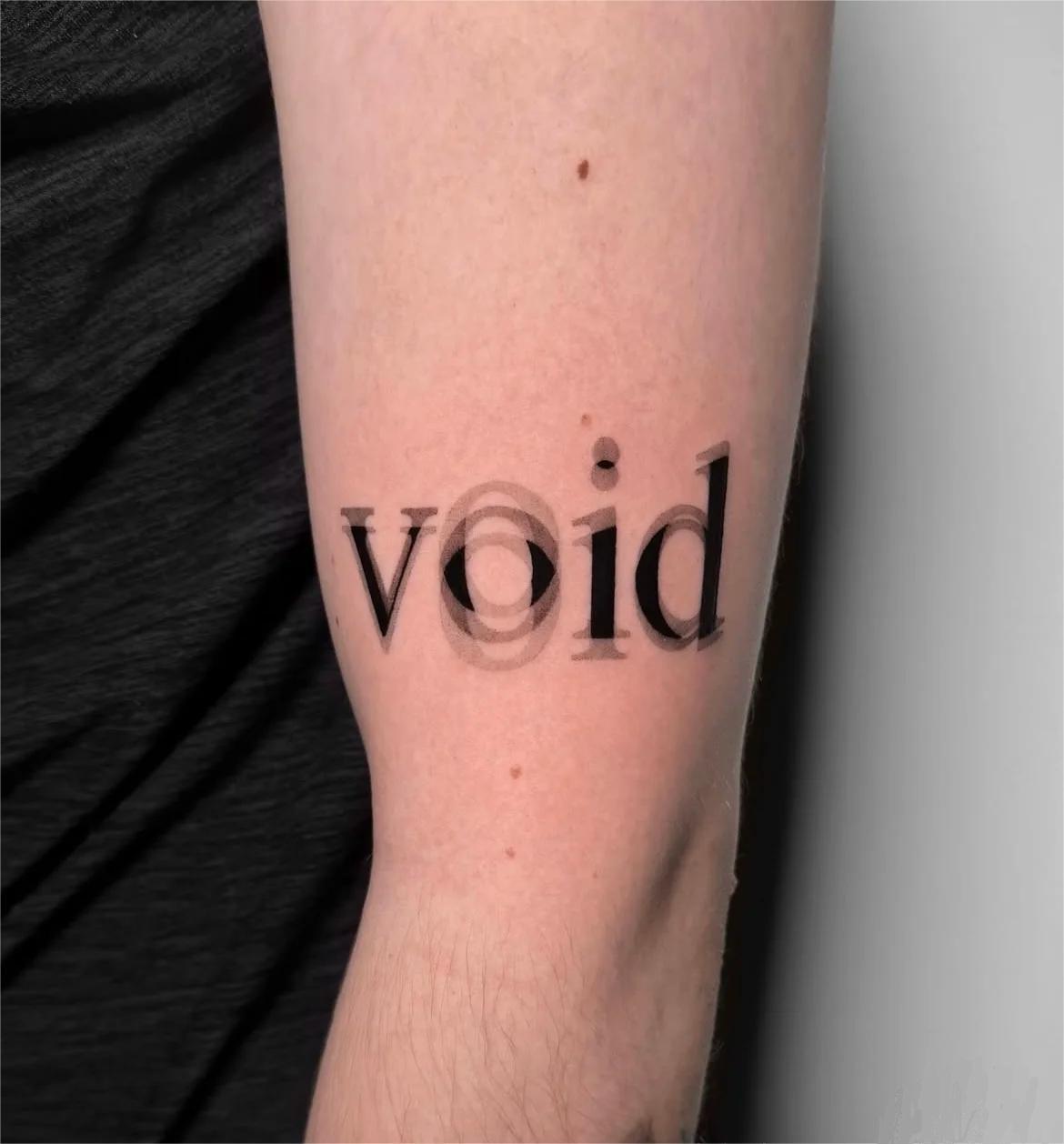
The only thing I can liken it to? This tattoo that looks blurred but isn’t:

These artistic, handmade optical illusions really show that, computer-assisted or not, it’s the ever-evolving ingenuity of creators that keeps the world full of wonder and creative achievement.

Now everyone, go stare at something boring and rest your eyes for a while.

(Oh, and check out the other patterns available from Modern Groove Quilts!)

Happy puzzling, everyone!