
Years ago I wrote a blog post discussing how crosswords have to walk a tightrope, balancing topicality and freshness vs. familiarity and family-friendly content.
I mentioned that older solvers may decry newer names, slang, terminology, or pop culture references, while younger solvers will bemoan not just older references they consider passe, but long-established crossword-friendly words they quickly tire of seeing.
And it’s frustrating to still encounter an elitist mentality when it comes to certain crossword solvers.
Now, you’re obviously allowed to have preferences when it comes to grid fill and cluing. But there’s a line, and these elitists stomp across it, barking all the way.
I’ve had commenters rant about the “ignorant ghetto language” in the LA Times crossword, citing “sup,” “did,” and “street cred.” And recently, a commenter shared their annoyance at pop culture references in crosswords, claiming that “doing a puzzle is a test of one’s general knowledge of history, science, and the arts.”
And I’m sorry, but that’s simply untrue. Doing a puzzle — specifically a crossword — is a test of one’s ability to answer clues, deduce words from letter placement, and test one’s vocabulary and knowledge of MANY facets of culture, pop or otherwise.
Different venues will provide different solving experiences, and you’re welcome to cherry-pick your crossword outlets that fit your preferences, but you don’t get to wholesale dismiss other puzzles, grid fill, clues, and content simply because you consider it beneath you.
In the past, I pondered the idea of the “average solver” — something my fellow blogger and puzzler Rae also wrote quite eloquently about — and we both came to the same conclusion: crosswords are better when they try to reach further, to challenge, to evolve.
As Rae wrote:
If we construct a puzzle for the average solver, are we really constructing a puzzle for anyone at all? Or has all the life been sucked out of the puzzle, all the potential for anyone to connect with its quirks?
I love seeing a constructor’s preferences, humor, and interests reflect in a puzzle’s grid fill and cluing. There’s such personality to it!
And it’s a very slippery slope to want puzzles limited to what YOU consider relatable.
Years ago, I was amazed when anyone outside the tri-state area had heard of Action Park, but now, thanks to a documentary about that now-infamous entertainment venue, I wouldn’t be surprised to hear it referenced by someone from either coast of the US or beyond!
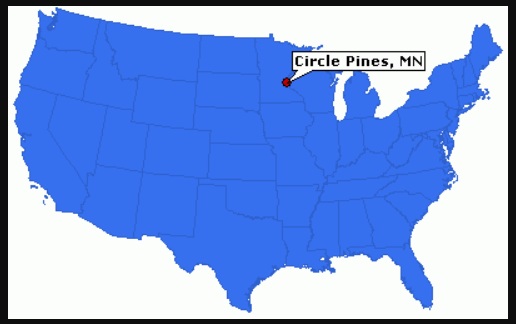
Mystery Science Theater 3000, the beloved comedy show where a presenter and their robot chums throw zingers at z-grade movies, used to be famed for its Wisconsin- and Minnesota-specific references and humor. As a teenager from Connecticut, I didn’t get all of them (thankfully, a friend from Wisconsin was able to fill those knowledge gaps for me), but I still very much enjoyed the show.
Later, when it was brought back through Kickstarter campaigns and a Netflix revival, writers from outside the Wisconsin/Minnesota area got to add their experiences and references to the show. Some fans complained that it was no longer their niche little treat, but I for one loved hearing references from my pop cultural childhood that never would’ve graced an MST3K episode from years past.
It’s fine not to know something. It’s not a flaw.
I certainly have my weaknesses when it comes to certain topics and fields of interest. Anyone matched up against me in Learned League should be rooting for questions about flowers, artists, and the names of athletes. I haven’t put in the time to educate myself on those topics, so I can’t be mad when I don’t get some of those trivia questions.
But when it comes to crosswords, I don’t get angry when I don’t know an entry or a reference. I look it up and learn and move on. Hardly a week goes by without learning a new word or phrase from Puzzmo crosswords and cluing. Heck, I’ve lost count of the cultural references and names I’ve learned from collections like A Trans Person Made Your Puzzle and Juliana Pache’s Black Crosswords!
There’s no shame in not knowing something.
There SHOULD, however, be shame in refusing to learn. There SHOULD be shame in excluding things that don’t fit YOUR definition of “culture.” To dismiss pop culture, to dismiss the unfamiliar, is to limit yourself and diminish the art of crosswords.
To argue, as that commenter did, that “sports, transient celebrities, and TV shows” aren’t part of general knowledge or are somehow inferior to their definition of “culture” is unfortunately fighting the tide of how culture works.
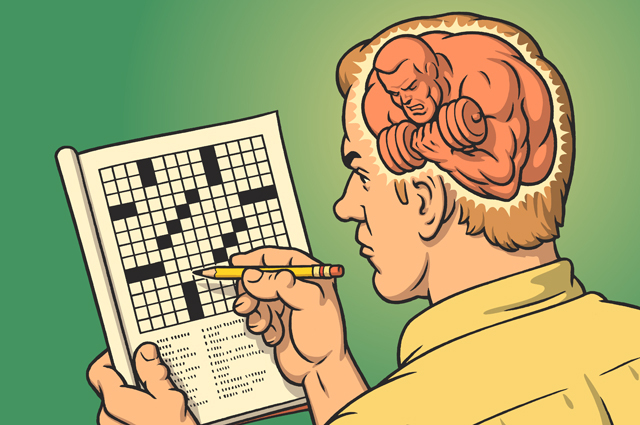
Puzzles are constantly evolving as we evolve, and whether you call it culture or pop culture, it all belongs in a crossword grid. We should be making puzzles MORE inclusive, not less.
In closing, I am inspired one last time by our commenter, who said that “a quote from Virginia Wolfe is more resonant than the title of a children’s book written by a former model or ice skater.”
So let’s wrap up this post with a quote from both Virginia Woolf and a quote from a children’s book with quite the resonant title, shall we?
“Lock up your libraries if you like; but there is no gate, no lock, no bolt that you can set upon the freedom of my mind.” — Virginia Woolf, A Room of One’s Own
“I’ll solve a puzzle, read a book, and learn a fun new fact!” — Jessica Hische, Tomorrow I’ll Be Brave
Happy puzzling, everyone!
 PuzzCulture