Optical Illusions Made of Wood!

Learning about the science behind optical illusions has been one of my favorite parts of this job. More and more, scientists are figuring out WHY optical illusions work on us, utilizing combinations of color, shadow, perspective, and how we process information to create impossible images, illusions of movement, and visual wonders to challenge how we interpret the world.

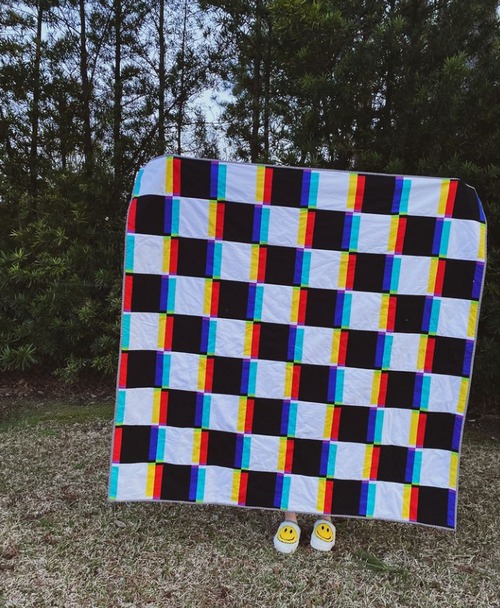
And I love seeing how people have responded by pushing the boundaries of what we can do with optical illusions. Earlier this year, I wrote about the glitch quilt, a fascinating and eye-wobbling work of brain-melting color play and meticulous execution.

In a world increasingly reliant on computer assistance and push-button AI-fueled shortcuts, there’s something both comforting and immensely charming about glitch quilts being handmade.

So it should come as no surprise to you, fellow puzzler, that I was overjoyed to discover another example of handmade optical illusion crafting… this time, made of wood.
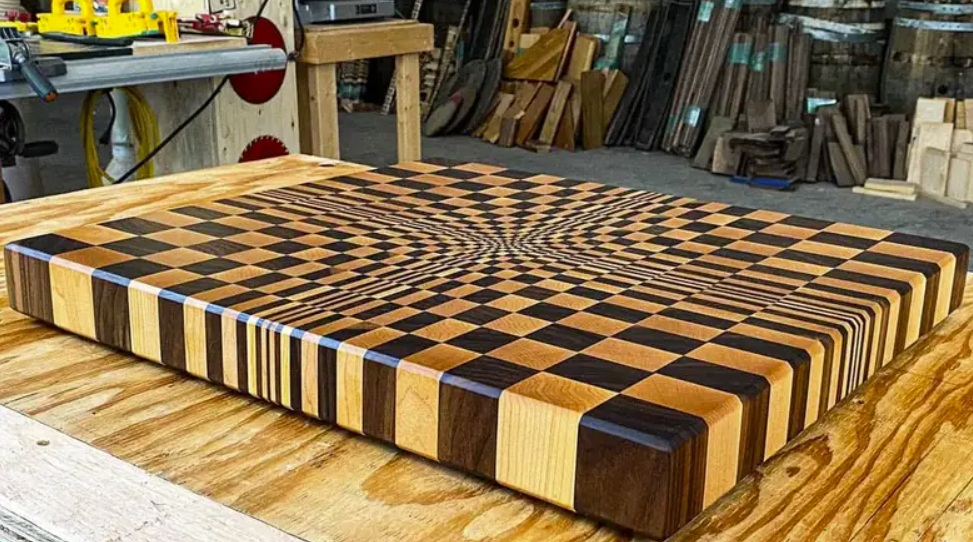
This is the end grain optical illusion cutting board. It appears to bend and swirl and warp as you stare at it, despite being made of straight lines and alternating colors.

Although I discovered it through Obsessed Woodworking, this particular piece is the handiwork of Ryan Hawkins, who has a woodworking YouTube channel where he detailed the elaborate step-by-step process involved in creating this sturdy perspective-twisting delight:

Ryan, to his credit, pointed to another woodworking content creator who supplied the design plans for the cutting board: mtmwood.

mtmwood has numerous examples of handcrafted visual tricky, employing tessellations and tricks of perspective to fool the eye into following intricately laid patterns, and my favorite is easily one that they call the butterfly board:

Employing a similar technique to the optical illusion cutting board, but managing to shape four twisting patterns, is truly impressive and a testament to the hard work, skill, and technique required to bring these stunning pieces to life.

And, as you might expect, this sent me down a YouTube rabbit hole looking for other wooden optical illusions, and there are plenty to choose from.

This is a nicely executed attempt at showing dimension and depth to get us started.

Whereas this one walks us through all the stages of preparing to take a familiar optical illusion from a drawing to a three-dimension form:

I confess, I watched this next one three times in a row, trying to spot the seams:

I could go on and on, but honestly, instead of closing out on the illusions, I’d like to end this celebration of creativity and artisanship with a simple photo showing the preparation and painstaking work it takes to bring these pieces to life.
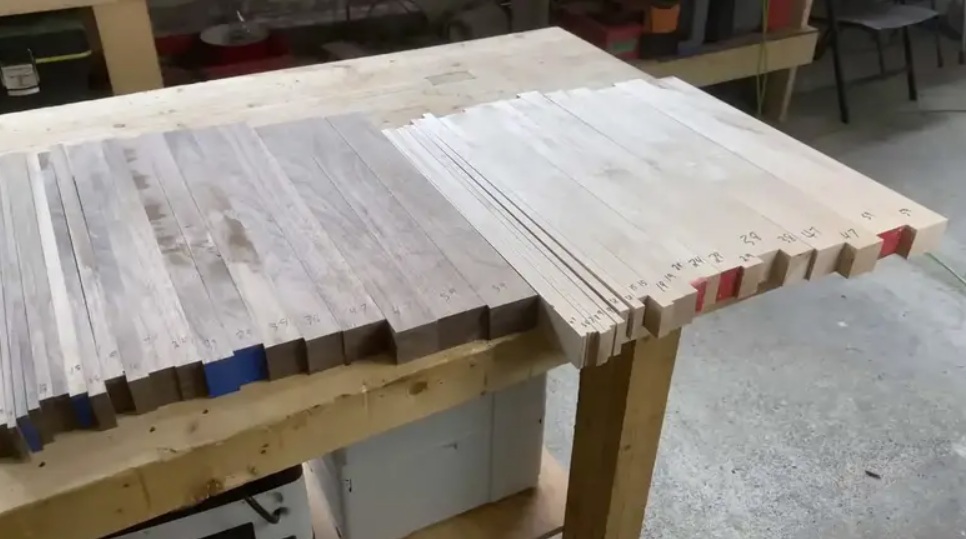
This is the optical illusion cutting board in its embryonic stage, a lineup of different pieces and thicknesses of wood. All marked and cut with precision, waiting for the next step in assembly. I stare at this picture, and consider every mark, every cut, every spin of the table saw’s blade as the creator runs piece after piece after piece through those whirling metal teeth, each of them perfect and crisp.

It’s a remarkable thing to ponder, and a joy to watch in both progress and in final realization. I’m glad I could share that with you today.

Happy puzzling, everyone!
Christmas Eve Puzzle to Solve!

It’s Christmas Eve, fellow puzzlers, and it’s tradition around here to celebrate the holidays with a free puzzle to solve!

This year is no exception, as I’ve cooked up something festive and fun for you.

Our friends at Penny/Dell Puzzles have a puzzle called First and Last, and when I thought of it, I immediately had the idea to do a holiday-themed version of it.

As you might’ve already guessed, I called it…

First and Last Christmas!

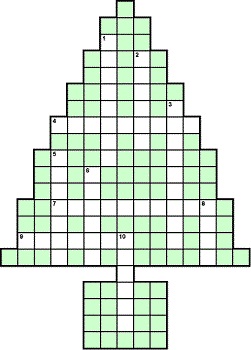
You can click here to download a PDF copy of the puzzle to solve, and I’ve included the full details in this puzzle below so you know what you’re getting into!

Merry Christmas and Happy Hanukkah, friends. May the holidays be kind to you.


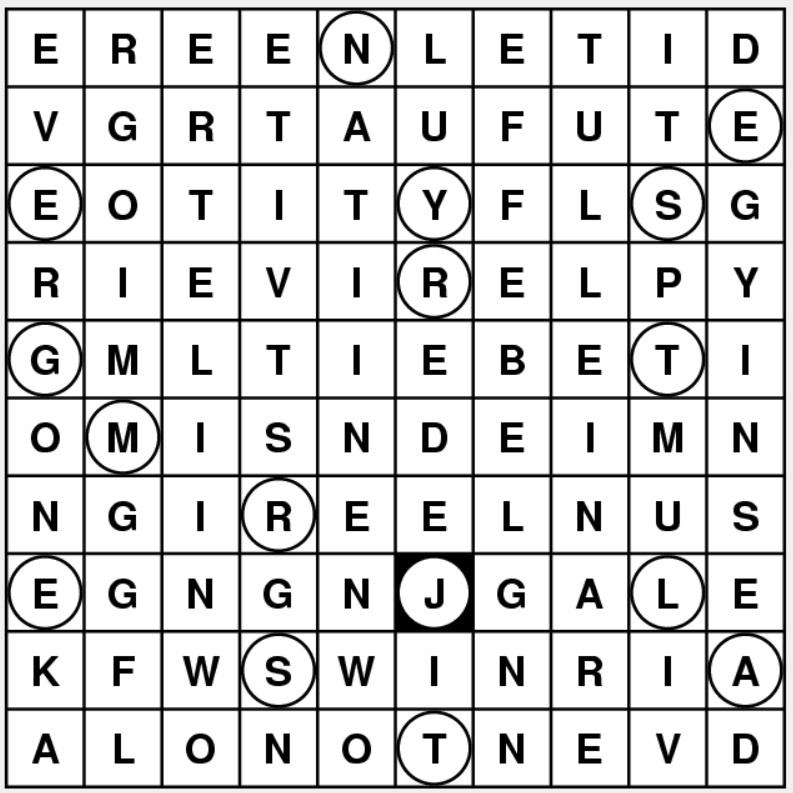
The answer to each clue can be found in the diagram. You can move up, down, backward, and forward, but not diagonally. Do not skip over any squares. The last letter of each answer is the first letter of the next answer; otherwise, each letter is used only once. The answer to the first clue begins in the outlined box, and the first and last letters of each answer are circled. Plus every word in the grid is festively themed. Good luck!

  1. This holiday song was the first song played in space (during the flight of Gemini 6A in December 1965)
  2. Stocking __
  3. Santa has eight or nine of these, depending on the song
  4. On the fifth day of Christmas, you get five of these
  5. There are 35 different shapes possible for this
  6. George Washington had a boozy recipe for this that included the instruction “Taste frequently”
  7. “The Elves and the Shoemaker” were just one story attributed to brothers by this name
  8. Holiday plant sometimes called “witches’ brooms”
  9. Good choice for a Christmas tree
  10. Scene featuring shepherds and magi (oh, and a baby, I guess)
  11. The Christmas season, of yore
  12. After leaving Bethlehem, Joseph, Mary, and Jesus traveled here
  13. This was originally made of hammered silver
  14. Holiday lights also known as farolitos
  15. __ calendar
  16. “Santa Claus is Coming to __

Puzzculture is alive! (Sorta)

Hello fellow puzzlers!

It’s been a long time since a new post, I know.

A lot of things are changing around here, big and small.

But the biggest change, the most important change, is that this place will once again be providing fun puzzle- and game-fueled content for anyone interested!

And here’s a quick list of what’s going on.

-Hi, we’re Puzzculture! We hope to once again be a hub of puzzle and game information, news, reviews, analysis, and celebration, just as PN Blog was not too long ago.

-This will be the final post associated with the PuzzleNation brand. If you’re reading this post through a link from the PuzzleNation Facebook or Twitter account, please follow us on Facebook and Twitter at Puzzculture, or follow the blog directly to see our future content!

-Yes, we are Puzzculture now, a completely independent entity. We are so thankful for all the years of great content created under the PuzzleNation umbrella, and we wish them nothing but the best in their future endeavors.

-New logos are incoming, we promise. We’re a bit of a shambles right now, but regular posts will be forthcoming. (Those post-its over the old logo are doing a lot of heavy lifting right now.)

If you’re out there and still reading, please feel free to say hi!

We’re over-the-moon excited to embark upon this new journey with you all. Happy puzzling!

Geniuses At Work

At the intersection of game-show geekery and puzzle nerddom is a group of very happy people: The Genius is back!

If you’re not familiar with The Genius… well, why would you be? The game show has never aired in the United States or in any English-speaking country. It originated in South Korea, where it ran for four seasons — the last of these concluding in 2015. The revived show, which debuted three weeks ago, is airing on a network based in The Netherlands. We freely admit that for most Americans, this show is on the obscure side.

But it is well worth the effort to find the subtitled episodes: The game is unlike anything else. There’s no trivia. There are no feats of physical endurance. There is only a room, and in that room are nine contestants — at least to start. In each episode, the rules of a game are announced. The rules are usually fairly simple to understand: In a recent Dutch episode, players were given cards with numbers from 1 to 3. All they had to do was find an opponent, and lay down the cards one at a time. If you lay down the higher number, you earn a point. The contestant who earns the most points wins.

Simple, right? It’s basically the children’s card game “War!” But the genius of The Genius is how even the simplest of games develop unexpected levels of depth as the contestants — an assortment of smart, successful people from the worlds of business and entertainment — try to finesse a win by thinking outside the box. Alliances are formed, plots hatched, and usually (but not always) the person who comes out on top is the one who has grasped subtleties that the others missed.

The Genius is one of those shows you want to watch with somebody else, or discuss online afterwards, so you can figure out together what on earth happened, and why so-and-so took this action instead of that action — what did that contestant notice that you, sitting at home, did not?? For fans of cerebral television, it’s exhilarating stuff.

The first three subtitled episodes of the Dutch Genius can be found here. The original South Korean episodes are harder to find, but there is a group on Reddit where links come and go — pop in there if you, like others in a small but passionate group of North Americans, fall in love with the show.

Hollywood’s Puzzle Guys

It’s important for screenwriters and filmmakers to look like they know what they’re talking about, and so many movies and TV shows hire consultants — medical consultants for the hospital drama, police consultants for the crime show, and so on.

And every so often, a movie or a TV show needs a puzzle. For that, the creative types are likely to turn to Dave Shukan and David Kwong. In real life, Shukan is a copyright and trademark attorney, and Kwong is a professional magician. Both are puzzle experts. David Kwong even infuses his magic with puzzles — his show “The Enigmatist” has had long runs in New York City and Los Angeles (with a pre-show in the lobby featuring puzzles by Dave Shukan).

Before throwing himself into magic full time, Kwong worked for a number of Hollywood studios, including Dreamworks Animation, where he helped look for properties that might make good movies. “But I was sneaking out of the office all the time,” he says, “to work with writers on every magic-related project out there.” There were many of these, and one finally escaped the morass of development and became a movie: 2013’s Now You See Me, for which he is credited as head magic consultant.

A year or so later a new call came in, from a television producer named Martin Gero. He was developing a show called Blindspot, which would feature a protagonist who has no memory but a wide assortment of mysterious tattoos. Gero wanted these tattoos to be puzzling in nature. Kwong at that point had gone full-time with his puzzle/magic hybrid act and seemed like just the guy to help out. By season 2, Kwong brought Shukan on board as well, and together they helped infuse puzzles not only in the show’s tattoos, but also in the episode titles.

The episode titles? Yep. Take this list of Blindspot titles from season 3. There is a very tricky message hidden within them. Can you find it?

BACK TO THE GRIND
ENEMY BAG OF TRICKS
UPSIDE DOWN CRAFT
GUNPLAY RICOCHET
THIS PROFOUND LEGACY
ADORING SUSPECT
FIX MY PRESENT HAVOC
CITY FOLKS UNDER WRAPS
HOT BURNING FLAMES
BALANCE OF NIGHT
TECHNOLOGY WIZARDS
TWO LEGENDARY CHUMS
WARNING SHOT
EVERLASTING
DEDUCTIONS
ARTFUL DODGE
MUM’S THE WORD
CLAMOROUS NIGHT
GALAXY OF MINDS
LET IT GO
DEFECTION
IN MEMORY

Answer at the bottom of this blog post, but here’s a hint: Look for a letter pattern common through all the titles.

Kwong and Shukan have since gone on to lend assistance to other well-known projects, including a sliding-block puzzle that was featured in Ghostbusters: Afterlife. Their most recent project has also been their most puzzle-intensive: Apple TV’s The Afterparty, a murder-mystery series from Phil Lord and Christopher Miller, the latter of whom encountered Shukan and Kwong at a puzzle party, and knew they were the right team to help infuse the show he was working on with devilish clues for the home audience to decipher.

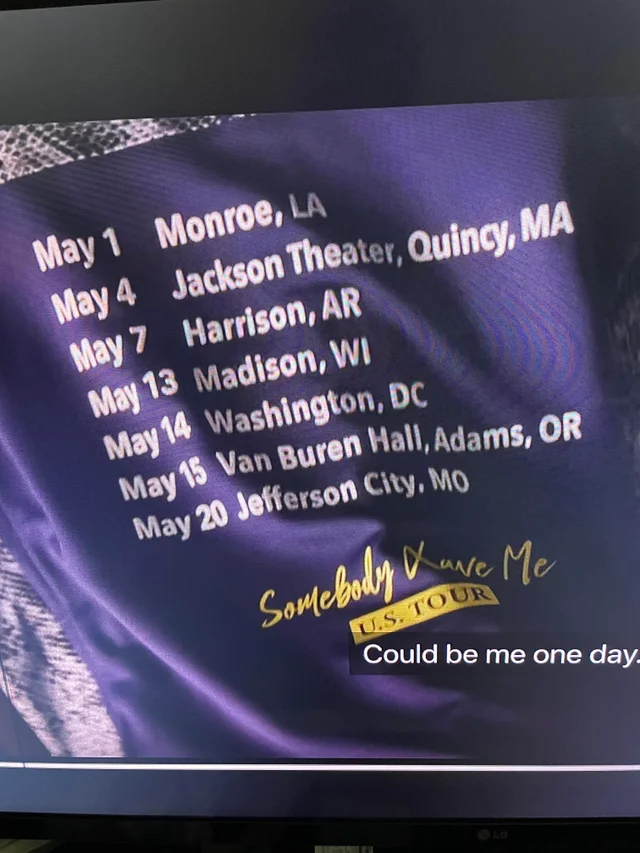
This Shukan and Kwong most certainly did. Every episode contains a puzzle — often only shown on screen for a flash of time — that, when solved, eliminates one of the suspects. A Reddit forum was quickly established to take on the challenges, and puzzles that the creative team thought might pass everyone by were in fact solved in an hour or so. Here’s one such puzzle, in the form of a briefly seen T-shirt:

Can you figure out the secret message? Once again, the solution will be at the end of this post.

Hopefully more TV and movie folks will realize that puzzles are a great way to bring fan communities together — Shukan and Kwong stand ready to assist. The pair recently finished creating the puzzles for the second season of The Afterparty. You can help crack the case in 2023.


BLINDSPOT PUZZLE SOLUTION:

Each episode title contains exactly one three-letter string in the form of XYX. For example, in the final title, the word MEMORY starts with the letters MEM. (Sometimes this three-letter string breaks across words — in the first episode, the three letters are TOT, as seen in the words …TO THE…)

If you take the center letter of this trigram, you will spell out the message ONE OF US WILL GIVE OUR LIFE.


THE AFTERPARTY SOLUTION:

You might notice that all of the cities and arenas share their names with US presidents — the first nine US presidents, in fact. Put these presidents in order, keeping the May date next to each one:

14 WASHINGTON
15 ADAMS
20 JEFFERSON
13 MADISON
1 MONROE
4 QUINCY ADAMS
4 JACKSON
15 VAN BUREN
7 HARRISON

Then simply take the letter of alphabet represented by that number — so, 1=A, 2=B, and so on. This spells out the answer to the puzzle, NOT MAD DOG, eliminating from suspicion the character with that nickname.

Last Call For Boswords

Boswords, the crossword competition that started in Boston but is now held online four times a year, is back with its Fall Themeless League! If you want a great themeless crossword every week, and furthermore want to see how you stack up against other crossword lovers, jump over to the Boswords site and sign up quick — the first puzzle of the weekly tournament will be released this coming Monday, October 3. (You don’t have to solve the puzzle that very day; just find time to sit with at some point during the week.)

As with previous iterations of the league, when you register, you choose which of three difficulty levels is best for you — Smooth, Choppy, or Stormy. (Boston is a port town.) The answers in the grids are the same for each puzzle, but the clues are not: Smooth means you’ll face a Tuesday level of difficulty, according to the New York Times difficulty scale. Choppy means Friday-level clues. And Stormy is “harder than a Saturday,” so yikes. (If you discover partway through the tournament that you have mis-ranked yourself, you can switch difficulty levels; just ask.)

Furthermore, you don’t have to go it alone: Boswords embraces a trend seen at other independent tournaments — Pairs solving! If you think you’ll need help with those Stormy-level clues, grab your friend, spouse, or significant other and discover the joys of co-solving.

All the puzzles are solved via your computer and timed automatically, and the ongoing scores are updated weekly. In the final week, there is a Championship puzzle, and the winner is thereby crowned. But even if you have no hope of coming out on top, it’s fun to see how far up the ladder you can climb — and then see if you can top that next time.

To emphasize: If this all sounds like fun, there are only a few days left to register before the first puzzle is released, so get moving!