Let’s Talk Puzzle Codes!

Puzzly information is concealed in all sorts of ways. Rephrasings, anagrams, riddles, puns… these are all ways to challenge solvers by hiding information in plain sight.

But puzzle codes are one of the most prominent techniques… and one of the most ways to do so.

Codes in puzzles come in all shapes and sizes. And if you’re venturing beyond the confines of crossword-style puzzling, you’re bound to encounter a coded puzzle from time to time.

So, to better equip you for your puzzly sojourns in the future, today we’ll be breaking down a few common ways puzzles get encoded!


Letter Replacement

This is what you’ll see in your standard Cryptogram puzzle. Each letter in a quotation has been replaced with a different letter, and you need to notice utilize patterns, punctuation clues, and context in order to unravel what the letters in front of you truly represent.

For example:

Guvf vf n frperg zrffntr. Jryy, yrff frperg guna vg hfrq gb or, fvapr lbh’er nyzbfg svavfurq qrpbqvat vg.

Now, the order of letter replacement is usually randomized, but sometimes, a letter shift cipher has been applied. A letter shift cipher (like ROT13) means that there is a pattern to the letter replacement, rather than the randomness of traditional Cryptograms.

For example, A is actually M, B is actually N, and so on. Once you recognize the pattern, filling in the rest of the quote is easy.


Alphanumeric

After Letter Replacement, this is the most common style of coded puzzle. And like Letter Replacement codes, Alphanumeric puzzles can either be randomized or have a pattern.

For the former, each letter has been randomly assigned a number, and you need to figure out which number represents which letter. Our friends at Penny Dell Puzzles have a puzzle called Codewords that employs this code quite effectively:

By using a crossword-style or cryptic crossword-style grid, you can use letter repetition, placement, and frequency to figure out which letters go where.

But there are also alphanumeric puzzles that are not randomized. In these, each letter is replaced by the number that represents its order in the alphabet. A is 1, B is 2, all the way to Z is 26.

You can create a devious little puzzle by writing out a message, replacing each letter with its alphanumeric counterpart, and then jamming all the numbers together without spacing. Now the solver must figure out if that’s a 12 OR a 1 and a 2 next to each other.

For example:

25152118575202091477151541203154541621262612519225208919161591420

or, for a slightly easier version:

251521185 7520209147 715154 120 315454 1621262612519 225 208919 161591420

There are also puzzles that rely on older telephone keypads, where each digit represented several letters of the alphabet. 2 is ABC, 3 is DEF, all the way to 9 is WXYZ.

So each number in the sequence can represent three or four possible letters, and you need to puzzle out the message.


Coded Math

Letter Replacement can also work in reverse, where numbers in an equation have been replaced with letters, and you need to figure out which letter represents what number. Sometimes you’ll see this with a long-division problem (often employing 10 different letters to represent the digits 0-9).

Other times, it’s more of a logic puzzle where several equations are listed in sequence, like A + C = 10 and C – B = 4, and you must use the relationships provided to figure out what letters represent what numbers.
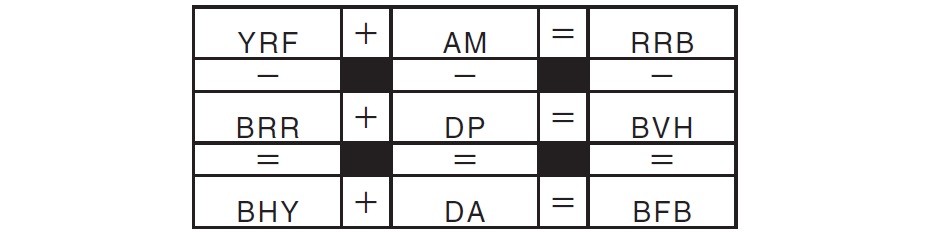
Another variation is combining Cryptogram-style letter replacement with logic puzzles. Imagine a 3×3 grid with equations overlapping, and all of the missing numbers are two, three, or four digits, but replaced with letters instead. This is called a Cross Arithmetic. Could you solve it?


Letter Blanks

Excluding letters from a word is also an effective way to create a puzzly code for someone.

There can be a pattern, like each word missing its center letter. (And then all the missing letters spell out a message).

Or perhaps there’s a pattern to the letters missing from several words (like a letter pair or a smaller word that’s been extracted from each incomplete word).

Or maybe there are multiple blanks in a word, and you need to figure out which letter fills every blank.


These are some of the codes and methods of obfuscation you’ll encounter in variety crosswords. How did you do? Did you unravel them all?

(Originally I was going to conclude this entry with Cryptic Crossword-style cluing, which is written in a coded language all its own, but I think that topic deserves a full blog post of its own.)

Happy puzzling, everyone!
The Tap Code (and a Puzzly Love Story)

puzzlelove

Instead of offering a puzzle for Valentine’s Day, this year I thought I’d do something different and share a story, a wartime puzzly love story for the ages.


Our tale begins in Vietnam on April 4, 1965, when Air Force pilot Carlyle Harris is shot down during a failed bombing run. Over the next eight years, Captain Harris — Smitty to his friends — was a POW in Vietnamese hands.

He would be imprisoned in numerous camps over the years — Briarpatch, “the Zoo,” Son Tay, Dogpatch, and even the infamous Hanoi Hilton — enduring illness, mistreatment, psychological and physical torture, and whatever other horrors his captors could conjure up.

But nothing was more taxing than being separated from his beloved wife Louise. With two daughters to raise, a son on the way, and a husband trapped on the other side of the world, Louise became one of the first POW wives. (Smitty was only the sixth American POW captured by the Vietnamese at that time.)

Louise worked hard not only to care for her family, but to try to contact Smitty and keep his spirits up. She also fought for personal rights, including access to her husband’s pay during his imprisonment, becoming a role model for other POW wives to come.

But what, you might be wondering, makes this a puzzly tale?

The Tap Code.

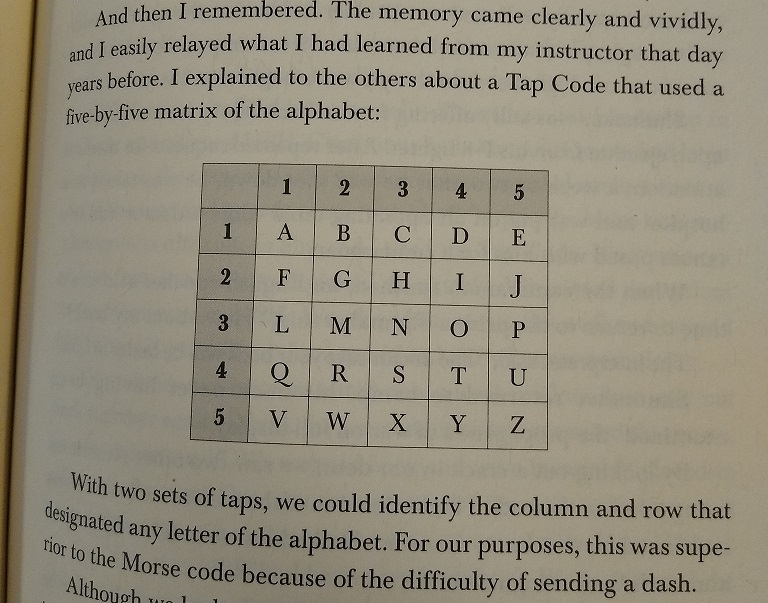
tapcode4

A World War II-era form of communication developed by a POW in Germany, the Tap Code was devised to allow communication when verbal commands wouldn’t do. The simple five-by-five matrix allows each letter to be identified by two simple sets of taps. (The lack of a need for dashes made the Tap Code superior to Morse Code for their efforts.)

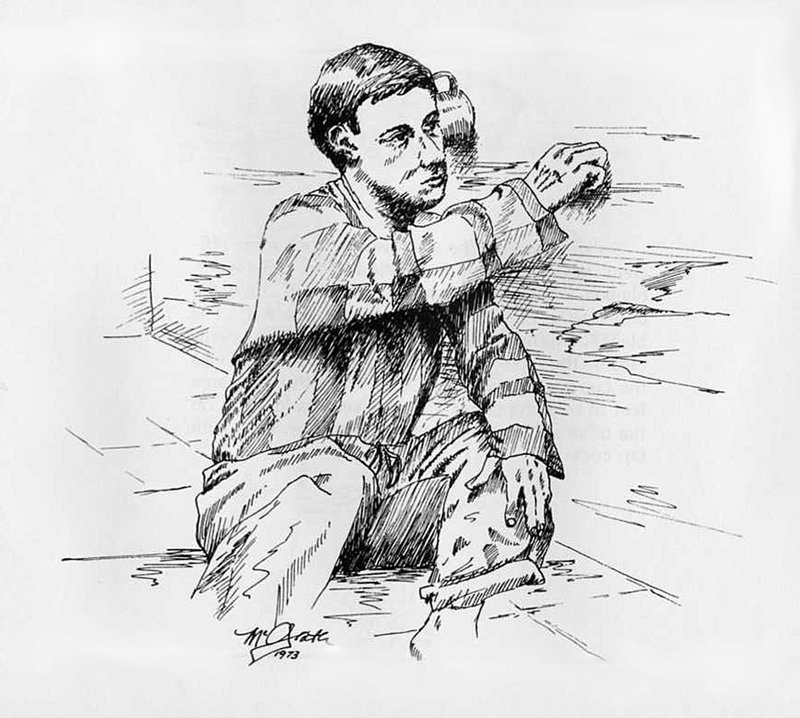
Smitty taught it to fellow POWs when given the opportunity, and they taught it to others, and soon, the prisoners could communicate by tapping on walls and water pipes, knocking on buckets, or even through the movements of a broom while sweeping. (Naturally, everyone using the Tap Code did so lightly, so as not to alert the guards to their efforts at clandestine communication.)

This wasn’t the only method of communication employed by the POWs. A one-handed code system similar to American Sign Language was also developed. Some used coughing as a signal that they were being moved, while others managed to pass notes, eventually assembling mental lists of all of the POWs in a given camp.

Of course, Morse Code also proved useful. When one POW was placed on television as a Vietnamese propaganda effort, Jeremiah Denton blinked a message in Morse Code for the world to see. His message? T-O-R-T-U-R-E.

These methods, along with the Tap Code, not only kept morale up, but allowed the POWs to keep track of their ranks even when moved between camps/prisons.

tapcode2

[Image courtesy of PBS.]

It also allowed for covert operations within the camps. An SRO (senior ranking officer) would be chosen for the group, and he could assign tasks to fellow POWs as well as establish rules for newcomers to help them survive the experience.

Key Tap Code abbreviations also emerged:

  • GNST: Good Night, Sleep Tight
  • DLTBBB: Don’t let the bed bugs bite. (A sadly literal wish for the POWs.)
  • GBU: God Bless You.

GBU became shorthand for “you are not alone,” a reassurance that both God and fellow POWs were on your side, watching over you.

But Smitty and his fellow POWs weren’t the only ones using coded messages. Louise was also learning codes in order to both support the war effort and communicate with her husband. She and other POW wives would participate by using the Letter Code:

The long process began when Louise would write a short letter in longhand and send it to the Pentagon. They would rewrite it in code, while at the same time keeping the spirit of what she had written. They would then send the letter back to Louise, and she would rewrite it in longhand on the prescribed form. These then would be mailed to North Vietnam, which didn’t know about the secret strategy. It was a complicated code, and only a select few had been taught how to do it in survival training.

Smitty taught a select few the Letter Code for their own coded messages to send home, but it was hard to tell how many made it out of the camps.

tapcode3

[Image courtesy of The Daily Journal.]

All through that time, Louise was constantly writing letters, sending packages, and making entreaties on behalf of her husband, reaching out to him in any way possible. Although the Vietnamese combed through every package and seized much of the contents for themselves, some items still slipped through, becoming treasures for Smitty to hold onto. (And yes, the US government managed to slip some info and supplies to the POWs spy-style through these packages, including microfilm, maps, and more.)

Louise’s unflagging efforts and Smitty’s determination were finally rewarded when negotiations between the US and Vietnam bore fruit. Before returning to the United States, Smitty was allowed to speak to Louise on the phone. It had been 2,871 days since his capture.

But that wasn’t the end for the Tap Code — later referred to as the Smitty Harris Tap Code after the successes with it during Vietnam. Even when the POWs were finally returned home, staying in a hotel before going their separate ways, they used the Tap Code all night to communicate with each other. Old habits are hard to break.


Not only is this a story of puzzly innovation and determination, but it’s also an inspiring tale of two people in love who never gave up on seeing each other again.

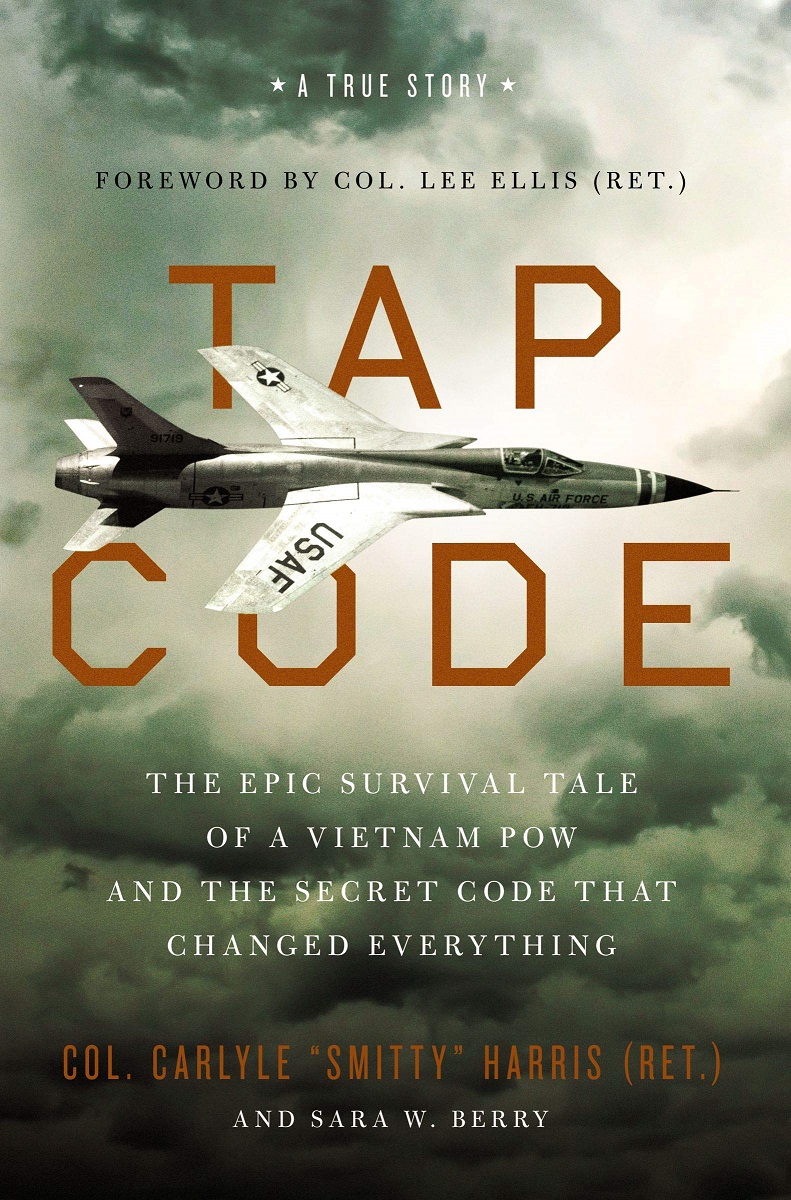
You can read the full story of Smitty and Louise’s trials and tribulations in Tap Code: The Epic Survival Tale of a Vietnam POW and the Secret Code That Changed Everything.

tapcode1

[Image courtesy of Amazon.]


Thanks for visiting PuzzleNation Blog today! Be sure to sign up for our newsletter to stay up-to-date on everything PuzzleNation!

You can also share your pictures with us on Instagram, friend us on Facebook, check us out on TwitterPinterest, and Tumblr, and explore the always-expanding library of PuzzleNation apps and games on our website!