
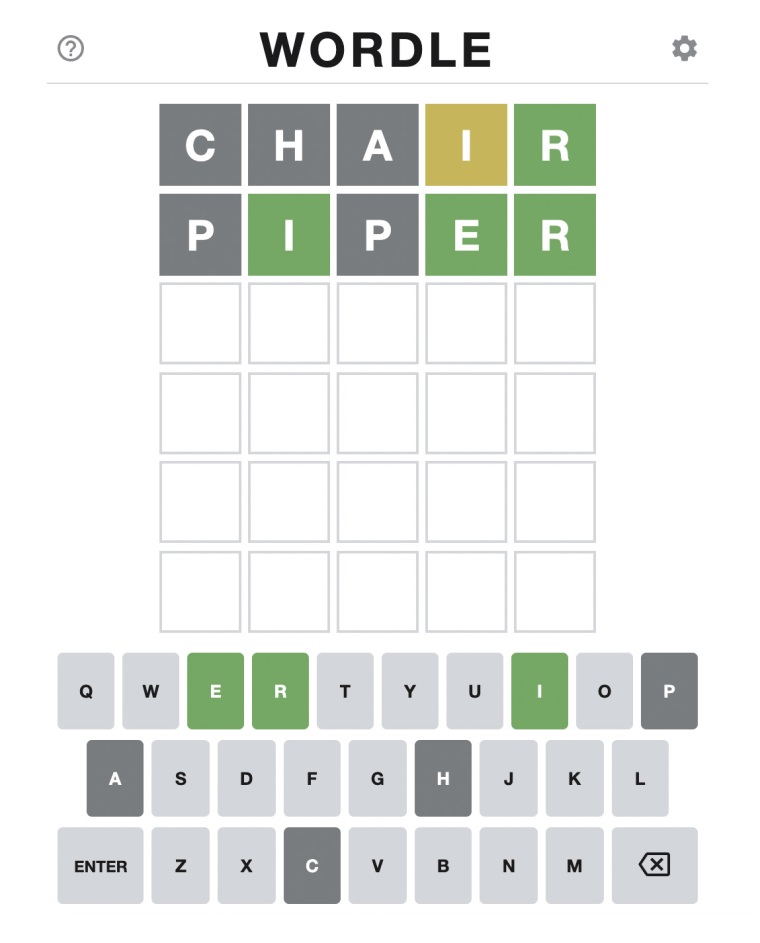
You might not know Josh Wardle by name, but you certainly know his viral creation, Wordle, and you’ve no doubt seen friends and family members sharing their solving results daily.
A few days ago, Josh launched a new puzzly endeavor called Parseword.
It’s a definite step up in complexity from Wordle, but you can still see some of Wordle’s foundation in Parseword. After all, Wordle is all about deduction, playing with the pieces in front of you, and slowly (or quickly) applying what you’ve learned to discover the day’s word.
Parseword works in a similar fashion, but instead of using the letters in front of you to uncover the word, you’re using a Cryptic Crossword-style clue to unravel the answer word.
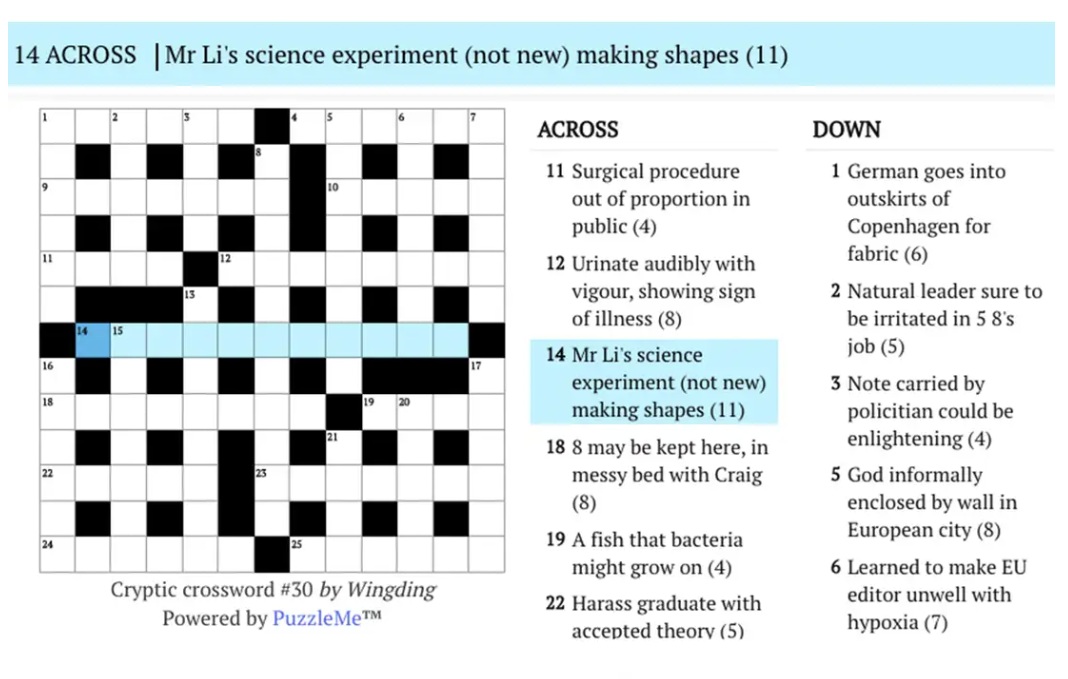
The clues in Cryptic Crosswords, also known as British-style crosswords, are longer, incorporating all sorts of wordplay, while concealing the definition within the clue as well. Each clue is a puzzle unto itself.
Here’s an example of cryptic-style cluing: “Quoted from edict wrongly (5)”
The definition part of the clue consists of the first two words, “quoted from.”
“Wrongly” indicates that part of the clue needs to be changed. This hints that the other word, “edict,” is not what it seems. EDICT, when anagrammed, becomes CITED. “Quoted from” defines CITED. Two ways to get the answer, one straightforward, one more challenging.
There you go. And that’s only one trick in the Cryptic Crossword cluing arsenal.
Cryptic clues can hide the answer between words, as in “Scottish snack offered in disco
nearby (5),” where “diSCO NEarby” conceals SCONE, the “Scottish snack.” They can offer two different definitions, as in “Desire for Japanese money (3)” for YEN.
Answer words could read backwards, or hide as initialisms or acronyms in the clue words. There could be soundalike words, or rebus-style assembly of the answer word. There’s loads of trickery and camouflage, especially in the hands of clever setters or constructors.
Parsewords is an interactive way to learn how to unravel Cryptic-style cluing.
Josh recently did an interview with The New Yorker, sharing his inspiration for the new puzzle game:
Wardle had tried cryptic crosswords when he was younger, but found them to be impenetrable. “I didn’t know how to begin,” he told me. The rules could seem arcane, almost impossible to deduce.
By treating the clue like a formula to be simplified, a linguistic version of P-E-M-D-A-S, the formerly impenetrable word salad of a clue starts to transform into something more recognizable. It’s a little bit like Ben Gross’s Bracket City puzzles.
Here, let’s take a look at yesterday’s puzzle and I can show you what I mean.
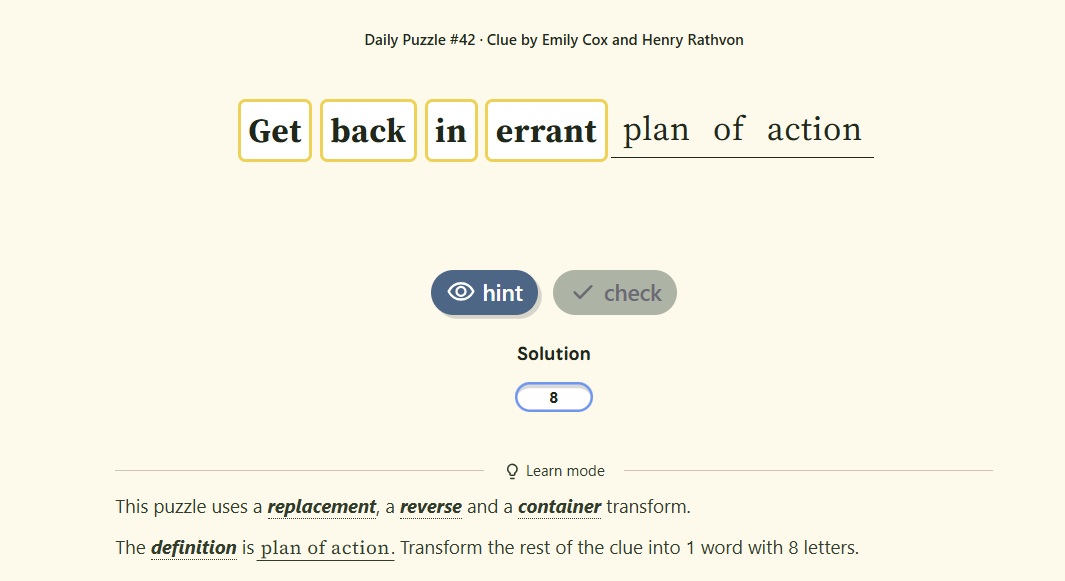
So the puzzle starts you off by highlighting the definition part of the clue: “Plan of action.”
We must now unravel how we get an 8-letter answer from what remains: “Get back in errant.”
Thankfully, the puzzle also prompts you with which particular forms of cluing manipulation you’ll need to use: a replacement, a reverse, and a container.
I found the reverse quickly. GET BACK told me literally what I needed to do, so I highlighted the entire phrase, which gave me the options to replace the phrase with a synonym like RECLAIM or RETAKE, or to literally turn “get” back, reversing it to read TEG.
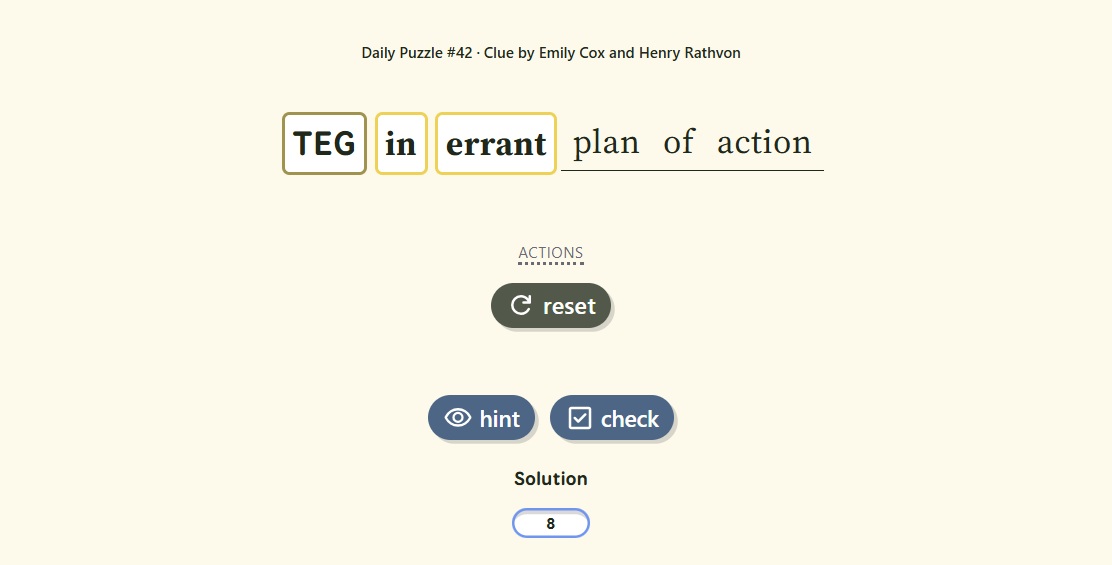
“In” tells me the container aspect of the puzzle. TEG would be placed inside of something. But I couldn’t think of any way to play with the word ERRANT that would get me to a synonym of “plan.”
I clicked on ERRANT and the program gave me several replacement options: Wrong, Stray, and Guilty.
I clicked on STRAY, which replaced ERRANT in the clue.
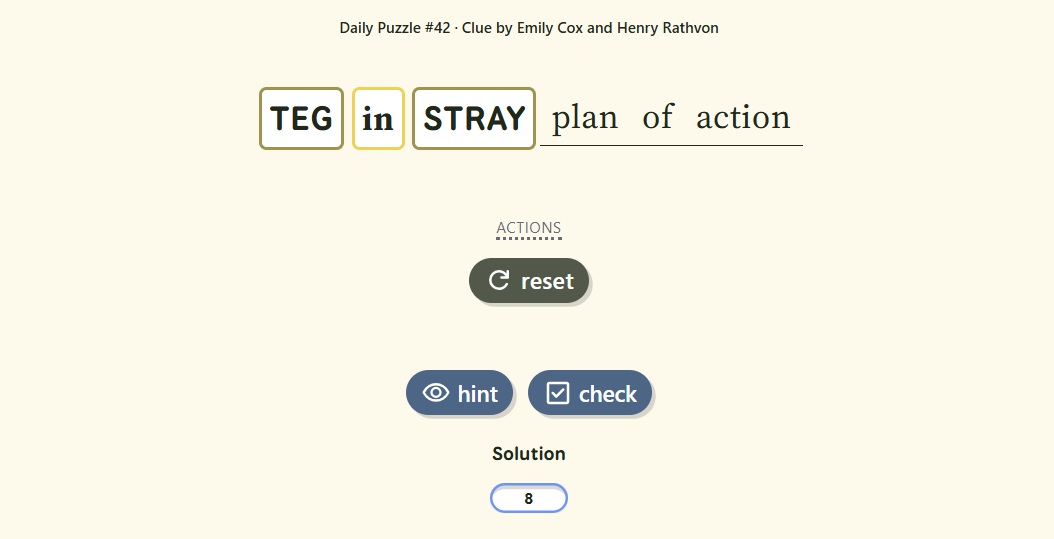
Finally, I highlighted all three, allowing me to place TEG in STRAY, giving me the answer word for “plan of action”, STRATEGY.
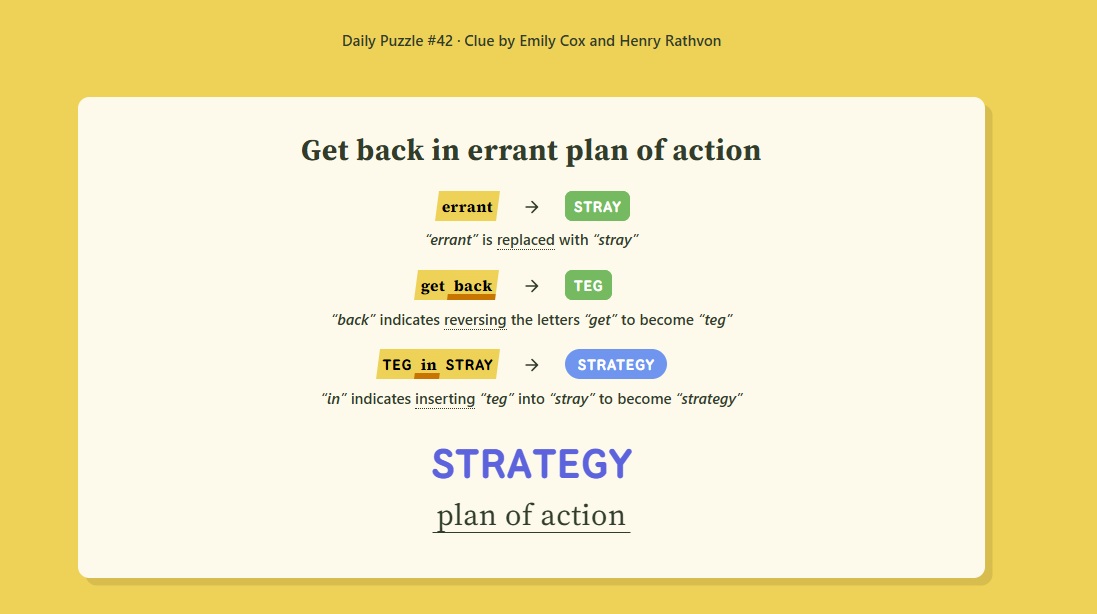
It’s a really playful, visual way to describe how Cryptic Crossword cluing works, giving solvers chances to try replacements and anagrams, then reset when they’ve gone astray.
I don’t exactly expect it to take the world by storm the way Wordle did, but there’s something wonderful about a puzzle that trains you to be better at another kind of puzzle. It’s puzzly community and encouragement, which is one of the best things about being a solver.
I haven’t checked out today’s Parseword yet, but I’m looking forward to it.
What do you think of Parseword, fellow solver? Are you a Cryptic Crossword fan? A Parseword enthusiast? If not, will this get you to try the British sibling to our beloved American crosswords? Let us know in the comments section below! We’d love to hear from you.
[Thank you to our friends at Penny/Dell Puzzles for the examples of Cryptic Crossword cluing. Check out their marvelous How to Solve Cryptic Crosswords guide here!]
 PuzzCulture