
Trigger warning: discussion of suicide
Yesterday marked a sad anniversary in the history of crosswords, but one that I think is worth talking about.
On March 4th, 1926, a 25-year-old waiter in Budapest, Hungary committed suicide at the Emke Kávéház (the Cafe Emke or the Aero Cafe), near the corner of Rákóczi út (Rákóczi Way) and Erzsébet körút (Elizabeth Boulevard).
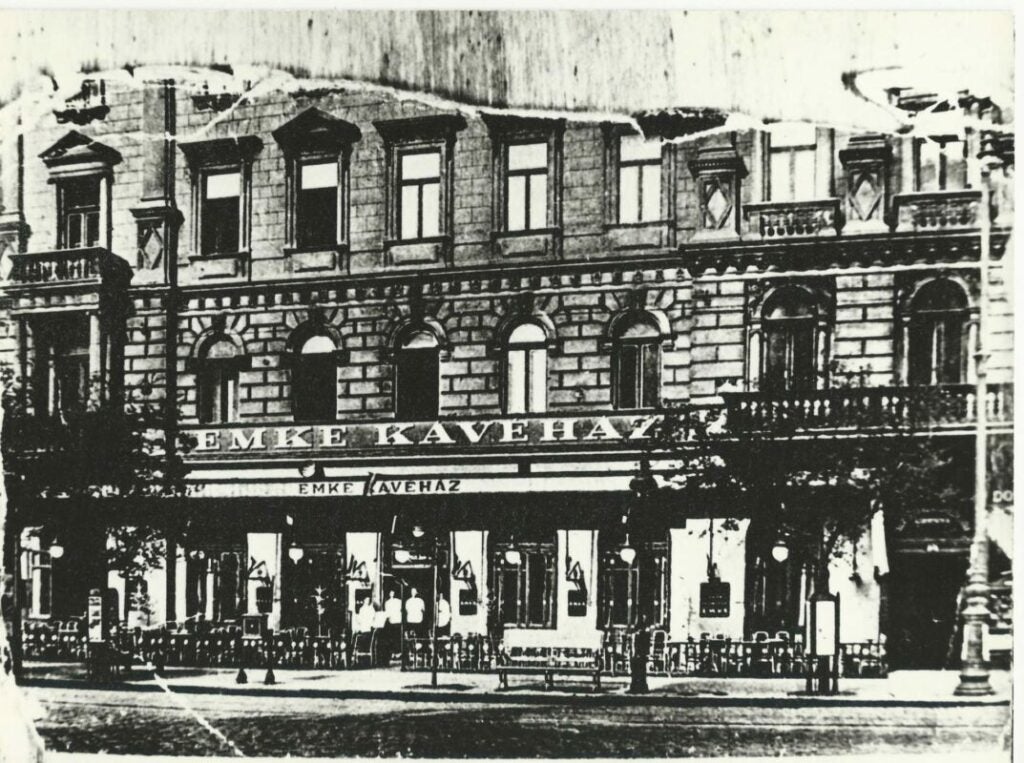
His name was Antal Gyula. He had come in just after midnight. He ordered a coffee, and used the cafe’s telephone to call the same number repeatedly, without success. Approximately an hour after he entered the cafe, the cloakroom attendant heard a loud bang sound from the bathroom. She opened the door as a second bang noise rang out. She found Gyula lying on the floor, pistol in hand.
That was the sad end of Antal Gyula, a young man who had, in his own words, lived in “misery and unemployment” for some time. He was already struggling with depression, and had been evicted from his apartment a few days earlier. His landlord claimed Antal left his clothes behind to help settle his debts.
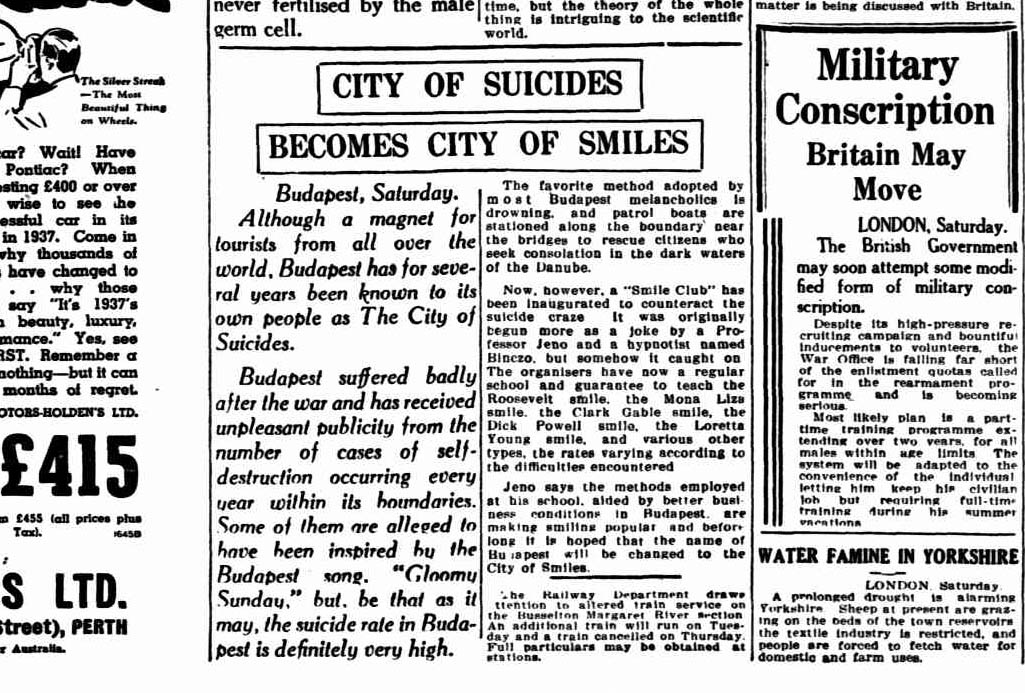
In most cases, that would have been the end of the story. A young man’s life ended far too soon. Sadly, this was not an uncommon occurrence in Budapest at the time, as Budapest had earned a reputation as a suicide hotspot. (On the same day, a newspaper reported 10 other attempted suicides.)
But Antal’s story persists a century later. Why?
Well, the detail that pushed this event from a sad footnote into the territory of urban legend was what police found on Antal’s body.
A suicide note accompanied by a crossword puzzle.
According to the note, the crossword would offer more of a glimpse into Antal’s fatal choice: The solution will give you the exact reasons for my suicide and also the names of the people interested.
(Before realizing Antal had constructed the puzzle, the police had originally surmised that he had ended his life because he couldn’t solve the puzzle. Which is an absolutely insane conclusion to draw.)
The crossword was taken to police committee headquarters, where detectives worked on both the crossword and the case for a month, but apparently they failed to solve it or decipher Antal’s intended message. Supposedly the police then asked the public for help solving the crossword, but there are no records to indicate anyone ever solved the puzzle, nor is there any sign of a copy of the puzzle itself in publicly available records.
Although Antal’s story floated around newspapers and the world of crosswords for decades, it was long believed to be an urban legend, one of the curious anecdotes about the mania of crossword fandom in the 1920s.
That was the case until Marinov Iván, a Hungarian urban legend enthusiast, explored endless strips of microfilm and unearthed the original article about Antal’s death in Az Est, an evening daily newspaper that ran from 1910 to 1939.
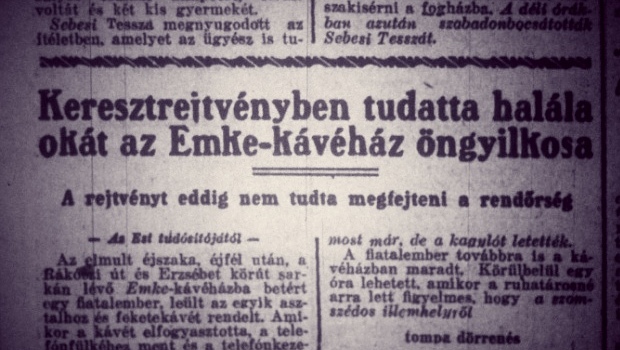
Antal’s sad tale was true. Sadder still, unless that crossword turns up in some police archive, none of us will ever know what he meant, or why exactly he chose a crossword as his final missive.
Maybe it was just for the notoriety. I would probably never have come across his name if it wasn’t connected to crosswords. It could have been deliberate, a curiosity designed to ensure that people would know his name, that the ripples in the water he left behind would last longer, travel farther. (A mention in Thomas Pynchon’s novel Shadow Ticket cynically suggests just that.)
Whether he intended to or not, he has succeeded in this regard.
“Why?” is a question that invariably follows in a suicide’s wake. Having lost several dear friends and loved ones to suicide myself, I’ve spent countless hours trying to understand why they made that single, irrevocable choice.
As T Campbell quite eloquently put it, “we may never know Gyula’s last message to the world. And that’s the real tragedy of suicide—all those chances to explain or continue one’s own story, snuffed out.”
Suicide leaves a crater in the lives of those left behind. Unanswered questions, unresolved feelings, persistent doubts about possible wrong turns and other choices that could have been made, the soul-crushing wish that you could have done more to intervene, to avert, to help. We don’t know who mourned Antal after his death. Maybe they were among the people named in his crossword.
But I do know this… I’d rather still have the person than the mystery.
Sources:
- EuroMenTravel’s Urban Legends of Budapest
- The Guardian Crossword Blog, September 9, 2013
- Modern Legends
- Cipher Mysteries
- T Campbell’s Substack
 PuzzCulture